





One of the most important Venetian vedute (views) by Bernardo Bellotto (Venice, 1722 - Warsaw, 1780) to appear on the market in recent years will take center stage at the Old Masters Evening Sale organized by Christie’s in London on June 30. The work, presented under the title Venice, the Bacino di San Marco from the Canale della Giudecca (“Venice, the Basin of St. Mark’s from the Giudecca Canal”), comes from a prestigious private collection and will be offered with an estimate of between £4 million and £6 million (€4.6 million to €6.95 million). It is a painting that scholars consider fundamental to understanding the Venetian painter’s beginnings and his early establishment as one of the leading vedutists of 18th-century Europe.
The canvas depicts the basin of St. Mark’s observed from the Giudecca Canal and is, says scholar Charles Beddington , who signed the card for the auction catalog, a testament to Bellotto’s pictorial ambitions in the early phase of his career. Datable to the last months of 1738, the work is striking not only for its quality of execution but also for its exceptional size. Up to that time the young artist had never produced a painting of such magnitude, and only about five years later would he surpass these measurements with the famous views of St. Mark’s Square now housed at the Cleveland Museum of Art and of the Entrance to the Grand Canal housed at the J. Paul Getty Museum in Los Angeles.
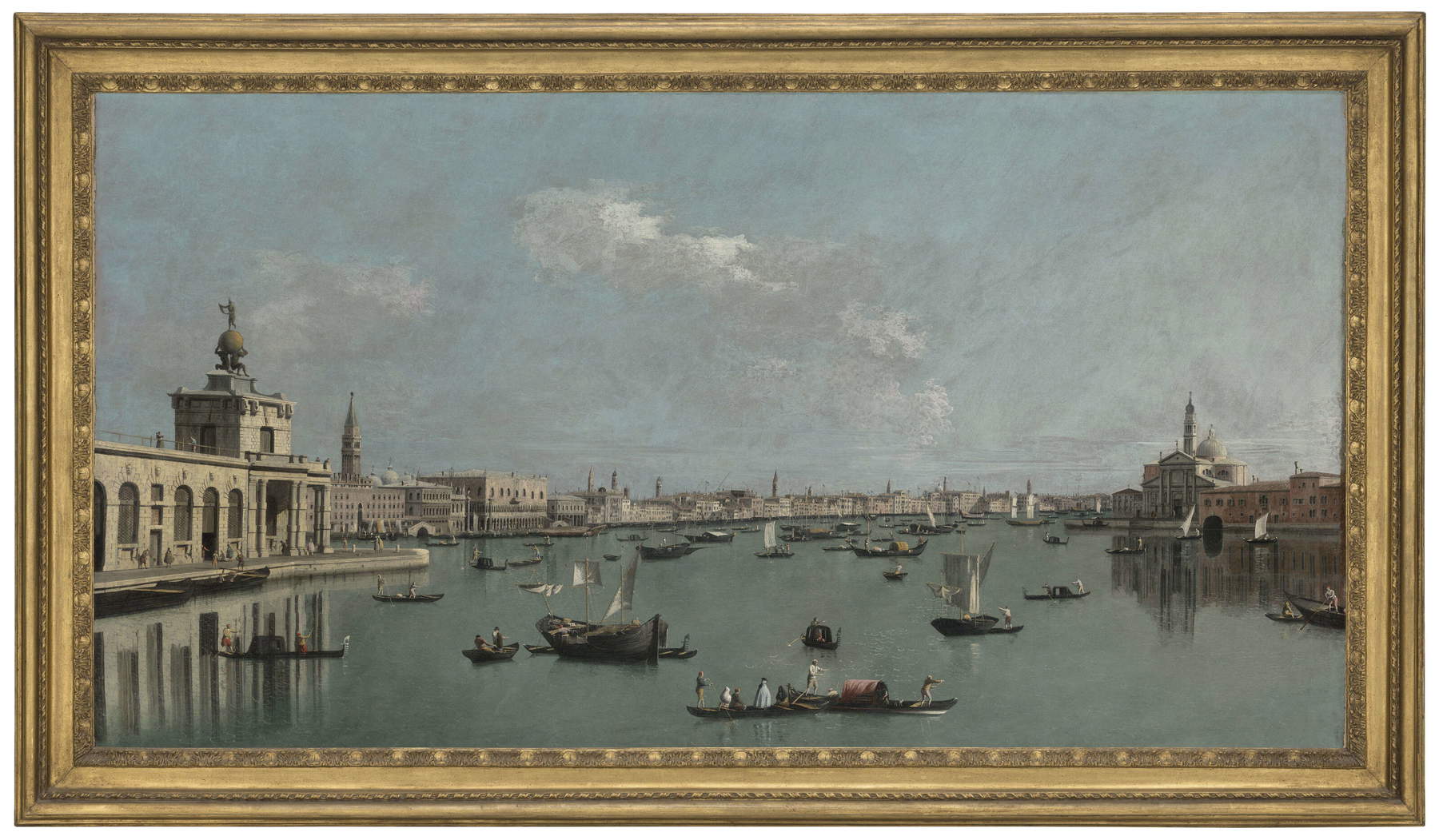
This choice of size takes on special significance when compared with the production of his uncle and master Antonio Canal, known as Canaletto. While the latter often favored smaller formats, Bellotto progressively developed a predilection for large monumental compositions, a characteristic that would become evident in his maturity through the famous cycles dedicated to Dresden, Vienna and Munich. Indeed, the dimensions of the view offered by Christie’s anticipate those great undertakings that would consecrate the painter among the absolute protagonists of 18th-century European painting.
The critical history of the work is complex and reflects the difficulties encountered by scholars in reconstructing the artist’s youthful catalog. The painting had been recognized as an autograph by Bellotto as early as 1931, but from 1935 to 2014 it remained in a private collection where the conservation conditions severely compromised its legibility. Thick layers of altered varnish in fact prevented a proper assessment of its quality and contributed to attributional doubts.
The art historian Mieczysław Kozakiewicz, author of one of the main studies on the artist, included it among the attributed works, judging from a black-and-white photograph that the painting showed a high technical level and refined brushwork but that it did not seem attributable to either Bellotto or Canaletto. An assessment that would later be revised thanks to new research and a deeper understanding of the Venetian vedutista’s early production.
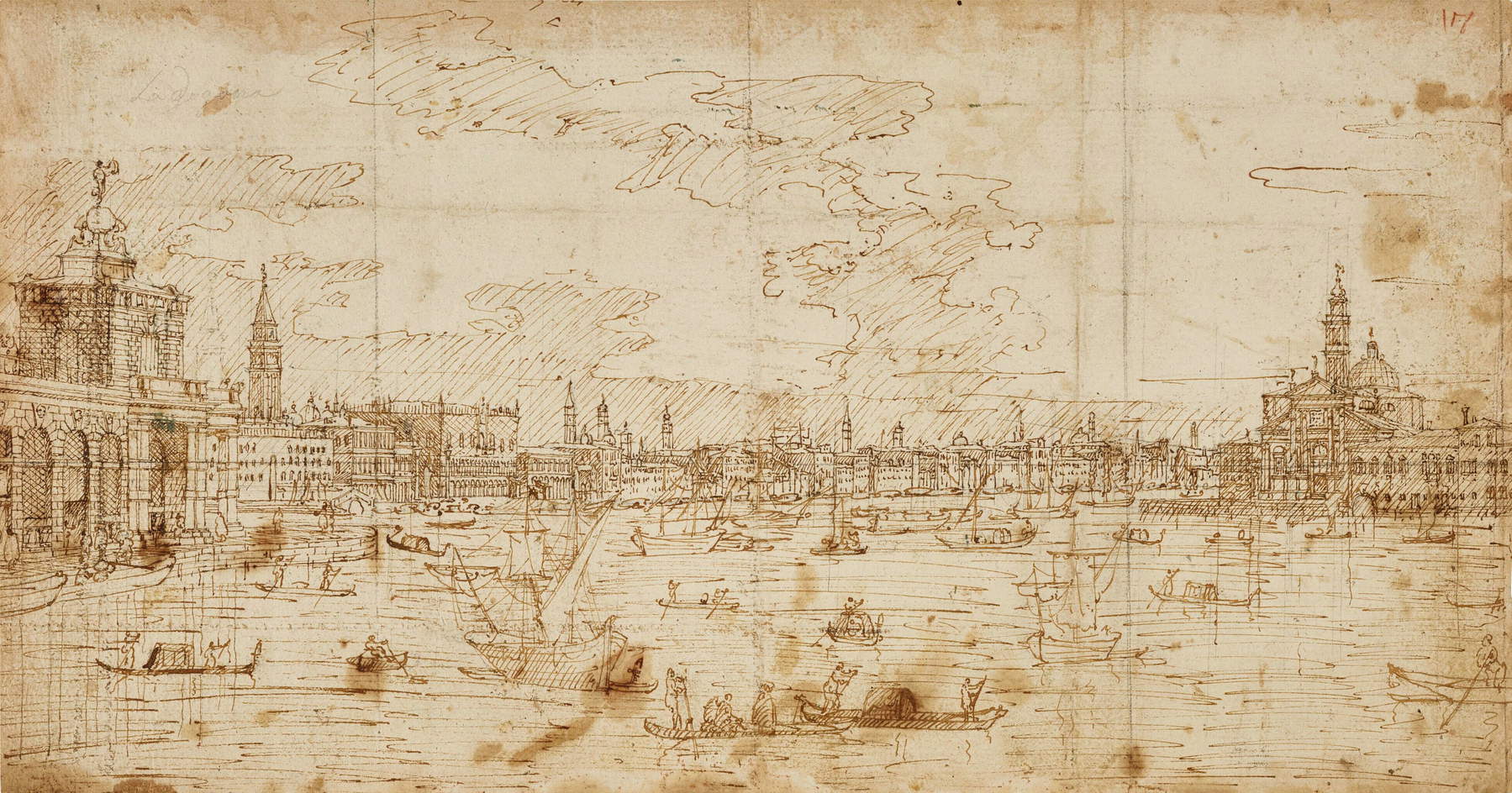
A decisive role in the critical recovery of the work was played by scholar Bożena Kowalczyk. Analyzing the painting and relating it to a drawing preserved at the Hessisches Landesmuseum in Darmstadt, the art historian identified a very close connection between the two works. In fact, the sheet, which came directly from the artist through an uninterrupted and documented provenance, represents a preparatory study that faithfully anticipates the painting in its proportions, the breadth of the view, the organization of light, the arrangement of the boats, the structure of the clouds and even the characterization of the figures.
According to Kowalczyk, the painting presents a Venice imagined and at the same time described with almost minute precision. The composition develops through a color palette dominated by gray-green tones, enlivened by the purplish highlights of the Zecca, the pale pinks of the Doge’s Palace, and the bright beiges of the Dogana. A palette that the scholar considers typically Bellottesque and already distinct from the sensibility of the more famous Canaletto.
The work also shows some features that testify to the still experimental phase of the artist’s career. The composition shows slight imbalances, a pronounced curvature of the Riva and some uncertainties in the proportions of the figures and boats. However, these very elements give the painting a special interest, revealing the training process of an author destined to become one of the greatest interpreters of European urban views.
The cleaning carried out prior to the 2014 exhibition made it possible to recover numerous details and further strengthen the attribution to Bellotto. Scholars were able to observe with greater clarity stylistic elements typical of the painter, such as the application of color in the sky through diagonal brushstrokes, the frequent use of black, the incisions used to describe the reflections on the water, and the characteristic gray-blue cloak of the character placed in the foreground on a sandola.
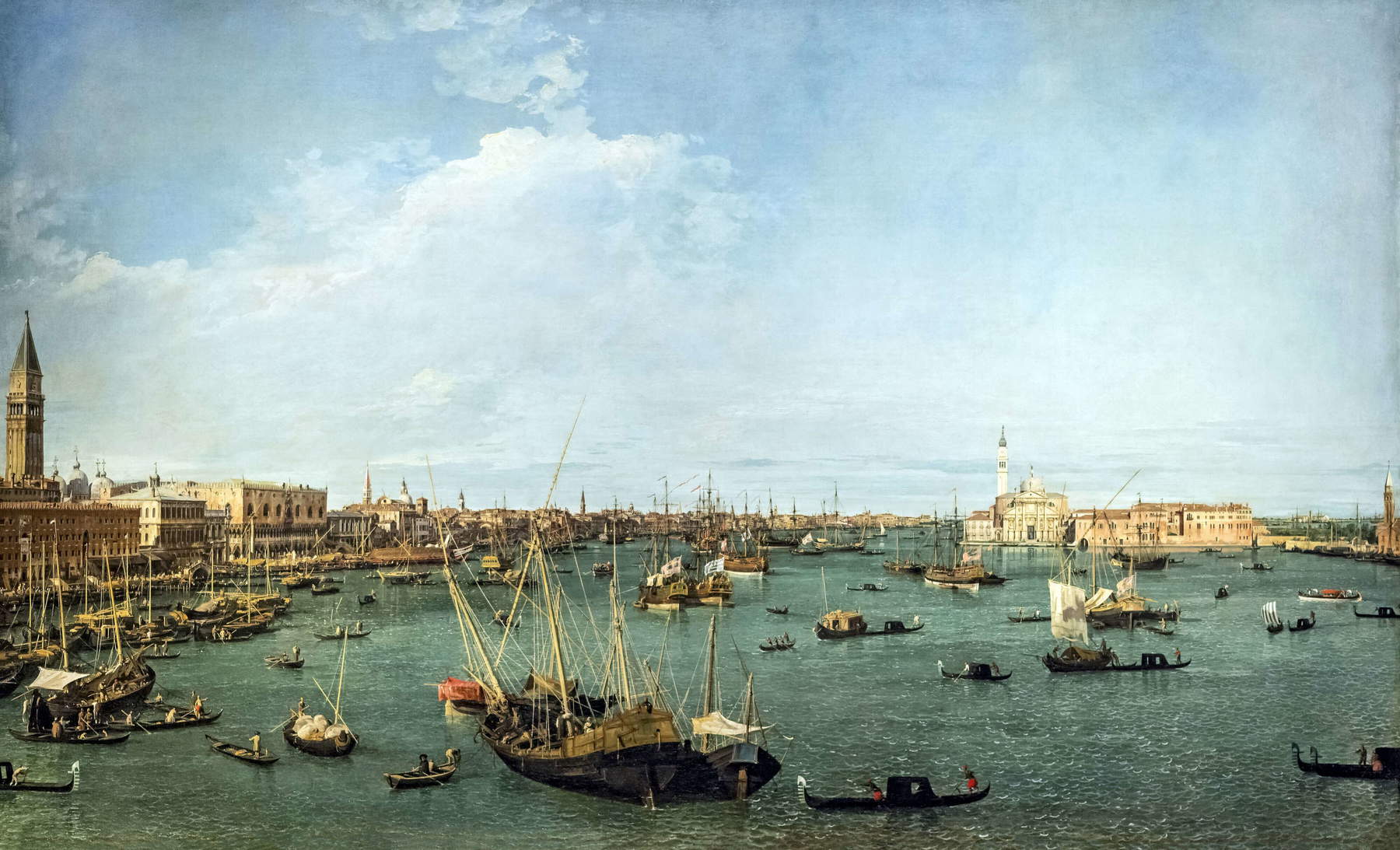
The restoration work also restored a historical detail that is crucial to the dating of the work. Indeed, on the bell tower of the church of St. Antonin, visible in the view, appear the scaffolding surrounding the new onion pinnacle, the completion of which is documented in October 1738. This detail is also present in a famous view of the Basin of St. Mark made by Canaletto and now in the Museum of Fine Arts, Boston, commissioned by Henry Howard, fourth Earl of Carlisle, who was in Venice that very year.
Bellotto is supposed to have looked with particular attention to that Canaletto masterpiece, seeking in some way to compare himself with it. While maintaining a composition closer to the veduta preserved at the Wallace Collection in London, the young painter in fact seems to want to measure himself against the language of the master, while developing an already autonomous personality. Indeed, the greater attention to atmospheric details, the treatment of clouds, the shimmering rendering of water and the almost analytical definition of architecture anticipate features that would become central to his later production.
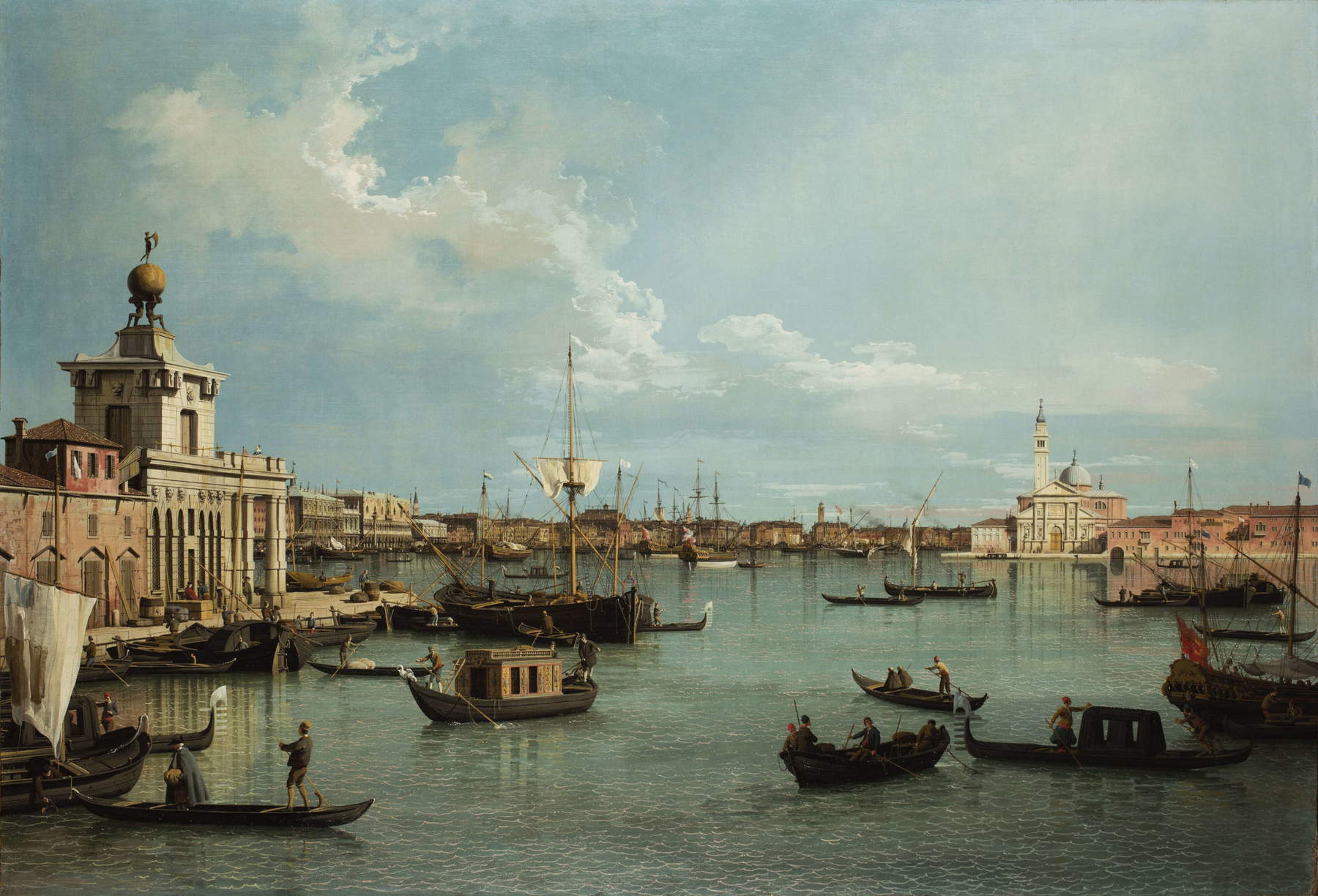
The painting is located in a particularly important phase of Bellotto’s artistic development. More recent research has made it possible to reconstruct with greater precision the path the painter took between his mid- and late teens. According to Beddington, the view of the Basin of St. Mark appears to immediately follow the Grand Canal eastward with the church of San Simeone Piccolo, now in the Wallace Collection, and in turn precede the Grand Canal northeastward with the church of Santa Croce in the National Gallery in London and the Basin of St. Mark on Ascension Day preserved in Castle Howard. These works also make it possible to distinguish the canvas proposed by Christie’s from a smaller version of the same subject identified in the 1990s as an autograph work by Bellotto. While sharing many similarities in the arrangement of the boats and the general layout, the variant significantly reduces the width of the water space and has a more full-bodied pictorial subject matter, features that have led scholars to consider it slightly later.
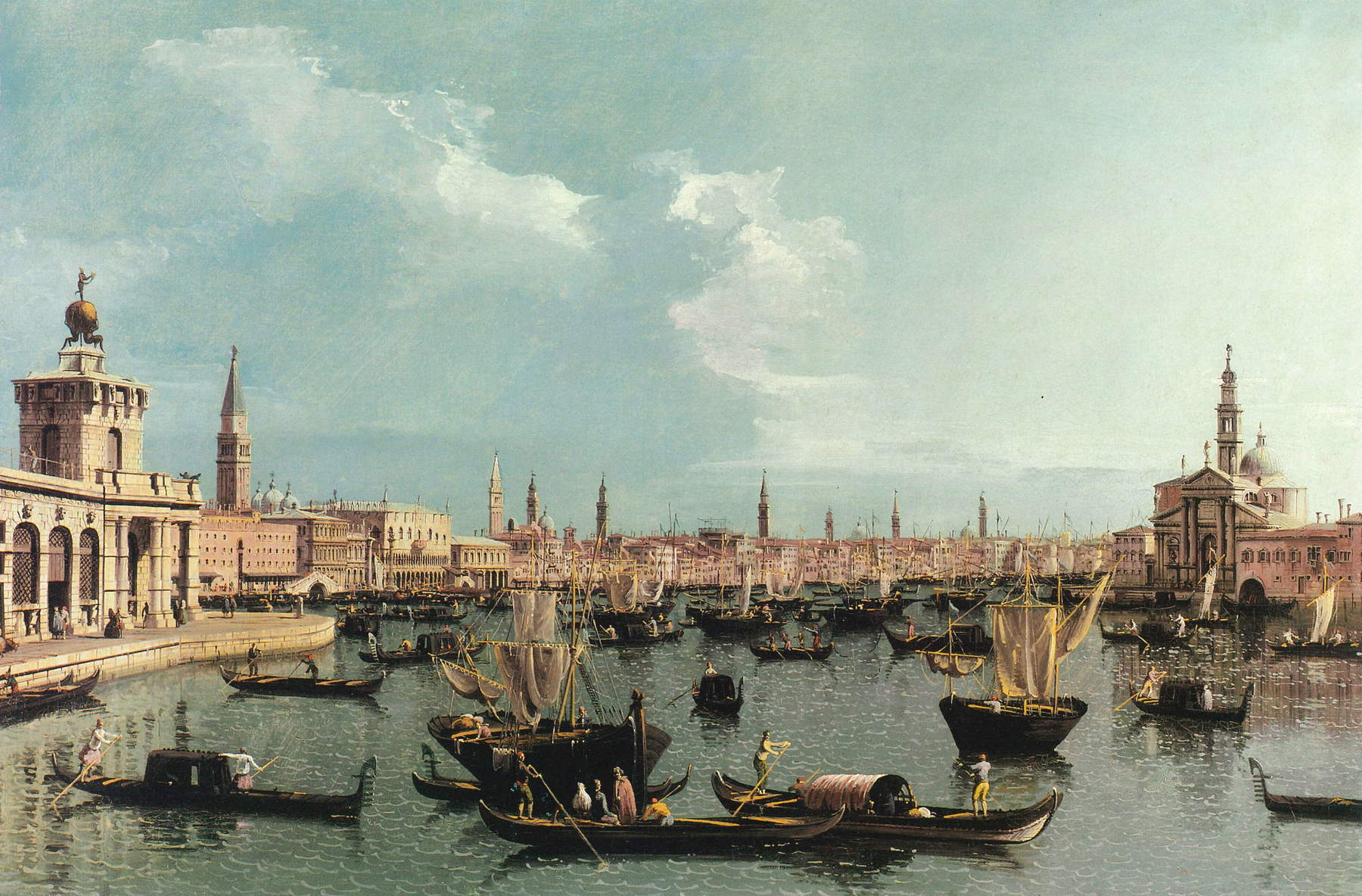
Among the most interesting aspects of the composition emerges the treatment of the human figures. In most cases the characters are depicted from behind, a choice that specialists interpret as indicating the young artist’s prudence in dealing with the depiction of faces. This detail also contributes to making the painting a valuable testimony to Bellotto’s formative phase. The documented provenance of the work begins with Sir Arthur Aston, the painting’s first known owner. A prominent British diplomat, Aston served at the embassy in Vienna from 1817, was secretary of legation in Rio de Janeiro in 1826 and secretary of the embassy in Paris in 1833. Between 1840 and 1843 he also served as envoy extraordinary and minister plenipotentiary in Madrid.
His art collection, dispersed after his death through an auction in 1862, included works from major European schools. The sale catalog described Dutch, Flemish, Spanish, French, and Italian paintings, including an important Saint Francis in Meditation by Francisco de Zurbarán now in the National Gallery in London. There were relatively few Italian works, and Bellotto’s Venetian veduta represented the only such painting in the collection.
The circumstances through which the diplomat came into possession of the canvas remain unknown. According to the catalog of a later sale in 1888, the painting was in his collection during his stay in Madrid, but there is no evidence that it was purchased in Spain. Indeed, scholars point out how the Spanish market showed little interest in Venetian views in the 18th century. However, they do not rule out the possibility that works originally destined for England may have landed on the Iberian peninsula as a result of the vicissitudes of shipping at the time.
|
| Bellotto stars at Christie's: £6 million Venetian masterpiece in London |

Warning: the translation into English of the original Italian article was created using automatic tools. We undertake to review all articles, but we do not guarantee the total absence of inaccuracies in the translation due to the program. You can find the original by clicking on the ITA button. If you find any mistake,please contact us.





























 IT
IT FR
FR DE
DE ES
ES CN
CN


