




by Redazione 02/06/2026



Categories: Ancient art / Disclaimer
At the Musée Jacquemart-André, work on the Madonna and Child, one of Pietro Perugino's early works, is completed. The restoration has restored luminosity to the colors and new legibility to the panel, accompanied by diagnostic investigations with X-rays and infrared reflectography.
One of the earliest testimonies to the art of Perugino (Pietro Vannucci; Città della Pieve, 1446 - Fontignano, 1523), returns to show itself in a renewed guise thanks to a conservation intervention that has restored legibility and luminosity to an important panel preserved at the Musée Jacquemart-André in Paris, the youthful Madonna and Child, datable to around 1470, which was entrusted to the specialized company Arcanes. The intervention was not limited to the cleaning of the paint surface, but was accompanied by a campaign of scientific investigations that allowed a deeper material knowledge of the work. Radiographs and infrared reflectographs have in fact provided new information on the wooden support, the execution techniques adopted by the artist and the interventions the painting has undergone over the centuries.
The panel belongs to the early phase of Perugino’s career (it was also exhibited at the major 2023 exhibition held at the National Gallery of Umbria), when the Umbrian painter was still assimilating the teachings he received in the Florentine artistic milieu. Despite the author’s young age, the work already manifests some of the qualities that would make Perugino one of the absolute protagonists of the Renaissance and one of the most influential masters of his generation.


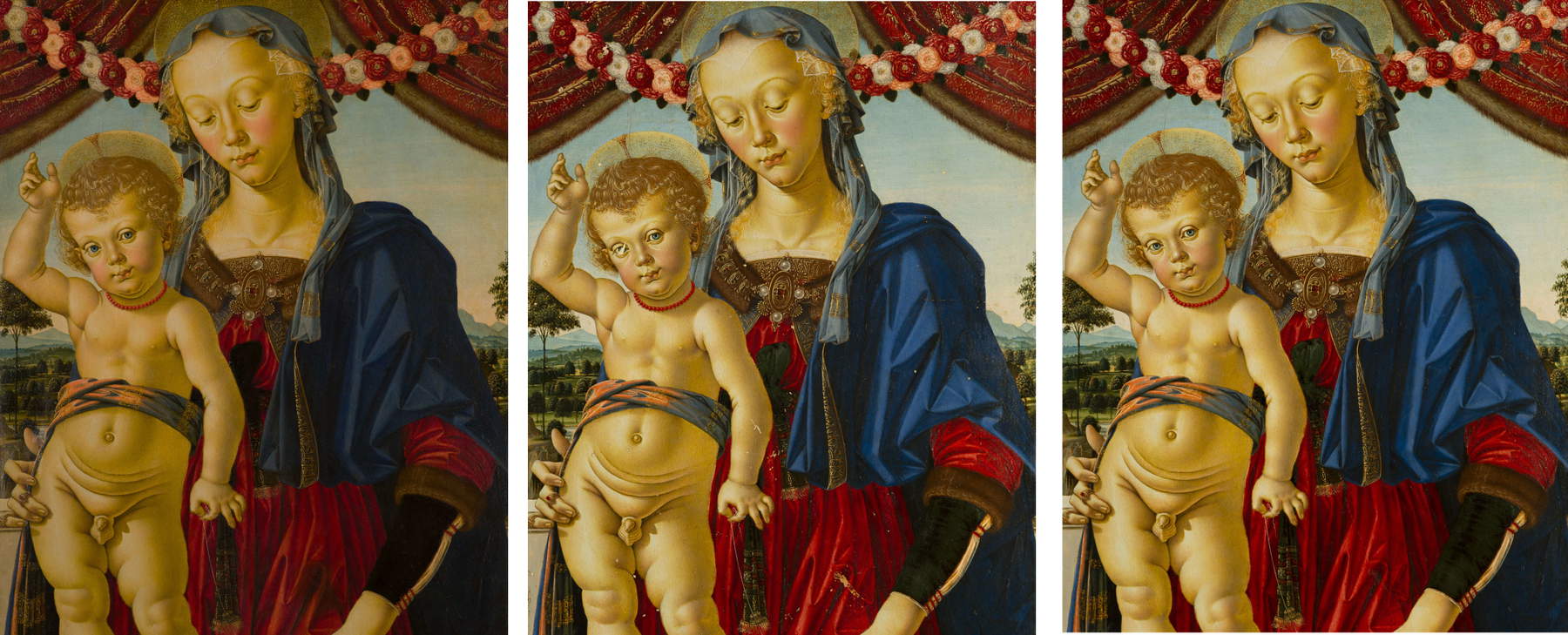
The painting depicts the Virgin and Child in a composition of great formal balance. Christ is depicted standing, completely nude, in the act of imparting a blessing. The pose of the Child recalls models developed within the workshop of Andrea del Verrocchio, a central figure of Florentine artistic culture in the second half of the 15th century. This is an iconographic typology that was also explored by Sandro Botticelli in the same years and testifies to the climate of intense experimentation that characterized Medici Florence.
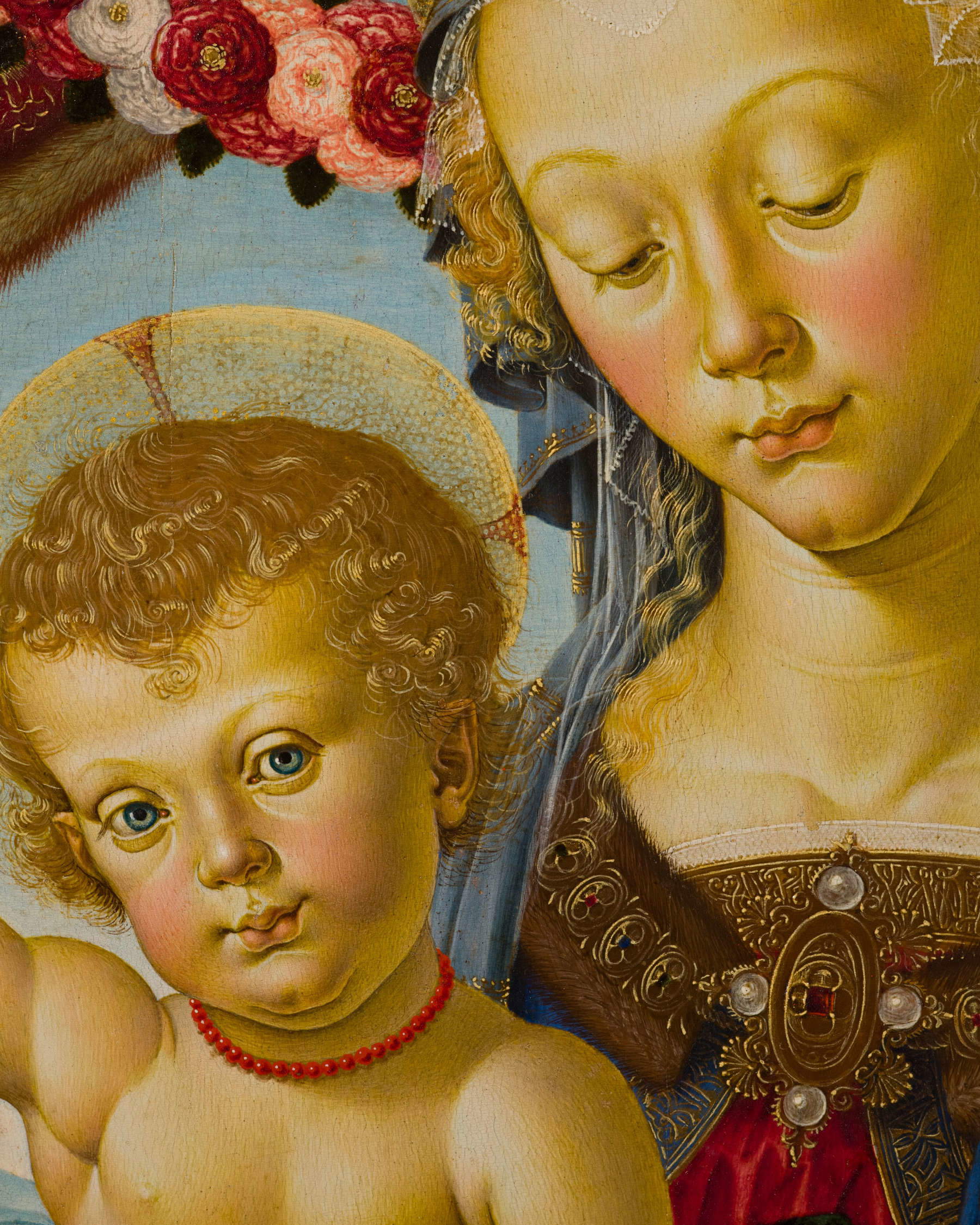
The work already allows elements to emerge that belong specifically to Perugino’s sensibility. In fact, the orderly landscape in the background, the crystal clear sky, the absorbed calm of the Virgin and the refined modulation of light introduce the contemplative dimension that was to become one of the most recognizable features of his painting. The Madonna appears gathered in silent meditation. Her gaze is turned downward, where an open book and a goldfinch lie. The latter element takes on a definite symbolic meaning in the Christian iconographic tradition, as it alludes to the future Passion of Christ. Indeed, the small bird, frequently found in Renaissance painting, recalls the sacrifice and suffering that await the Son of God. The Child, on the other hand, establishes direct contact with the viewer of the painting. Turning his gaze outward and raising his right hand in the gesture of blessing, Christ engages the viewer within the sacred scene, according to a mode of communication that will characterize much Renaissance artistic production.
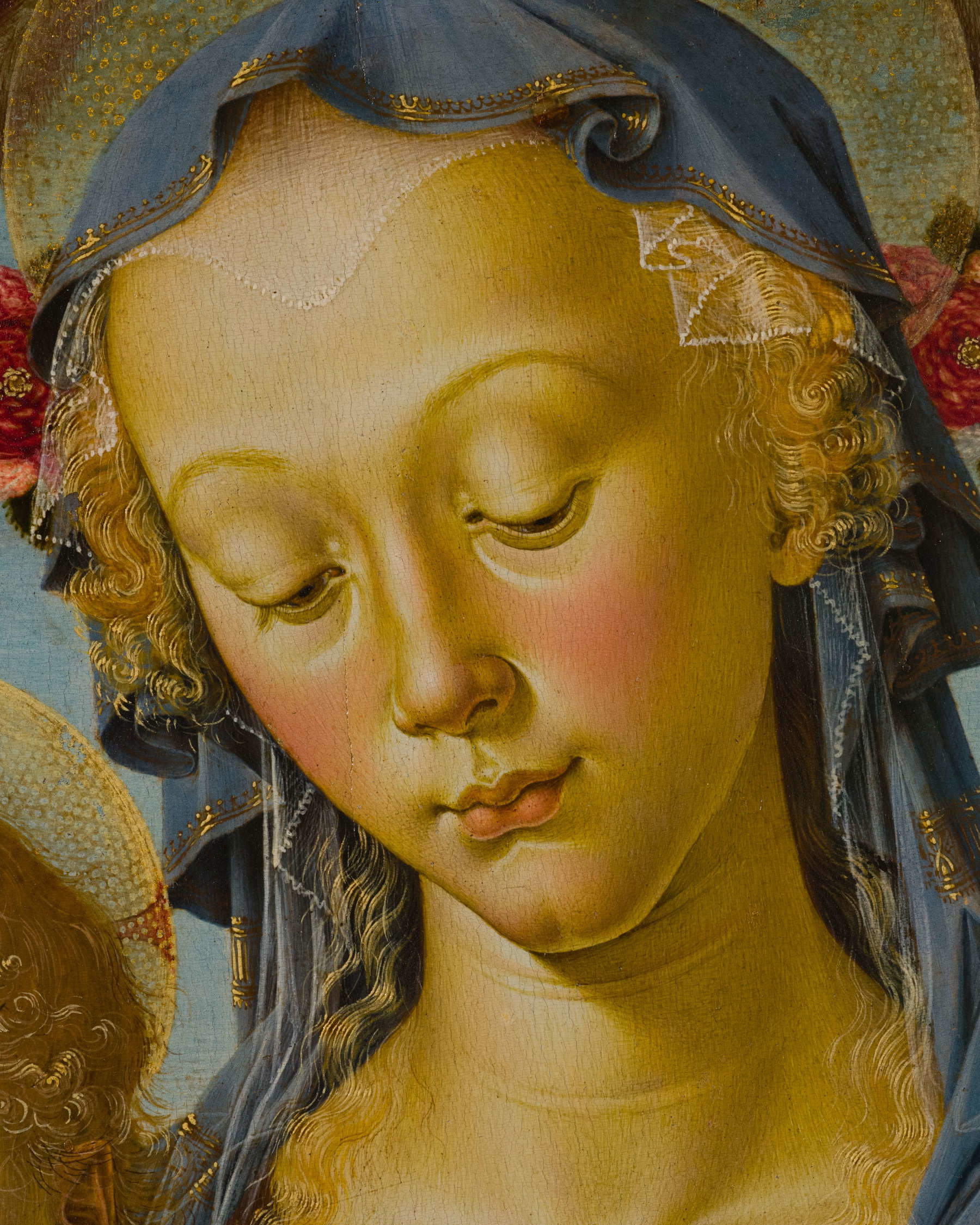
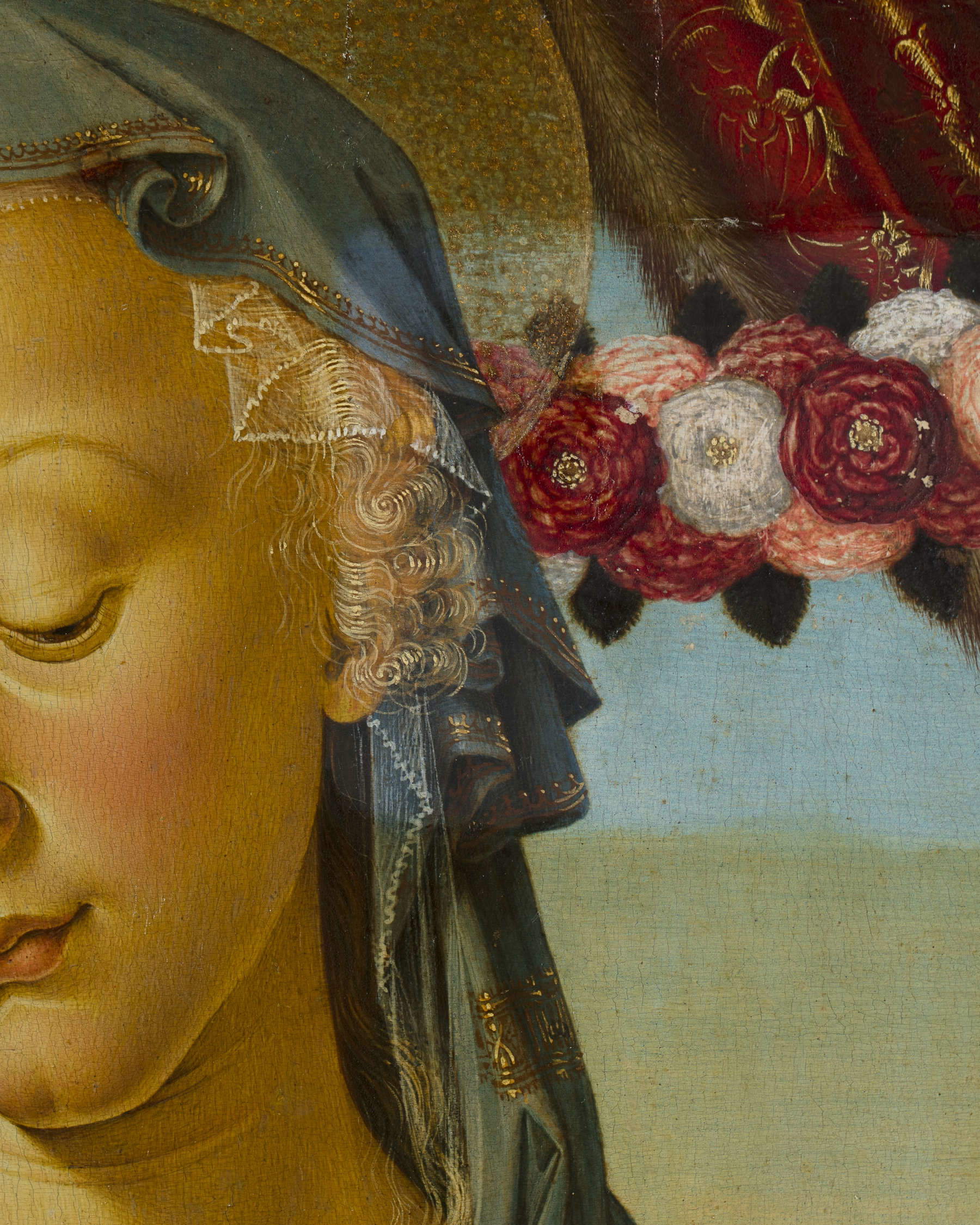
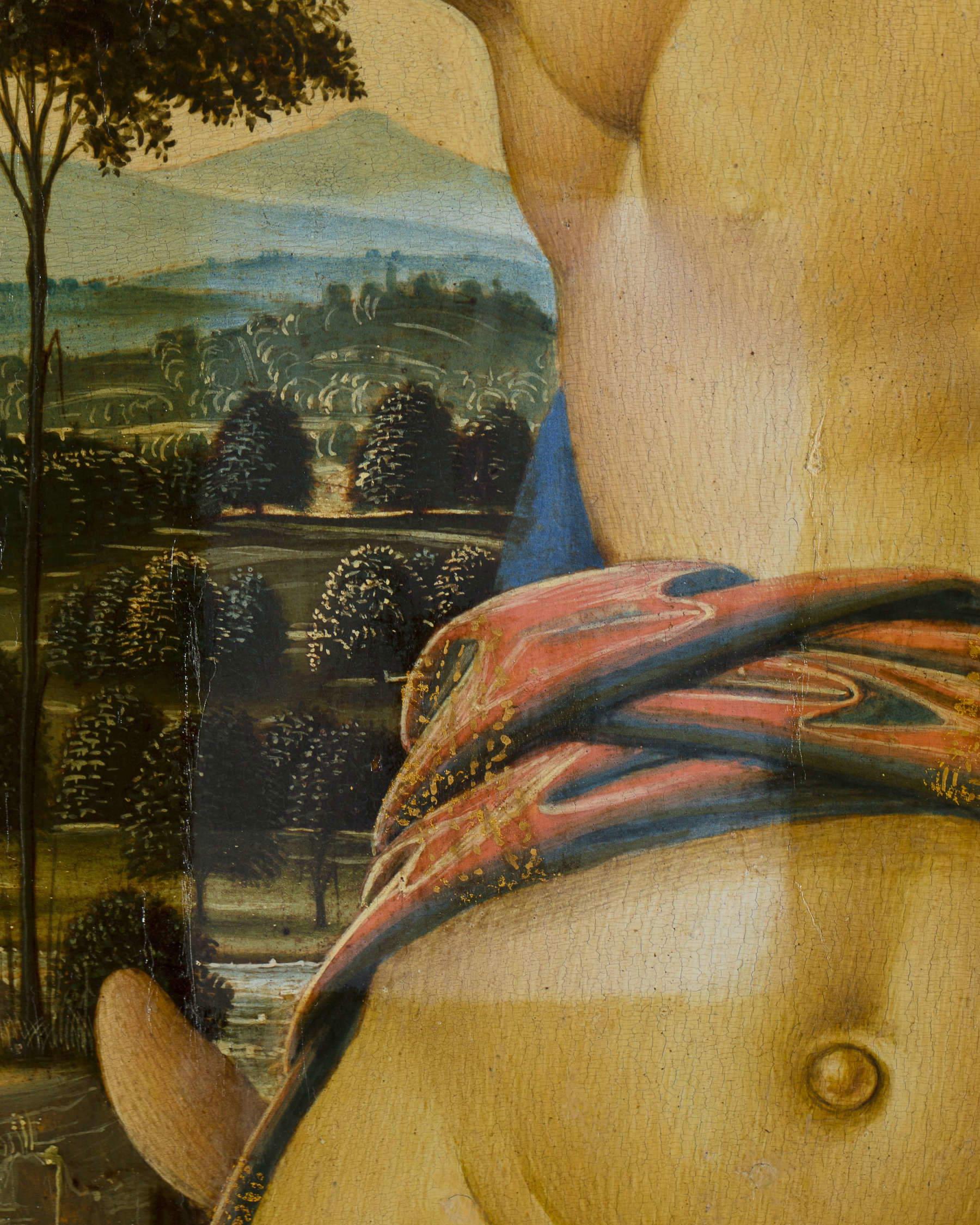
Before the conservation intervention, the reading of the work was compromised by the presence of a thick oxidized varnish that, with the passage of time, had taken on dark, yellowish tones. This altered layer attenuated the chromatic contrasts, flattened the perception of space and made it more difficult to grasp the refinement of the pictorial drafting.
The restoration removed these alterations, restoring a more balanced view of the composition and bringing back the painting’s original chromatic quality. The delicate modulations of the flesh tones have returned fully legible, as has the depth of the blues and reds that characterize the robes and decorative elements.
Particularly significant was the rediscovery of the ornamental details, which play an essential role in the visual organization of the work. The greater clarity of the pictorial surface now makes it possible to better appreciate the dialogue between figures, landscape and compositional architecture, offering a perception closer to that originally conceived by the artist.
Parallel to the restoration, diagnostic investigations have been an important tool of knowledge. Radiography, performed using Fujifilm FDR XAIR technology, made it possible to document the structure of the wooden support and to identify the distribution of previous conservation interventions. In fact, radiographic analysis constitutes a fundamental resource in the study of panel works, as it allows us to observe elements invisible to the naked eye, such as the internal conformation of the wood, any joints, structural reinforcements or modifications introduced over time.
Even more relevant proved to be the contribution of infrared reflectography. This diagnostic technique has made it possible to investigate the relationship between the preparatory drawing and the final pictorial drafting, offering valuable insights into the creative process adopted by Perugino during the creation of the work. In fact, the study of the drawing allows art historians to understand the artist’s working methods, identifying any afterthoughts, corrections or modifications made during execution. In many cases, this information helps to reconstruct the dialogue between the design phase and the final result, returning a more complete view of Renaissance painting practice.
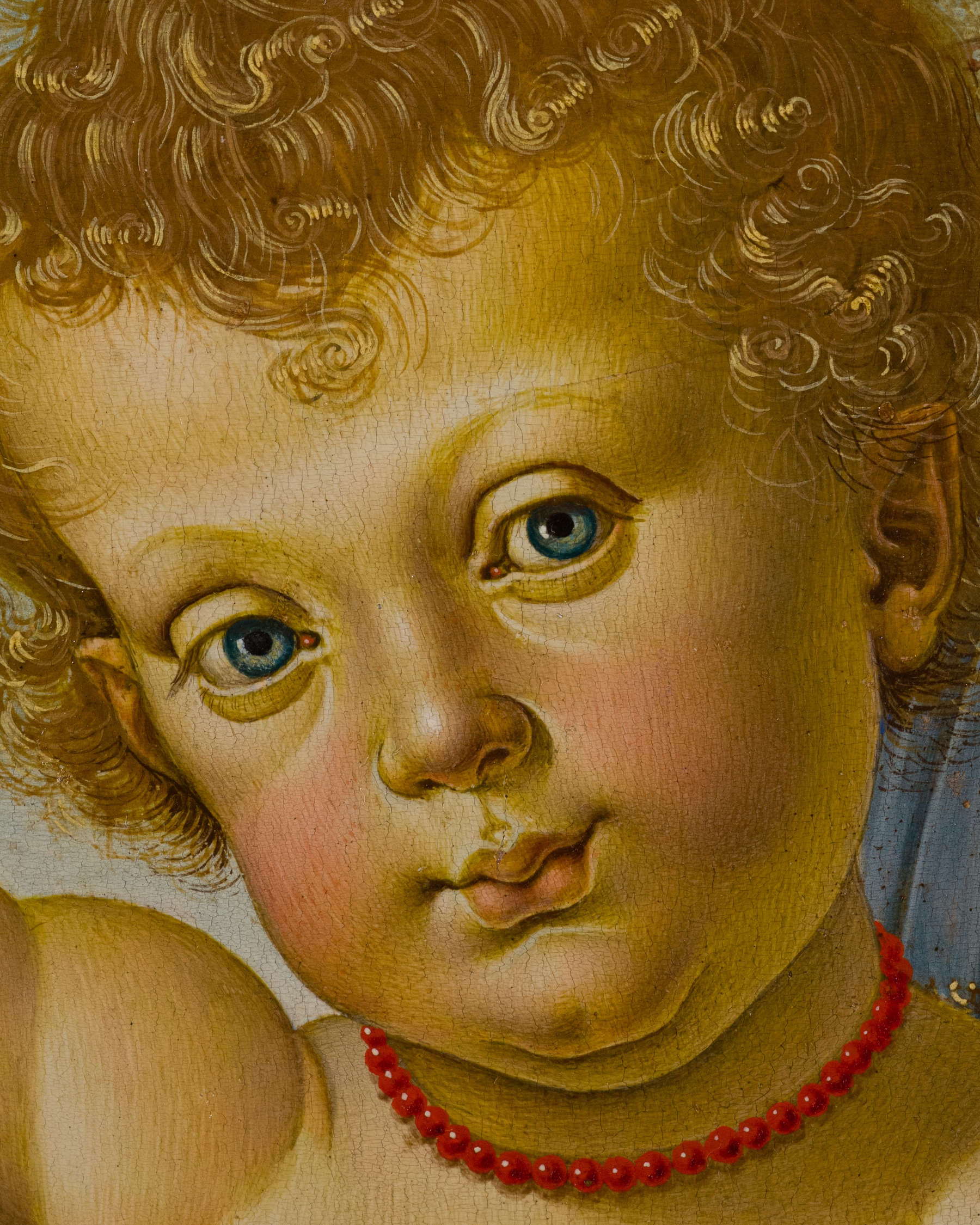
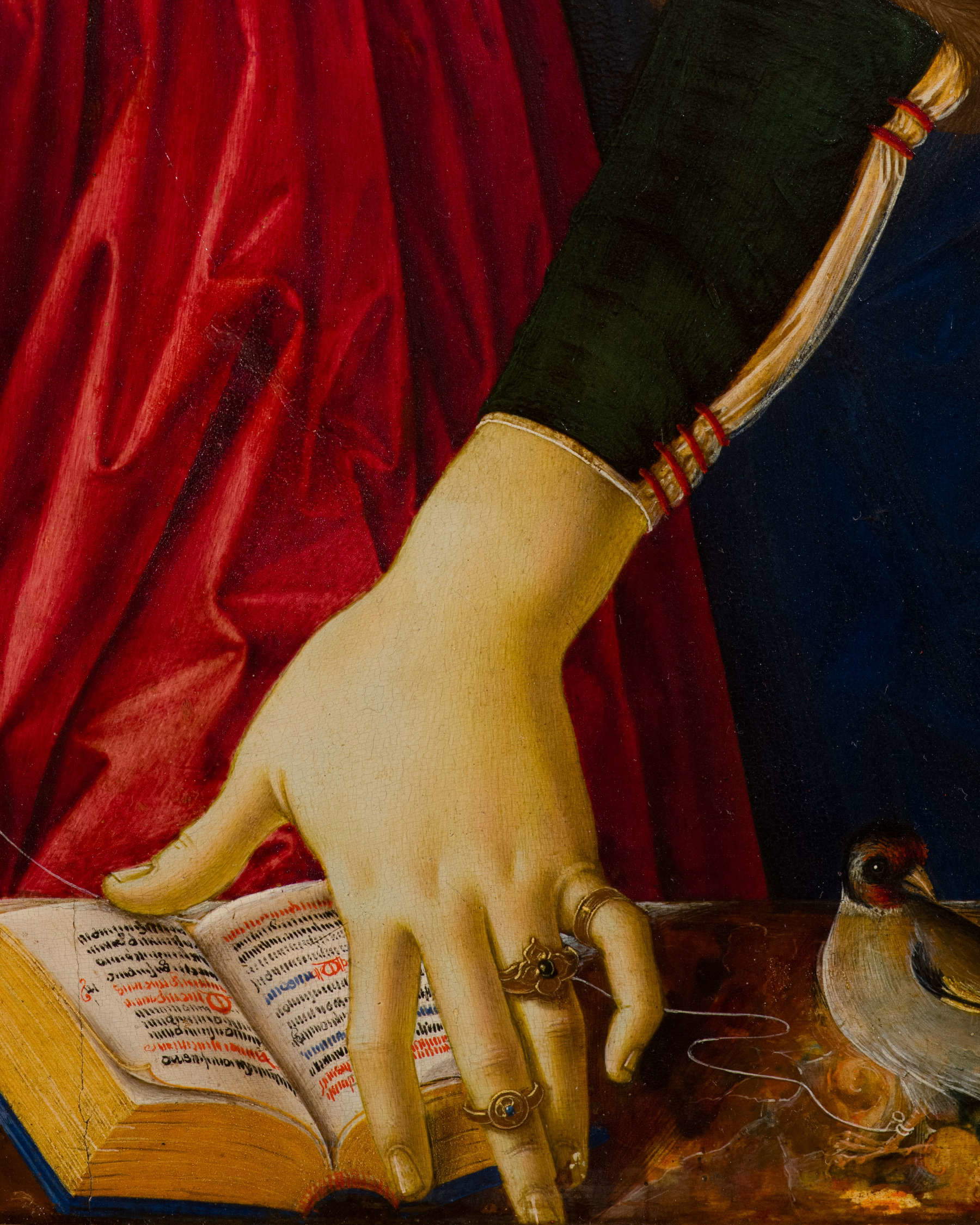
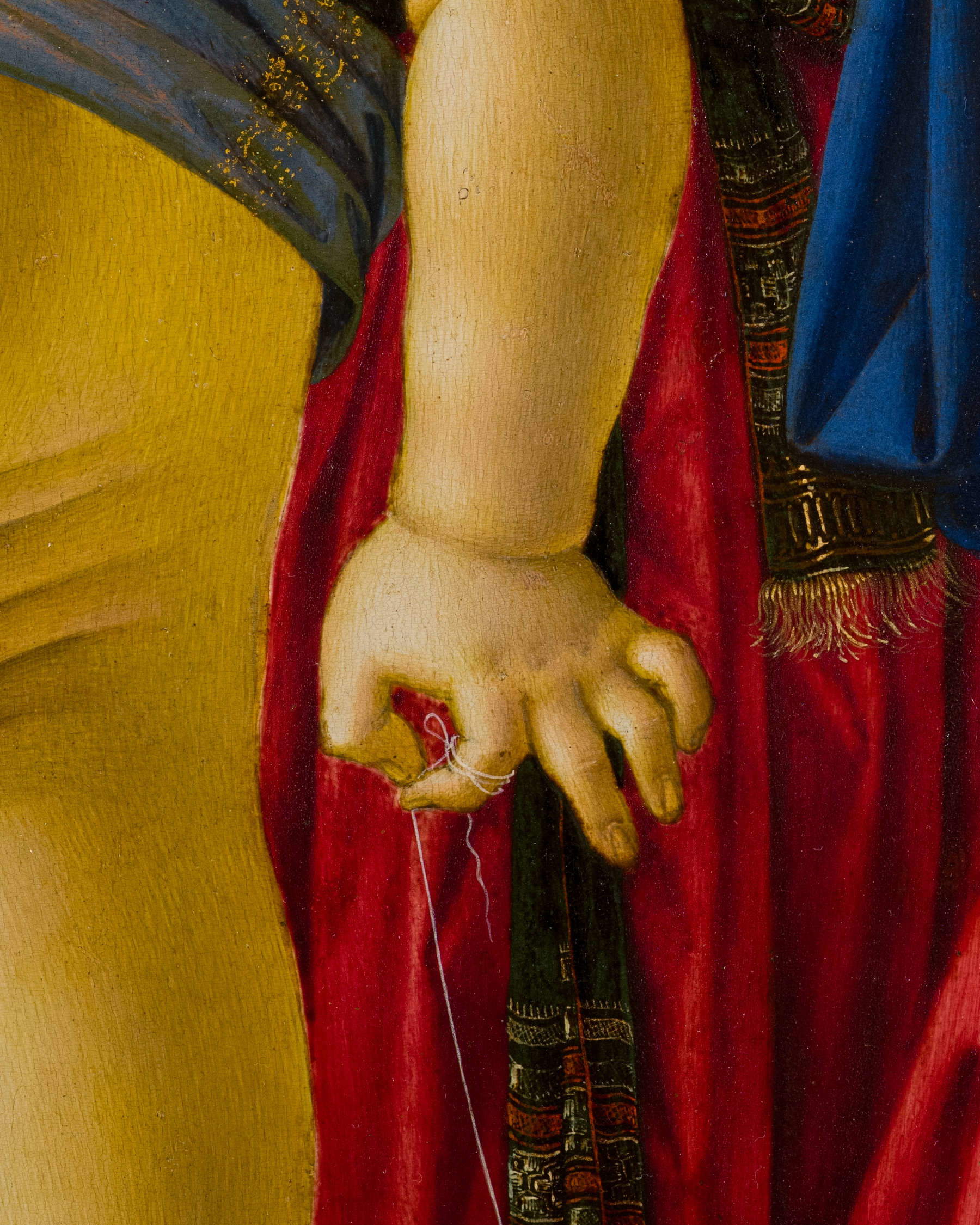
Analysis has also revealed the complexity of the work, located at the intersection of different artistic traditions. While the painting bears witness to the link with the culture of the Florentine workshops and the teaching of Verrocchio, influences traceable to the Flemish tradition emerge, particularly evident in the attention to detail, the rendering of light and the descriptive precision of certain elements. This synthesis of different models represents one of the most interesting aspects of Perugino’s early phase. Before becoming the great interpreter of Umbrian painting and one of the most sought-after masters of Renaissance Italy, the artist in fact built his own language through constant comparison with the main artistic currents of his time.
The work in the Musée Jacquemart-André documents precisely this moment of formation and stylistic definition. While remaining linked to Florentine experiences, the panel already shows that search for harmony, balance and serenity that would characterize the artist’s maturity and that would also profoundly influence the young Raphael, his pupil and future protagonist of the Renaissance.
|
| Paris, young Perugino's Madonna and Child restored |
Warning: the translation into English of the original Italian article was created using automatic tools. We undertake to review all articles, but we do not guarantee the total absence of inaccuracies in the translation due to the program. You can find the original by clicking on the ITA button. If you find any mistake,please contact us.