





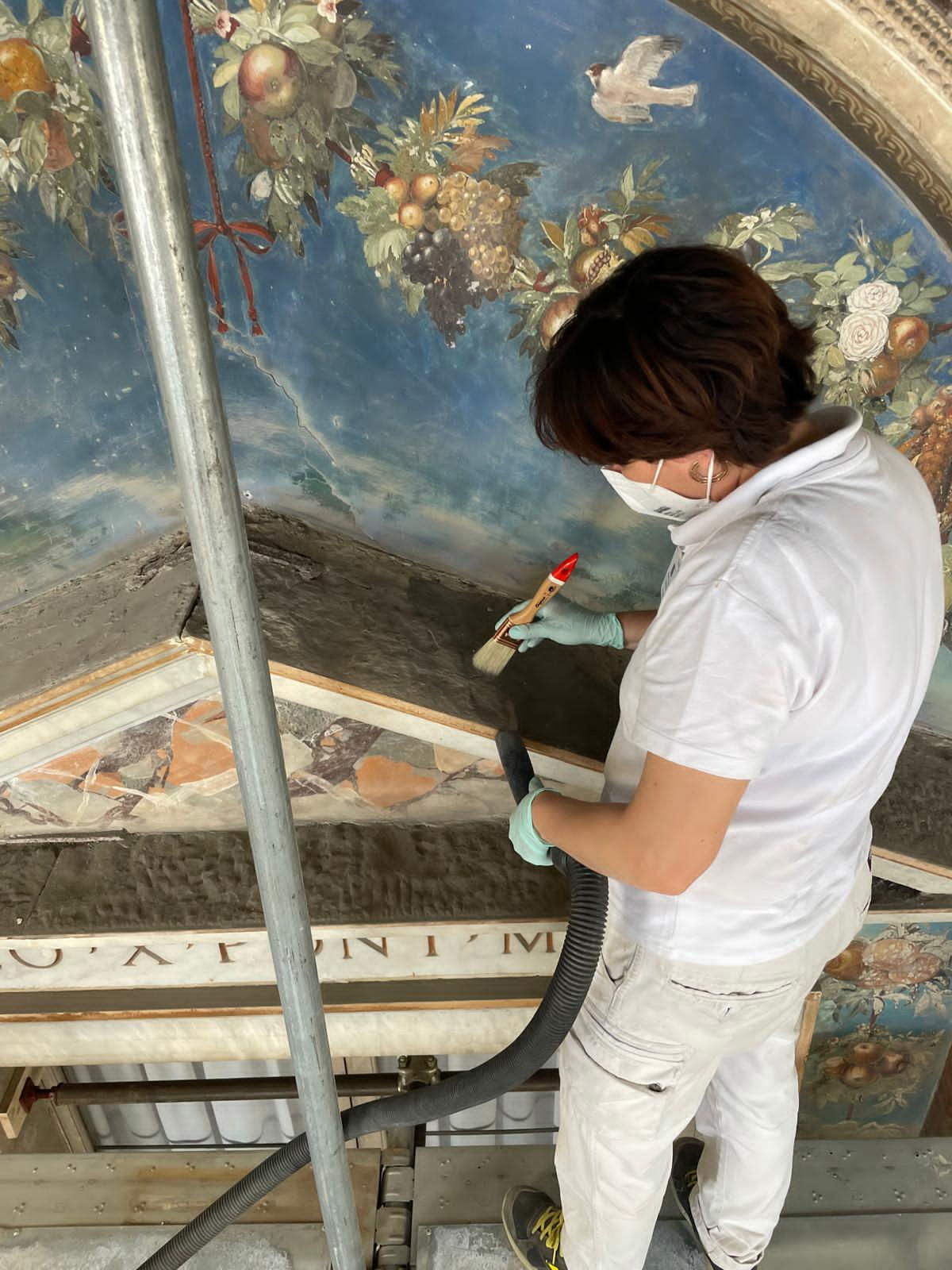
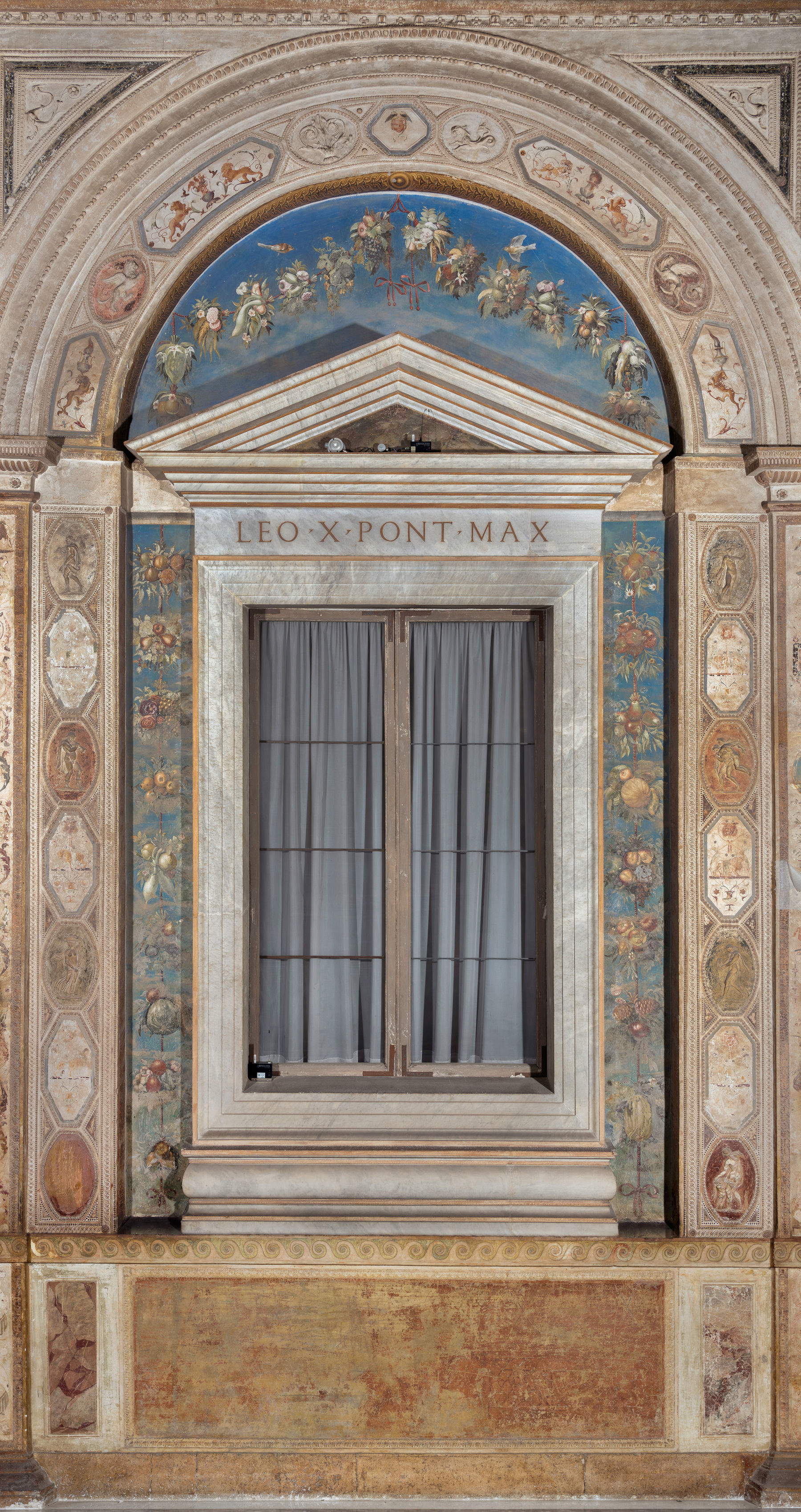
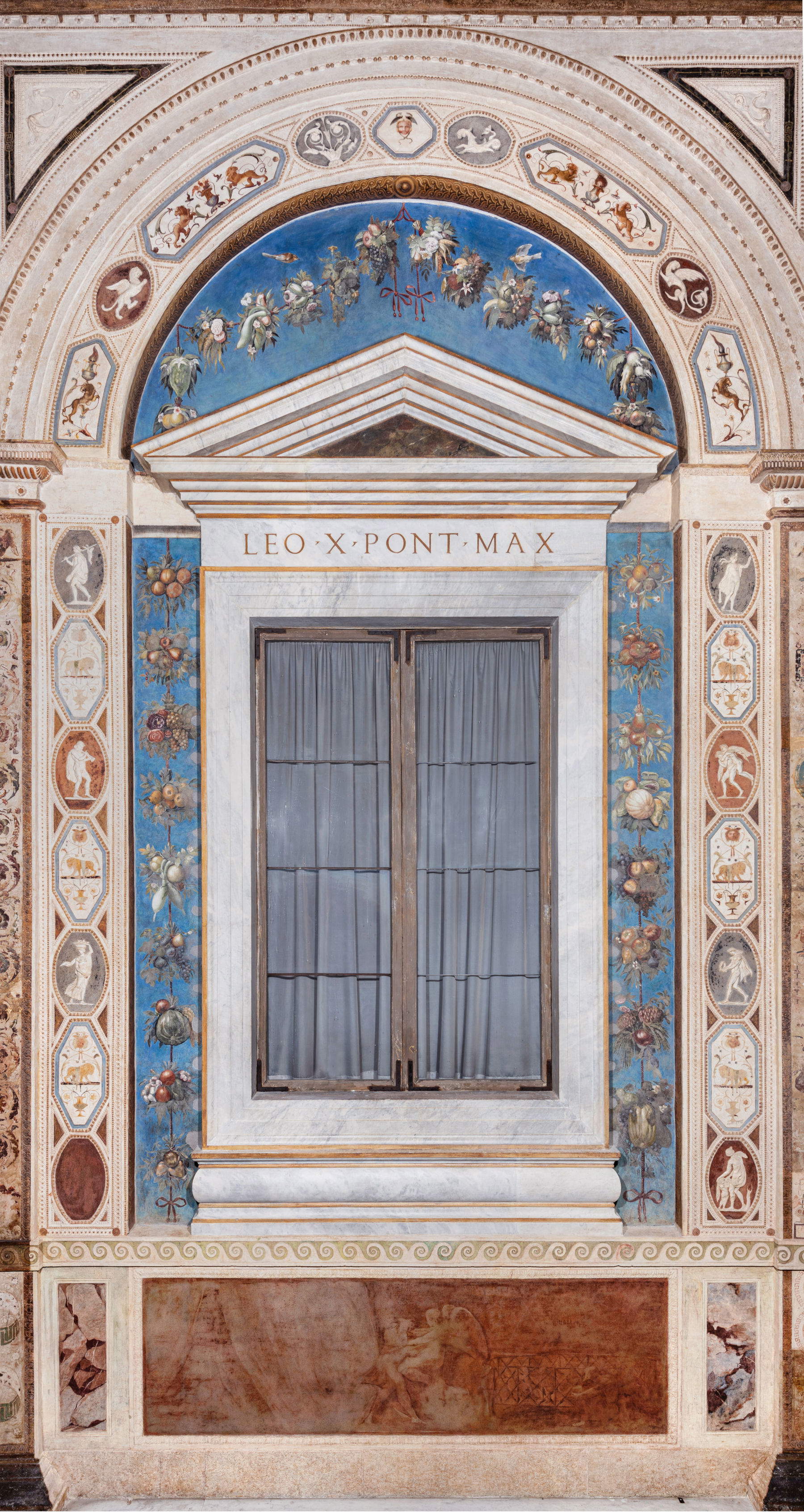
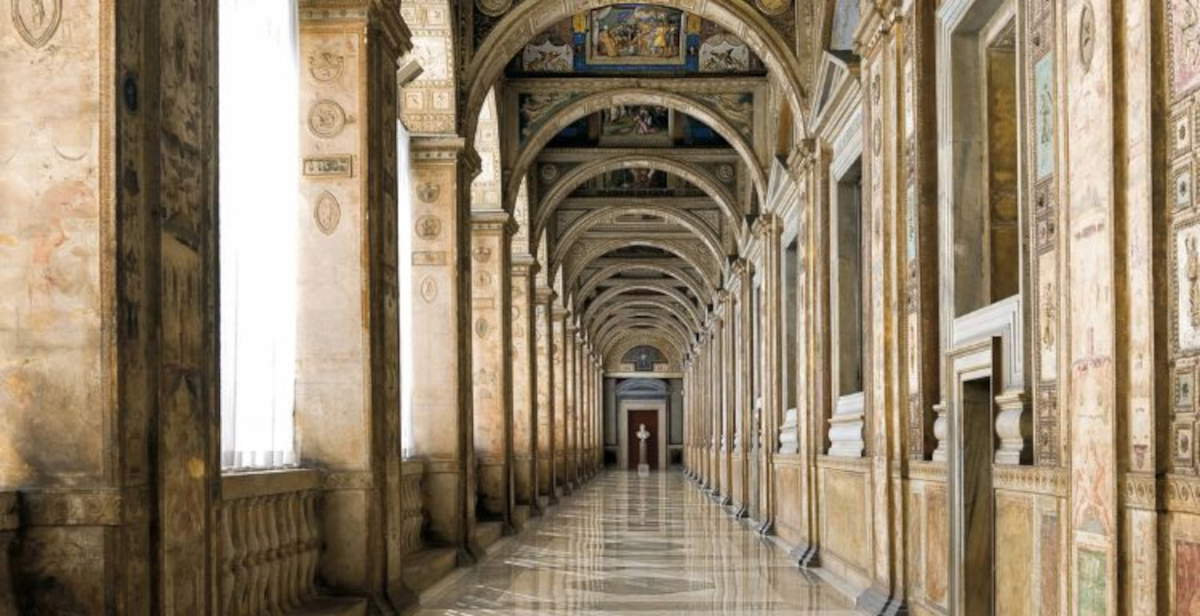
On Wednesday, June 24, 2026, at 11:00 a.m., at the Lapidary Gallery of the Vatican Museums, the restoration project forthe west wing of the Second Loggia—known as the Raphael Loggia—on the second floor of the Apostolic Palace, overlooking the Courtyard of San Damaso, was presented. The project, expected to last five years, is supported by the World Monuments Fund and involves one of the largest sections of the decorative complex. The operational methodology is based on the pilot project carried out on the sixth bay, divided into two phases spanning 2019–2020 and 2023–2024.
The Loggia, designed by Raphael Sanzio and decorated between 1517 and 1519 by his students for Pope Leo X de’ Medici, measures 65 meters by 4 and is divided into thirteen bays, each featuring four biblical scenes on the vault, ranging from the Old Testament to the New Testament. The complex is considered one of the foremost examples of the figurative style of the early 16th century. Among the artists involved in the cycle are Giulio Romano for the biblical scenes on the vaults, Giovanni da Udine for the botanical elements and grotesques, along with contributions by Perin del Vaga.
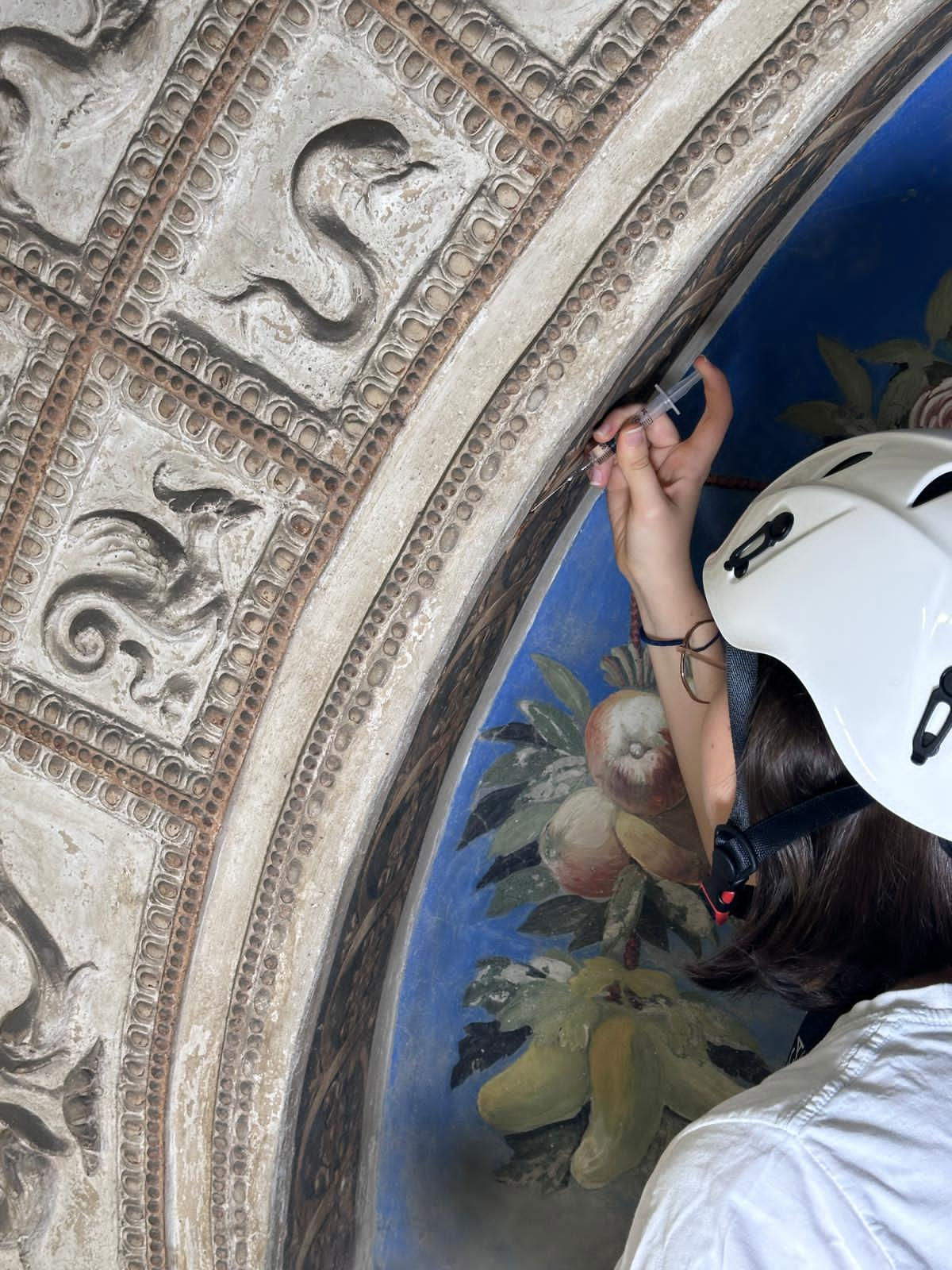
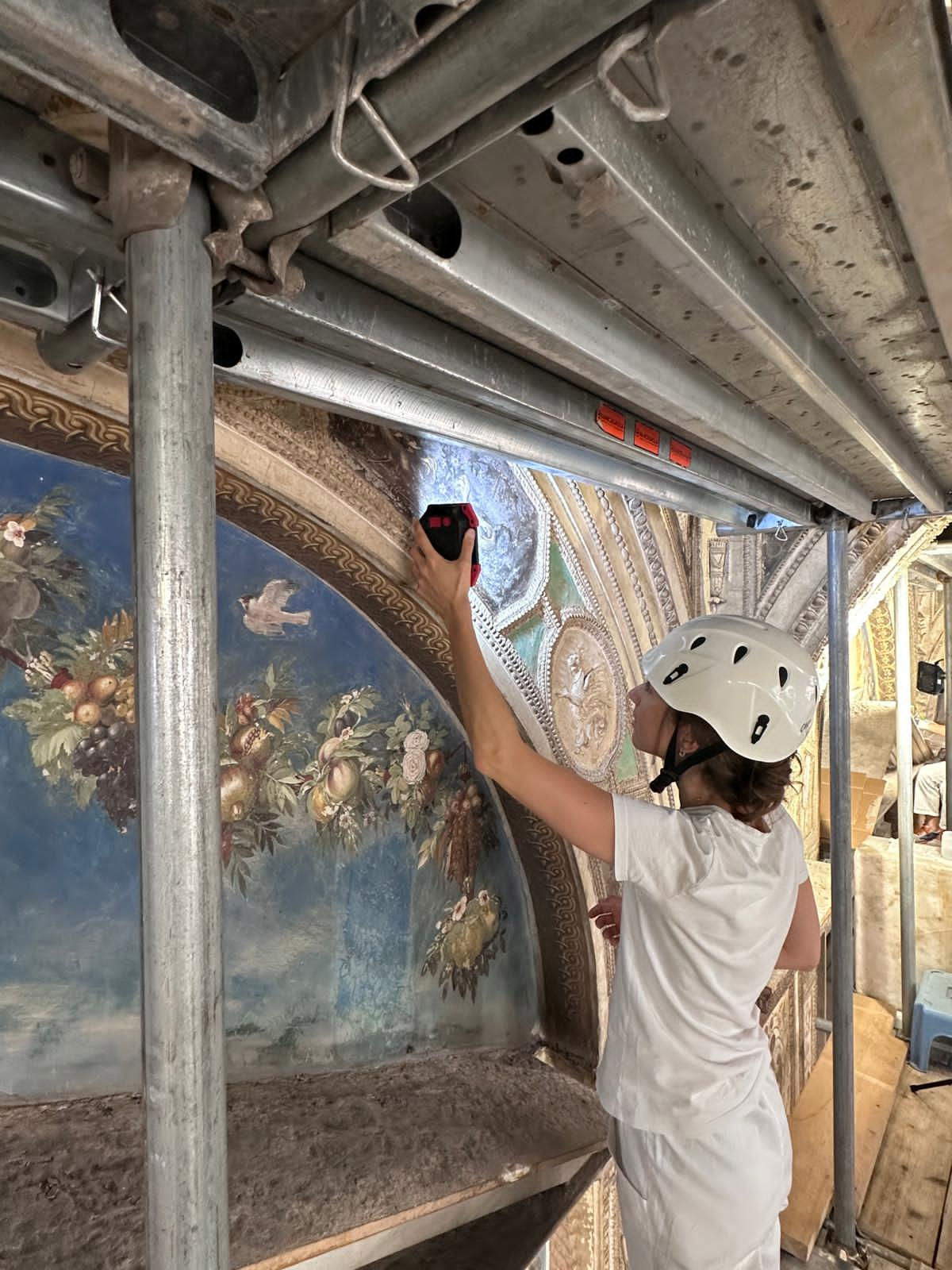
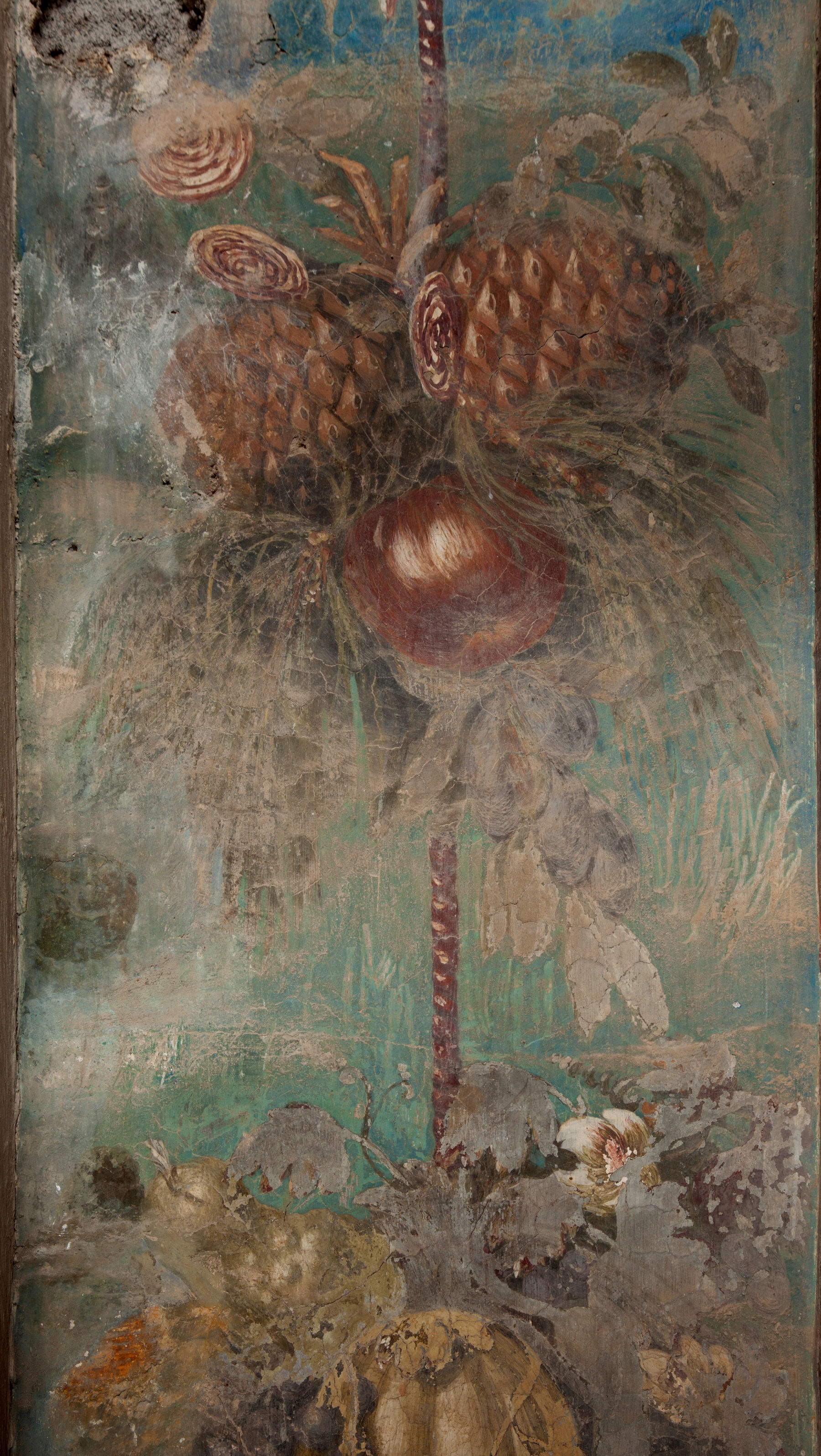
In 1813–1814, the arches on the east side were closed off with stained-glass windows according to a design supervised by Antonio Canova. This intervention altered the microclimate, reducing air circulation and causing moisture from the upper floor to stagnate. The restoration techniques include dry application on Roman stucco, tempera or lime finishes on fresco bases, and the use of azurite, within a complex conservation framework. The project involves more than twenty restorers from the Vatican Museums, in collaboration with the World Monuments Fund and with the support of the Stephen A. Schwarzman Foundation, in coordination with the Vatican Museums Directorate, the Department of 15th–16th-Century Art, the Office of Scientific Research, and the Office of the Conservator of the Vatican Museums. Upon completion of the work, a new lighting system and new glass panels will be installed, funded by the Patrons of the Arts in the Vatican Museums. The measures will include UV filtering and heat reduction, with the aim of improving conservation conditions and the visual clarity of the space.
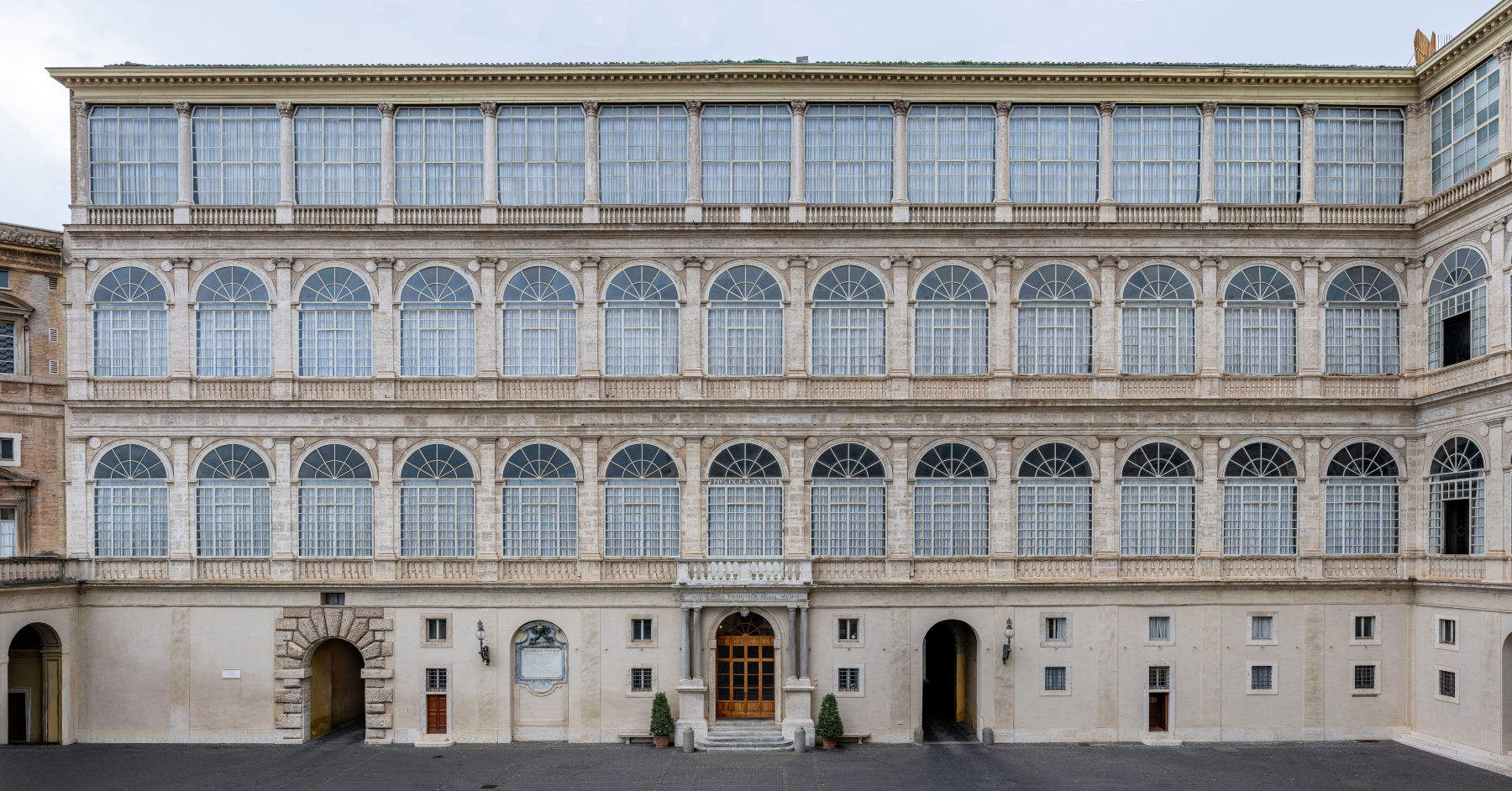
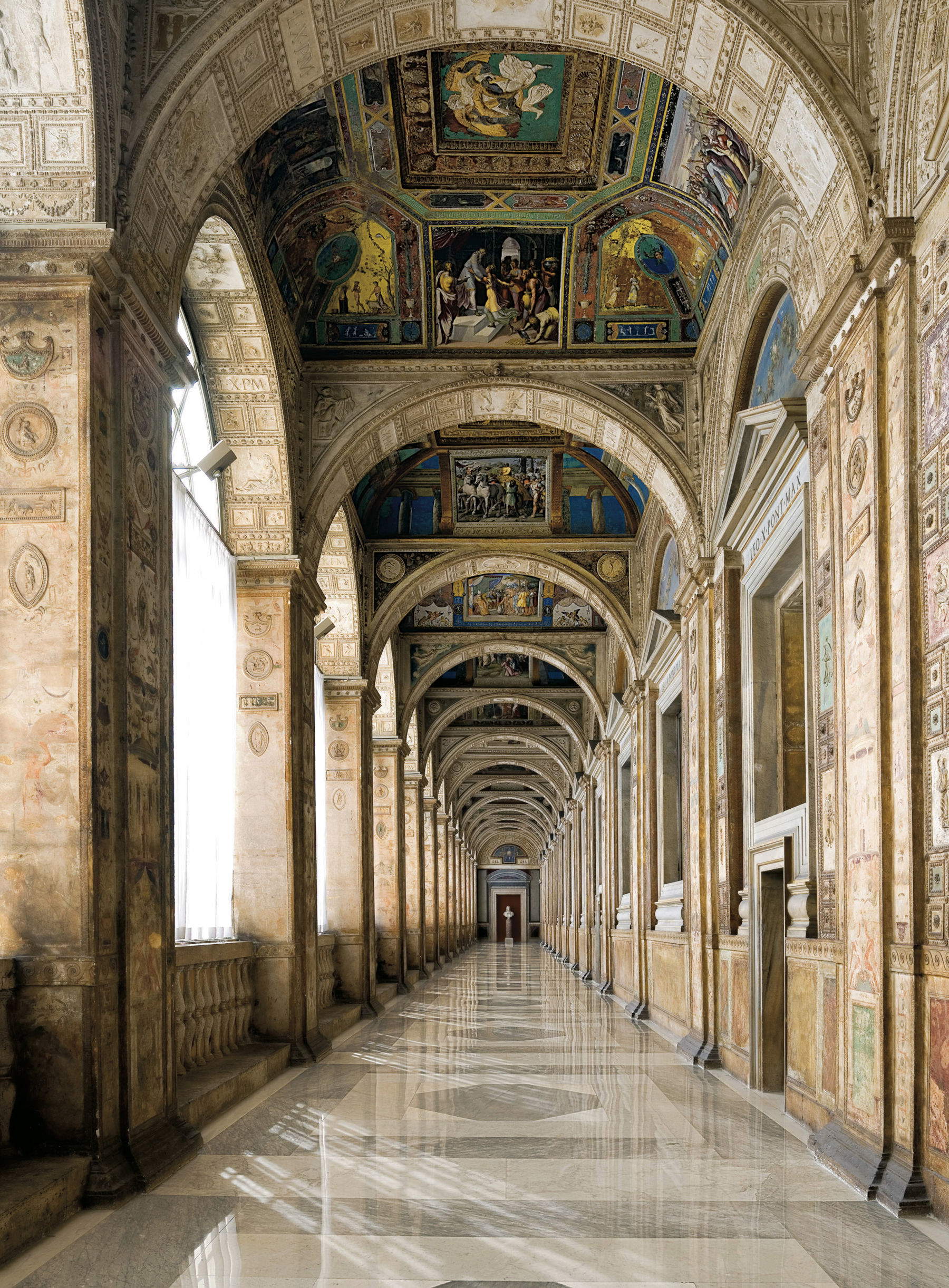
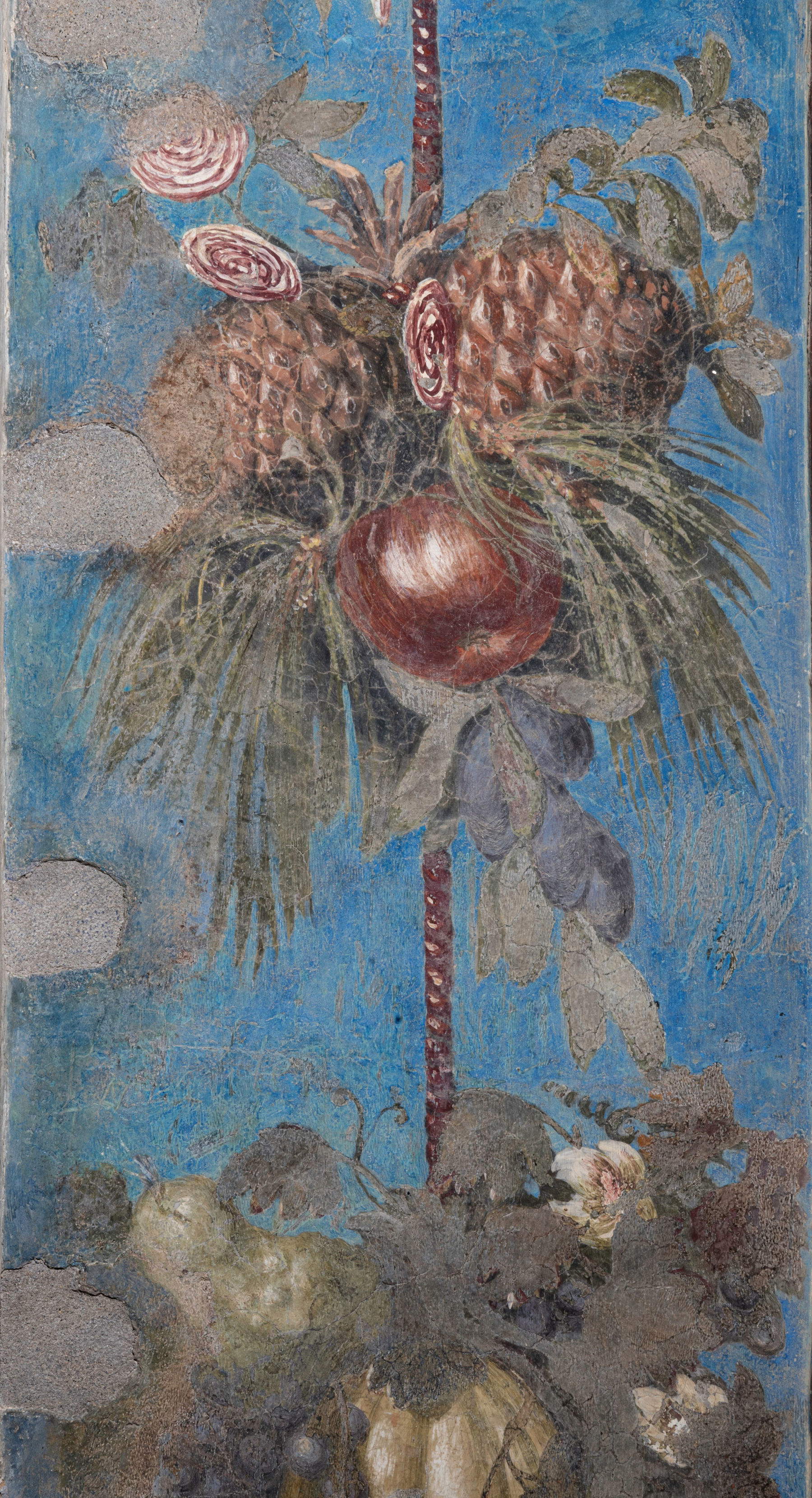
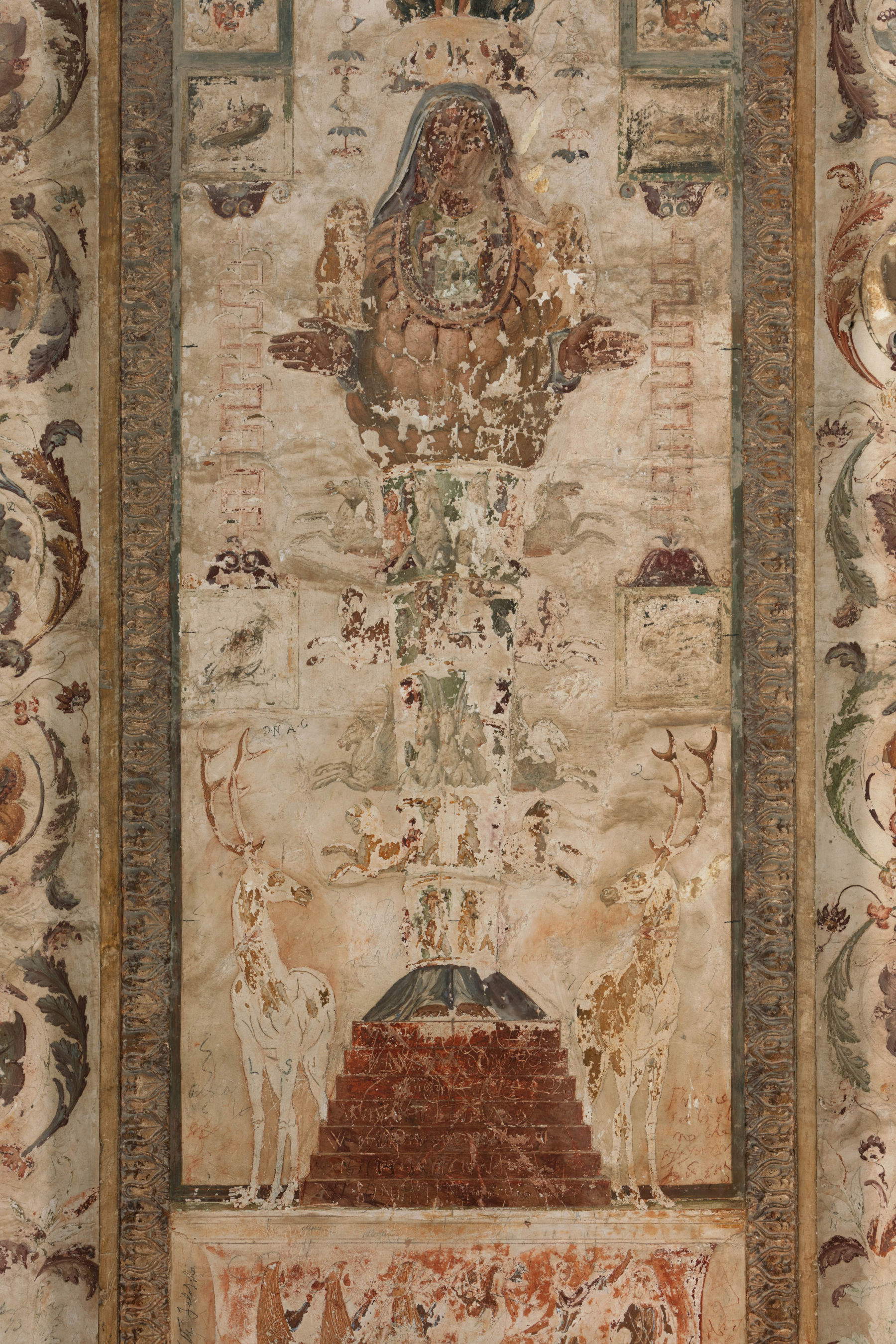
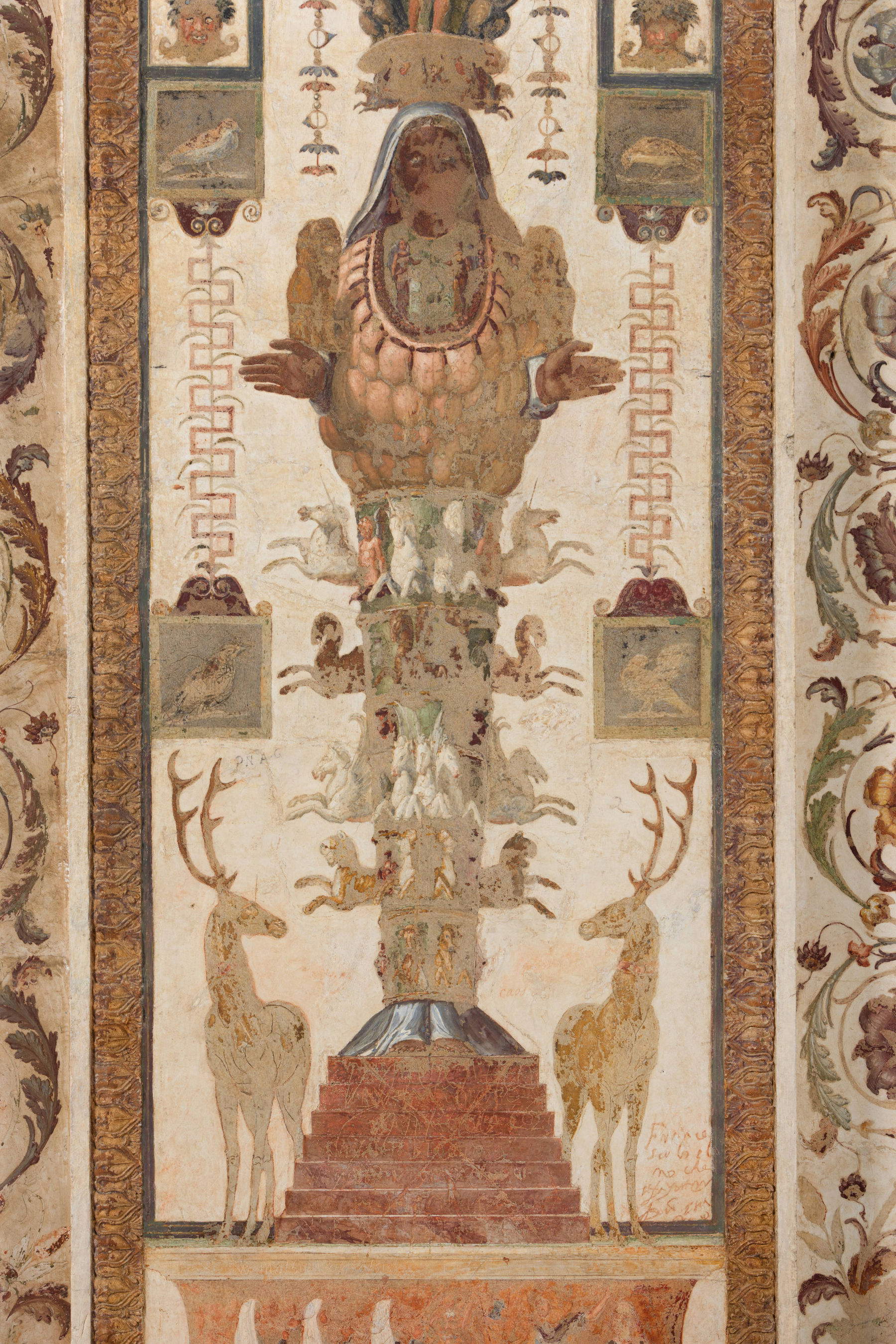
“It has always been traversed by cardinals, high-ranking prelates, and ambassadors visiting the Pope,” explains Barbara Jatta, Director of the Vatican Museums, “admired and copied by the greatest Italian and foreign artists and an essential destination on the Grand Tour, the Loggia is located within the premises of the Holy See and the Secretariat of State. The conservation work on this Raphael masterpiece—thanks to an agreement with the WMF, made possible by the invaluable support of the Stephen A. Schwarzman Foundation—will mark a defining moment in the history of restoration as well as in the history of Italian Renaissance art. We are grateful to the WMF and the Stephen A. Schwarzman Foundation for their generous support of $5.5 million for this Vatican Museums project. The restoration project also benefits from the support of the Patrons of the Arts in the Vatican Museums, who have been supporting the Vatican Museums for over 40 years.”
“Raphael’s Loggia is one of the most important and delicate artistic complexes in the world. It is a place where one can admire, in magnificent detail, the full creative ambition of the Renaissance and the genius of Raphael and his workshop,” said Bénédicte de Montlaur, President and CEO of the World Monuments Fund. “Together with the Governorate of the Vatican City State and the Stephen A. Schwarzman Foundation, the WMF aims to share this extraordinary heritage with the world through an innovative conservation project, extensive documentation for the general public, and a training program on the conservation of wall paintings for cultural heritage professionals from around the world. For this project, $5.5 million will be allocated to the restoration of the west wing of the Second Loggia, known as the Raphael Loggia. Meanwhile, the WMF’s entire initiative, “Legacy of Raphael: The Vatican and Beyond”—which includes the restoration, training activities, digital documentation, outreach, and other ongoing projects in the Vatican—is made possible by a generous donation of $14.275 million from the Stephen A. Schwarzman Foundation.”.
“The most enduring legacy of this project will not only be the restored masterpieces, but also the conservators who will be trained along the way,” adds Stephen Schwarzman, President of the Stephen A. Schwarzman Foundation. “Raphael’s Loggia belongs to all of humanity, and by investing in the people who will learn scientific conservation methods at the Vatican and the Villa Imperiale in Pesaro, we are helping to preserve not only this work but also countless other artistic treasures around the world for future generations. Developing these skills represents one of the most enduring investments we can make in our shared cultural heritage.”
“Surface examination,” explains Paolo Violini, Chief Restorer of the Vatican Museums’ Laboratory for the Restoration of Paintings and Wooden Objects, “highlighted the need to adopt a ‘dry’ cleaning method, in order to preserve the delicate original layers and their fragile remnants, which are extremely sensitive to chemical procedures. Laser technology has responded admirably to this need. After a series of tests with various types and different modes, an ‘active fiber’ model was chosen, which is highly versatile in managing the cleaning level, allowing for accurate and detailed control.”
 |
| Rome: Restoration of the West Wing of Raphael’s Loggia at the Vatican Museums Has Begun |

Warning: the translation into English of the original Italian article was created using automatic tools. We undertake to review all articles, but we do not guarantee the total absence of inaccuracies in the translation due to the program. You can find the original by clicking on the ITA button. If you find any mistake,please contact us.






















 IT
IT FR
FR DE
DE ES
ES CN
CN


