




by Noemi Capoccia 19/04/2026



Categories: Archaeology / Disclaimer
Sixteen petroglyphs and cave paintings, dating from prehistoric to postclassic times, were identified at the El Venado site in Hidalgo state, Mexico, during archaeological preservation work related to the new rail line.


In the course of the archaeological preservation activities related to the construction of the Mexico City-Querétaro passenger train, promoted by the Secretaría de Cultura of the Government of Mexico through theNational Institute of Anthropology and History (INAH), new graphic-rock manifestations have emerged at the site called El Venado, identified as Site 77 and located on the eponymous relief in the state of Hidalgo, Mexico.


The discovery involves a total of sixteen elements, including petroglyphs and cave paintings, which, based on stylistic characteristics, could be traced to a very broad chronological span, between prehistoric and postclassic Mesoamerican times, dating from AD 900 to 1521. The evidence is distributed on two overhanging cliffs, near the Tula River and La Requena Dam, in the vicinity of the communities of San José Acoculco (Atotonilco de Tula) and Benito Juárez, in the Tepeji territory of Río de Ocampo.
The figures identified in the area near the dam present a remarkable iconographic variety. These include a figure depicted in profile, characterized by a Greek on his chest and a chimalli, a shield, held in his hand. Another figure appears upright, wearing a headdress and anteojeras (blinkers) similar to those associated with the deity Tláloc, while holding an object that can be interpreted as a macana (a kind of clavas). A further subject shows a plume and outstretched limbs, with a circular element placed between the legs. These representations are complemented by a face equipped with a nariguera (nasal ornament) and feathered headdress, a quadruped identifiable perhaps with a deer, and a negative white band inserted between red backgrounds.




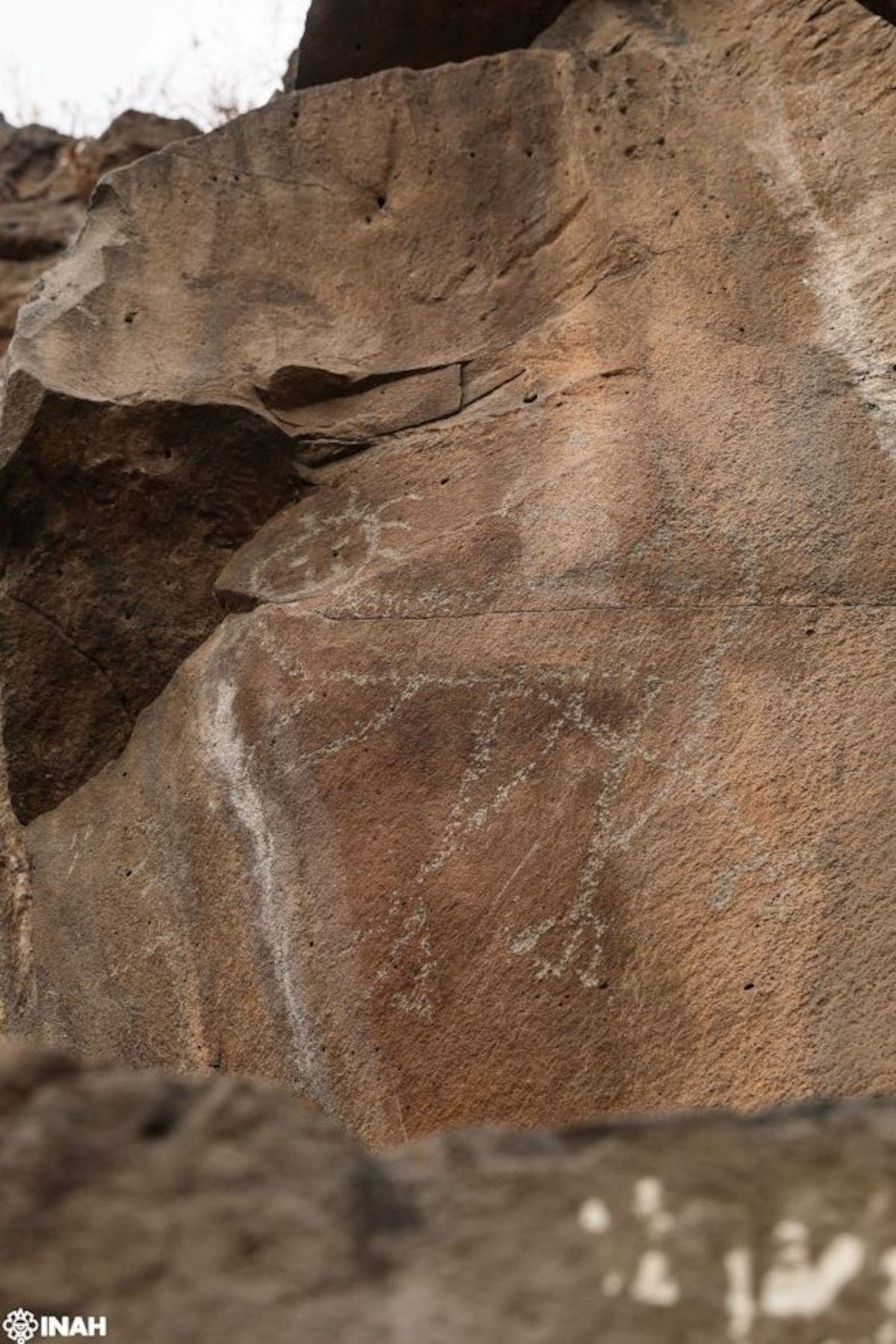
Also distinguishable within the same rock shelter are a stylized anthropomorphic figure, made in red pigment, and a shape that could be interpreted as a snake or a falling lightning bolt. Some of these expressions appear partially faded today due to the action of time, but their origin may date back more than four thousand years.
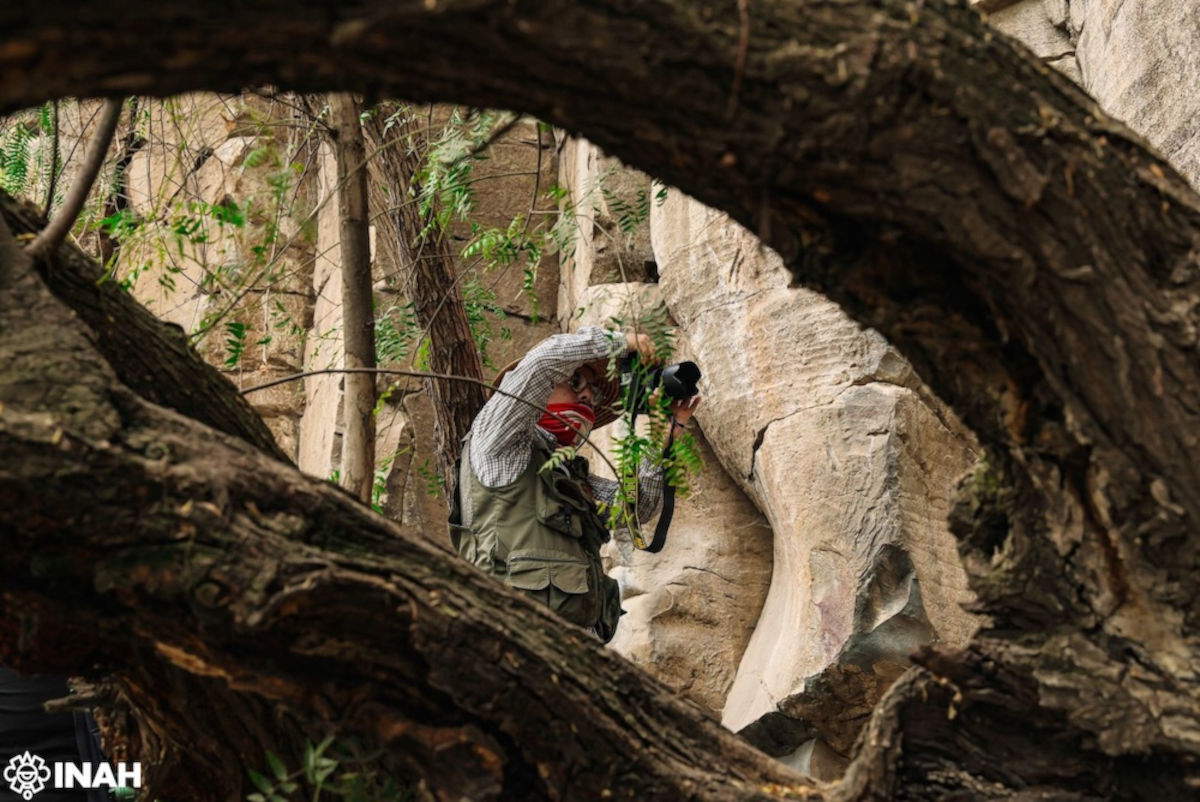
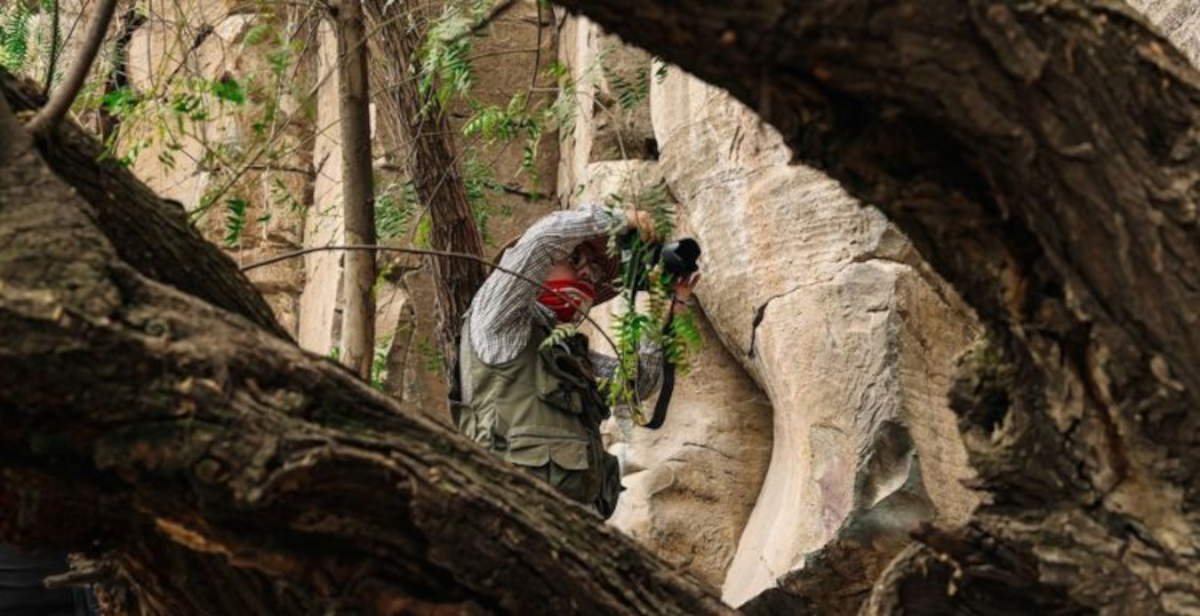
The coordinator of the archaeological preservation project, Víctor Francisco Heredia Guillén, pointed out that the elements were identified on January 3, 2026. The paintings would have been executed through pigments of mineral or plant origin, while the petroglyphs appear to have been made through the pointillism technique. Archaeologist Abel José Romero García, who was also involved in the project, pointed out the good state of preservation of the paintings and advanced the hypothesis that those from the pre-Hispanic period could be connected to the final phase of the city of Tula. Following the discovery, the displays were subjected to photographic documentation and photogrammetric survey, operations that will allow for a more in-depth analysis and more precise chronological definition through comparison with other similar examples in the region.
“Thanks to understandings and negotiations between INAH and the Ministry of Defense, it has been possible to safeguard petroglyphs and cave paintings, while allowing railroad work to continue without interfering with the remains,” said Heredia Guillén. The coordinator also emphasized that the attention shown by the federal presidency to these remains may foster greater awareness among state and local authorities of the need to protect cultural heritage even in the context of infrastructure projects, highlighting the possibility of coexistence without direct impacts.
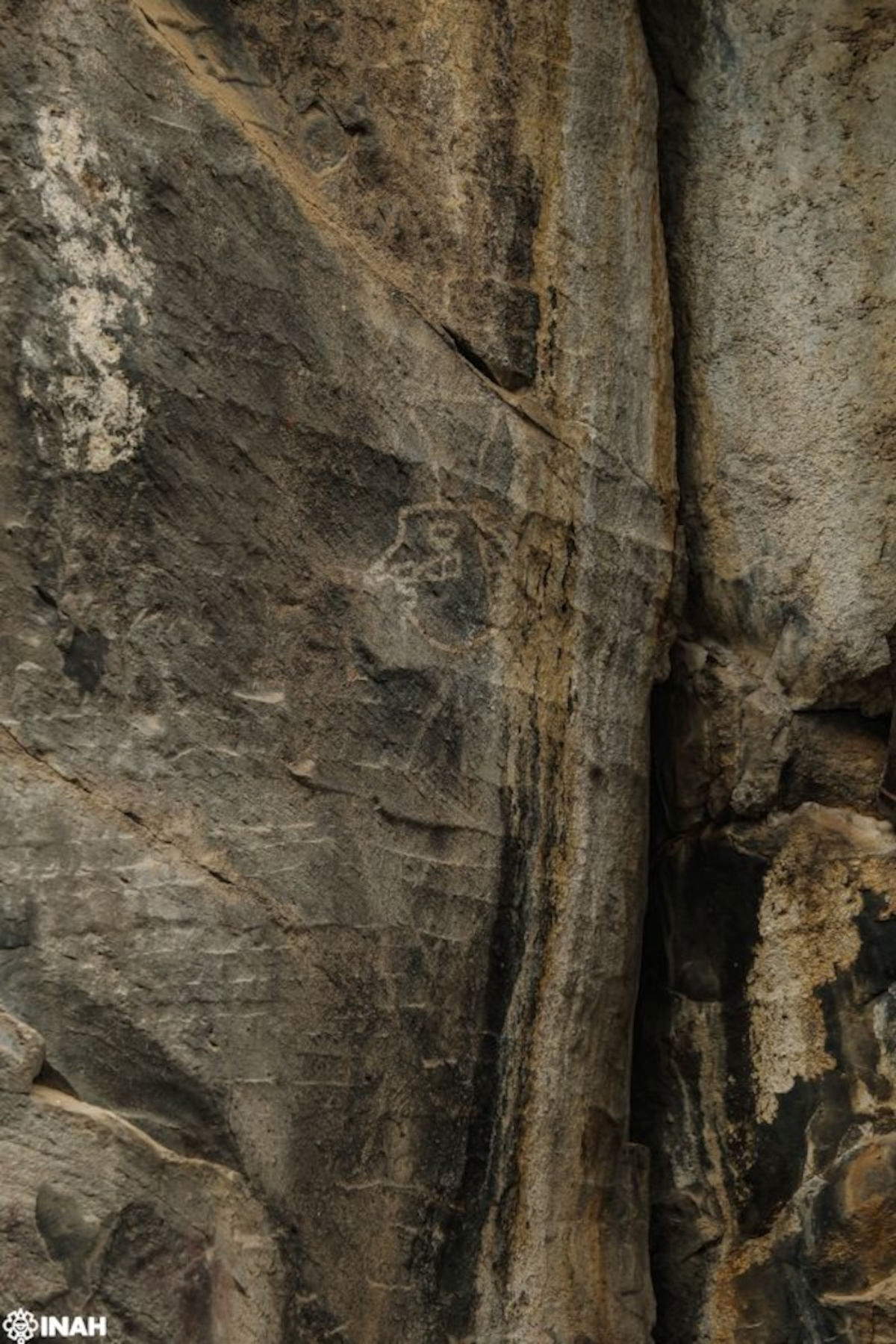
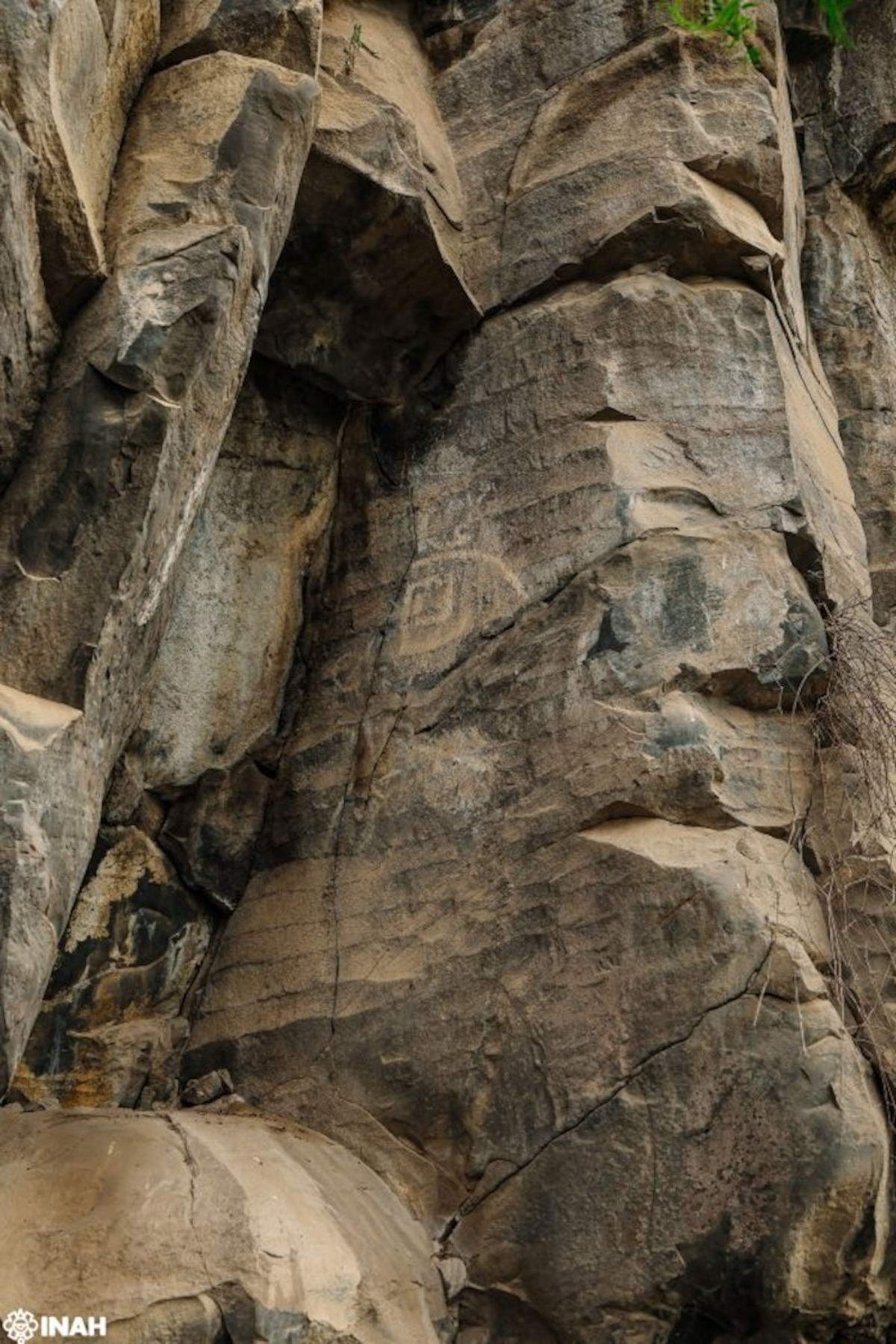
The El Venado site is not unprecedented to archaeological research. It had already been recorded in the 1970s as part of the Proyecto Arqueológico Tula - Tula Archaeological Project, coordinated by INAH researcher emeritus Eduardo Matos Moctezuma. On that occasion, a painted figure referable to a deer was identified, an element that later gave the relief its name. The location of the rock manifestations suggests a possible function of a mythical-religious nature, perhaps related to phenomena of an astronomical or calendar-related nature.
Additional figures have been documented near the Tula River. Among these again emerges the depiction of a deer, together with a figure equipped with tusks, antennae, breastplate and nose ring similar to those of Tláloc, but with bird-like lower limbs. Such iconography recalls patterns attributed to the Mogollón culture, which developed between the southwest of the present-day United States and northern Mexico, and was already attested at some sites in the state of Puebla. A figure with an anthropomorphic face and hair, equipped with four limbs resembling those of a bird or the hooves of a horse, has also been identified. Based on these features, a possible date to the time of contact with the Spaniards is speculated. These latter features were located on May 15, 2025, although they were already known to local communities.
The original route of the Mexico-Querétaro railroad line included a passage through the area occupied by the rock manifestations. In October 2025, Mexico’s President Claudia Sheinbaum Pardo announced that the route would be modified, motivated by the need to preserve the site, including the impossibility of relocating the paintings to a museum setting.
 |
| Mexico, new cave paintings from prehistory to 1521 AD discovered during work on Mexico-Querétaro train |
Warning: the translation into English of the original Italian article was created using automatic tools. We undertake to review all articles, but we do not guarantee the total absence of inaccuracies in the translation due to the program. You can find the original by clicking on the ITA button. If you find any mistake,please contact us.