




by Redazione 15/07/2026



Categories: Archaeology / Disclaimer
The campaign launched in October 2025 to unearth the Roman theater has come to an end. Original steps made of Botticino stone, medieval structures, and tombs have been uncovered. Excavations will resume in the fall and conclude in the spring of 2027.


The first phase of the archaeological excavation campaign at the Roman theater in Brescia, which began on October 27, 2025, as part of a broader project for the restoration, major maintenance, and enhancement of one of the most important performance venues in northern Roman Italy, concluded last week. The conclusion of these activities marks a significant step in the process of rediscovering the monument, which is set to continue over the coming months until its completion, scheduled for spring 2027. The project was sponsored by the Superintendence of Archaeology, Fine Arts, and Landscape for the provinces of Bergamo and Brescia and was directed by archaeologist Serena Solano. The excavations are part of the theater’s restoration program funded by the Ministry of Culture with an allocation of 1.5 million euros, as previously announced in February 2024.

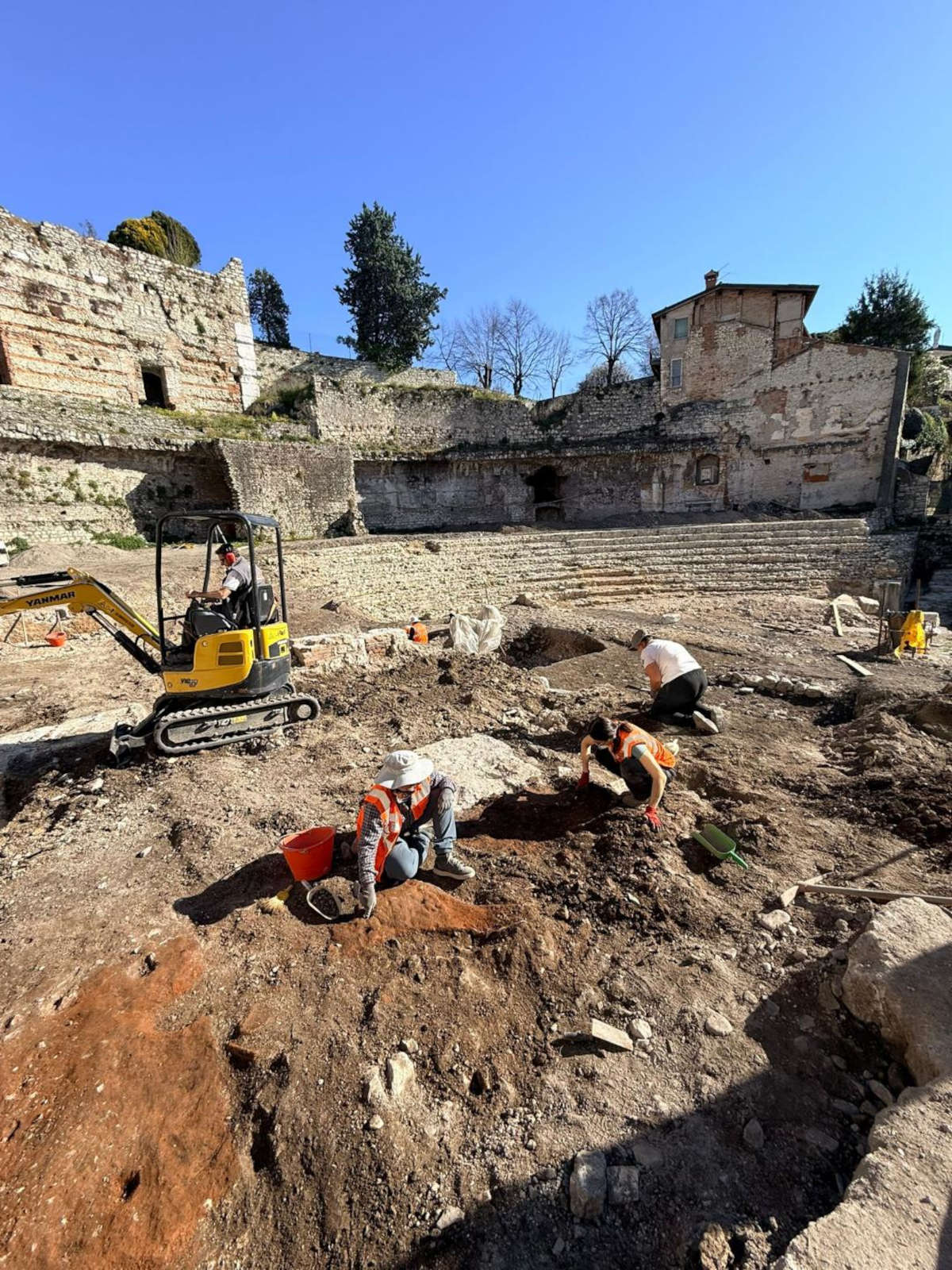
Field operations were entrusted to the archaeological firm AR/S Archeosistemi of Reggio Emilia, under the scientific direction of Brescia-based archaeologist Ivana Venturini and with operational support from the excavation firm Belleri Silverio & C of Zone. The goal of the campaign was to complete the exposure of the archaeological structures, while improving their state of preservation and laying the groundwork for the future enhancement of the monumental complex.


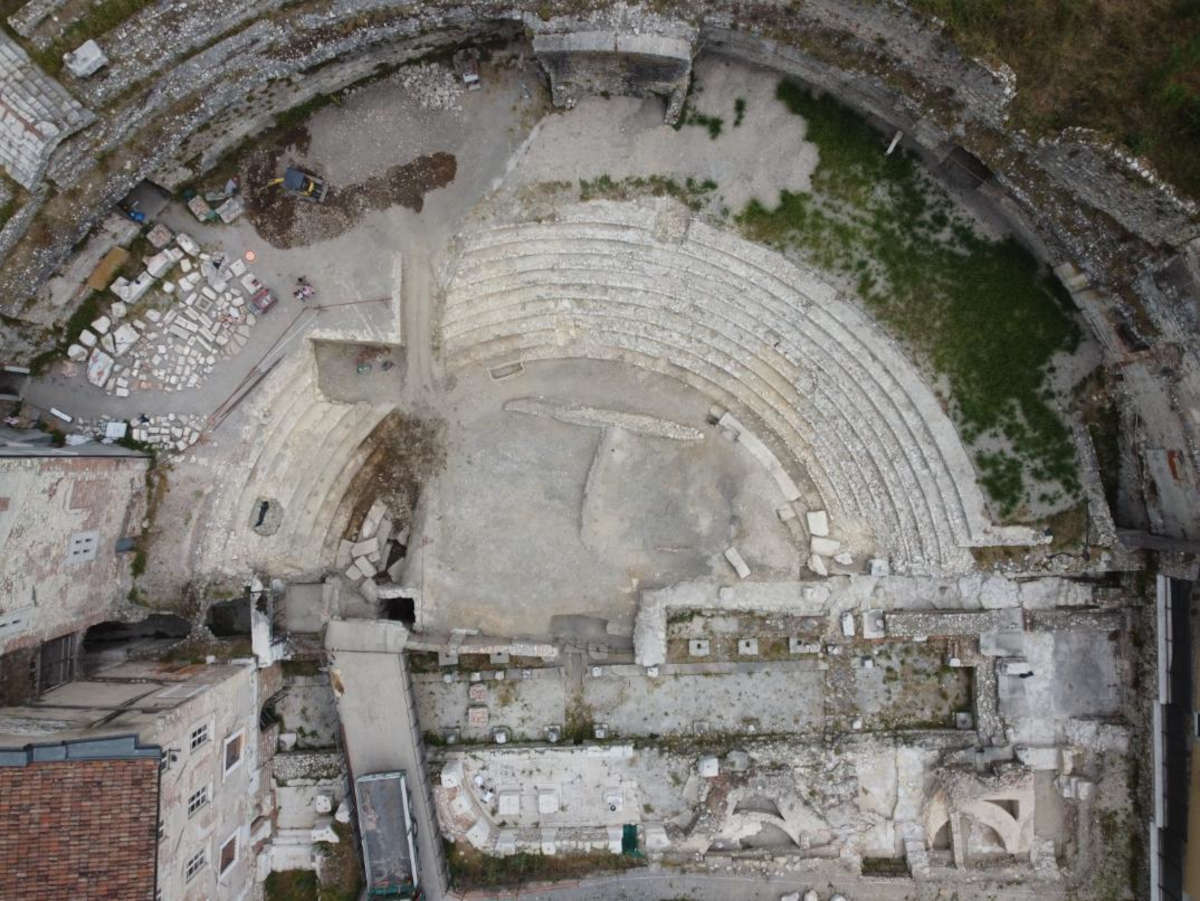
The results obtained over the past few months have already provided a much clearer understanding of the Roman theater’s original layout. Archaeologists have removed the foundations of buildings constructed over the centuries atop the ancient structures, gradually freeing the monument from the layers of later additions that had altered its appearance. Thanks to this work, it has been possible to uncover the entire perimeterof the imo cavea, the lower section of the seating area intended for spectators. Today, large portions of the original steps are once again visible, allowing for a more precise understanding of the layout of the stage area and the section reserved for the audience.

For reasons related to site safety and the logistical aspects of the operations, the excavations have been temporarily halted at a depth of approximately three and a half meters below the current ground level. Archaeologists are now just over one meter from the Roman-era floor level, a depth that will be reached in the next phase of the work. Excavations are scheduled to resume in the fall, following safety measures planned for the summer. The archaeological excavation is set to be completed by spring 2027.
In addition to the gradual uncovering of the Roman structures, the investigations have also provided deeper insights into the medieval phases of the area’s occupation, offering new information on the site’s evolution after the theater ceased to serve its original function. In the central part of the monument, residential and productive structures have come to light that archaeologists have defined as “povere,” characterized by low stone walls originally topped with elevations made of perishable materials. Alongside these elements, hearths and functional surfaces were identified, attesting to daily activities carried out in the area during the medieval period.
The research has also brought to light numerous inhumation burials, carried out both directly in the ground and inside stone and brick coffins. The tombs occupied the lower partof the lower cavea and the orchestra area, having been established starting in the 5th century AD atop layers of debris and rubble from the collapsed Roman structures. These findings document the radical change in the monument’s function over the centuries, as the spaces originally intended for performances were gradually transformed into burial grounds and subsequently reused for residential and productive activities.
The most significant discoveries, however, emerged from the deepest levels of the excavation. Archaeologists have identified large, worked stone blocks resulting from the collapse of the Roman building’s monumental structures. In the final days of the excavation campaign, what is considered one of the most important discoveries of the project was also made. Several original steps have resurfaced, still preserved in their original positions, constructed from large blocks of Botticino stone and complete with the staircases that connected the various sections of the cavea. This is a find of particular archaeological value, as the structures are exceptionally well-preserved. It is precisely this state of preservation that fuels the expectation that future excavations may uncover additional steps still perfectly in situ, particularly those belonging to the front rows of the spectator seating.
Future research also focuses on the orchestra area, where archaeologists believe it is possible to uncover the original flooring—consisting of stone slabs from the Roman era—still well-preserved: Before excavation resumes, a series of measures will be carried out to ensure the safety of the area and the preservation of the structures that have been uncovered.
The site’s current configuration will be maintained in the coming months. Among the planned interventions are the reinforcement of the existing footbridge and the construction of a second bridge—an infrastructure deemed essential both for allowing archaeological work to continue and for facilitating the subsequent restoration of the structures. The restoration of the theater is scheduled for 2027 and will be followed by further redevelopment work that will also involve the visitor pathways and the repurposing of the Palazzo Maggi Gambara complex; these projects will be carried out by the City of Brescia.
The entire project is part of a comprehensive program for the restoration and enhancement of the archaeological site, developed by the Superintendency in close collaboration with the City of Brescia and the Brescia Museums Foundation. The goal is to gradually return one of the most significant monuments of Roman Brixia to the city, while simultaneously improving its conservation and public access.
The conclusion of the first phase of the excavations also coincides with the initiatives organized as part of the bicentennial of the discovery of the Winged Victory. On this occasion, the Superintendency will host two public events dedicated to presenting the results obtained during the archaeological campaign. The events are scheduled for Thursday, July 16, at 5:30 p.m. and Monday, July 20, at 3:30 p.m., and will be organized directly by the Superintendence of Archaeology, Fine Arts, and Landscape. In conjunction with these two events, there will be a special opening of the UNESCO corridor on Vicolo del Fontanone, allowing residents and visitors to look out over the Roman theater area and observe the progress of the archaeological research up close.
|
| Roman Theater in Brescia: First Phase of Archaeological Excavations Completed |
Warning: the translation into English of the original Italian article was created using automatic tools. We undertake to review all articles, but we do not guarantee the total absence of inaccuracies in the translation due to the program. You can find the original by clicking on the ITA button. If you find any mistake,please contact us.