





An independent project has transformed the Piacenza Liver, an Etruscan artifact preserved in Piacenza, into an interactive three-dimensional model. Created by developer Lorenzo Andraghetti and 3D artist Luca Tampieri, the work allows for online exploration of the bronze dated to the late second and early first centuries B.C., analyzing both its anatomical features and the forty-two inscriptions describing the Etruscan cosmological vision. The reconstruction is available at https://liver.rasna.dev/it/ and allows the public to be brought closer to the complexity of Etruscan religion without altering its scientific rigor.
The platform also allows users to view the model from any angle, rotating and enlarging it, and to explore the 42 inscriptions engraved on the bronze, accompanied by detailed scientific annotations. Within the site it is possible to delve deeper into the liver and its different sections, each of which features dedicated pages with transcriptions and explanations of the inscriptions, presenting a complete understanding of the structure and cosmological significance of the find.
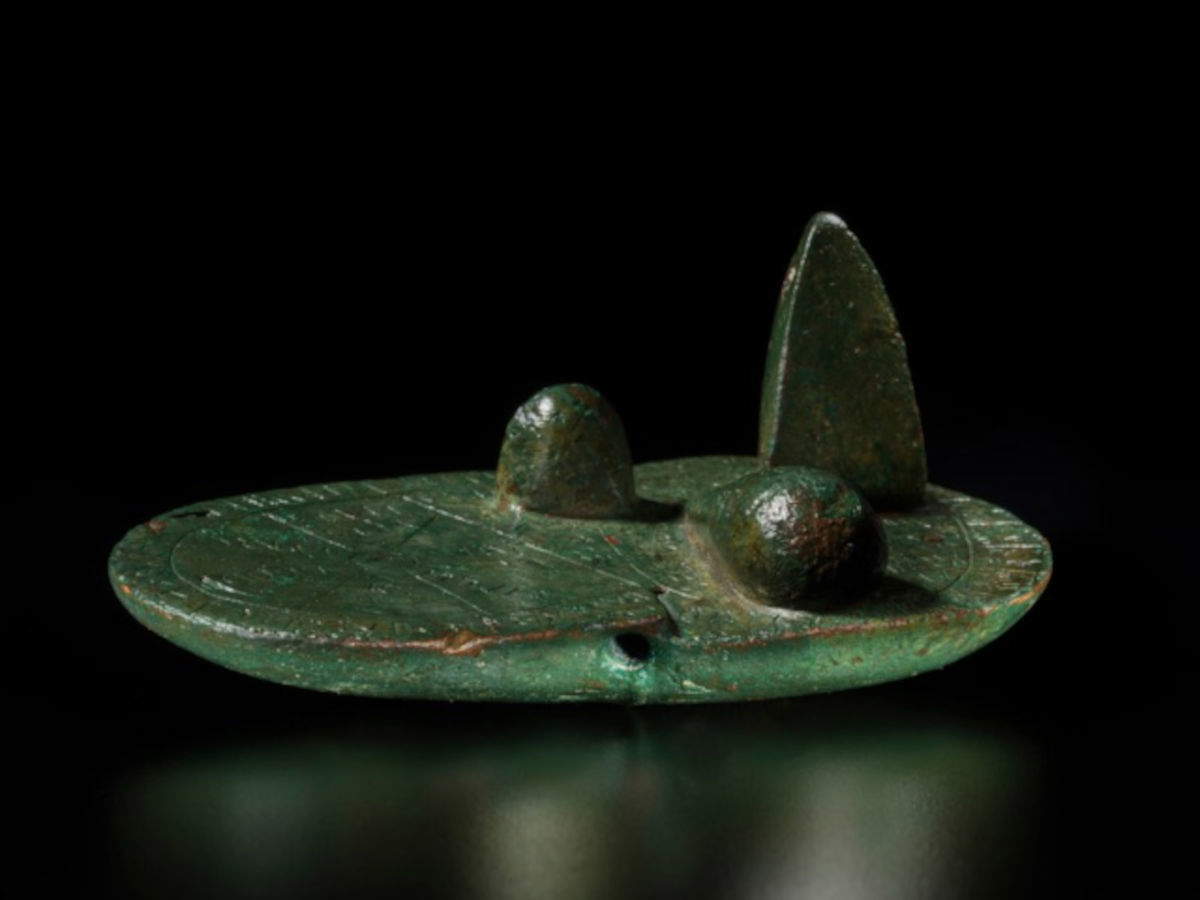
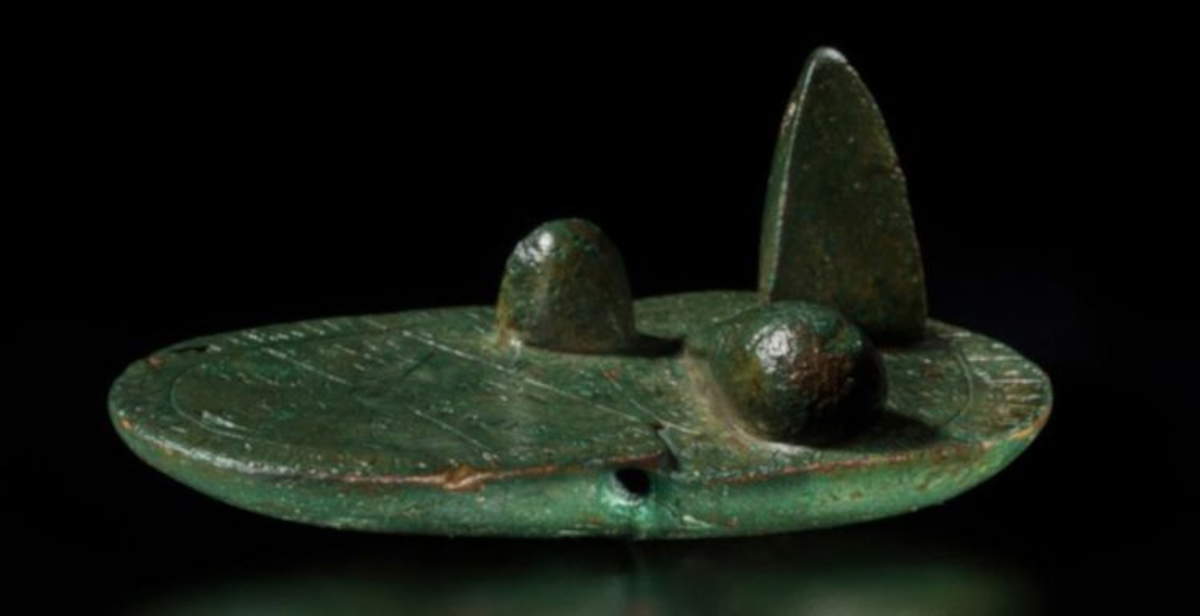
As documented on the Liver .rasna.dev website, which offers an interactive 3D reconstruction ofthe work, the Liver of Piacenza is a bronze model datable to the late second and early first centuries B.C. that translates into physical form theEtruscan art of divination through forty-two inscriptions distributed in nine sectors. Discovered in 1877 near Gossolengo, just outside Piacenza, the find represents one of the most remarkable testimonies to Etruscan religion. The surface of the liver accurately reproduces a sheep’s liver, carefully recording the names of the deities and their sphere of influence, configuring itself as a cosmological map and an interpretive tool for the will of the gods.
Hepatoscopy, also known as haruspicin, was the most widely practiced divinatory art among the Etruscans. Haruspices, priests who specialized in this practice, observed the liver of sacrificed animals by analyzing its shape, color, texture and any special signs. Each part of the organ corresponded to a deity or cosmic realm, and the information gathered during the observation allowed them to draw omens about future events. Hepatoscopy also influenced Roman religion, evidence of a cultural continuity that continued through the centuries.
The Piacenza Liver is characterized by three landmark anatomical protuberances: the processus papillaris, the gallbladder, and the processus pyramidalis. The two processes reproduce actual structures of the sheep liver, the variability of which made each examination unique. The gallbladder, located between the two processes, was considered a “charged” point, associated with the presence of intense or unstable forces. The distribution of the nine cosmological zones on the liver reflects the Etruscan conception of the universe: Heaven houses the supreme deities, Water the atmospheric and marine forces, Earth the terrestrial powers, and the Otherworld the chthonic deities. The Pars Familiaris and Pars Hostilis indicate favorable and unfavorable events, respectively, while the Gallbladder and Middle Section gather generative forces. Finally, the Posterior Zone anchors the entire cosmic system through the Sun and Moon.
The forty-two inscriptions record twenty-nine Etruscan deities, some traceable to Greek and Roman pantheons: Tinia corresponds to Zeus and Jupiter, Nethuns to Poseidon and Neptune, Turan to Aphrodite and Venus. Other figures, such as Thufltha and Cilens, remain specific to Etruscan religion, linked to fate, judgment, night, or boundaries. The position of each deity on the Liver is consistent with its cosmic role, offering a systematic representation of the relationships between divine forces, natural phenomena and human affairs.
The significance of the Liver of Piacenza goes beyond its divinatory function. As the site further states, according to the epigraphic studies of Adriano Maggiani and the cosmological interpretations of Antonio Gottarelli, the find documents structured and methodical religious thought, probably also serving as a training tool for haruspices in training. Recent insights by Antonio Paolo Pernigotti suggest the existence of two systems of celestial division: one related to the diurnal motion of the sun and based on the cardinal axes for the practice of ars fulguratoria, and the other based on the annual motion of the sun to define the abodes of the deities, with the sixteen squares of the outer rim oriented according to the sun’s rising and setting points at the solstices rather than according to the cardinal points.
The bronze model measures about 12.6 centimeters long and 7.6 centimeters wide, faithfully reproducing the proportions of a sheep’s liver. The inscriptions, drawn in an Etruscan alphabet derived from the Greek alphabet, correspond to specific anatomical regions and form a precise map for the haruspices to memorize.
 |
| The Liver of Piacenza lives again in 3D: Etruscan divination at the click of a button |

Warning: the translation into English of the original Italian article was created using automatic tools. We undertake to review all articles, but we do not guarantee the total absence of inaccuracies in the translation due to the program. You can find the original by clicking on the ITA button. If you find any mistake,please contact us.


















 IT
IT FR
FR DE
DE ES
ES CN
CN


