



by Lorenzo Madaro 17/04/2026



Categories: Opinions / Disclaimer
In the 1980s, Italian art conquered the world with the Transavanguardia. Today, among foreignophilia, weakness of the system and new global scenarios, the comparison becomes more complicated: it is not a question of talent, but of structures, vision and ability to make a system. Lorenzo Madaro's opinion.
I constantly ask myself, dealing a lot with artists and works from the 1980s in Italy, what happened in that decade in the contemporary art world of our country and in the international context, when the Transavanguardia artists were transiting to America and to different European geographies - particularly Germany - with excellent feedback, exhibitions, publications, success with collectors and in museums.
Were Chia, Cucchi, Clemente, Paladino and De Maria better than today’s artists, the artists of an Italy that is increasingly struggling to export its talents to the cosmopolitan context? I would not make comparisons, in the sense that even today there are artists of the latest generations with visions, scenarios and energies that could compete in the international context, I think certain names today are brilliant and capable of rethinking so many lexicons and so many imaginaries. Simply the comparison does not hold up because these are completely distant times and the art system was completely different from today’s system in terms of methodology, new power centers, new professions and above all new scenarios, starting with fairs, technologies, different ideas of time, past, present and future. We think that a giant like Ettore Spalletti in certain years became an international artist while still not moving within a 4-kilometer radius in his village outside Pescara. That would be unthinkable today, wouldn’t it? Yet he proudly cherished his principle, his way of life (and life proved him right, evidently). This is to reiterate that at that time it was probably not an artist’s geographical location that determined his standing in the world. Today when everything is more immediate, attainable, seemingly more understandable and usable, the big issue is the paradox of an obsessive disregard for certain artists and certain contexts. Beginning with an enormous defect, indeed a real disease that Italy has, a disease that is getting worse by the day, in institutional contexts but also in editorial, collecting and curatorial ones: foreignophilia. Which, rarely, means internationality, this because unlike certain years - think of Leo Castelli and Ileana Sonnabend, who brought giants made in the USA to Rome and elsewhere but then supported Mario Schifano in New York, or Michelangelo Pistoletto, demonstrating a projectuality in the orbit of exchange - today the galleries that welcome foreign names then do not know how to export Italians. Or maybe they are simply not interesting in doing so.


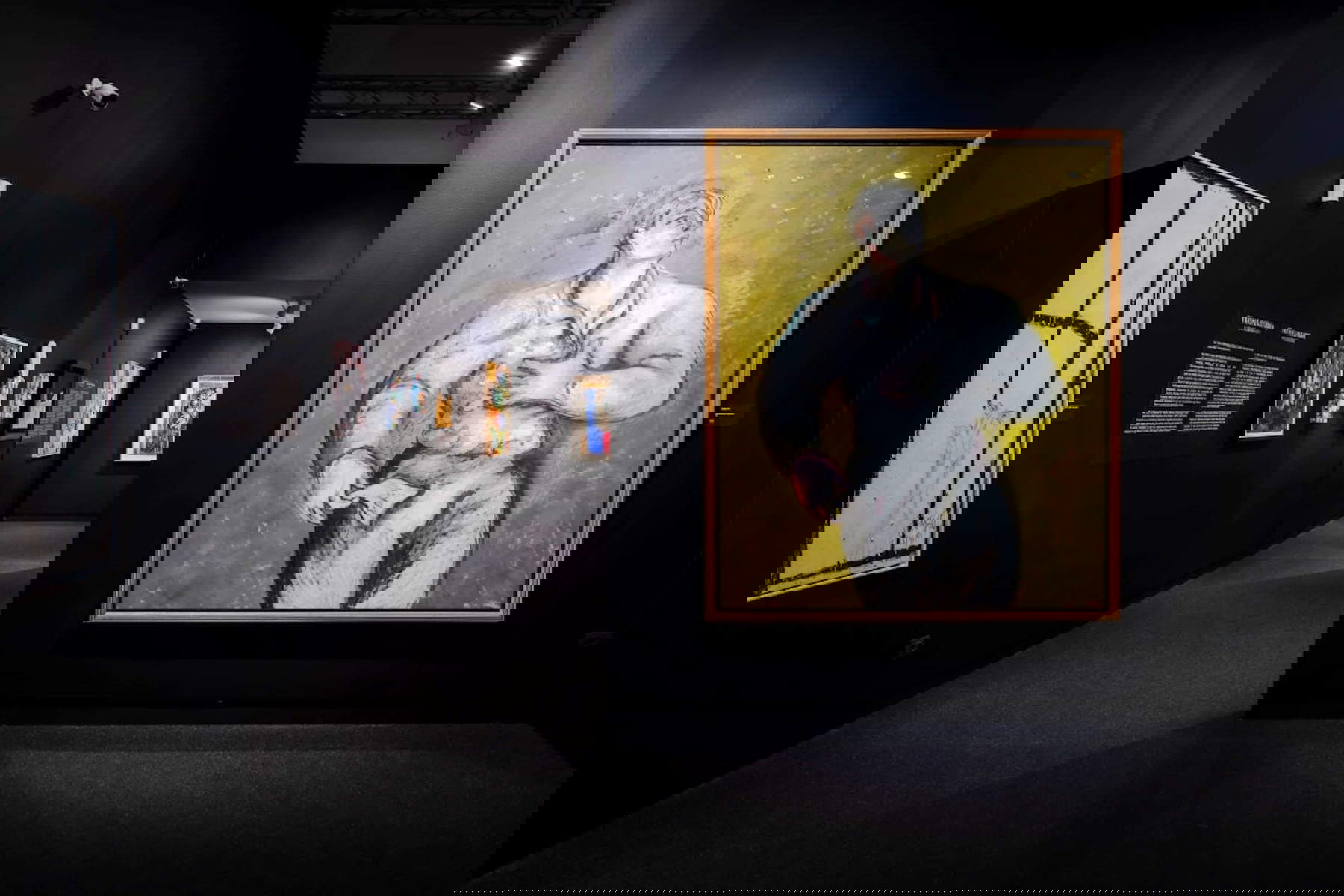
But there is another primary factor to take into analysis: the Italy of the 1980s, the Italy of the Transavanguardia, was one of the great economic powers of the world, it was a country esteemed, respected and taken into consideration for its history but also for its intellectuals, and visual art, as well as cinema, literature and Italian imagery - as well as fashion, of course - were taken into consideration outside national borders. And, above all, paradoxically, at one time, albeit incomplete, perhaps even frayed, there was a contemporary art system. What are we today? But there is more: the Transavanguardia, let us not forget, was born because of the great quality of the artists, because of the darting theoretical insights of Bonito Oliva, but also because of the commitment of gallerists like Gian Enzo Sperone (who will support some of them in the U.S.), Emilio Mazzoli, and a publisher like Giancarlo Politi, who at the time with Flash Art has an international influence. That is to say, there was a system, even if among them-as I understood several times in dialoguing with some of them and with some of the protagonists of those years, such as Mazzoli and Sperone himself-no great amicable energies ran, and therefore the Transavanguardia “product” was driven by cohesive and pregnant forces but certainly not by human unions. Then what happened? We always think of this movement as an example of a successful export. But then subsequently how did things turn out? Apart from the fact that, like all movements, after the first years of exhibitions and group publishing projects, everything stopped and today, unfortunately, these artists are no longer present in the great museums of the world and in international fairs like Art Basel they are present but no longer with that magnetic and massive force with which they were once presented by more than ten galleries per artist per edition.
Today, are the Italian galleries that are based abroad so powerful that they can impose an Italian artist of the same age that Chia and Cucchi had in the very early 1980s? Massimo De Carlo, for example, what kind of strength does he have compared to international museums and institutions to be able to impose his own young Italian artist? Apart from Giulia Cenci, also, who are the Italian artists of De Carlo, a gallerist with a special history who also has branches abroad besides the epicenter of Milan? Does Galleria Continua have young artists or mid-careers to export abroad? What weight does Italian art have today, then abroad? Among the various considerations that should be taken into account in addition to the strength of gallery owners, their commitment to Italian artists, and the operativeness and authority of Italian curators in the international context (Celant, in certain years, took his own to America, supporting them in major museums and collections), another international aspect should be taken into account: are Italian artists - apart from those already recognized outside, besides Cattelan - today dealing with issues that concern the entire, hyper globalized world? Do they deal with lexicons, urgencies and perspectives that, for example in America, are recognized as contemporary? Are the major political and social issues that investigate the work of many foreign artists, accepted in certain contexts, an integral part of contemporary Italian artists’ research? Probably not, apart from rare cases. Are the monumentality of certain productions of many influential artists in the world context within the reach of the pockets of Italian artists and galleries? Not even that, I would say. Here then are many problems, and perhaps before demanding attention outside Italy we should demand more attention within our borders, in our galleries and museums. And in our fairs, especially those frequented by foreign collectors and curators. In short, before we expect attention from outside, we should practice it ourselves, these attentions, starting at home, perhaps by beginning to value all those artists who have worked seriously in our country since the 1990s and who today are almost completely ignored when they do not answer the usual call. Let’s look back, then. And let’s look for the best to export. Or, at least, let’s try.
This contribution was originally published in No. 29 of our Finestre sull’Arte on papermagazine , erroneously in a shortened form. Click here to subscribe.
Warning: the translation into English of the original Italian article was created using automatic tools. We undertake to review all articles, but we do not guarantee the total absence of inaccuracies in the translation due to the program. You can find the original by clicking on the ITA button. If you find any mistake,please contact us.