



by Fabrizio Federici 20/04/2026



Categories: Books / Disclaimer
A broad and accessible handbook, "The New Art Literature" by Donata Levi and Giovanni Mazzaferro, published by Zanichelli, traces the history of art discourse from late antiquity to the 15th century. A useful work for students, scholars and enthusiasts. Fabrizio Federici's review.

The first volume of La nuova letteratura artistica (The New Art Literature), a three-volume work that recapitulates the development of the discourse on the arts from antiquity to the end of the nineteenth century, has recently been released by Zanichelli publishers. A handbook, first and foremost, aimed at university students who intend to acquire solid knowledge on the subject and, specifically, to prepare themselves adequately for the examination of “history of art criticism,” as the title of this subject in the academic sphere states; and intended, of course, also for teachers, who can thus count on a valuable support for their teaching activities. The work’s intended audience, however, is potentially much broader, and includes those who deal with art history from various perspectives (research, popularization) and intend to refresh or deepen their skills in art literature; as well as the much broader audience of enthusiasts who frequent museums and exhibitions, eager to make their approach to the art of the past more articulate, gaining insight into the Jalissian “river of words” that has lapped up works and artists over the centuries. Theoretical and historiographical accommodations, biographies of creators, praise and critiques that make up a significant part of the ’life of works’ after their creation, along with displacements, reuses, re-functionalizations, restorations, etc., and that obviously play an important role in the genesis of artworks themselves as well. Credit for embarking on this necessary (because there is essentially nothing comparable in circulation) and impervious (because of the vastness and complexity of the subject) publishing venture goes to two renowned specialists: Donata Levi, professor of the history of art criticism and museology at the University of Udine, and Giovanni Mazzaferro, scholar of art-historical sources and creator of the well-respected blog Art Literature.
Already evident in the title is the reference to Die Kunstliteratur, Julius von Schlosser’s capital work published in Vienna a hundred years ago, in 1924. The adjective “new” indicates not so much a desire to update that illustrious model, but rather the fact that the range of sources examined broadens considerably from the criteria adopted by the Austrian scholar, to the point of attempting to encompass the “art discourse” in its entirety as it has developed over time: both texts already extensively examined by Schlosser and evidence to which the scholar had paid little or no attention are therefore examined. A “very tangled skein,” as stated in the preface, which is intended to unravel by following “the transmission of ideas, in both a chronological and geographical sense,” limiting (so to speak) the examination “to the European sphere, not to establish a cultural primacy, but because it is in this sphere that we move best.”


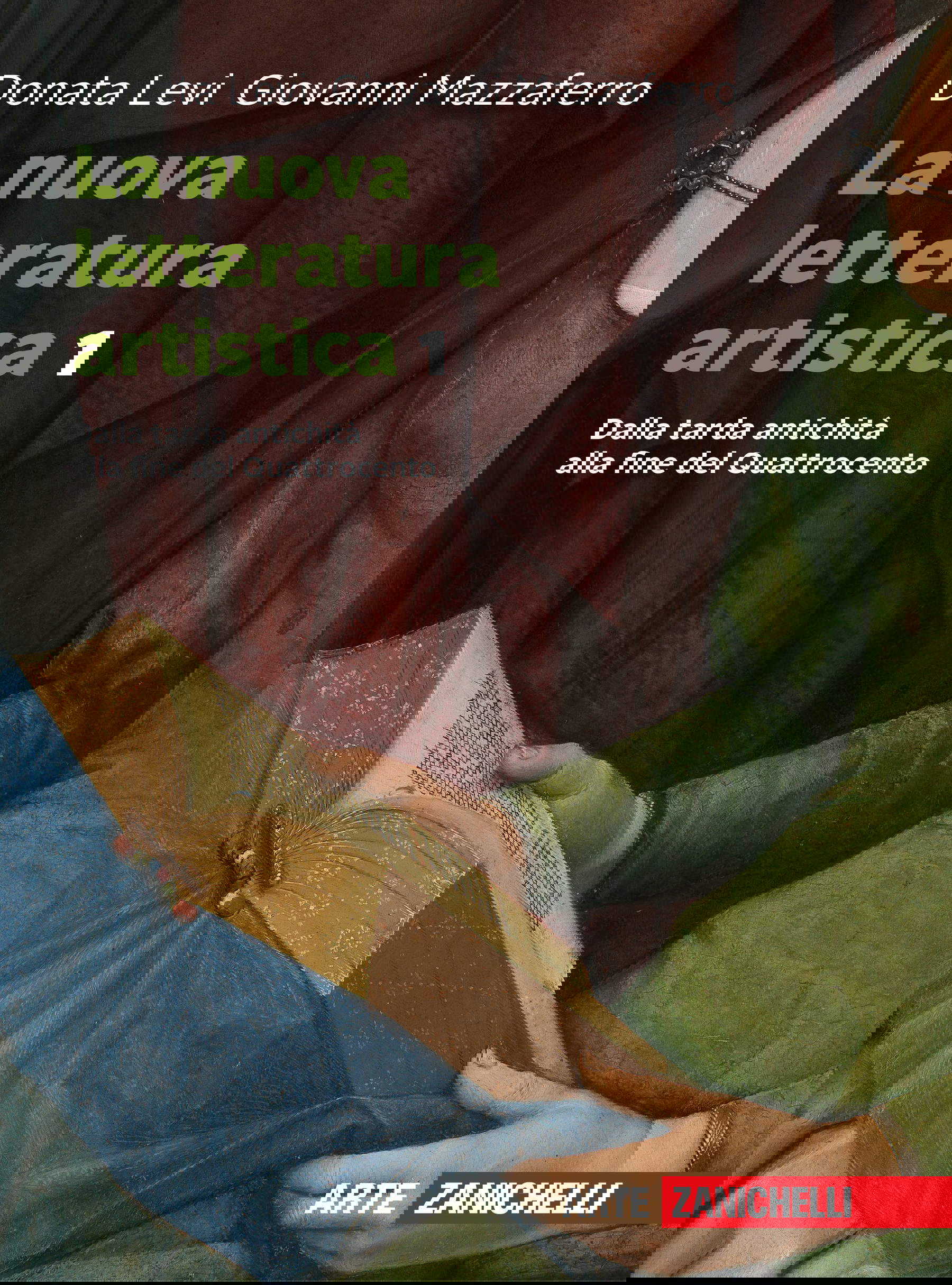
Each chapter is divided into two parts: a first section, of a more discursive nature, is followed by a second section of “Insights,” devoted to a closer examination of certain issues and bibliographical references. A very up-to-date wealth of news and references is thus made available to the reader, providing an excellent starting point for further research. The language adopted is plain (but never trivializing); evident is the authors’ effort to make even the most difficult concepts and problematic issues understandable. This is because, as mentioned above, this is a handbook; but also because the volume was written with the wider audience of specialists in mind, who might feel like reading it, not just consulting it here and there, looking for the single piece of information, but reading it in a row. An unabridged reading that turns out to be unexpectedly enjoyable, not least by virtue of the language and confidential tone adopted, far from the chiseled and, not infrequently, involuted “historicodellartese” in which writers on things of art often indulge. And that this choice in favor of clarity and fluency occurs precisely in a work devoted to what has been written about the arts throughout history seems to me all the more noteworthy.
The first volume examines a much broader chronological span than the other two, devoted respectively to the fifth and seventeenth centuries and the eighteenth and nineteenth centuries. Here we go from Late Antiquity to the Renaissance. The “Greco-Roman heritage” is reserved for the first part, in which the figures of Pliny the Elder and Vitruvius excel: as the term used in the title makes clear, the artistic literature of the classical world is reviewed by highlighting those aspects that will enjoy particular fortune in later developments in reflections on the arts. The second and third parts examine the early and middle centuries of the Middle Ages, from the fourth to the end of the twelfth century, focusing on a varied array of sources: technical-artistic literature, the writings of eminent ecclesiastics (Bernard of Clairvaux, Sugerius), and odeporic literature. Protagonists of the fourth part, on the 13th and 14th centuries, are great men of letters (Dante, Petrarch, Boccaccio, Filippo Villani), but also artists such as Villard de Honnecourt and Cennino Cennini. The final and most extensive section devoted to the fifteenth century offers a comprehensive overview of the many key figures and writings of that century, from Alberti’s treatises and Ghiberti’s Commentari to antiquarian literature, from the relationship between humanists and artists to the words of churchmen on art and the use of images. The volume closes with eager anticipation of being able to dive into the second tome, in which indispensable figures such as Vasari and Bellori will be given their due prominence, but lesser-known figures, writings and episodes will also find their place, the knowledge of which will enable readers to gain a more multifaceted understanding of the thoughts and words on the arts between the Renaissance and the Baroque.
Warning: the translation into English of the original Italian article was created using automatic tools. We undertake to review all articles, but we do not guarantee the total absence of inaccuracies in the translation due to the program. You can find the original by clicking on the ITA button. If you find any mistake,please contact us.