





Lithuania has announced its participation in the 61st. International Art Exhibition of the Venice Biennale in 2026 with a project that interweaves archaeological research, performance practice and contemporary visual languages. Representing the country will be artist Eglė Budvytytė (1981), who will present the new multichannel film installation animism sings anarchy, hosted at the Fucina del Futuro in the Castello district of Venice. The preview for press and guests is set for Wednesday, May 6, at 1 p.m.
The project was commissioned by the National Art Museum of Lithuania and is part of an established institutional trajectory for the Lithuanian presence at the Biennale, active since 1999 and already recognized with four special mentions and the Golden Lion in 2019 for Sun & Sea (Marina). Leading the pavilion as commissioner is Lolita Jablonskienė, director of the National Gallery in Vilnius, while curating is Louise O’Kelly, London-based independent curator and founder of the international performance art festival Block Universe.
Eglė Budvytytė, an artist who lives and works between Vilnius and Amsterdam, develops a practice at the intersection of visual and performing arts, integrating song, video and performance in an investigation of collective dynamics, vulnerability and the fluid relationships between bodies, audiences and the environment. With animism sings anarchy, the artist realizes one of the most ambitious projects of his career, also marking a significant transition on the technical level, with the first use of 16mm film, later transferred to 4K.
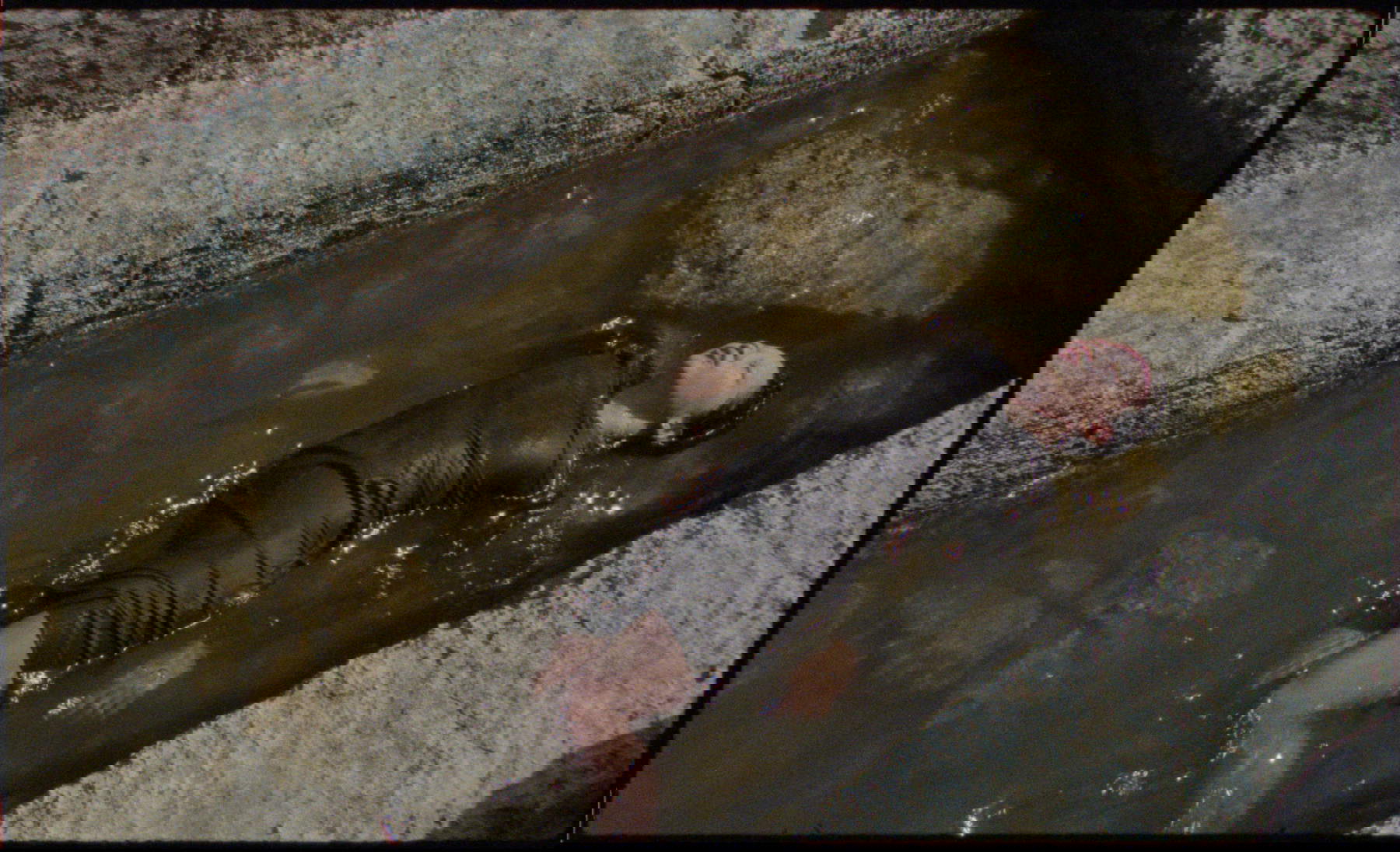
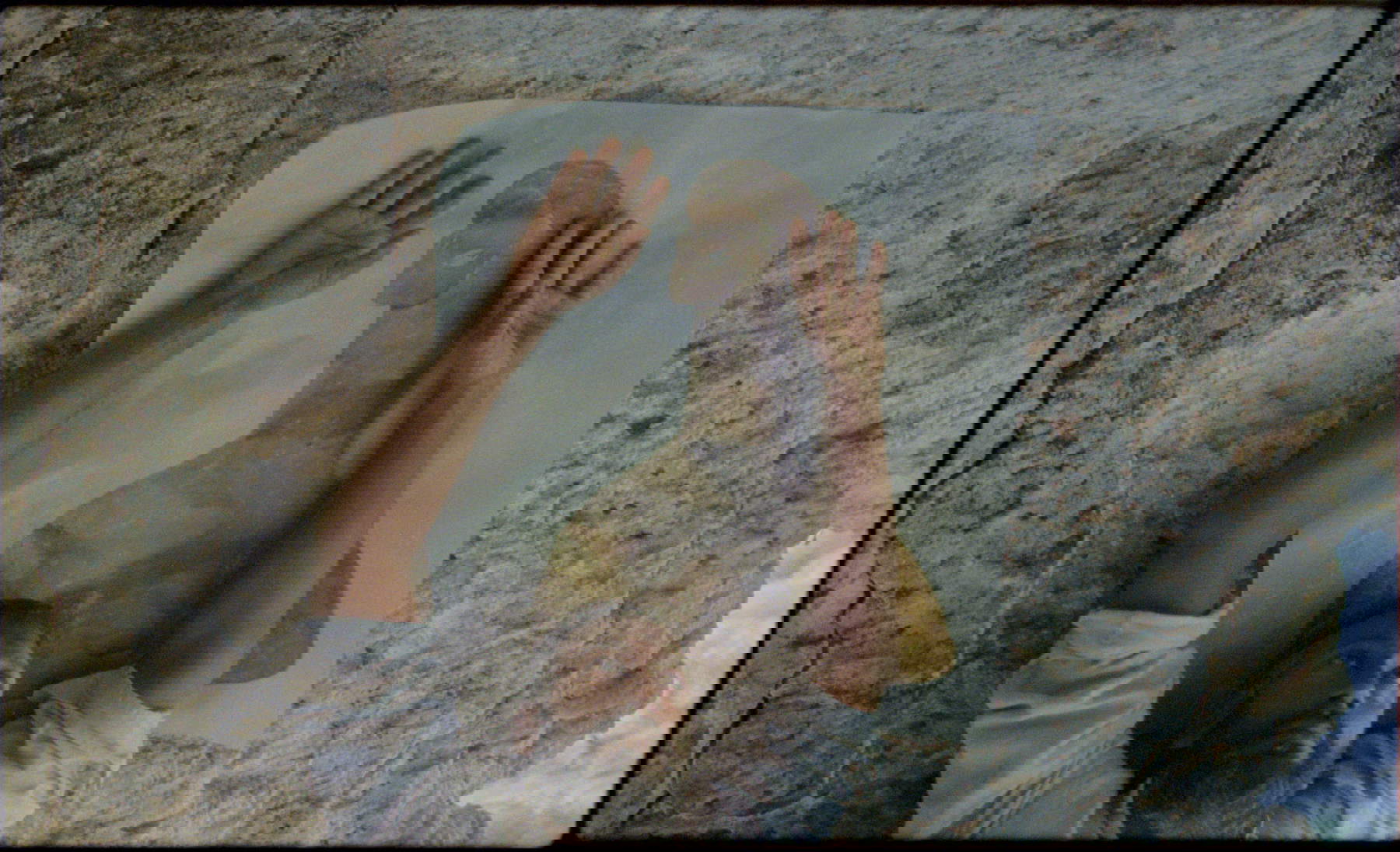
The work takes the form of a poetic and performative attempt to translate archaeological research into sensory experience, transforming data, artifacts, and historical contexts into song, movement, and altered states of consciousness. The film draws in particular on the studies of Lithuanian archaeologist and anthropologist Marija Gimbutas, a central figure in the interpretation of Neolithic matrilineal and animist societies, whose theories have influenced artists, academics and exponents of second-wave feminist-related ecology over time. The filming took place in southeastern Italy, near Grotta Scaloria, a water-related Neolithic cult site where Gimbutas herself conducted excavations in the late 1970s. In continuity with an artistic practice that privileges the relationship between body and place, Budvytytė constructed the film’s sequences by interweaving museum environments and natural landscapes of the Apulian coast, characterized by the presence of caves and aquatic burial sites.
The scenes are articulated as ritual movements that take the form of an animist prayer, in which the choreography is rooted in the landscape and remnants of the past. Symbolic elements such as facsimiles of anthropomorphic deities, made through 3D prints and simple photocopies, become centers of gravitation for delicate and unstable choreographic gestures. States of trance, ecstasy and abandonment emerge in these actions, helping to define a visual language suspended between spiritual dimensions and contemporary research.
According to curator Louise O’Kelly, the project represents one of the most significant moments in the artist’s career. She emphasized how the work manages to charge archaeological materials, polyphonic melodies and choreographic movements with anarchic possibilities, while highlighting the collaborative dimension of the work, developed together with a community of creatives. In this process, she noted, a quality emerges that seems particularly necessary in the contemporary context. Commissioner Lolita Jablonskienė also highlighted the scope of the project, pointing out how the work draws on ideas and theories spanning different eras and geographies, bringing to light forgotten or marginalized connections between the visible and the infinite. The installation is thus part of a broader reflection on the role of art in reactivating latent relationships between past and present.
The project will be accompanied by a catalog co-curated by Louise O’Kelly and Virginija Januškevičiūtė, with graphic contributions by Goda Budvytytė and critical texts signed by Amelia Groom, among others. The publication will also include an interview between the artist and Januškevičiūtė and will be produced in collaboration with institutions such as the National Museum of Art in Vilnius, the Vleeshal Center for Contemporary Art in Middelburg, and BOM DIA BOA TARDE BOA NOIT in Berlin.
The exhibition design was conceived by Marija Olšauskaitė, an artist who develops her practice through collaborative modes and who has already worked with Budvytytė in previous projects, including Song Sing Soil and Songs from the Compost: Mutating bodies, imploding stars, presented at the 59. International Art Exhibition of the Venice Biennale.
Throughout her career, Eglė Budvytytė has exhibited in numerous international institutions, including Le Plateau in Paris, Canal Projects in New York, Vleeshal in Middelburg, the Whitechapel Gallery in London, and the Stedelijk Museum in Amsterdam. He has also participated in major exhibitions such as the Sydney Biennale and the Baltic Triennial, consolidating a significant presence in the international contemporary art scene. In parallel, he has taken part in residency programs at institutions such as Palais de Tokyo, Nida Art Colony, OCA in Norway and WIELS in Brussels.
|
| Biennial, Lithuania Pavilion translates archaeological research into sensory experience |

Warning: the translation into English of the original Italian article was created using automatic tools. We undertake to review all articles, but we do not guarantee the total absence of inaccuracies in the translation due to the program. You can find the original by clicking on the ITA button. If you find any mistake,please contact us.




















 IT
IT FR
FR DE
DE ES
ES CN
CN