





A new public artwork forthe historic Herkenrode Abbey in Belgium: The new project, CLAUSURA, has been commissioned from the Gijs Van Vaerenbergh studio—founded by Arnout Van Vaerenbergh and Pieterjan Gijs—and is sponsored by Herita (National Trust for Flanders) for the historic Herkenrode Abbey in Hasselt. The public art project, scheduled for completion between 2026 and 2028, stems from a desire to restore a sense of presence to the lost heart of the ancient abbey complex through a contemporary artistic language. The work does not aim to faithfully reconstruct what has been destroyed, but rather to make the memory of the vanished architecture visible, restoring the cloister buildings to their original scale and location.
Founded at the end of the 12th century, Herkenrode becamea Cistercian abbey during the 13th century, quickly establishing itself as one of the wealthiest monastic complexes in the Netherlands. The physical and spiritual heart of the abbey was the cloister, formed by an organic ensemble of buildings. At the center of the complex stood the large 16th-century Gothic church, flanked by the convent, the infirmary, the nuns’ quarters, and other service buildings. The buildings were arranged around two large cloister gardens, enclosed by long galleries that defined the complex’s spatial and architectural unity. Over the centuries, however, Herkenrode suffered numerous episodes of decay and destruction. A particularly dramatic event was the fire that destroyed the church in 1826, followed by the gradual demolition of the entire historic core of the ancient abbey. Today, all that remains of the original cloister are the chapel, the ruins of the nuns’ quarters, and the old infirmary. What was once the heart of the abbey now appears as a space marked by absence and emptiness.
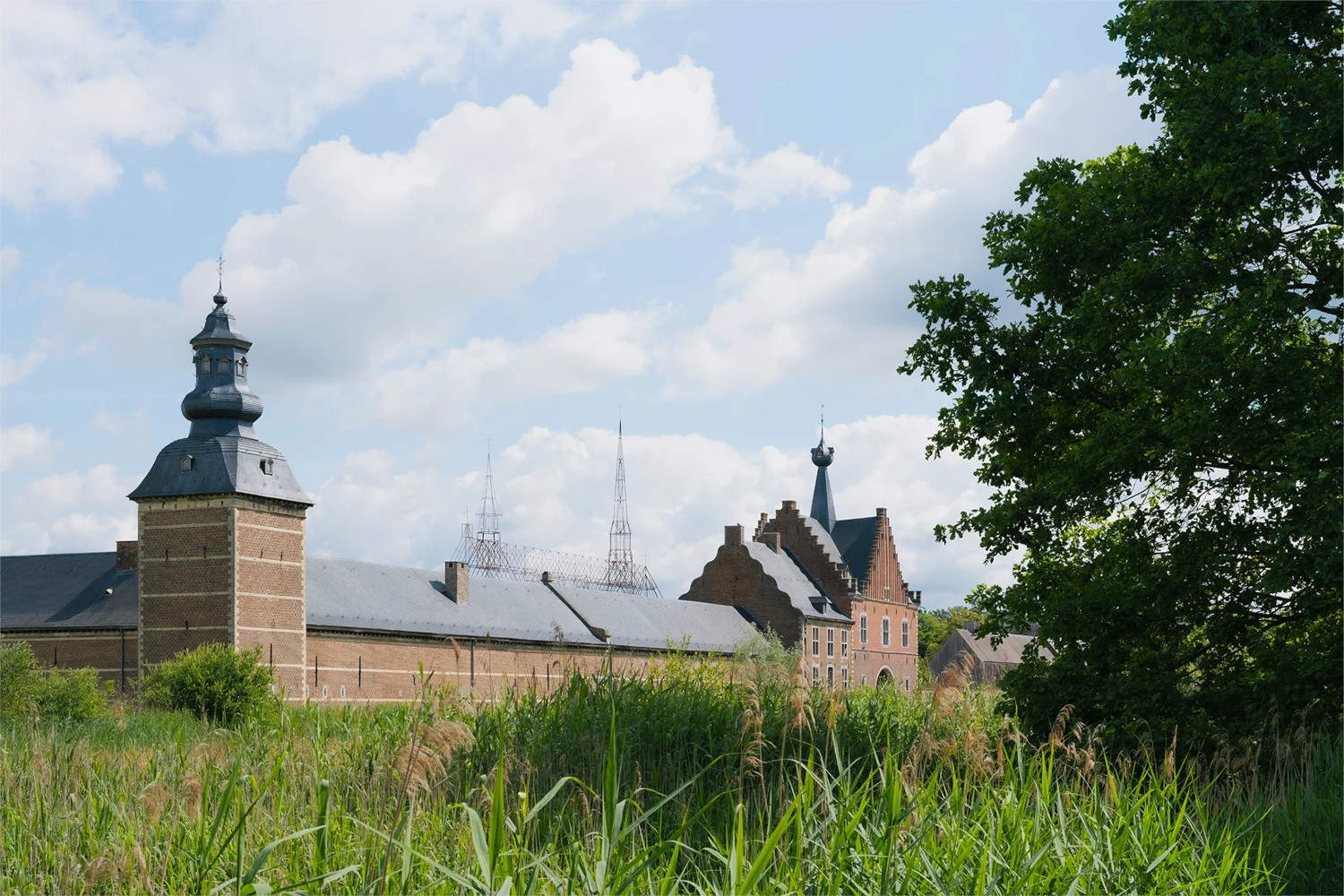
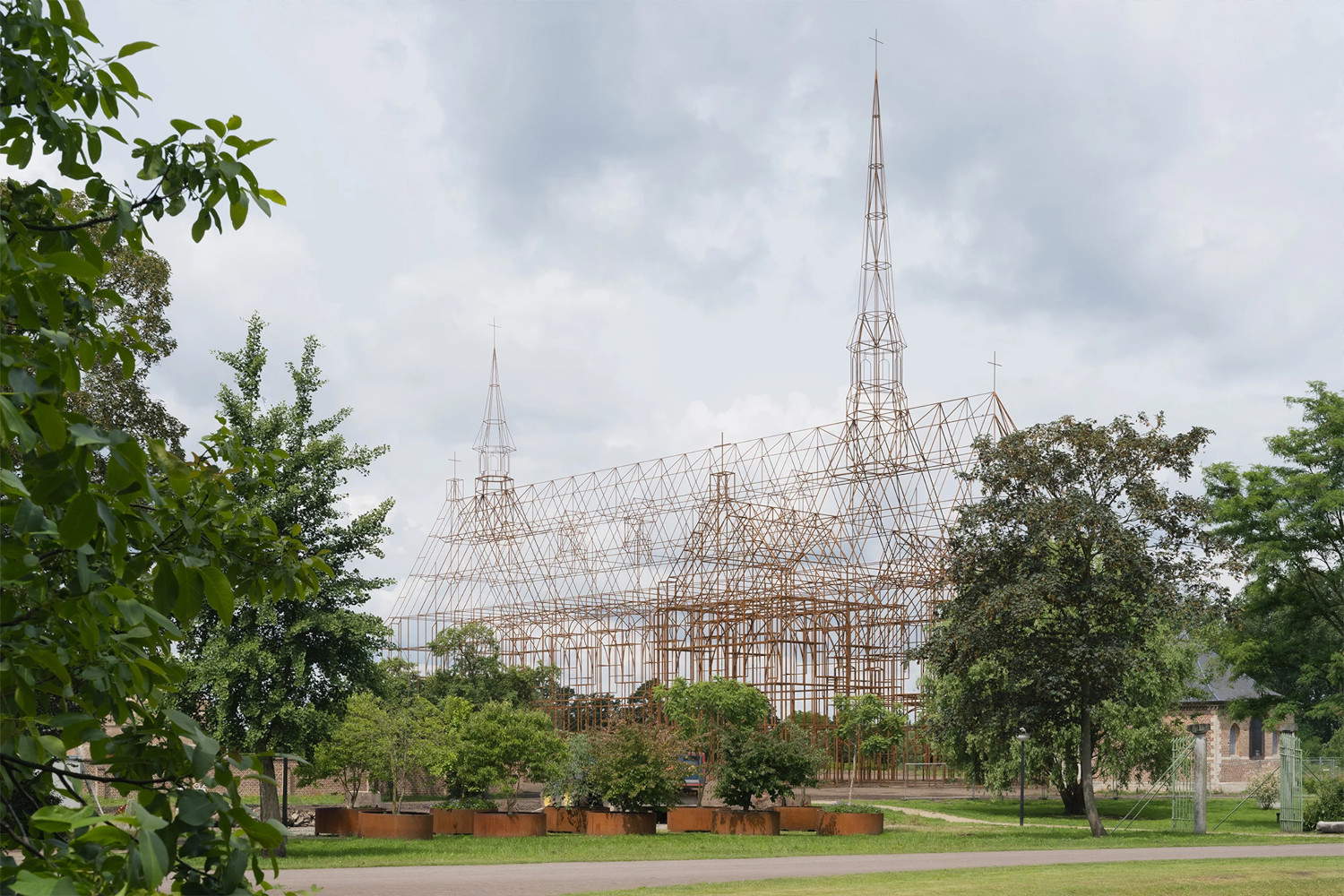
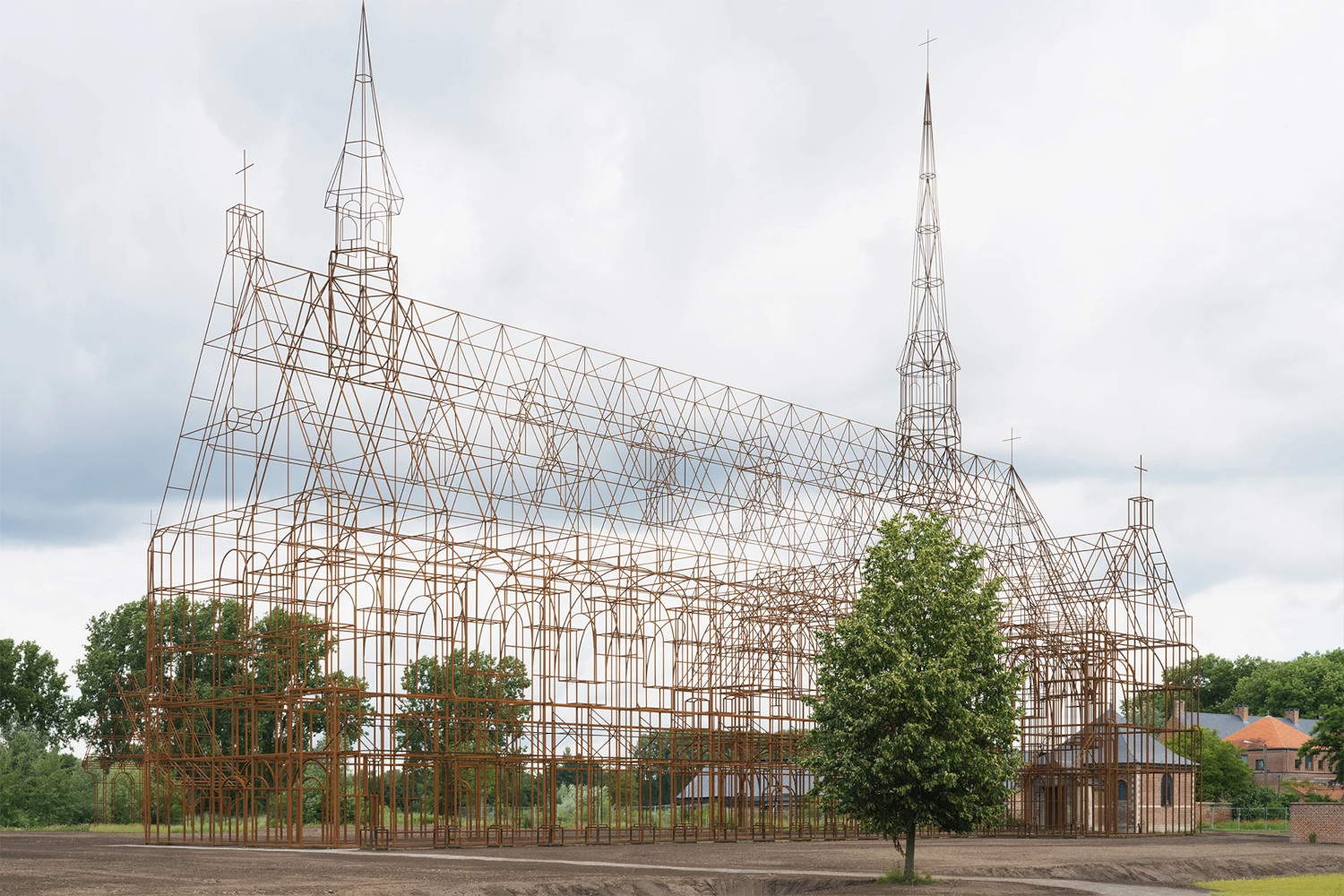
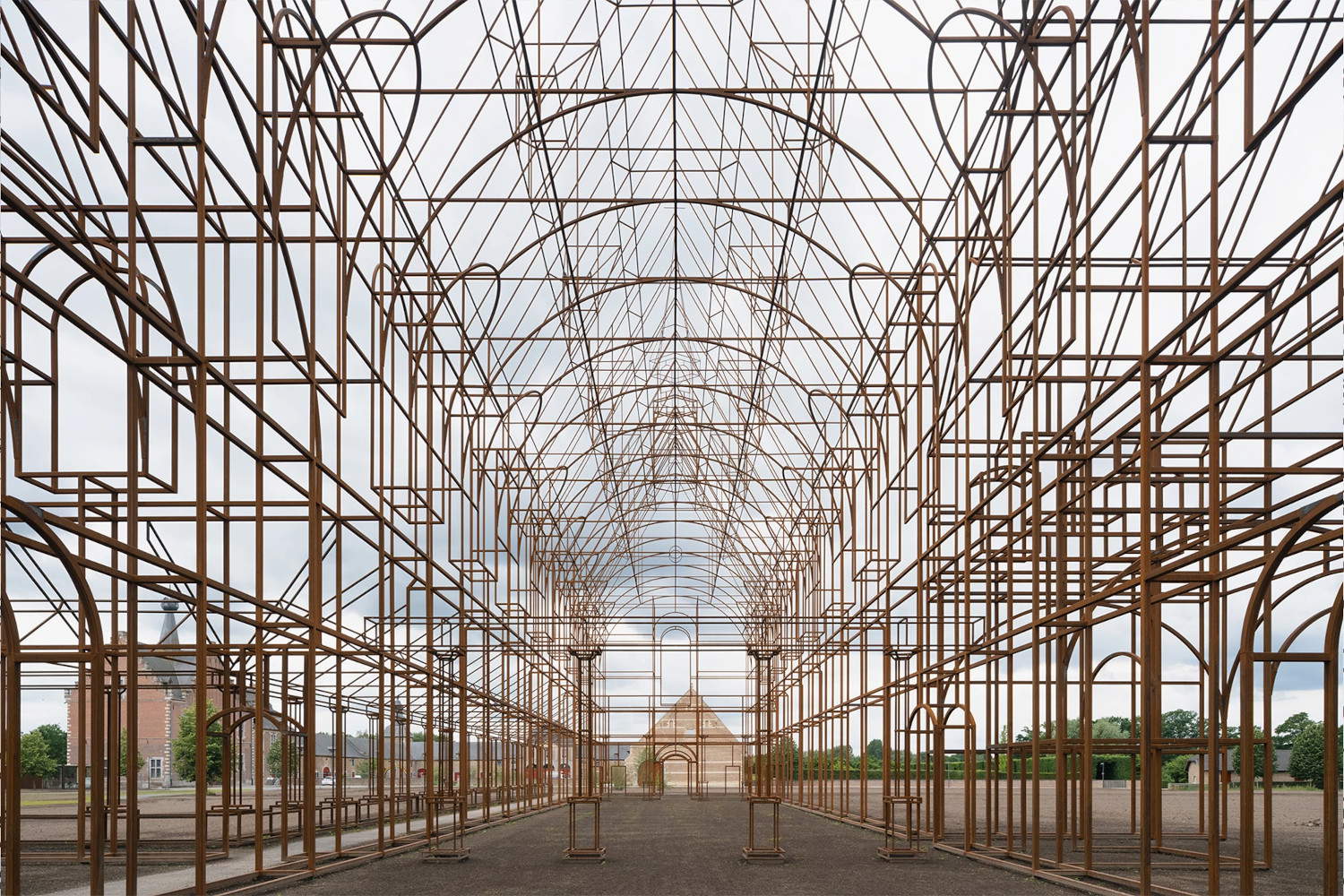
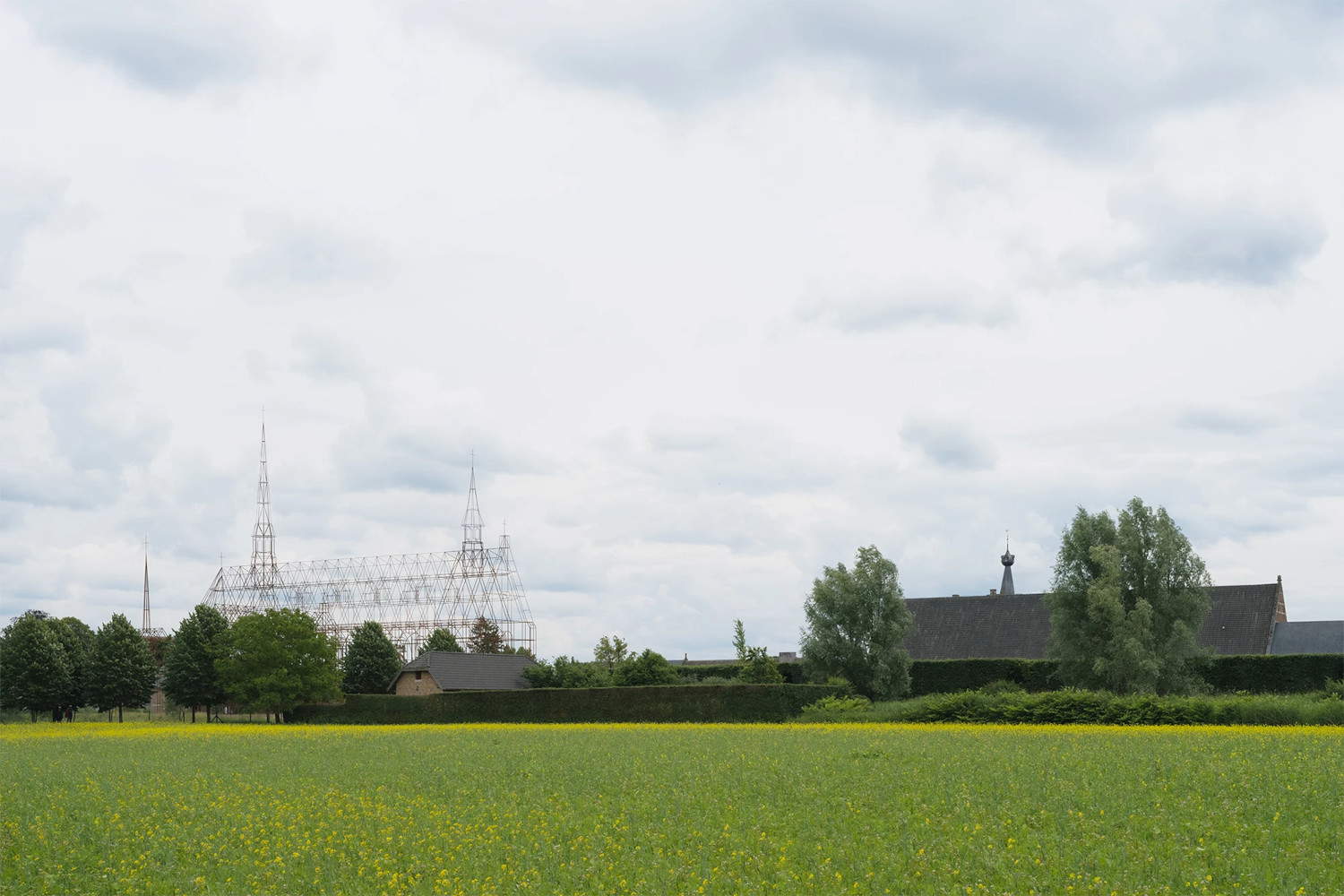
It is precisely in light of this situation that Herita commissioned Gijs Van Vaerenbergh to develop a new artistic vision for the lost heart of Herkenrode. With CLAUSURA, the studio intervenes on the site through a structure of slender steel bars that trace the outline of the buildings that once belonged to the cloister. The structures ideally restore the lost buildings to their original dimensions and locations, without, however, becoming a historical reconstruction. The new volumes are, in fact, transparent and permeable, allowing their silhouettes to blend into the surrounding landscape. The effect varies depending on the vantage point: from some perspectives, the metallic lines seem to almost disappear, while from others they become sharp and easily recognizable. CLAUSURA thus occupies a middle ground between reconstruction and abstraction. The vanished buildings are not physically recreated but evoked through a sophisticated system of lines and proportions. Certain architectural details help make the lost forms immediately recognizable: windows, vaults, and towers are suggested by the metal structure, even though in some places the composition fragments and seems to dissolve into an interweaving of lines. The project thus transforms absence into a new presence, allowing visitors to perceive the layout of the ancient complex through an experience that is both spatial and immaterial.
The project also addresses the still-existing ruins of the nuns’ quarters, the infirmary, and the portico, originally built of brick and wood. These historic elements are preserved from further deterioration and integrated with a new steel structure. The result is a composition in which historic architecture and contemporary intervention coexist without blending into one another. The metal structure also echoes the roofing of the existing buildings, which is still partially visible in the nuns’ quarters and partly covered in the infirmary.
Through CLAUSURA, Herita and Gijs Van Vaerenbergh transform the void left by the destruction of the ancient cloister into an opportunity for reflection on memory and the stratification of heritage. The work does not seek to erase the traces of loss, but rather makes them legible through a contemporary gesture. Herkenrode Abbey thus becomes a place where ruins, landscape, and contemporary art engage in a dialogue to restore a form—albeit an immaterial one—to the vanished architecture.
|
| In Belgium, contemporary art is bringing the ancient Cistercian abbey of Herkenrode back to life |

Warning: the translation into English of the original Italian article was created using automatic tools. We undertake to review all articles, but we do not guarantee the total absence of inaccuracies in the translation due to the program. You can find the original by clicking on the ITA button. If you find any mistake,please contact us.

























 IT
IT FR
FR DE
DE ES
ES CN
CN


