





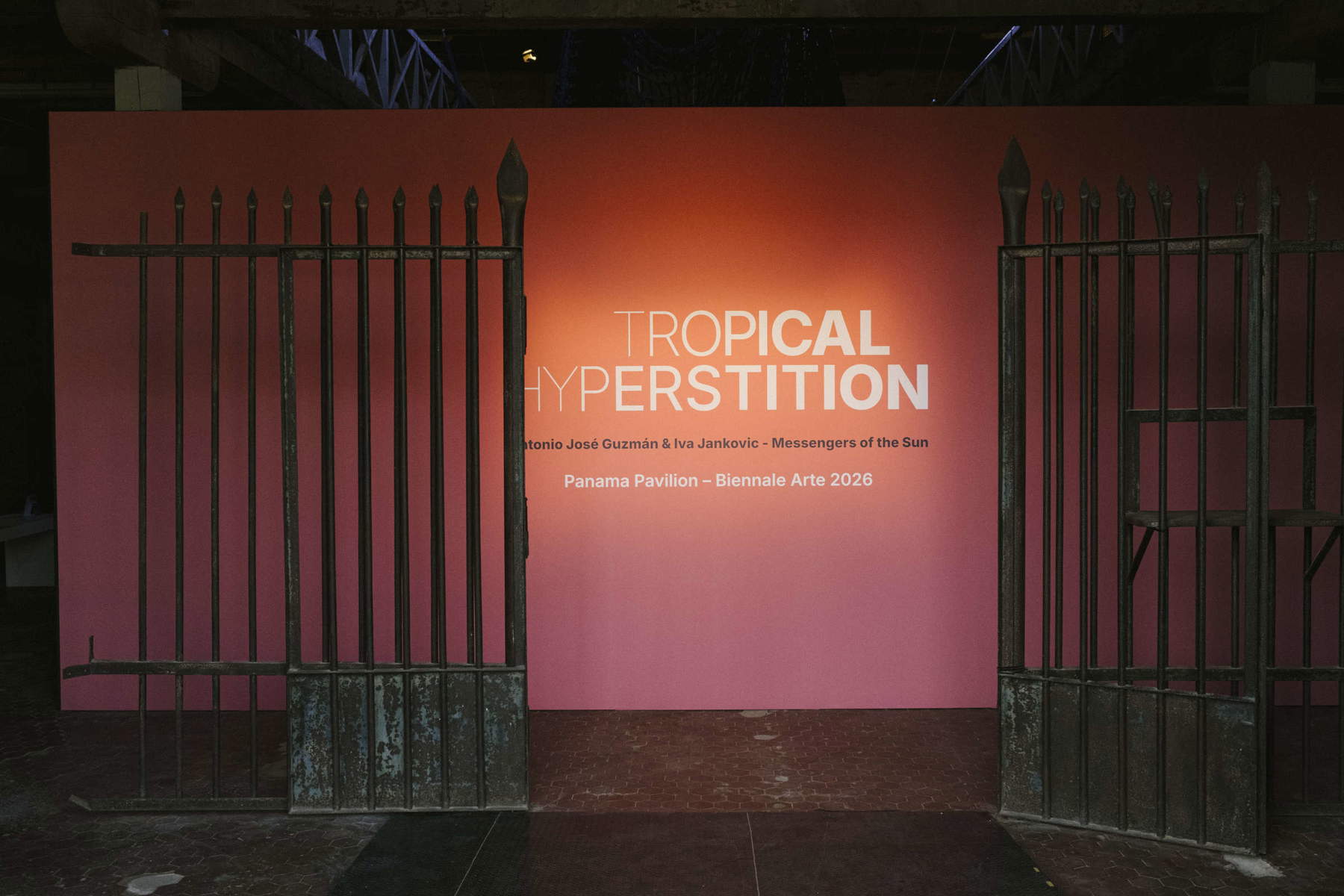
Panama returns to the Venice Art Biennale with a reflection on the legacies of colonialism, forced migration and the ability of communities to preserve memory and identity through shared cultural practices. On the occasion of the 61st International Art Exhibition of the Venice Biennale, the Central American country presents its second National Pavilion with Tropical Hyperstition, a large-scale environmental and performance installation signed by Antonio José Guzmán and Iva Jankovic, the artistic duo known internationally as Messengers of the Sun, and curated by Ana Elizabeth González and Mónica E. Kupfer. The project sits at the intersection of contemporary art, historical research, and political memory, and takes its starting point from one of the most significant and at the same time least told events in Panamanian history of the twentieth century: the construction of the Panama Canal and the subsequent creation of the Canal Zone, a territorial enclave about ten miles wide and administered by the United States for most of the last century.
Through Tropical Hyperstition, the artists bring to light narratives that have long remained at the margins of collective memory, reactivating the stories of the communities that were forced to leave their lands and villages due to the territorial transformations imposed by the great infrastructure project. The work proposes a critical rereading of Panama’s role in global history, not only as a strategic crossing point between oceans and continents, but as a territory deeply marked by imperial ambitions, logistical power logics and social engineering dynamics that accompanied colonial modernity.
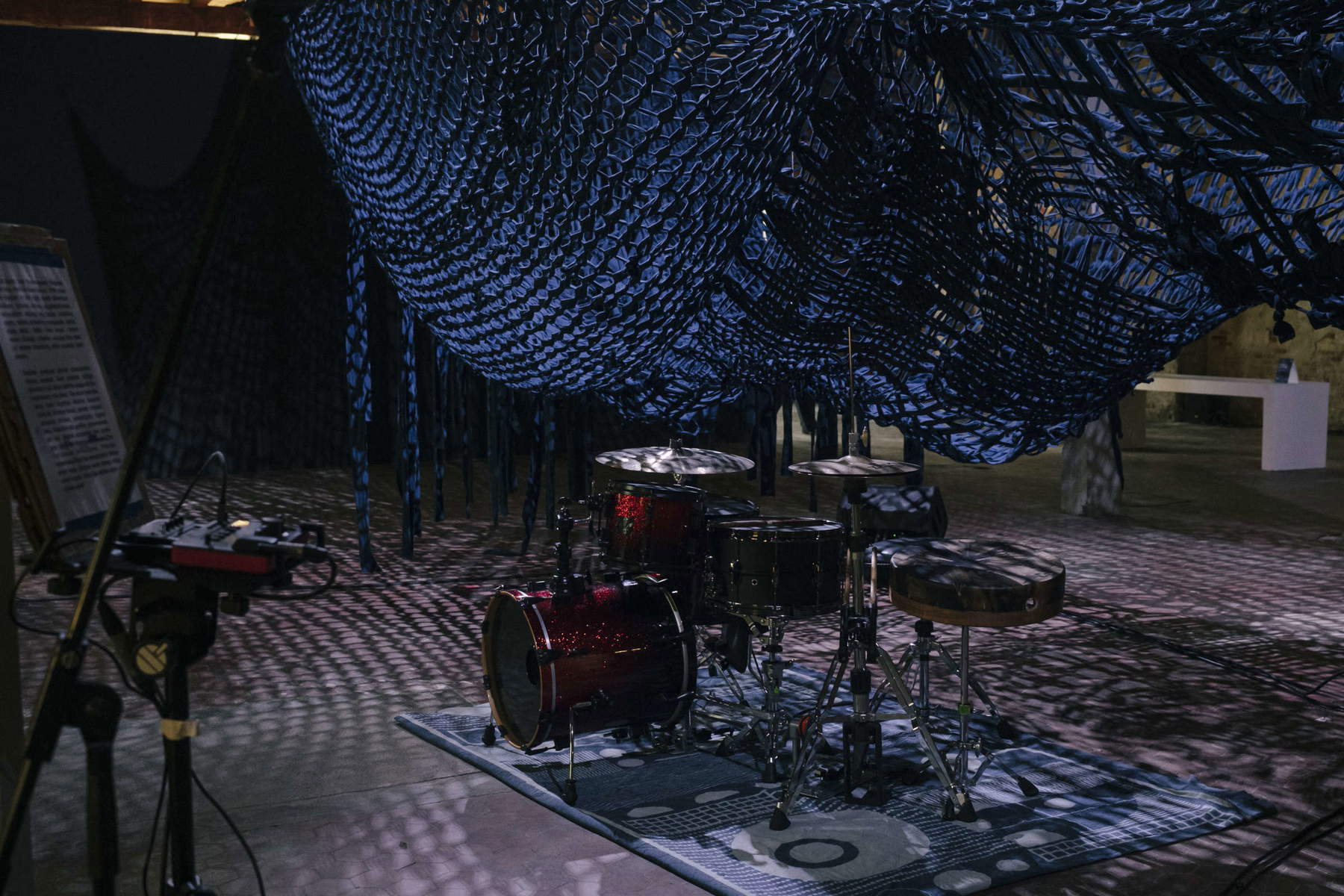
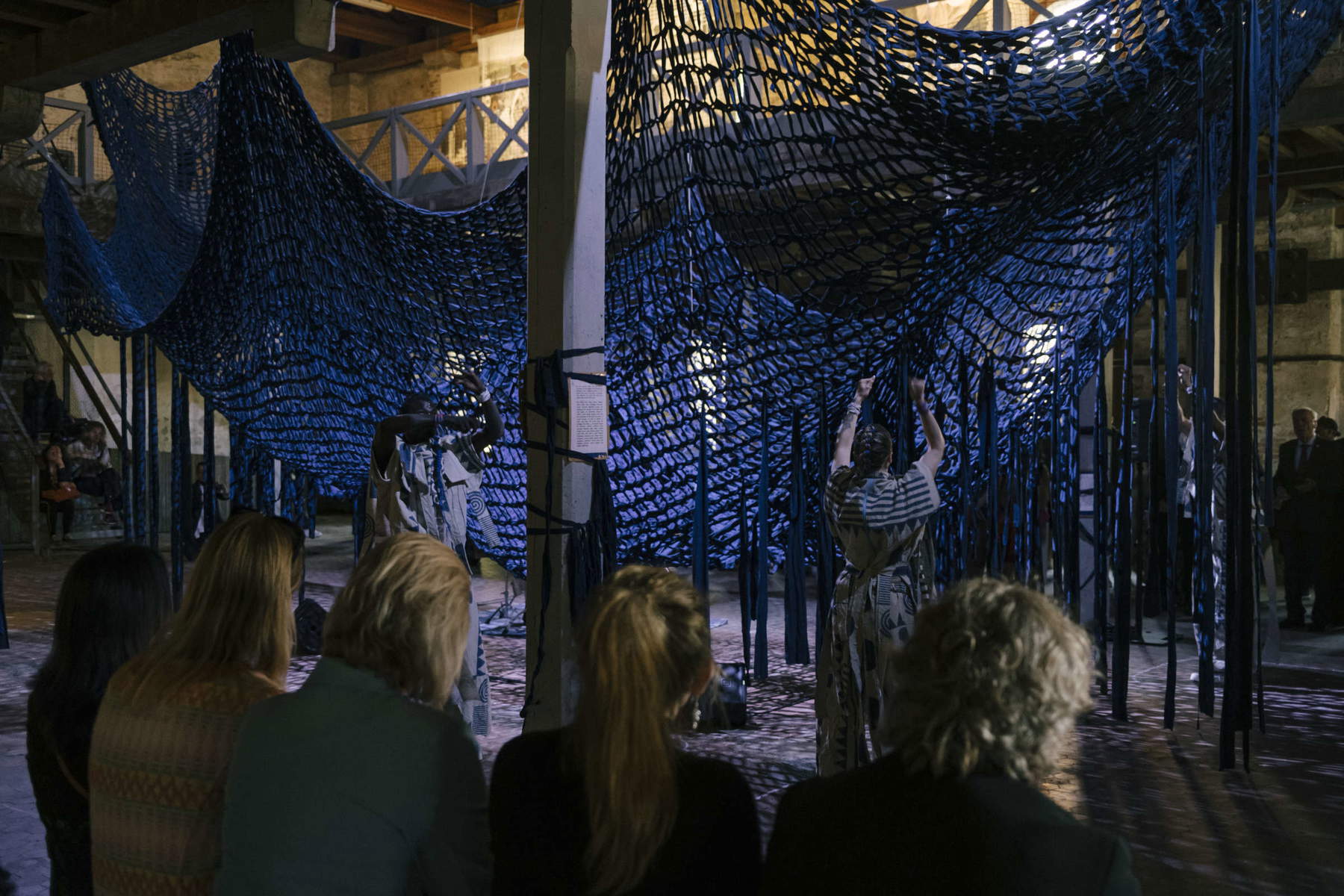
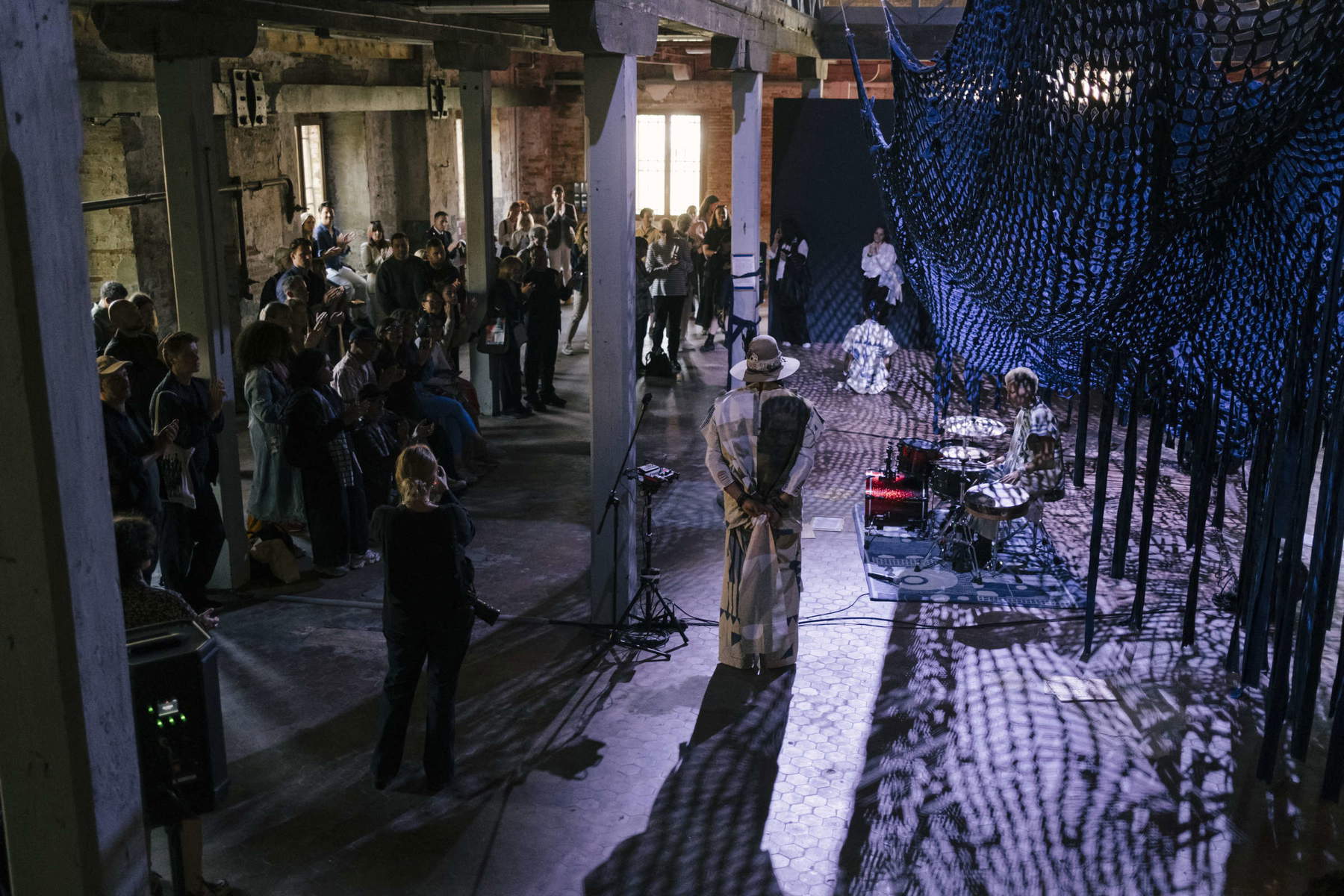
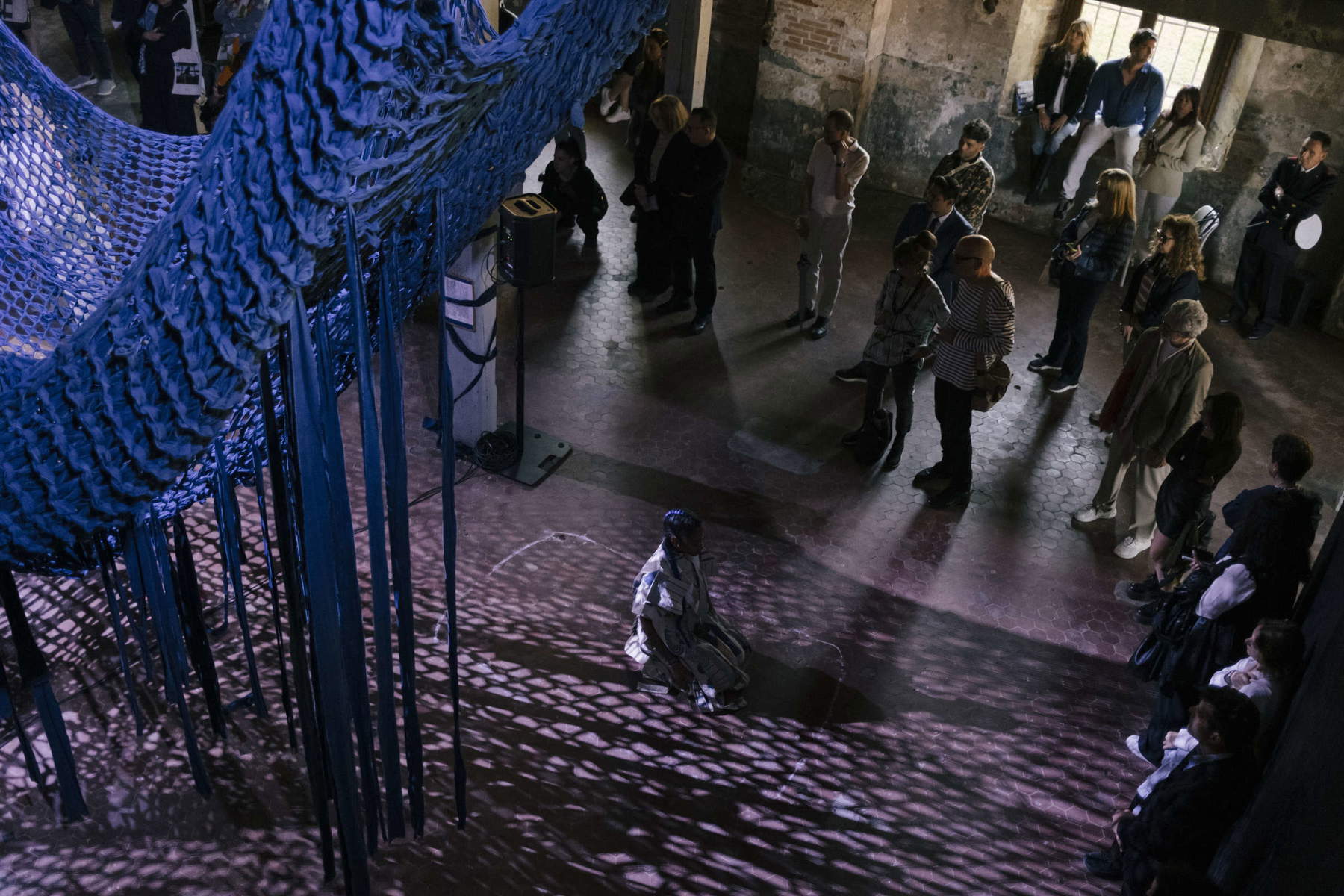
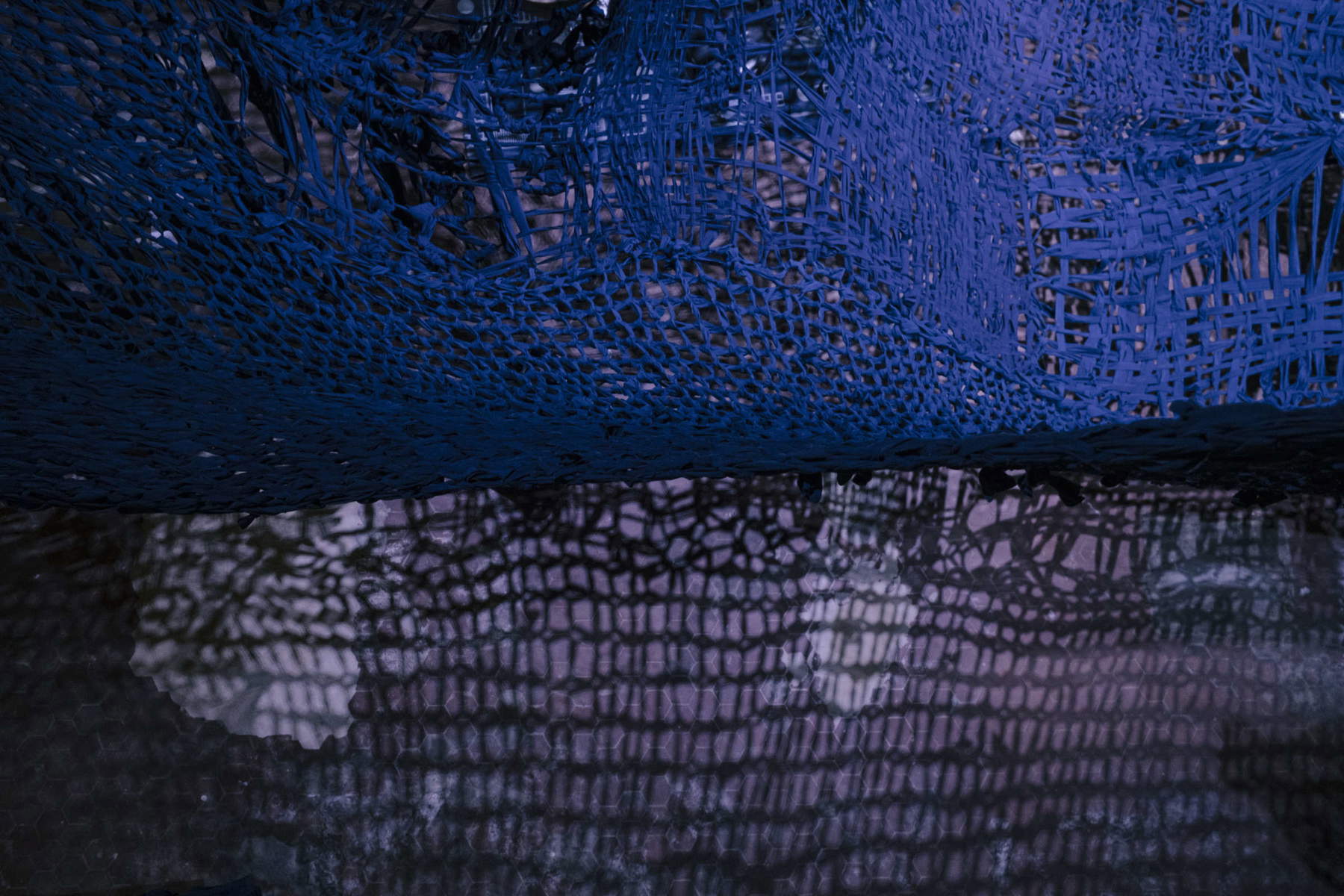
A central element of the installation is a giant twenty-meter-long suspended hammock, handmade from indigo-dyed fabrics. The work encompasses multiple cultural and symbolic genealogies. Its origins lie in the ancestral practices prevalent in different areas of the Americas, where lifting from the ground is traditionally associated with protection, life, and the cycles of existence. At the same time, the hammock recalls the everyday material culture of workers from the Antilles who migrated to Panama to participate in the construction of the Canal. Within the Panama Pavilion, this object is transformed into a kind of monumental architecture of refuge. The hammock becomes a symbolic space where quiet, memory and survival converge, gathering within it the intertwined stories of indigenous traditions, Afro-Caribbean migration and the process of Panamanian nation-building. The structure is meant to embody simultaneously the idea of protection and that of uprooting, of belonging and loss.
The entire environment is bathed in indigo blue, a color that envelops the exhibition space and relates seemingly opposing dimensions: intimacy and landscape, rest and resource extraction, refuge and historical violence. In Guzmán and Jankovic’s art practice, indigo has long occupied a central role and is evoked as a material deeply connected to colonial economies, forced labor, and racial hierarchies that have characterized long periods of global history.
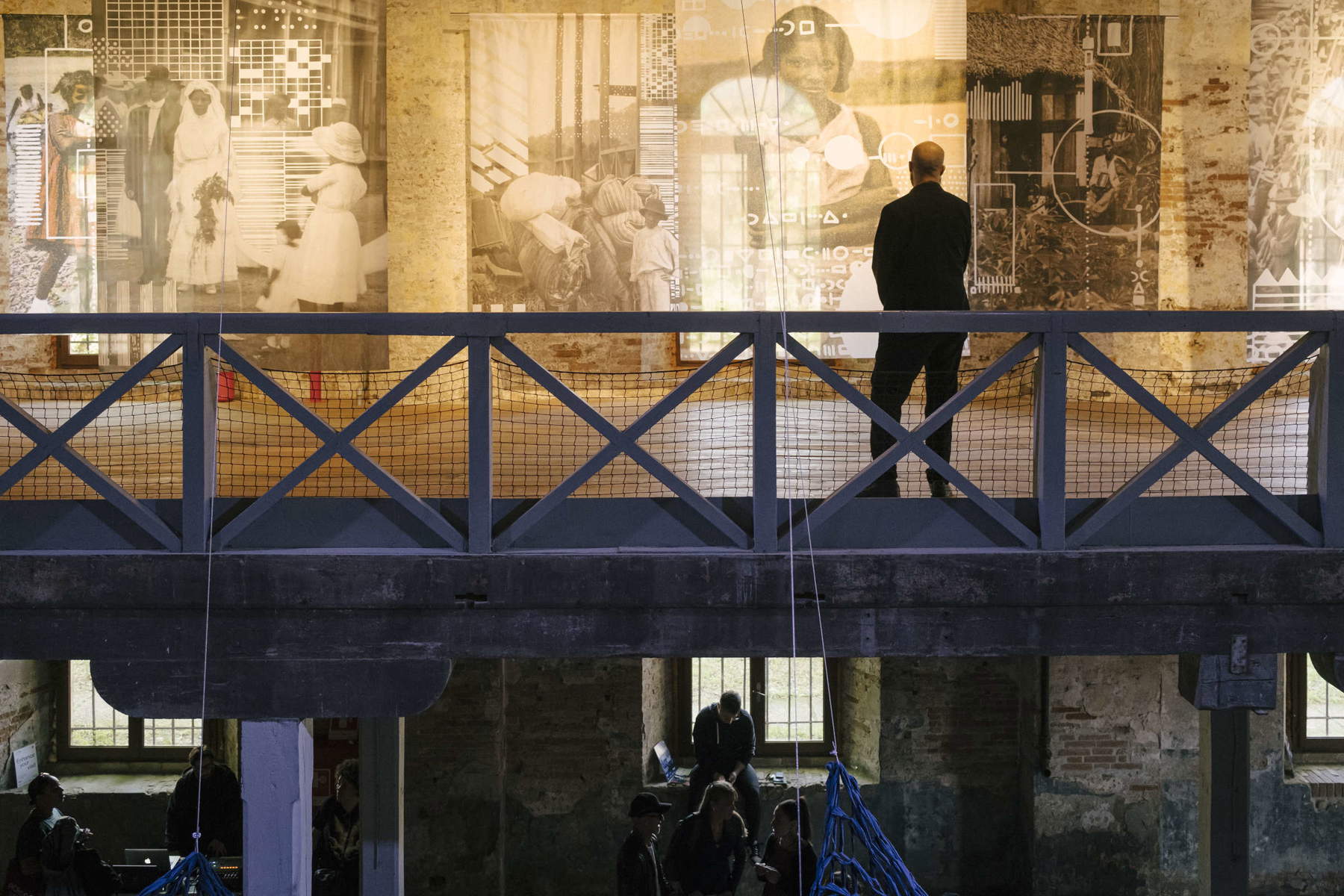
Also integral to the installation are large printed fabrics that take the form of visual collages. Within them appear archival photographs and illustrations dedicated to so-called “lost cities” and their inhabitants, almost ghostly presences that restore the image of erased realities. These historical testimonies are interwoven with graphic motifs derived from Antonio José Guzmán’s DNA sequences, with indigenous drawings and symbols belonging to ancestral traditions.
The result is a kind of textile cartography in which personal memory, genetic heritage, and collective memory meet and overlap. The work thus constructs an alternative symbolic territory, in which what has been removed from official geography and the dominant narrative finds a new form of presence.
“Our practice,” declare Messengers of the Sun, “considers ritual and community as living forces that activate history, rather than merely representing it. Working with indigo means confronting its colonial entanglements while reappropriating it as a site of resilience and decolonial imagination. We do not understand culture as an unchanging heritage, but as something that is continually shaped through migrations, musical traditions and everyday practices. Our work goes beyond the neutrality of the white cube, insisting instead on bodily experience and collective presence. Textiles carry memory, ritual becomes a space to repair historical rifts, and collaboration with ancestral knowledge opens an ongoing process of transformation. We propose art as a space of emancipation, where sound, fabric and movement generate new forms of belonging.”
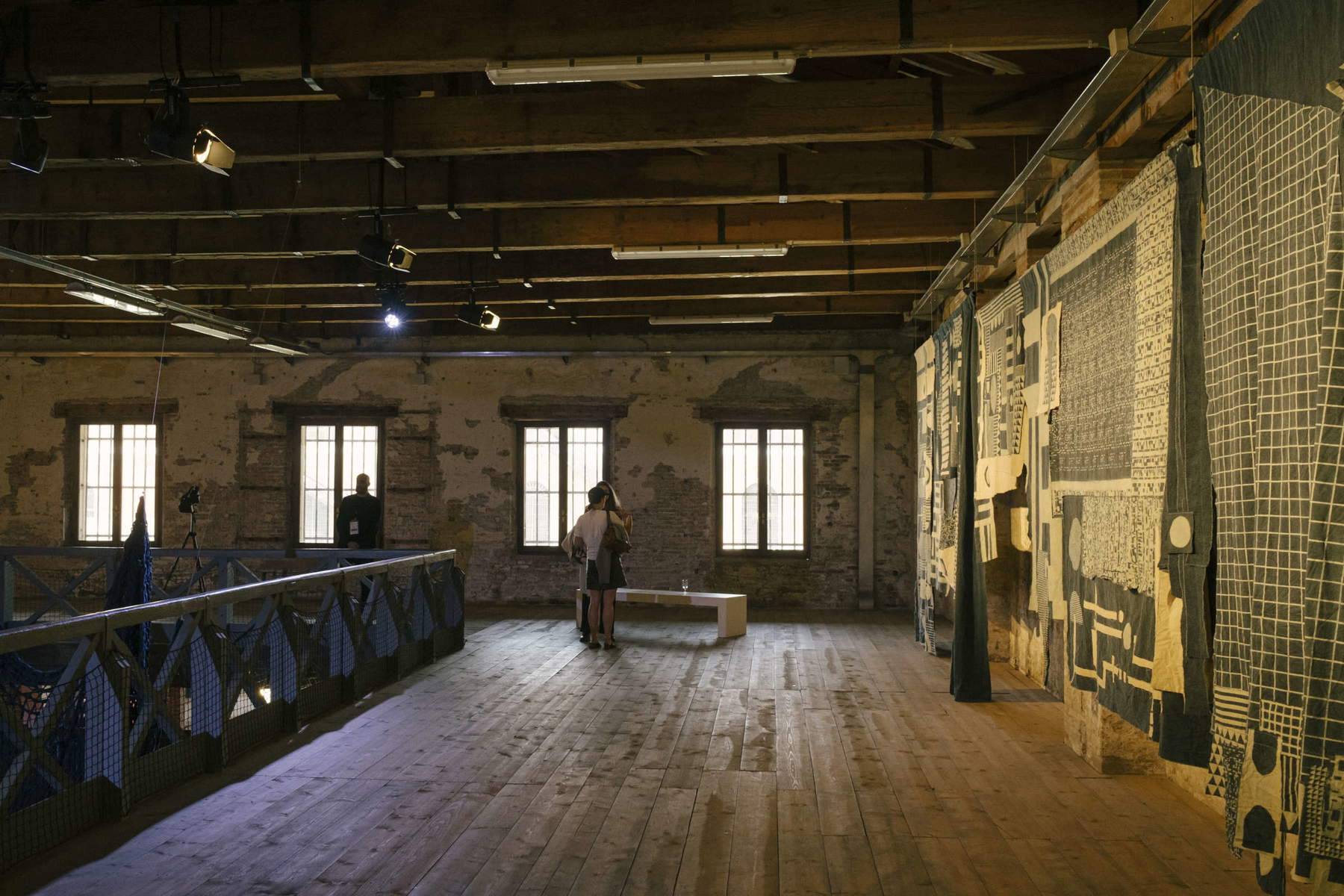
The work also takes shape through a historical reflection on the Panama Canal Zone. For almost a century, in fact, this territory functioned as a state within a state, imposing borders that redefined daily life, limited freedoms and created parallel systems of segregation and control. Entire villages were dismantled. Family homes, businesses, local institutions and cultural traditions rooted for generations were gradually erased. In the name of progress, tens of thousands of people were forced to leave their communities. Their towns disappeared from maps and, with the passage of time, from national memory as well. Today, these settlements are remembered as “lost towns” that testify to the human cost hidden behind the triumphalist narrative of the Canal, which is often celebrated as an extraordinary civilizing feat accomplished in a land wrongly described as empty.
Reinforcing the immersive experience of the project is its sound dimension. Indeed, the Pavilion is traversed by a spatialized acoustic environment that combines the noise of water, human voices and the sounds of large-scale engineering infrastructure. These elements are interwoven with Caribbean rhythms, interpreted by the artists as codified forms of cultural survival capable of transporting memory and ritual across generations. Musical cadences accompany visitors through a landscape marked by uprooting and fragmented belonging, evoking a diaspora constructed through expulsions, forced migrations and continuous identity negotiations. In this way, sound is not simply an accompaniment to the visual work, but becomes an essential component of its narrative structure.
Curators Ana Elizabeth González and Mónica E. Kupfer state, “This project offers a different way of interacting with the story in the exhibition space, a way shaped by lived experience and constant presence. By focusing on indigo and textile practices as active forms of knowledge, the artists bring colonial histories and diaspora memory into dialogue with contemporary cultural expression. The work invites visitors to connect physically and sensorially, using ritual as a means to open art to a shared space of remembrance and cultural reimagining.”
Antonio José Guzmán (Panama, 1971) and Iva Jankovic (Yugoslavia, 1979) combine textiles, sounds and memory in a multidisciplinary approach that revisits the paths and imaginaries of the Black Atlantic, the hybrid and transnational culture that originates from the historical experience of the African diaspora. Their work focuses on indigo as a bearer of memory: a material steeped in the legacy of slavery, exchange and forced displacement, whose presence extends from dyed textiles to Afro-Caribbean sound traditions. In Sufiyan Khatri’s Ajrakh block printing workshop in Gujarat, India, they create textiles that unfold as layered surfaces of inscriptions, where West African Adinkra iconography, Mesoamerican motifs and Afrofuturist patterns and thoughts intersect. The artists also draw on historical documents and period photographs to create collages and visual poems of shared memory, drawing connections between continents and highlighting the lingering imprints of colonial systems and global economic powers. Drawing on archival research and sound resonances, the artists reflect on how songs of resistance, rooted in the past experienced by African diaspora and indigenous communities, persist and transform over time, finding new expression in musical forms such as dub. Extending beyond the textile plane, their work takes shape through installations and performances, generating immersive environments that invite reflection on movement, resilience and cultural continuity, while opening a reconsideration of boundaries through the lens of interwoven diasporic experience.
|
| Panama at the Art Biennale 2026: memory, diaspora, and resistance in Tropical Hyperstition |

Warning: the translation into English of the original Italian article was created using automatic tools. We undertake to review all articles, but we do not guarantee the total absence of inaccuracies in the translation due to the program. You can find the original by clicking on the ITA button. If you find any mistake,please contact us.



















 IT
IT FR
FR DE
DE ES
ES CN
CN


