




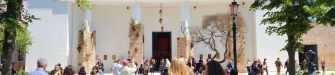
For the first time in its history, the Socialist Republic of Vietnam is officially participating in the Venice Art Biennale: The debut takes place as part of the 61st. International Art Exhibition, scheduled to be held in Venice from May 9 to Nov. 22, 2026, with the inauguration scheduled for May 8 at 11 a.m. in the spaces of Ca’ Faccanon, Calle delle Acque, in the sestiere of San Marco. The pavilion, titled Vietnam: Art in the Global Stream, is sponsored by Vietnam’s Ministry of Culture, Sports and Tourism and is a deliberately understated presence within the world’s most important event dedicated to contemporary art. Under the stewardship of Commissioner MaThe Anh and curated by Do Tuong Linh, the project brings together the works of ten artists-Le Huu Hieu, Nguyen Thanh Chuong, Doan Thi Thu Huong, Bui Huu Hung, Le Hoang Nguyen, Trinh Tuan, Dinh Van Quan, Nguyen Truong Linh, Trieu Khac Tien, and Le Nguyen Chinh.
Vietnam’s chosen approach is distinguished by a specific desire to avoid spectacular effects or explicit statements. Rather, the pavilion is configured as a silent and continuous flow, able to fit discreetly into the global context of contemporary art. In an era marked by globalization, conflicts and deep rifts, the project proposes a reflection on the balance and value of less visible contributions, suggesting the possibility of building harmony and peace from cultural and spiritual dimensions considered marginal.
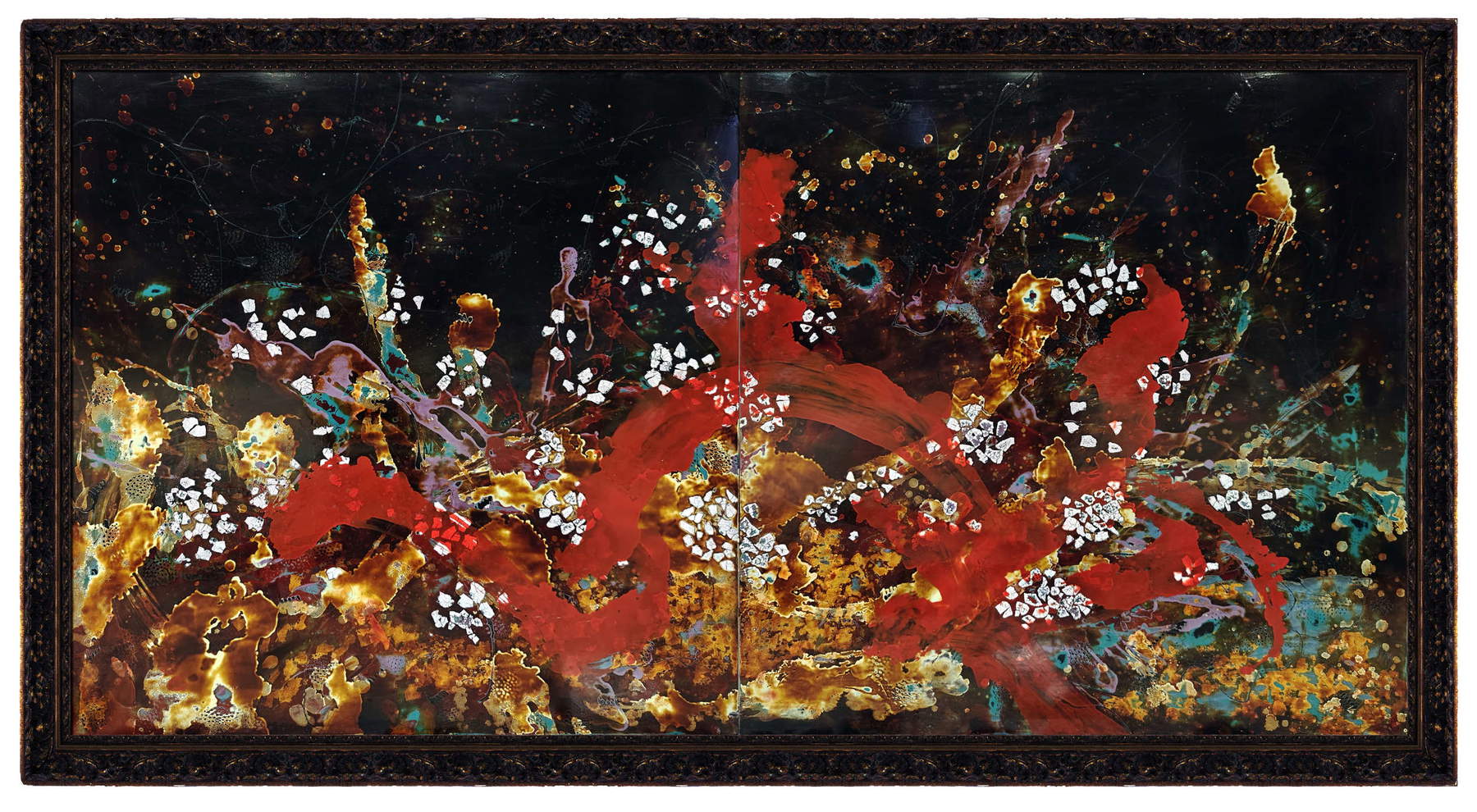
The exhibition is not intended to provide definitive answers to questions of the present, but to open a space for listening and contemplation. Visitors are invited to slow down, pause and reconnect with their inner selves. In dialogue with the overall theme of the Biennale, the pavilion adopts the metaphor of the “minor mode” in music, evoking deep tones and slow rhythms, a poetic dimension that runs through the entire exhibition project and results in a subdued but persistent voice.
A central element of the itinerary is traditional Vietnamese lacquer, used by all the artists present not only as a technique but as an actual language. Derived from the natural resin of the lacquer tree, this practice is time-consuming and labor-intensive, based on successive layers and patient hand-sanding. Characteristic colors, such as black, cinnabar red, deep browns, gold and silver, are derived from natural materials such as mineral pigments, eggshells and metallic leaves, resulting in surfaces of great visual depth.
Within the pavilion, lacquer is presented as a living practice, closely linked to the cycles of nature and the repeated gesture of craftsmanship. The dialogue between this material, the exhibition space, architecture and other traditional practices expands expressive possibilities and helps build an atmosphere of introspection and recollection.
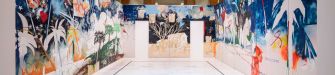
The space is designed according to a principle of essentiality. Formal and visual reduction allows sensory and emotional experience to emerge, while repetitive structures, circular rhythms and the relationship between matter, light and emptiness reflect a worldview based on the interconnection between human beings, nature and the spiritual dimension. Meaning is not imposed, but suggested, taking shape in the voids and pauses, leaving visitors free to construct their own interpretive path.
In this context is the work of Le Huu Hieu, a central figure in the pavilion, who presents the body of work entitled Silkworm. The artist, after a path marked by a phase of radical experimentation between 2015 and 2017, culminating in the voluntary destruction of the works created in those years, has undertaken since 2019 a new research focused on historical reconstruction through an epic and generalized narrative.
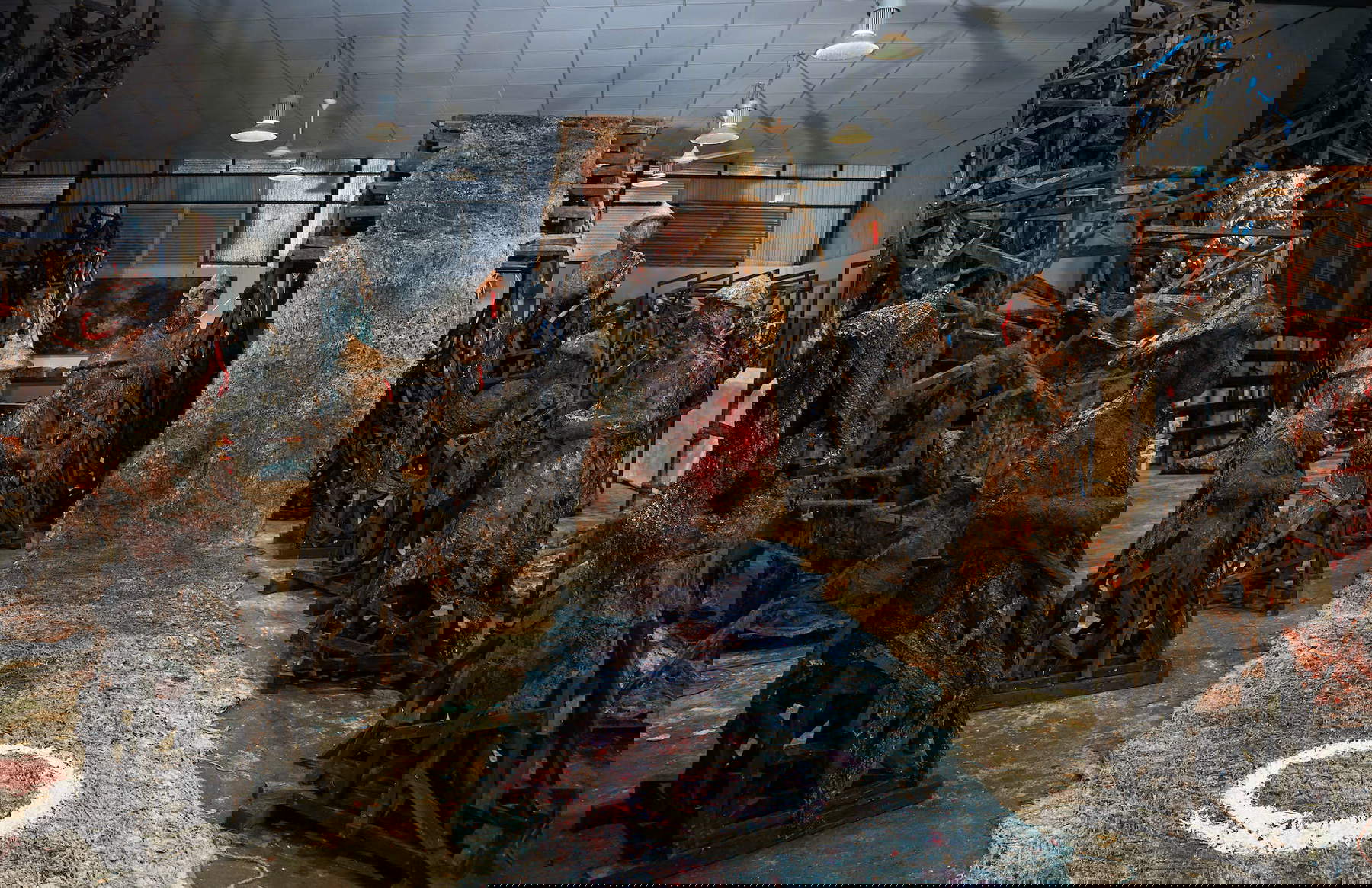
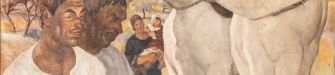
At the center of his vision are the anonymous figures of the masses, regarded as true protective deities. They are silent heroes who sacrifice themselves to preserve the basic values of daily life: the tranquility of villages, the ripening of paddy fields, the abundance of crops, the simple beauty of nature and poetry. In Venice, Le Huu Hieu presents monumental installations and sculptures made from materials deeply connected to Vietnam’s history and traditions. His works are distinguished by an imposing scale and expressive force that combines rawness and majesty. Colossal structures impose their physical presence on the viewer, transforming collective history into tangible entities.
Prominent among the materials used is jaguar wood, worked with an ancient Vietnamese conservation technique called HOM, which produces a charred surface. This is complemented by fire and red lacquer, a natural insect secretion used for millennia to protect temples and palaces, characterized by a warm color and primordial brilliance.
The project also includes a monumental reconstruction of a traditional North Vietnamese house, over five meters long and four meters high, with a roof covered by a fifteen-meter painting. Inside is a sculptural ensemble consisting of seventeen statues, including twelve military figures inspired by the sculptures of the imperial tombs of Khải Định and Minh Mạng, as well as the deities of the Five Elements.
An additional symbolic element is fifteen meters of fabric made of coconut fiber, recovered through a journey by the artist to the Red River Delta regions, coastal areas and the Mekong Delta. This material, suspended in the space of the wooden house, creates a bridge between different cultural areas of the country.
Influenced by the Art Informel philosophy, Le Huu Hieu attaches great importance to the energetic potential of raw materials. For the creation of a five-meter-tall Warrior God statue, he studied and applied traditional bronze and aluminum casting techniques, using sand and clay molds and oxidative treatments to simulate the traces of fire, transforming the material into a presence capable of interacting with the viewer.
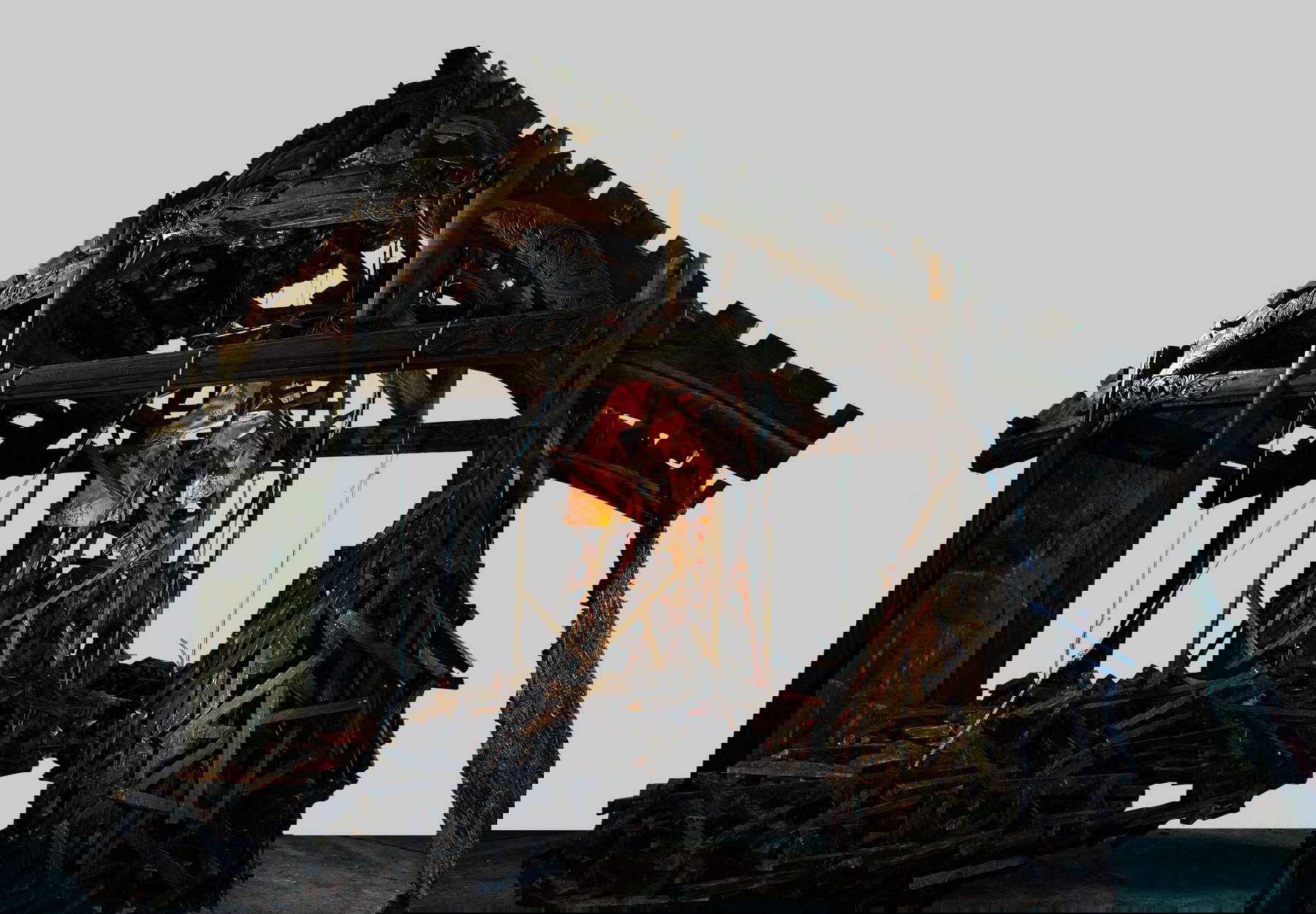
The highlight of his research is the use of living organisms as an integral part of the work. Thousands of silkworms are released on the surfaces of the sculptures, creating an ever-evolving process. Sericulture, which has been practiced in Vietnam for over two thousand years along with rice cultivation, is thus evoked in a living form: the silkworms produce threads of silk that weave into unpredictable patterns, helping to construct a narrative in the making. The same silk is used to make the Empress’ robe placed in the center of the structure.
Through this practice, the artist affirms his manifesto: history is an organic continuum, and the anonymous masses represent the true founding forces of civilization, maternal and protective figures that sustain the flow of life.
Alongside the exhibition, the Vietnamese pavilion offers a series of participatory cultural activities throughout the biennale, including workshops and moments of direct interaction. These initiatives allow international audiences to get closer to traditional lacquer techniques and other practices related to community life.
|
| Vietnam debuts at Venice Biennale with its own pavilion: here's what it brings |

Warning: the translation into English of the original Italian article was created using automatic tools. We undertake to review all articles, but we do not guarantee the total absence of inaccuracies in the translation due to the program. You can find the original by clicking on the ITA button. If you find any mistake,please contact us.















 IT
IT FR
FR DE
DE ES
ES CN
CN