





At the 61st edition of the Venice Art Biennale, Austrian performance artist and choreographer Florentina Holzinger (Vienna, 1986) returns to the spotlight. She does so within the Austrian Pavilion curated by Nora Swantje Almes by bringing to life Seaworld Venice, a multiple performance act that lends itself to wide readings. The main theme around which it revolves is water related to the fragile lagoon ecosystems, its rising together with floods caused by the climate crisis, tourist overcrowding and its waste but also the female body that becomes a dense space to confront dominant cultural narratives.
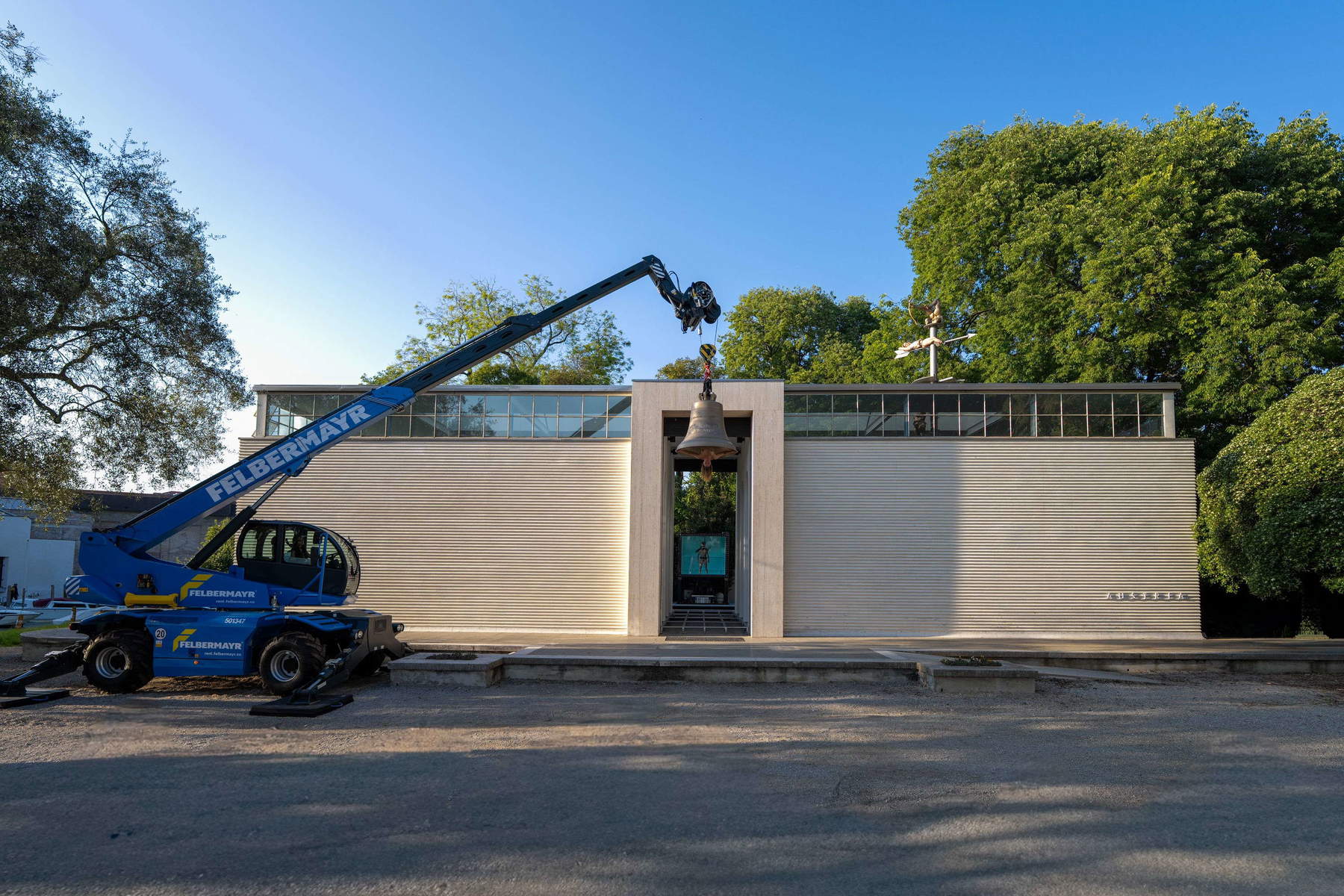
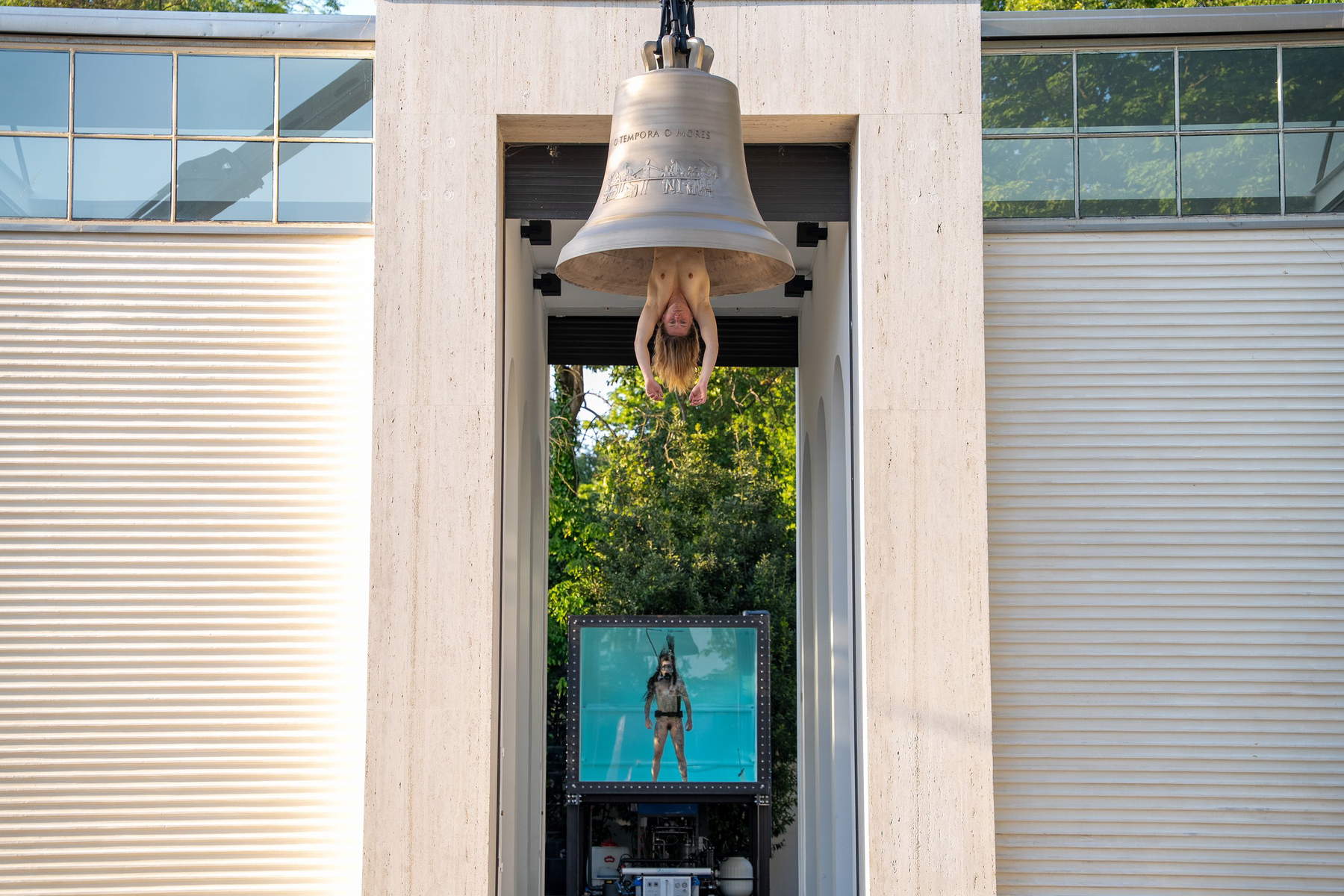
In front of the pavilion, raised by a crane, a large bronze bell recovered in the lagoon and previously carried in procession welcomes visitors to the site. On it stands the inscription “O tempora, o mores” (a famous Latin inscription from Cicero’s Catilinarium alluding to the corruption of society). At every hour a naked performer climbs the rope, hangs upside down inside it and takes her place on the clapper, making the bell ring vigorously left and right. The gesture can be interpreted as a cry of alarm or a rallying call toward an increasingly serious ecological situation, as well as a symbol of the passing of time, the deterioration of patriarchy and the religious system.
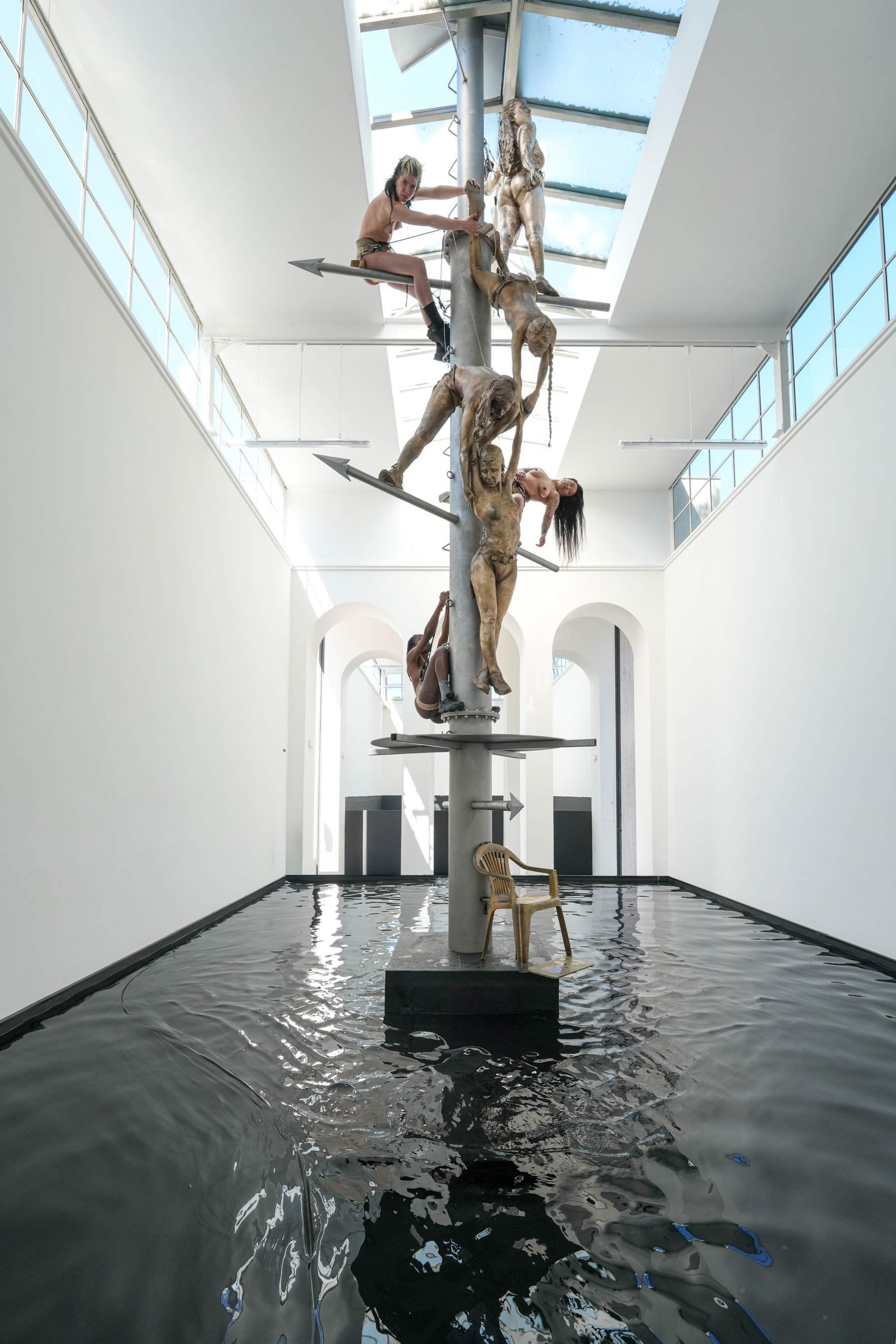
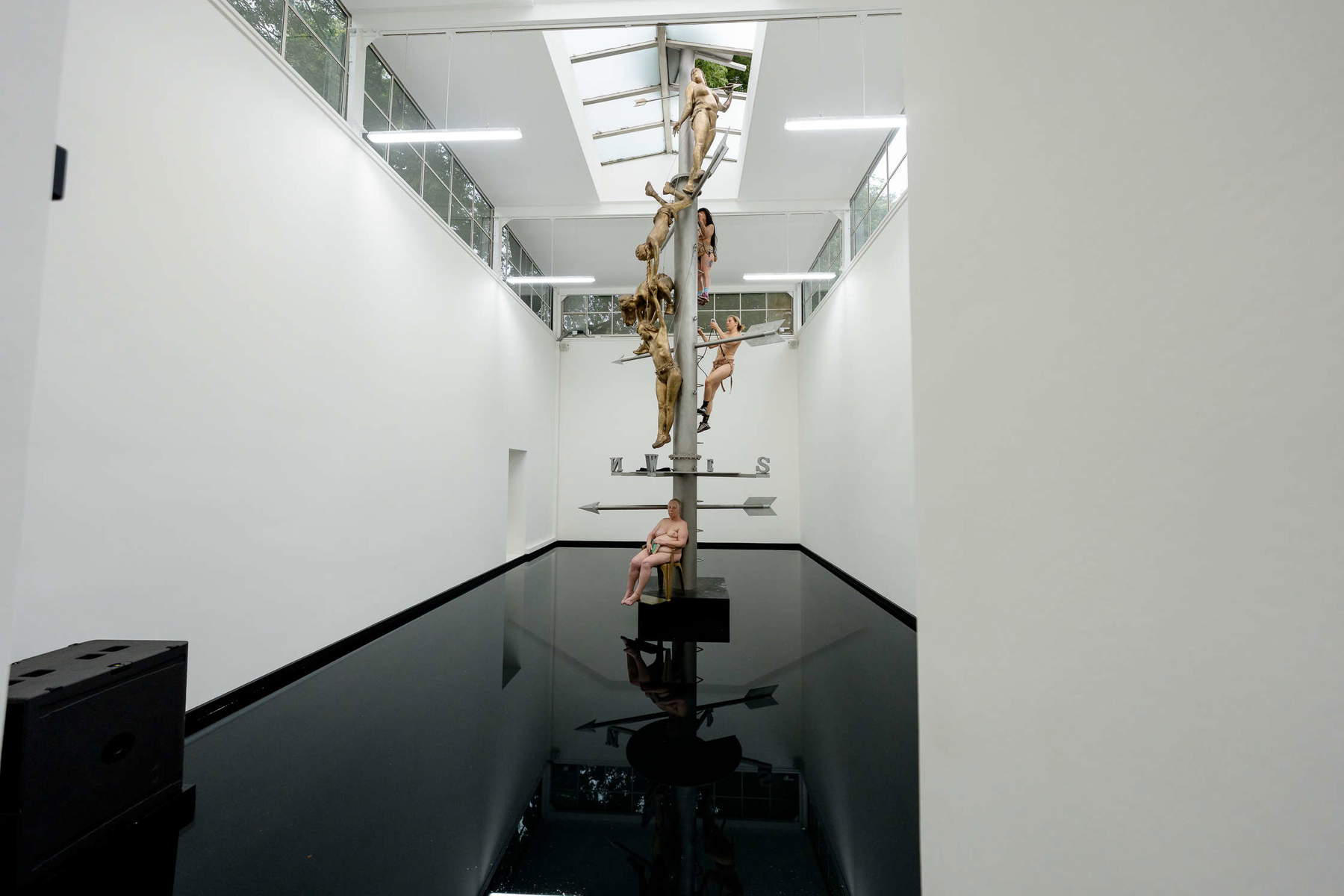
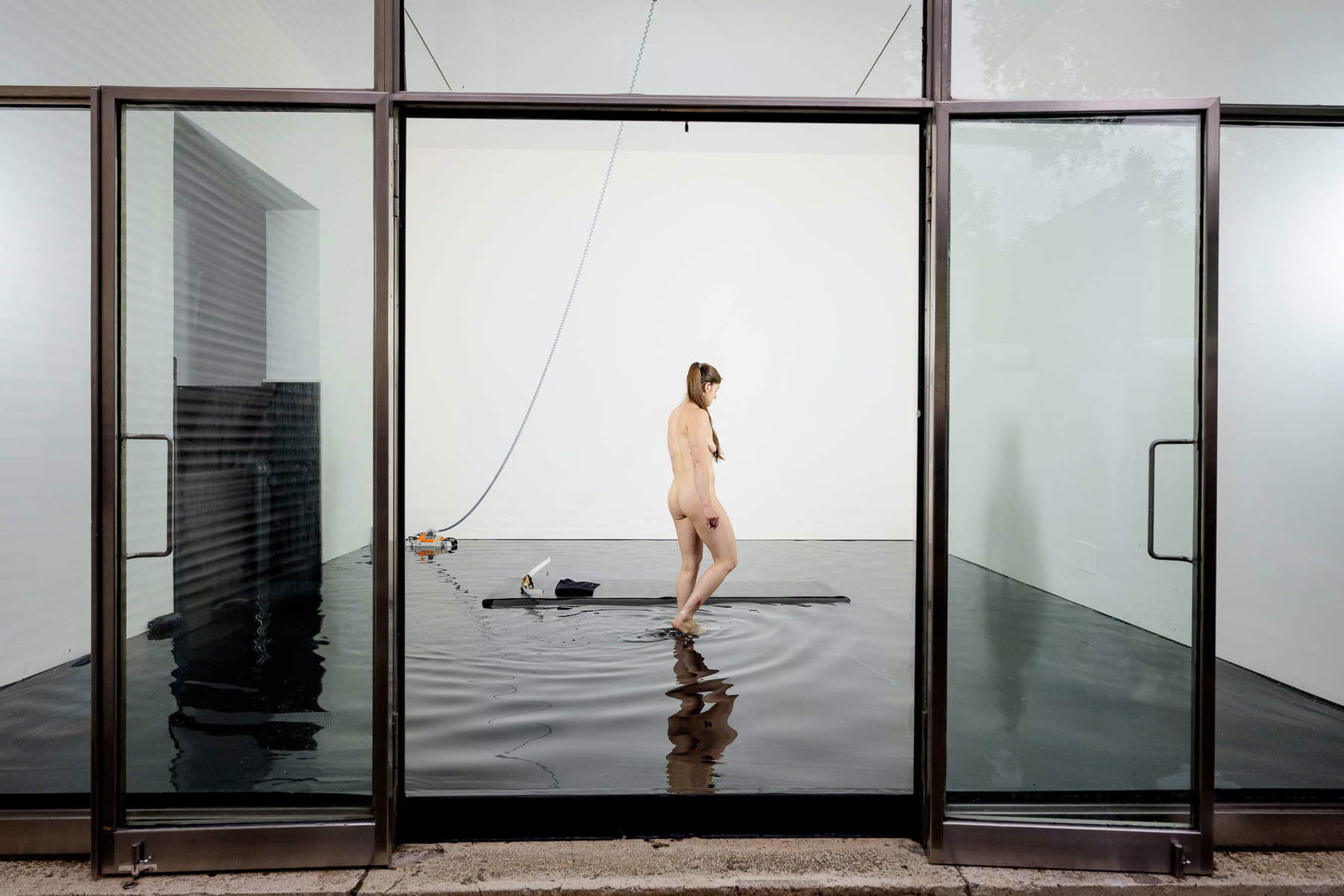
After crossing the threshold on which is engraved the provocative and explicit phrase “I live in your piss,” the audience enters a room where two different yet intrinsically connected actions take place: on the right side a weathervane, on which four bronze female sculptures representing a crucifixion have been cast, rises in the center of a pool and stands vertically piercing the ceiling. Making rotary movements almost as if it were a merry-go-round, it accommodates three young performers who climb and contort themselves on it, exhibiting ordinary, objectified but de-eroticized nude bodies in a continuous ascent that lands on a Christological deposition declined into the feminine. The critical text states that “this symbol of the deposition is transformed into a moment of collective force that rotates upon itself,” and that “the rotation of the figures with a change in the direction of the wind signals a radical departure from the status quo that heralds a defiant direction for a changing society.” However, what this highly impactful image conveys can inevitably be traced back to a critique of the commodification of the female body reiterated across the board (the wind vane, as tradition dictates, is in fact marked by the cardinal points), and also reiterated by the bell that, ringing at times like a death knell, indicates the end of female identity often reduced to a product.
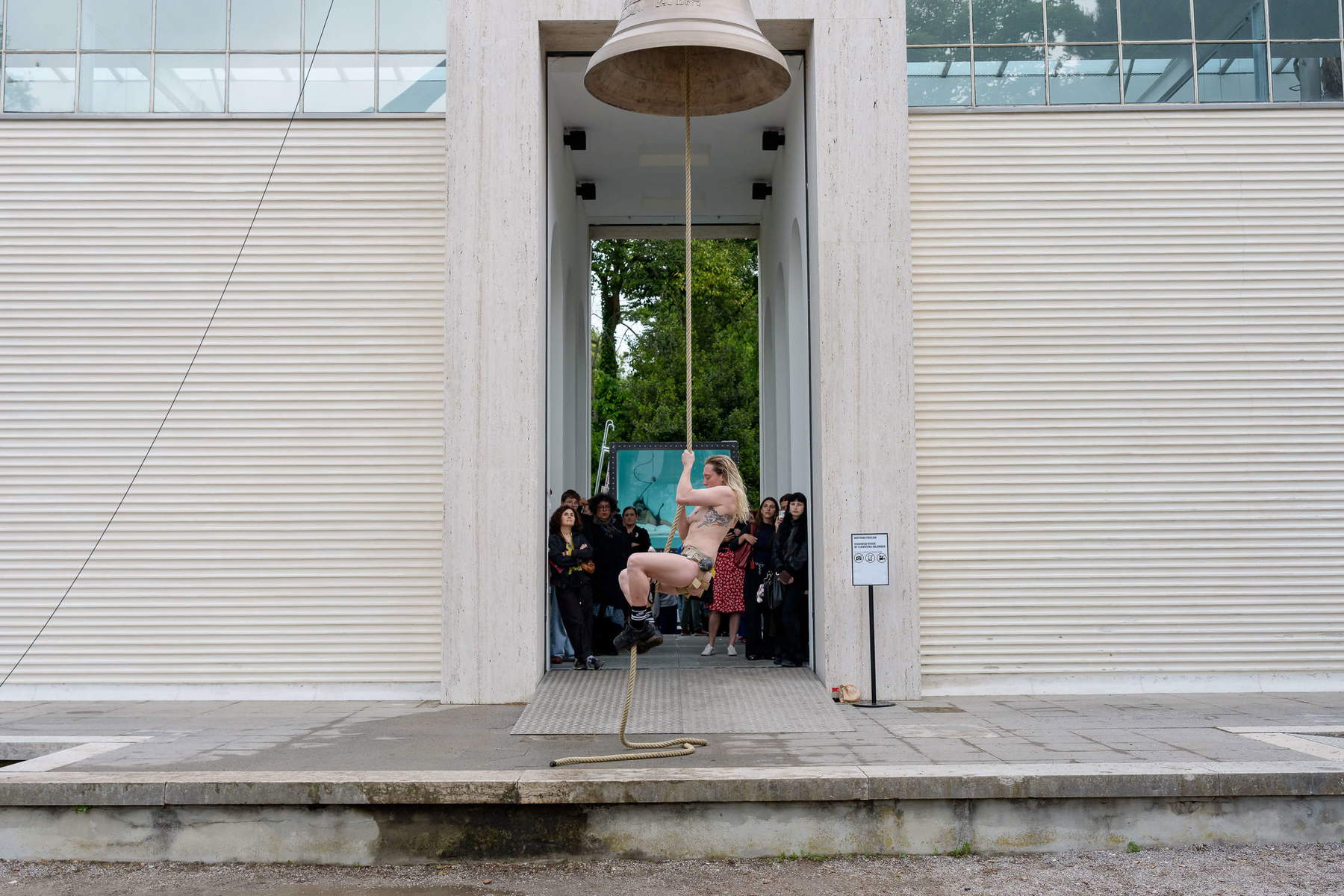
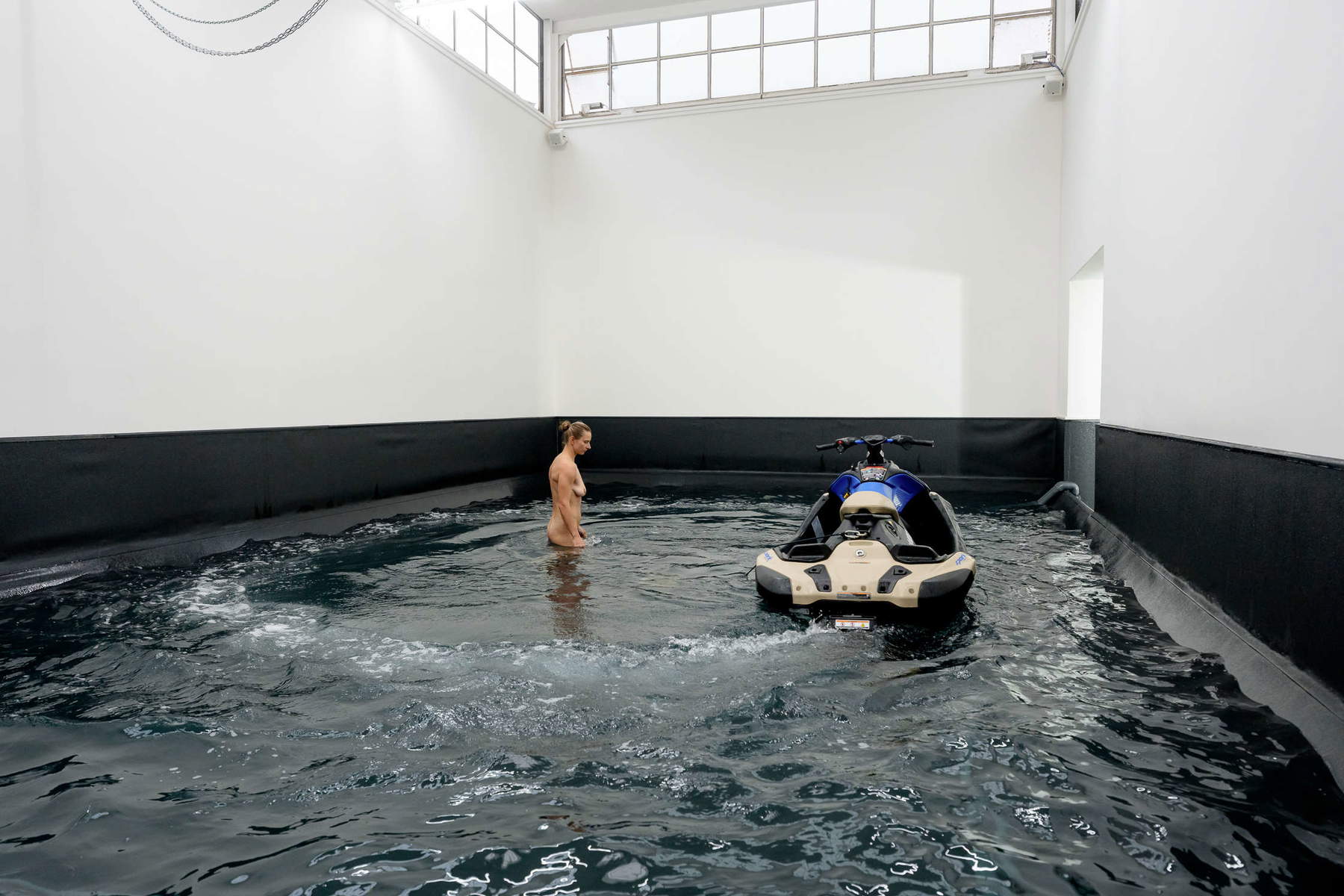
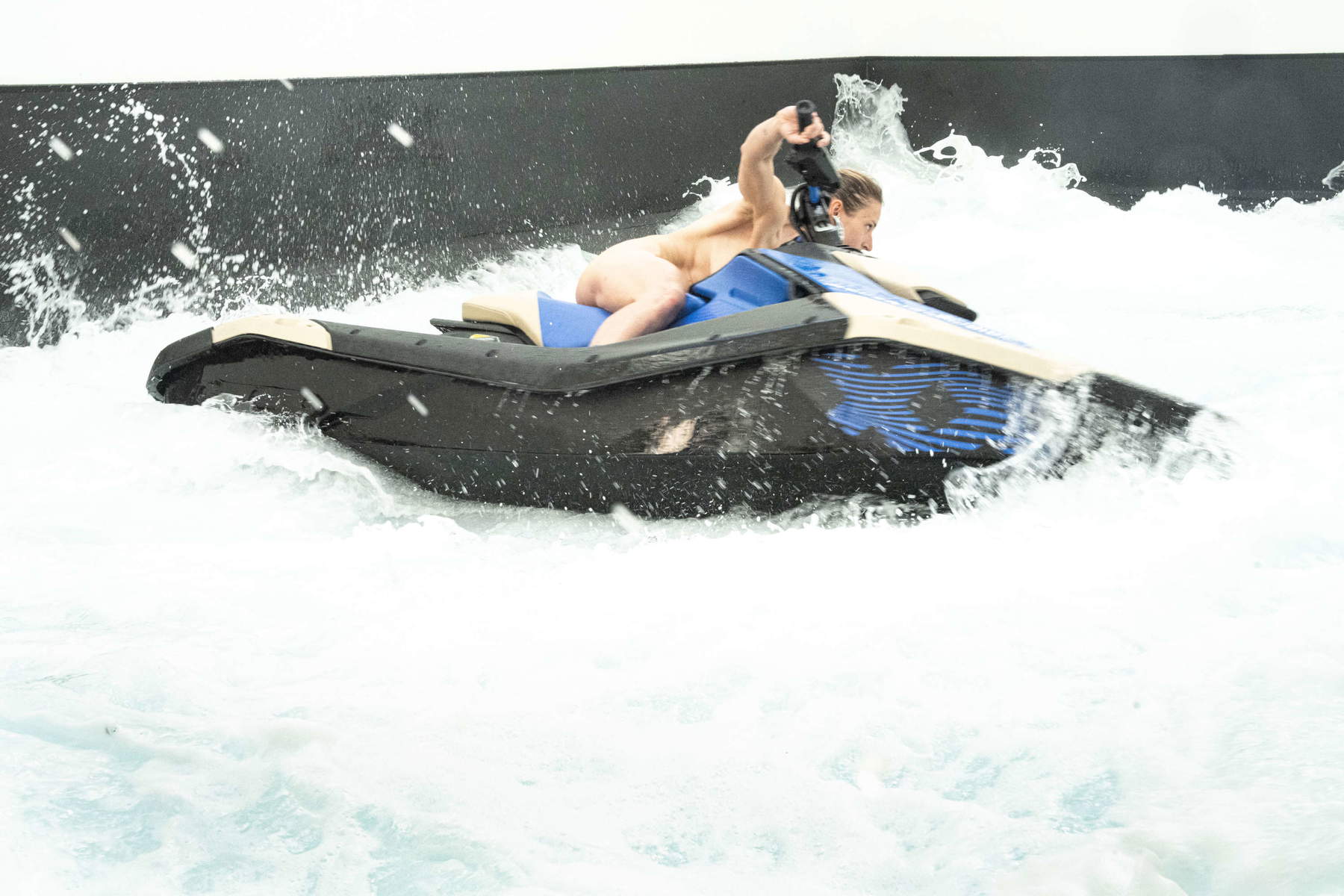
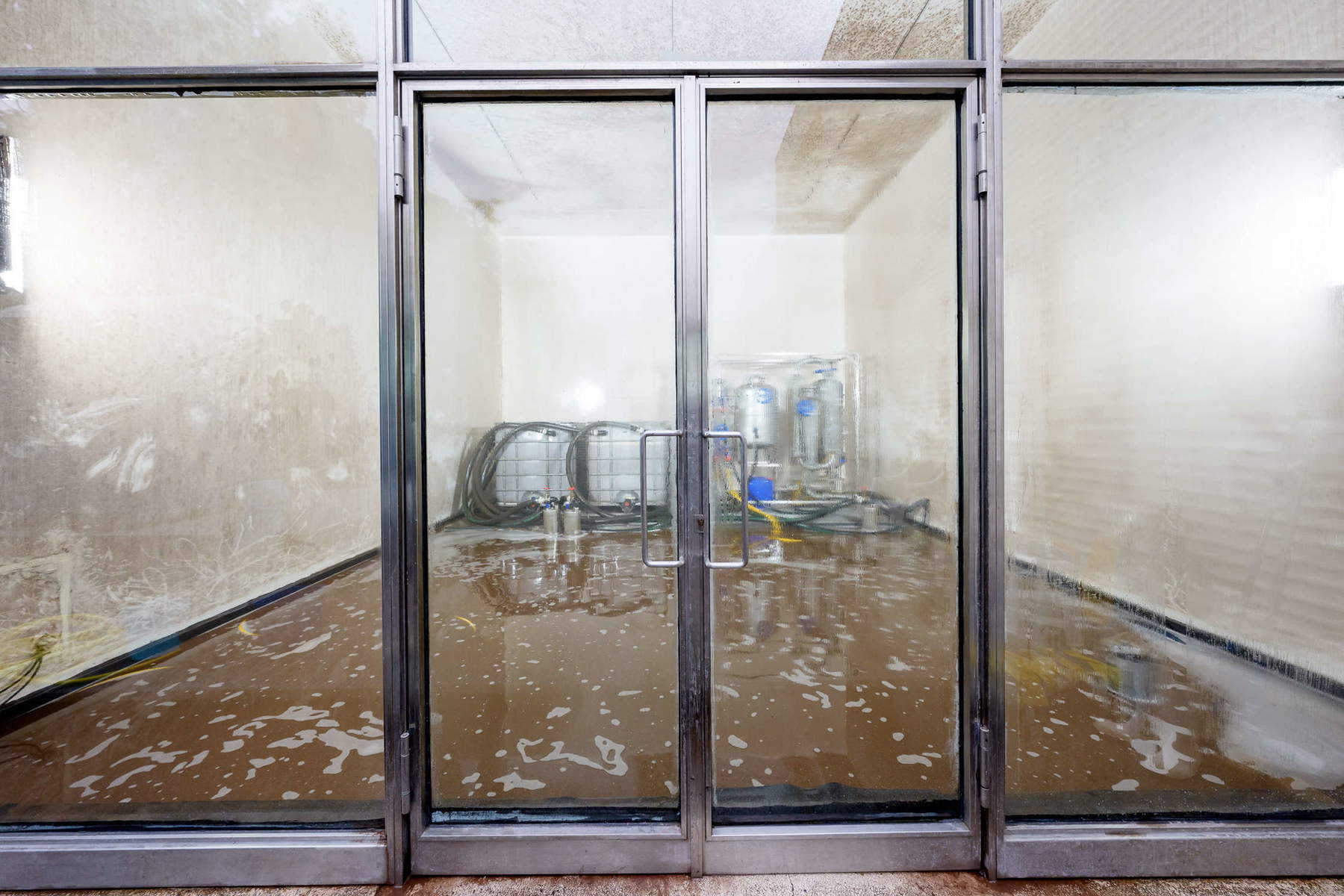
Placed on the base of the weathervane is a plastic seat that is occasionally occupied by an agée woman intent on reading or crocheting: in contrast to the hyper-exposed suspended bodies in perpetual motion, now alienated from the codes of desirability, she devotes herself to an anti-spectacular, almost anachronistic action within an unstable environment obsessed with transformation. On the opposite side, a performer-valkyrie drives a water motorcycle (an emblem of human control over nature), making continuous circular movements that become increasingly insistent and fast in a Dantesque hell circle short-circuit, until they splash the audience and flood the hall: an allusion to lagoon overtourism, violent, invasive, inexorable.
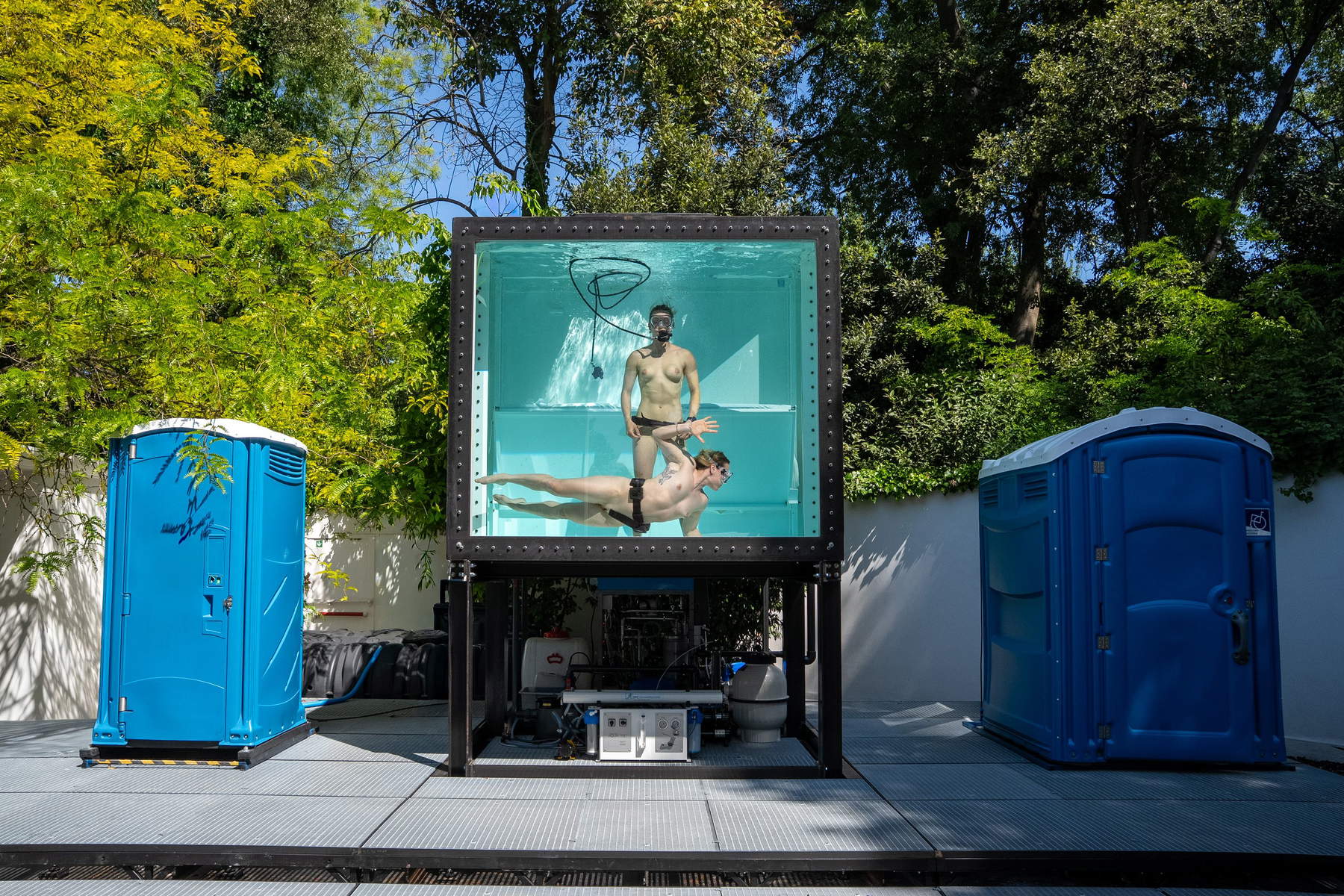
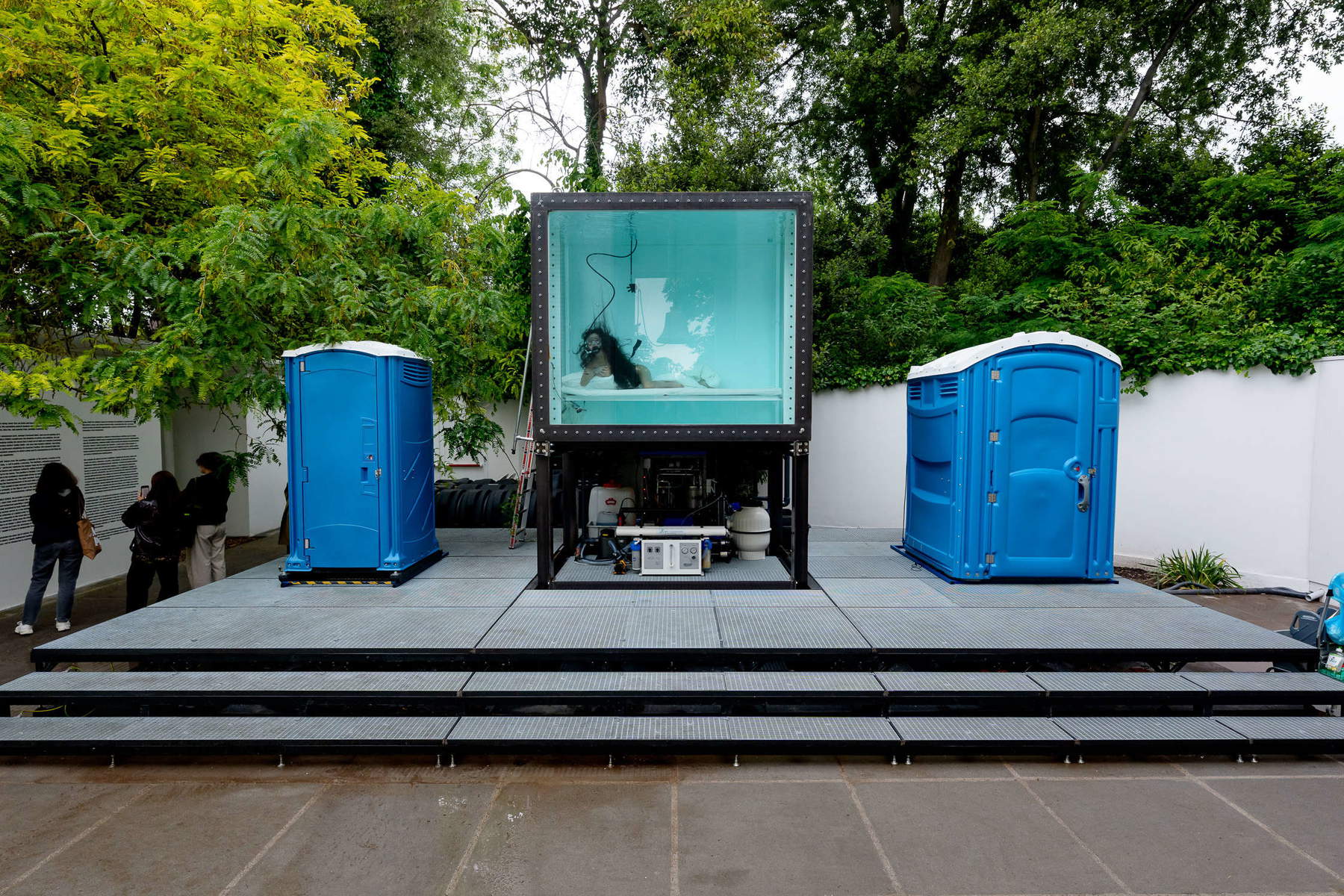
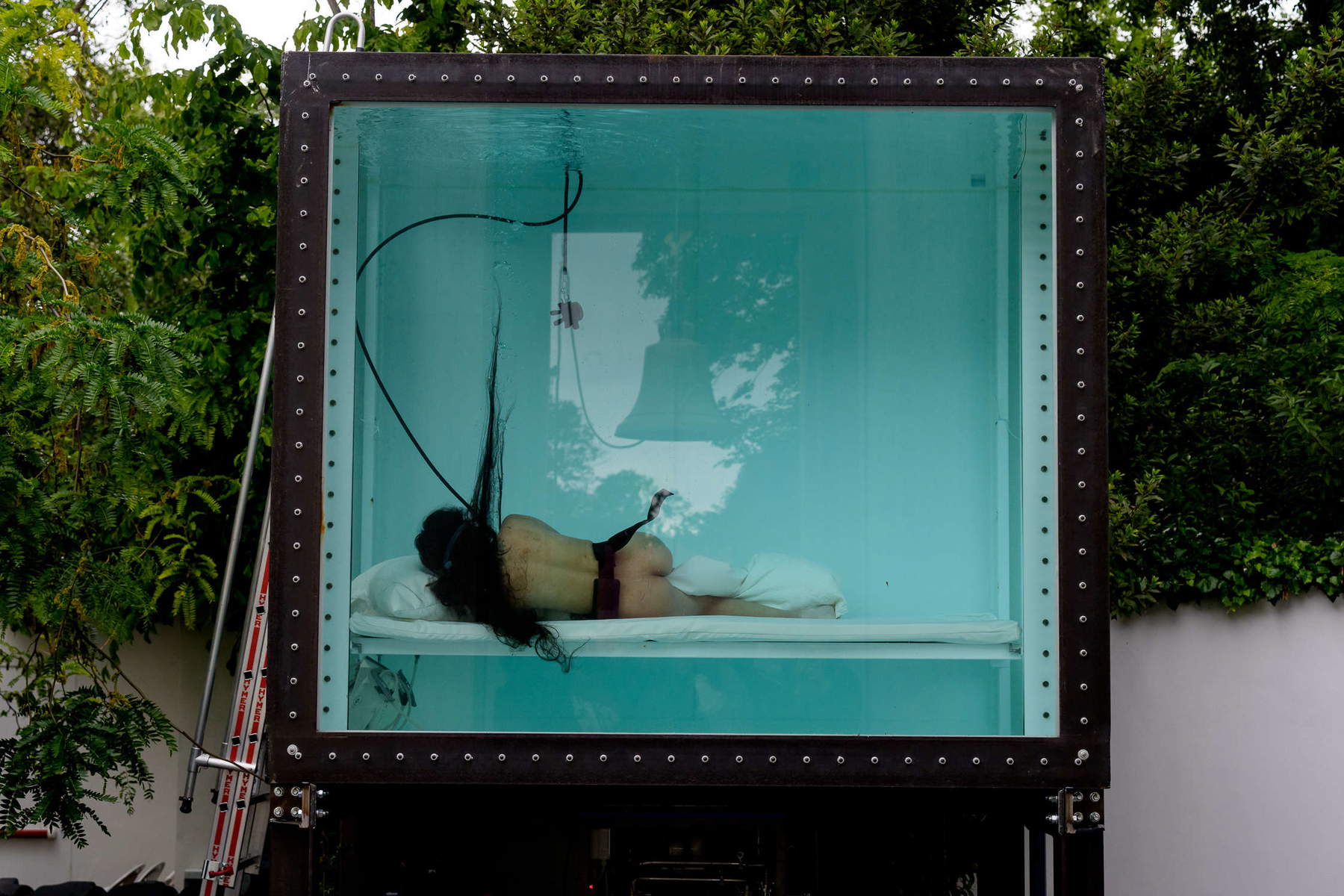
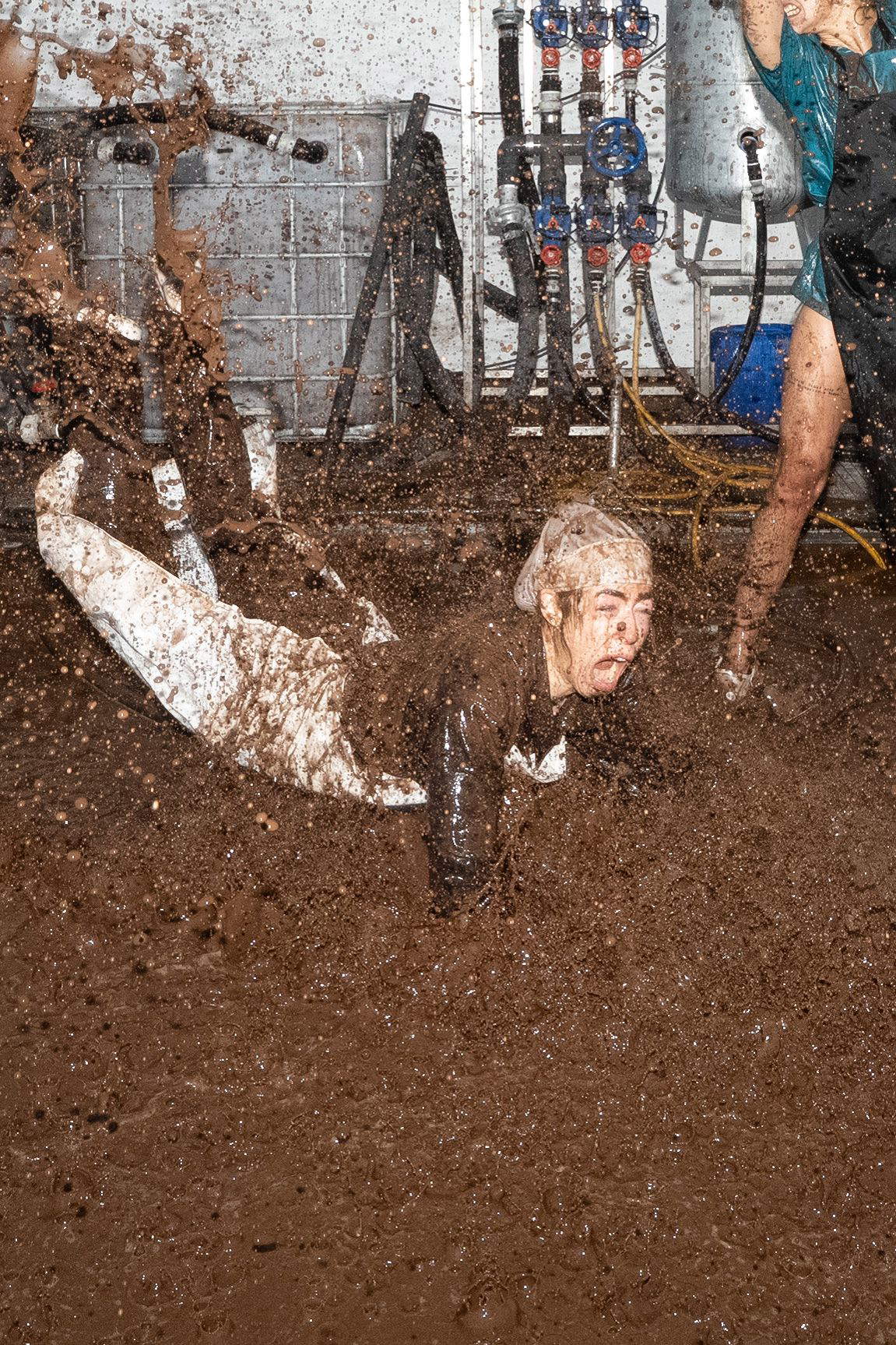
In the garden behind the pavilion, inside a large aquarium flanked by two chemical toilets, which visitors are encouraged to use, invited by women dressed as attendants (thus coming to feed with their bodily fluids, purified, the tank connected to them), performers, wearing diving masks, from time to time dive into it to pause or rest, lying on an underwater bed in what is meant to be a quotation of Giorgione’s Sleeping Venus. Unlike the 16th-century subject, the first reclining nude in the history of art painted in Venice, elegantly asleep on a white cloth with a pillow covered by a red drape, the chosen performer dresses as a survivor observing a decaying civilization liquefied in urine. Her test of endurance likens her to a now hybrid, aquatic creature whose iconography seems inscribed in a Central European sensibility linked to Austrian and Germanic folklore. On one side, machine-dogs (identified as mechanical Cerberus) garrison the pool (designated as a “sacrificial altar”) while a little further on in a room filled with slime emitted from the sewage system that sprays it everywhere, a few performers scramble to try to stem a situation that now seems to have degenerated.
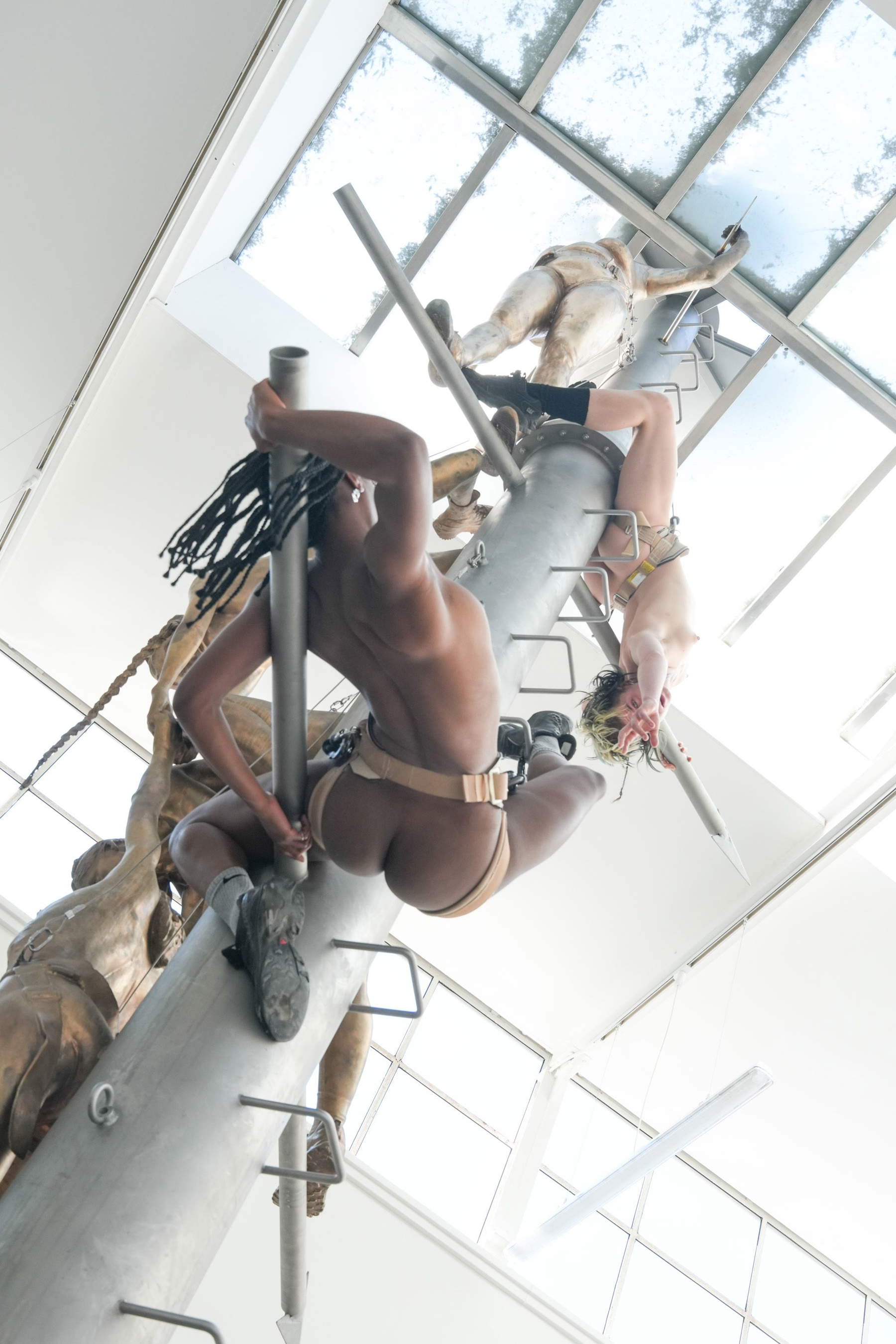
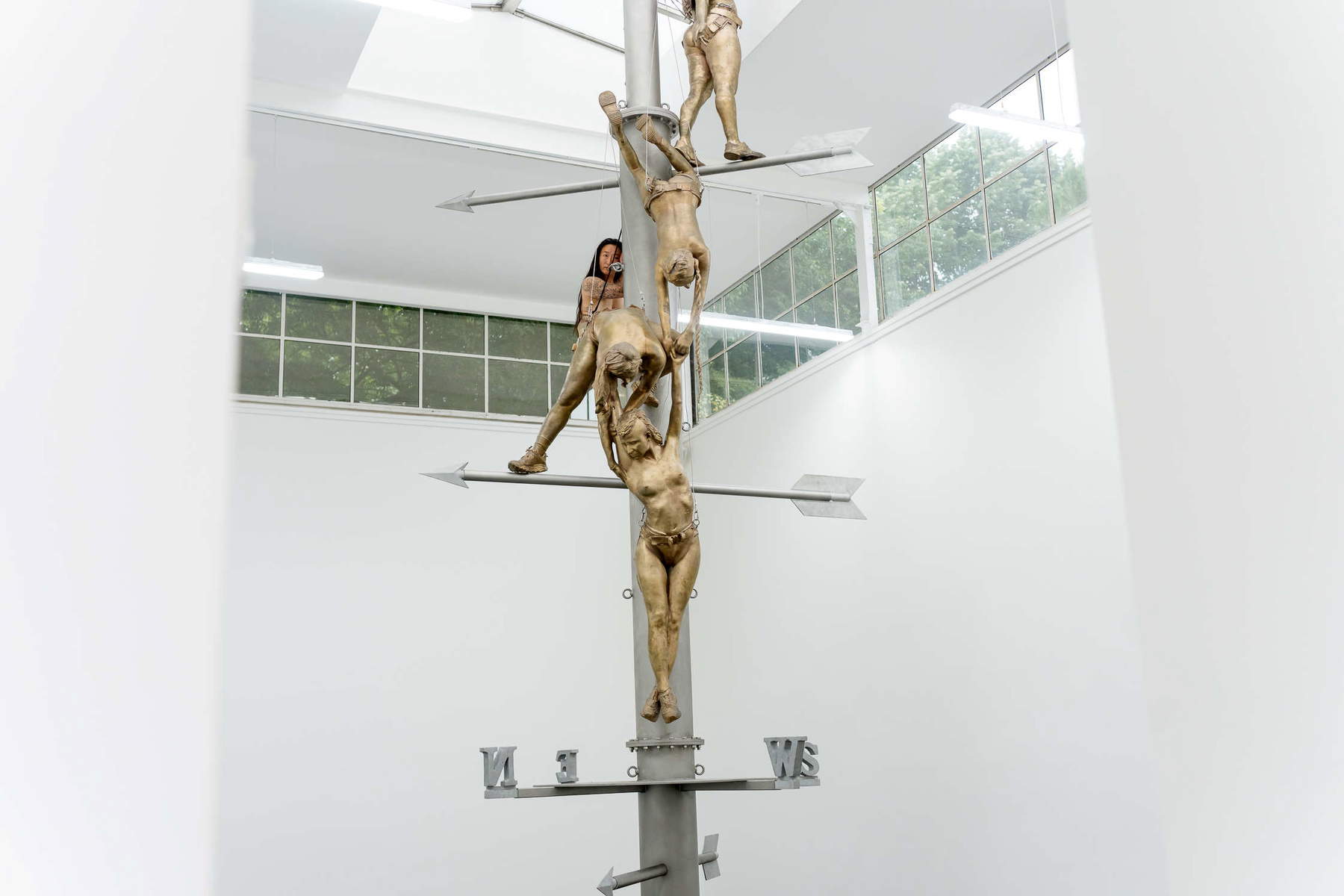
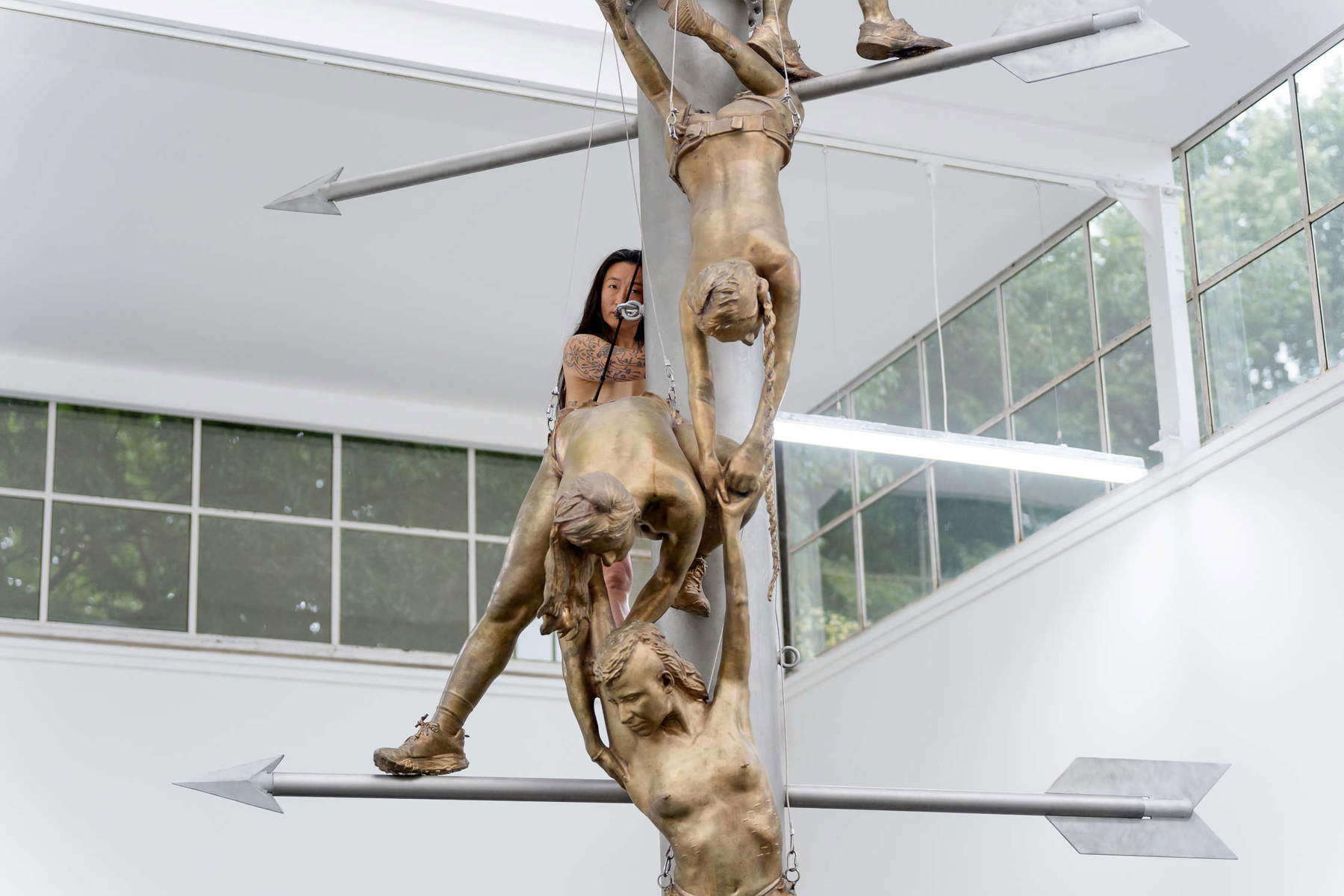
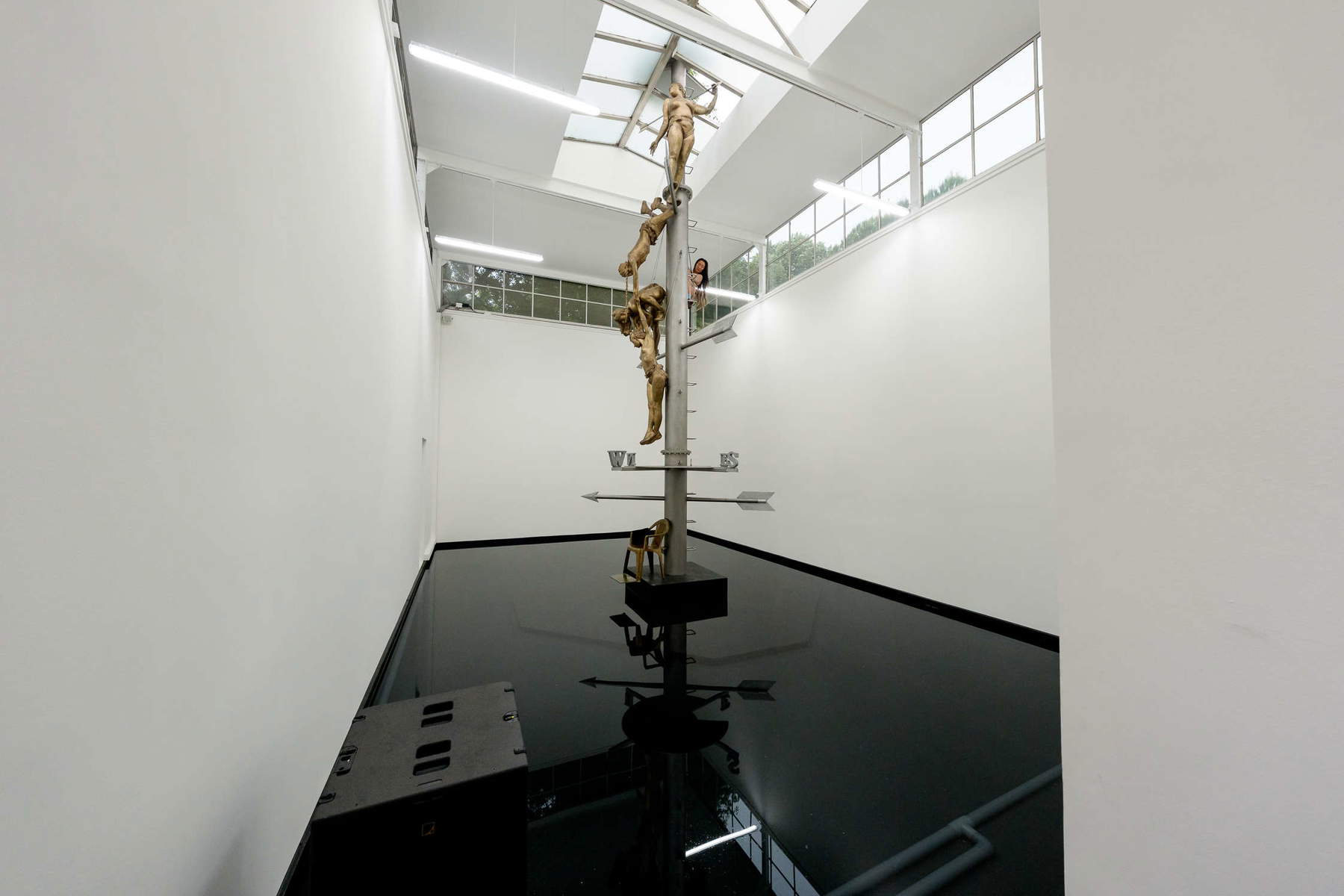
Holzinger converts the exhibition space into a “Frankensteinian dystopia,” a hybrid place between water park, sewage treatment station and sacred building in a work that speaks of climate change, ecological catastrophe and the interdependence of body and machine. In Venice, he reintroduces, revisiting them, some leitmotifs present in past works such as TANZ in 2019, Ophelia’s got talent in 2023 and Sancta in 2024: the constant nudity of bodies, the strictly female presence, the bell, the crucifixion, a certain athleticism and endurance tests. In these performances where a constant provocative and transdisciplinary approach is evident, high culture such as ballet is fused with pop entertainment, circus arts, body art, horror aesthetics, strip clubs. These are performances that literally shocked the audience, including performers hanging by their hair, blood, needles, masturbation, profane scenes, motorcycles on stage, even a helicopter. The use of an exposed, ritualized and mangled body also finds echoes in Austrian Catholic Baroque painting, where it is shown martyred, in ecstasy amid suffering and suspension (as evidence of this, the artist often uses slings, cranes, hooks). Florentina, a former enfant terrible, has thus captured the attention of audiences and critics alike, obtaining numerous awards and a mention in one of the most prestigious theater festivals in the Germanic area, the Theatertreffen.
Holzinger’s poetics scandalize, arouse curiosity (as evidenced by the kilometer-long lines already present on preview days to gain access to the Austria pavilion), and make people talk about her (one only has to open social media or an art journal to come across countless shots of her performance in Venice). Seaworld Venice, taking stock, is perhaps one of the works most deserving of attention at this lagoon kermesse, even if it comes across as a derivative work, a large postmodern patchwork imbued with references taken from art history: first and foremost the use of radical nudity, in line with 1970s women’s body art (see Valie Export), which aims not only at scandal and attention-grabbing as much as to emphasize a body that acts, exposes itself to risk without mediation, that does not censor female bodily fluids such as blood, milk, urine, able to evade patriarchal aesthetic codes that impose youth, harmony and perfection. Holzinger also cites the experience of Viennese Actionism (particularly figures such as Hermann Nitsch and Günter Brus), while rewriting it in a feminist key along with countless forays into pop culture, and contemporary experimental theater, a sphere from which the artist comes along with dance.
The repurposing of even tableaux vivants where the theme of the crucifixion emerges as an archetypal Western image, often used not in a purely religious but in a symbolic sense (acted out or evoked), is also borrowed from some of his predecessors such as Nitsch, Bill Viola, Marina Abramovic, and Pier Paolo Pasolini.
The iconography of the bell enclosing within it an inverted human being used as a clapper finds in turn a visual kinship in a drawing by Hieronymus Bosch and in a detail of the central compartment of his apocalyptic Triptych of the Last Judgment, preserved at the Groeningemuseum in Bruges. In this section of the work, almost entirely dominated by the hellish tortures inflicted on sinners by insect-like demons, iconographic motifs already present in the Delights and the Judgment of Vienna reappear, along with images inspired by proverbs and sayings from the Flemish tradition. And it is undeniable that the artist’s performative language, even in the contemporary theater shows offered in recent years, is steeped in suggestions influenced by Nordic painting and the Flemish grotesque. Also coexisting in the work are themes that are particularly recurrent today and perhaps a bit too overused, such as a certain decadent carnival aesthetic, suggestions of ecological dystopia, reflections on the conflicting relationship between man and technology, and even the presence of robot dogs (already employed by numerous artists such as Agnieszka Pilat, Silke Grabinger and Riccardo Benassi, among others).
Holzinger constructs an intentionally excessive, ambiguous, and disturbing imagery, intentionally seeking shock in order to cleverly attract the visitor’s attention by fueling a certain voyeurism that is at times morbid, in fact involving a female body that exposes itself without filters and forces the viewer to ask whether it is exhibitionism, emancipation, or exploitation. This is on a first level, since, as the curator argues, the operation is “a threshold,” instrumental in then delving into “other” themes. Seemingly in friction with the “minor tones” evoked by the recently deceased curator Koyo Kouoh and indicated as a common thread of the Biennial, the artist re-enters it with a mode ofoperating certainly not contemplative nor whispered or poetic but, exposing ecological, cultural, bodily fragilities and putting at the center of the show what is usually concealed or removed, he re-enters it with a post-punk spirit. The project will develop beyond the Giardini della Biennale to be acted out in public city spaces through performances conceived from 2020 and titled Etudes that interweave bodies, sounds and architecture.

The author of this article: Tristana Chinni
Tristana Chinni nasce a Bologna dove risiede. Dopo studi classici, si iscrive alla Facoltà di Lettere e Filosofia di Bologna, laureandosi in Storia del Cinema presso il DAMS Spettacolo e successivamente in Storia dell’Arte. Ha conseguito un Master in Comunicazione per le imprese culturali. Giornalista dal 2013, critica d’arte e curatrice, collabora con varie e note riviste cartacee e online specializzate nel settore artistico e culturale. Dal 2020 scrive per Finestre sull’Arte; lavora presso l’Alma Mater Studiorum-Università di Bologna.Warning: the translation into English of the original Italian article was created using automatic tools. We undertake to review all articles, but we do not guarantee the total absence of inaccuracies in the translation due to the program. You can find the original by clicking on the ITA button. If you find any mistake,please contact us.


























 IT
IT FR
FR DE
DE ES
ES CN
CN


