





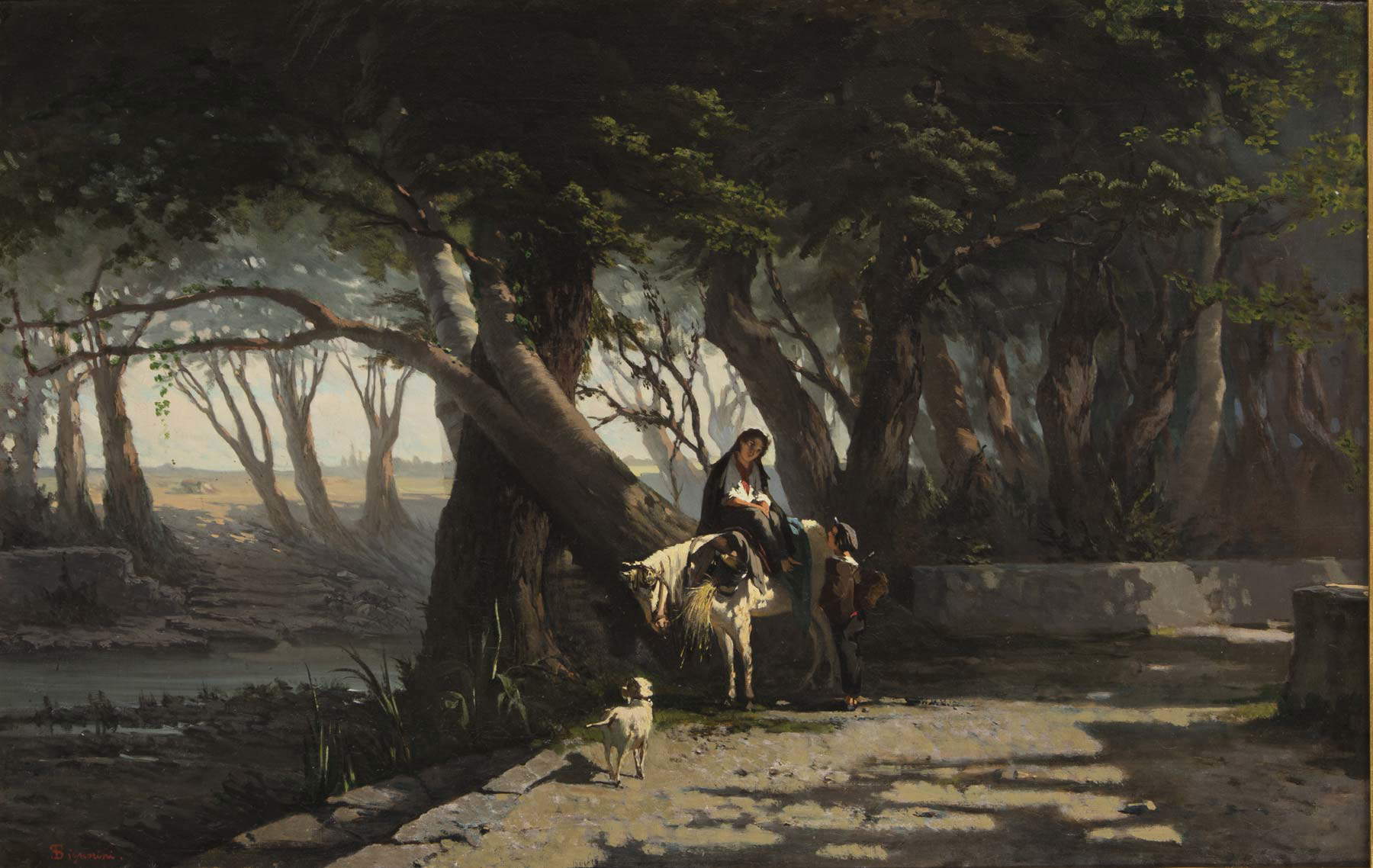
Giacomo Puccini ’s most famous arias immediately immerse us in the atmosphere of the Belle Époque, the same atmosphere breathed by Giovanni Boldini, the painter of the elegant and seductive women who lived in the fascinating and vital period between the late 19th and early 20th centuries. Two masters, one in music and the other in painting, who best embodied the spirit of the era. And that is why the choice to accompany, with Puccini’s musical background, the entrance of visitors to the exhibition Giovanni Boldini. The Seduction of Painting, set up in the rooms of the Cavallerizza in Lucca until June 2, 2026, does not jar or distract, but on the contrary creates an ideal parallel with one of Italy’s greatest composers, to whom the city of Lucca was the birthplace, diving poetically into a past, if one thinks about it, not so distant from us (only from a temporal point of view of course, since the progress we boast of today was only just around the corner). An exhibition on Giovanni Boldini is certainly nothing new, so much so that the very concluding essay by Nicoletta Colombo in the accompanying catalog is devoted to the exhibitions and criticism of the last fifty years focused on the Ferrara artist, but if on many occasions our dear painter has been presented almost exclusively by virtue of his vibrant and flamboyant female portraits, splendidly attractive because of the artist’s great portraiture skills, deeply immersed in the bourgeois environment of the Belle Époque, the current Lucca exhibition curated by Tiziano Panconi has the merit of making the public understand how Boldini is not only this. Before the most famous “Parisian” portraits (do not forget that Boldini is considered one of the three main Italiens de Paris along with Giuseppe De Nittis and Federico Zandomeneghi), he in fact fully gathered all the innovative scope, particularly luministic, of the Macchiaioli during his long stay in Florence, starting in 1864, thanks to the fruitful dialogues with some of its exponents, including Telemaco Signorini and Cristiano Banti, and the mutual influences with Giovanni Fattori, and the decorative effects of Michele Gordigiani, portraitist of thelast Grand Ducal Florence who first welcomed Boldini to his Florentine studio. But the Ferrara-born artist was also a good landscape painter: the most significant works in this sphere, as Stefano Bosi states in his essay devoted to Boldini as a landscape painter, are to be considered those in which “the force of wild nature and the vitality of the popular world, made up of work, daily gestures and family values” emerge; he was also one of the artists of the Maison Goupil, whereby, as Panconi explains, “the Boldini figure was enriched with minute punctuation through the use of tiny brushstrokes, unparalleled in the finished Flemish-style tablets wanted by Goupil in the style of Fortuny, enchanting audiences halfway around the world. The subjects, while retaining the natural light introjected between Florence and Castiglioncello and the relationship with the real, drew inspiration above all from imaginary anecdotes of eighteenth-century life, inspired by the court of Louis XIV and reconstructed with plenty of costumed models, in noble palaces or in the park of Versailles,” but he was also a skilled engraver and draughtsman (Tiziano Panconi calls him a “swordsman of the sign”).
All this versatility, which therefore goes beyond the most famous portraits of well-dressed and coiffed ladies, is well expressed along the entire exhibition itinerary, chronologically divided into six sections, or rather four chronological sections that give an understanding of the evolution of Boldini’s painting, to which is added one dedicated to Vincenzo Giustiniani, a Ferrara resident in Lucca and a collector close to the Macchiaioli, and another dedicated to a selection of works on paper. Finally, the curatorial choice to accompany Boldini’s paintings and drawings from important museums, including the Uffizi Galleries and the Giovanni Boldini Museum in Ferrara, and from private collections, with a rich nucleus of works by artists contemporary with him, such as Signorini, Zandomeneghi, De Nittis, Antonio Mancini, and Vittorio Matteo Corcos, is useful for contextualizing his art in the artistic scene of the time.
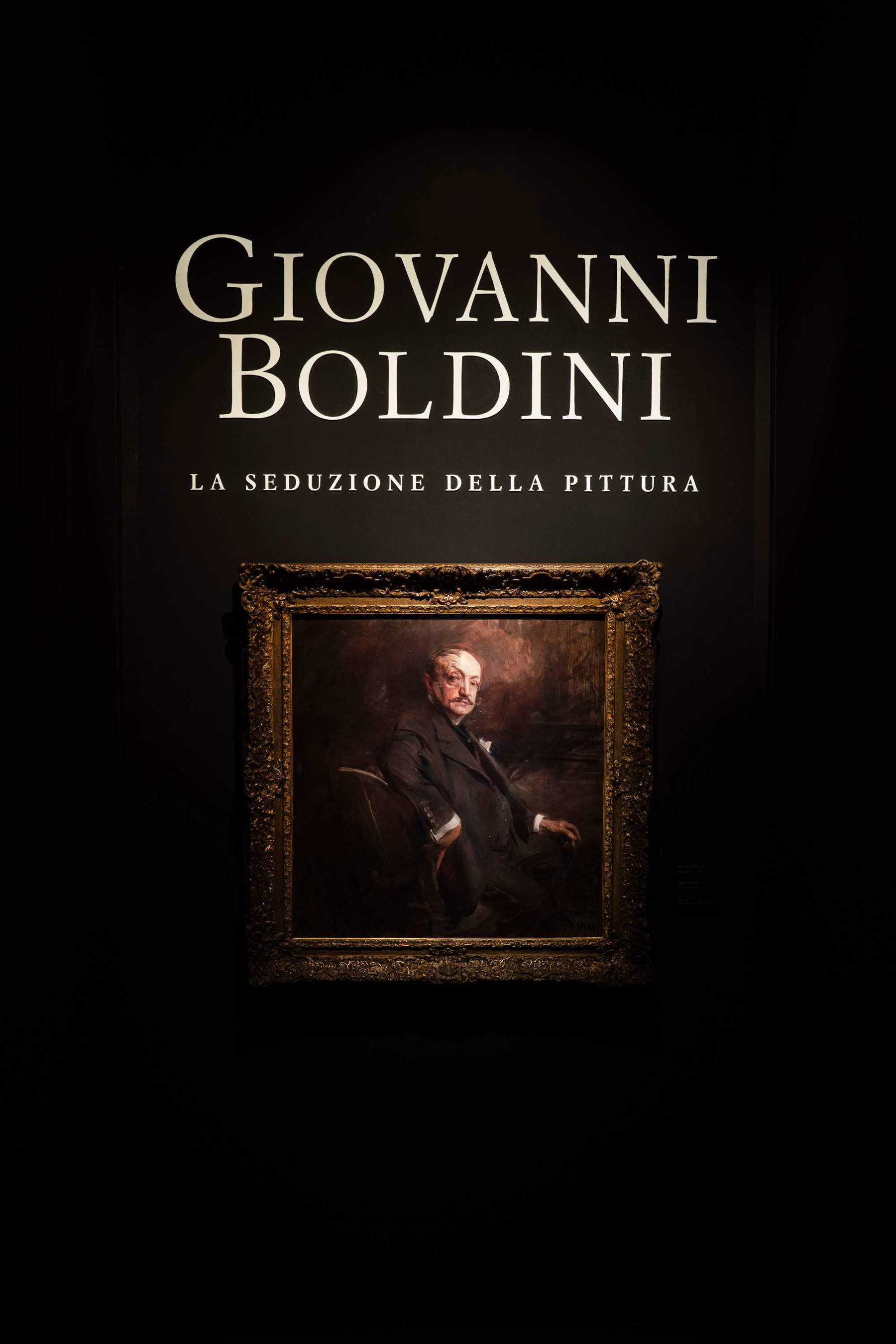
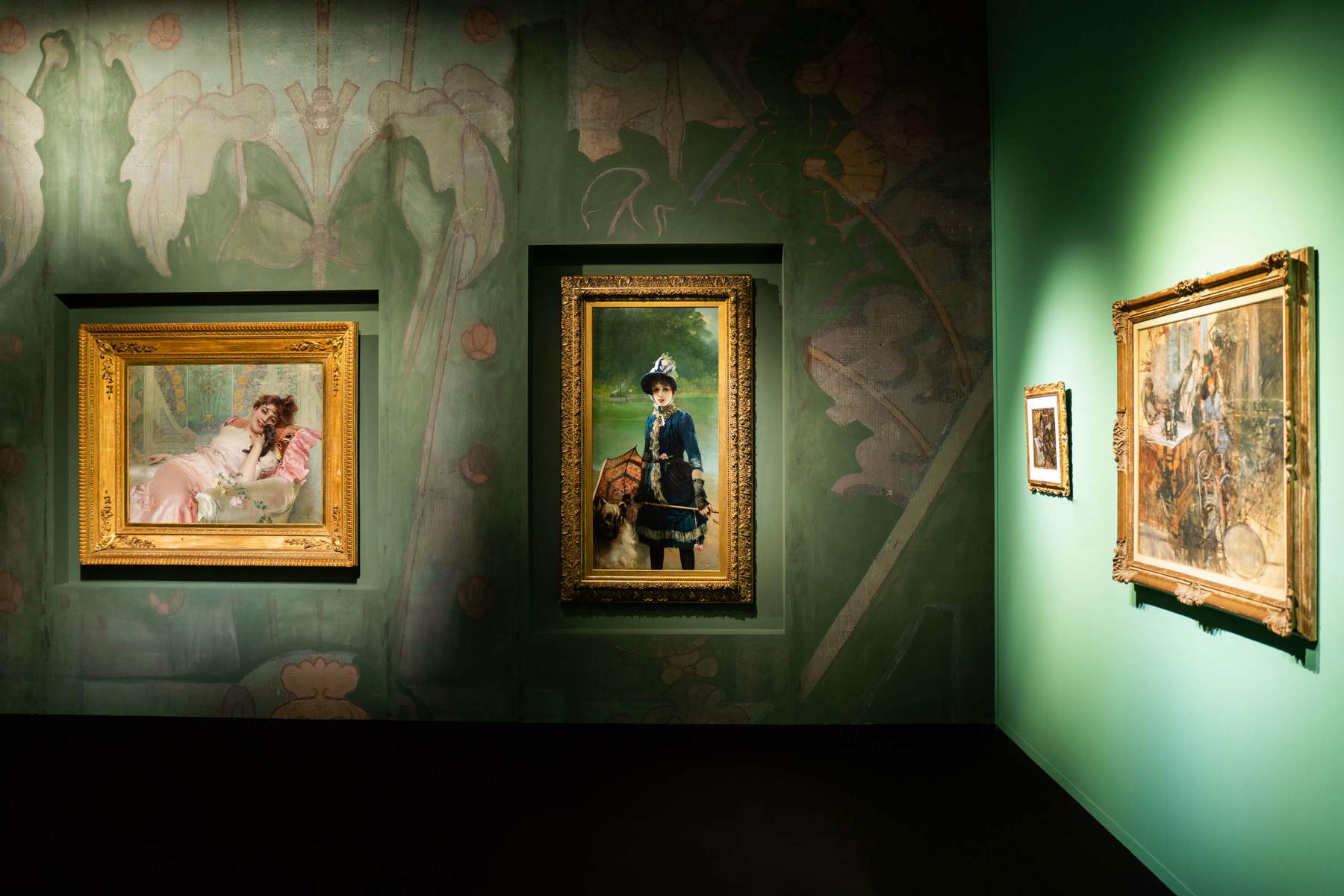
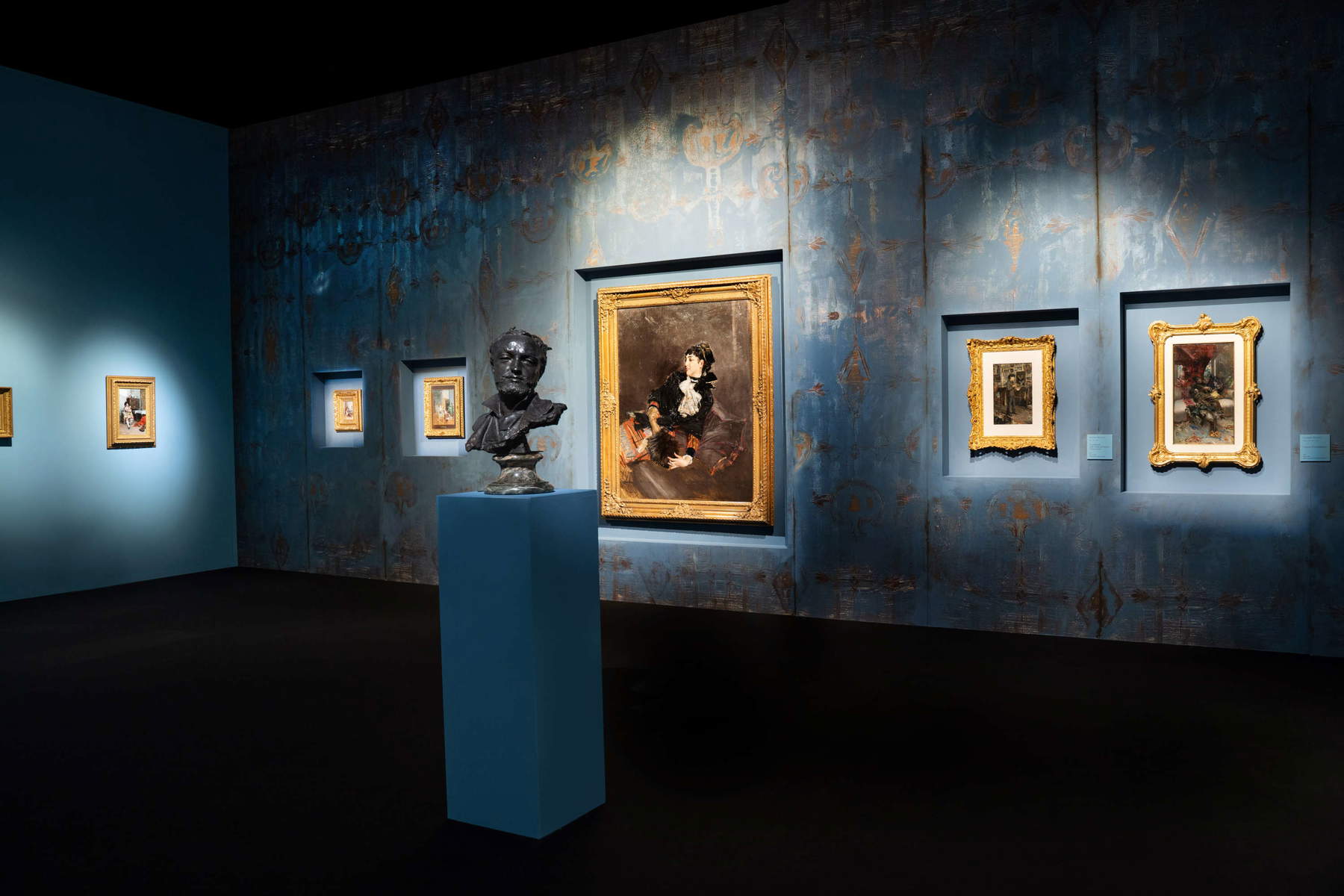
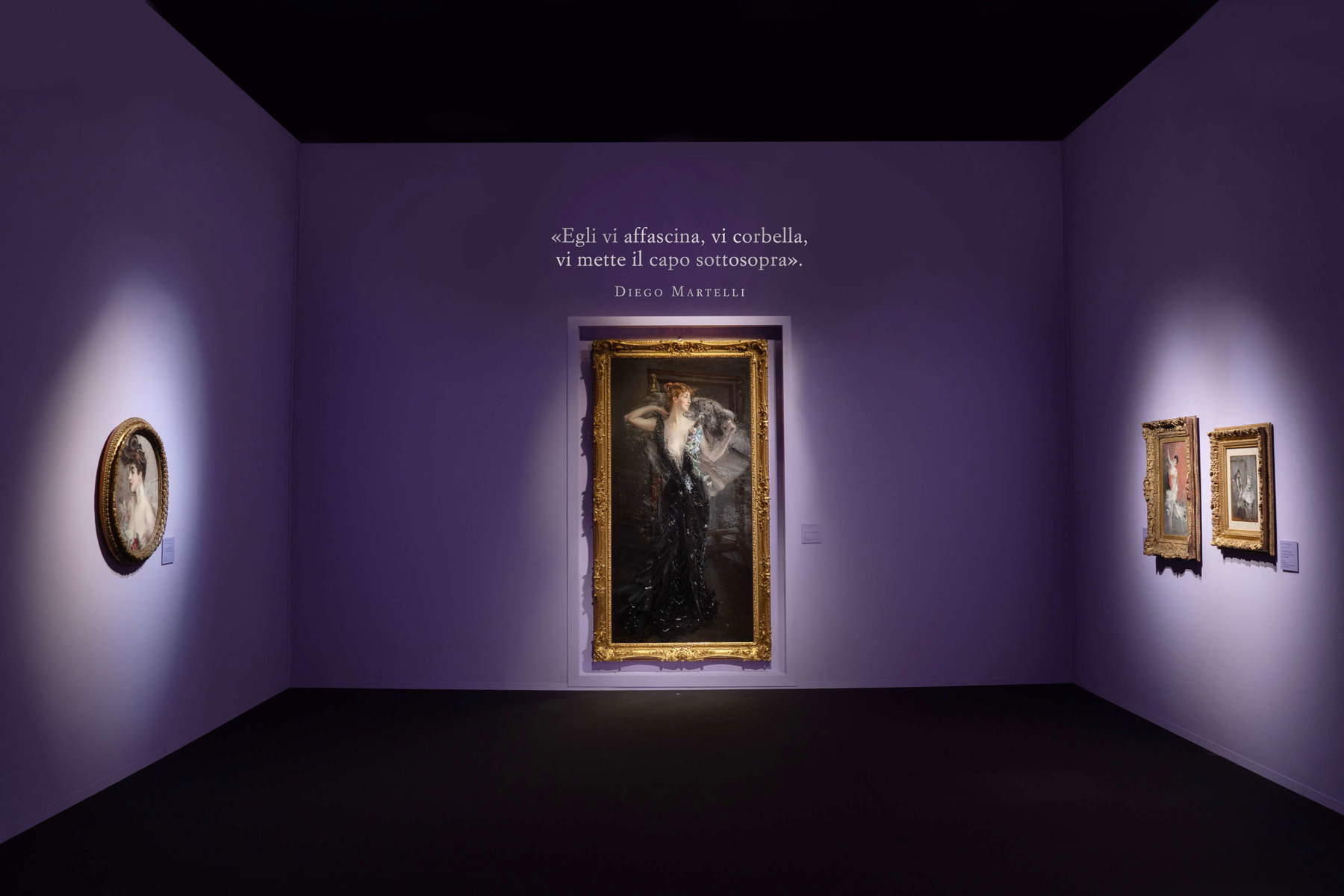
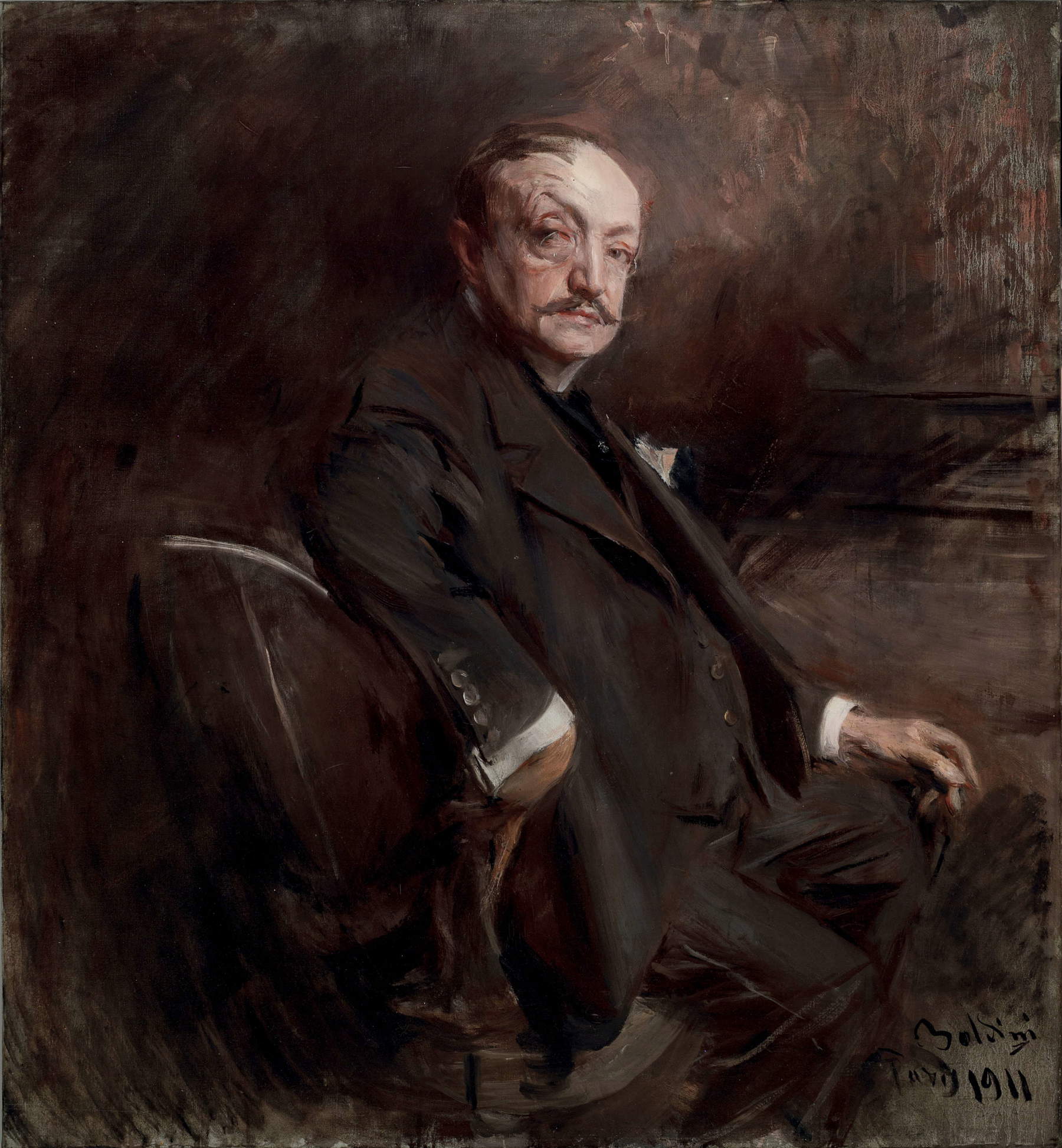
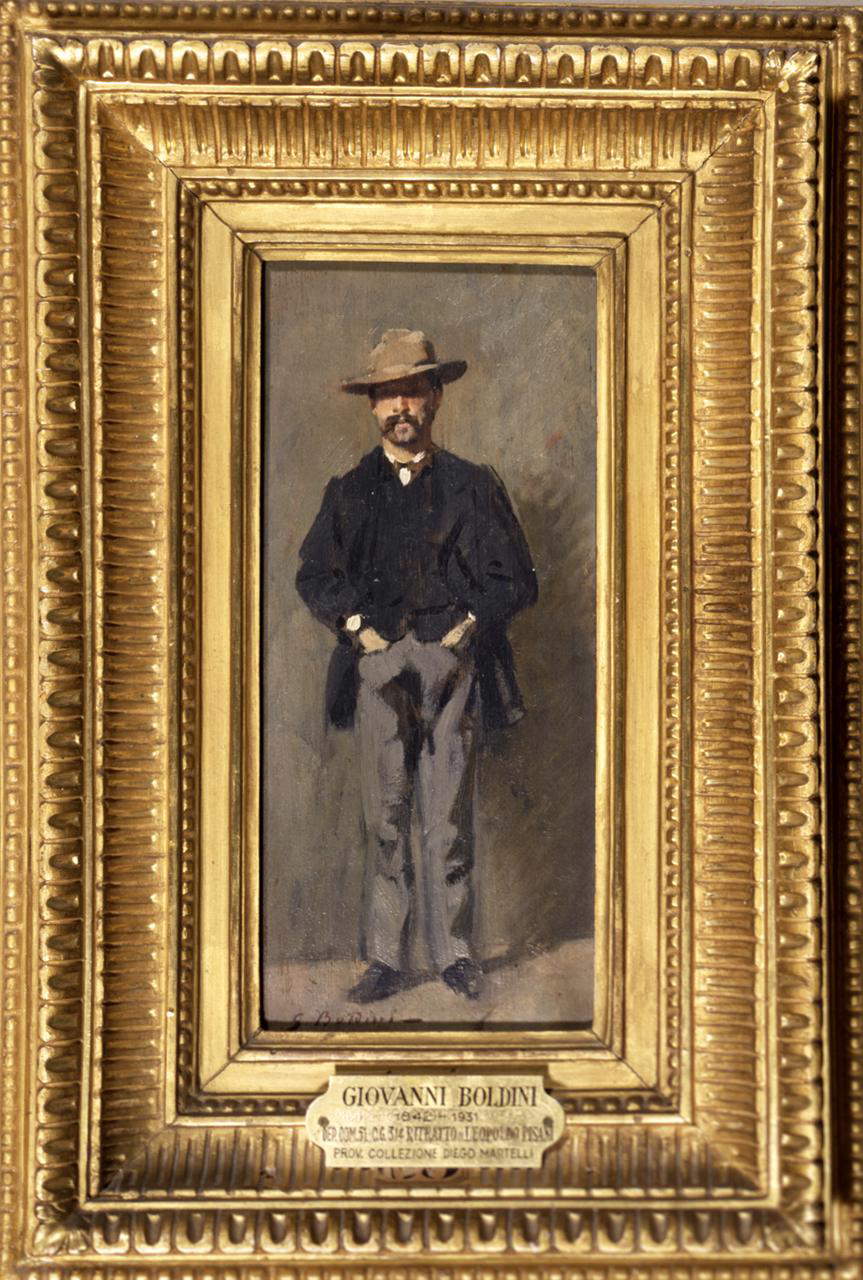
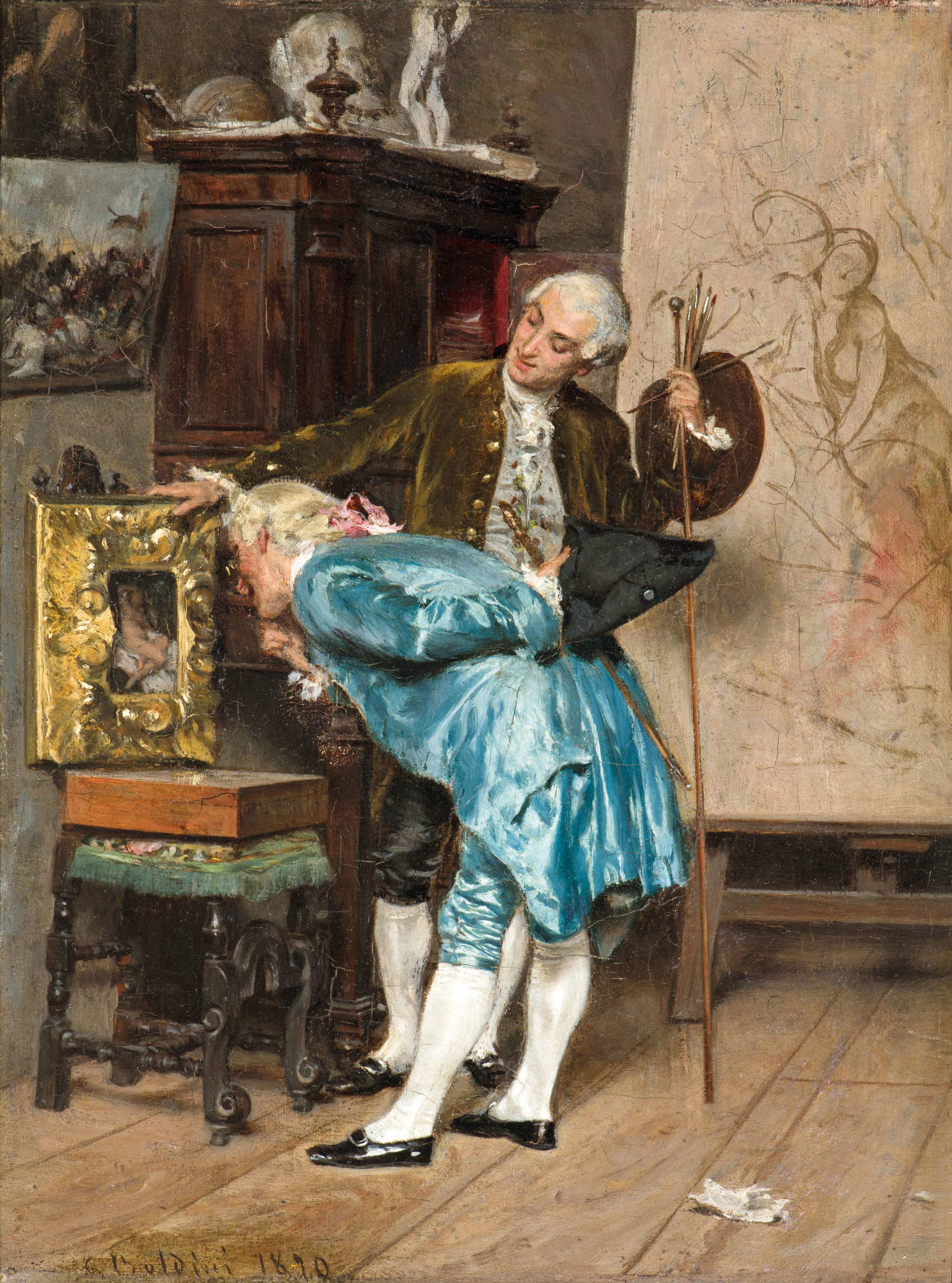
The exhibition kicks off with Giovanni Boldini’s The Self-Portrait at Sixty-Nine (1911), in which the Ferrara-born artist looks the viewer straight in the eye; a markedly different portrait from the one he made in 1865 depicting Leopoldo Pisani, a railway engineer and friend of Diego Martelli, the critic linked to the Macchiaioli and the Caffè Michelangelo whose guest Boldini was at the Castiglioncello estate: it is in fact a small portrait of a subject from the Macchiaioli circle in which the painter uses splashes of color and strong chiaroscuro contrasts, a technique that expresses his early closeness to the Macchiaioli during his Florentine sojourn. It is seen much more accentuated, to take one example, in Telemaco Signorini’s L’Ardenza (Albereta a Antignano). Also noticeable is the taste for Dutch-style interiors that allows one to engage with both portraits and luministic effects, particularly shading, as for example in Boldini’s The Painter Luigi Bechi and Odoardo Borrani’s Lady on the Piano, in the manner of the Flemish painter Gustave Leonard De Jonghe, whose The Game with the Cat of about 1865 is exhibited here. Or the interest in the interiors of artist’s studios, such as the exquisite and detailed Intendant in the Artist’s Studio, where Boldini’s distinct passion for clothes, the rendering of fabrics and the flashes of light on them can already be understood. The same attention to light can also be seen in the exteriors, on buildings lit by the sun or on the grass in a park (exhibited examples by Borrani and Banti, but not Boldini). Wonderful, in this first section devoted to the stay in Tuscany with the Macchiaioli (1864-1869/1870), is the unpublished Rest by Cesare Bartolena, a Leghorn painter close to the Macchiaiolo group.
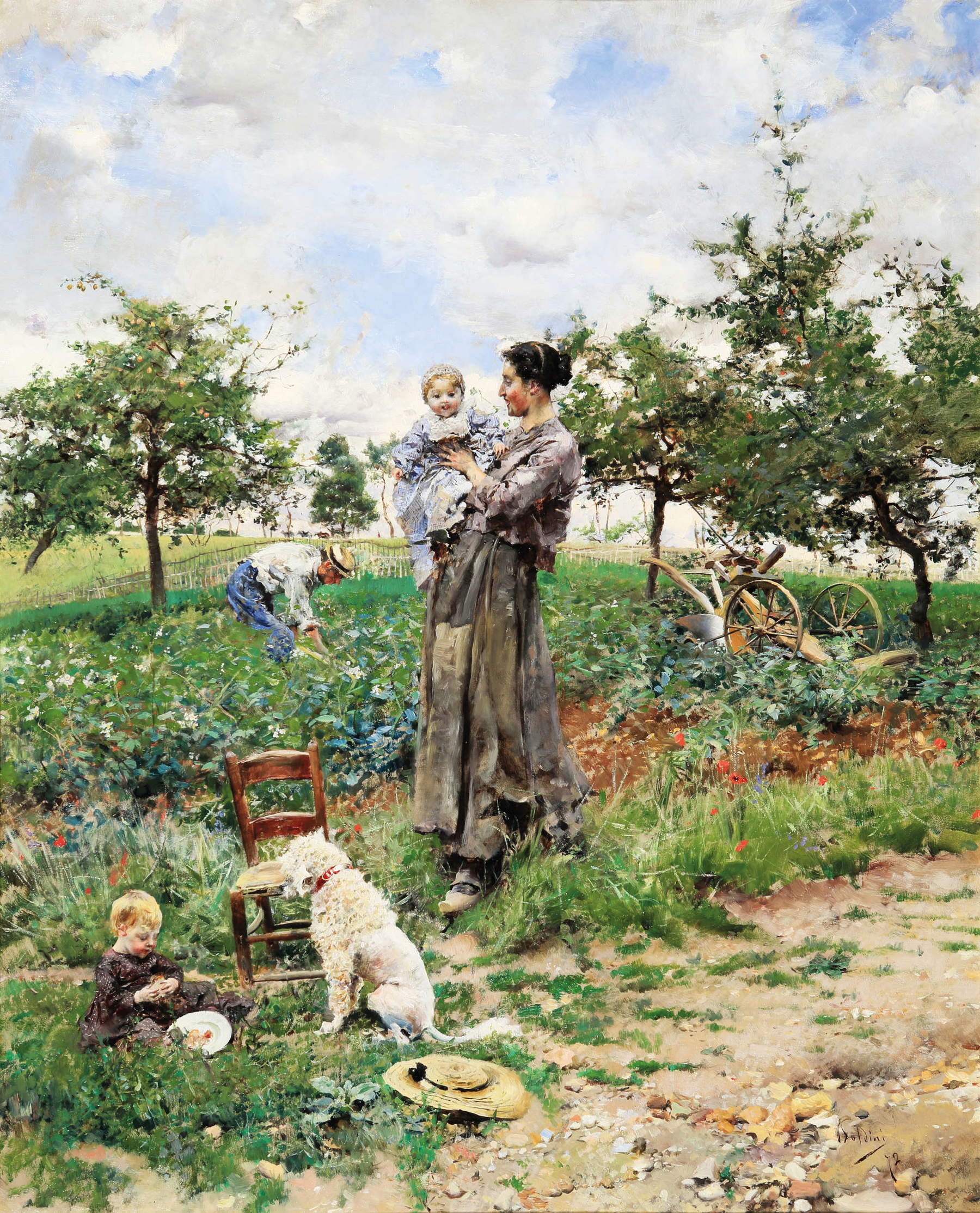
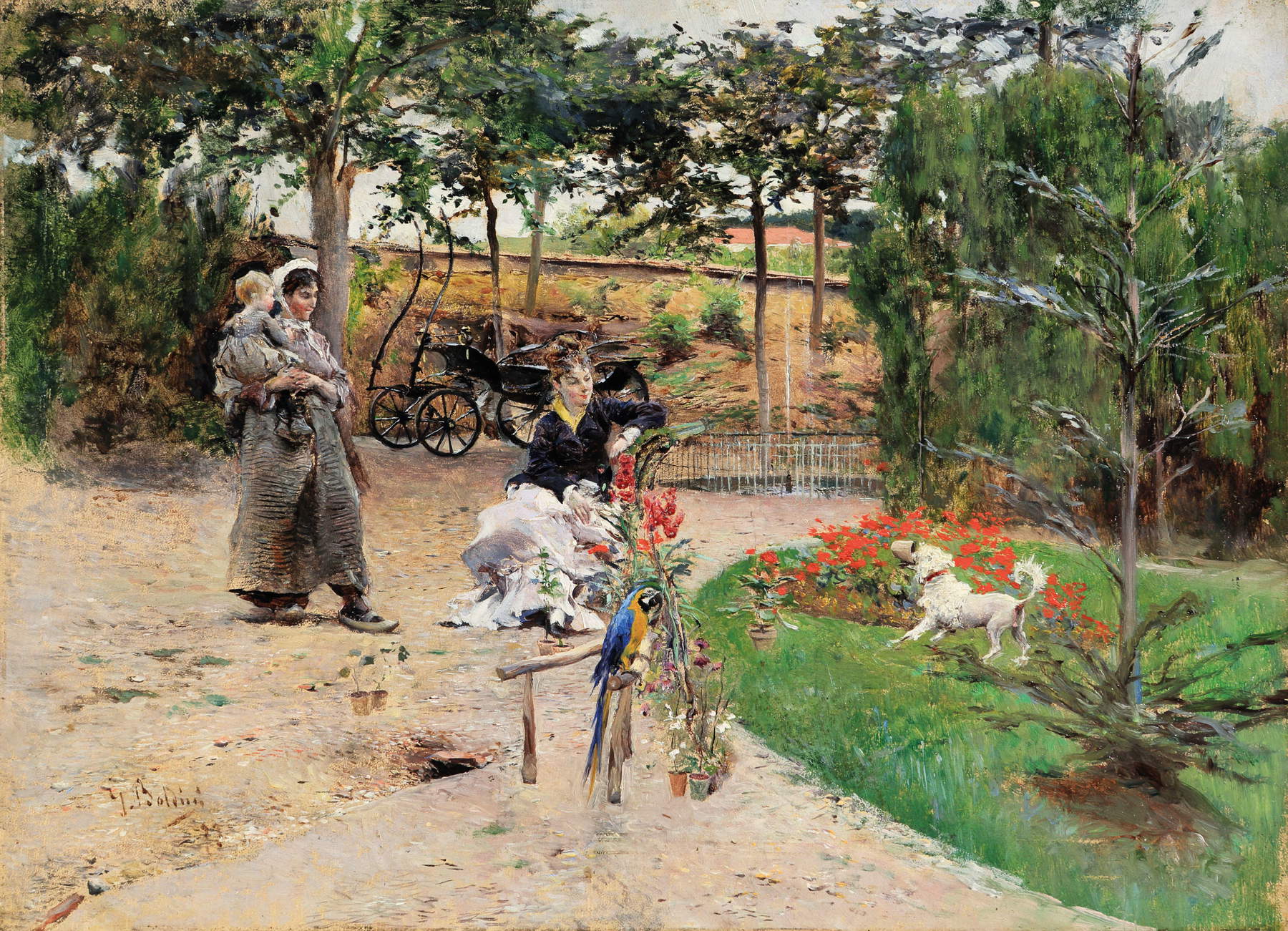
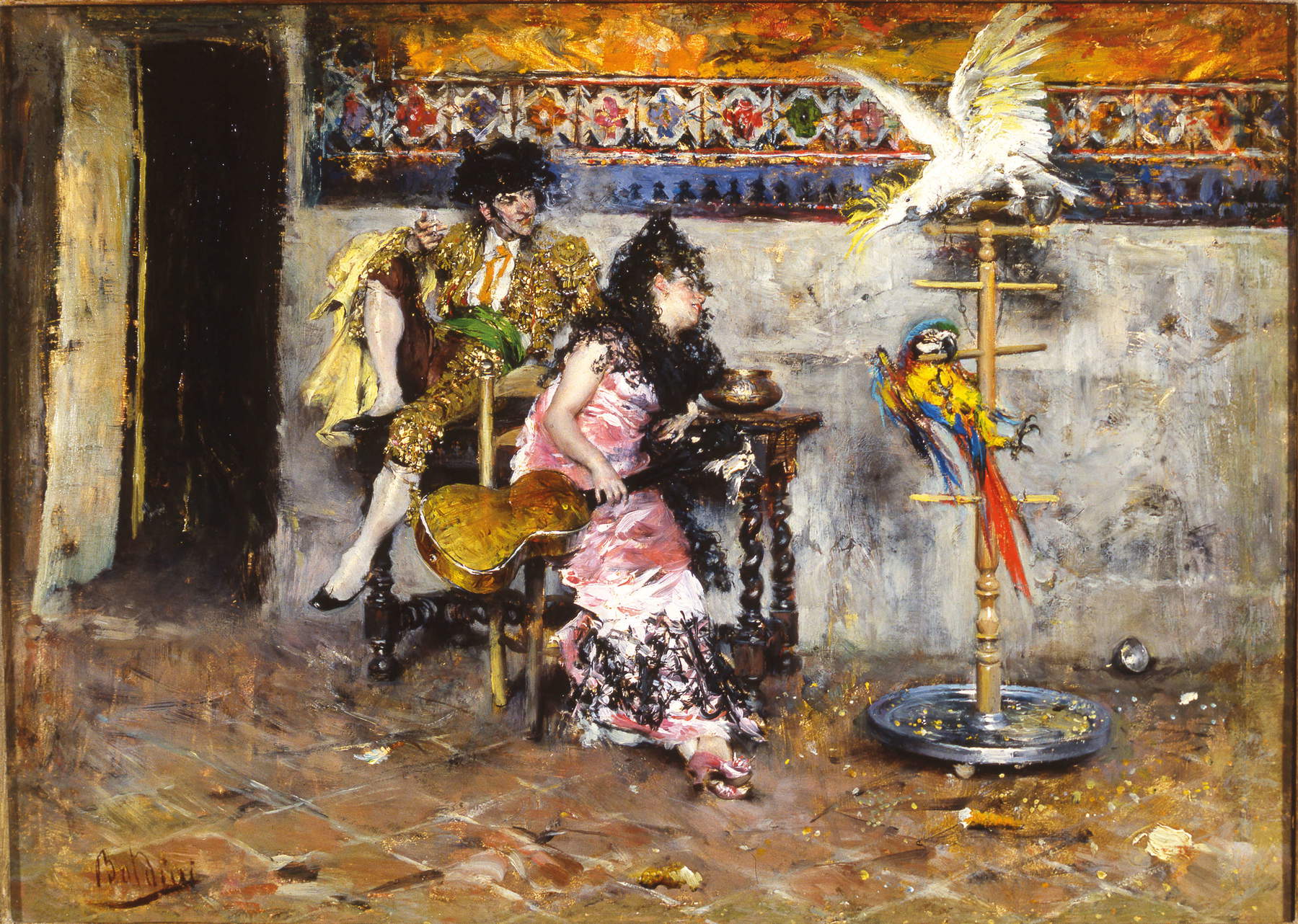
It continues with the Goupil period (1871-1878), in which Boldini participated by developing, as the curator writes, “exciting pictorial weavings,” capable of restoring to the subjects a vitality and dynamism hitherto unknown“ and ”realizing small scenes, mostly connoted by eighteenth-century or Empire settings that he managed to make “very light,” blurring them with vaporous effects." Prominent here is À la campagne (The Spring): a fragment of rural life where the mother holds a smiling infant, the eldest son snacks on the grass with the white poodle watching him attentively, and the father works in the vegetable garden. The poodle is also repeated in the painting In the Garden, running with something in its mouth toward a young woman (almost certainly the model and companion Berthe) seated in the center of the scene; a mother with her small son in her arms is also heading toward her. Behind, under the foliage, is a carriage, while in the foreground, on a perch, is perched a handsome parrot addressing the viewer. Two parrots are also the object of curiosity of the couple in Spanish dress in The Matador. Thevaporous and nuanced effect alluded to is thus observed in both landscapes and interiors, with light and color effects created by brushstrokes, as also in the portraits of the Cellist and the Lady Reading, in which both subjects are engaged in their activities seated in the center in a very similar composition. The different comparison with Leontine in a dinghy by Giuseppe De Nittis seems sharp, as one is faced with a much more impressionistic brushstroke. The presence, on the other hand, of Antonio Mancini and Vincenzo Gemito as artists linked to the Maison Goupil is due to the influence of the Catalan painter Mariano Fortuny Y Marsal, whose stay in Portici in 1874 inspired young southern painting (see Isabella Valente’s essay in the catalog). The painting In Conversation, rarely exhibited, in which the painter portrays at the Café de la Nouvelle Athènes, a famous haunt of the Impressionists, his companion Berthe together with his mistress, Countess Gabrielle de Rasty, is worth dwelling on.
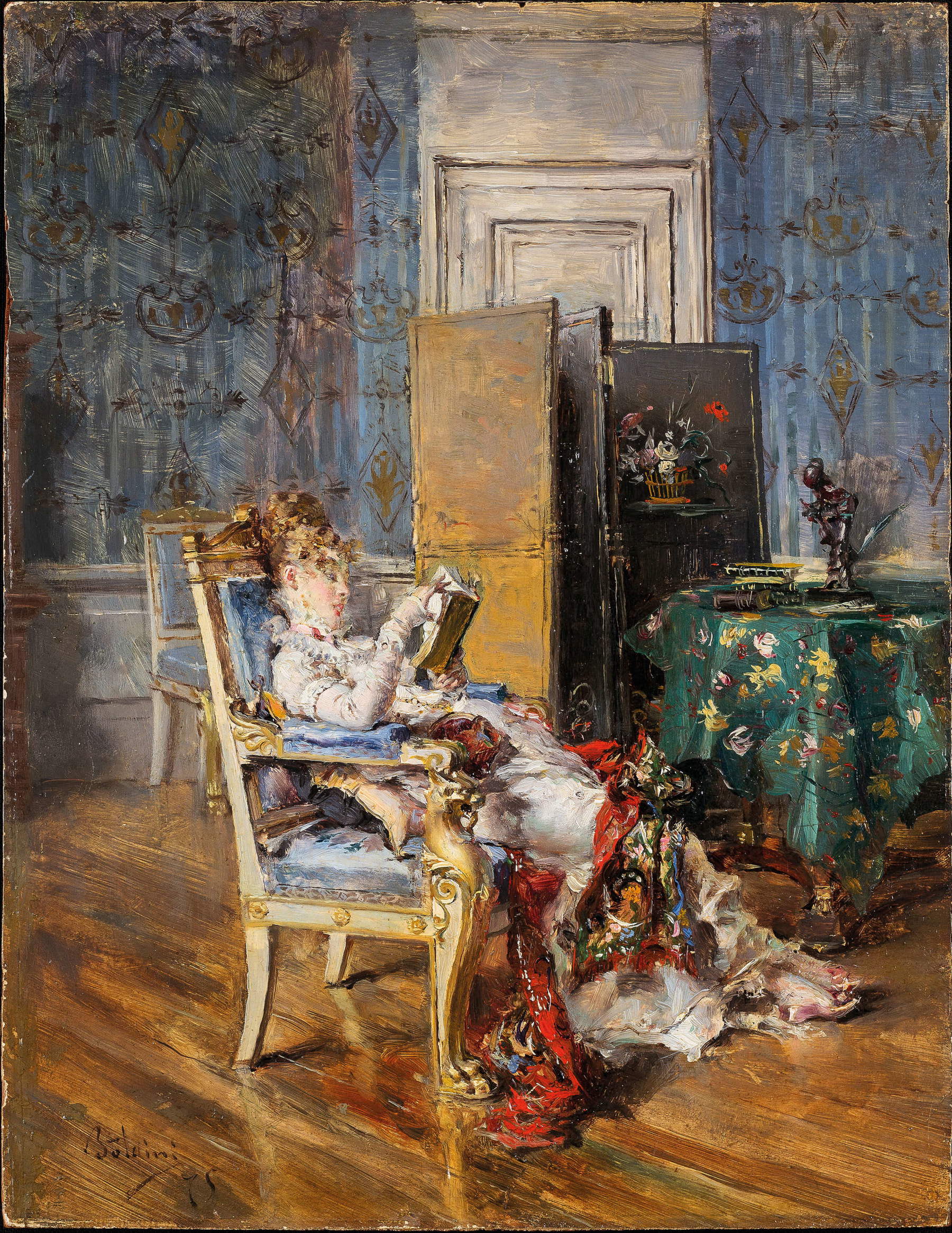
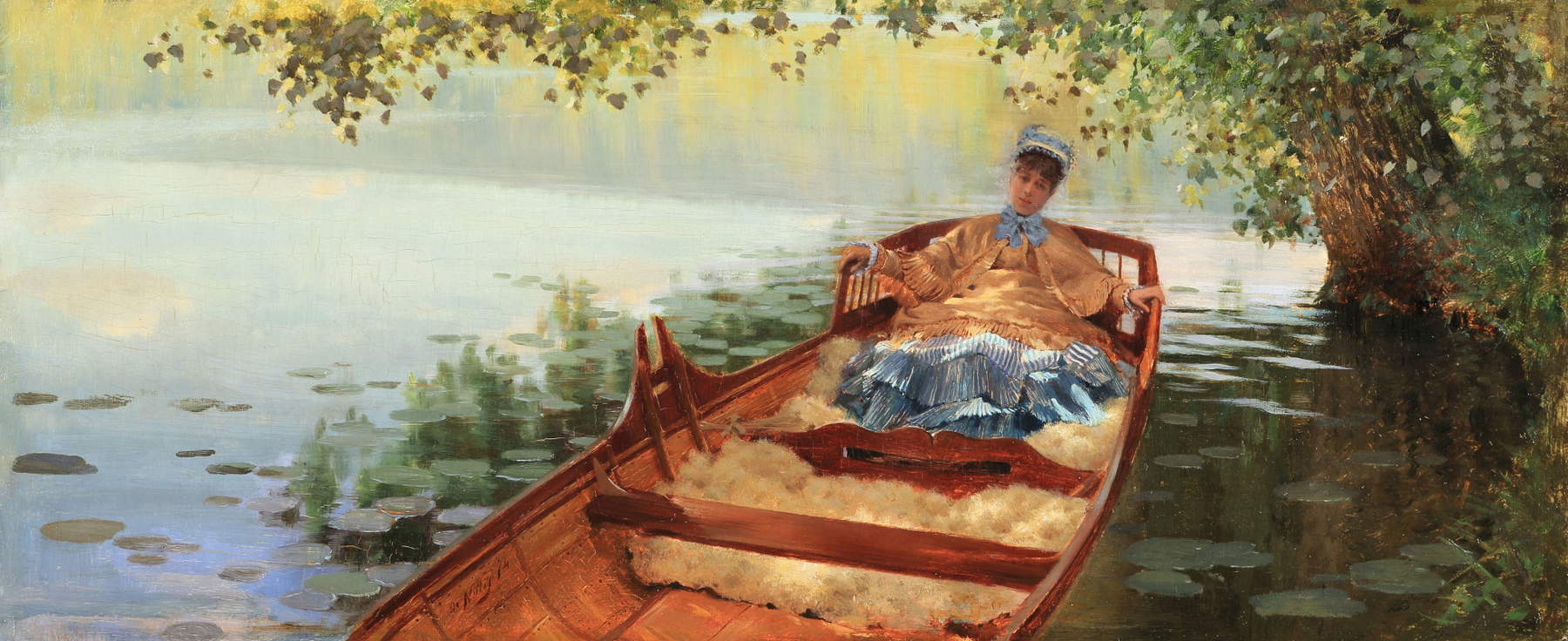
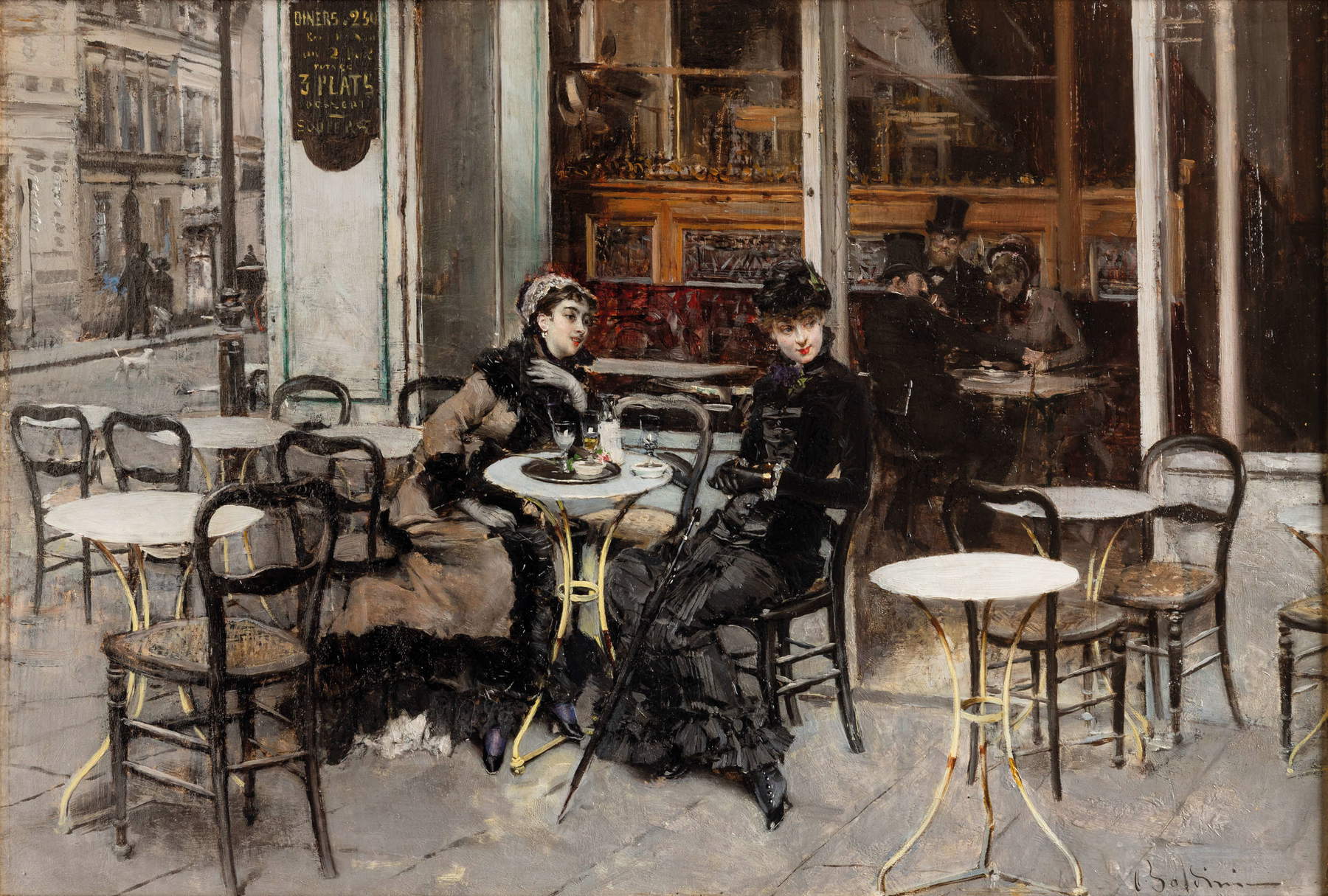
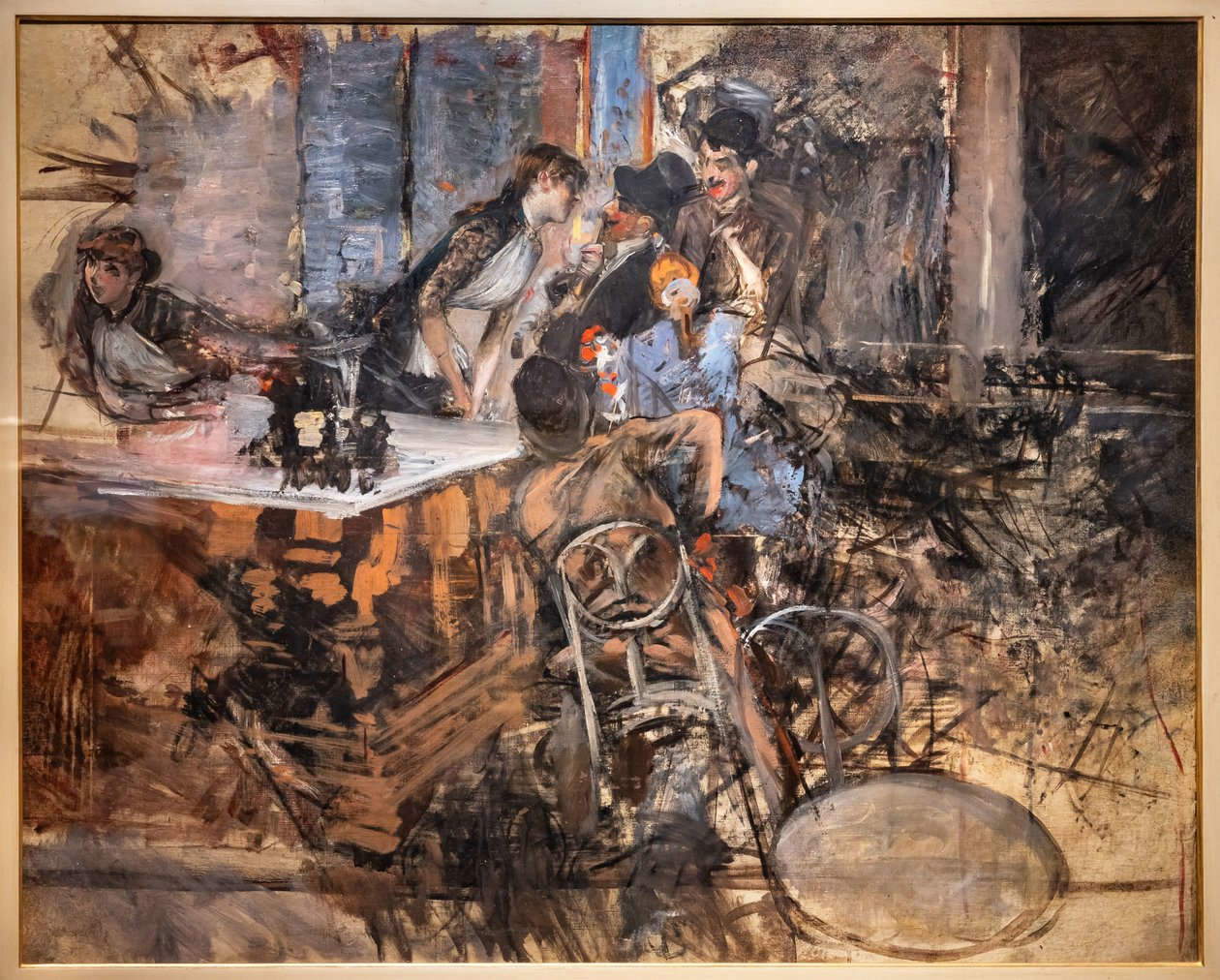
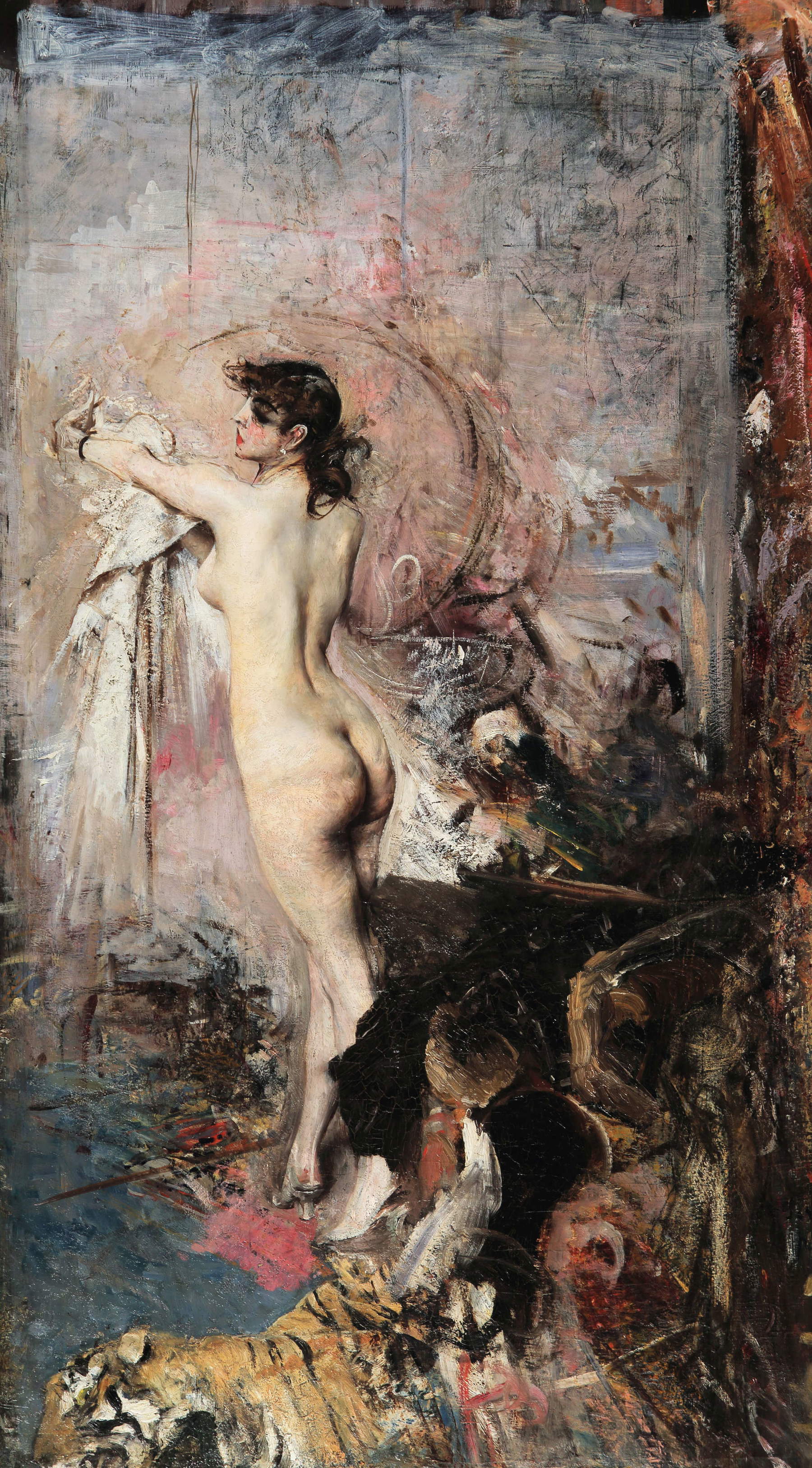
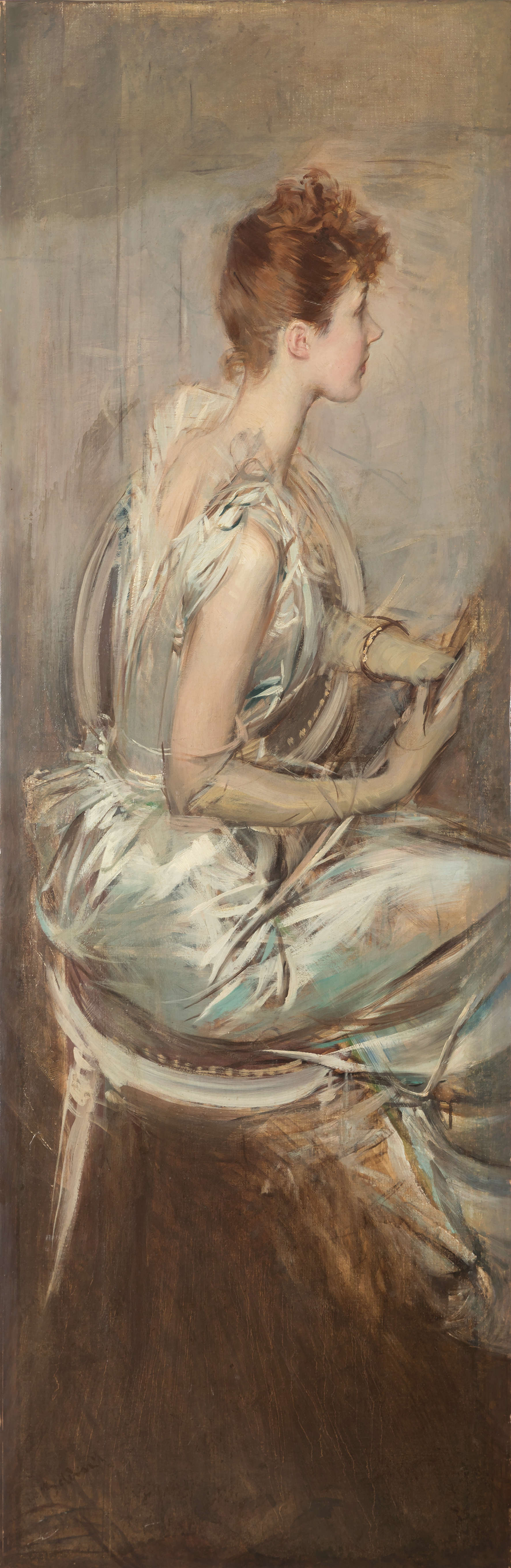
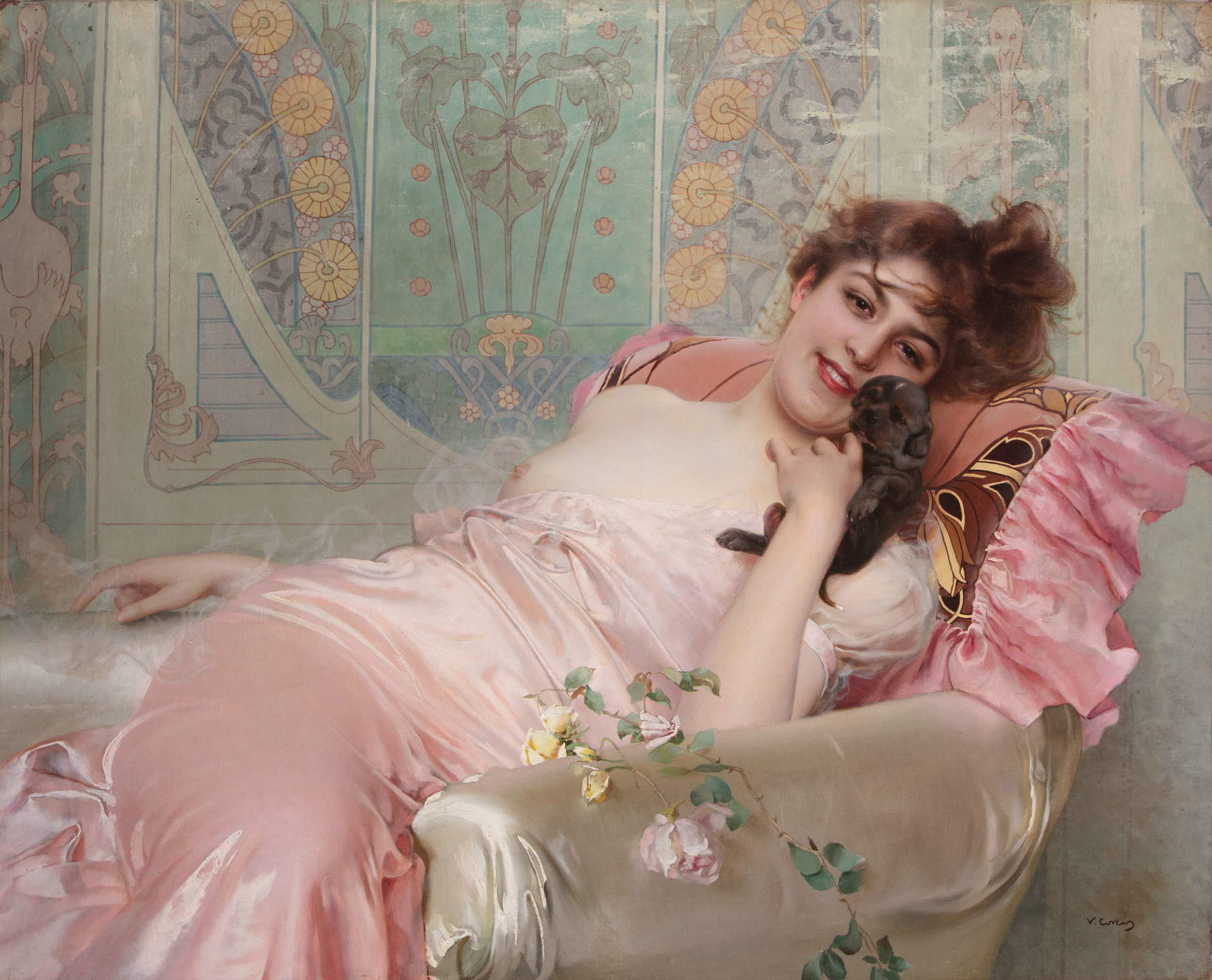
The next step in the painterly evolution of the artist, by now fully embedded in the Parisian milieu, corresponds to the third section(The Sensuality and Dynamism of Forms 1879-1891) and sees greater stylistic freedom, but above all the ability to “fix on the canvas the fleeting moment, charged with the intensity that succeeds an action now passed and announces the becoming of the next one.” These are dynamic images, such as The Bar of the Folies Bergère, Venice, San Giorgio Maggiore as seen from the city or Ships in Venice, or portraits of sensual and sometimes half-naked women that nonetheless express a natural gestural expressiveness, caught in moments of everyday life. These include After Bathing, Portrait of the Actress Alice Regnault or The Countess Berthier de Leusse seated, placed here in relation to the female portraits of Edoardo Gelli and Vittorio Matteo Corcos, close-up, natural and sometimes very seductive, as in the case of Lady with Little Dog. While Boldini is distinguished by the almost swirling dynamism of forms and features, Corcos focuses on detail, descriptive ability, and psychological depth: the softness of the pink dress, the tulle, the uncovered breast, and the small dog close to the face become opportunities to explore femininity, and the floral motifs in the background anticipate the Art Nouveau style that would develop toward the end of the century.
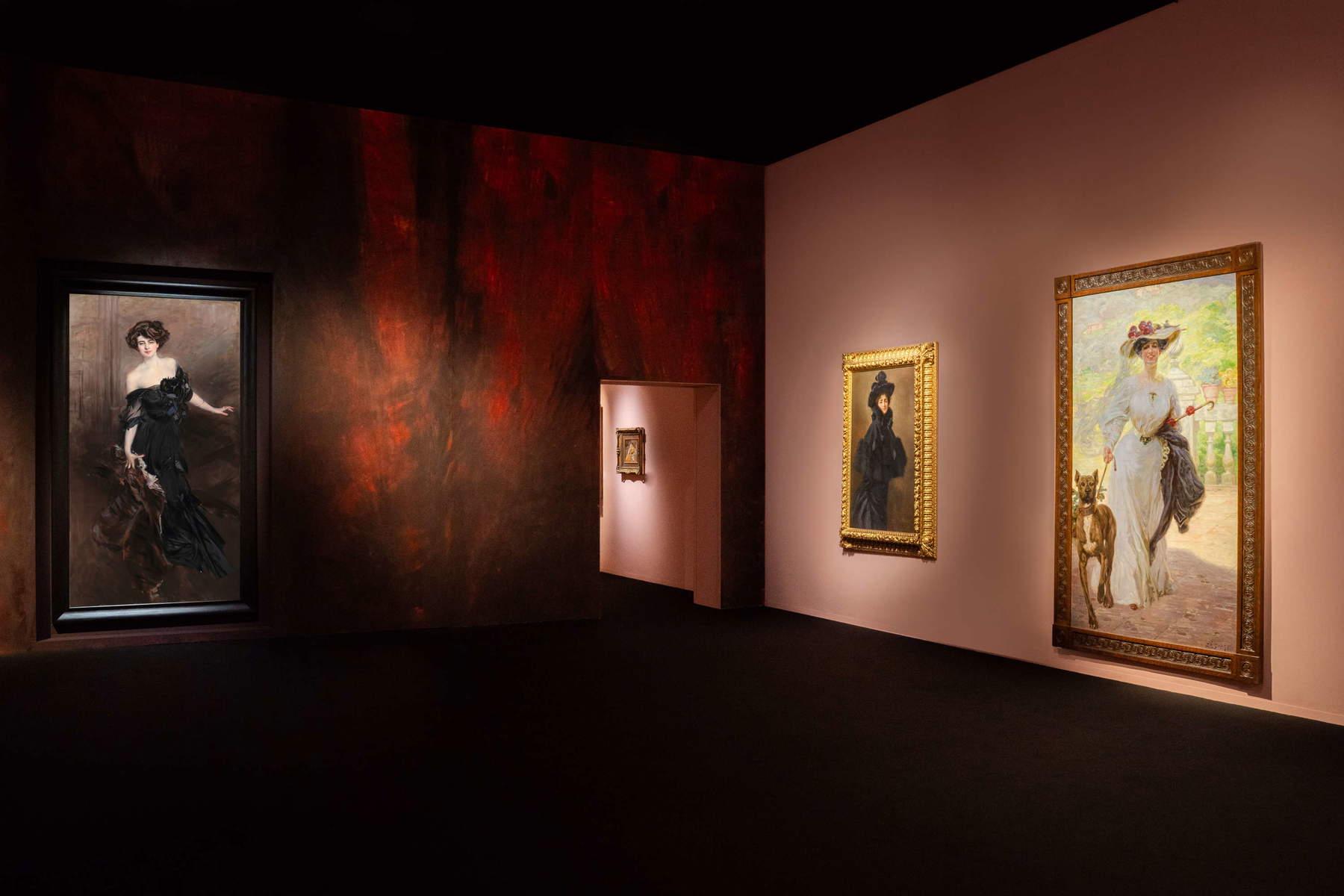
More aristocratic, heir to sixteenth-century portraiture, however, is the monumental Portrait of a Lady with a Large Black Feathered Fan, a pastel on canvas that stands out in the next room, where a significant selection of Giovanni Boldini’s works on paper , including etchings and drawings, have also been brought together. The other side of Boldini’s painting, Panconi writes, “essays of prodigious talent, skill and ingenuity, capable of laying bare, without possibility of misunderstanding - and free from the compromises of the pictorial amalgam with its densities and chromatics - the essence of the highest magisterial [....] Swordsman of the sign sketched on the imprint, instinctive yet controlled, he faced the sheet as if with foil strokes, imprinting the burin or the pencil, now light now decisive, describing fragments of a transitory reality.”
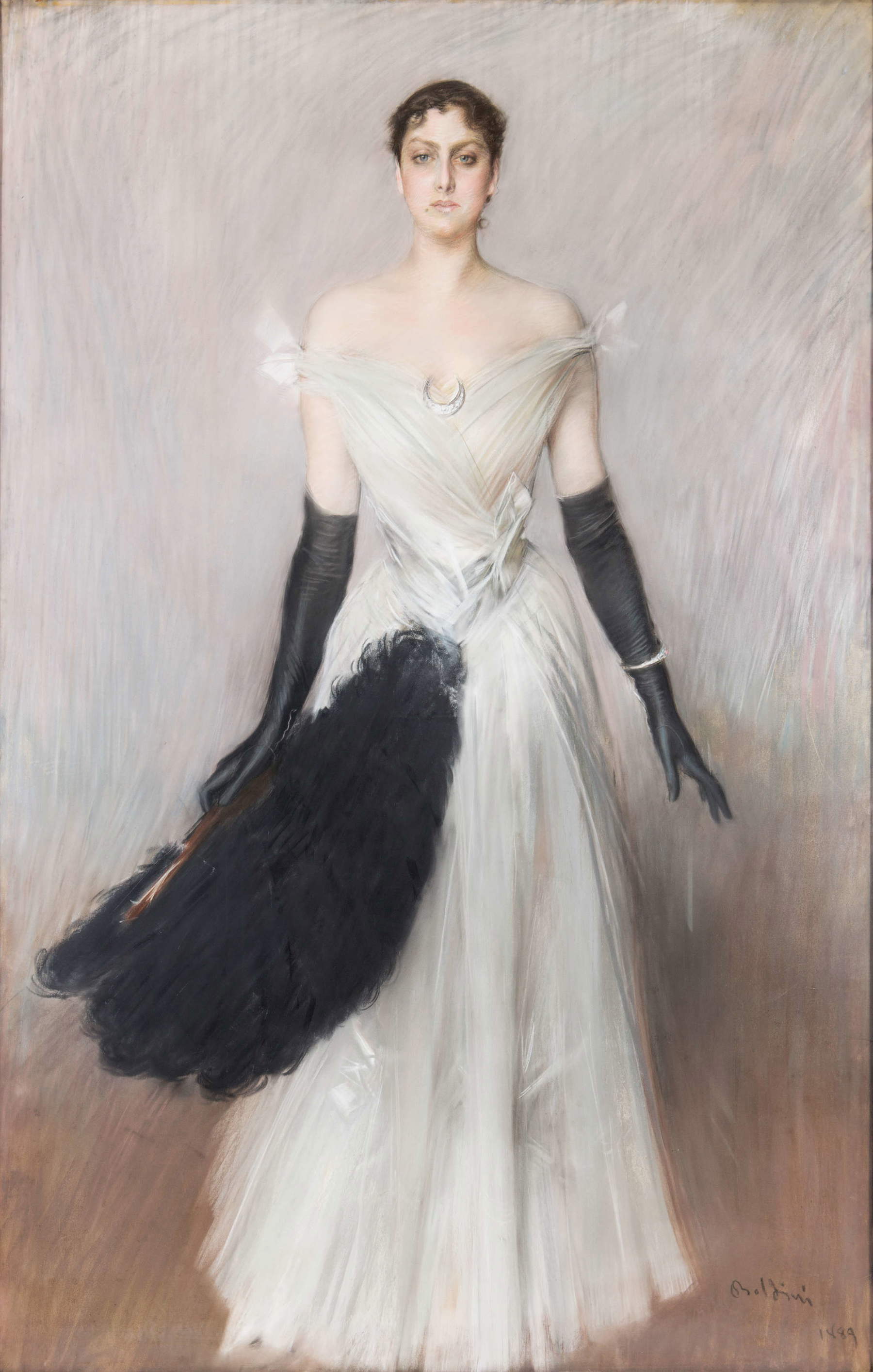
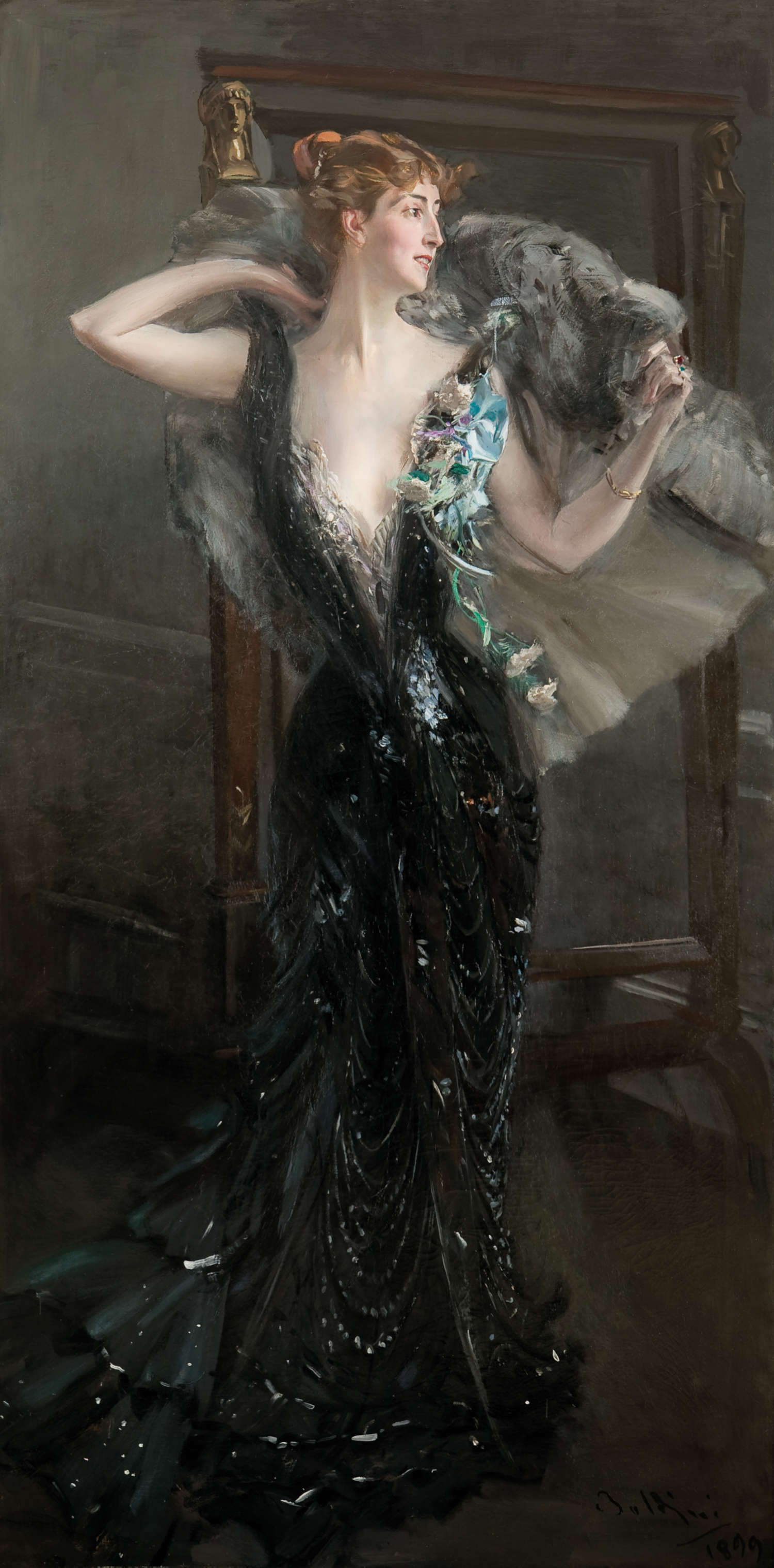
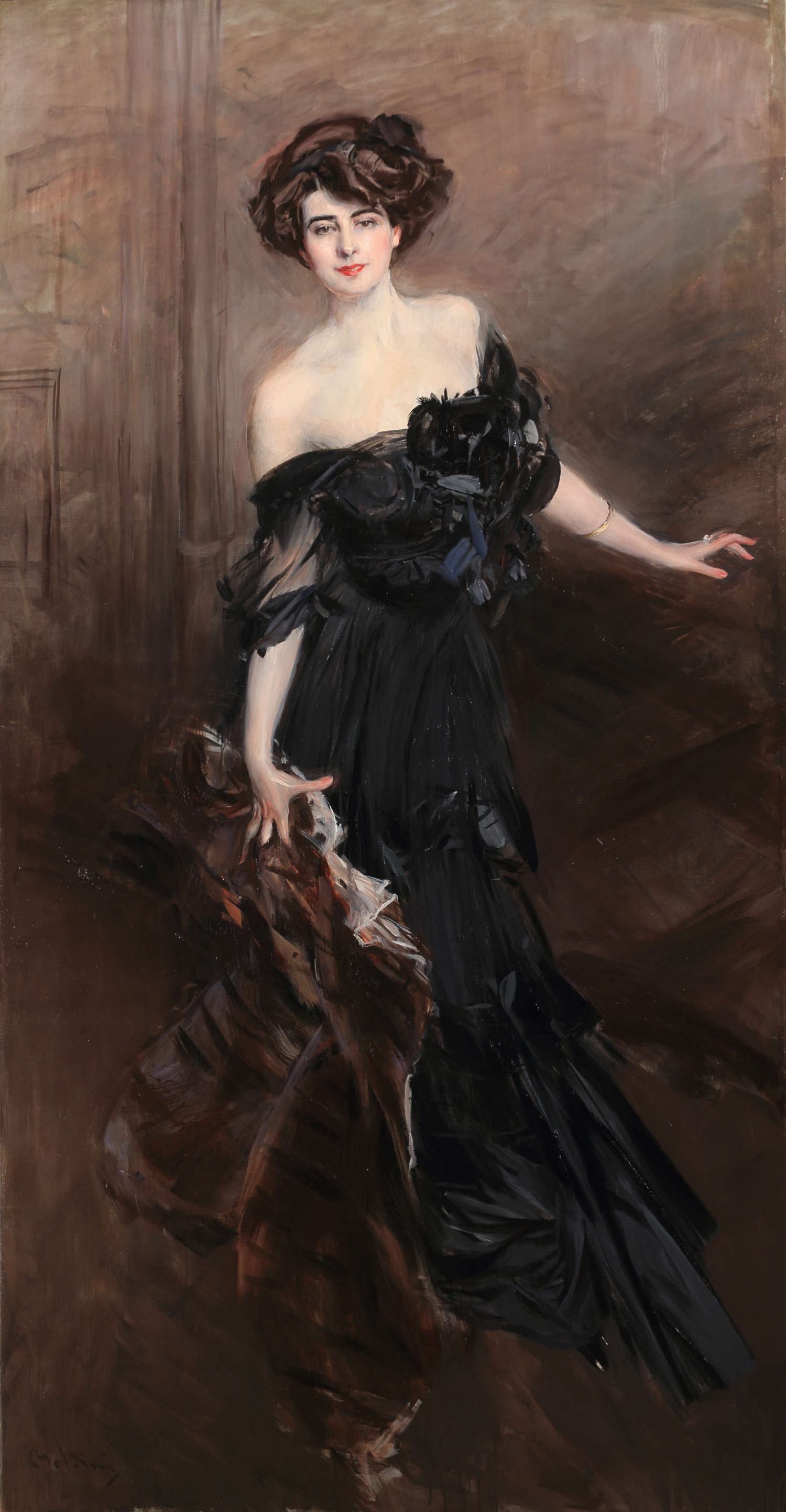
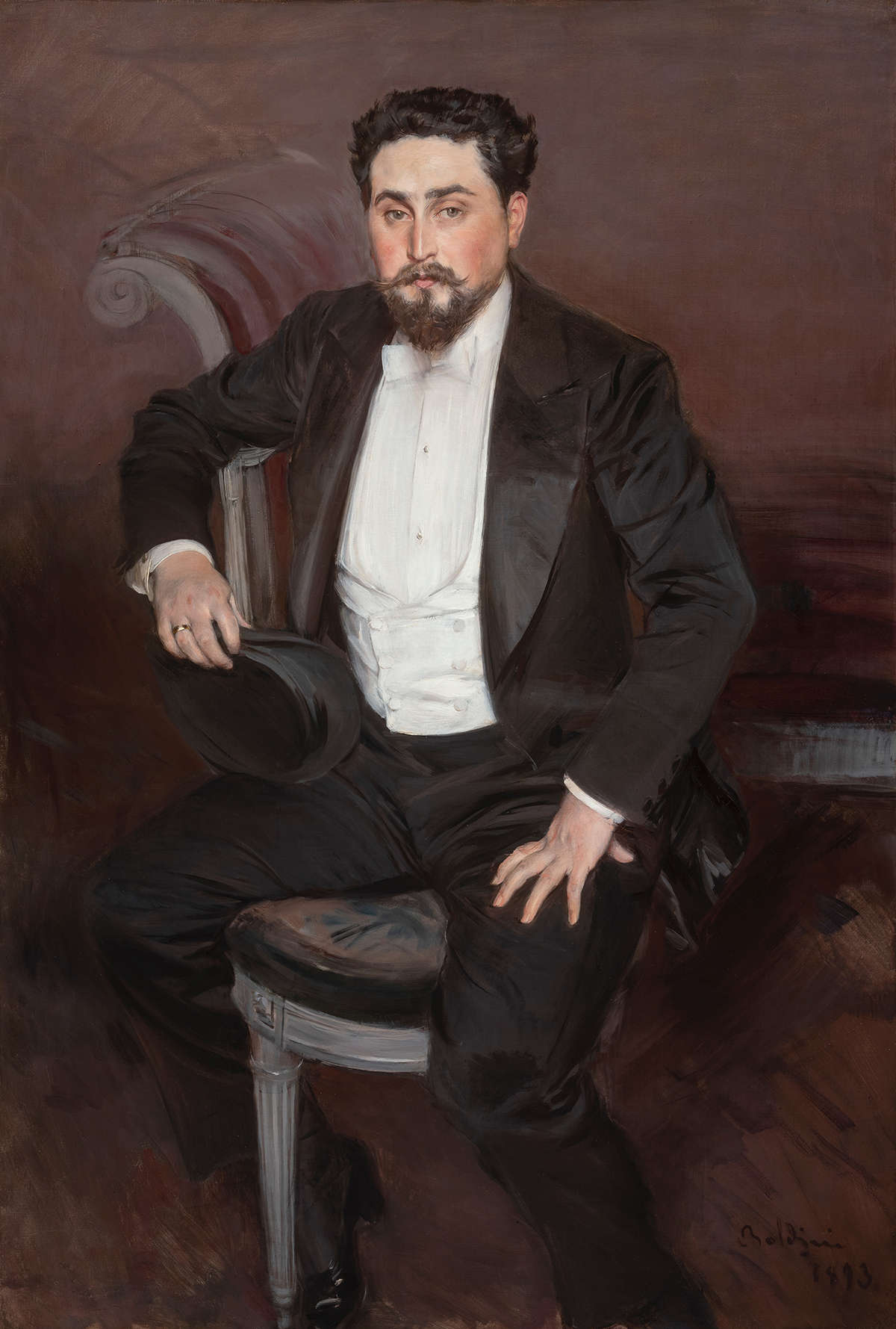
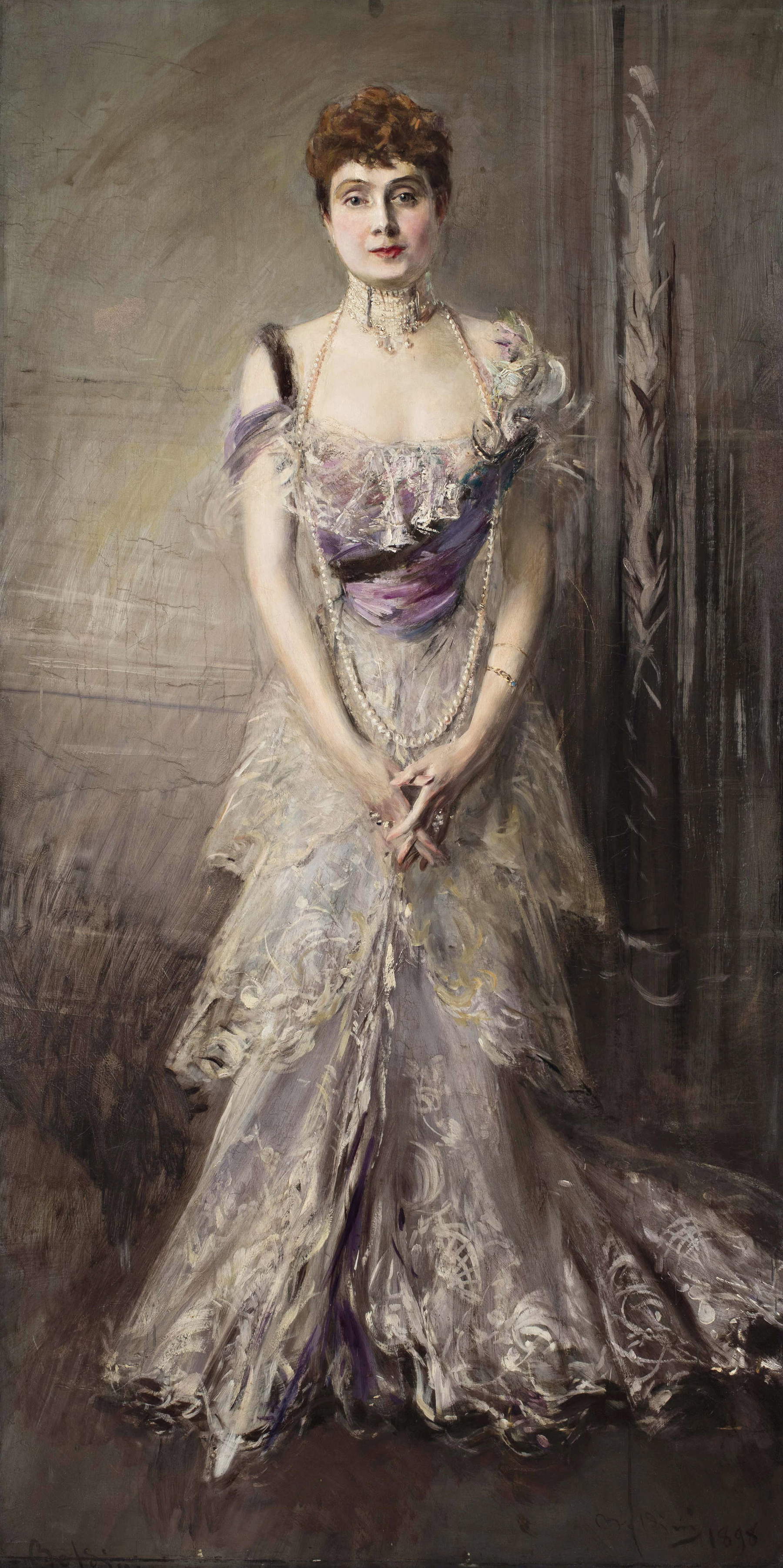
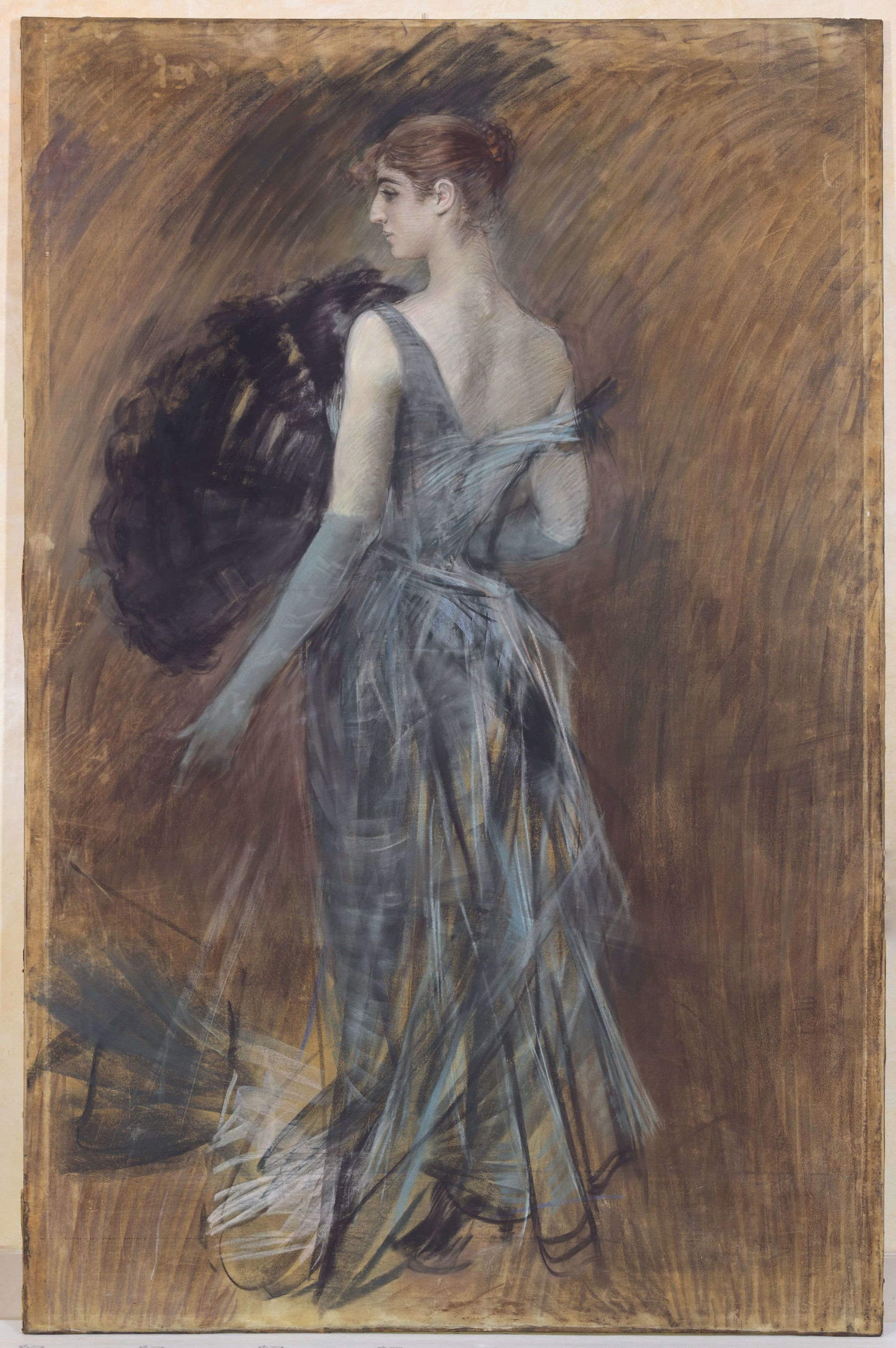
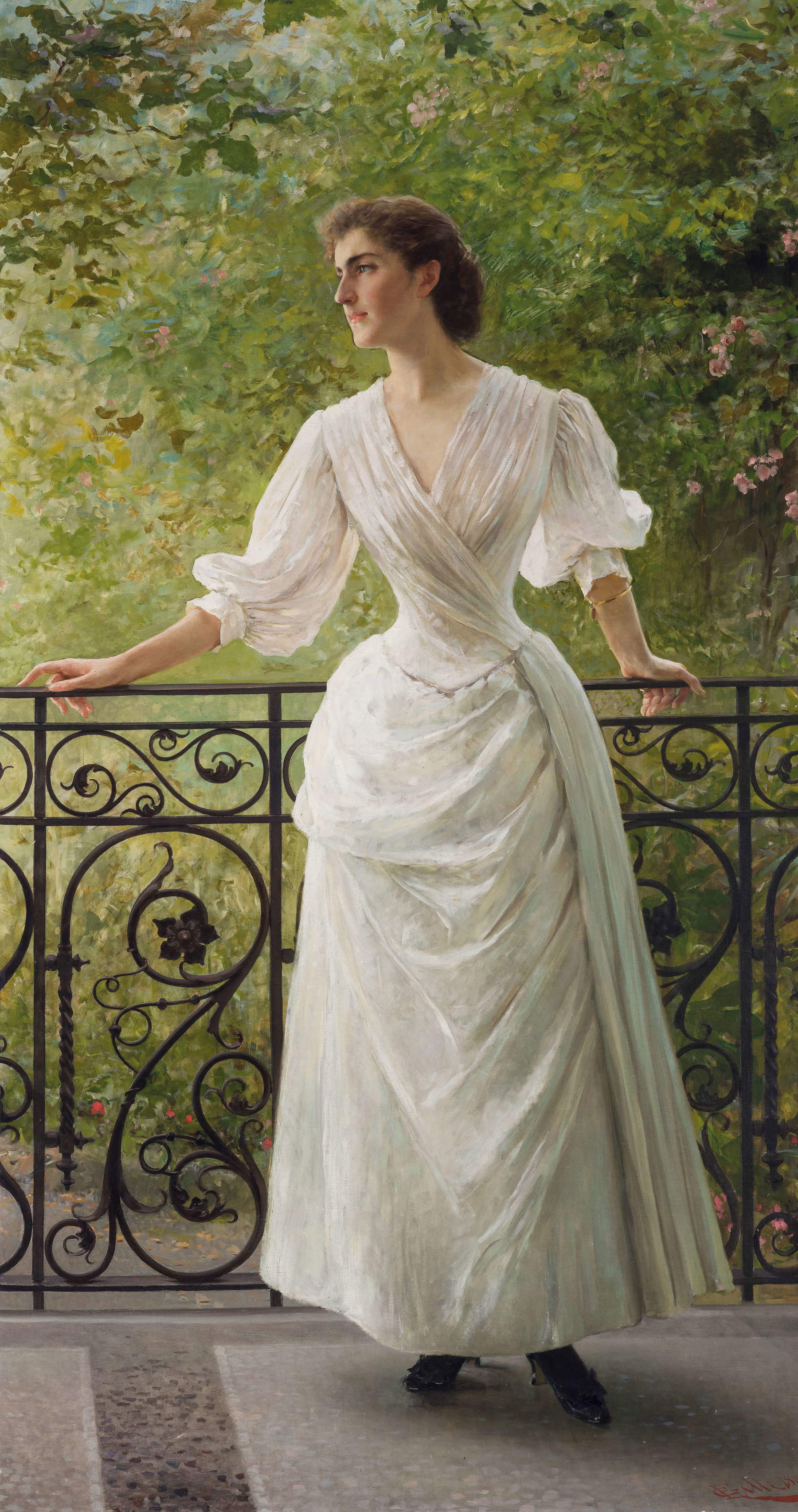
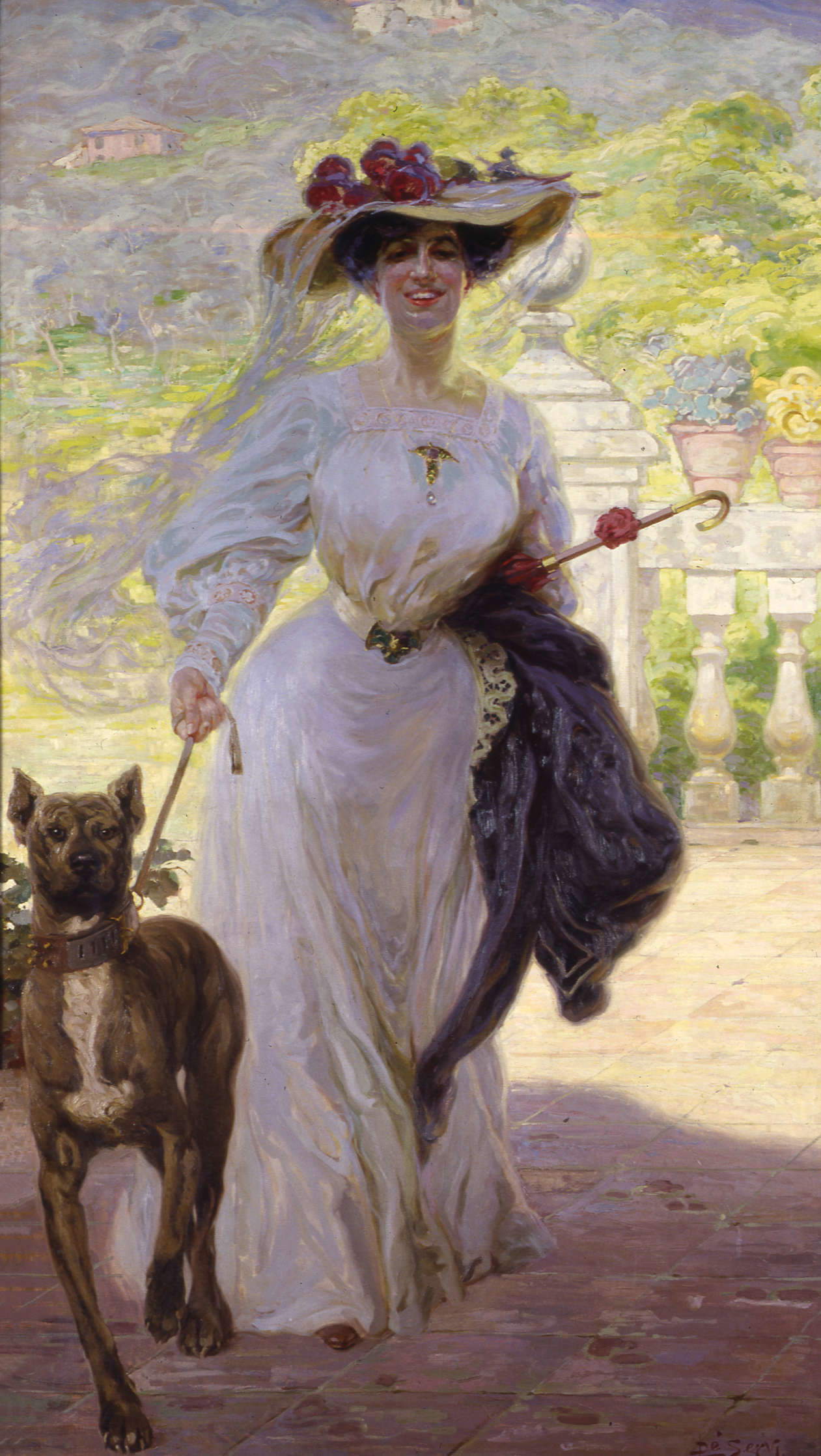
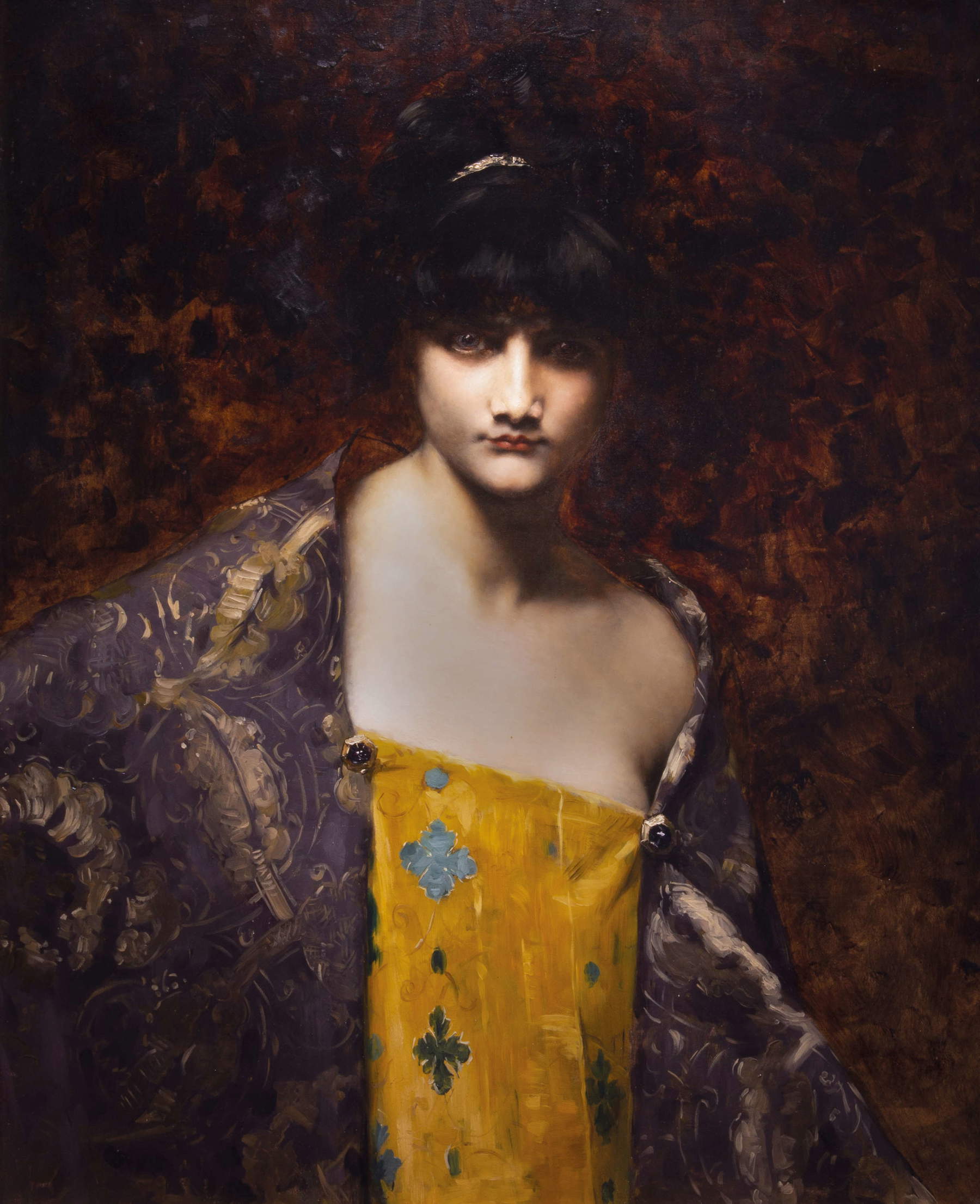
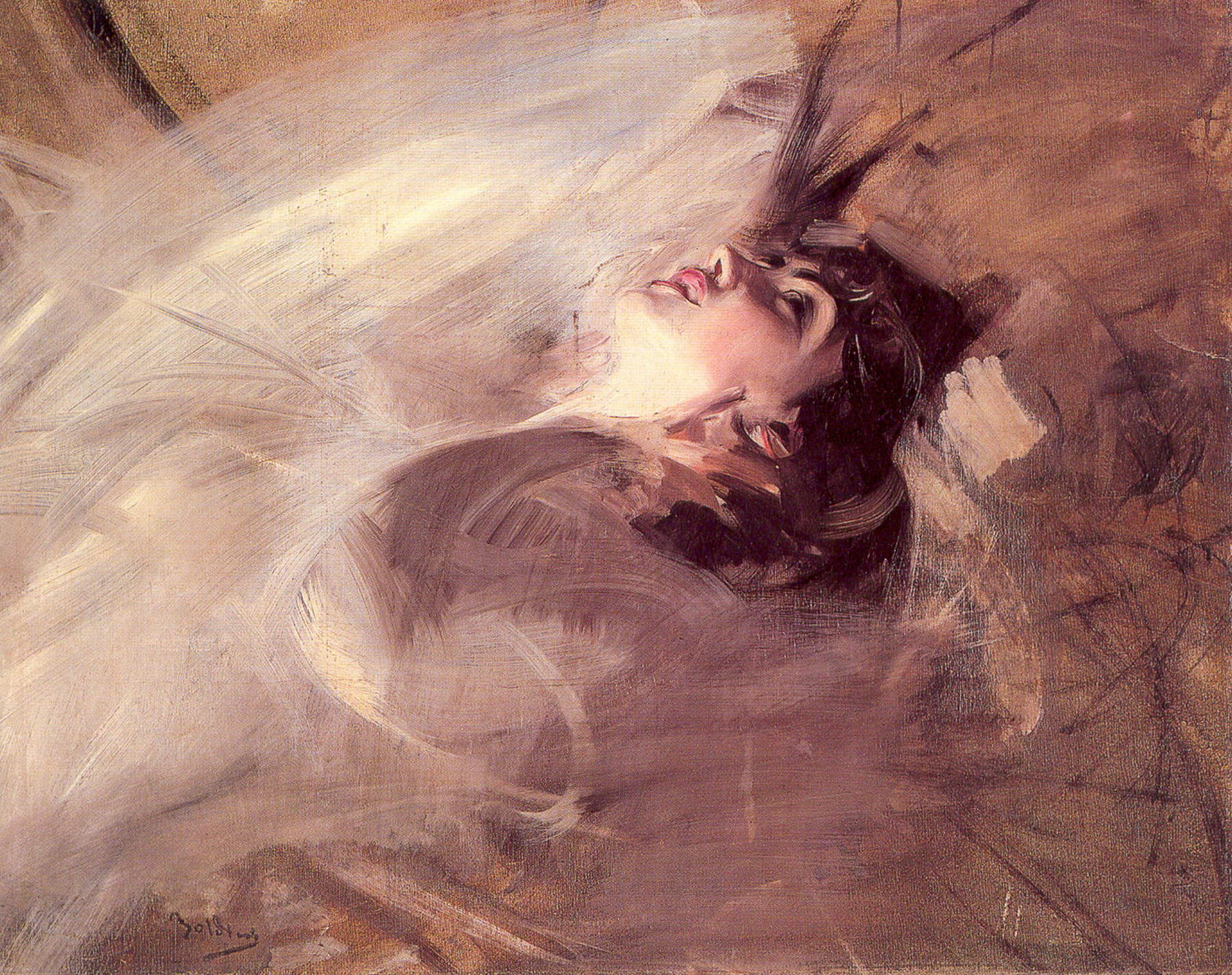
The Portrait of a Lady in Her White Dress and Black Feathered Fan also kicks off the life-size female portraits that scenographically dominate (thanks in part to the carefully designed set-up signed Contemplations) the next two rooms, those to which the fin de siècle taste paintings (1892-1924) belong: first The Countess Hope (1899), then Mademoiselle De Nemidoff (1908). Beginning in the last years of the nineteenth century, in fact, Giovanni Boldini developed a very personal portrait style: his energetic and animated brushstrokes, similar to "saber strokes,“ gave his subjects, especially high society women, an elegant, dynamic and almost theatrical appearance, going beyond the traditional canons of official portraiture. The large full-length portraits, to which the Ferrara artist owes his distinct fame, reflected the refined and modern taste of fin de siècle society: the women who posed for him (whom he dubbed ”divine": Paola Goretti’s essay gives an account of this) belonged to the international elite. They were noblewomen, actresses and famous figures of the time, whom the painter represented, yes, their outward appearance, but he also tried to capture their personalities and the more fragile, sensual or restless sides behind their apparent social security. There are portraits of Madame Veil-Picard, alongside the very elegant René Cole (more rare male portraits but present in his Belle Époque portraiture), Madame Roger Jourdain, Madame X with beaded collar (the same as in Sargent’s famous painting), Princess Eulalia of Spain, and the Blonde Lady in evening dress who carries, like the previous Portrait of a Lady, a large black feathered fan. However, the Belle Époque did not only spread to Parisian salons but, as the works exhibited here by Edoardo Gelli and Luigi De Servi attest, it also spread to the salons of Lucca’s province. In the portraits of Ida Marchesini, including an unpublished one, Gelli focuses on controlled refinement and intimate portraiture, highlighting the aesthetic culture of the Lucchese bourgeoisie; Luigi De Servi, on the other hand, in L’Incontro focuses on movement and luminosity: the young woman walks at a brisk pace accompanied by the large dog she holds on a leash, within a composition that looks like a film shot shot against the light. Also of particular note is La fille de Théodora (1893), a very rare work by painter Juana Romani (Gabriele Romani discusses it in his essay).
Finally, the last room and section is dedicated to the collector and patron Vincenzo Giustiniani, a Ferrara-born artist fascinated by the Macchiaioli who lived in Lucca, whose collection entered the patrimony of the Fondazione Cassa di Risparmio di Lucca last year thanks to the donation of his niece Diamantina Scola Camerini. Among the works on display here are Giovanni Boldini’s Leopolda Banti at the spinet, portraits of Count Vincenzo Giustiniani and Luisa Giustiniani by Alberto Pisa, and above all the large navy Fishing boats at anchor by Giovanni Fattori .
The exhibition concludes with the Bust of a Reclining Young Woman from Ca’ la Ghironda - Modern Art Museum, thus bringing to an end the journey through the evolution of Boldini’s painting, an artist who knew how to make beauty a form of storytelling, dynamic, alive, aristocratic, still restoring all the charm of the Belle Époque.


The author of this article: Ilaria Baratta
Giornalista, è co-fondatrice di Finestre sull'Arte con Federico Giannini. È nata a Carrara nel 1987 e si è laureata a Pisa. È responsabile della redazione di Finestre sull'Arte.
Warning: the translation into English of the original Italian article was created using automatic tools. We undertake to review all articles, but we do not guarantee the total absence of inaccuracies in the translation due to the program. You can find the original by clicking on the ITA button. If you find any mistake,please contact us.

























 IT
IT FR
FR DE
DE ES
ES CN
CN


