



by
Federico Giannini  @federicogiannini1
27/05/2026
@federicogiannini1
27/05/2026



Categories: Exhibition reviews / Disclaimer
In Venice, sculptures, glass, bronzes and hybrid creatures by Koen Vanmechelen invade Palazzo Rota Ivancich in a markedly posthuman exhibition, We Thought We Were Alone, that dissolves the boundaries between human, animal and artifice. Federico Giannini's review.

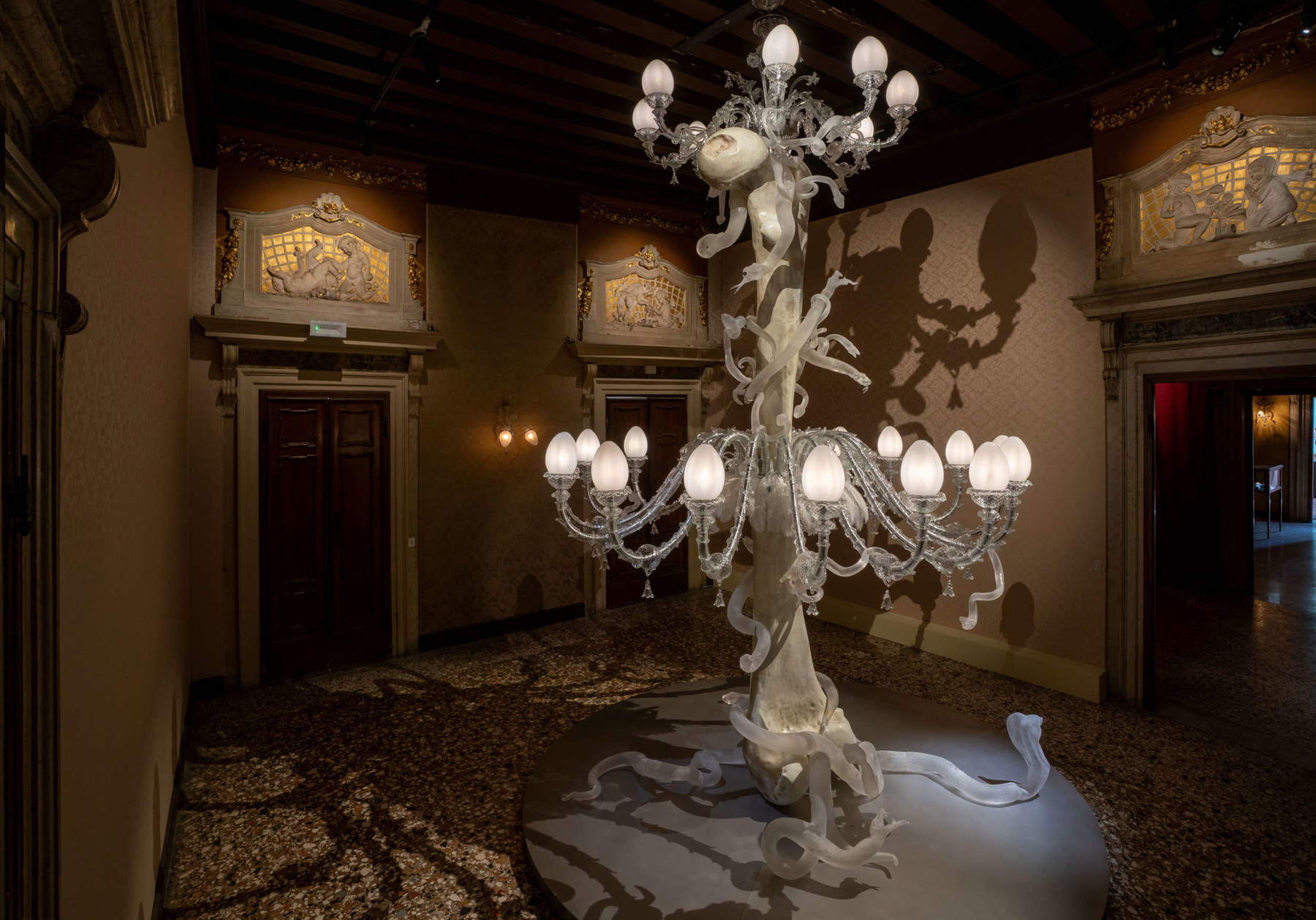
Koen Vanmechelen’s purest discovery is a rare form of gaze, a heretical and necessary gaze, which contemplates the past as if it were something that has yet to happen and observes the future as if it were evidence, a testimony, a page of marble, glass, bronze, a drawing in the making of which the first outlines can already be discerned. That gaze, which has long accompanied Vanmechelen’s entire production, has now taken the form of the cargo of sculptures that has landed in the rooms of Palazzo Rota Ivancich in Venice like a kind of alien spaceship, and one traverses it as if it were a landscape from another world (this is, after all, how Vanmechelen likes to think of his exhibition: as a “sculptural landscape”). We thought we were alone is the title of this luxurious and persuasive, dirty and lucid, regal and animal, mythological and earthy, hybrid and human, spatial exploration of an earth in the making, visionary section of a universal metamorphosis that no longer distinguishes between human being, beast, ruin, fragment, matter, thought, creature, artifice. The title smacks at the same time of an undue scientific confession, of a note quickly marked in the middle of an expedition, and of an awareness of an illusion in which everyone believed, we all believed. And the visitor will realize that he is no longer inside an exhibition, but that he has been derailed inside a visionary ecosystem where everything is mixed, contaminated, fragile, uncertain, new. Of no longer being a detached observer, but of being himself part of a universe where traditional categories no longer exist.


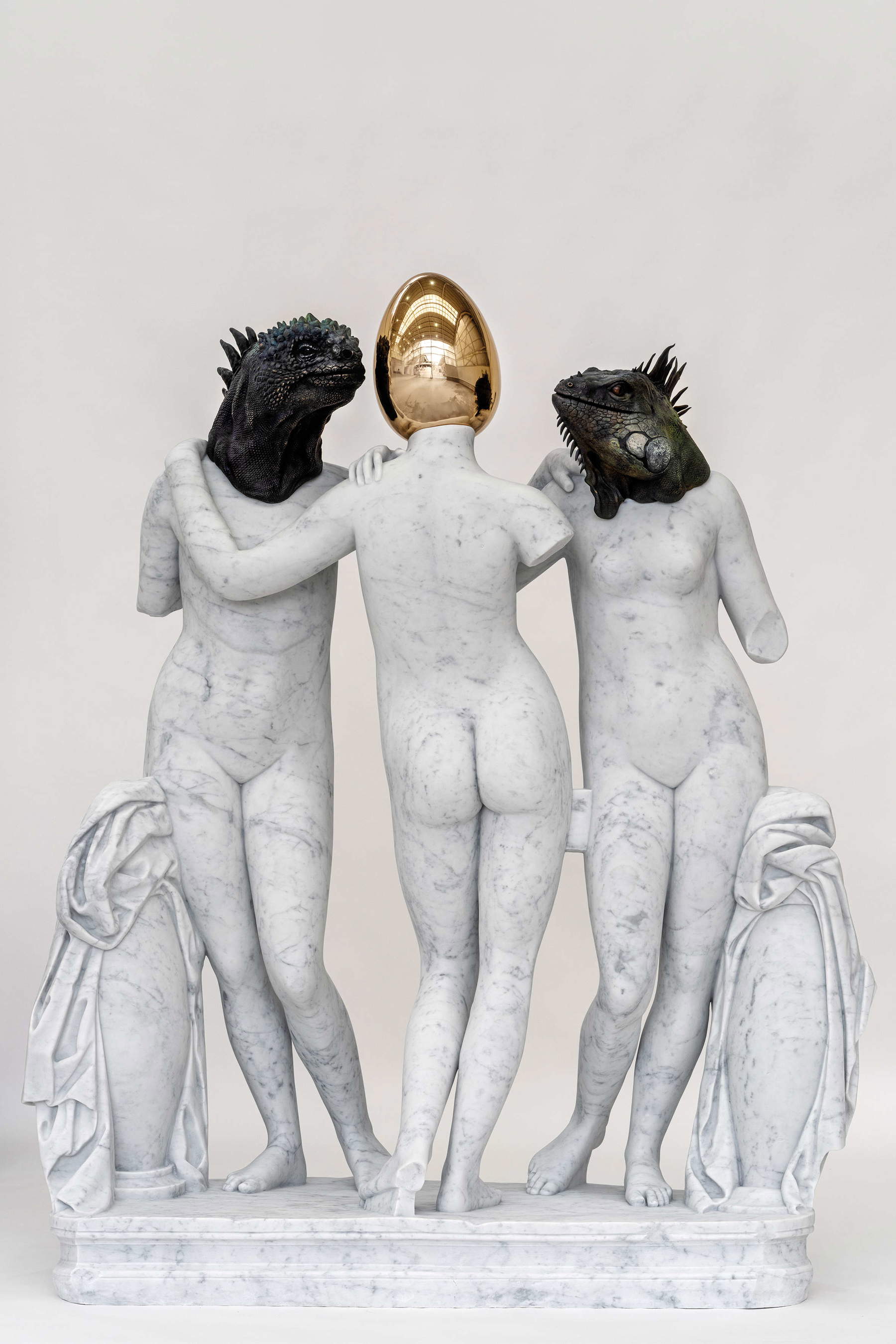
Koen Vanmechelen’s posthumanism is embodied in a chicken that has been challenging the exceptionalism of the human being for years, with tools that in turn challenge tradition, detach themselves from it, bypass it but in the end, in an epilogue that almost smacks of necessity, of labyrinth, of eternity, return to it. A mestizo chicken, a cosmopolitan chicken (Vanmechelen’s Cosmopolitan Chicken Project is the search for a career), a chicken that has the capacity to act and to be a work of art, a hybrid organism that cracks pure biological distinctions, a chicken that becomes the arbiter of the future of the species. It has been said that Vanmechelen’s cosmopolitan chicken, which welcomes the public to Palazzo Rota Ivancich on the first floor, inside two fragile Murano glass frames, in front of a reinterpretation of the Three Graces now on its way to metamorphosis into iguanas and a kind oftwo-faced herma in front of which it is difficult to establish where it is that the reptile begins and where the human being ends (or vice versa), risks becoming an object, a symbol, mere matter of a work that serves above all to reason about purely human issues: the relationship of the human being to the biological diversity of the planet, the problem of identity, globalization. But the chickens are nothing but the aedi of the universe imagined by Vanmechelen. And there is very little that is human, although the gaze and the means would make one think more of a Renaissance sculptor than a contemporary artist. The portraits of the chickens, with their somber backgrounds that seem to have been stretched by the brush of a seventeenth-century painter, with their enameled feathers, their gaze fixed and distant like that of a duke, a prince, a king, also serve to undermine the conviction that wants man to be the summit, the measure and the tribunal of the living. And, at the same time, they celebrate, in the most traditional form there is, the biological complexity of these feathered creatures and the duty of human beings to be accountable to other living things, the mutual empowerment, theintertwined relationships between humans and animals and the transformative power these relationships have on both parties (Donna Haraway, in her Chthulucene, spoke of response-ability, rendered in Claudia Durastanti’s Italian translation as “responsive-ability.” “we all have a responsibility to shape better conditions for multispecies prosperity during terrible historical moments, and sometimes even during happy historical moments.”). The Cosmopolitan Chicken Project is a kind of allegory of these collaborative processes, of the realization that nothing exists in isolation from connections with other life forms.


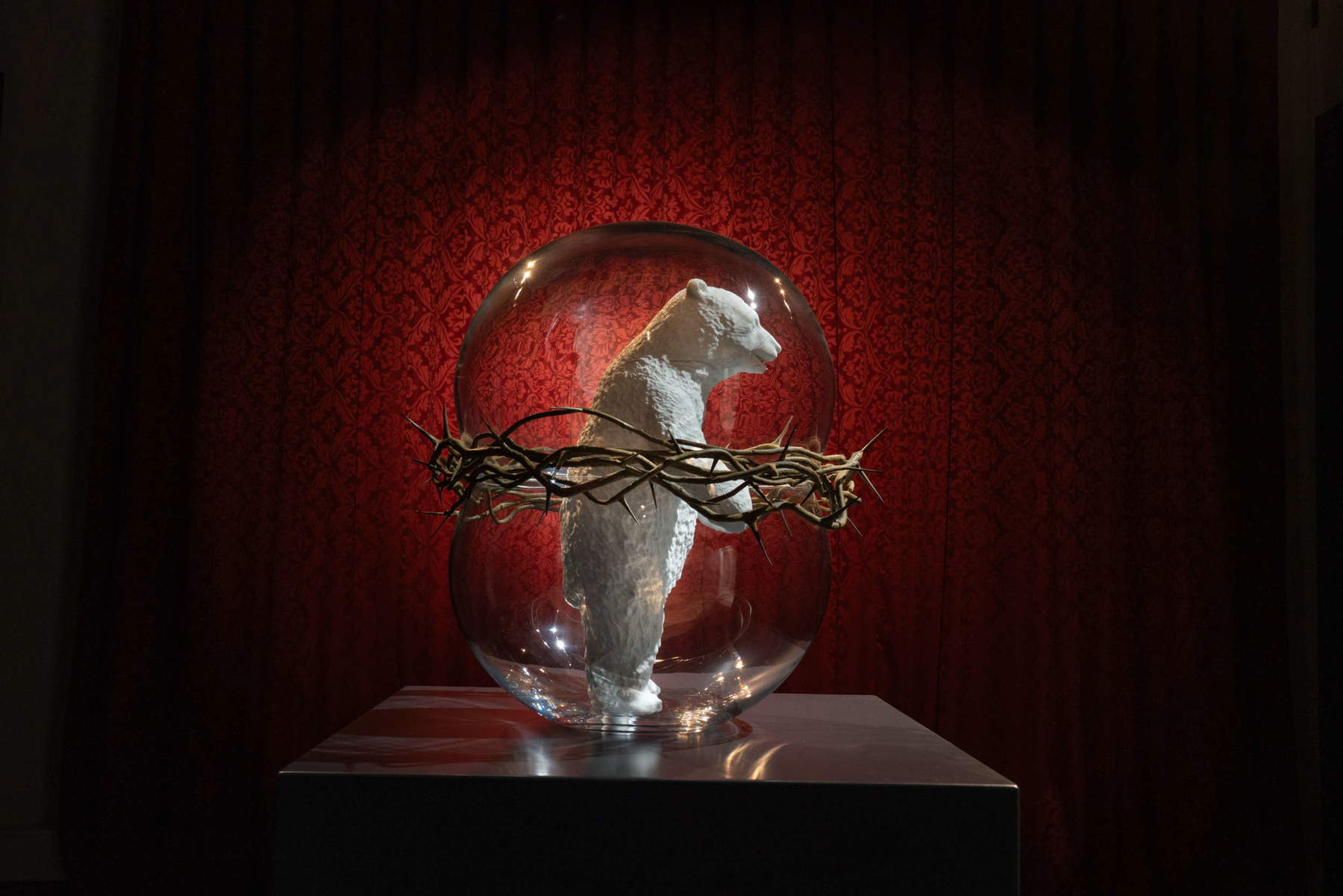
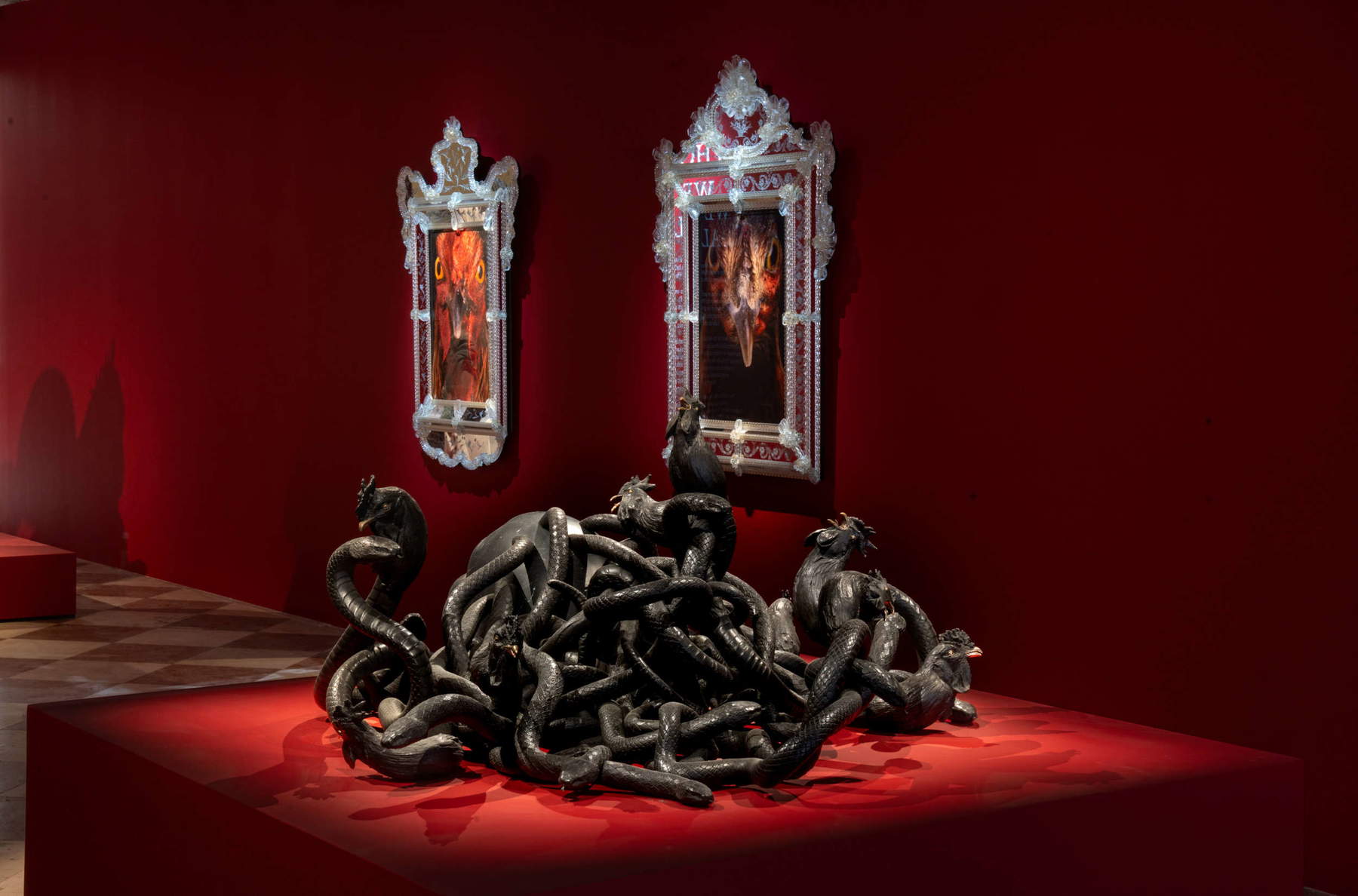
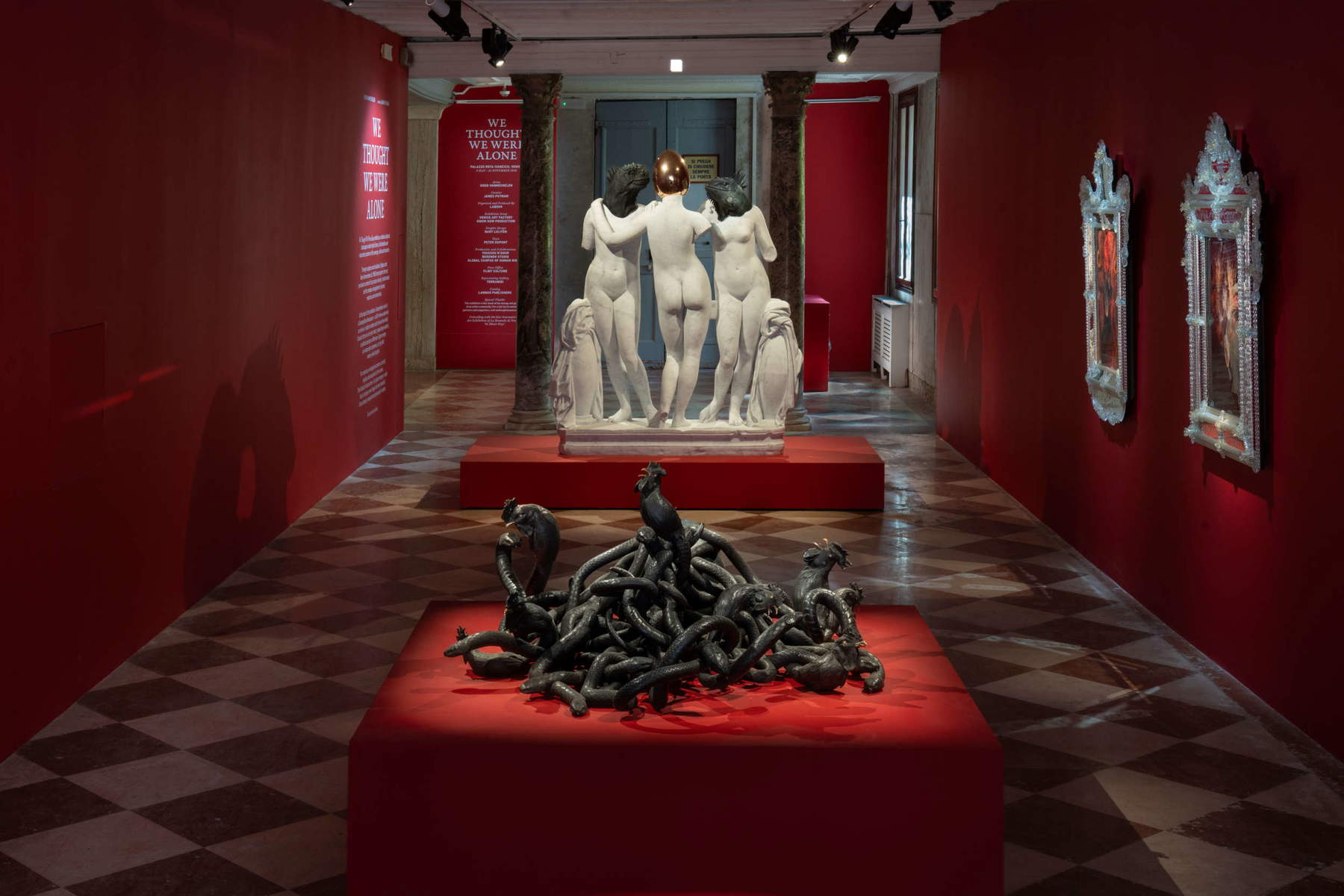
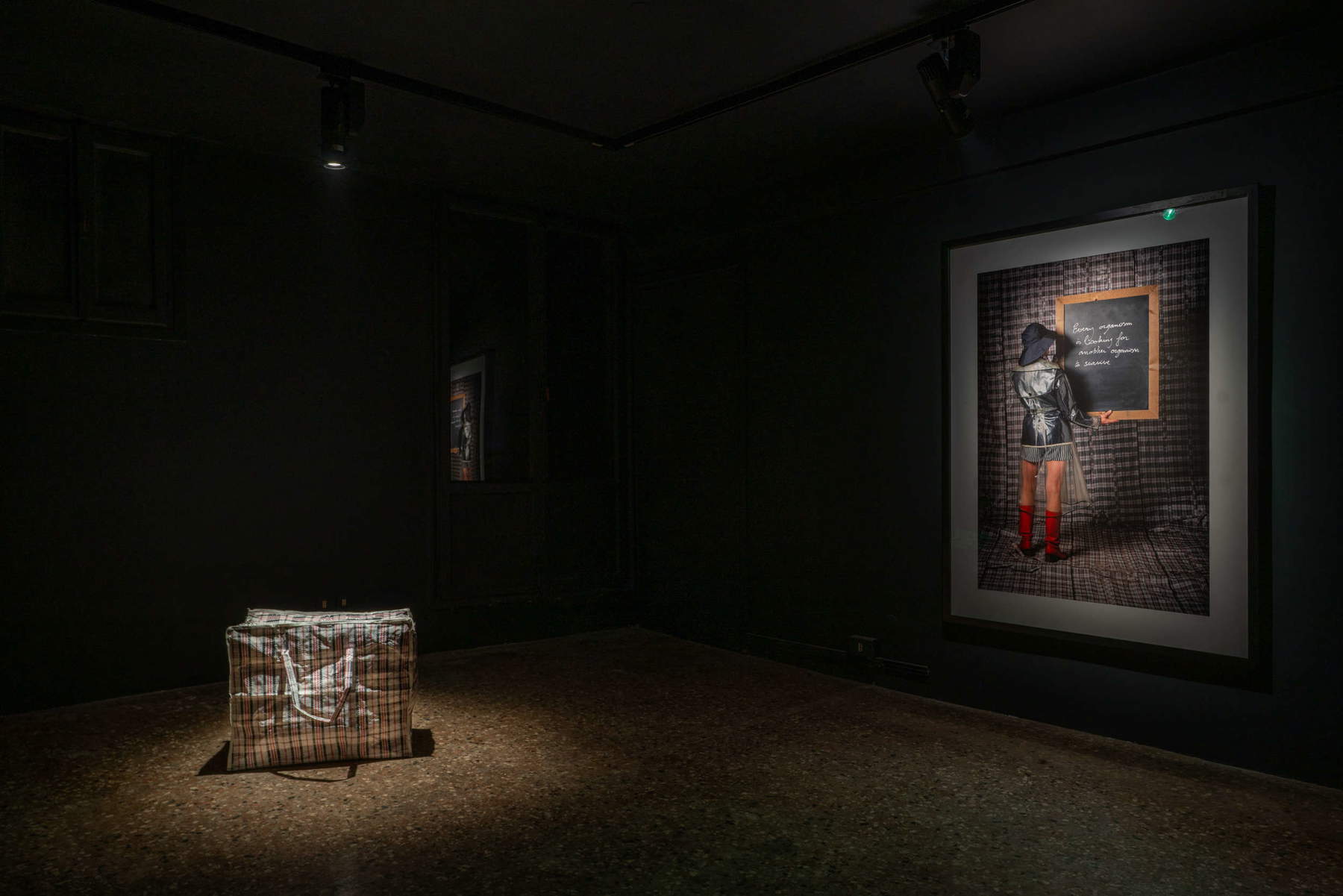
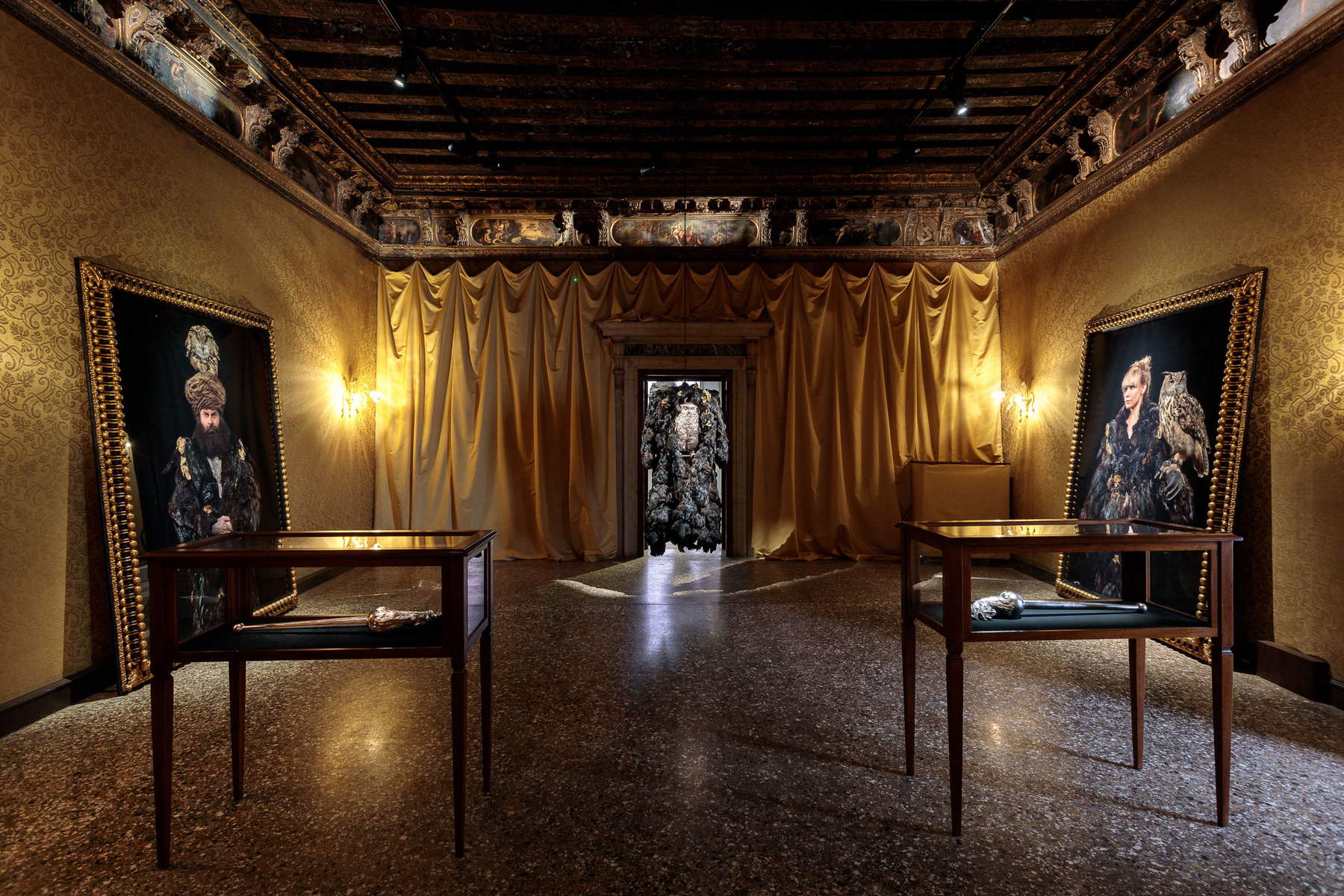
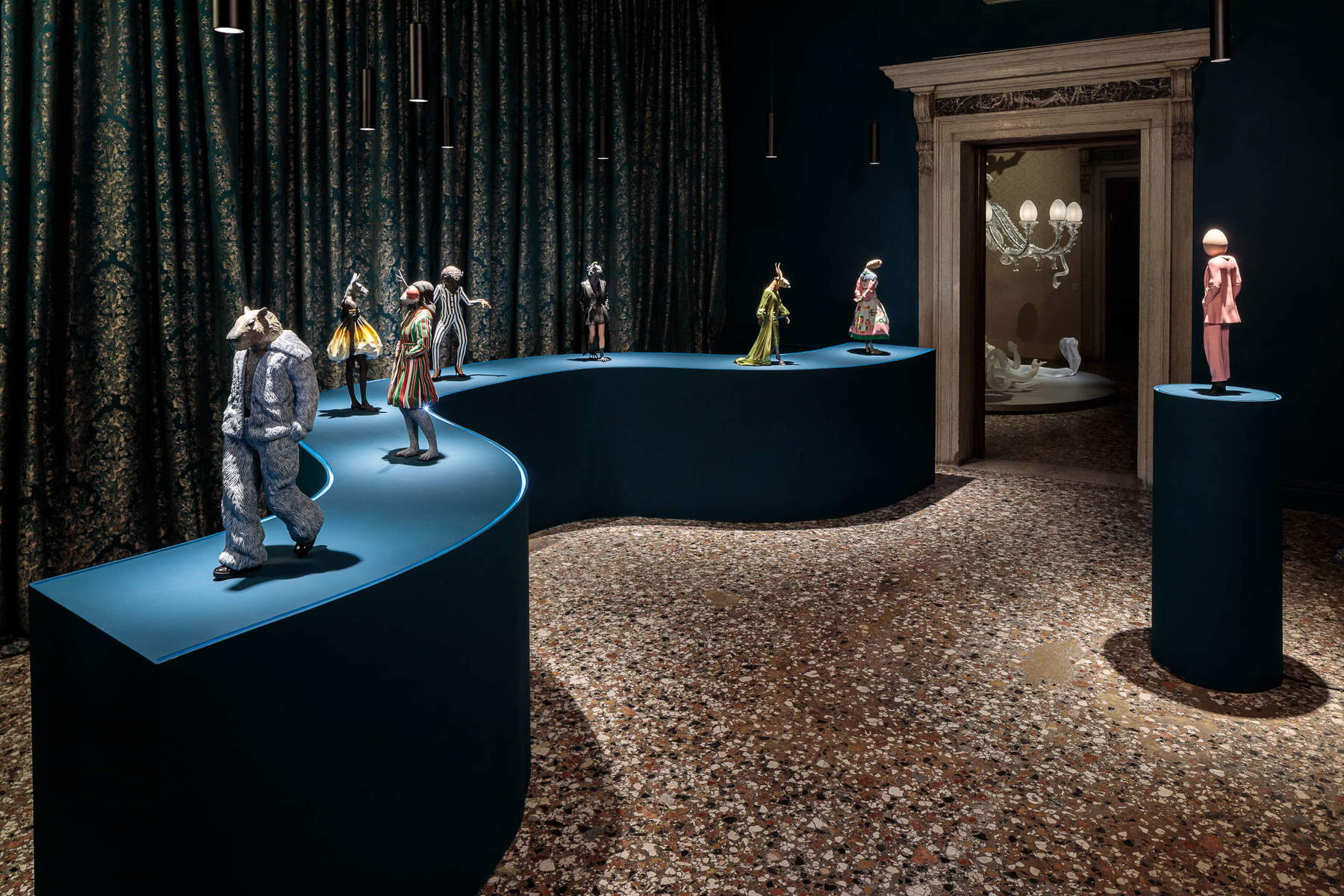
From a pair of chicken portraits, then, begins this itinerary that, suggests the exhibition’s curator, James Putnam, should lead to a “shift in perspective,” that is, a “shift from human autonomy over nature to the recognition that we are just one part of a vast functional and interconnected system, and that it is vital to maintain its balance for our long-term survival.” That the world can continue to exist, and perhaps even thrive, finally without any more human presence, is a hypothesis that hovers in the background of this exhibition, but it is not this terminal reverie that Koen Vanmechelen’s interest is concerned with: the Belgian artist does not sing about the absence of the human being, if anything, he discusses his supposed ontological privilege and, above all, forces his identity to become contaminated. We Thought We Were Alone is above all, one would think, an exhibition of contaminations imagined by an artist, certainly, but at the same time also by a philosopher “who also dresses up as a magician and astrologer, and perhaps as a man of science,” as Eugenio Garin said of the Renaissance philosopher. Vanmechelen, after all, inhabits with naturalness, with spontaneous ease a philosophical subject matter that does not need to be ostentatious or explained, as happens in so much contemporary art, even that presented on the stages of the Biennale: Vanmechelen’s thought lives by its magnificent immediacy, enjoys that wild and imaginative intelligence that translates concepts into a movement of restless intersections, into a conciliation of humans and beasts projected toward a common destiny. And it finds its manifestation in an exhibition that is to be understood as a single environment of meaning, as a system where the works are not autonomous, but all interdependent, and where the visitor does not observe from the outside, does not look at these works, albeit sumptuous, albeit classical, albeit so stubbornly textural, as individual detached elements, but as fragments of a single accomplished discourse. It is as if one ends up inside a web of relationships.


Take, for example, the recurring image of the egg, which returns in several works exhibited at Palazzo Rota Ivancich: protected by glass claws and lying on a pillow of Belgian black(Carried by generations), guarded by a purple arabesque hyena, encumbered and restrained by a heavy chain(Silence), miraculous remnant of’a ruin inhabited by a vulture(Protected Paradise), lights of an imaginary chandelier with glass snakes twisting along a giant painted bronze femur(I never lost Paradise). The egg is origin, it is possibility, it is perfection, but it is also, the curator suggests, openness and uncertainty, a form that emphasizes one of the concepts underlying the entire exhibition: that which emerges is not fixed, much less predetermined. Hence it seems almost to derive everything else: I Never Lost Paradise itself takes light as a symbol not only of purity, but of an ambiguous direction that insinuates, that opens a fissure, that suggests a tension between temptation and choice. The eponymous work of the exhibition, to which an entire room is dedicated, is a large bronze finger, probably reminiscent of the colossal statue of Constantine in the Capitoline Museums, holding up an orb dominated, however, by a cercopithecus, which has climbed all the way up to the sphere to deny theassumption of human sovereignty over the world, and thus, one would think, not to challenge but to mock, or perhaps to ignore with animal indifference, an authority that no longer belongs toHomo sapiens. "Introduce a sense of shared and competing agency ," the curator suggests: the concept of response-ability returns.
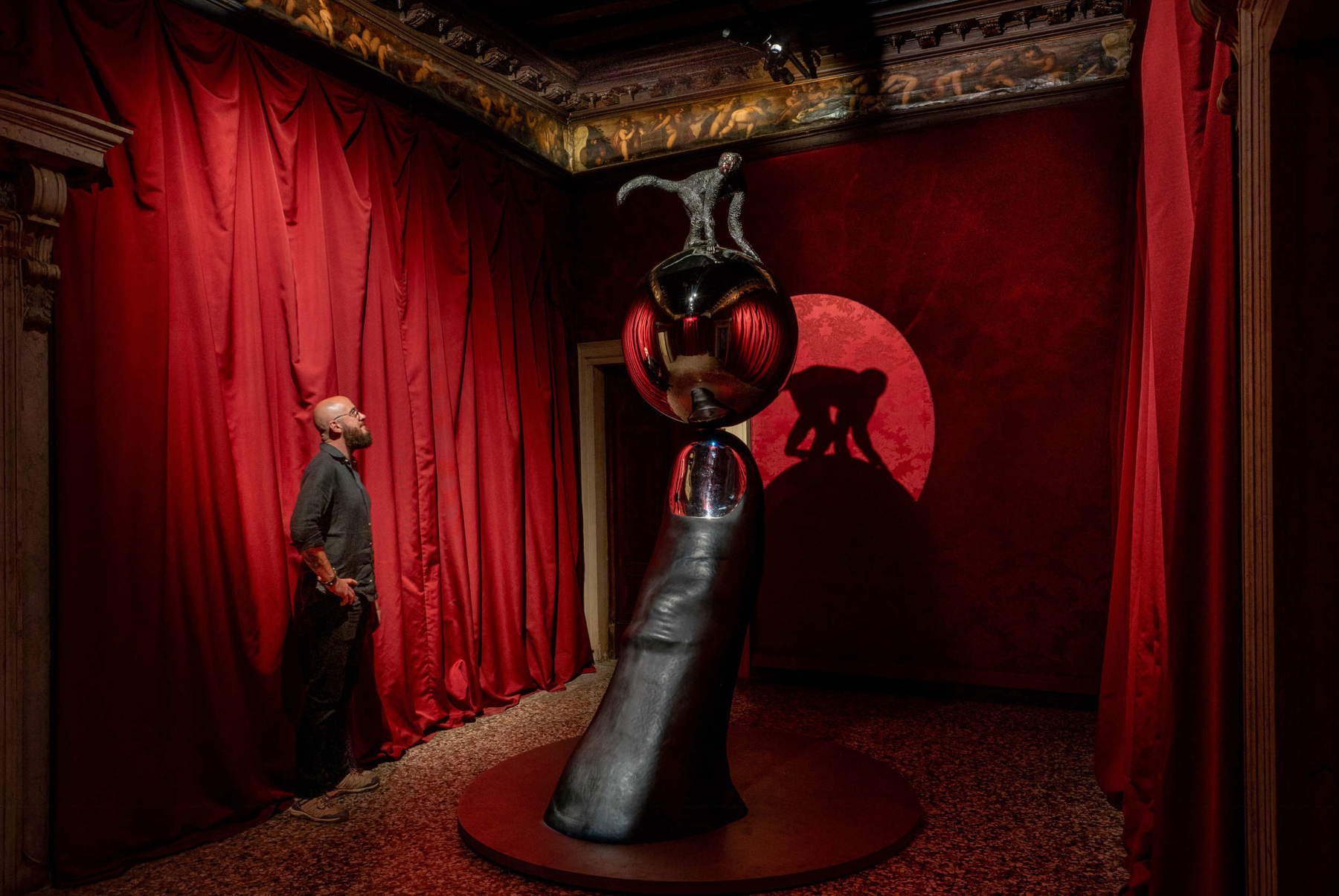
Perhaps the most telling result comes with We are the other, an installation of bronze sculptures where a host of figures in which the human body retains limbs, hands and posture, but faces and epidermis take on recognizable animal traits, are engaged in a kind of fashion show: anthropomorphic beasts (a snake, a bison, a fly, a zebra, a wildebeest, a beaver, the inescapable egg) move down the catwalk while the visitor, from a speaker hidden behind a curtain, listens on a loop, a choice that causes further sense of instability, to Radiohead’s Feral . The curator suggests that we are not witnessing a parade of characters circumscribed within fixed identities, but of “figures shaped by distortion, intersection and change, questioning the durability of existing categories,” to arrive at the idea of an “us” that, from a social condition, becomes “theatrical: a shared scene in which we present ourselves to each other as hybrid and uncertain.” Toward the end of the exhibition, a cheetah would like to escape from a room, but is stopped by a glass, moreover already hit by a bullet(Under Pressure): this is the mode Vanmechelen chooses to make manifest the tension that separates animal and human being, an image that brings back to a present dominated by chaos, struggle, and violence. Something similar happens in Cosmopolitan Fossil, a work that explicitly quotes a sculpture by Adriano Cecioni (the Bambino col gallo, perhaps the most famous of the Macchiaioli sculptures) but changing the rooster of the original with an enormous iguana, to suggest the idea that the human being can continue even indefinitely his process of civilization but still remain entangled in an evolutionary process, in a continuous confrontation with what human is not, and above all remain aware that human beings, in their attempt to control nature, cannot overstep the limits imposed on them. Faced with these images, one risks faltering, since they do not allow themselves to be absorbed into the narrative of a pervasive and inescapable interdependence: they are perhaps the only moments when the categories that the artist imagines as connected (“The question,” Vanmechelen says, “is no longer whether we are at the center, but how everything is connected and how this connection keeps changing”) come back distinct, separate, antithetical. One wonders, then, whether the feeling of still being inside that landscape that the exhibition wants to evoke is being undermined, or whether it is not rather a deliberate strategy, an expedient to make one feel an ambiguity that does not intend to let itself be resolved.
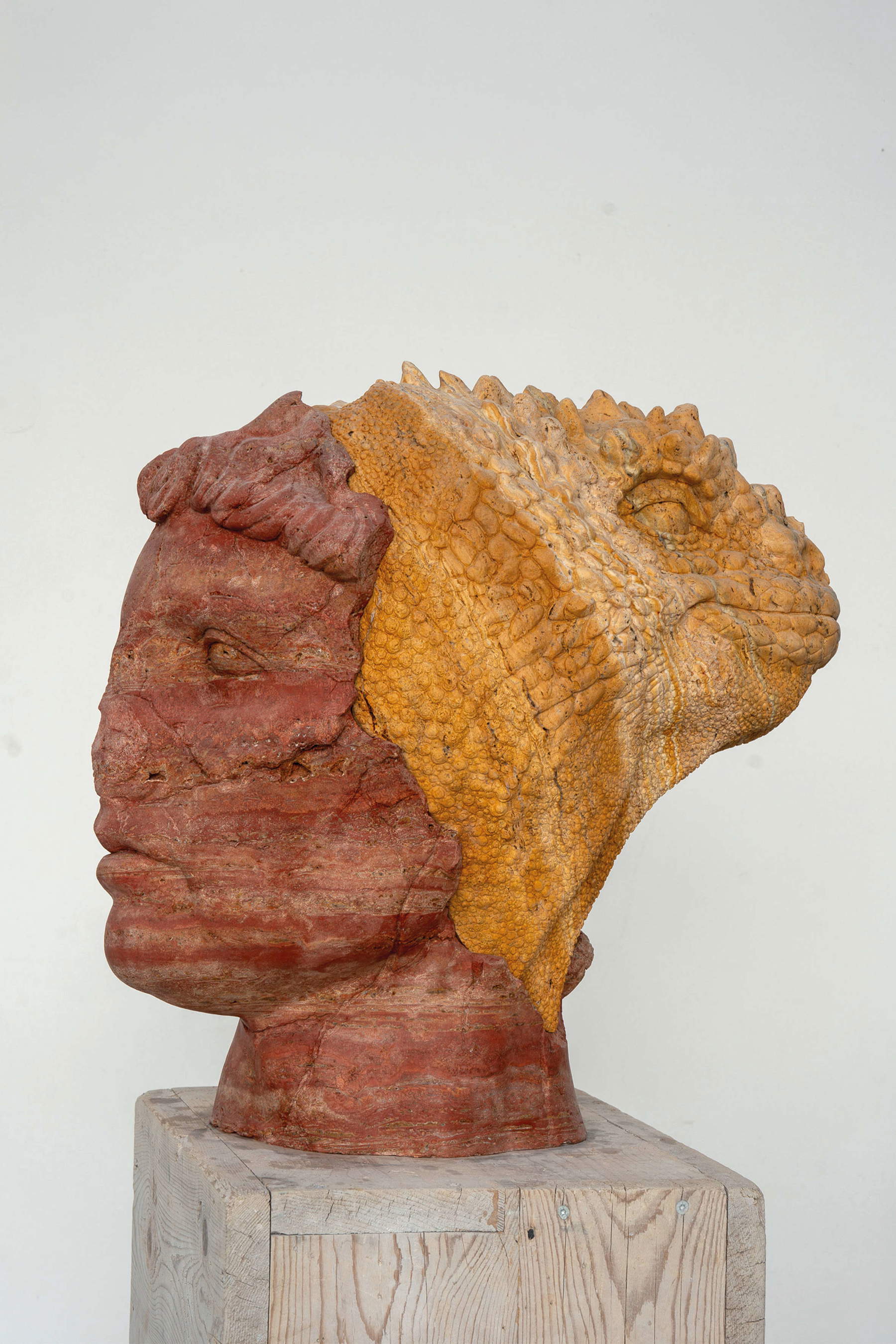
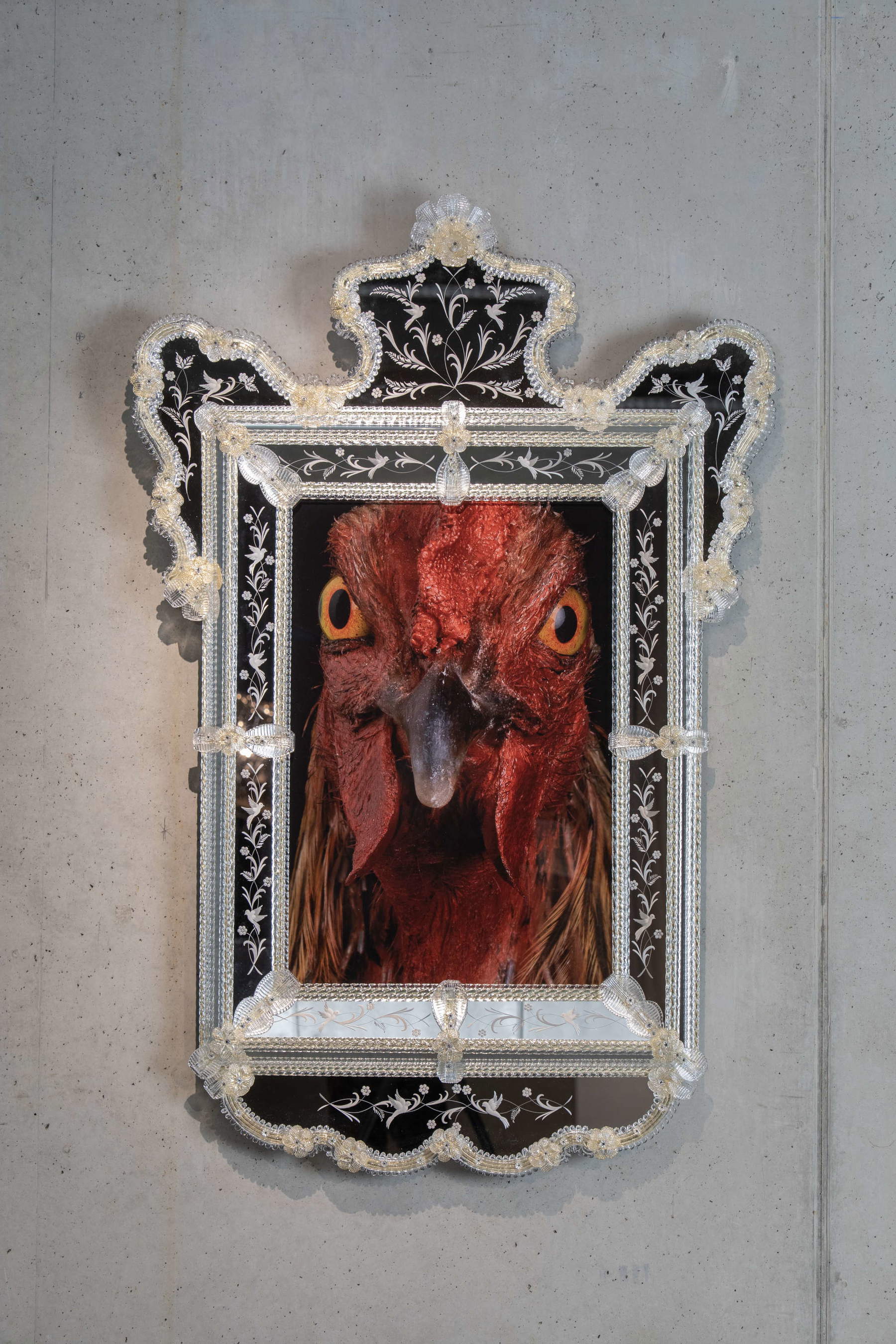
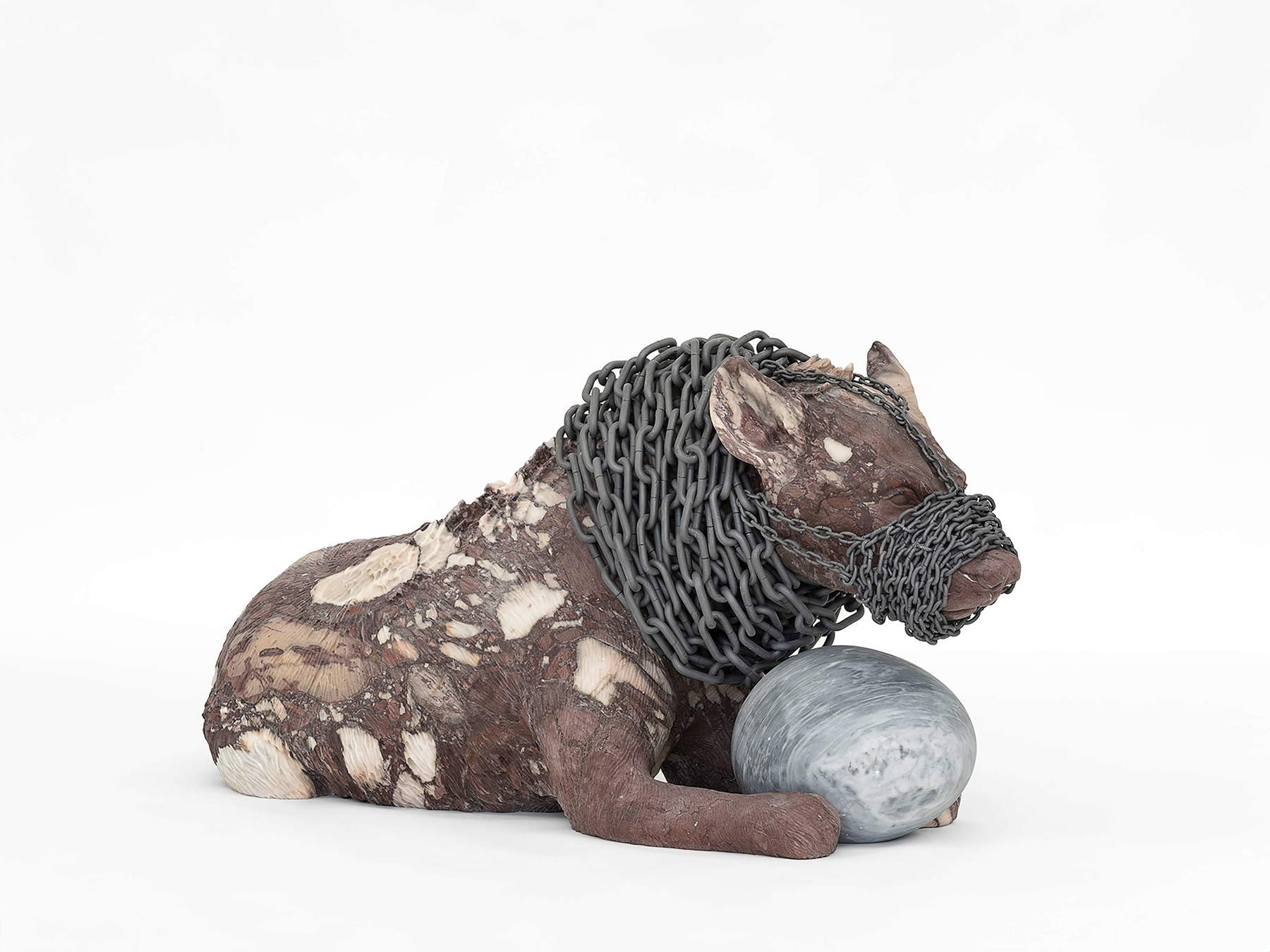
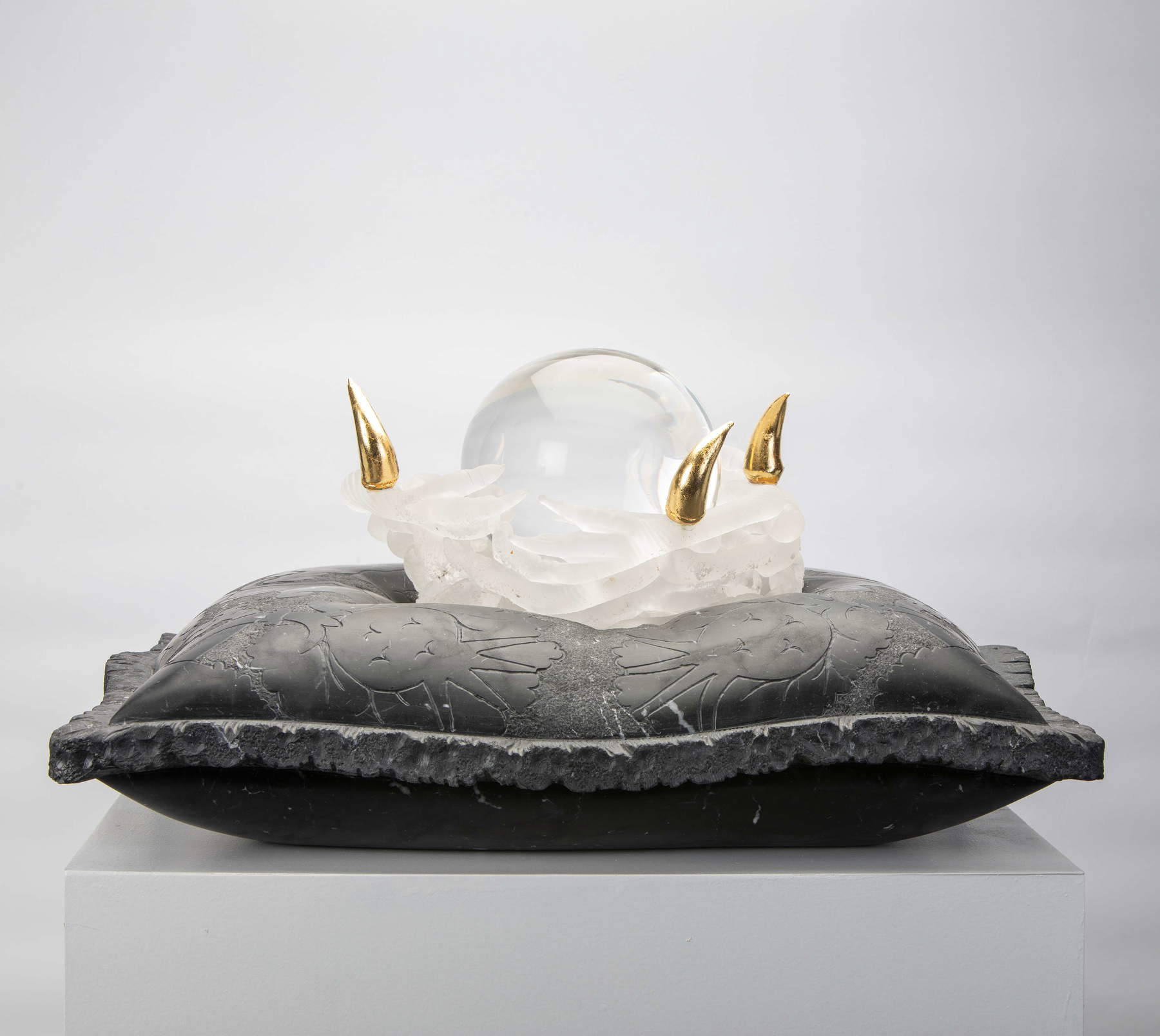
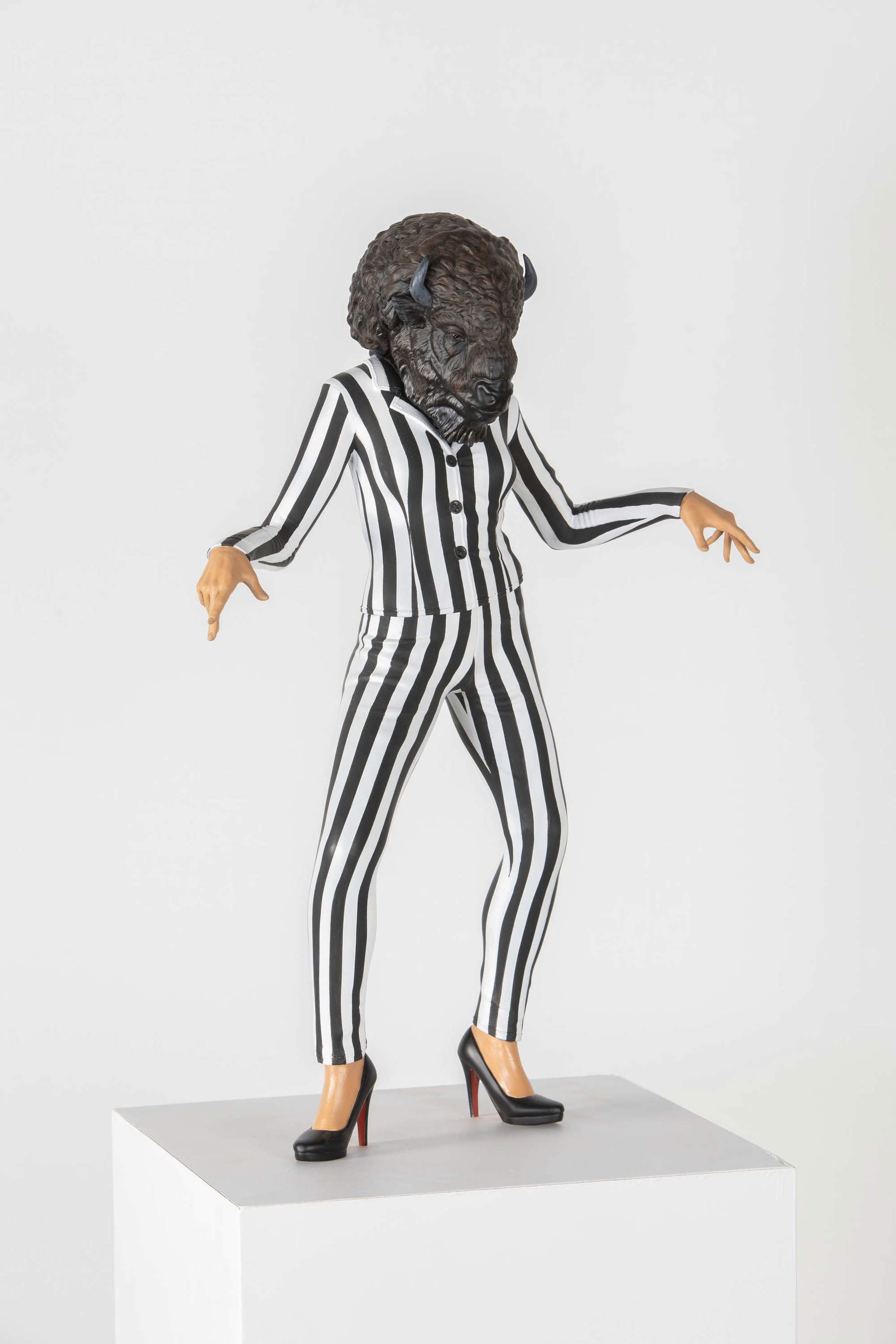
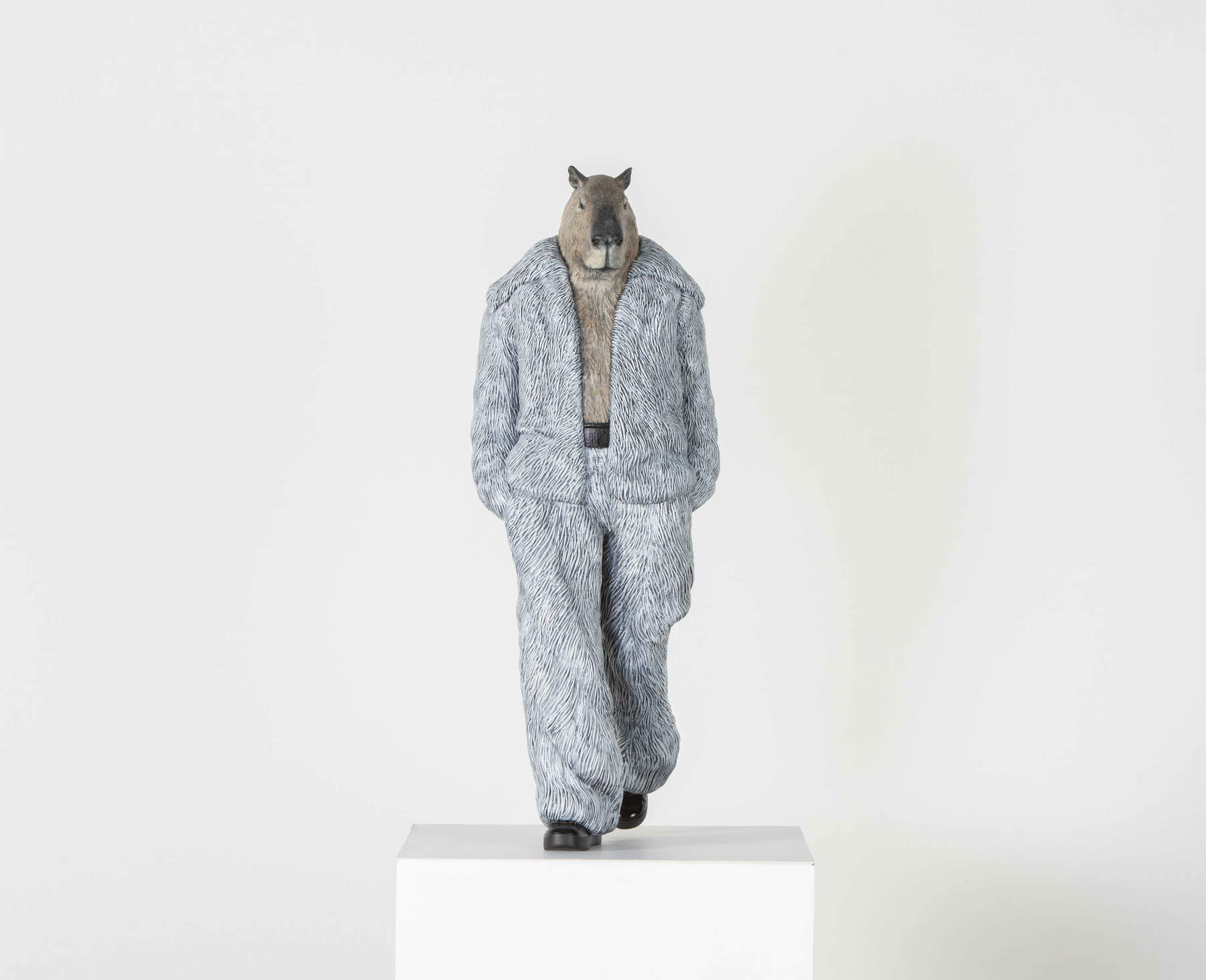
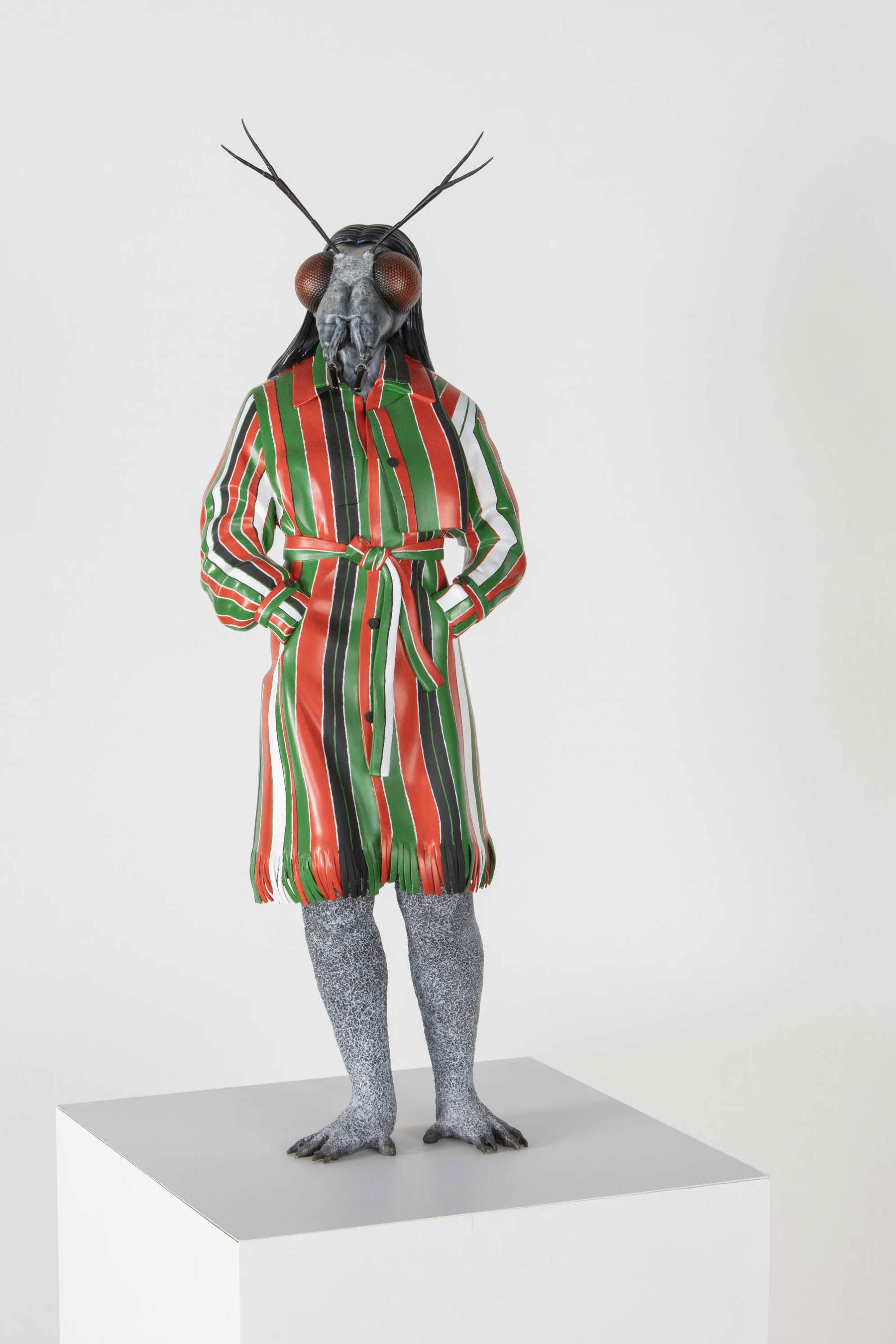
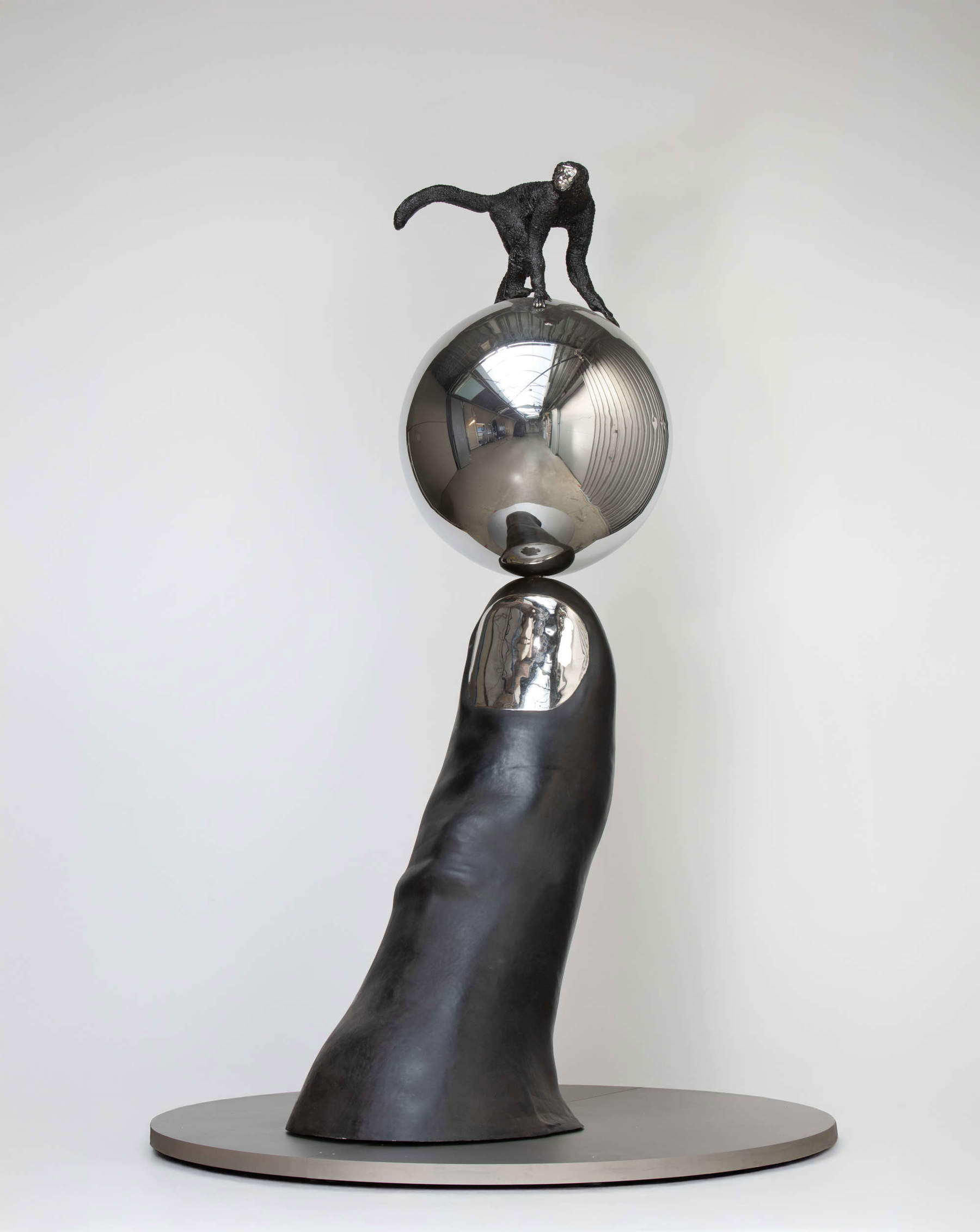
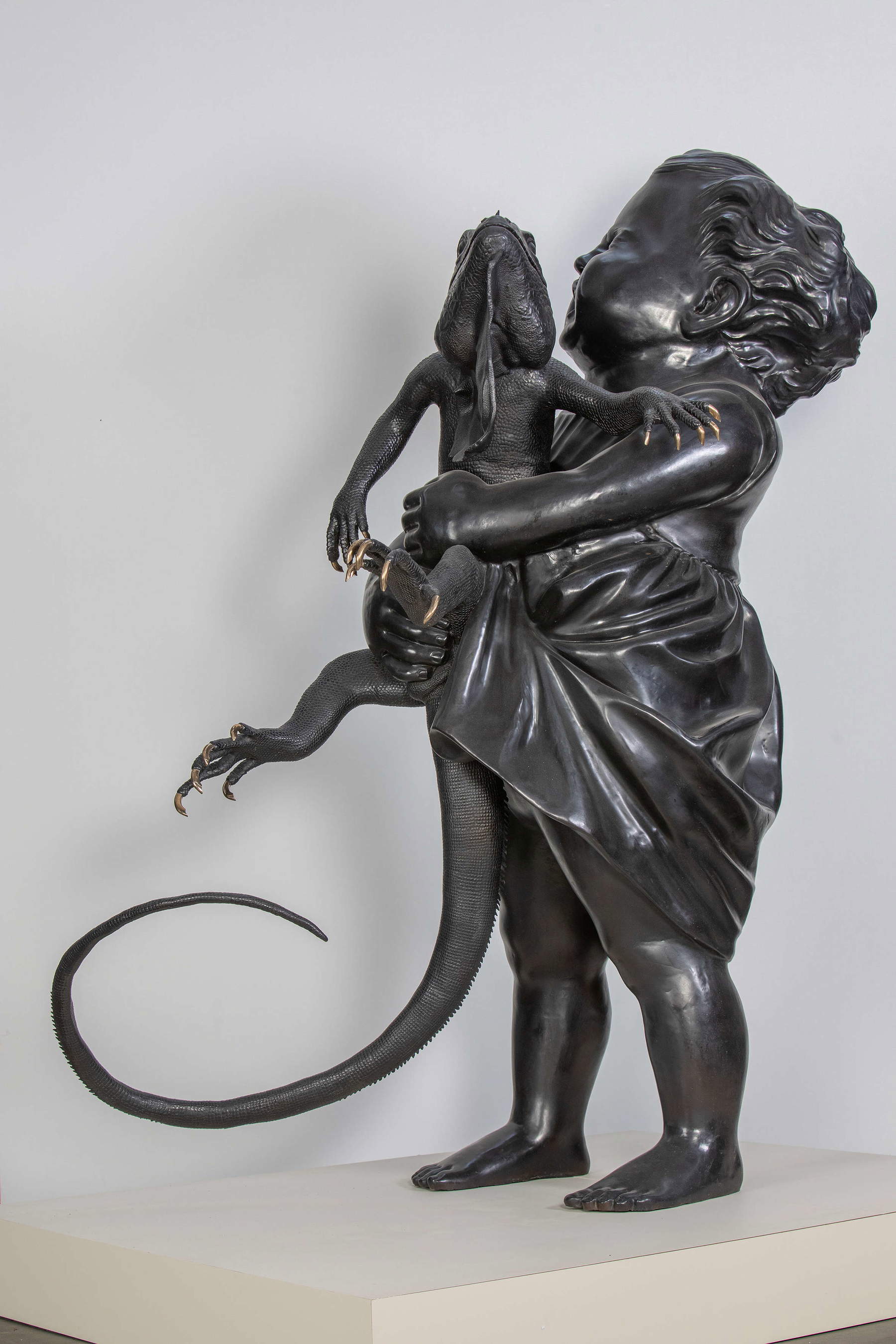
There is, therefore, also a certain degree of tension that can cause a slight disorientation. We are, unquestionably, inside a landscape: and it is a feeling that does not come from an abstract principle, from a predetermined reading that is imposed on the visitor (there are no guides in the exhibition to direct the public), from a suggestion. It is, in the meantime, the result of a precise arrangement, of a circular progression that plunges the visitor into an environment that is explored without there being a linear path, without the various exhibition nuclei losing strength if one decides on one itinerary rather than another. It is then the outcome of an ensemble of presences that, although forced into a whole, retain their autonomy: the exhibition is first and foremost the construction of a coherent framework, but the works also take on the artist’s thought on their own, a thought that is ordered into individual figures capable of living a life of their own even outside the context of the exhibition, capable of propagating even beyond the halls of the palace the’mental order of the artist, as fragments of a thought that is not extemporaneous, that is not the result of a contingent reflection, but that has for years been the fulcrum of a research that writes a new chapter in Venice, consistent with the exhibitions and works of the past. A research that ends up reconverting a posthumanist line of thought into direct imagery. However, one also feels the risk of losing one’s bearings, of experiencing sincere discomfort, if not open rejection.
It happens when one notices the calculated, disturbing duplicity of this allegory of a decline, this landscape where thought is deposited in the image through symbols and matter. It happens when one glimpses the hypothesis of a reconciliation that may not be exactly peaceful. It happens when one is admired by the craft of an artist who works with a pre-digital grammar within a recognizable tradition, who accepts art history to reject a purely anti-human or purely technological perspective, but at the same time ends up questioning that history, destabilizing it, cracking it. It happens when one realizes that the clarity of Apuan marbles, the transparency of Murano glass, the smoothness of bronzes lose their traditional meaning, lose their status as celebratory materials, and become the site of aninfiltration that transfers to the mutant what was once human, that rediscusses hierarchies, that exalts instability by entrusting to every sliver of marble, to every sparkle of glass, to every reflection of bronze the continuous revival of a heresy.
Warning: the translation into English of the original Italian article was created using automatic tools. We undertake to review all articles, but we do not guarantee the total absence of inaccuracies in the translation due to the program. You can find the original by clicking on the ITA button. If you find any mistake,please contact us.