





At a time when the aftermath of grievances over the absence of Italian artists at the International Exhibition of the upcoming Art Biennale is still swirling (completely unfounded, moreover, except in terms of “discourtesy” to the host country of the review, given the almost total exclusion of Western artists from the selection), the exhibitions recently opened in Venice by the Pinault Collection confirm that this is a sign of the times, whatever conclusions one may draw from it. In the foundation’s two prestigious venues, African Michael Armitage, Indian Amar Kanwar, African-American Lorna Simpson and Brazilian Paulo Nazareth are featured in four solo shows (the former two at Palazzo Grassi, the latter at Punta della Dogana) that demonstrate how even theinfluential collection is geared to massively absorb the new creative sap coming from continents that have always been marginalized in their peculiarities by the art system “that counts.” François Pinault himself, in his presentation of the projects, declares that he has been particularly sensitive, since the beginning, to the attitude of artists to grasp the challenges of their time by highlighting the imbalances of the global world. A similar statement was uttered by Patrizia Sandretto Re Rebaudengo on the occasion of the exhibition Reaching for the Stars. From Maurizio Cattelan to Lynette Yiadom-Boakye at Palazzo Strozzi Florence, which in 2023 took stock of thirty years of her collection. The urgencies of the contemporary world under threat of World War III and increasingly divided between rich and poor are there for all to see, but not all the artists celebrated by the art system as spokesmen (or by virtue) of these instances succeed in embodying them in languages capable of avoiding the anti-colonialist standards so much in vogue today and of imposing themselves for their intrinsic strength even on a strictly artistic level. One of the most important voices on the international scene in relation to these aspects is undoubtedly that of Michael Armitage, who, just over 40 years old, is already supported by galleries of the caliber of White Cube (London, New York, Paris, Seoul) and David Zwirner (New York, Los Angeles, London, Paris, Hong Kong) and included in the collections of such leading institutions worldwide as Tate, Fondazione Sandretto Re Rebaudengo, Solomon R. Guggenheim Museum, Museum of Modern Art (MoMA), The Metropolitan Museum of Art, Beyeler Foundation, Glenstone Museum, as well as, of course, Pinault Collection. For the artist, born in Nairobi, Kenya, in 1984 to a Kikuyu mother and an English father, the one at Palazzo Grassi is the largest retrospective dedicated to him in Europe, a recognition more than due for the extraordinary maturity and quality of his expressive figure and for the scope of the cultural and ethical substratum that constitutes its substance.
The first striking aspect of his poetics is the monumental breadth: most of the paintings are of large format, but this is not a matter of the predilection or mastery, by no means taken for granted, of a certain dimensional scale, as much as of the aptitude, never depotentiated even in those of smaller proportions, to think of painting as a tool for materializing a mythological environment in which the chaos of human affairs is transformed into a choral syncretic epic of survival. In contrast to the sophisticated speculations on the dreamlike, evanescent or technological body that mark so much recent painting influenced by the uncertainties of digital dematerialization, the driving center of Armitage’s is a body understood as a crowd and as a muscular jumble of physical and psychic energies, on the strength of which the centuries-old obsolescence of figure painting is swept away by a disruptive urgency.
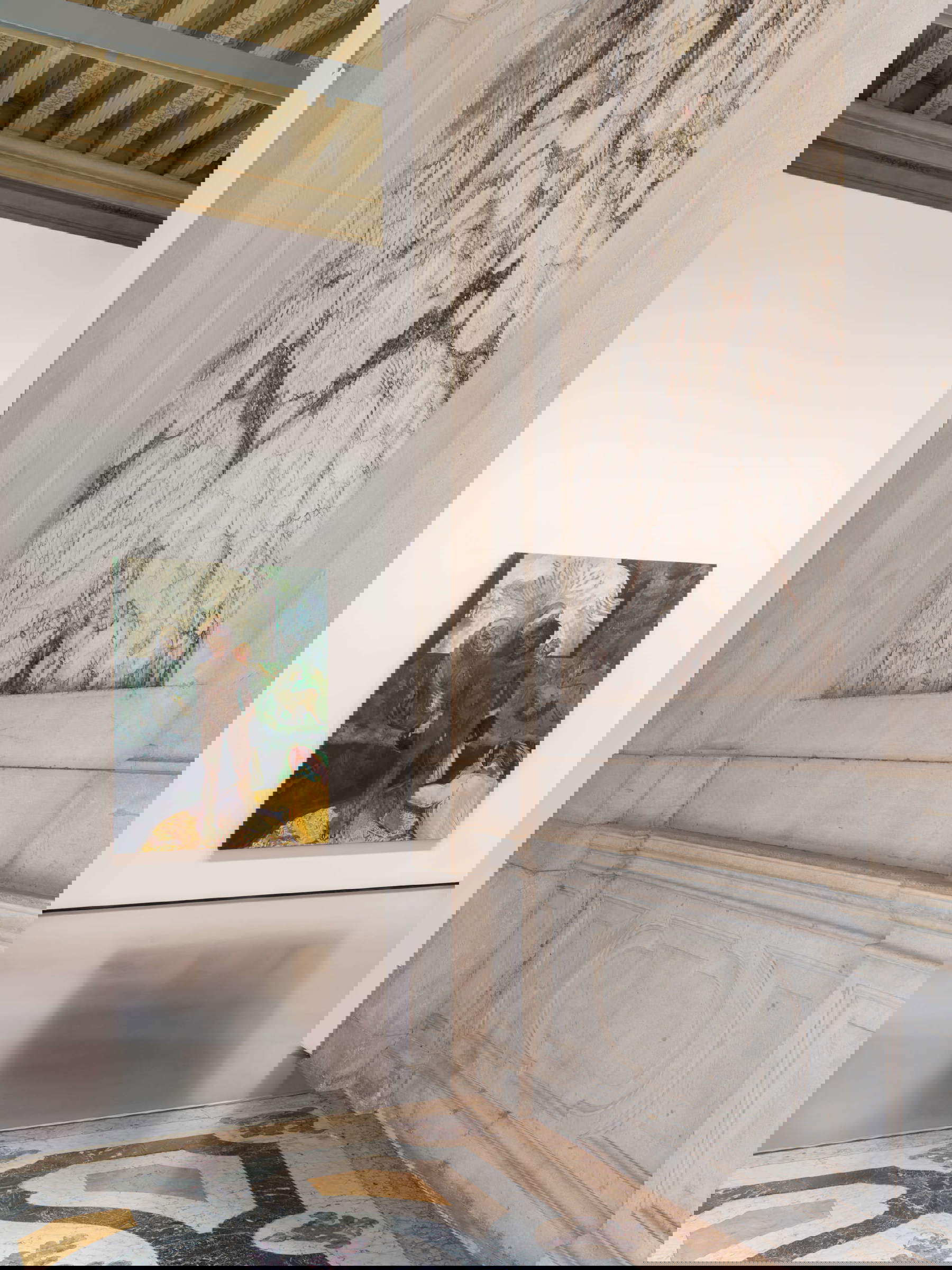
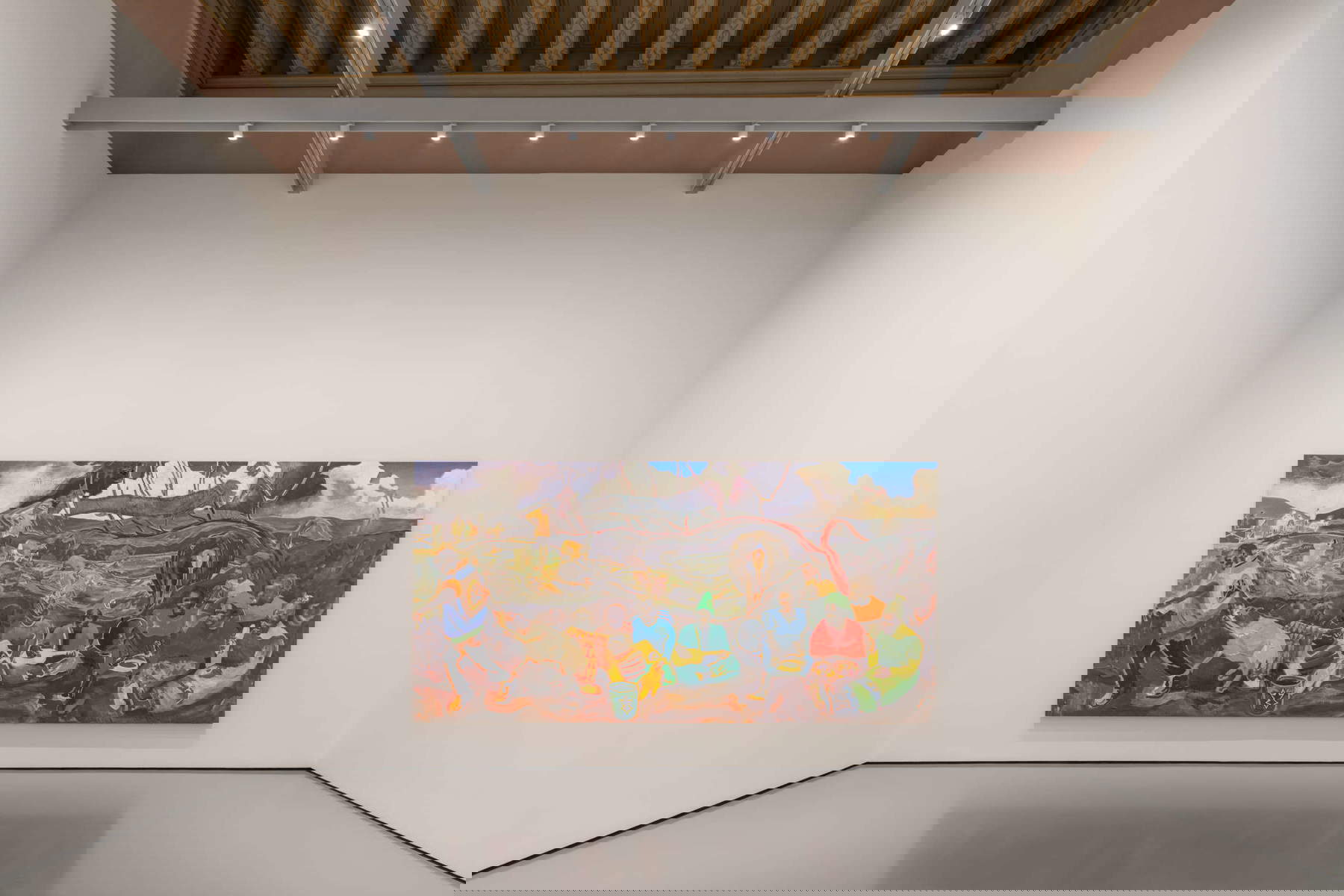
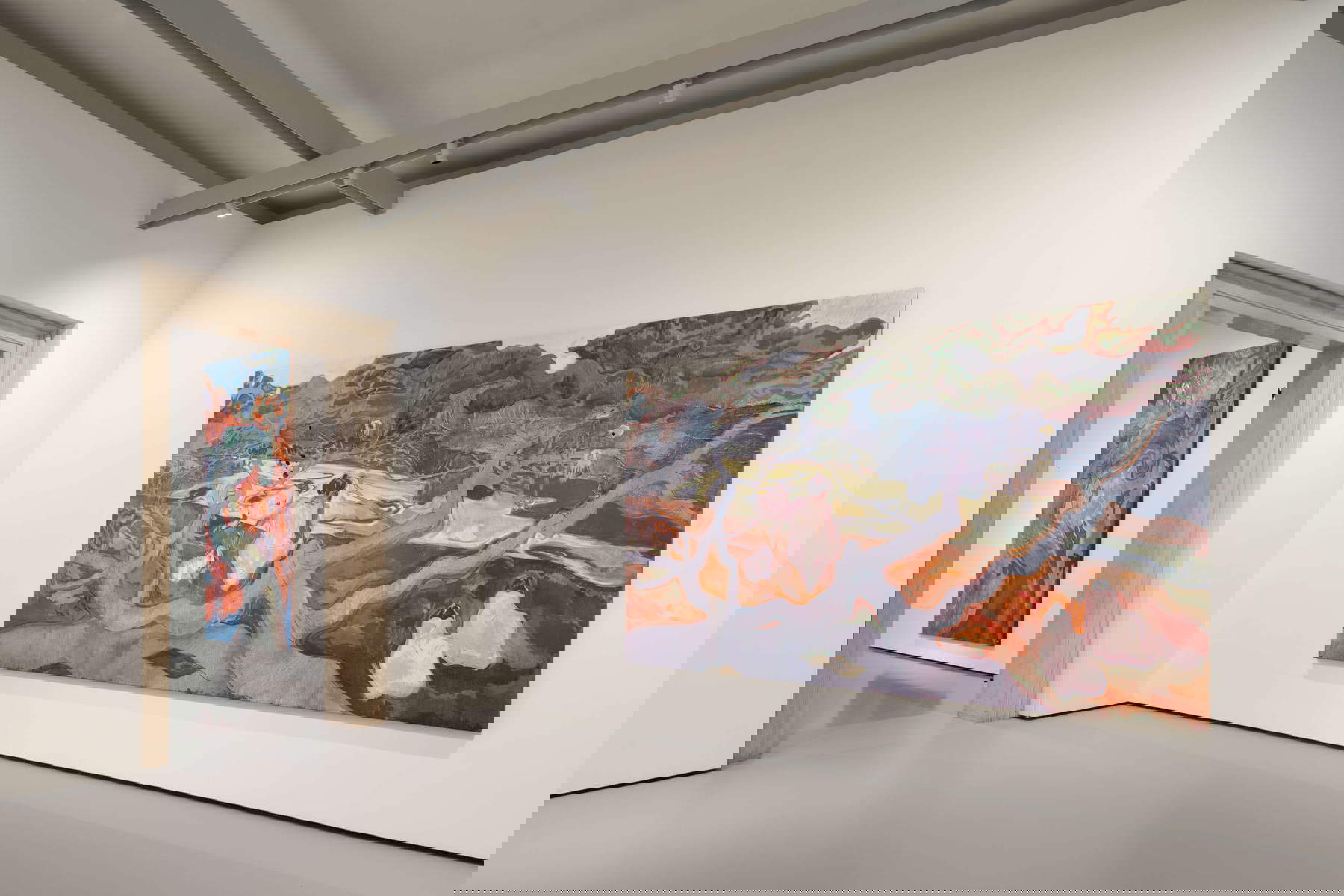
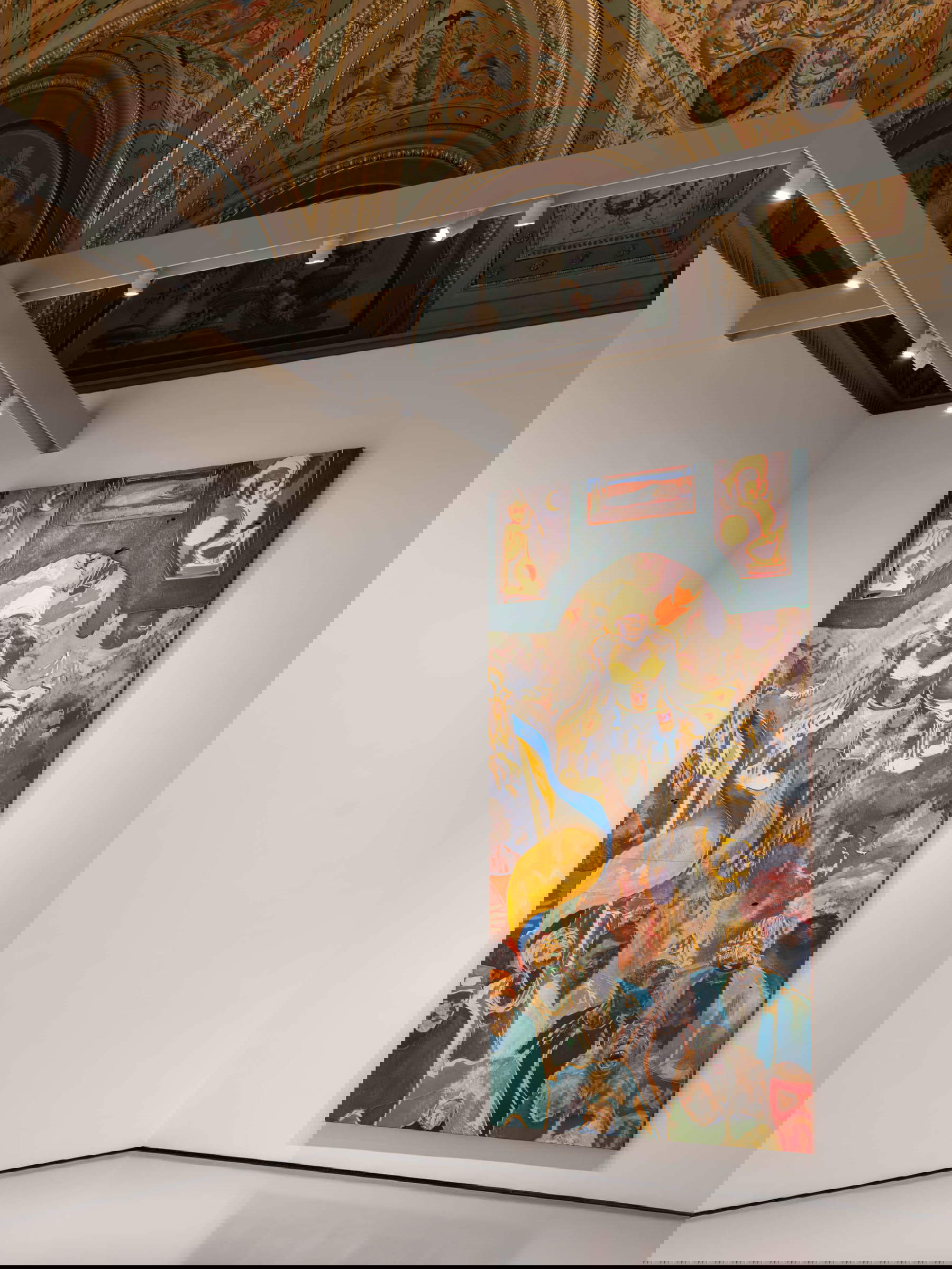
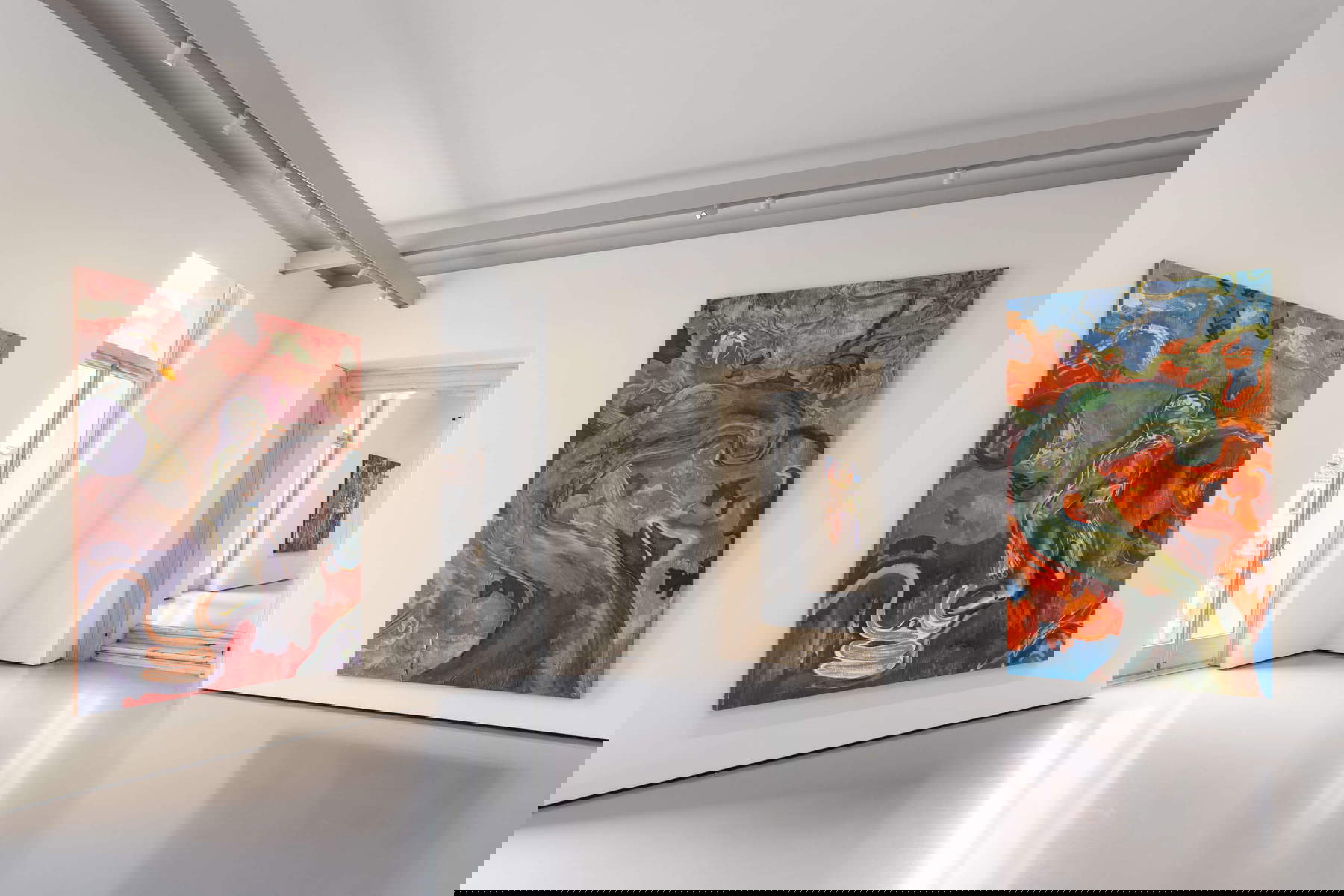
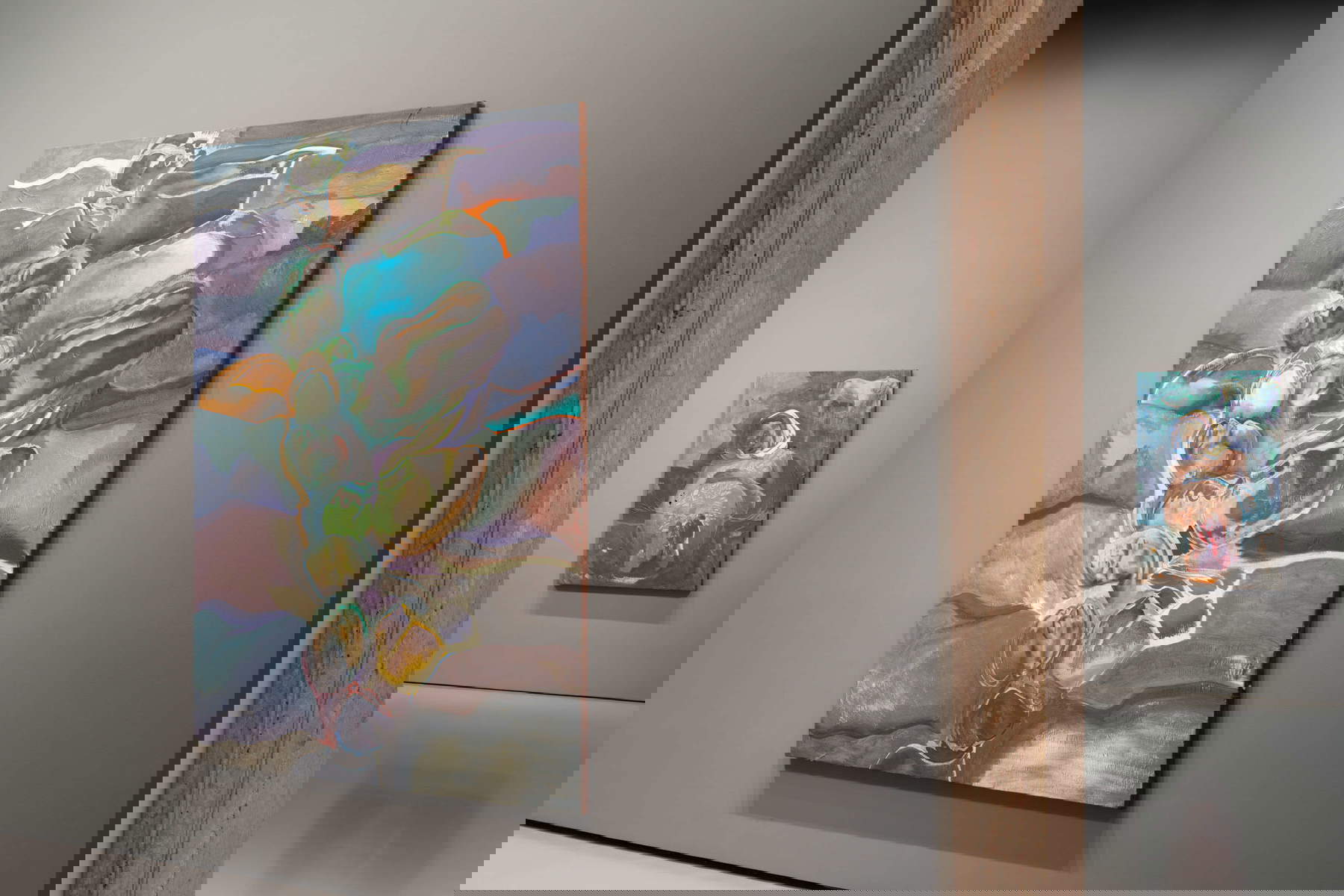
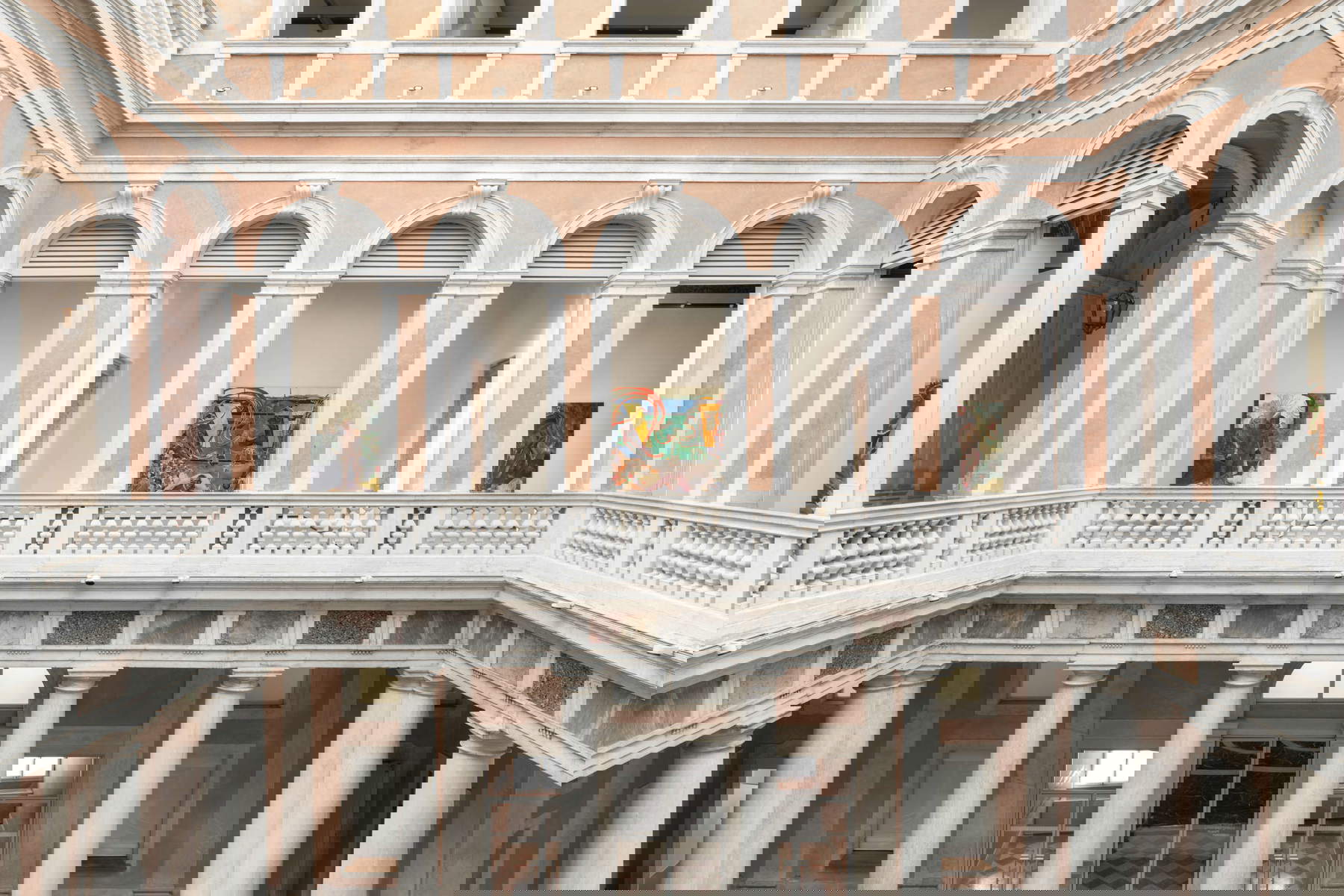
If academic hierarchies were still effective, one could speak, with due actualization, of a triumphant return of that “Great Manner” theorized in the 16th century for which history painting, including biblical, mythological, allegorical scenes and historical facts, was considered the supreme genre, both for its ability to make visible the universal essence of things and for the absolute mastery of the medium that its execution required. It is very significant in this regard what the artist recounts about his beginnings in his conversation with Hans Ulrich Obrist published in the exhibition catalog, in which he says that he always thought that his audience was the Kenyan audience, to whom he wanted to create a recognizable and engaging language with which most people could identify, not just those familiar with the art. And equally significant is the fact that, having moved to London to study, earning a bachelor of fine arts degree from the Slade School of Fine Art (2007) and a postgraduate diploma from the Royal Academy Schools in London (2010), he turned with the same commitment to the Western museum with the specific intention of “operating beyond a very specific geography” while keeping his roots firmly in African heritage.
Thus, from the fusion of these layered instances arises his unmistakable stylistic signature, that metamorphic painting, peremptory but ready to liquefy into living masses of color, capable of sketching as well as describing, blurring as well as dazzling, and, above all, seamlessly merging all these meanings into the cruel lucid dream of visions that touch us dangerously close. Another structural element characteristic of his painting is the support, a fabric made from the inner bark of the Ficus Mutuba, typical of Uganda, which he discovered in Kenya in a tribal souvenir store for tourists. Lubugo, which he discovers was already widespread as an artistic medium in Uganda, was immediately adopted by him to differentiate himself from the Western tradition of painting on canvas. His choice to incorporate the cultural and biological DNA of African identity into his material arsenal triggers a fruitful interaction between that ancestral rough texture and the painting style, with which he establishes a symbiotic relationship. The irregularities, the holes, the stitch-stitching, the partial overlapping of the support, as well as becoming an additional plastic veil inscribe themselves in a surprising way in the image, both as surreal environmental accentuations and as narrative elements. In The Promised Land (2019), for example, a work made from participation in a demonstration during the 2017 Kenyan elections following a news crew, a hole in the lubugo riddles a little girl facing a balcony, whose legs are visible only, like the bullet she was accidentally hit by in reality during those protests.
The protagonists of Armitage’s epic are, therefore, invariably black, a natural consequence of a gaze centered in the geography of East Africa and Kenya in particular, where the artist continues to work through the Nairobi Contemporary Art Institute, a nonprofit institution he founded in 2020 to develop and preserve local contemporary art. The bodies that crowd his canvases belong to women, men, children, demons, deities or inextricable groups. Made mythologically homogeneous by the ambiguity between the recognizable and the visionary that appertains to them, they are constantly pulled by the vortex of painting into a polyphonic semantic field. Different dimensions coexist in his compositions: in certain areas of the painting they emerge as parallel worlds between one layer and another of the painting, in certain others as interconnected narrative interweavings, each treated with the same visual density and ability to hold together the particular and the universal. Armitage speaks of political news, state violence, social marginalization, migration, corruption, myth, landscape, and, sure, even anticolonialism, but without uncritical Black Power claims or didactic denunciations of abuse. For when the problems globally are violence, famine and mortality, it is not as much a priority to emphasize who is good and who is bad as it is to elaborate new myths capable of representing humanity as a cohesive entity in its albeit constitutive disunity to try to avert self-destruction.
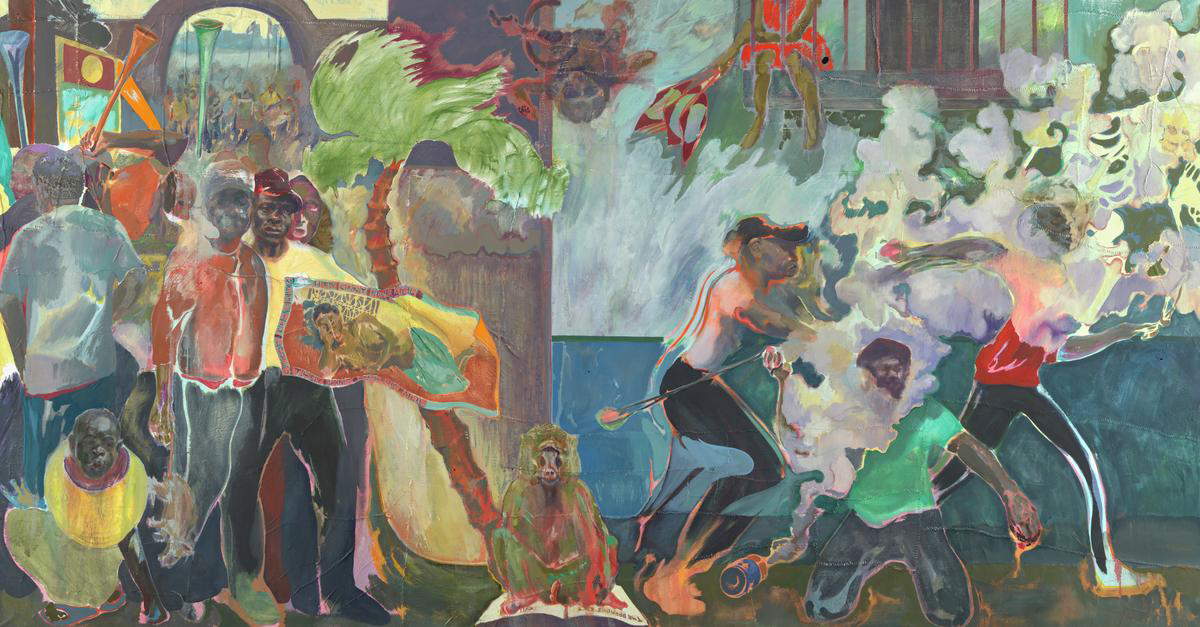
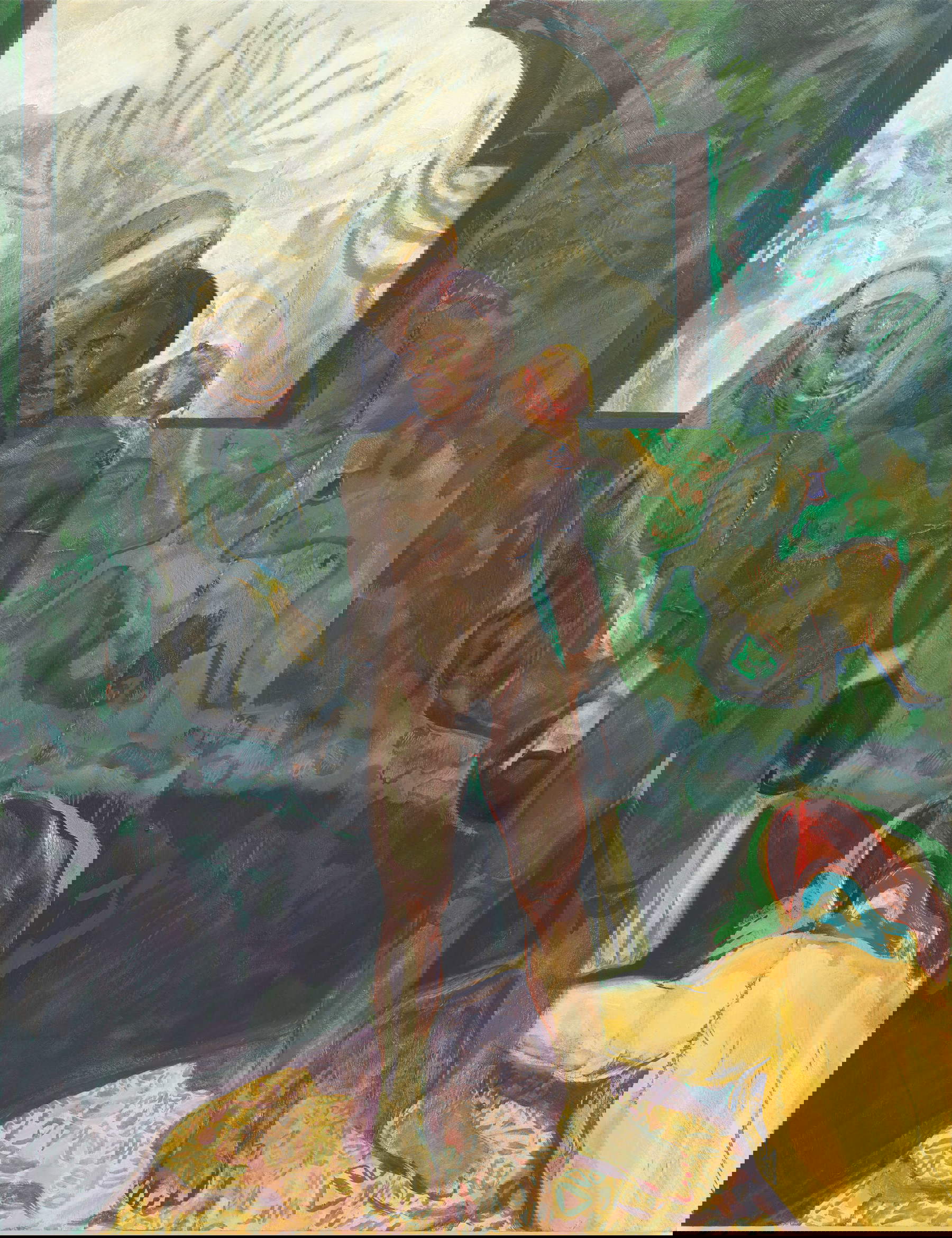
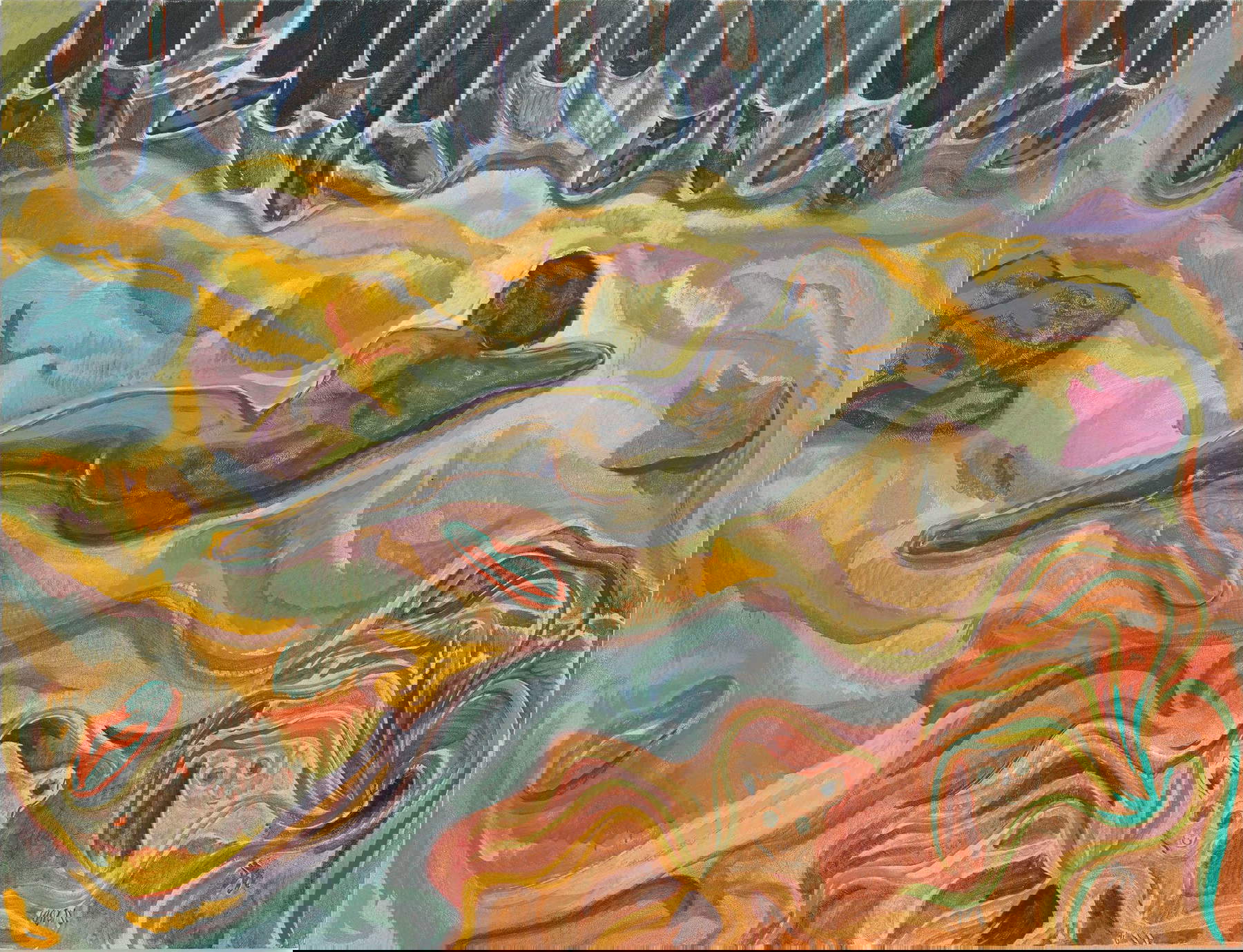
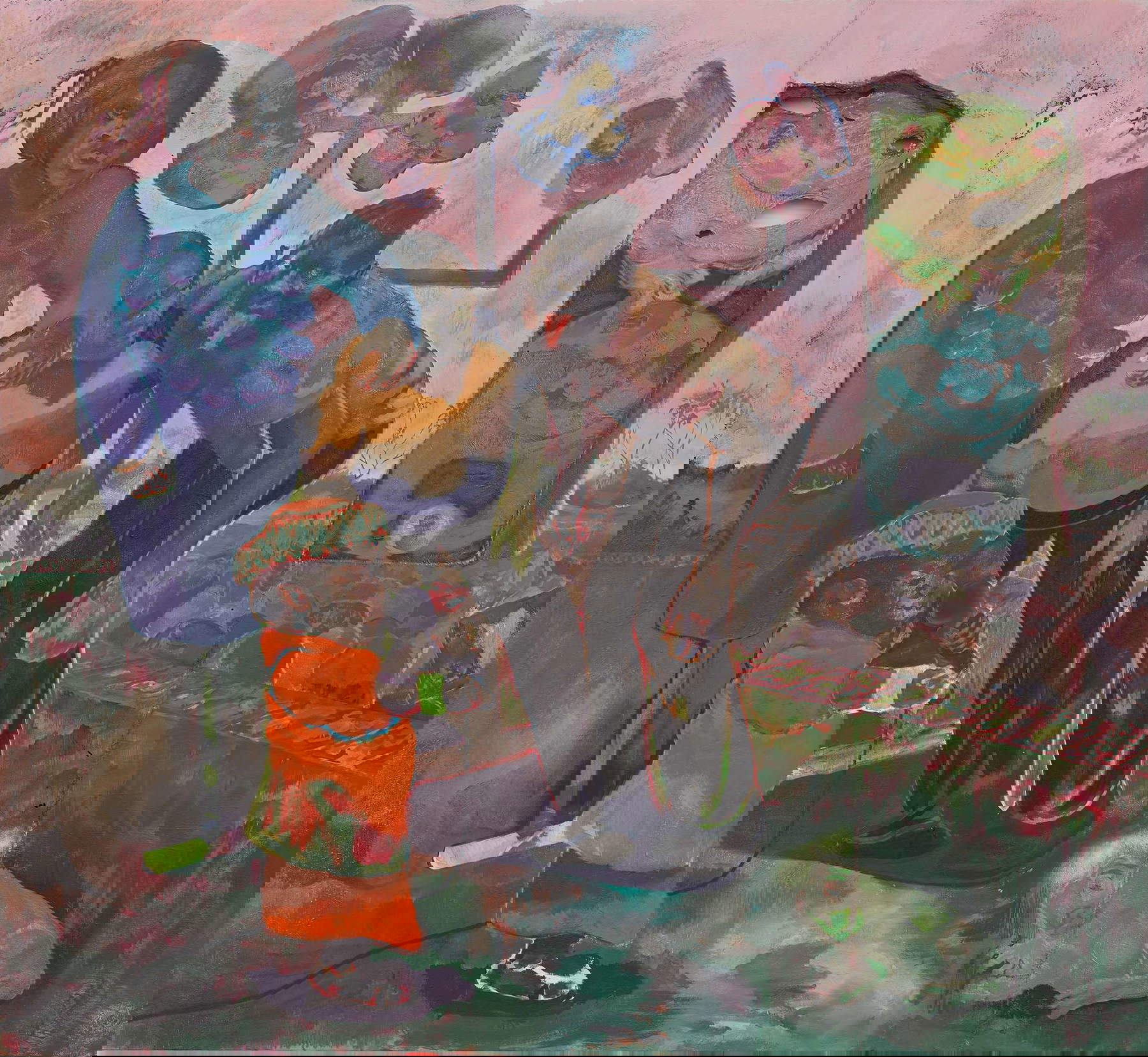
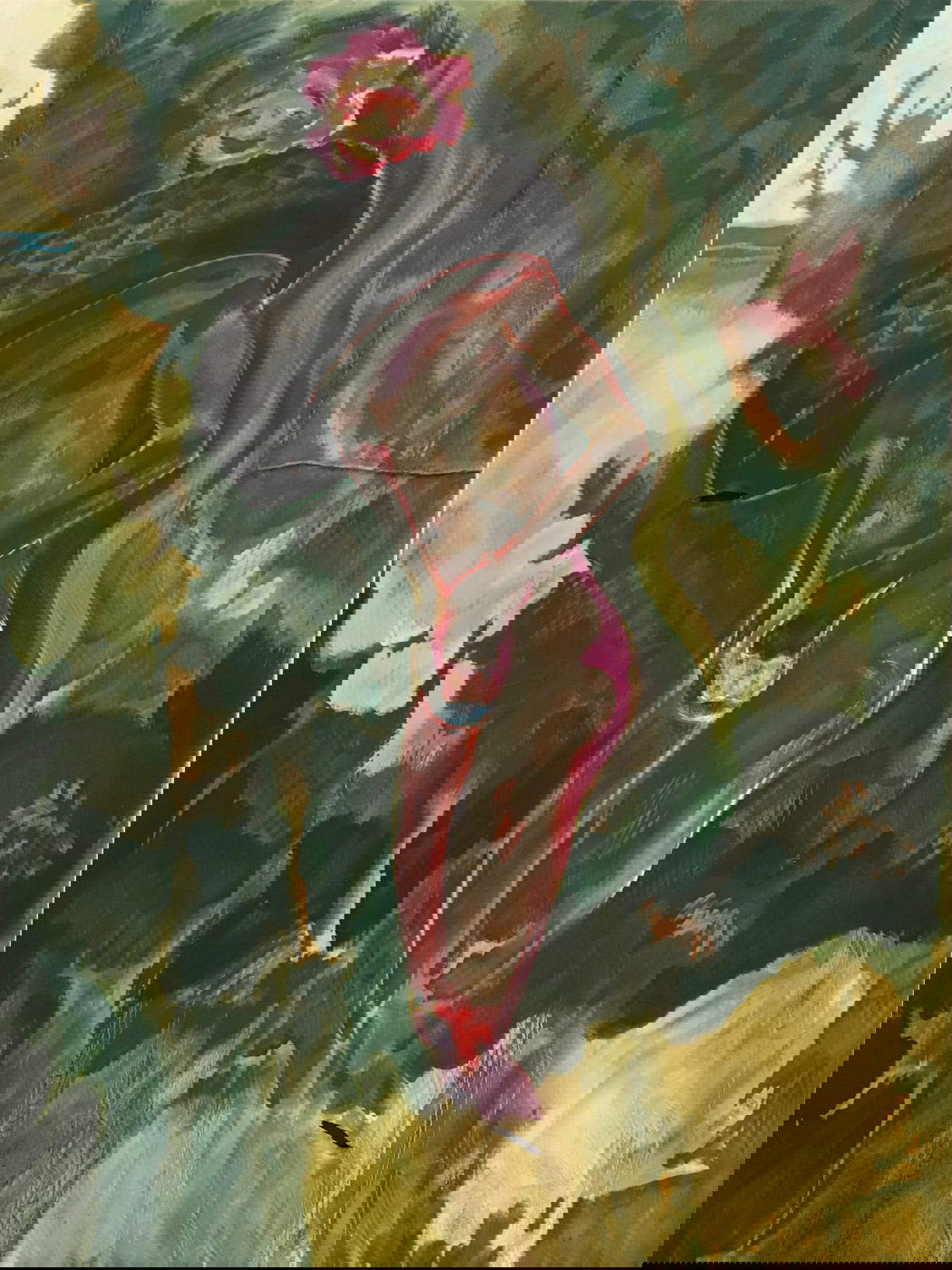
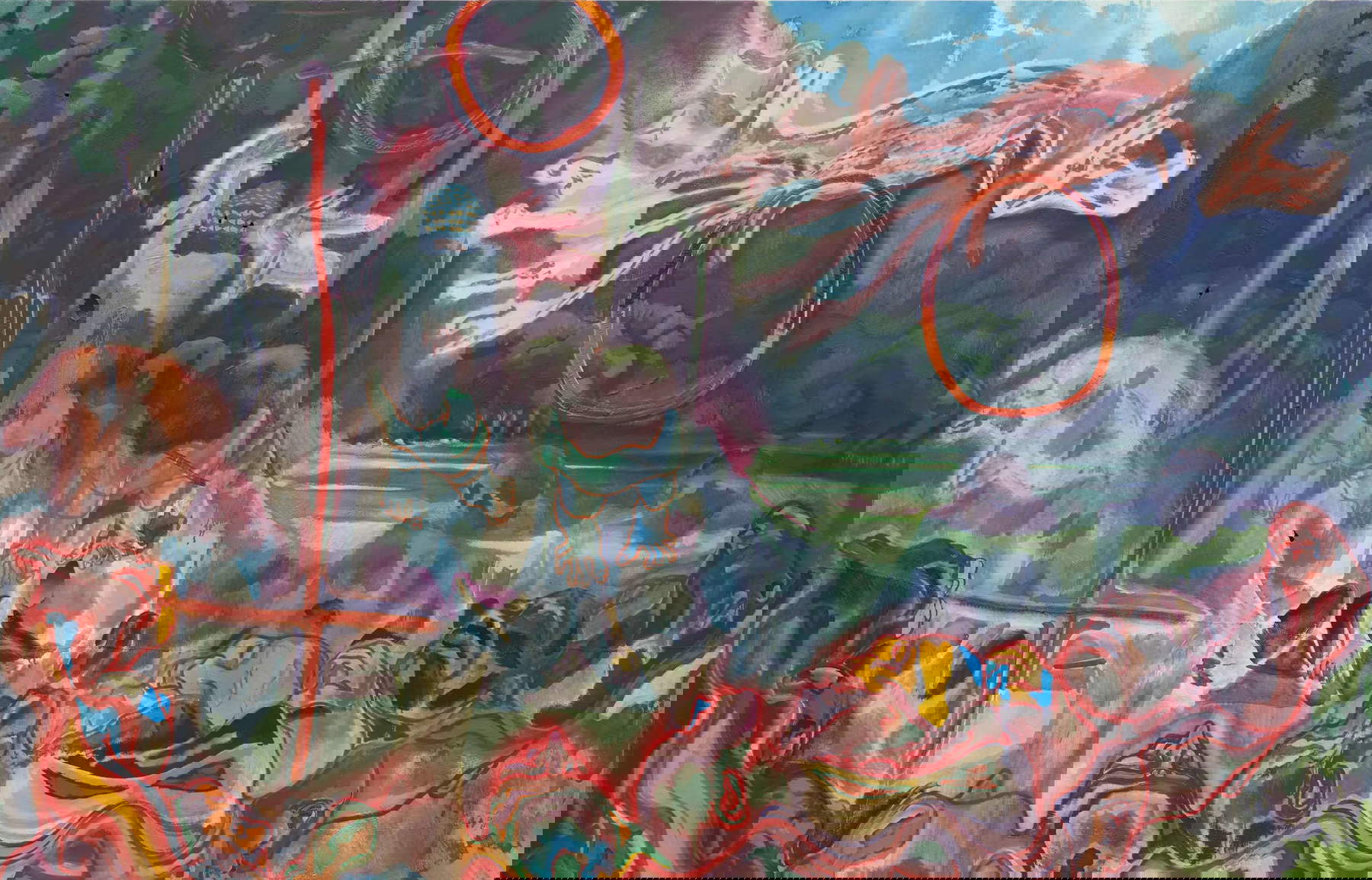
The process of making paintings is a lengthy one: Armitage thinks long and hard before finalizing one and, working like the Old Masters, he has it preceded by a long series of studies on paper in which he individually focuses on the many elements of the composition, as revealed by a room in the exhibition devoted to drawings. The selection that can be enjoyed at Palazzo Grassi, with its nucleus of forty-five paintings, including historical works and new productions (together, the equivalent of ten years of work), offers a comprehensive overview of the artist’s creative journey, as well as the intense pleasure of sinking one’s gaze at length into his lush painting, an experience that no photographic documentation can ever replace.
Let us now mention a few paintings, more to suggest useful observational cues for reading than to point out highlights that are really very subjective given the absence of lapses in tone. So let us begin with Conjestina (2017), a standing portrait of Kenyan boxing champion Conjestina Achieng, nicknamed “Hands of Stone,” the first African woman to win a world title. Subjected to public denigration by the media because of the mental breakdown that led to her hospitalization, she is depicted by taking up in a deforming key the iconographic structure of Antoine Watteau’s Gilles, twisting its melancholy with the stigmatization of the cruelty of a voyeuristic gaze that is common to every era and latitude. In #mydressmychoice (2015), a young woman assaulted and stripped by the crowd because of the miniskirt she was wearing, unwittingly the protagonist of a video that went viral on Twitter, is restored to dignity through a pose reminiscent of Diego Velázquez’s Venus Rokeby, short-circuiting Western art history with a very current gender violence. Political repression enters the exhibition with a large series of paintings focused on the brutal suppression of opposition rallies during the aforementioned 2017 presidential election: in The Promise of Change (2018), the work that gives the exhibition its title, a toad in the guise of a political leader (mindful of Peter Mulindwa’s satire, but also of Aesop) harangues the crowd on a stage over which hover the mutilated bodies from Francisco Goya’s The Disasters of War.
Violence also enters the pictorial fabric from personal memory: Necklacing (2016) evokes a childhood memory of the artist, a fleeing man with a tire doused with gasoline around his neck being chased by a mob with a burning flashlight, a form of summary execution practiced in the 1980s in apartheid South African townships. On the migration side, the recently completed paintings facing the Grand Canal sublimate journeys across the Mediterranean into painting, with figures suspended between life and death in marinas monstrously hostile to those trying to survive but amniotic in welcoming those who succumb to the crossing. Finally, landscape runs through the entire exhibition as a backdrop and as an autonomous strand in which the animist and hallucinatory vocation of this painting deflagrates. In 52,000 Years (2025), the superimposition of pictorial layers incorporates the succession of human generations beginning with the oldest known figurative paintings, discovered in some rock caves on the Indonesian island of Sulawesi and dating back some fifty-two thousand years, which have been raised to a paradigm of biological as well as cultural continuity by the fact that they depict the same animals still present in their surroundings today.
That the exhibition is called The Promise of Change is, in the end, the most ambiguous and most honest detail: the promise of the title is that of the politicians whom Armitage portrays as toads and buffoons, but it is also, one would like to think, that of painting itself, which for thousands of years has continued to bet on the possibility of making visible what the world prefers not to look at.

The author of this article: Emanuela Zanon
Laureata in Discipline dell’Arte, della Musica e dello Spettacolo all’Università di Bologna, città dove ha continuato a vivere, si è specializzata in Beni Storico Artistici all’Università di Siena. Curiosa e attenta al divenire della contemporaneità, crede nel potere dell’arte di rendere più interessante la vita. È direttrice editoriale di Juliet Art Magazine online.Warning: the translation into English of the original Italian article was created using automatic tools. We undertake to review all articles, but we do not guarantee the total absence of inaccuracies in the translation due to the program. You can find the original by clicking on the ITA button. If you find any mistake,please contact us.























 IT
IT FR
FR DE
DE ES
ES CN
CN


