





It rarely happens that, chatting among art historians, critics, and specialized journalists, a unanimous consensus emerges on an exhibition project. But about the exhibition Tarot. The Origins, the Cards, the Fortune a currently underway at the Carrara Academy in Bergamo, we have yet to meet anyone who does not state convincingly, “It is beautiful!” The credit certainly goes to an intriguing theme, which has to do with the desire of each of us to know the future that awaits us (disclaimer: in the exhibition we do not learn how to read tarot cards!), to which is added the fascination aroused by tiny works of art, precious as jewels and representing one of the many expressions of that dazzling period that goes by the name of International Gothic. The positive judgment on the project, shared by the writer, finds solid foundations in a rigorous framework of studies and in a significant operation that had been waiting to be accomplished for more than a century, namely, the integral reunion of the three cores into which the famous Colleoni tarot paintings were divided.
The twentieth-century fame of this deck goes back above all to the convergence between the intuition of publisher Franco Maria Ricci for the rediscovery of hidden or neglected masterpieces and the genius of Italo Calvino: to them, in fact, belongs a splendid 1969 volume, printed on blue paper (and the memory goes to the experiments of Giambattista Bodoni) and with the images imprinted on glossy paper, cut out and pasted so as to intersperse the story of the writer, who was inspired precisely by the Colleoni deck to write The Castle of Crossed Fates. Moreover, a small room set up as if it were a small library halfway along the tour is reserved for Calvino and a selection of volumes devoted to tarot cards.
This is not, however, the first time that some tarot cards or entire decks (particularly those that came out of Bonifacio Bembo’s workshop) have been exhibited to the public: recall, for example, the exhibition Quelle carte de triumphi che se fanno a Cremona, set up in 2013 in Milan, at the Pinacoteca di Brera, curated by Sabrina Bandera and Marco Tanzi. That project focused on the Brambilla deck, preserved precisely at Brera, and at the same time aimed to take stock of the Bembo workshop that played a leading role in the artistic history of the duchy of Milan in the second half of the 15th century: “If Bonifacio was the favorite of the Milanese court, to whom the dukes entrusted the running of the main factories in the centers of their power, Ambrogio was his favorite and often mimetic collaborator between the 1940s and 1950s, while Benedetto and the presumed Gerolamo are the darlings of the lords of the courts of the Po Valley, such as the Pallavicino family in Busseto and Monticelli d’Ongina, and the Rossi family in Torchiara and, perhaps, Parma,” Bandera wrote in the catalog. We quote the quote just to frame the scenario in which a passion deflagrated that in a few decades spread to all the courts of Italy and Europe.
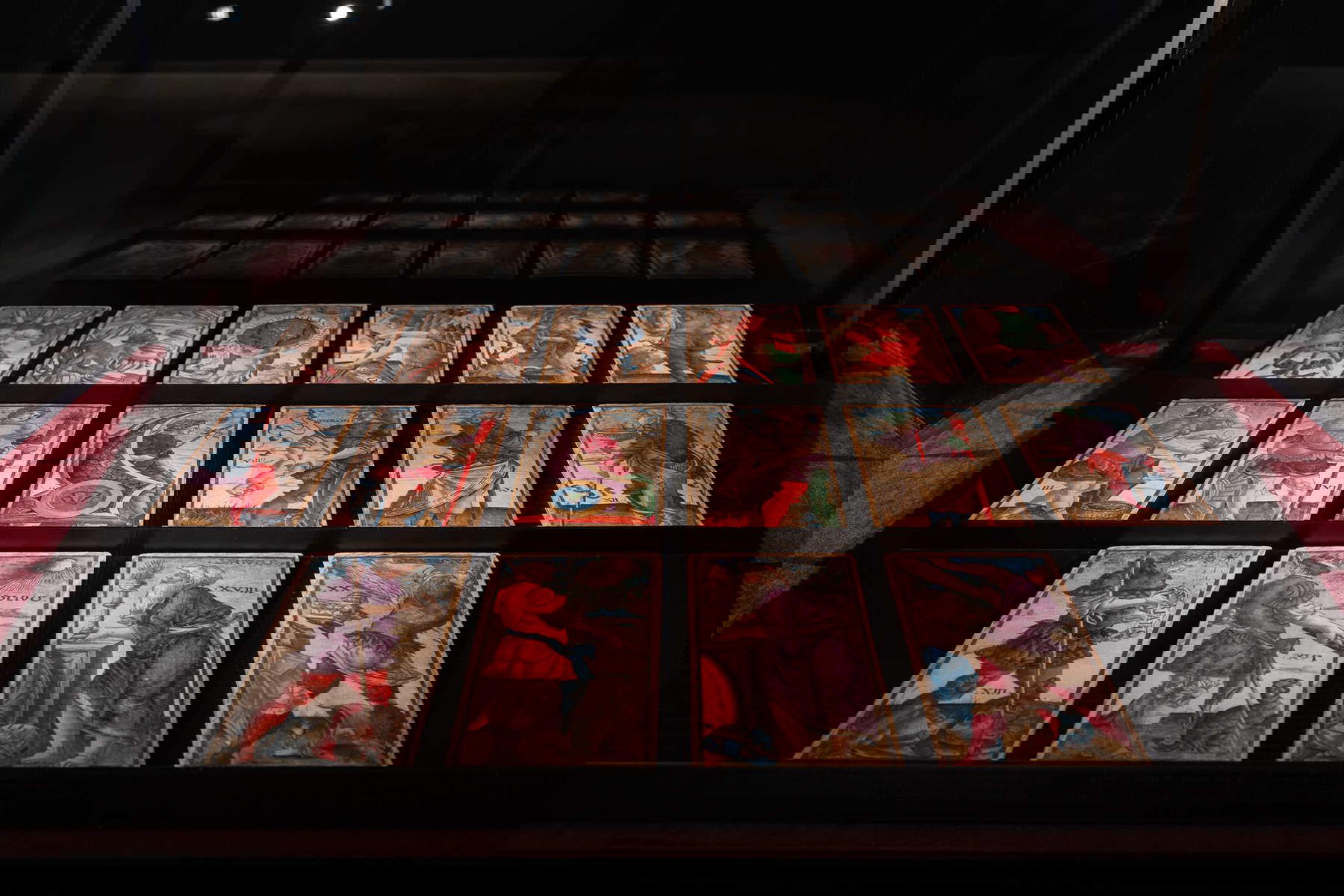
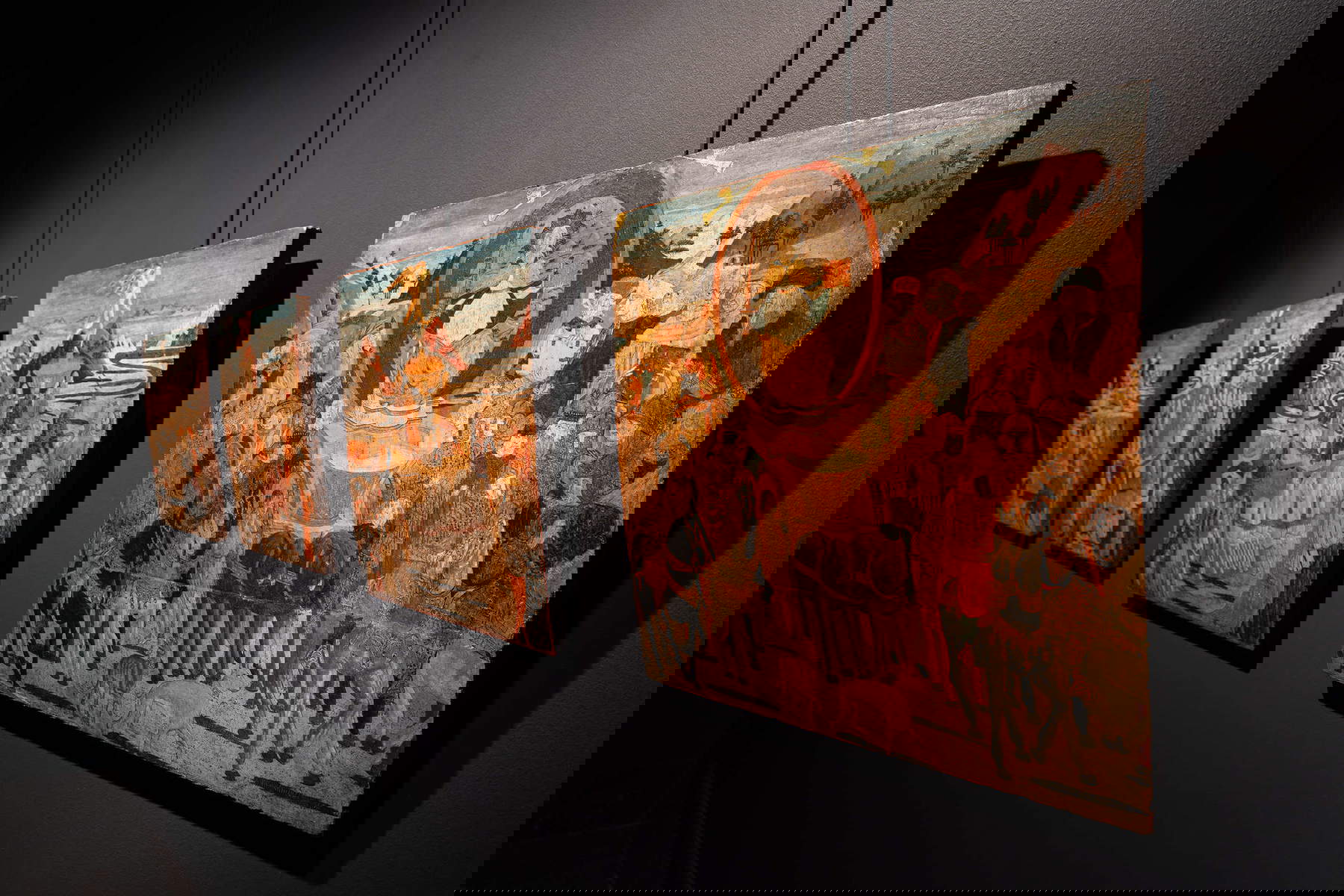
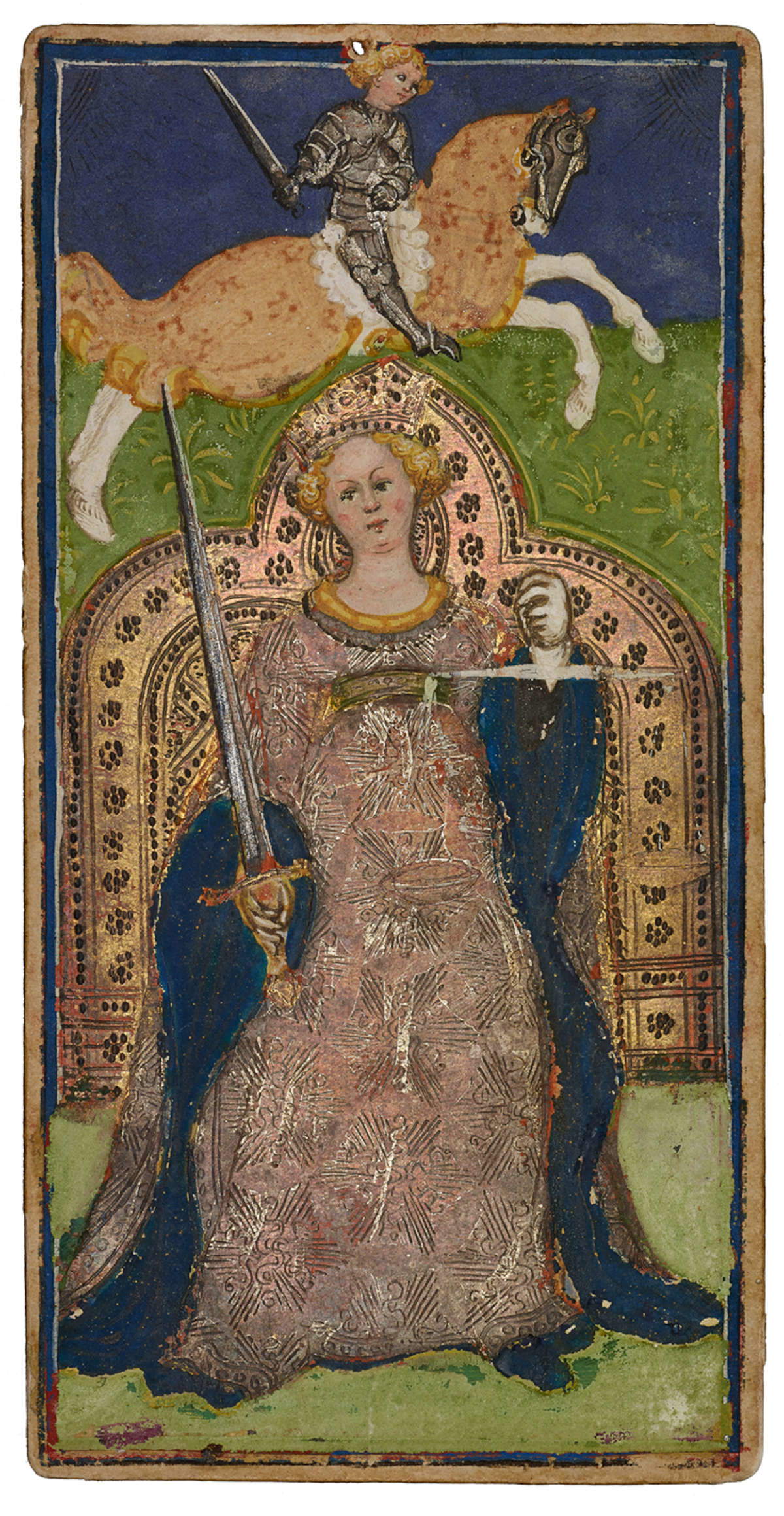
The Colleoni tarots are attributed precisely to the hand of Bonifacio Bembo (the intuition, always luminous, was Roberto Longhi’s) helped probably by Ambrogio, while some cards are to be assigned to another author, as we shall see. The likely chronological span for their execution is from 1450 to 1466, and the commissioner was most likely Francesco Sforza. Various clues lead Paolo Plebani, curator of the Bergamo exhibition, to support these hypotheses, and specifically the devices and mottos that appear on the cards reveal an authentic repertoire of Visconti and Sforza heraldry: the radiant sun for example, but above all the three intertwined rings traceable precisely to Francesco Sforza, who used them from his triumphal entry into Milan in 1450 until his death in 1466.
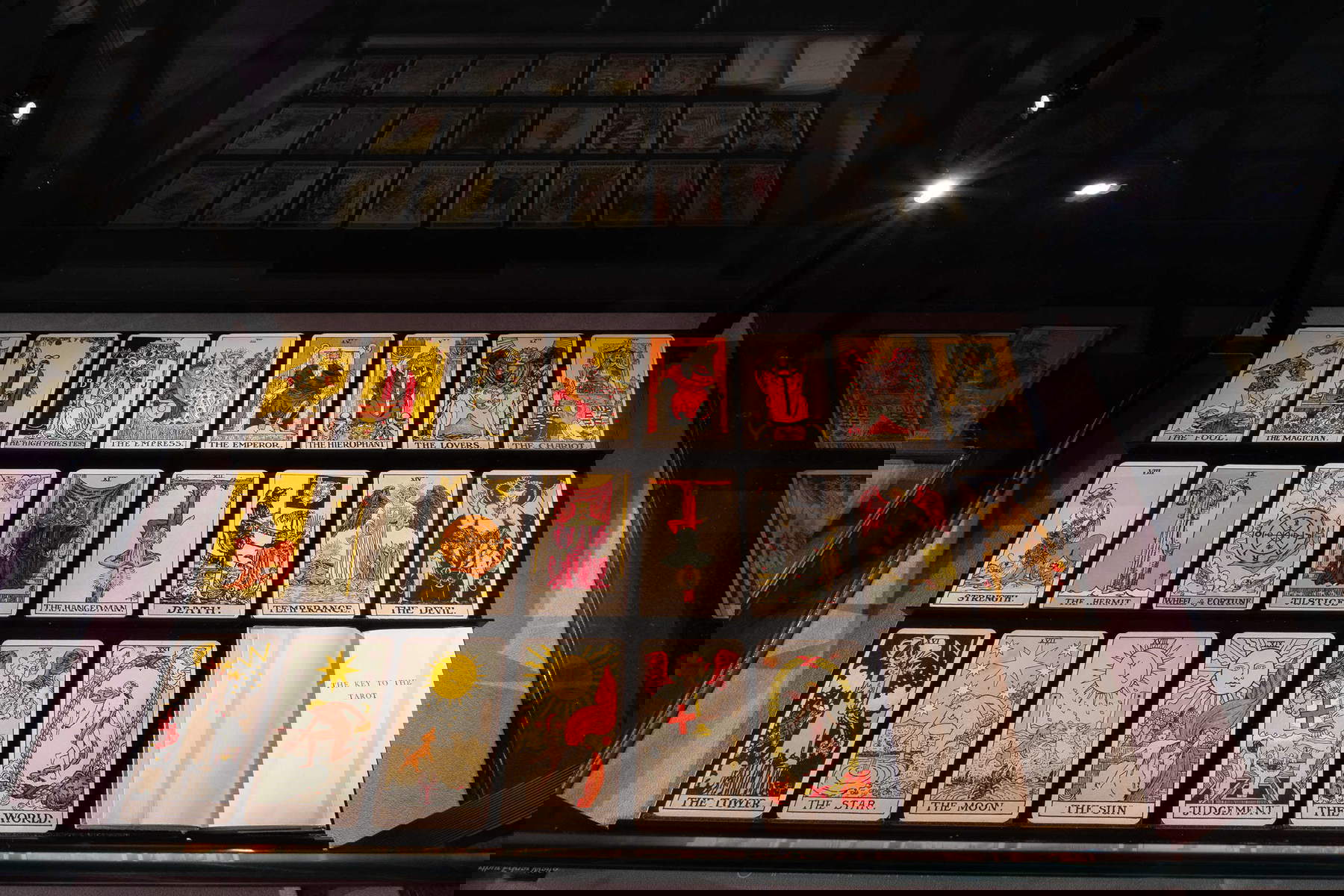
The Colleoni deck, as mentioned, is the most complete of the ancient ones, and its cards are preserved in three different collections: the Carrara Academy holds 28, the Morgan Library in New York 35, and a private collection, still belonging to the Colleoni, holds 13; four cards, however, are lost, the Devil, the Tower, the Knight of Coins and the Three of Swords. Dispersal occurred in the early 20th century, when part of the deck was sold to Francesco Baglioni (upon his death the nucleus went to the Accademia Carrara), while in 1911 another 35 cards were purchased by John Pierpont Morgan.
But in general, how is a tarot deck composed? Assuming that in the mid-15th century the number of cards and the subjects depicted were not yet definitively canonized, a set such as the Colleoni deck consists of 78 cards divided into the so-called “Minor Arcana” and “Major Arcana.” The former are further divided into four suits, Denarii, Cups, Swords and Wands, and into the related “Honors” or “Court Cards,” i.e. Jack, Knight, King and Queen (exactly like trump cards!). The 22 cards of the Major Arcana, on the other hand, depict symbolic or allegorical figures, including the Bagatto (or Magician), the Papess, the Empress, Love, the Chariot, Justice, the Wheel of Fortune, the Hanged Man, Death, the Tower, the Sun and the World. Added to this, then as now, is the Fool (or Joker) who stands outside the box just like all flesh-and-blood “fools,” and thus routs everyone.
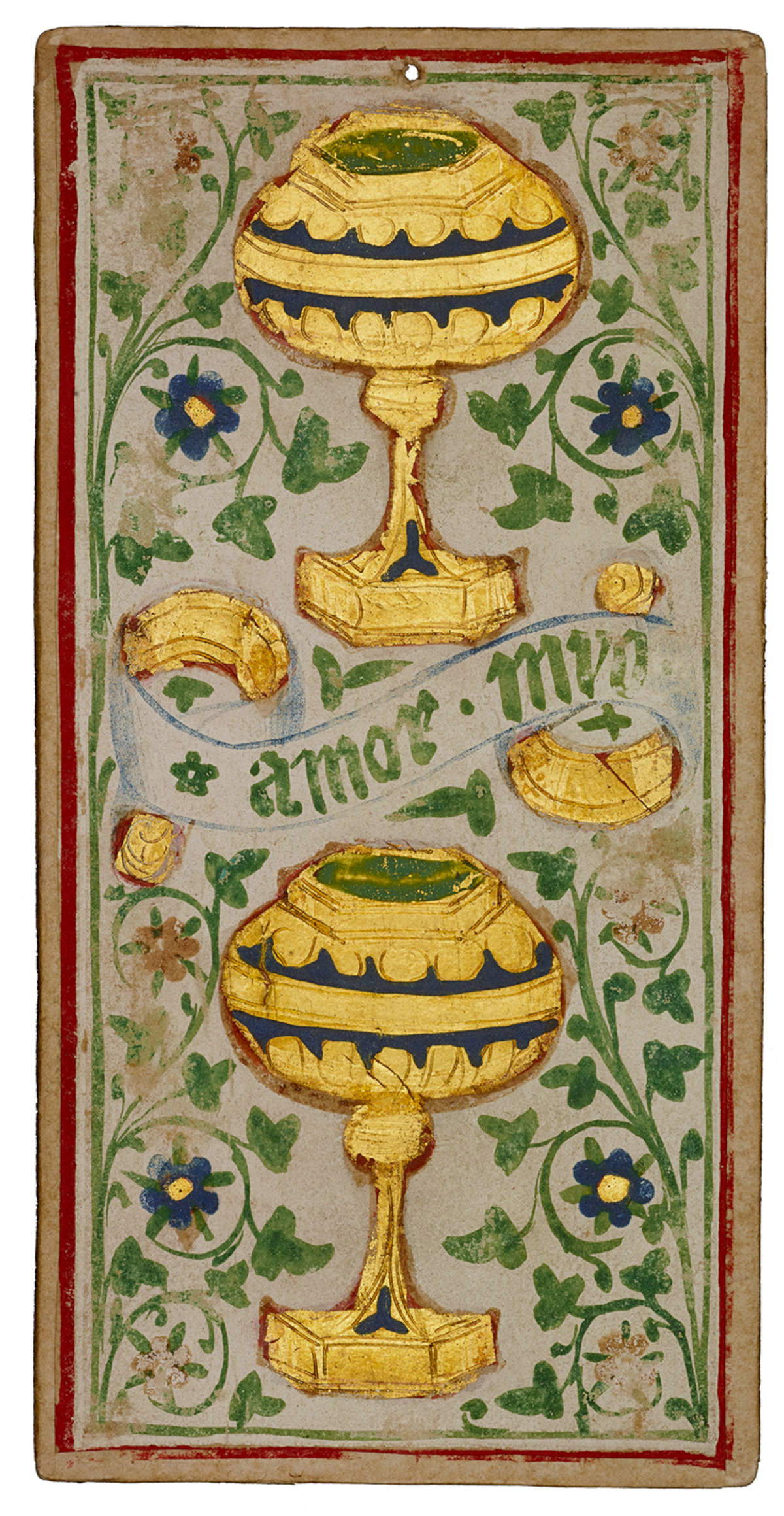
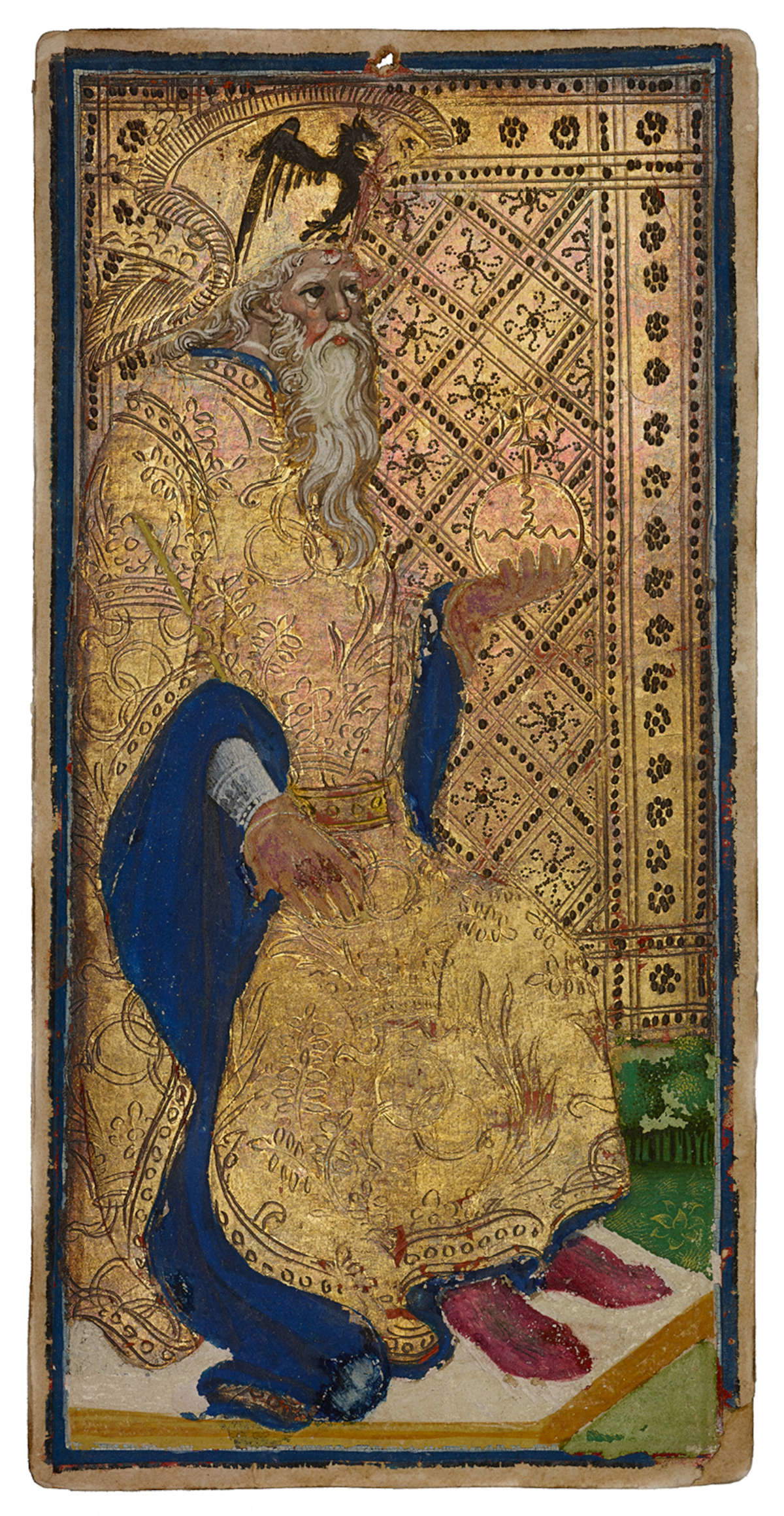
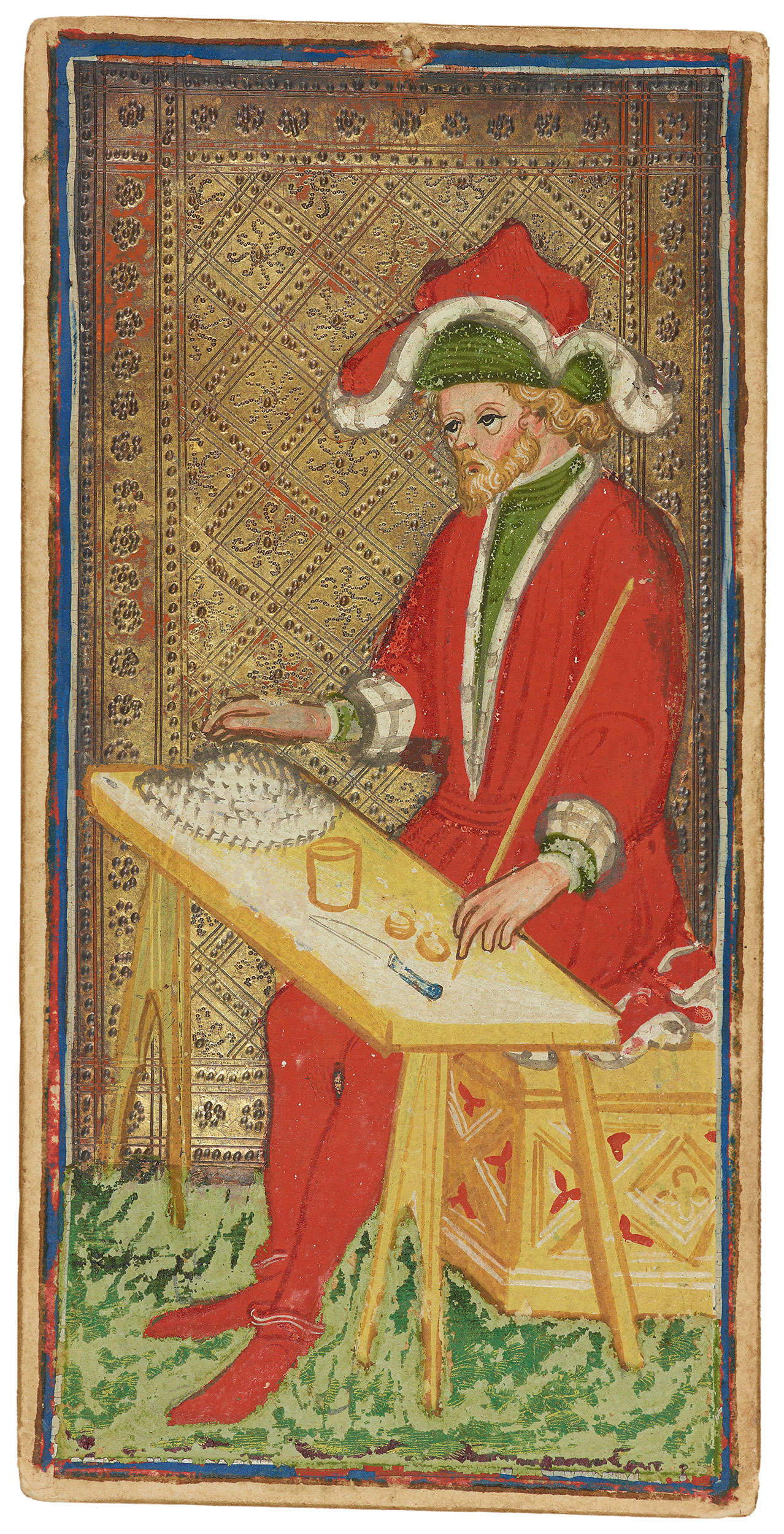
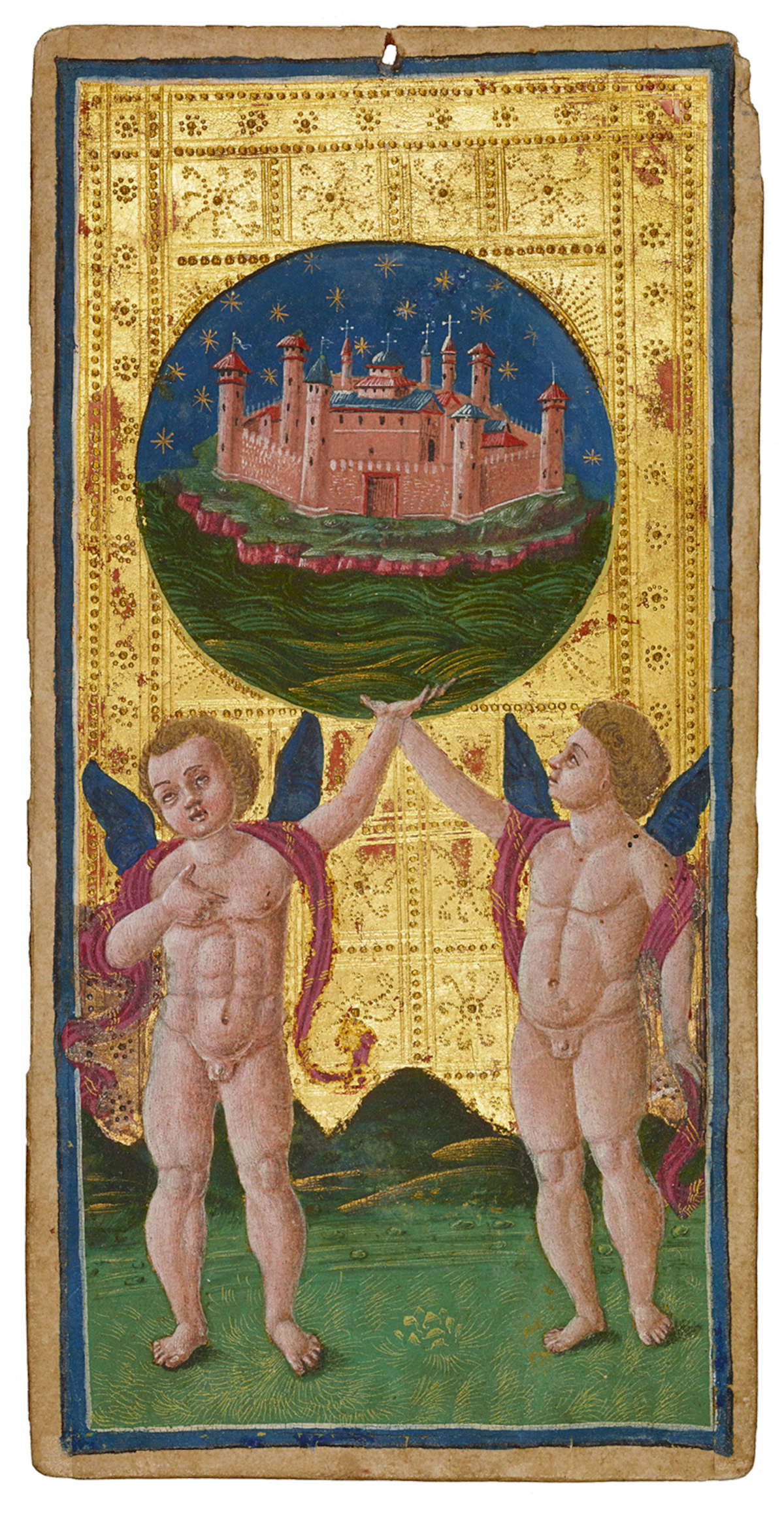
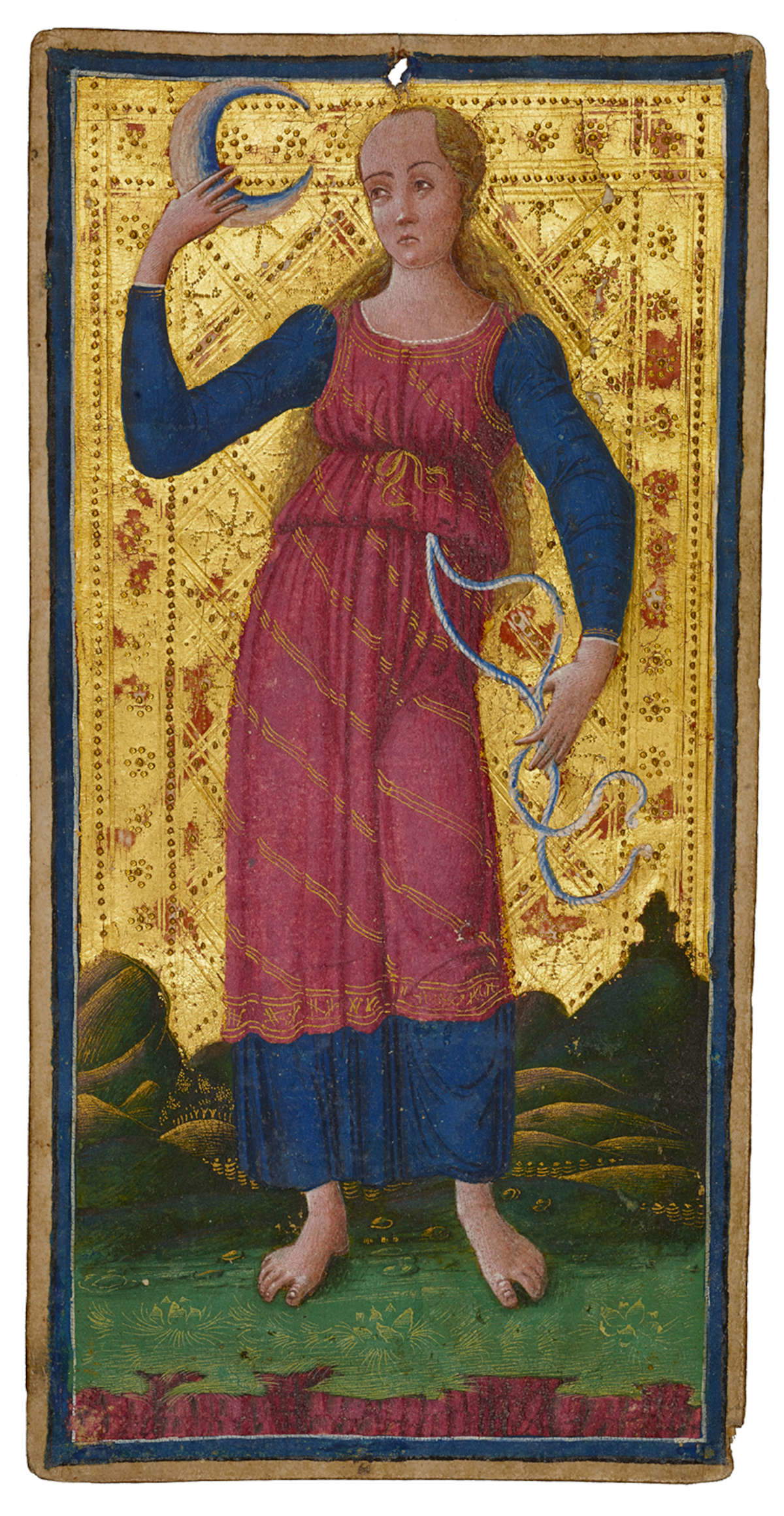
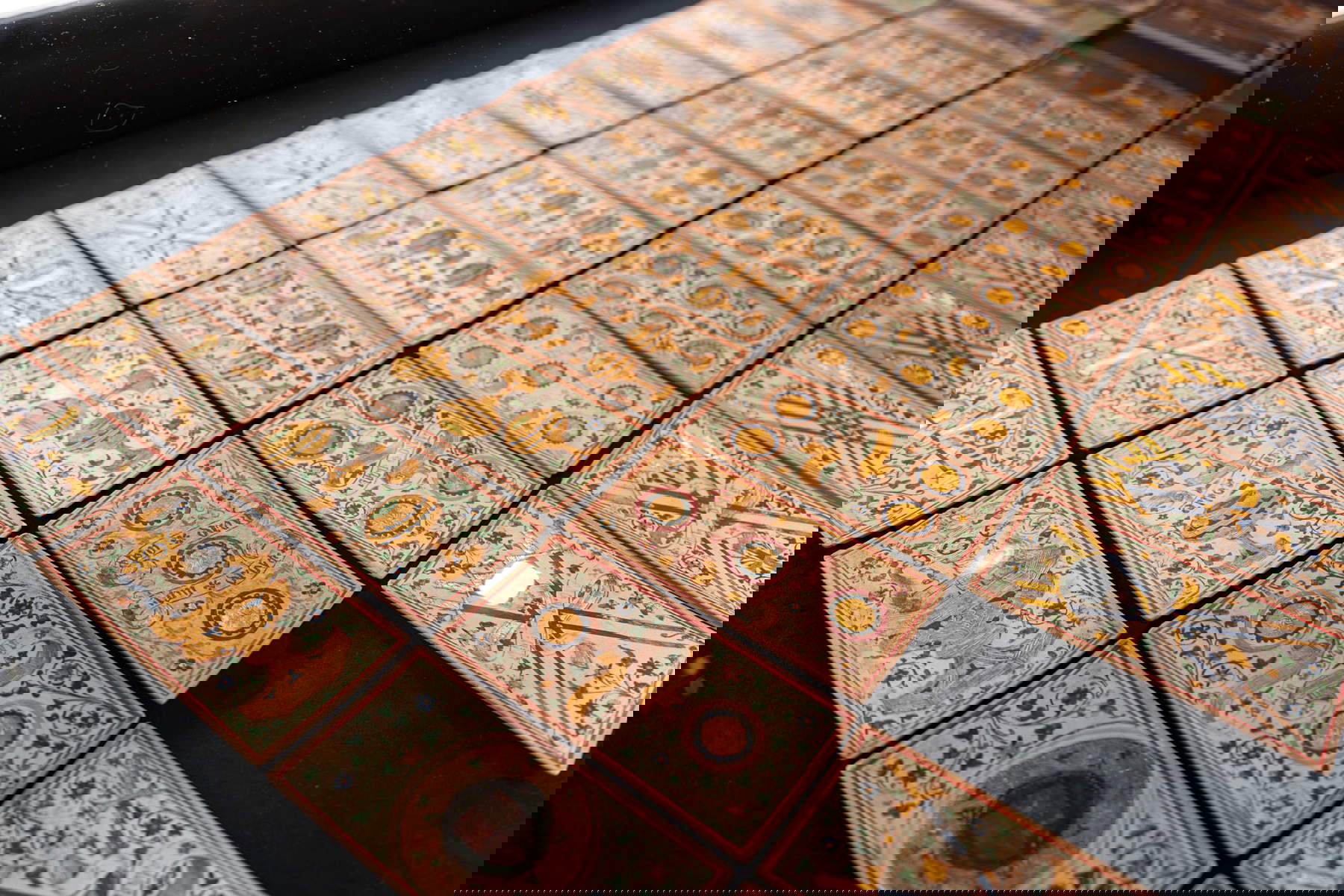
After this lengthy introduction, we finally come to the exhibition itinerary, which first illustrates the origins of tarot cards, immediately highlighting how they, in the highly refined courts of the 15th century, represented only a card game and were therefore devoid of any divinatory aspirations. Here, then, the first room unfolds a series of objects with a very high rate of decorative finesse, the kind with which nobles and sovereigns surrounded themselves and which invested all areas of art, from painting to book illustration, from objects to textiles. Thus it turns out that playing cards arrived in Europe after the mid-14th century from Mamluk Egypt, probably passing through Spain, and that they immediately germinated in the fertile soil of the noble courts, where games such as chess were already being played and boredom was being fought by devoting themselves to literature, music, dance, courtship, and hunting. It is a context that still captivates us today and is evoked by two splendid game boxes, a manuscript depicting King Arthur playing chess, the illustrated volume - by Bonifacio and Ambrogio Bembo - with the stories of Lancelot of the Lake, a dance manual, a hunting horn, and a tapestry depicting a falcon beat. Then the first cards appear: we do not know the rules by which they were used (they were probably grasping games or mnemonic exercises), but the small cards had already begun to be filled with animals for the number cards and with figures that look like something out of the gold background paintings of that period.
For a simple group of picture cards to become something different, however, a crucial step was needed, and credit goes to one of the most celebrated poets of all ages. In 1378, shortly before his death, Francesco Petrarch completed his Trionfi, a poem based on an allegorical system that showcases the forces that dominate human existence, from love to eternity, via death and fame. The extraordinary success of the poem, written in the vernacular, was not only literary: in fact, from the descriptions of those parades of allegorical chariots sprang a visual imagery that inspired countless artists, who began to populate their works with allegorical “triumphs” and related real or fantastic animals, thus grafting a proto-Renaissance invention with the established tradition of medieval bestiaries. The transition of those models through various mediums (illuminated manuscripts, ivories, majolica, wedding chests, all the way to playing cards) was immediate, and for a long time thereafter, playing decks were called precisely Triumphs. A phenomenon that was by no means isolated, nor confined to the humanistic era, as Giulia Zaccariotto explains in her catalog essay where she cites a very recent case history: in fact, even the Harry Potter saga, published between 1997 and 2007, gave rise to a widespread iconographic translation into objects, furnishings and especially games “which, just like the Tarot, were inspired by the original text, but then took on a life of their own.”
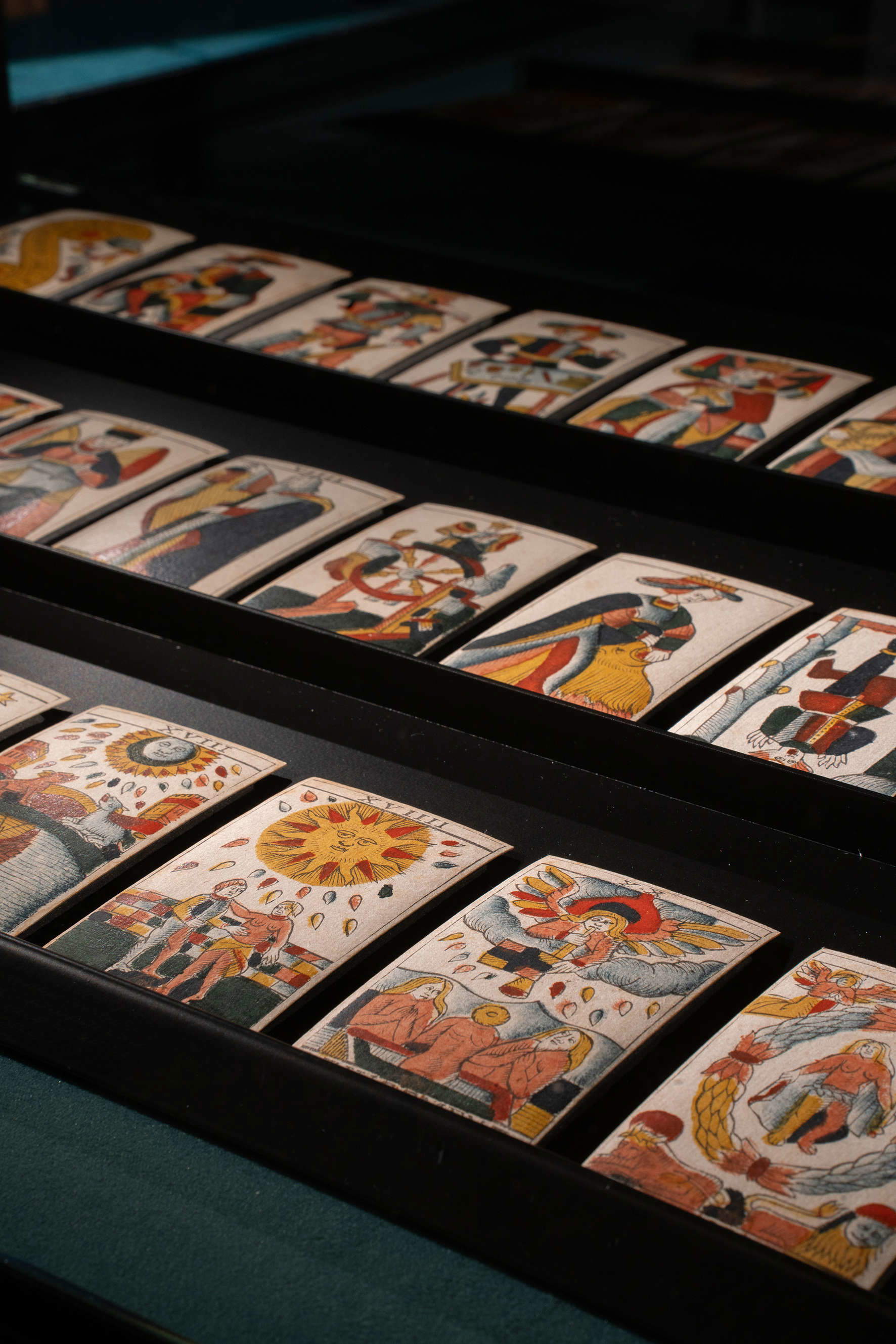
On the path to the Colleoni Tarot, their “cousins” are encountered in the exhibition: a selection of cards from New Haven and part of the Visconti deck, as well as others extracted from the Brambilla deck (the one already mentioned and preserved in Brera). Both fine-tuned by the Bembo, they testify on the one hand to the passion for playing cards among the Milanese dynasties (likely, given their preciousness, they also represented an instrument of political promotion) and on the other to the Cremonese workshop’s ability to draw on various iconographic sources. The Wheel of Fortune, for example, descends from medieval miniatures such as those by Michelino da Besozzo and Pietro da Pavia (this is seen in the codex De consolatione philosophiae, 1390-95, Cesena, Biblioteca Malatestiana). A magnificent tablet by Cosmè Tura is also on display: it depicts a St. George dressed in shocking pink as he defeats the dragon. The work derives from the classical depictions of Hercules and the lion and in the Tarot inspires the arcane of Strength, also documenting a passage of models between the major courts of northern Italy, including the Ferrara of the Este family. Also on display are the so-called Tarots of Mantegna, which, however, are neither tarots nor Mantegna’s...the curator then calls them an educational game that enacts a kind of portable cosmogony.
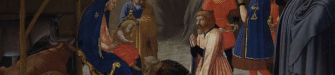
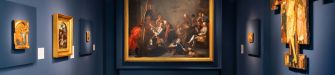
In the next room, illuminated by the splendor of their punched gold background, appear the delightful and fragile Colleoni cards, which are juxtaposed with the portraits of the patron Francesco Sforza and Bonifacio Bembo’s phantasmagorical Journey and Adoration of the Magi, a work where many figures can be traced that closely resemble those of the tarot. In the small cards gathered in a display case, one can recognize the wide-eyed faces typical of Bonifacio, the very elegant clothes, the mighty armor, the coats of arms of the Visconti and Sforza families, and the iconographies of the Arcana, which by now were running toward a stabilization of the subjects. Compared with the other decks produced in the Bembo workshop, the figures are characterized by a more monumental setting, are more solidly placed in space, and abandon the typically Gothic filiform elegance, a sign of later execution. Also marking a profound stylistic departure are the figures of Strength, Temperance, the Star, the Moon, the Sun and the World, which are undoubtedly to be attributed to another hand. By now the attribution to Antonio Cicognara is fairly well established, and to effectively refute it the curators chose his altarpiece with the Madonna del Latte from the Cavallini Sgarbi Foundation.
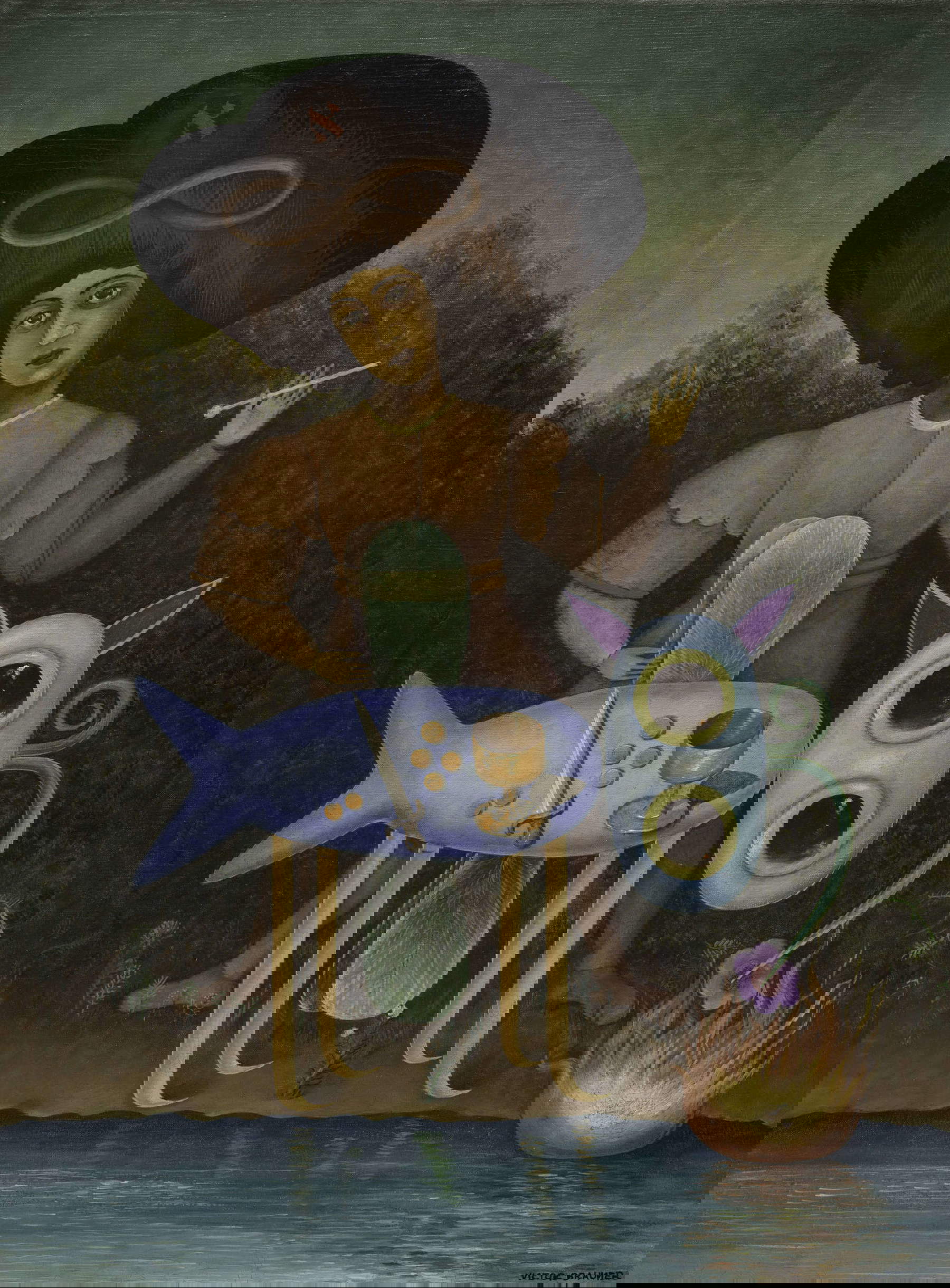
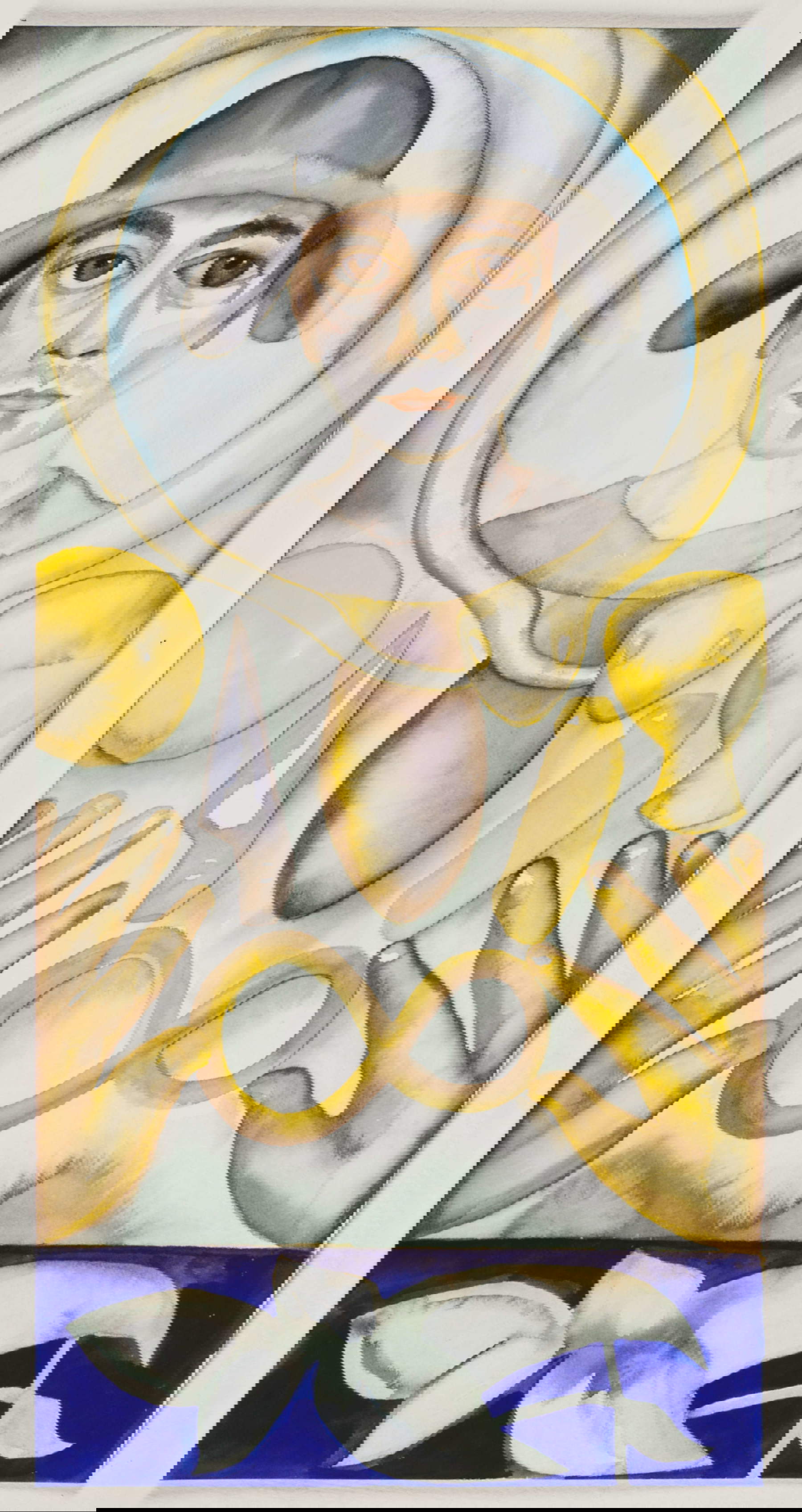
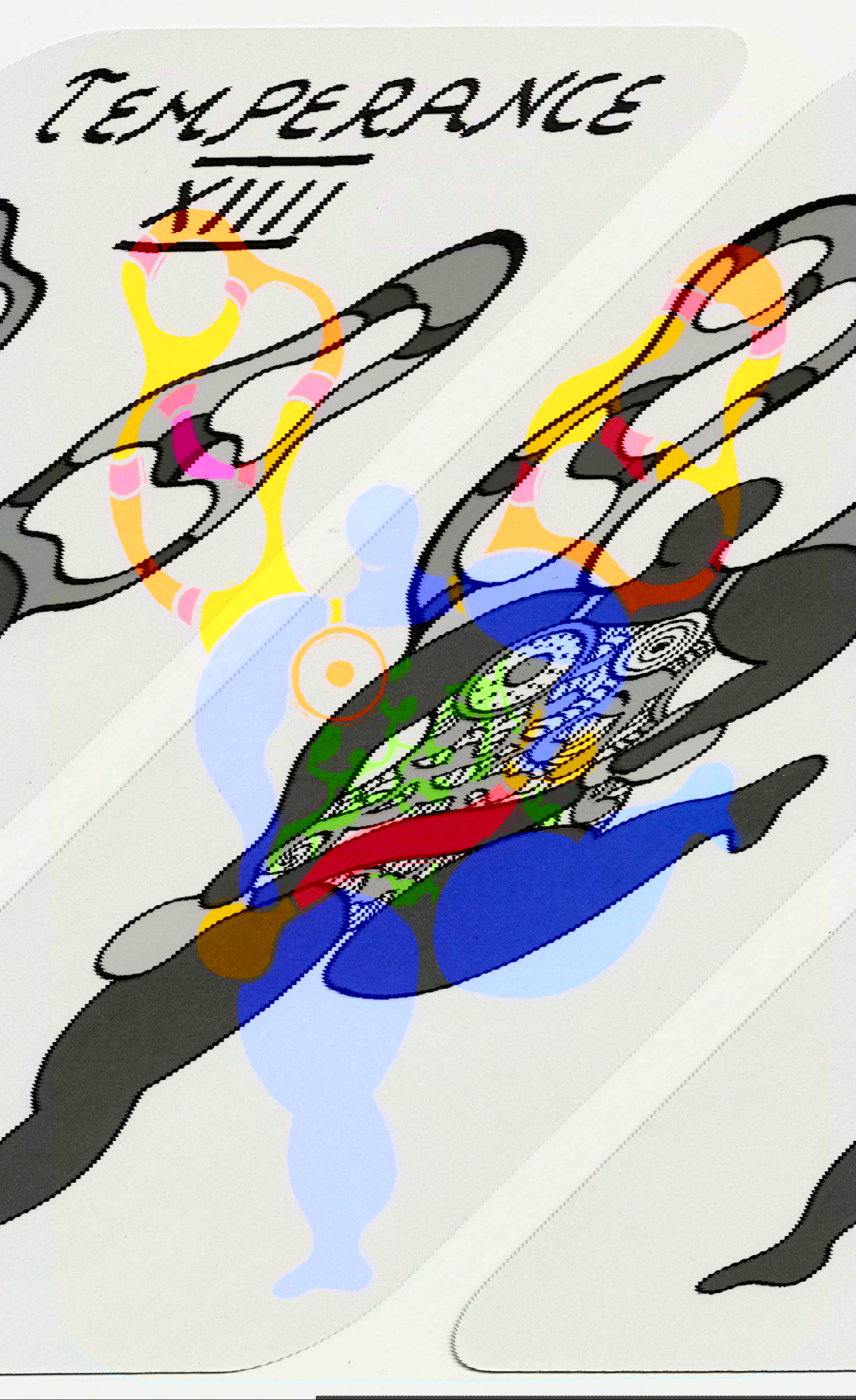
Let us now proceed more expeditiously toward the conclusion of the exhibition: the fortunes of the tarot certainly did not end with the end of the 15th century. On the contrary, the invention of printing enabled its widespread dissemination, which reached all of Europe, and marking a turning point for the card game were the bizarre esotericists Antoine Court de Gébelin and Jean Baptiste Alliette, known as Etteilla, who in the late 18th century invented out of whole cloth a derivation of the tarot from a sacred text from ’Ancient Egypt, the Book of Thot (pure invention, too), thus opening the season of esoteric and occult interpretation of those simple playing cards, which lost in part their ludic character to become an instrument of divination of the future. The success of this theory, ça va sans dire, was immediate and far-reaching, so much so that even today when we think of tarot cards we think of the fortune teller who reads them in order to reveal to us our destiny.
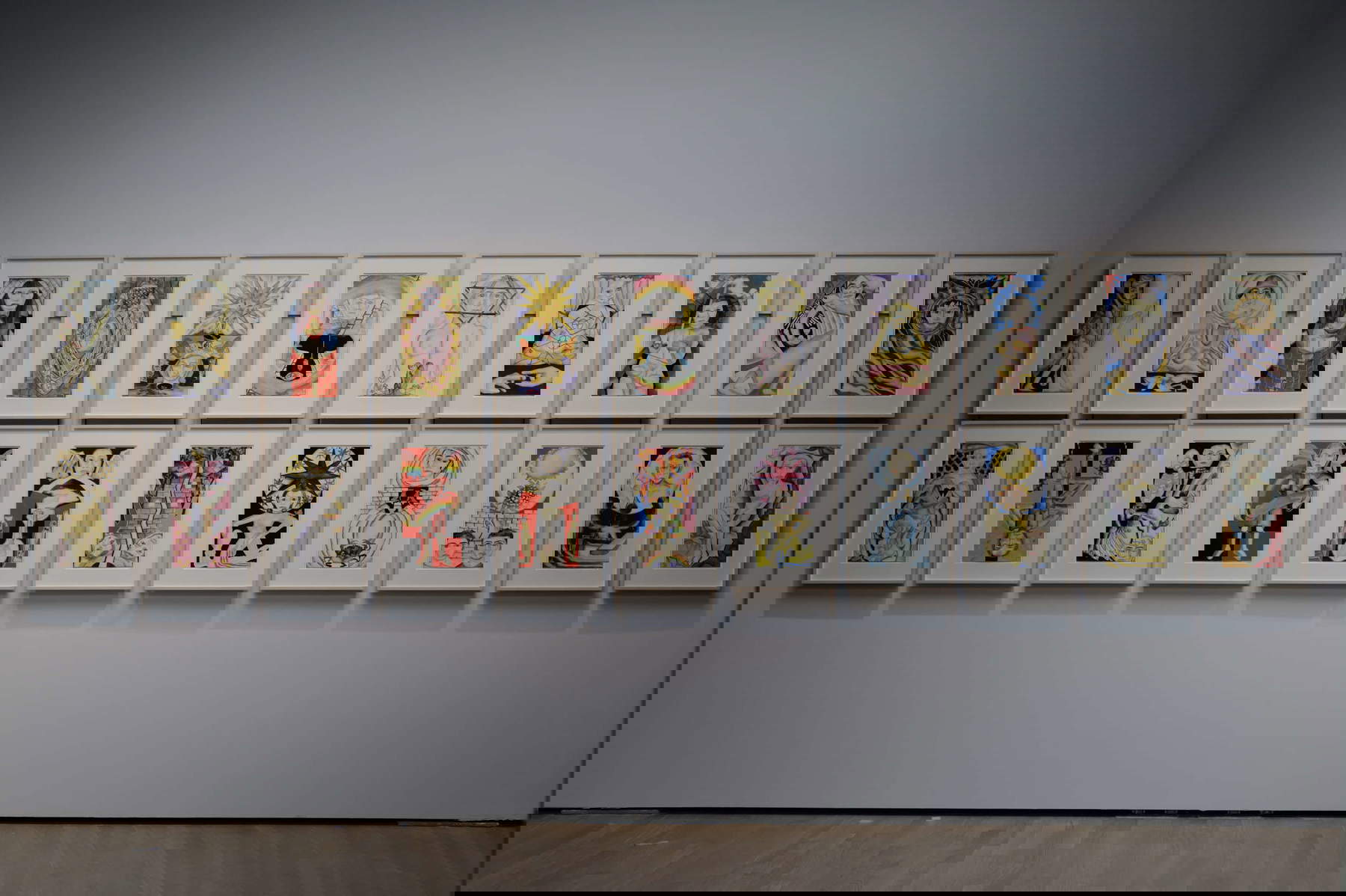
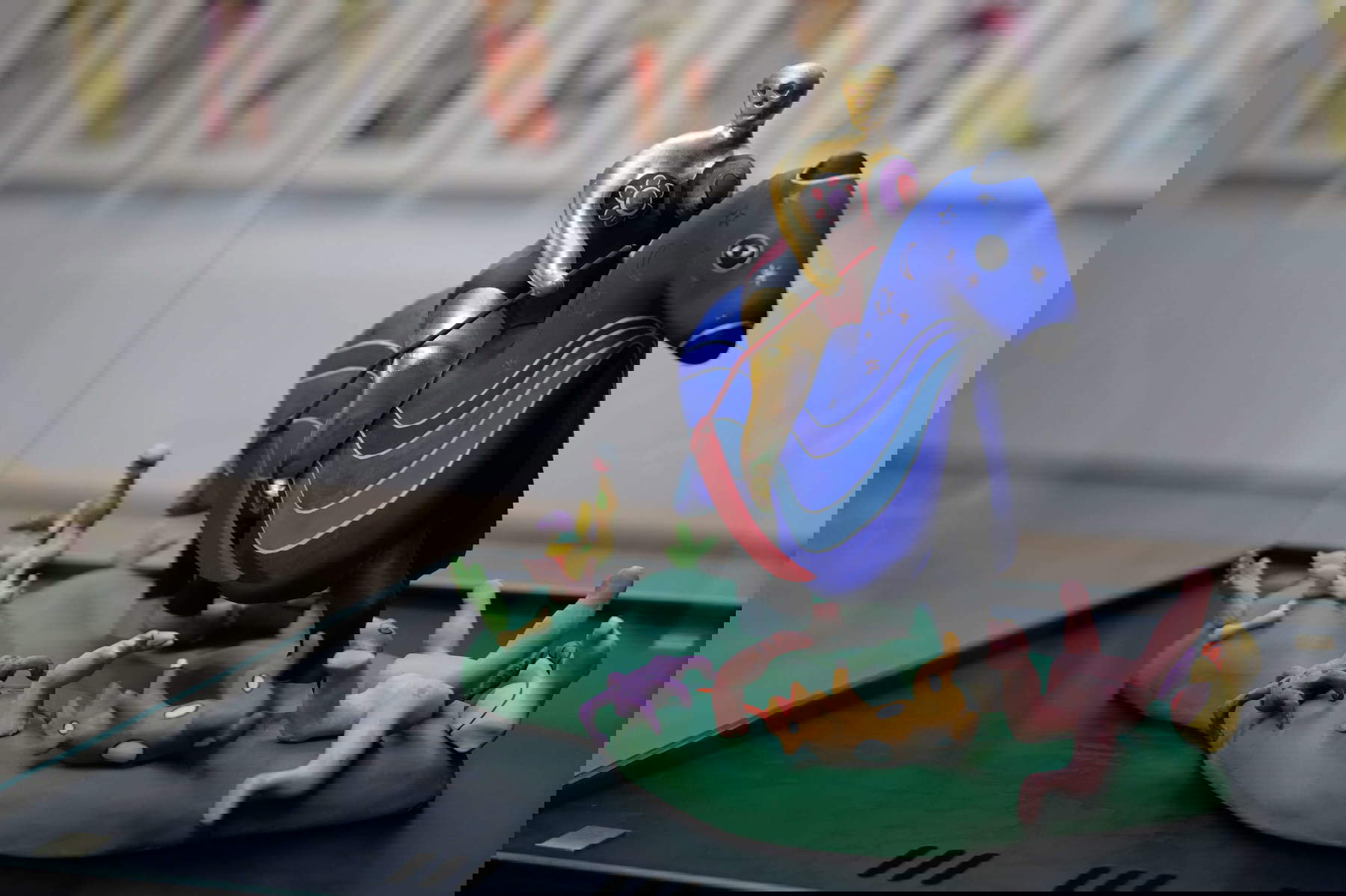
Beyond superstitions, the long life of the Arcana (and numerals, one only has to pop into one of the few surviving taverns in provincial towns to meet the elderly grappling with those cards originated in the 15th century) found new impetus in art, especially around the middle of the 20th century, when the Surrealists were inevitably fascinated by the mysterious figures. Having retreated to Marseille to escape the ongoing war and Nazism, in 1941 André Breton, Max Ernst, Victor Brauner and André Masson decided to create a new interpretation in a Surrealist key of the tarot, also taking them up in publications and paintings, for example in Brauner’s Bagatto; much more recent, however, are Francesco Clemente’s works on the Arcana. And if in the twentieth century we are given to identify a “queen of the Tarot,” this was undoubtedly Niki de Saint Phalle, who not only designed a deck of cards, but for decades, from 1979 to 1996, engaged in the construction of the Tarot Garden in the environs of Capalbio: a colorful, magical place, a joyful dream to delve into. Also exceptionally exhibited in the exhibition are original works by Lenora Carrington, also the author of a very original deck; however, the artist made it forbidden to reproduce her works, and even in the catalog the drawings could not be published.
Finally, parallel to the exhibition project at the Carrara Academy, in Bergamo’s Upper Town, and more precisely in the hall of the Palazzo della Ragione, there is a multimedia installation by Studio Azzurro that reinterpreted Fabrizio De André’s interest in tarot cards.


The author of this article: Marta Santacatterina
Marta Santacatterina (Schio, 1974, vive e lavora a Parma) ha conseguito nel 2007 il Dottorato di ricerca in Storia dell’Arte, con indirizzo medievale, all’Università di Parma. È iscritta all’Ordine dei giornalisti dal 2016 e attualmente collabora con diverse riviste specializzate in arte e cultura, privilegiando le epoche antica e moderna. Ha svolto e svolge ancora incarichi di coordinamento per diversi magazine e si occupa inoltre di approfondimenti e inchieste relativi alle tematiche del food e della sostenibilità.Warning: the translation into English of the original Italian article was created using automatic tools. We undertake to review all articles, but we do not guarantee the total absence of inaccuracies in the translation due to the program. You can find the original by clicking on the ITA button. If you find any mistake,please contact us.




















 IT
IT FR
FR DE
DE ES
ES CN
CN


