



by Redazione 20/05/2026



Categories: Exhibitions / Disclaimer
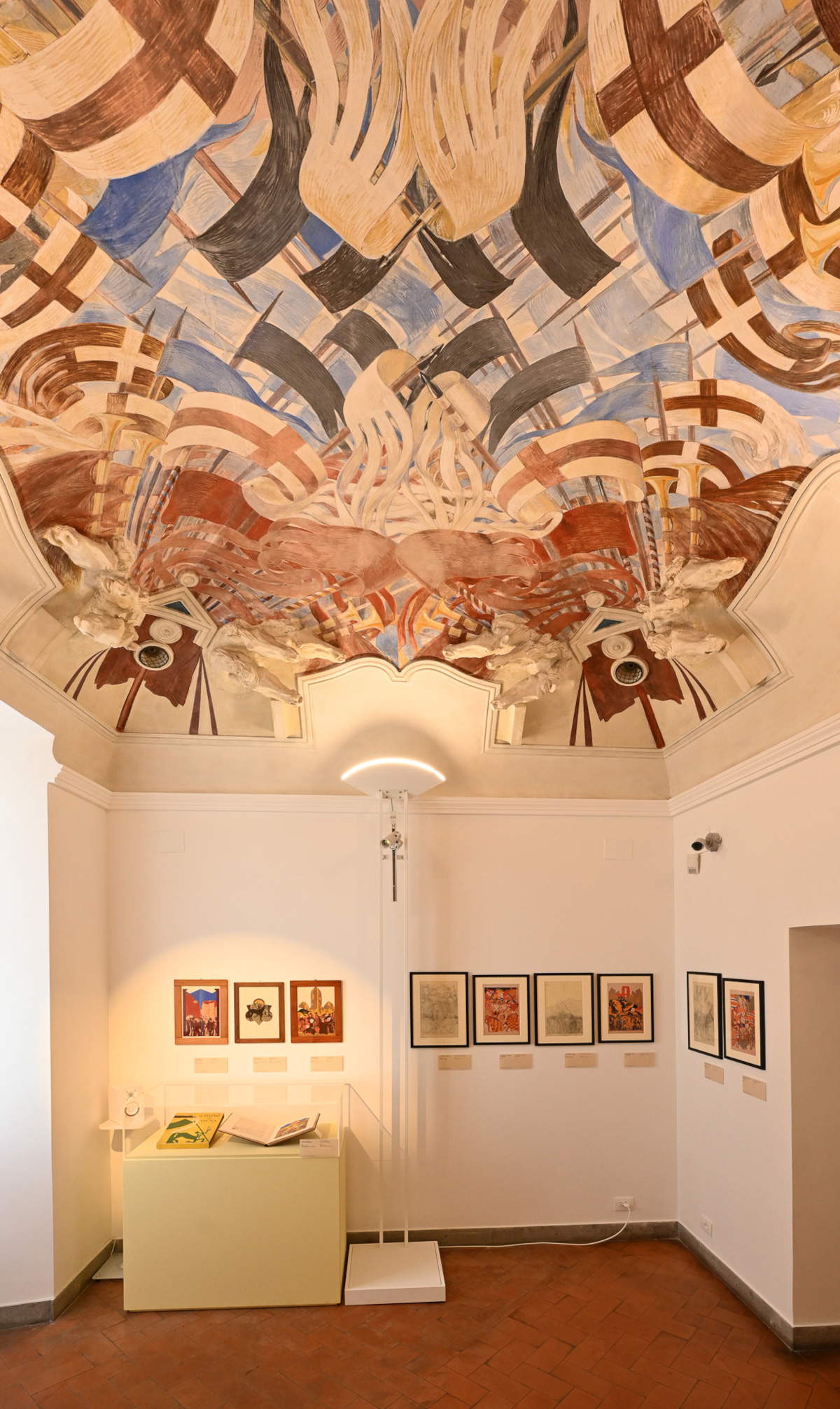
Castel Sant'Angelo reopens the Sale Cambellotti to the public from today to host an exhibition dedicated to Duilio Cambellotti. The Sale were decorated by him between 1925 and 1926 to house the flags of the regiments disbanded after World War I.

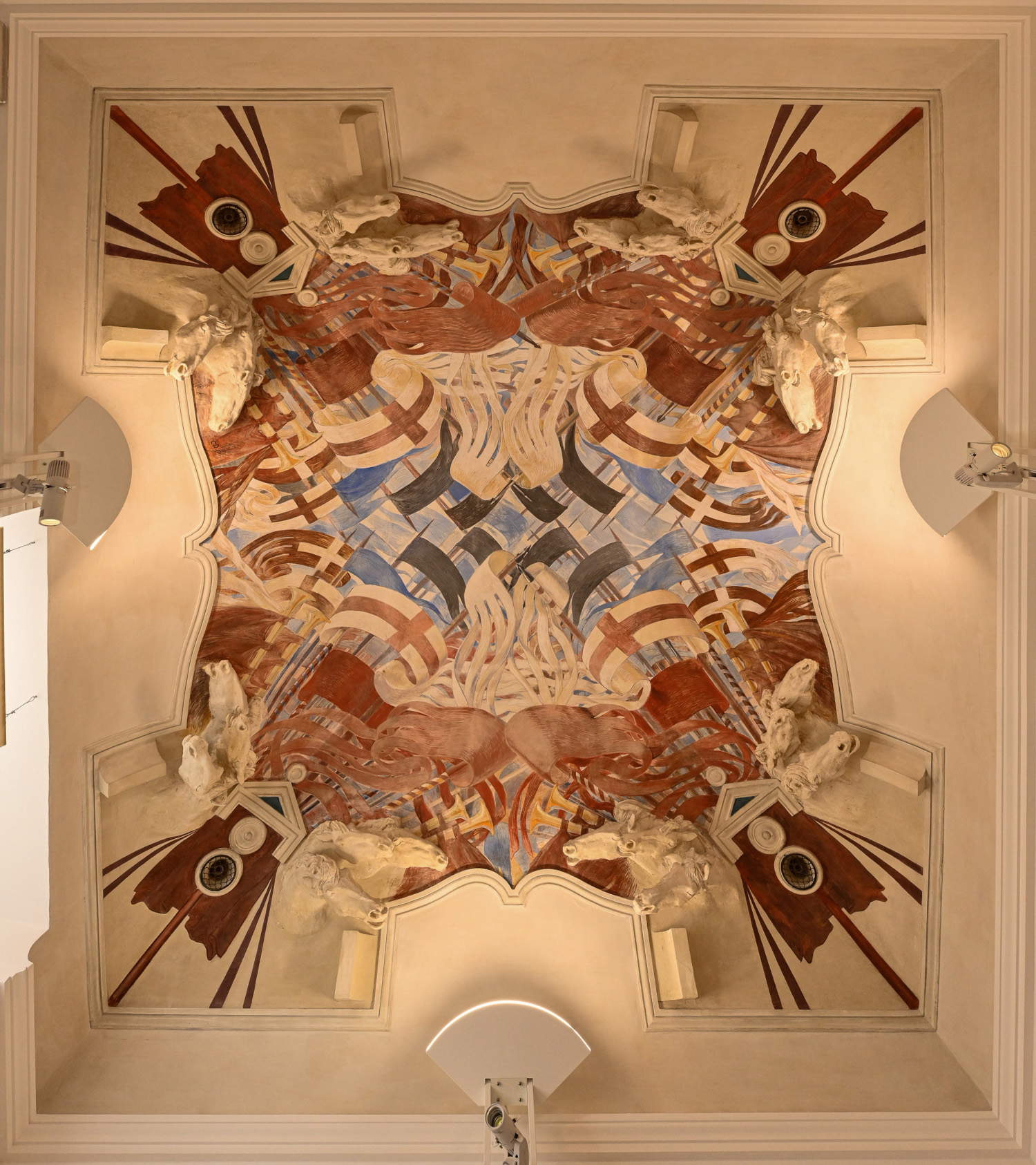
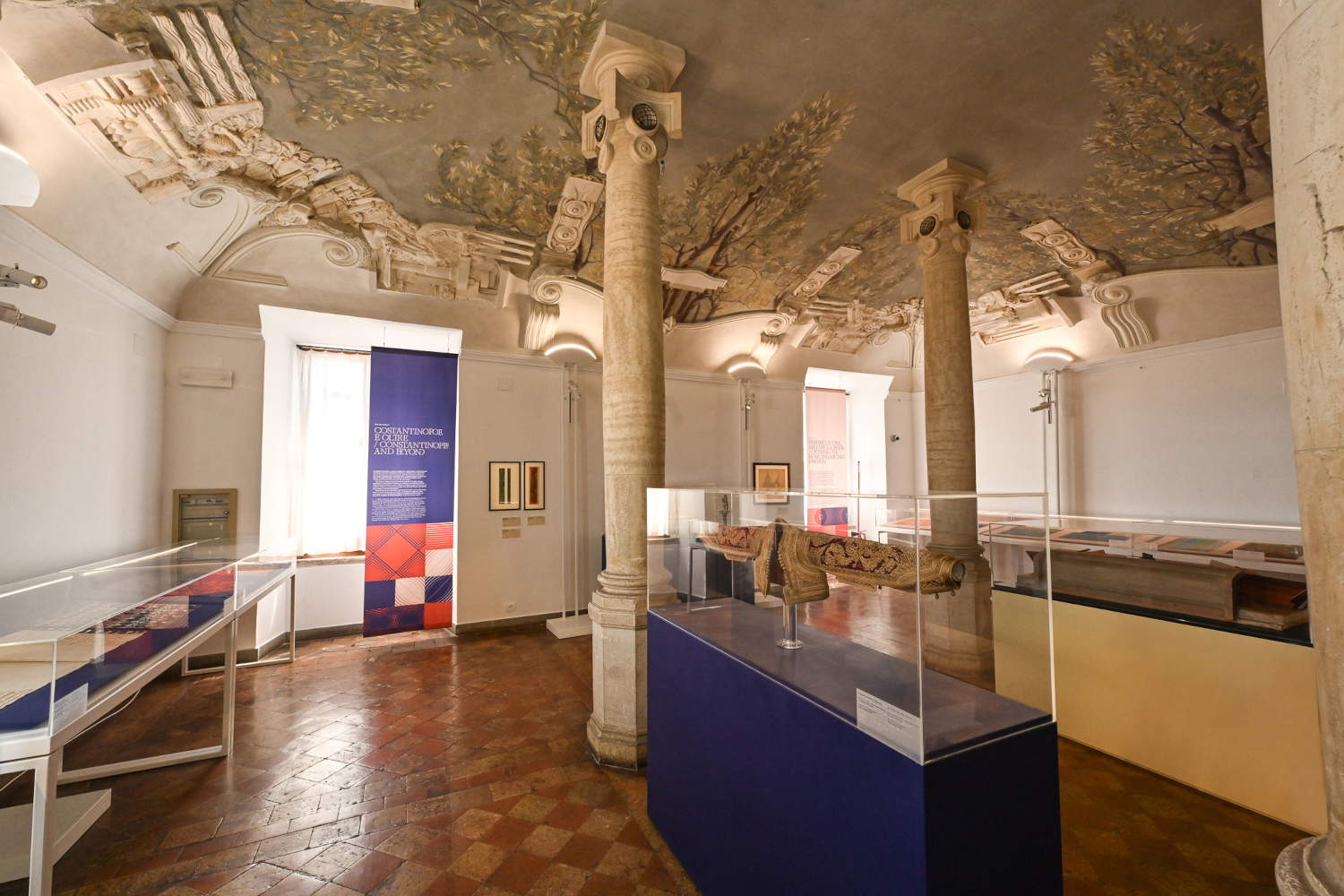
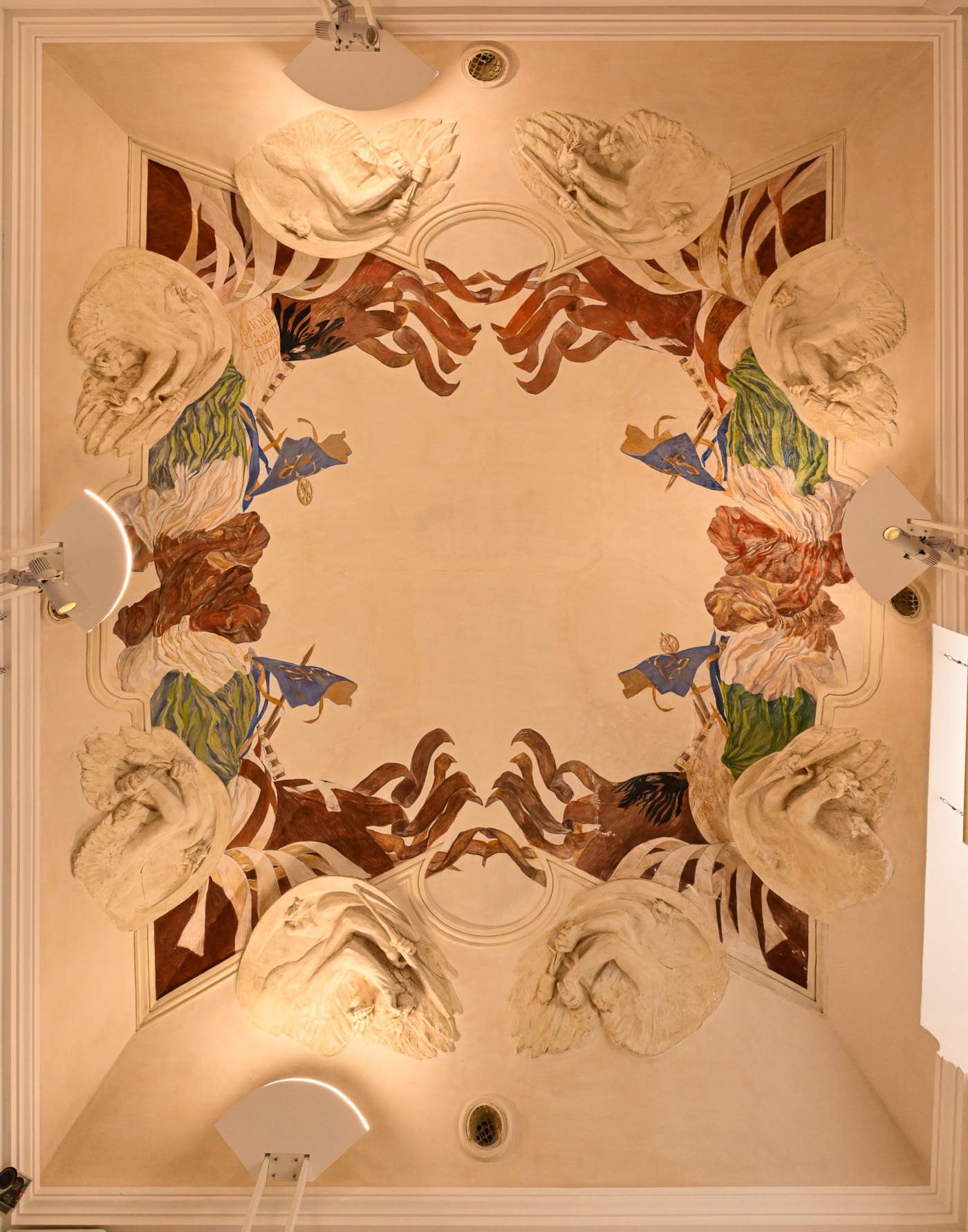
At Castel Sant’Angelo, the Cambellotti Rooms (the Hall of Columns, the Assault Units Room and the Cavalry Room), decorated by Duilio Cambellotti between 1925 and 1926 to house the flags of the disbanded regiments after World War I, reopen to the public from today. The reopening of these rooms, which are of great historical and artistic value, coincides with two important anniversaries: the 150th anniversary of the artist’s birth (1876-1960) and the centenary of the creation of the decorations, celebrated with an exhibition.

Cambellotti. Everything Becomes Form. Textiles and Decoration between Vision and Matter, curated by Luca Mercuri, director of the Pantheon Institute and Castel Sant’Angelo - National Museums Directorate of the City of Rome, with the scientific collaboration of theArchive of Duilio Cambellotti’s Work and under the coordination of Chiara Capulli, proposes a new interpretation of Cambellotti’s artistic and formative path. The exhibition, which can be visited until Sept. 6, 2026, aims to relate the painted vaults of the rooms with a selection of works from the Archive, including sculptures, temperas, drawings and posters, along with textiles that belonged to the artist, donated to Castel Sant’Angelo by Francesco Tetro and presented to the public after careful restoration.


In 1940 Cambellotti described himself simply as “an autodidact.” A central figure in Italian decorative arts, he developed his own language through a constant process of cultural assimilation: from ceramics collected in Constantinople to Chinese silk embroidery to the geometric motifs of 1920s Parisian fashion. Without adhering to specific movements or schools, he crossed different cultures and eras, transforming history and nature into a repertoire of essential forms - trees, shields, horses - recurring throughout his production.
In the rooms of Castel Sant’Angelo this vision reaches an accomplished synthesis: foliage, horses, banners, drapes and panoplies belong to the same visual universe. Nature and war are here fused into a single ornamental system.
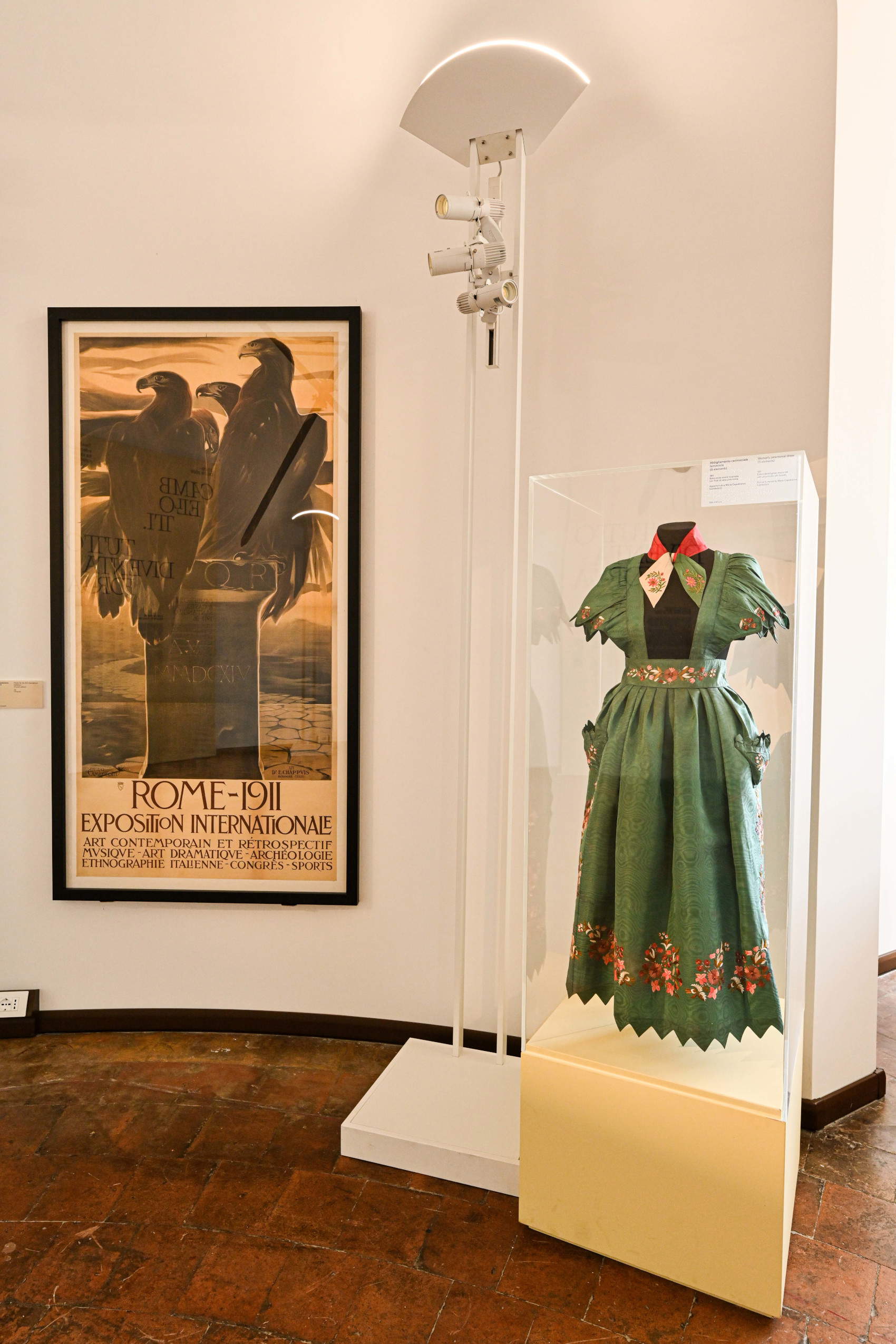
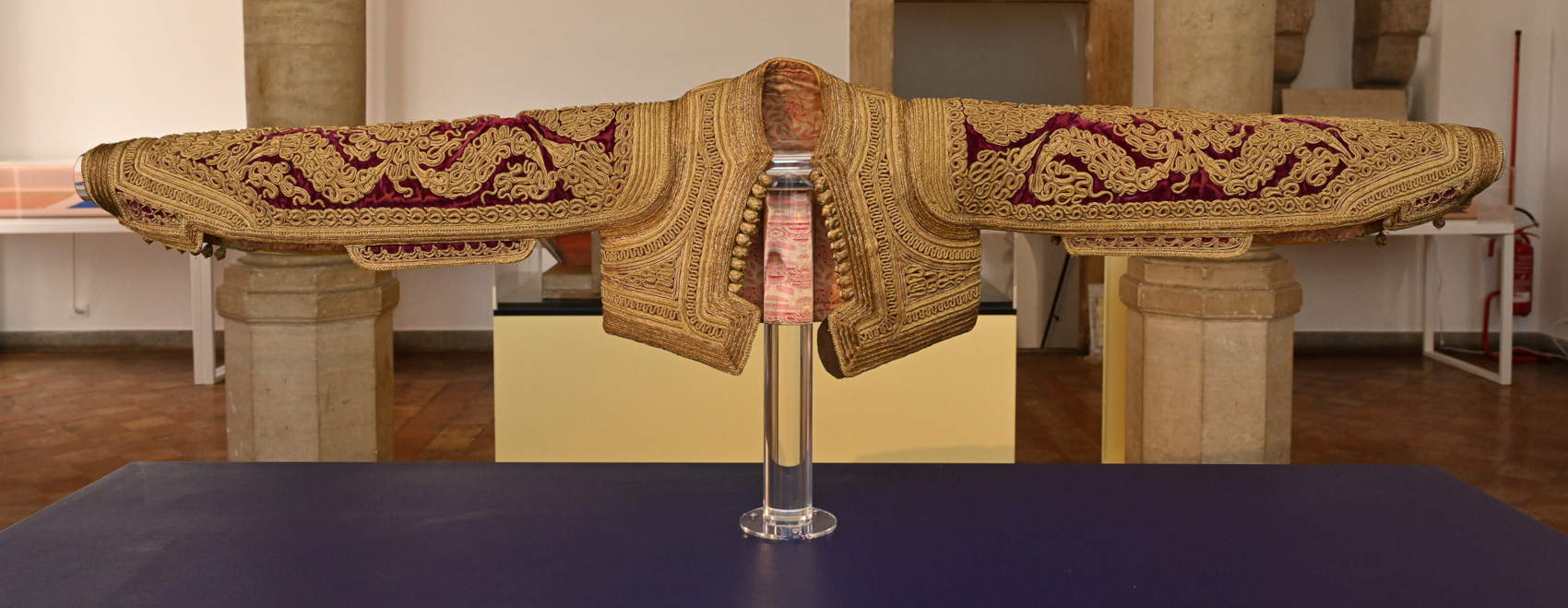
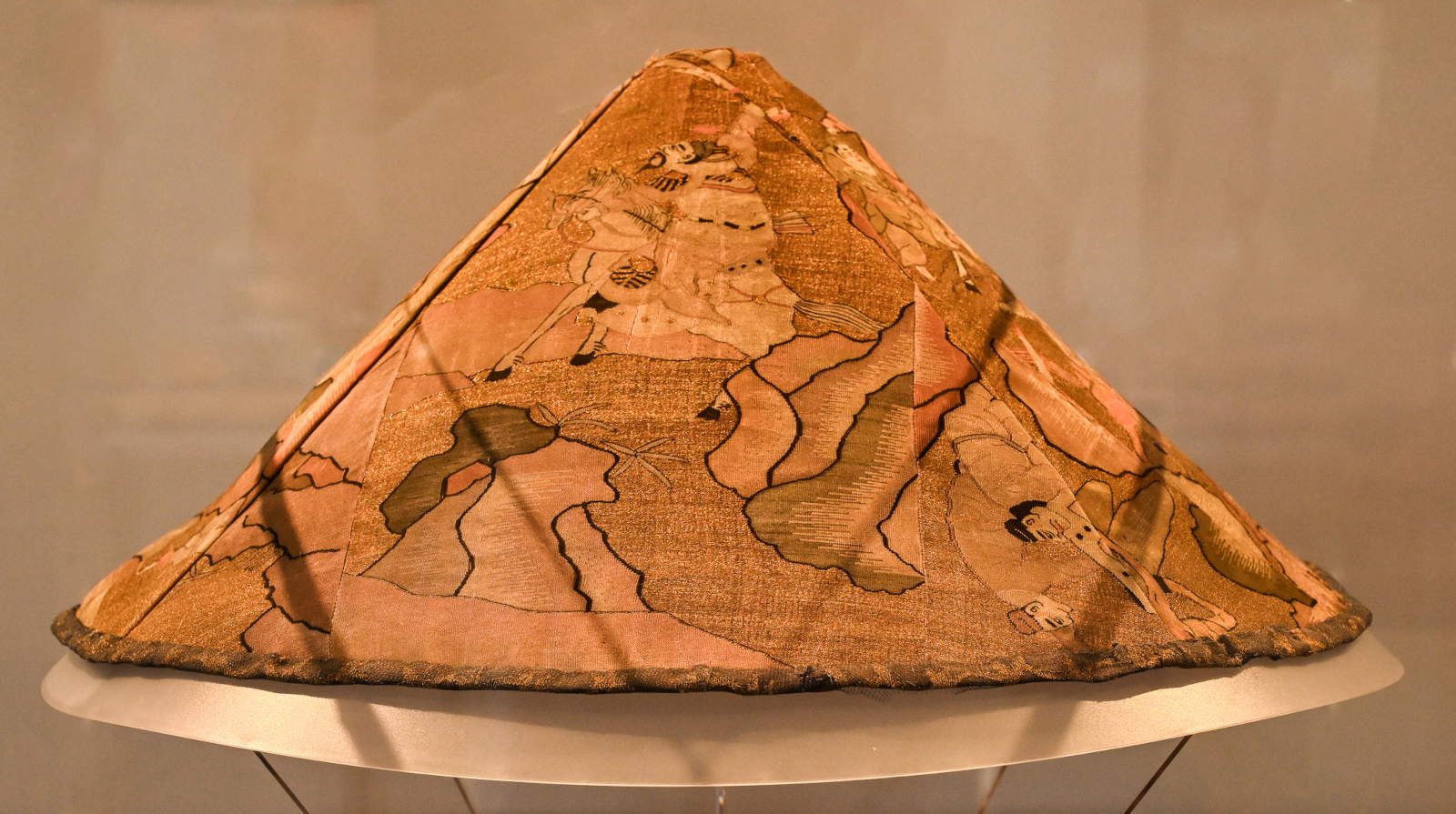
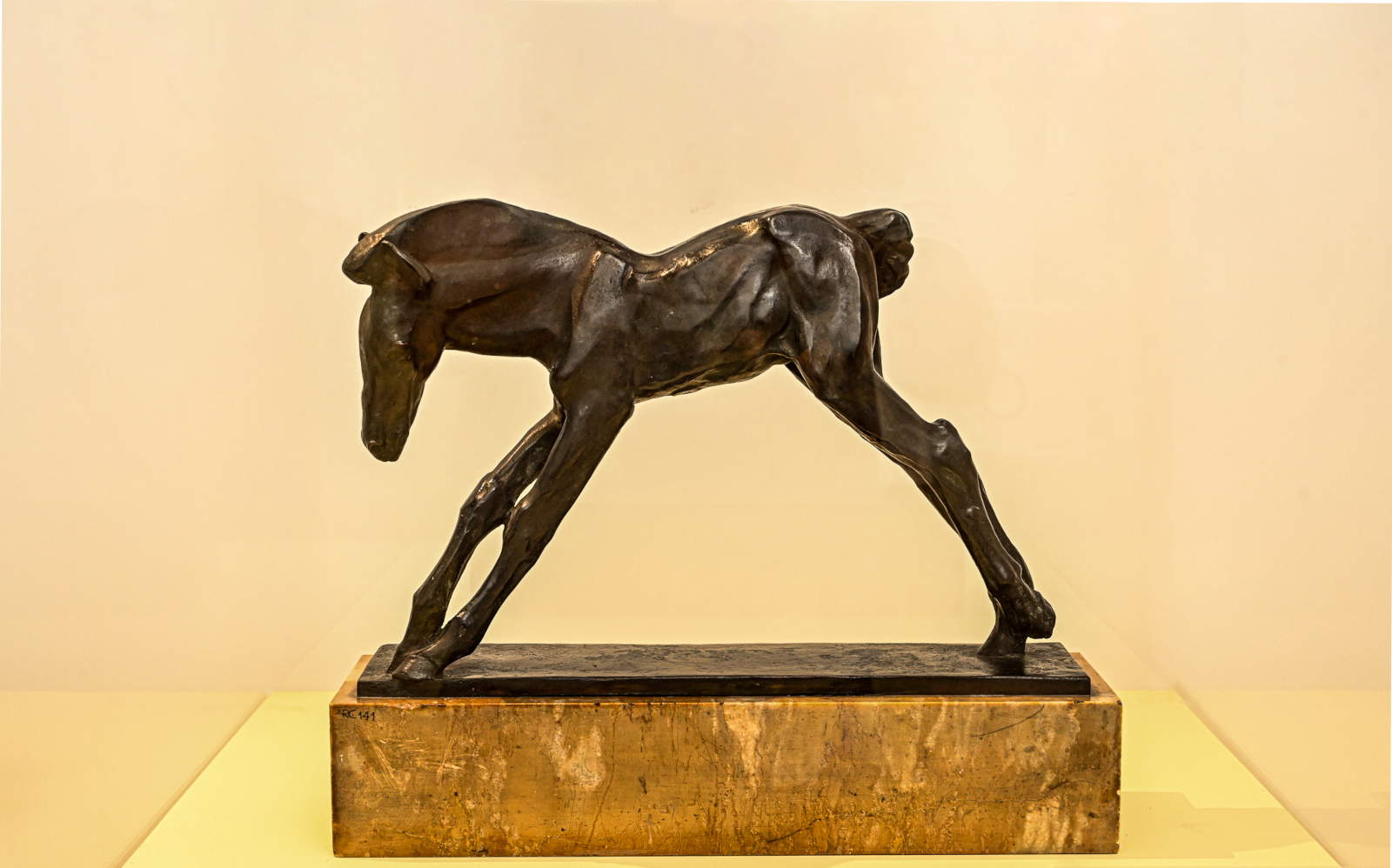
In the Hall of Columns, under the large laurel wreath painted in trompe-l’oeil, the works from the Archive dialogue with the decorations of the vault without overlapping, while the textiles, including Anatolian fabrics purchased in Constantinople in 1898, testify to the long path of research that fed the artist’s language. They are the traces of an education built outside the academies, through direct observation of the world and its continuous transformation into form. The exhibition is accompanied by two immersive sound compositions. The first is born from the encounter between an electroacoustic texture obtained from the sound of the cello performed in sautillé and abstract and harmonic electronic components. The second, on the other hand, is constructed from natural sounds, such as flags moved by the wind, galloping, neighing, and horse puffs, processed through spatial reverberations that restore the perception of a vast, distant environment suspended in time.
Taking into account the architectural features of the monument, which make some rooms not easily accessible to people with mobility difficulties, the exhibition will also be accessible through an immersive virtual tour available from one’s devices. Accessibility represents one of the central elements of the project. In collaboration with Handy Systems Onlus, the tour integrates soundscapes, three-dimensional reproductions of decorative elements, and Braille transliterations of content, with the aim of offering visitors a tactile and sound experience as well. The exhibition aims to restore the image of Cambellotti as a symbolic figure of an Italy that builds its visual identity through dialogue with different cultures, the enhancement of applied arts and the continuous tension between form and meaning. The initiative is also part of the program of the National Made in Italy Day 2026, dedicated this year to the theme of Education.
“The reopening of the Cambellotti Rooms represents a new stage in the process of progressively returning Castel Sant’Angelo’s historic spaces to the public, following the opening of the Appartamento del Castellano and the Passetto di Borgo,” said Luca Mercuri, director of the Pantheon and Castel Sant’Angelo - Rome’s National Museums Directorate. “This project also fits into the work begun with the exhibition Castel Sant’Angelo 1911-1925. The Dawn of a Museum, dedicated to the season of major retrospective exhibitions that contributed to the birth of the National Museum of Castel Sant’Angelo, as part of the celebrations of the fiftieth anniversary of the Unification of Italy, whose manifesto was precisely the work of Duilio Cambellotti. Today we return to the artist with a project deliberately collected and built in direct dialogue with the rooms he decorated, closer to a story of education and images than to a traditional monographic exhibition. The fabrics donated by Francesco Tetro, displayed to the public after careful restoration, also allow us to enter Cambellotti’s visual workshop and read his formation through materials, suggestions and geographies that fed his decorative imagination.”
“This exhibition demonstrates how much the dialogue between cultural institutions and the collaboration between public and private can generate projects capable of concretely expanding the knowledge and enjoyment of heritage,” said Massimo Osanna, Director General of Museums. “In fact, the donation of textiles that belonged to Cambellotti makes it possible to enrich the narrative of the rooms in a way that is consistent with the place that hosts them, returning to the public not only extraordinary environments, but also the creative process that generated them. At the same time, the project confirms the attention of the General Directorate for Museums to increasingly broad and diversified forms of accessibility, with particular attention to cognitive and sensory accessibility, capable of fostering participation in and experience of cultural heritage even within particularly complex historical monumental contexts.”
“The reopening of the Sale Cambellotti at Castel Sant’Angelo allows for renewed access to the decorative cycles created by the artist. This exhibition makes it possible to grasp the continuity between the monumental dimension of the rooms and the more intimate and everyday research that emerges in the drawings, projects and sculptures preserved in the Archive of Duilio Cambellotti’s Work. Alongside the works, the elements that fueled his imagination, such as fabrics and ceramics he collected, through which Cambellotti built a unique and recognizable language that is still capable of speaking to the present,” emphasized the Scientific Committee of the Archivio dell’Opera di Duilio Cambellotti.
|
| At Castel Sant'Angelo, the Cambellotti Rooms reopen to the public for the exhibition dedicated to Duilio Cambellotti |
Warning: the translation into English of the original Italian article was created using automatic tools. We undertake to review all articles, but we do not guarantee the total absence of inaccuracies in the translation due to the program. You can find the original by clicking on the ITA button. If you find any mistake,please contact us.