





Capri Verdemare is a site-specific sculpture project by Maicol Borghetti conceived for the island of Capri, created in collaboration with Franco Senesi’s Liquid Art System and featuring a critical essay by Alessandro Romanini. The project is sponsored by the Municipality of Capri and the Municipality of Pietrasanta and will be installed at the Belvedere in Piazza Armando Diaz, just a short walk from the Piazzetta in Capri, starting on June 30, 2026.
The work arises from the encounter between the bronze of the untitled sculpture from the Mythos and Protos series and the sea. The piece is submerged in the waters off Capri and reemerges marked by the action of the sea, with a blue-green patina called Patina Capri Verdemare. The color of the sea becomes the material and surface of the work. The sculpture takes the form of a unique artifact, a fragment returned by the water that preserves the identity of the place. The result takes the form of an object suspended between the ancient dimension and a future perspective—an artifact imaginary in its origin but tangible in its material. The reference to the sea of Capri becomes a constitutive element of the work, rather than merely its context.
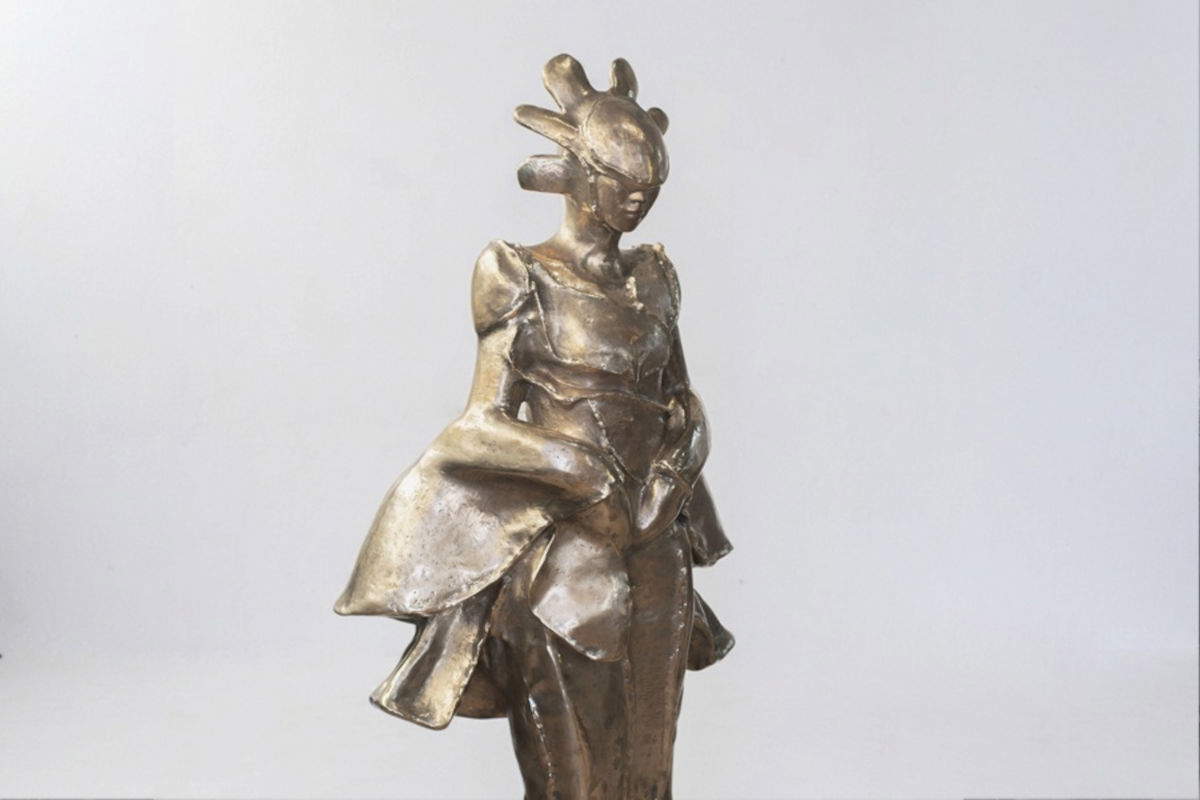
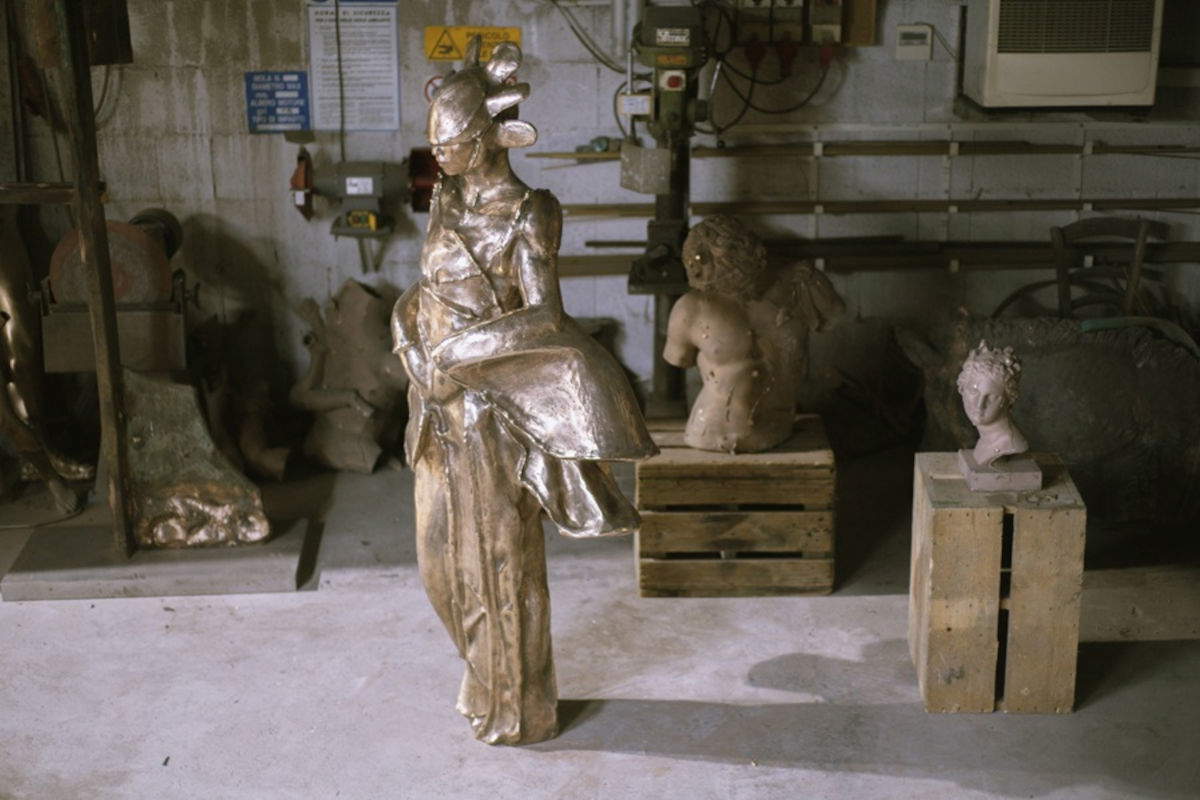
The artist defines the project as a form of archaeology of the future. Art becomes a tool for observing the present from a hypothetical temporal distance. The bronze sculptures are cast at the Fonderia Artistica Versiliese in Pietrasanta, where the material foundation of the works takes shape. The concept of “archeology of the future” thus identifies a methodology for interpreting time through sculptural matter. The sculpture is entrusted to the sea and subsequently returned by the waters. A meeting with the artist is scheduled for June 30, 2026, at Spirito di Capri, located at Piazzetta Ignazio Cerio 6.
“In conceiving this project, the artist aligns himself with the Aristotelian view, according to which poetry is an imitation of nature in its operational methods rather than in its outward appearances—in its processes rather than in its exteriority,” writes Alessandro Romanini in his critical essay. “In this exploration focused on the archaeology of the future, Borghetti confirms that the artist’s task is not to recount past events or report objective realities, but to convey what could plausibly happen—or rather, in his interpretation, that which anticipates myth and lies outside of narratives and outside the linear flow of time. He constructs a specific and detailed temporal strategy within which he organizes his works—sculpture and photography—which are interpreted as complementary. A coexistence of times, a co-existence of temporal flows, which intersect according to heterogeneous and independent dynamics; and within the meshes, the recesses, and the thresholds of these flows, the artist wedges herself with her own sculptural creations. A liminal existence, on the threshold, amid the interstices of the historicizing and taxonomic operations of archaeology, physics, and history. Like any work of art worthy of the name, Borghetti’s sculpture—co-created with the sea through heterogeneous forms, concretions, and finishes—represents the encounter between nature and culture, the natural and the artificial, sparking both logical and emotional thought and conveying complex meanings. An archaeology of the future that never ceases to explore, offering examples of a hypothetical alternative space-time and, therefore, of unprecedented forms of engagement and relationship—ones that require a fresh perspective and a new way of thinking.”
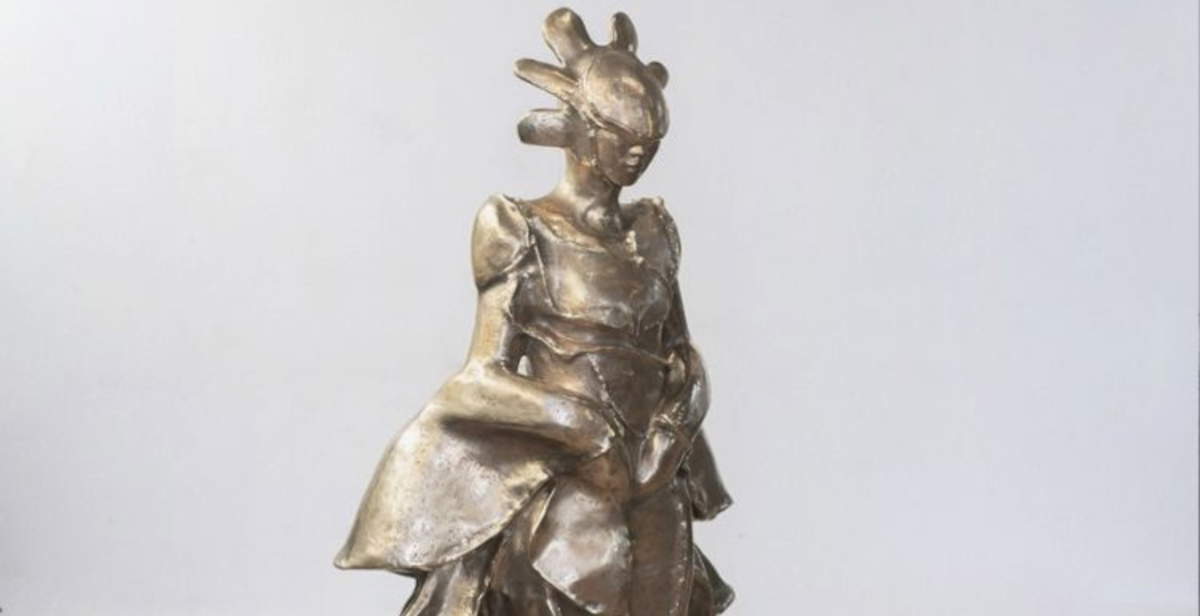 |
| Capri Verdemare: Maicol Borghetti’s sculpture, submerged in the sea and returned to the Belvedere in Capri |

Warning: the translation into English of the original Italian article was created using automatic tools. We undertake to review all articles, but we do not guarantee the total absence of inaccuracies in the translation due to the program. You can find the original by clicking on the ITA button. If you find any mistake,please contact us.





















 IT
IT FR
FR DE
DE ES
ES CN
CN


