




by Redazione 22/05/2026



Categories: Exhibitions / Disclaimer
Winston Churchill is universally known for politics, but he was also a painter. Painting was a passion that accompanied him throughout his life. At the Wallace Collection in London, the first major posthumous exhibition in the United Kingdom devoted to his art.


The Wallace Collection in London is dedicating a major retrospective to the paintings of Sir Winston Churchill (1874-1965), the first major posthumous exhibition in the United Kingdom devoted to his art. The exhibition, open to the public from May 23 to Nov. 29, 2026, brings together more than fifty works, about half from rarely accessible private collections, to offer a new perspective on a personality universally known for politics but deeply connected to painting, a passion that accompanied him throughout his life.


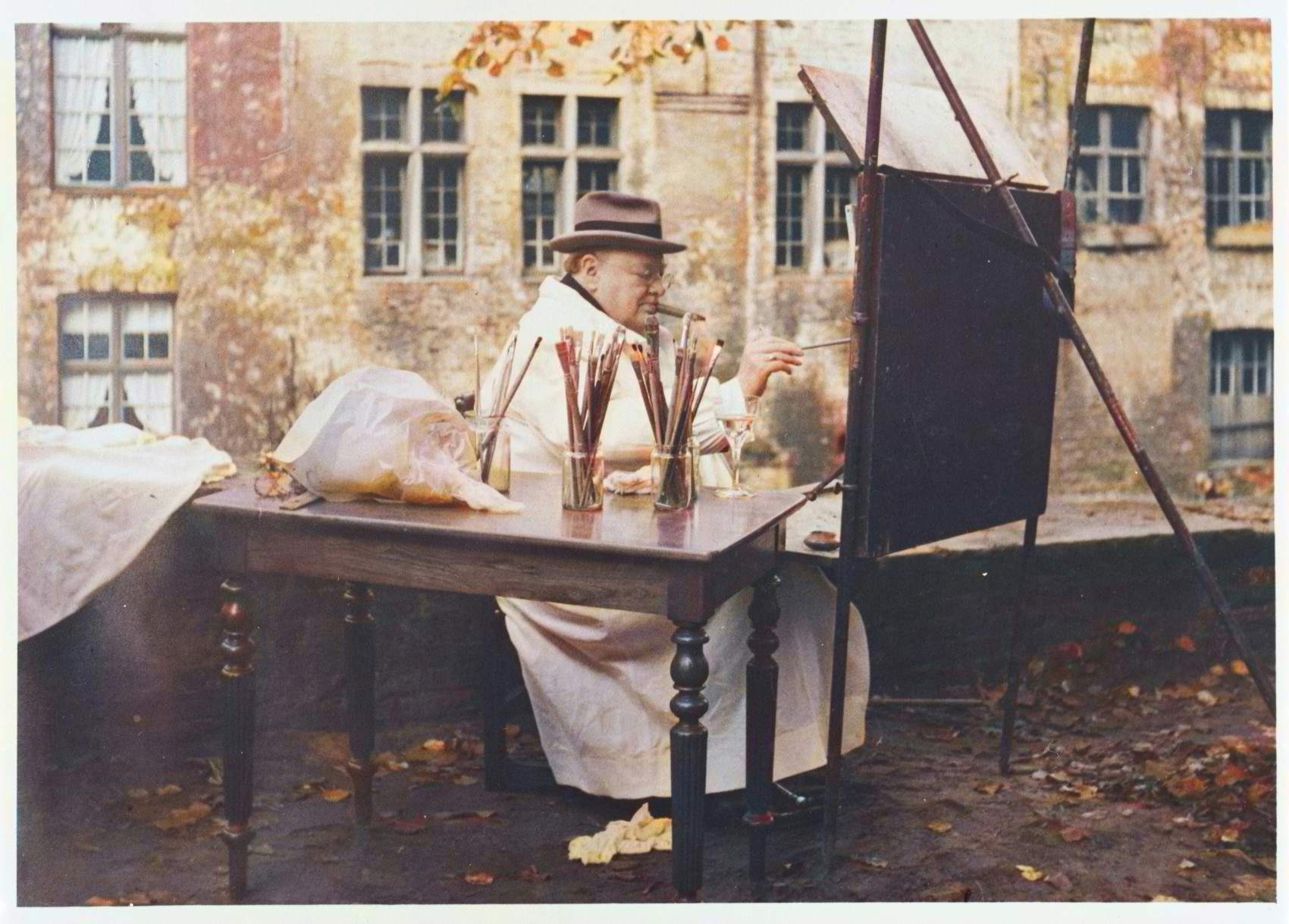
Indeed, Churchill turned to painting in 1915, during a period marked by personal difficulties and the national crisis caused by the Dardanelles defeat in World War I. What initially represented a form of private escapism soon turned into a constant creative practice. Over the course of more than fifty years he produced more than five hundred paintings, working during his many trips to England, France, Italy and especially Marrakesh, fascinated by Morocco’s intense light.
Following a chronological path, the exhibition aims to recount the evolution of his pictorial language, from his more uncertain beginnings to the works of his full maturity, highlighting a surprisingly versatile artist. The exhibition alternates between dark-toned war scenes, bright Mediterranean harbors, richly detailed still lifes, and Moroccan cityscapes also created as diplomatic gifts.




Churchill’s works enter into dialogue with those of artists who were friends and points of reference for him, including Sir John Lavery (1856-1941) and Sir William Nicholson (1872-1949), allowing for a deeper understanding of the influences that contributed to his pictorial formation. The exhibition also highlights some key thematic cores of his artistic research, such as the role played by Walter Sickert (1860-1942), who encouraged him to experiment with new expressive techniques. Early portraits executed in Lavery’s studio and rare war paintings made in Belgium render the dramatic atmosphere of Britain during the conflict, as well as the initial attempts of a self-taught painter intent on perfecting his language. These works are complemented by intimate views of Chartwell, his beloved residence, along with gardens and interiors of friends’ homes, contemplative places in which he found relief from public responsibilities. An important nucleus of works from Chartwell, now managed by the National Trust, forms a central focus of the exhibition.
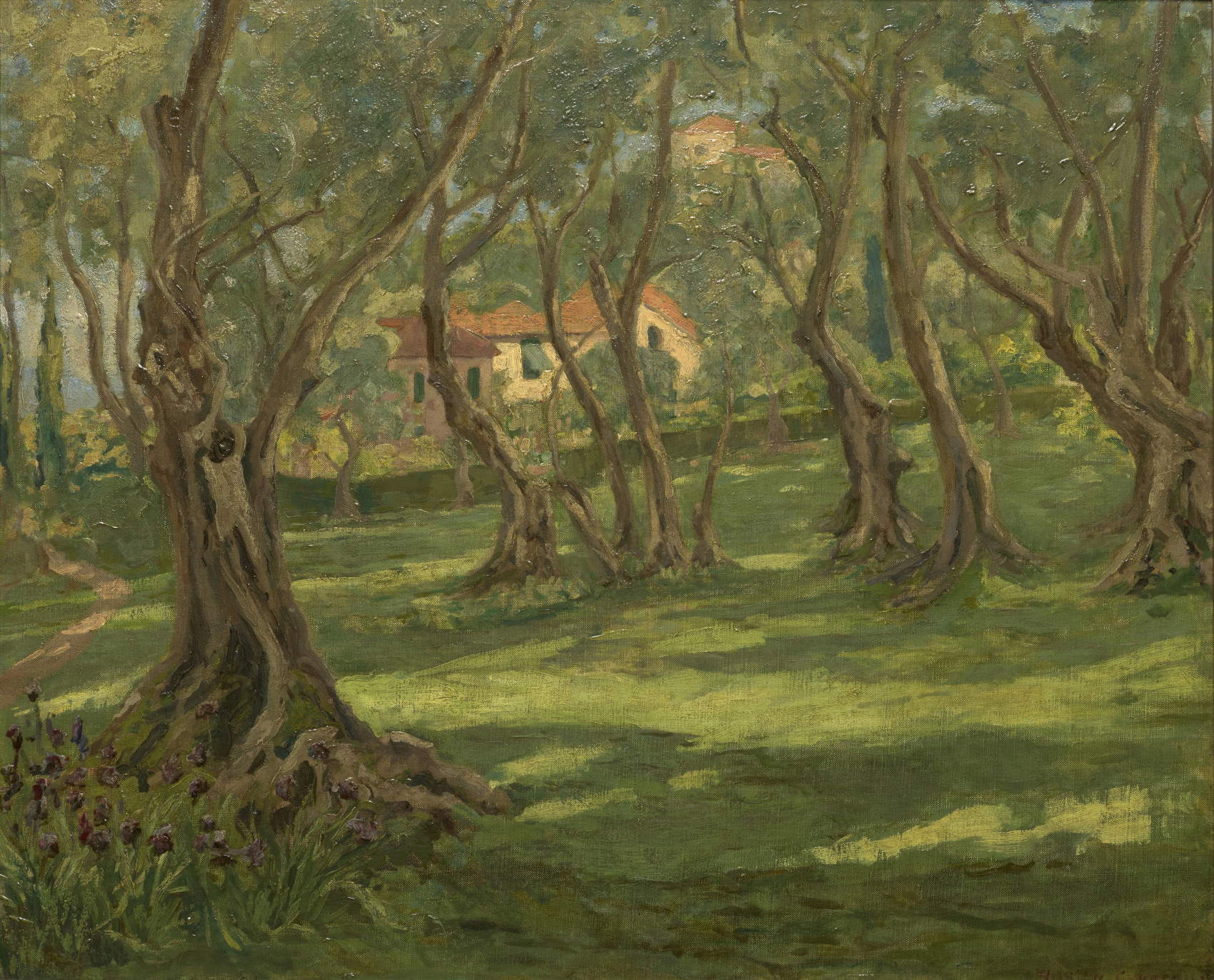
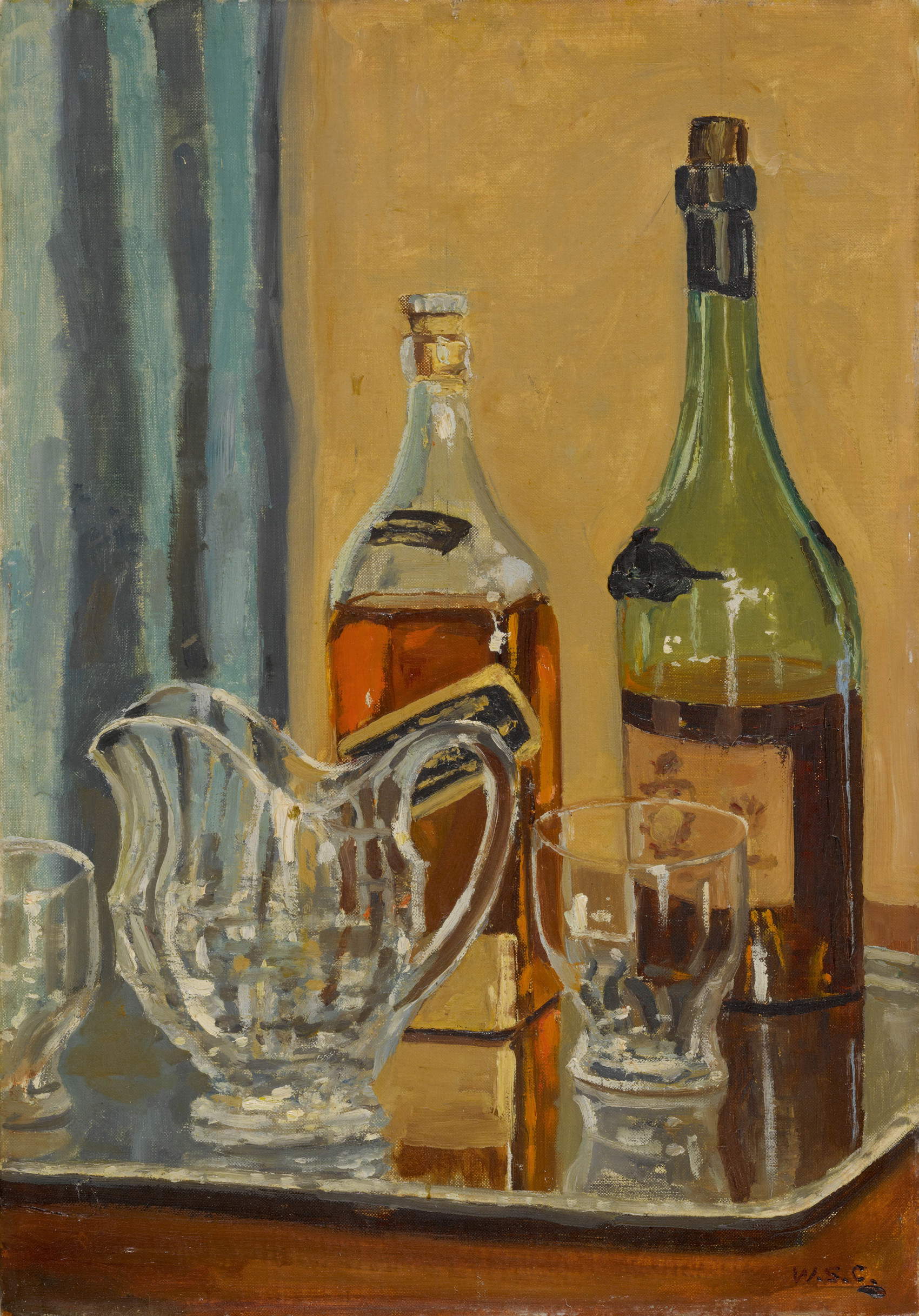
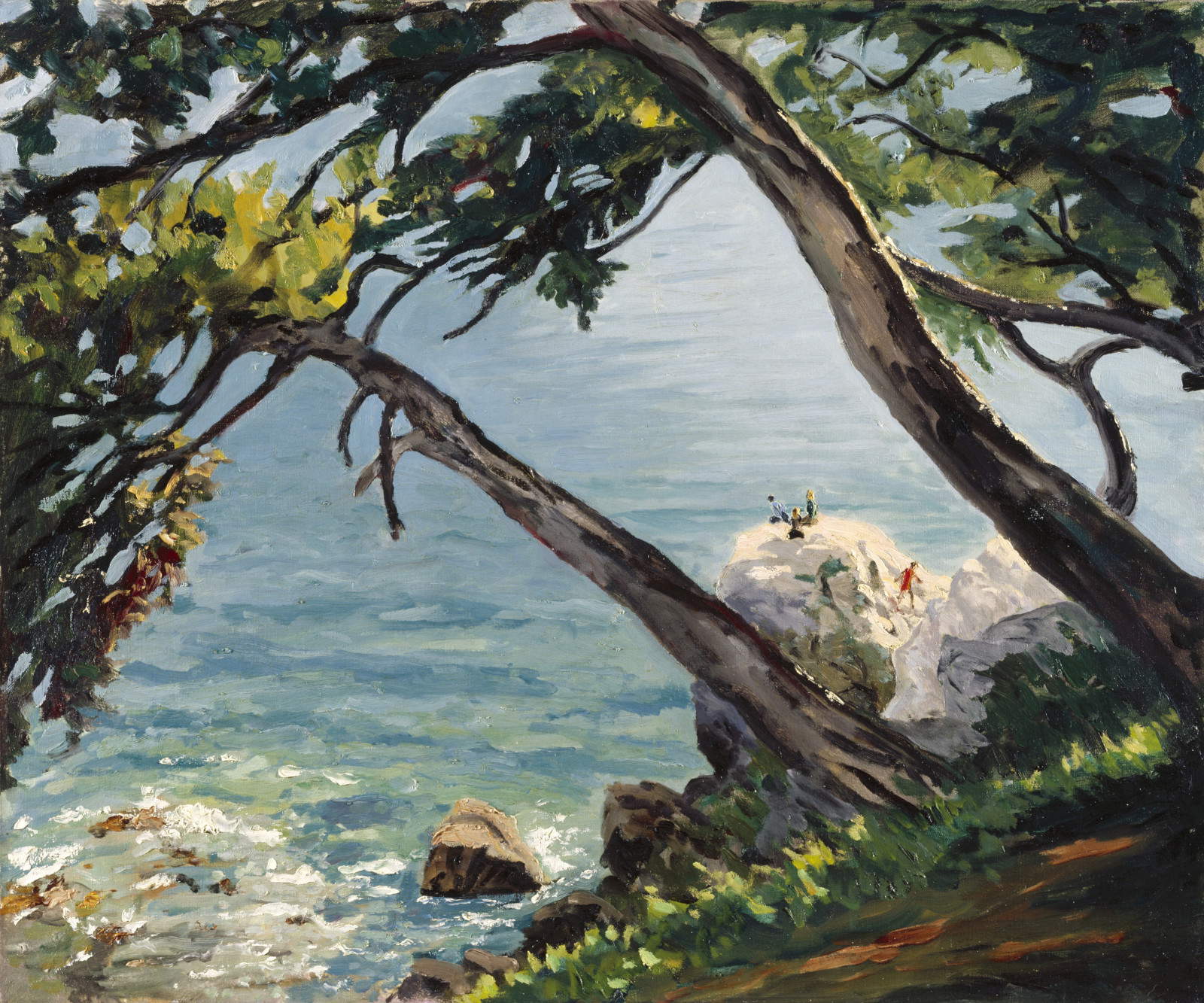
The exhibition also delves into Churchill’s interest in still life, developed through Nicholson’s encouragement. Objects such as silverware, bottles and reflective ceramics testify to his taste for composition, material and color effects. The narrative then continues to the sunny landscapes of southern Europe: ports, coastal towns and villas of the French Riviera, Italy and the Atlantic coast, interpreted with energetic brushstrokes and intense colors. Particular attention is devoted to Churchill’s relationship with Morocco, documented through famous views of Marrakech depicting the Mamounia Hotel, the Koutoubia Mosque and the Atlas Mountains. These works, considered by Churchill himself to be among his best, fully express the confidence he achieved in his artistic maturity and investigate the contrast between the arid plains, the green vegetation and the snow-capped peaks in the background. Between 1935 and 1959 Churchill visited Marrakech six times, and in 1943 he also convinced U.S. President Roosevelt (1882-1945) to join him in the city. The painting made during that stay was the only work executed by Churchill during World War II.
One of the exhibition’s central themes also concerns his relationship with the Royal Academy and other British and American cultural institutions. In 1947, invited by Royal Academy President Sir Alfred Munnings (1878-1959) to participate in the Summer Exhibition, Churchill submitted two paintings under the pseudonym David Winter in the category for non-professional artists. When his identity was made public, he was celebrated as the first prime minister to exhibit at the Royal Academy and, the following year, received the title of Honorary Academician Extraordinary in recognition of his political and artistic merits. This prestigious appointment enabled him to participate regularly in the summer exhibition until 1951.
Thelast major retrospective devoted to Churchill’s paintings was in 1958, organized with the support of U.S. President Dwight Eisenhower (1890-1969) and Hallmark founder J.C. Hall (1891-1982). The exhibition traveled between North America, New Zealand, and Australia before arriving at the Royal Academy in 1959. Winston Churchill: The Painter thus now represents the first major retrospective of Churchill’s art in more than sixty years.
The link between the Wallace Collection and Churchill also has its roots in World War II, when in 1942 the museum hosted the Artists Aid Russia exhibition, organized to support the charitable fund sponsored by Clementine Churchill (1885-1977). This historical chapter is explored in depth in the free exhibition The Wallace Collection at War (April 15-October 25, 2026), organized in parallel with the main retrospective.
The exhibition was made possible through the support of the Churchill family and Churchill Heritage Ltd.
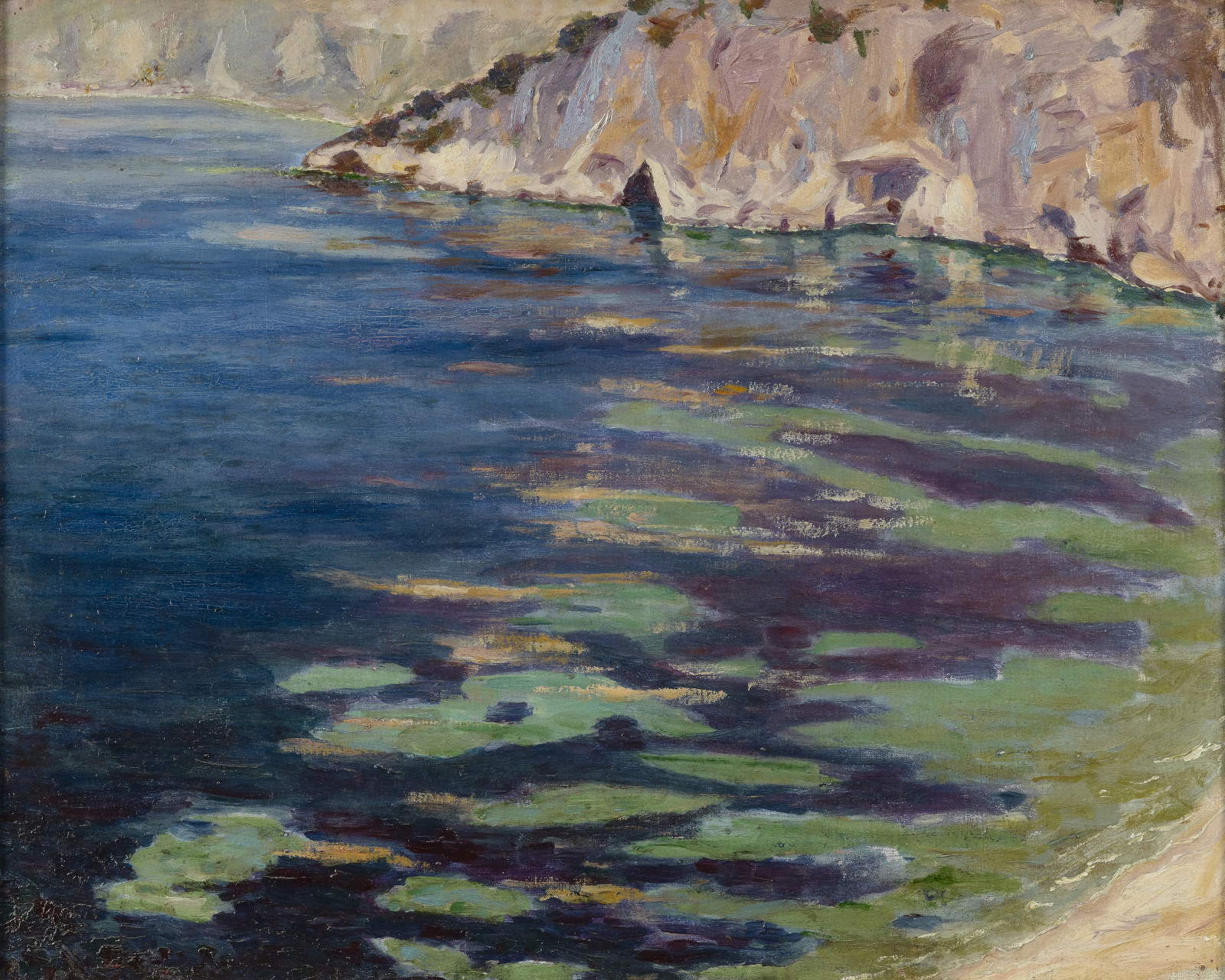
“Churchill’s paintings reveal a more joyful and intimate personality than the image of the statesman we think we know,” said Xavier Bray, Director of the Wallace Collection and co-curator of the exhibition. “The Wallace Collection played a discreet but significant role in the Churchill story during the war, and we are proud to offer this more in-depth portrait of the great wartime leader. It is a reminder that creativity can be both a source of personal comfort and a cultural force, and that even a monumental figure like Churchill found solace in front of a canvas.”
“Churchill approached painting with an intensity that mirrored his political life, although he turned to the canvas for quite different reasons. What emerges is a painter who began cautiously, inspired by Lavery and Nicholson, and ended up forging a surprisingly bold and personal visual language. This exhibition allows visitors to discover the private creative dynamics behind the public figure,” said Lucy Davis, co-curator of the exhibition.
|
| Churchill painter: at the Wallace Collection, London, the first major posthumous exhibition in the UK |
Warning: the translation into English of the original Italian article was created using automatic tools. We undertake to review all articles, but we do not guarantee the total absence of inaccuracies in the translation due to the program. You can find the original by clicking on the ITA button. If you find any mistake,please contact us.