



by Redazione 21/04/2026



Categories: Exhibitions / Disclaimer
The Fondation Louis Vuitton in Paris is celebrating with a major retrospective the centenary of U.S. sculptor Alexander Calder's arrival in France in 1926 and the 50th anniversary of his death.
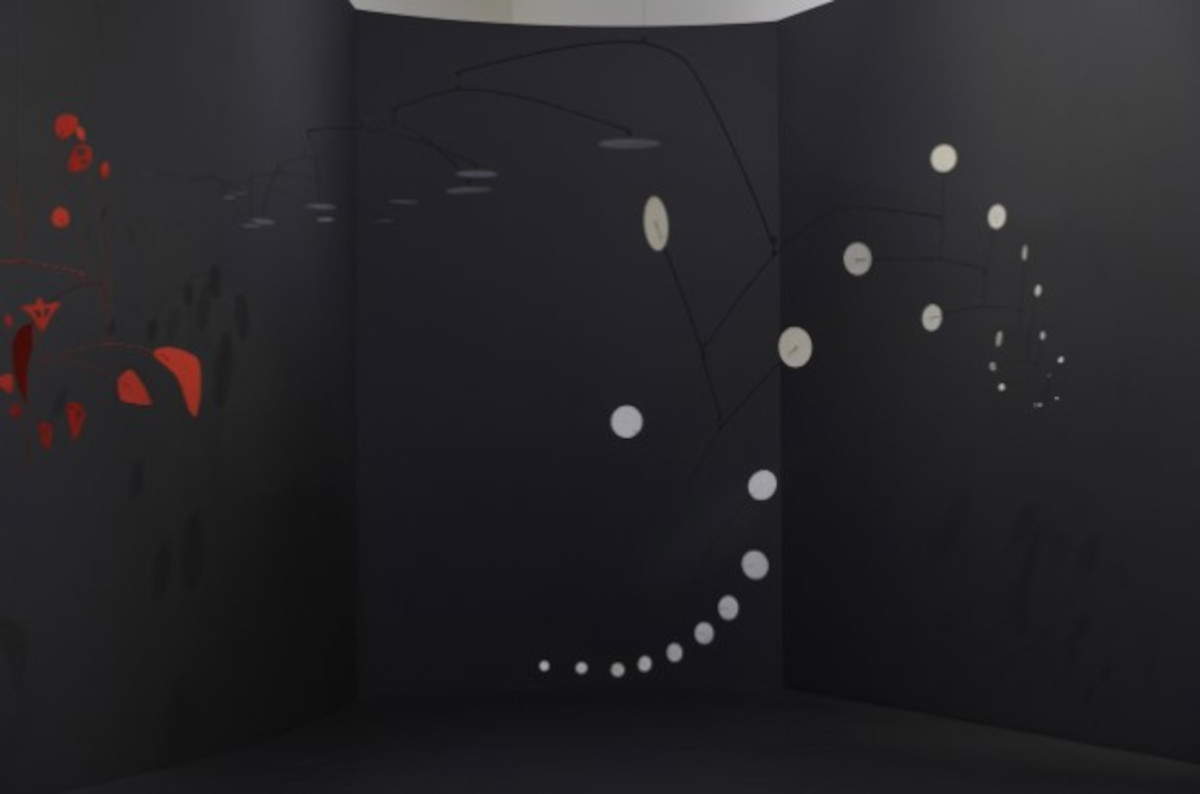
From April 15 to August 16, 2026, the Fondation Louis Vuitton in Paris is celebrating the centenary of the arrival in France of the American sculptor Alexander Calder (Lawnton, 1898 - New York, 1976) in 1926 and the 50th anniversary of his death with a major retrospective exhibition that aims to investigate all aspects of his artistic production. Entitled Calder. Rêver en Équilibre, the exhibition curated by Suzanne Pagé, Dieter Buchhart and Anna Karina Hofbauer, with the collaboration of Valentin Neuroth, Olivier Michelon and Léna Levy, aims to retrace nearly half a century of his activity, from the 1920s, with the first Cirque Calder performances that conquered the Parisian avant-garde, to the impressive public sculptures of the 1960s and 1970s. Within the Frank Gehry-designed spaces, Calder’s celebrated mobiles also transform the exhibition into a choreographed dance.
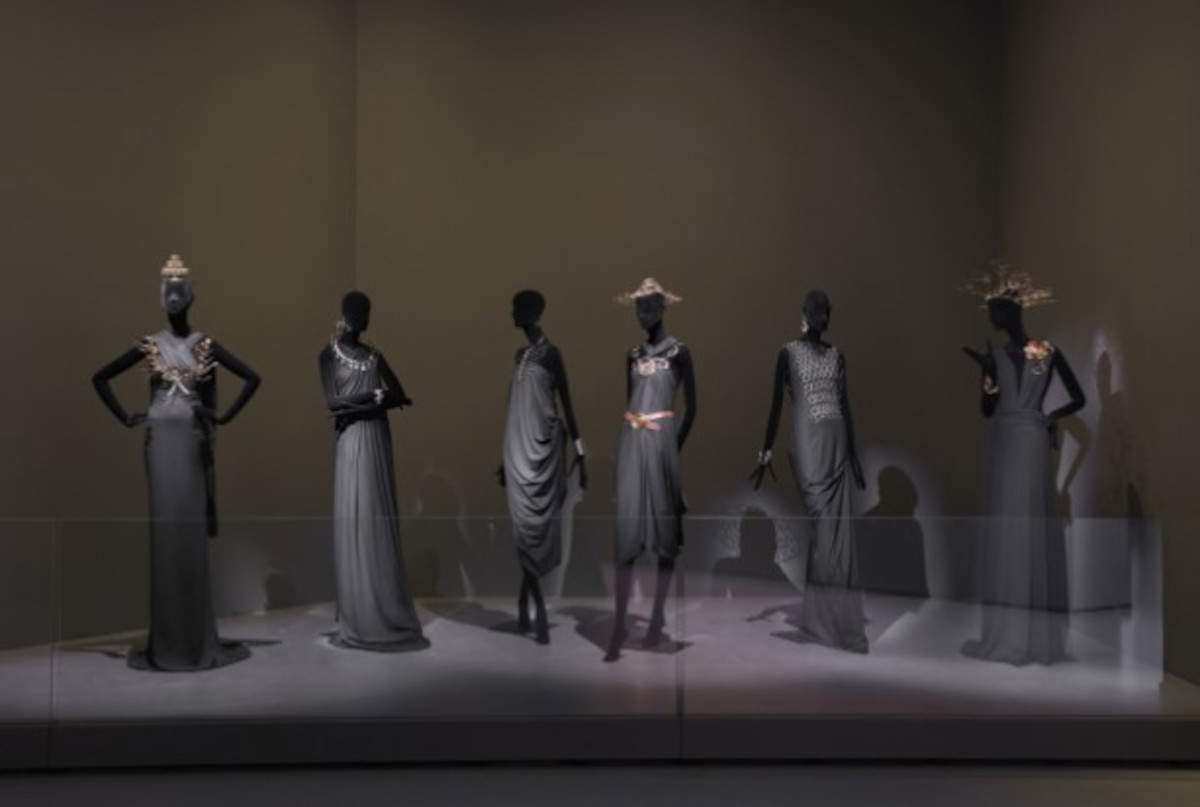
Produced in close collaboration with the Calder Foundation, the main lender of the works, the exhibition aims to be one of the most important ever dedicated to the artist. Loans from the Calder Foundation are joined by loans from international institutions and private collections, totaling about 300 works: stable and mobile, to use Calder’s terminology for static and kinetic abstractions, but also portraits in metal wire, carved wooden figures, paintings, drawings and jewelry. Organized chronologically and spread over more than 3,000 square meters, the exhibition aims to highlight the central themes of Calder’s research: movement, light, reflections, the use of simple materials, sound, the ephemeral dimension, gravity, performance and the relationship between positive and negative space.


The exhibition is further enhanced by works by artists contemporary to Calder. Works by Jean Arp, Barbara Hepworth, Jean Hélion and Piet Mondrian, along with those of Paul Klee and Pablo Picasso, allow Calder’s innovation to be placed in the context of the avant-garde. In addition, 34 photographs taken by some of the most important photographers of the 20th century, including Henri Cartier-Bresson, André Kertész, Gordon Parks, Man Ray, Irving Penn and Agnès Varda, are intended to restore the image of an artist suspended between art and everyday life. The exhibition also includes in-depth examinations of some fundamental nuclei of his production, such as the famous Constellation series and his jewelry.
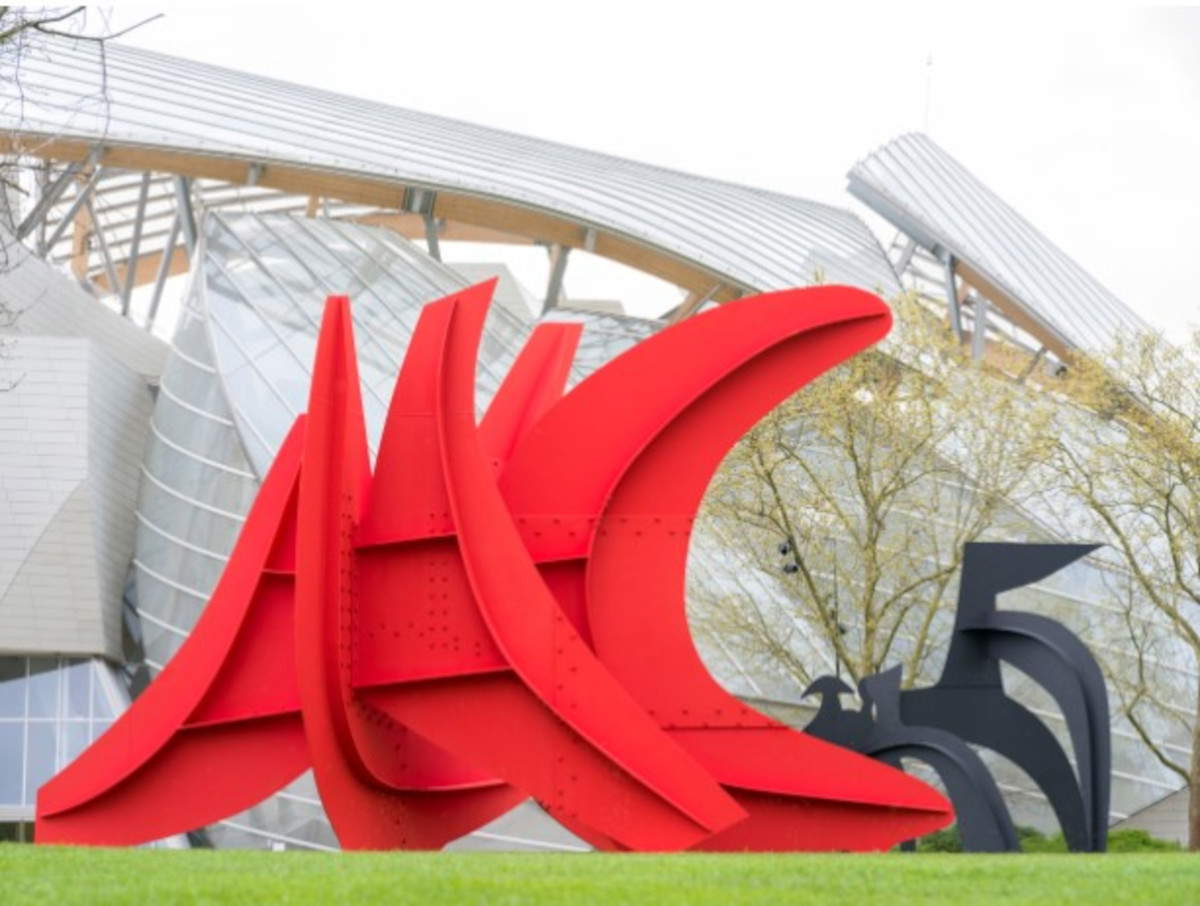
Following the line of previous major monographs devoted to key figures in 20th- and 21st-century art, including Jean-Michel Basquiat, Joan Mitchell, Charlotte Perriand, Mark Rothko, David Hockney and Gerhard Richter, the Fondation Louis Vuitton is dedicating the entire exhibition space and, for the first time, also the surrounding green space to Calder’s work, thus creating a direct dialogue between the forms, volumes and movements of his works and those of Gehry’s architecture.
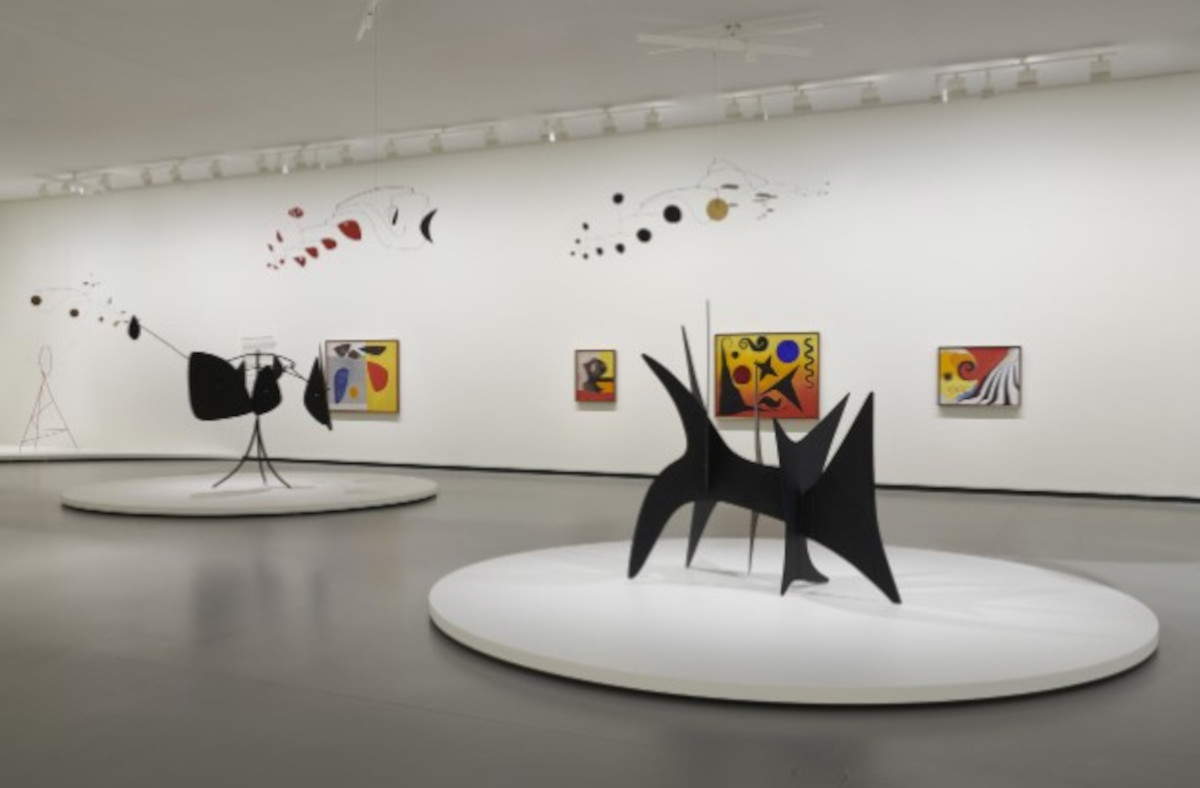
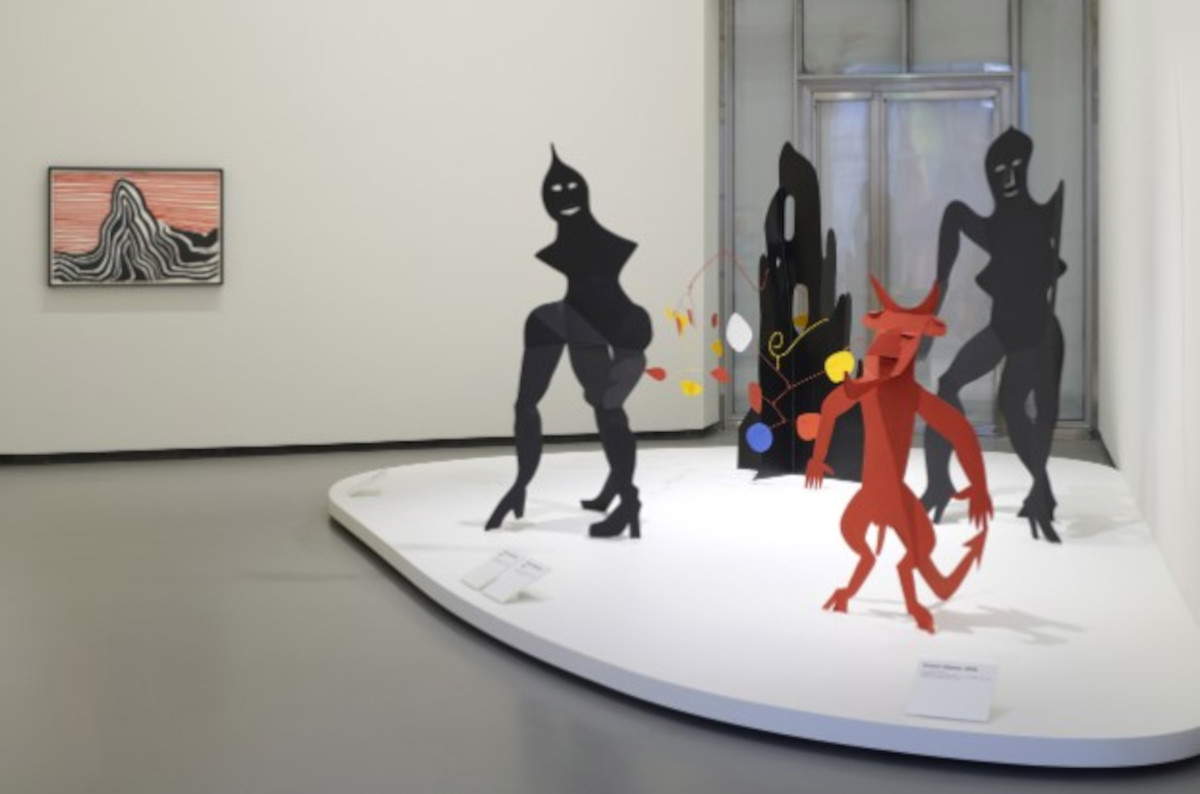
Around the age of twenty-five, Calder rediscovered his family’s artistic tradition (in fact, he was the son of a painter and a sculptor, as well as the grandson of a sculptor) and began to devote himself to painting and drawing. After his studies at the Art Students League in New York, he moved to Paris in 1926, settling in the Montparnasse district, then the nerve center of the international art scene. Here he quickly came into contact with a vibrant creative environment and presented innovative works: figurative and minimalist wire sculptures, which were highly praised by critics, as well as a miniature circus. Thanks to an exceptional loan from the Whitney Museum of American Art, Cirque Calder now returns to Paris for the occasion. In these performances, Calder animated acrobats, clowns, and miniature riders before an ever-growing audience, including Fernand Léger, Le Corbusier, Joan Miró, and Piet Mondrian.
A visit to Mondrian’s studio in 1930 marked a fundamental shift for Calder toward abstraction, initially in painting and later in sculpture. It was Marcel Duchamp who coined the term “mobile” in 1931 to describe his abstract kinetic compositions, exhibited in 1932 at Galerie Vignon in Paris. In response to this definition, Arp later introduced the term “stable” to refer to the static works made by Calder in the early 1930s.
Despite returning to the United States in 1933, Calder maintained strong ties to Europe, participating in the Pavilion of the Spanish Republic in 1937 alongside Miró and Picasso. After the war he settled back in France and in 1953 opened a studio in Saché, in the Loire Valley. Dividing his time between Europe and America, he continued to redefine the very concept of sculpture until his death in 1976: through movement, but also thanks to an expressive language capable of adapting to all dimensions, from light metal structures animated by air to monumental installations, he gave life to non-figurative forms that constantly dialogued with nature.
|
| In Paris, Fondation Louis Vuitton celebrates Alexander Calder with a major retrospective |
Warning: the translation into English of the original Italian article was created using automatic tools. We undertake to review all articles, but we do not guarantee the total absence of inaccuracies in the translation due to the program. You can find the original by clicking on the ITA button. If you find any mistake,please contact us.