




by Redazione 21/02/2026



Categories: Exhibitions / Disclaimer
The Carrara Museum of the Arts presents the Armenian artist's solo exhibition curated by Christopher Atamian and Tamar Hovsepian. An unprecedented installation that explores the concept of connection and memory through the textural contrast between statuesque marble and the rigidity of steel cables.
From Feb. 14 to Aug. 30, 2026, the mudaC | museum of arts in Carrara hosts Mikayel Ohanjanyan ’s solo exhibition entitled Mikayel Ohanjanyan .Ties: Ties That Bind. The exhibition, curated by Christopher Atamian and Tamar Hovsepian of the New York-based platform Atamian Hovsepian Curatorial Practice, takes the form of a large-scale site-specific project focused on the dynamics of connection, historical memory and resilience. The body of work, officially presented with an opening scheduled for Feb. 13 at 6 p.m., marks a moment of synthesis in the Armenian artist’s recent research, establishing a direct dialogue between the raw material of the land and philosophical reflections on collective identity.
“Trained in Armenia and artistically matured in Italy, Ohanjanyan’s language is both deeply rooted and universal. We are honored to present his work in a city and institution of such high historical value,” the curators emphasize.
Mikayel Ohanjanyan, who was born in Yerevan, Armenia, in 1976 but professionally matured in Italy, chooses for this occasion white statuary marble as the privileged medium to shape a monumental installation composed of five sculptures. The exhibition project is promoted by the Municipality of Carrara and produced directly by mudaC, with the support of important entities related to the Armenian diaspora and culture, such as the AGBU Armenian General Benevolent Union and Patrick Bahadourian, as well as technical sponsorships from Kooling and Tenax SpA. Ohanjanyan’s inclusion in the mudaC’s itinerary places him in continuity with the museum’s exhibition line, which already includes in its collections and exhibition history such names as Jannis Kounellis, Lynn Russell Chadwick and David Tremlett.


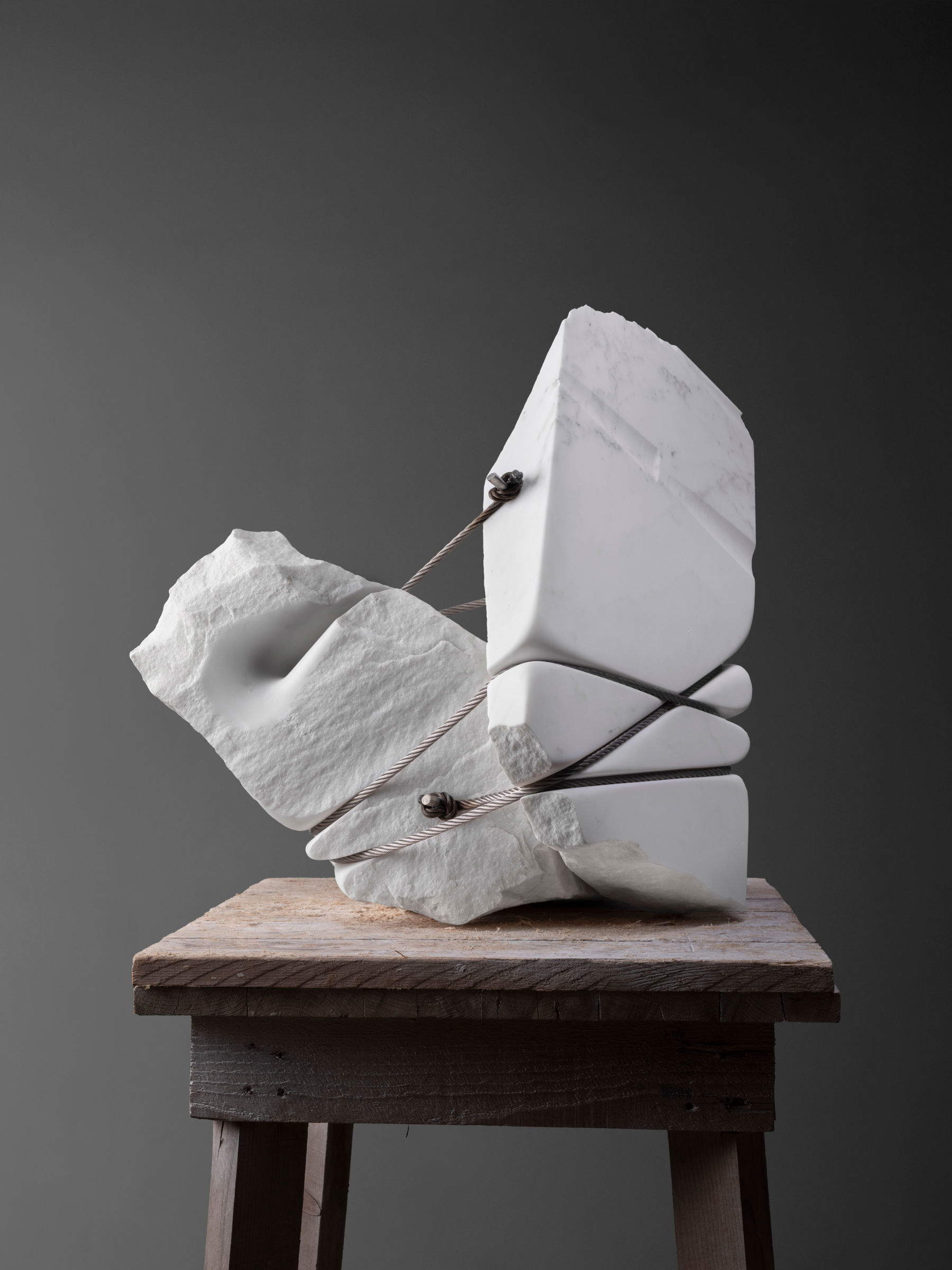
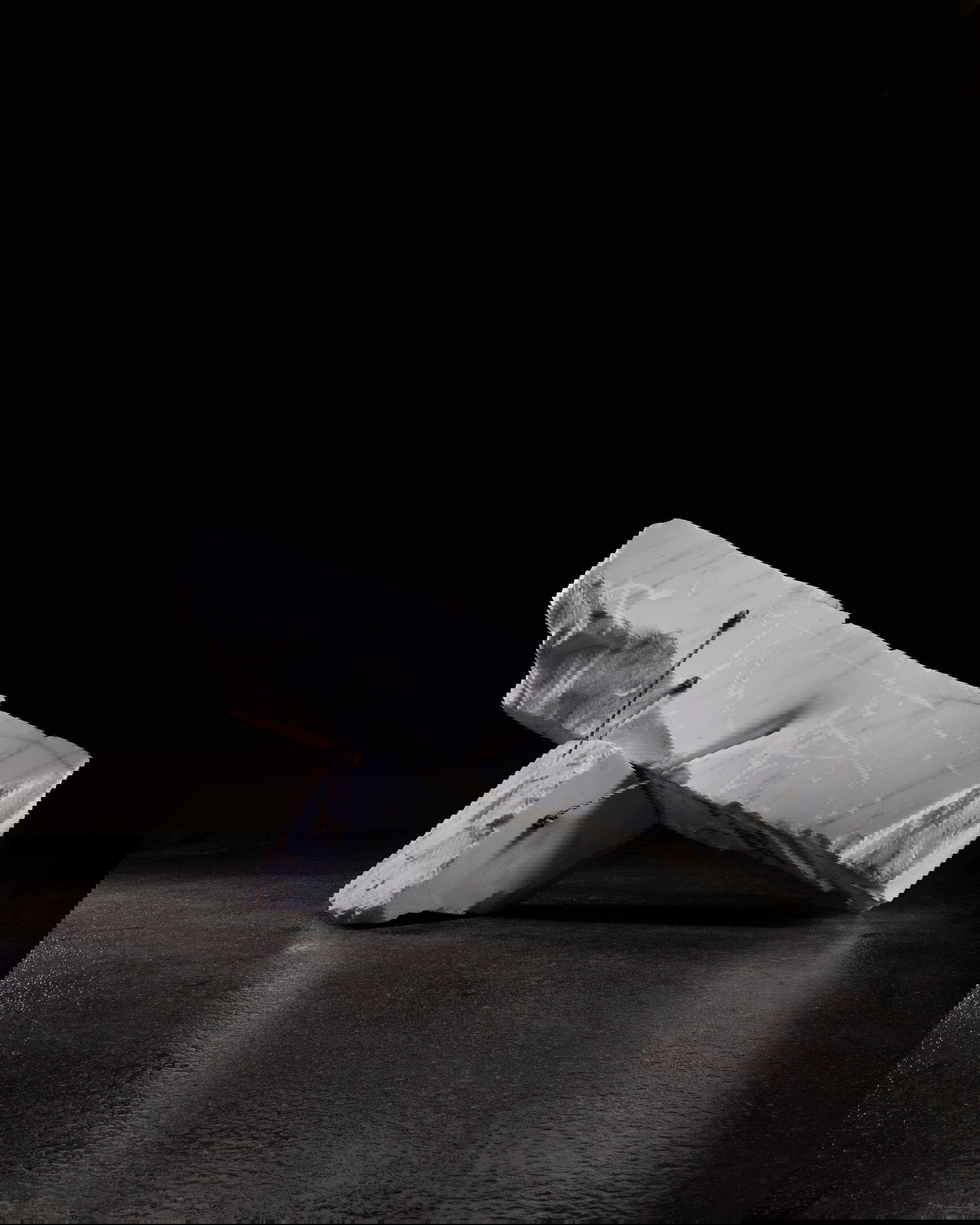
The choice of location is not random: Carrara now represents the place where the artist established his studio and, significantly, the city is twinned with his home capital, Yerevan. This geographic and biographical intersection is reflected in the concept of connection that gives the exhibition its title. For Ohanjanyan, bonding is an ontological principle that connects the individual to the web of history, nature and one’s fellow human beings. In an era characterized by fragmentation and social contrasts, the artist proposes a vision of humanity understood as one interdependent web.
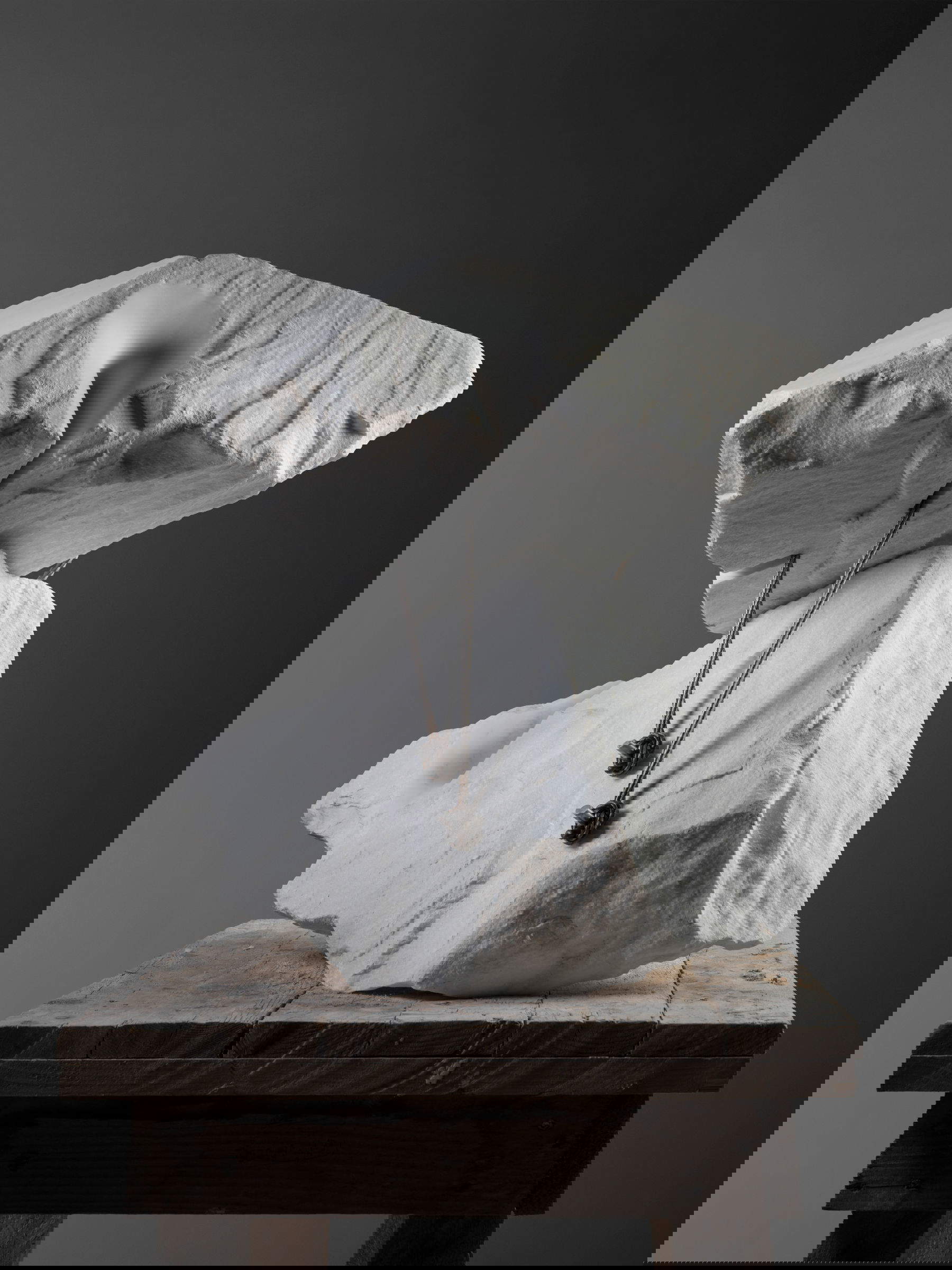
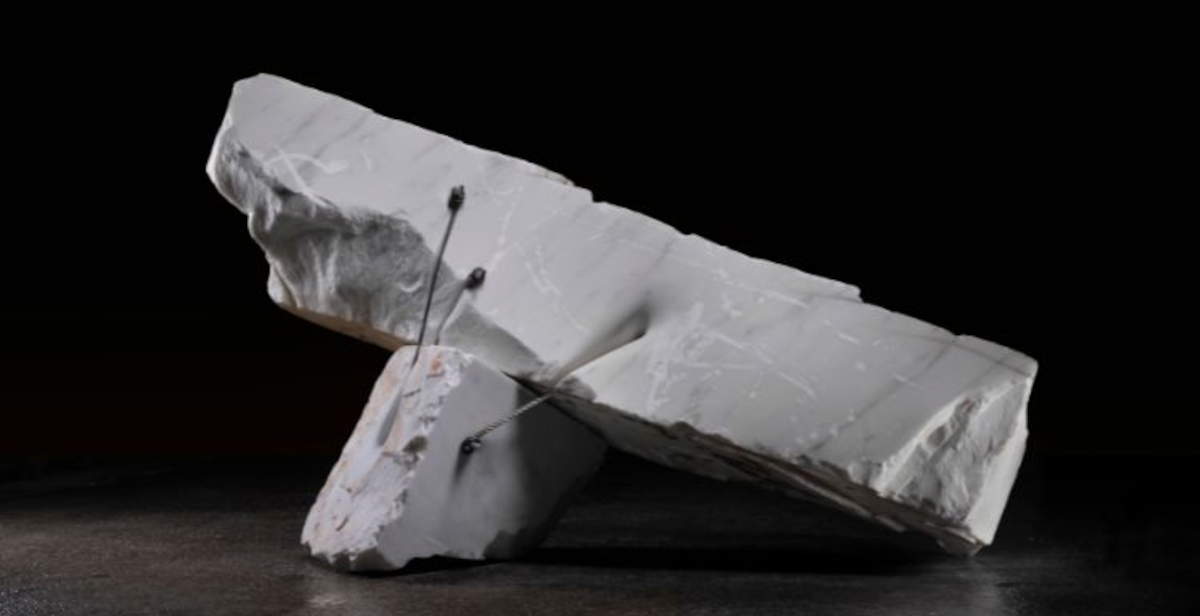
The central installation consists of five sculptural elements of varying sizes, ranging from the monumentality of blocks reaching 210 centimeters in length to more contained and collected volumes. Each work is structured through the juxtaposition of two shapeless marble blocks held firmly together by stainless steel cables. The tension generated by these cables is not purely mechanical: the steel etches the stone surface, penetrating the stone and making the strain of cohesion visible. This creates a visual and conceptual contrast between the immutable hardness of marble and the constricting force of metal. Although the blocks appear inherently incompatible in form and nature, the act of binding them together symbolizes a utopian attempt to recover a memory in danger of being lost. The forms remain deliberately incomplete, suggesting that identity and history are processes in the making, never quite resolved.
From the point of view of spatial fruition, the exhibition transforms the rooms of the mudaC into an environment of silent reflection, where the physicality of the works invites the visitor to measure himself against the gravity and resistance of the materials. Ohanjanyan’s poetics manifests itself in the reconciliation of opposing forces, where the hardness of stone and the tension of cable find a precarious but necessary balance. The exhibition will be accompanied by a scholarly catalog, which will be presented during the opening months, containing institutional greetings from the Councillor for Culture of the Municipality of Carrara, Gea Dazzi, and critical contributions from the curators and Cinzia Compalati.
 |
| Ohanjanyan at mudaC in Carrara: five monumental marble sculptures to investigate the tension of bonds |
Warning: the translation into English of the original Italian article was created using automatic tools. We undertake to review all articles, but we do not guarantee the total absence of inaccuracies in the translation due to the program. You can find the original by clicking on the ITA button. If you find any mistake,please contact us.