





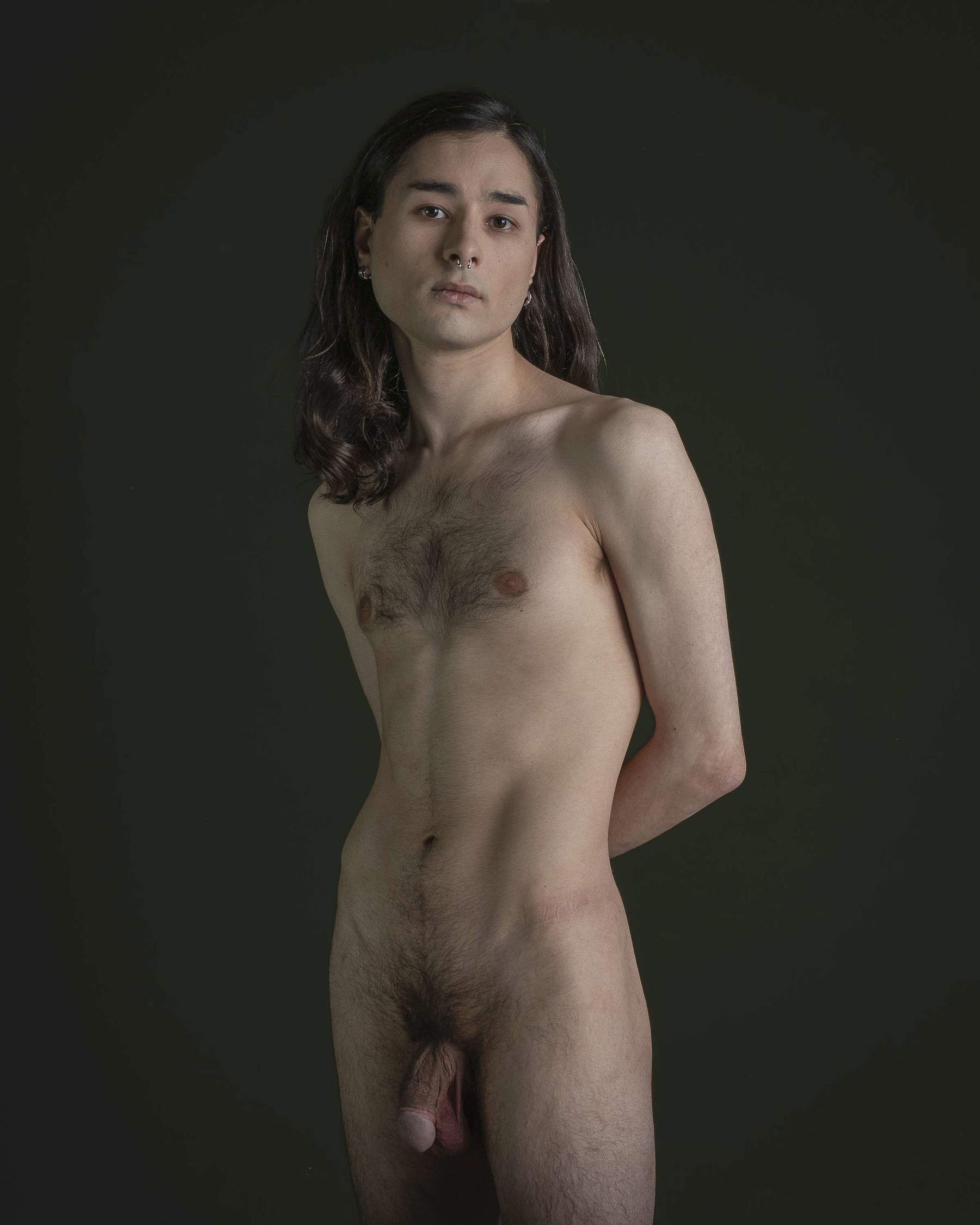
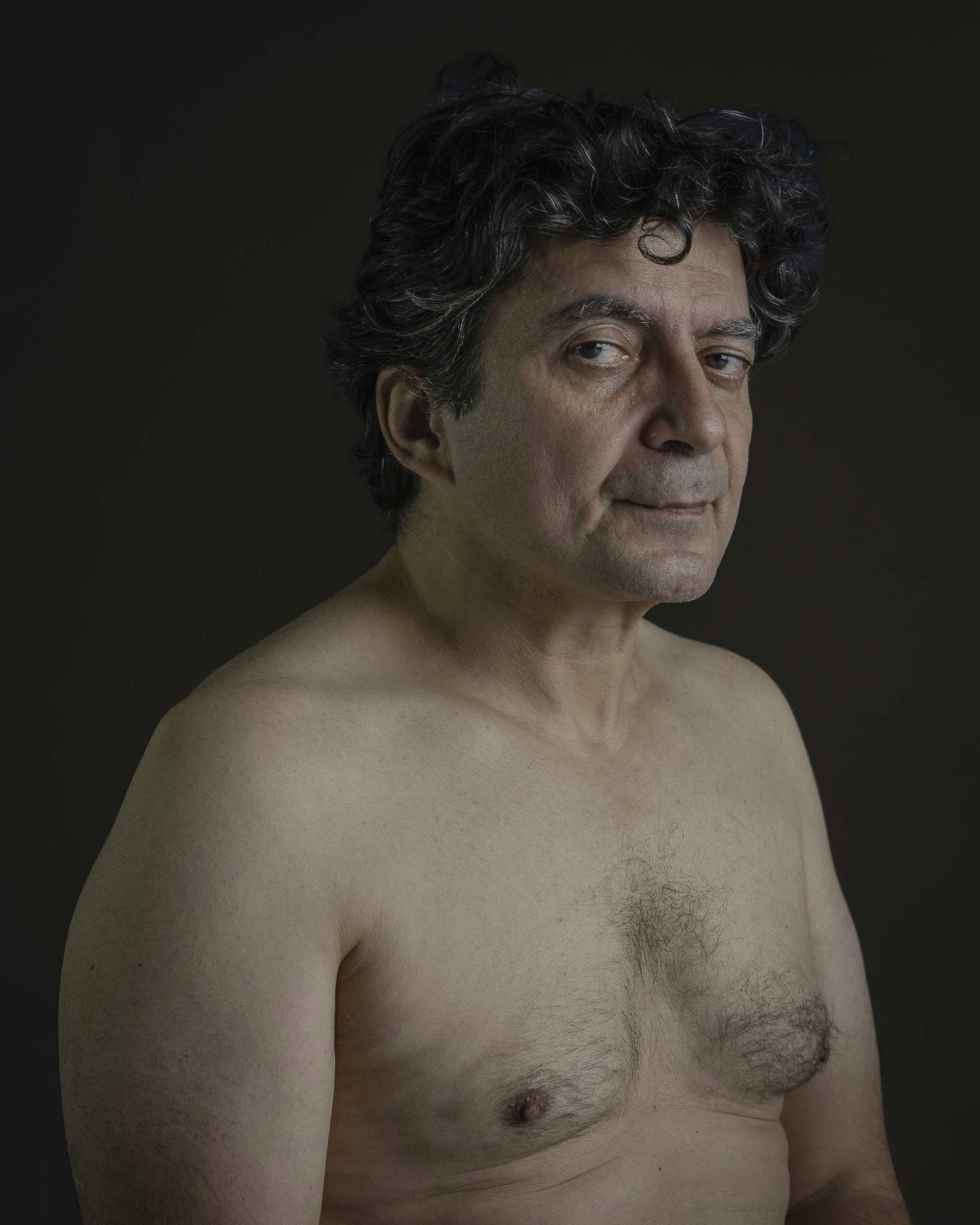
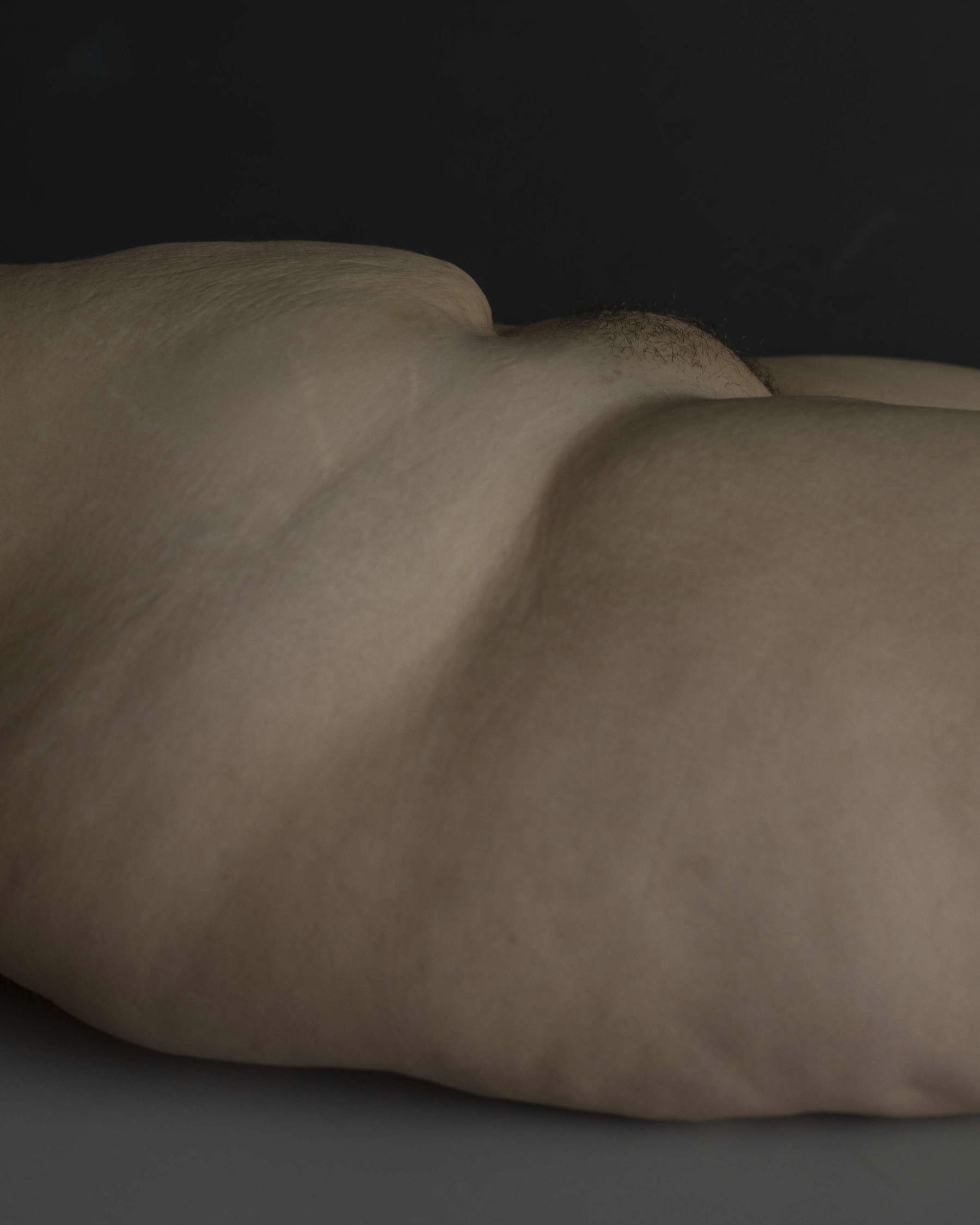
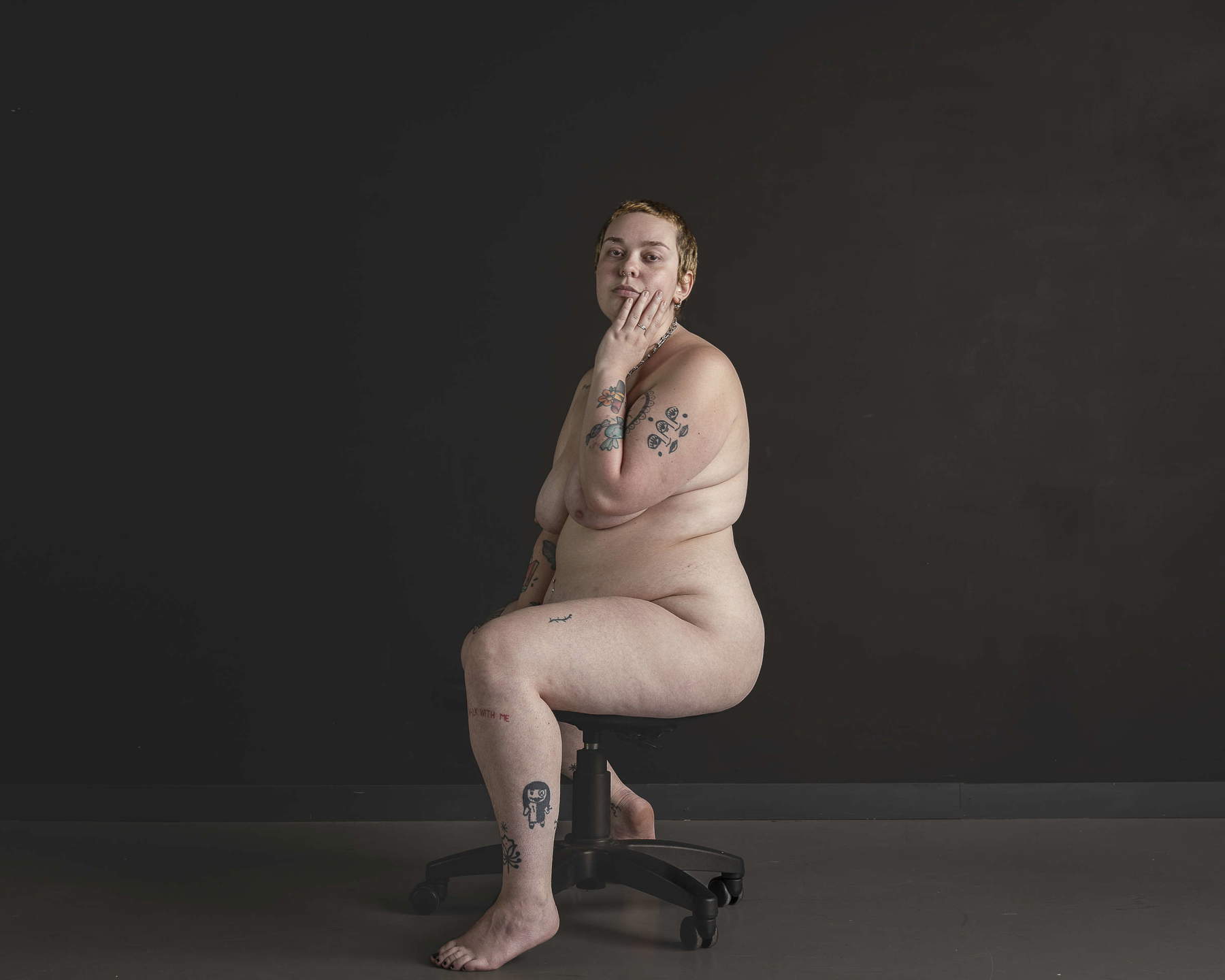
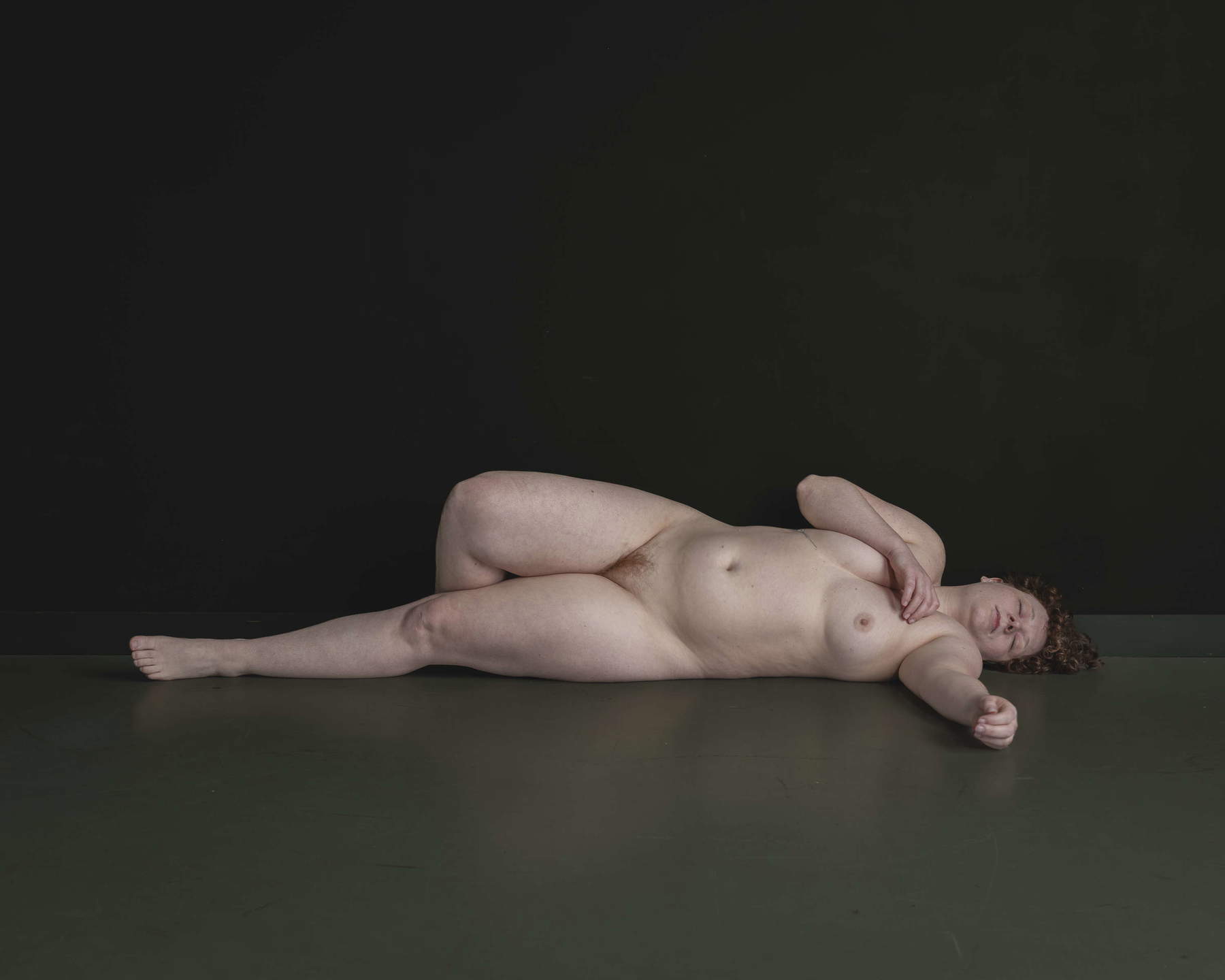
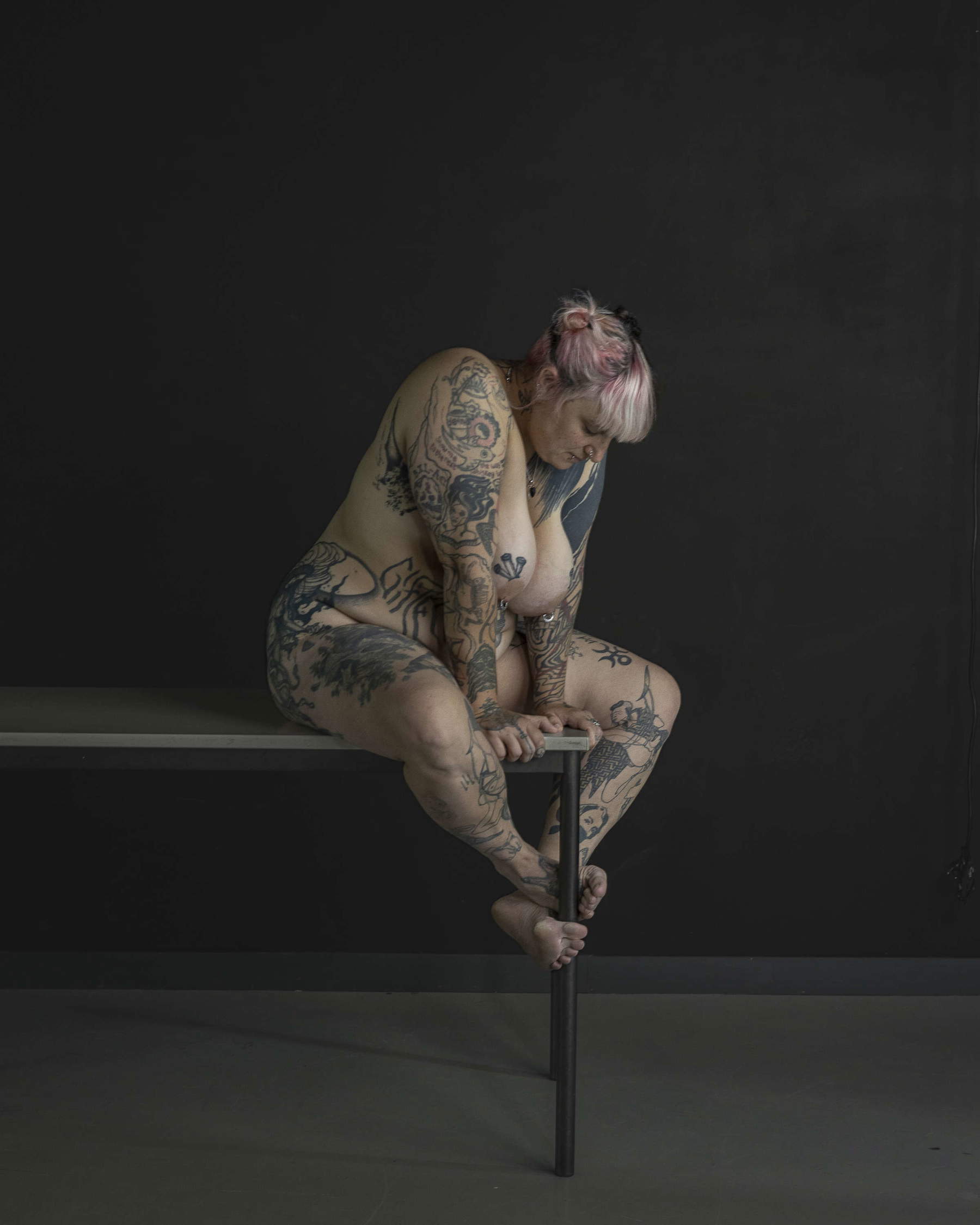
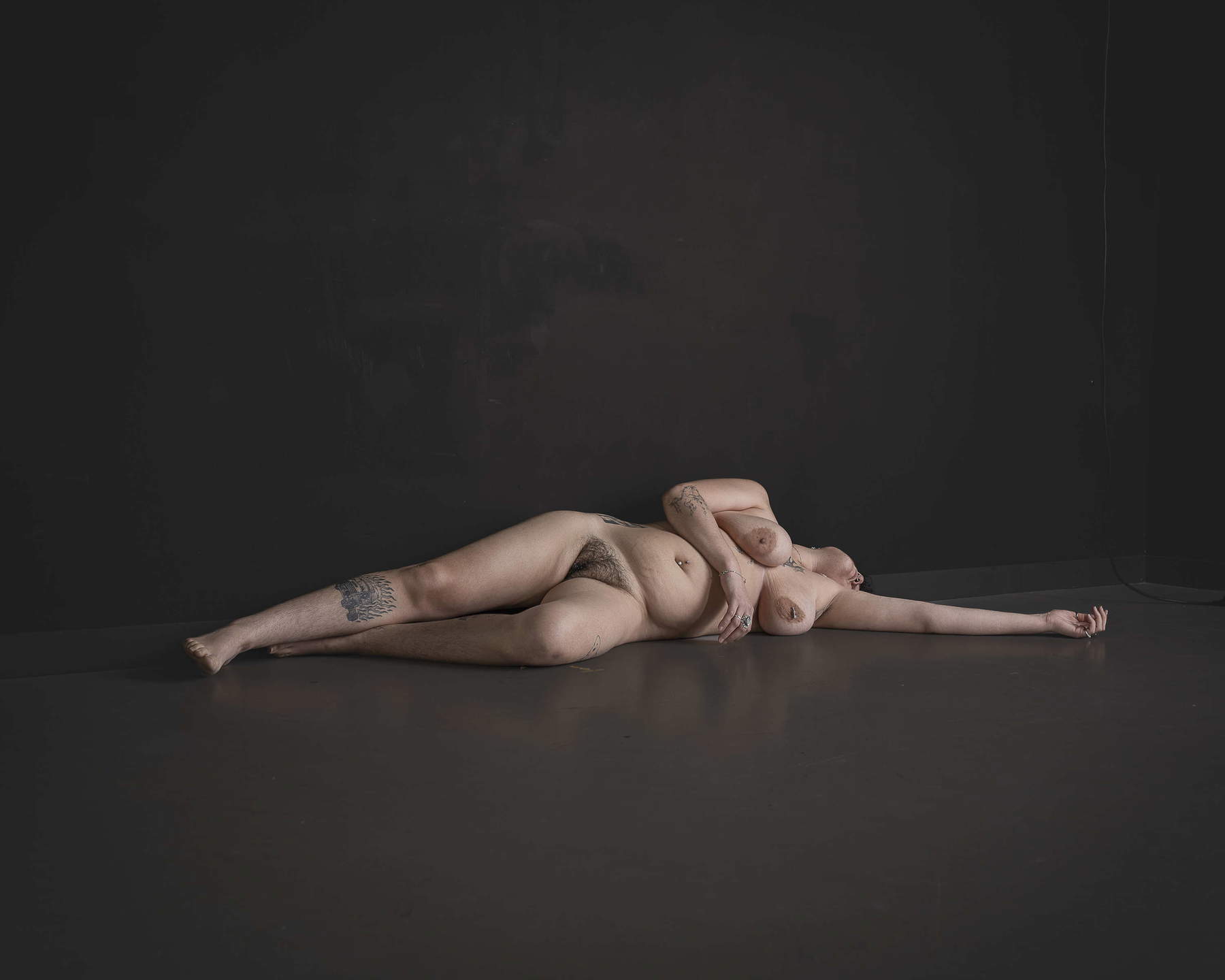
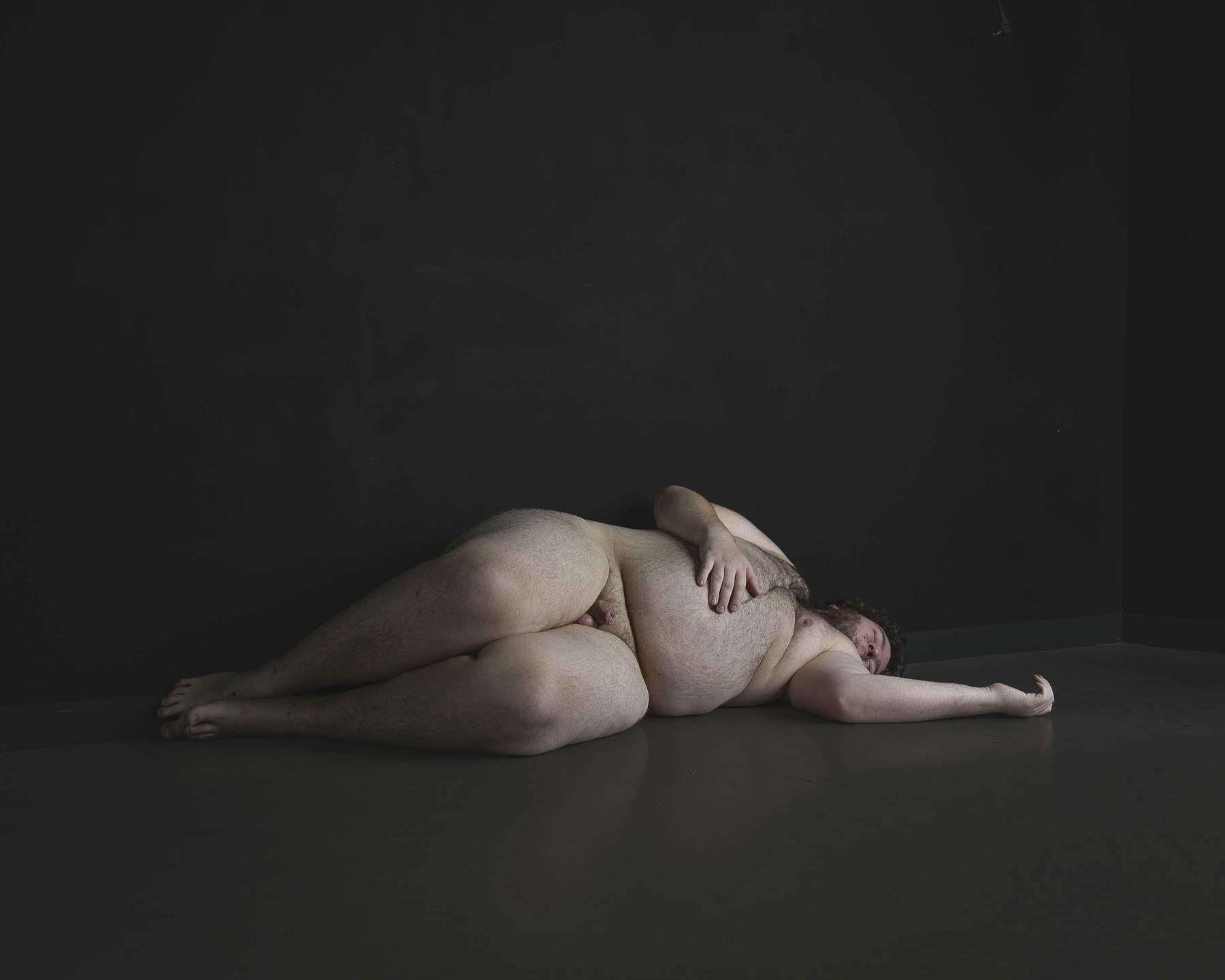
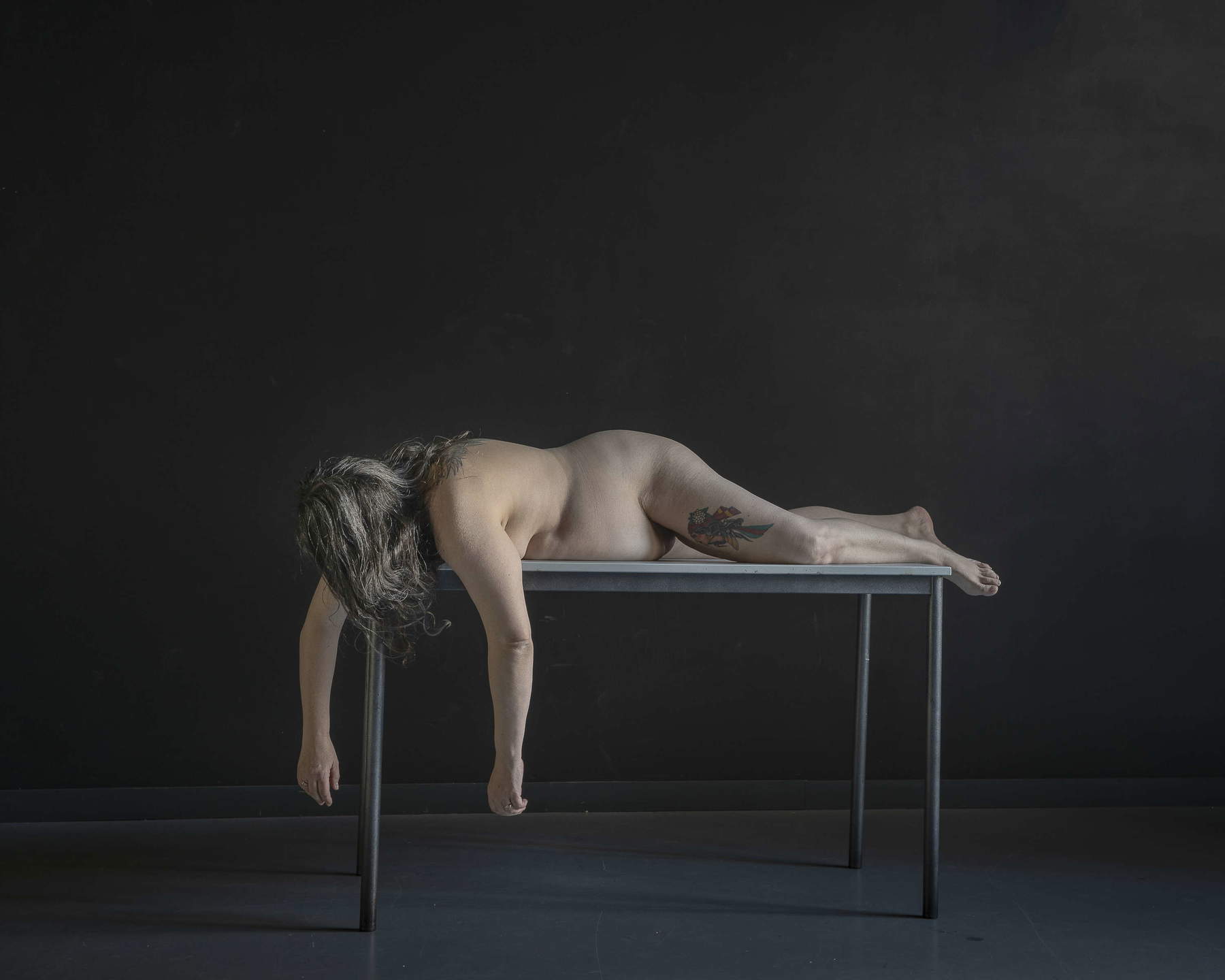
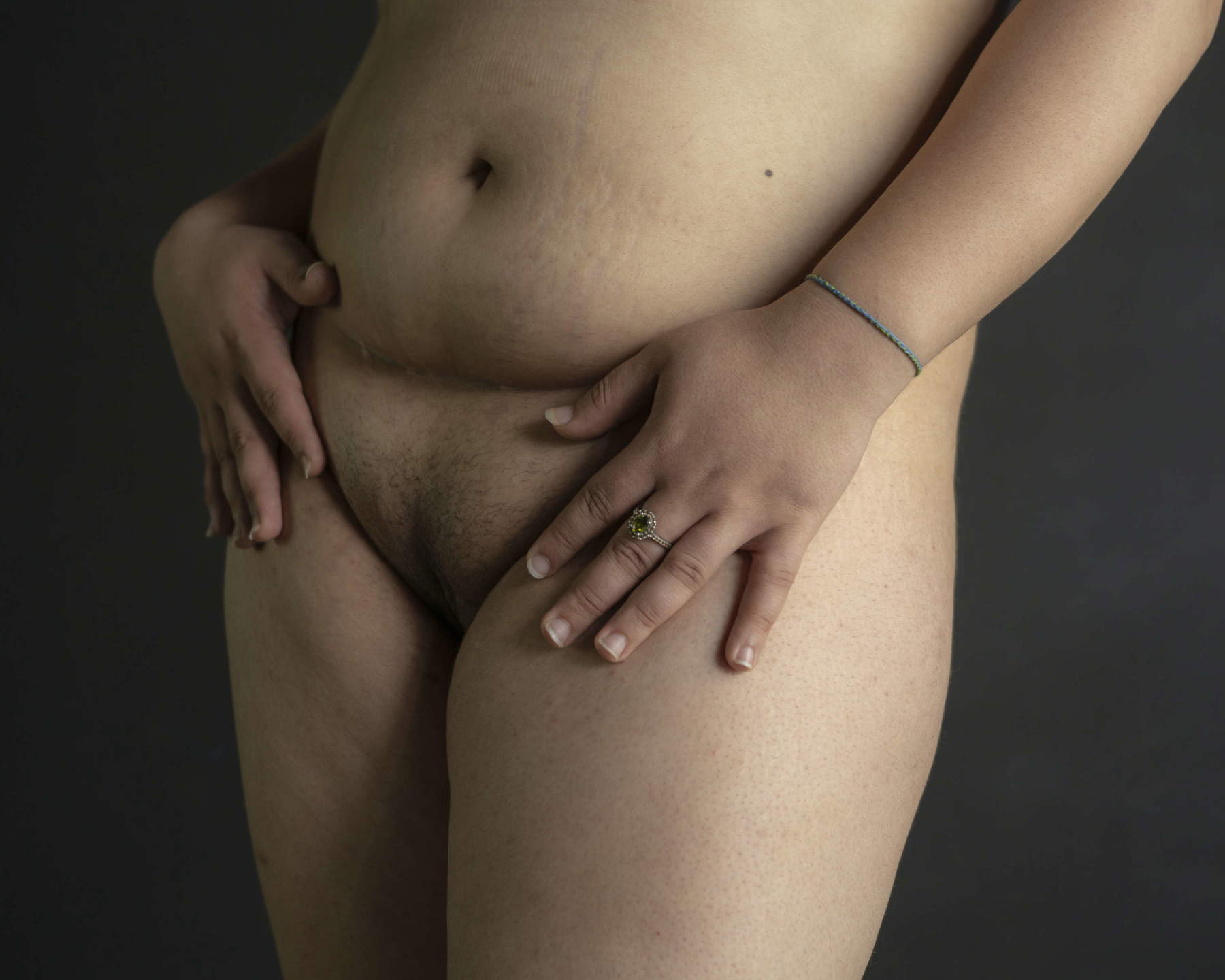
The body today is one of the most guarded and debated territories of our time. Measured, judged, corrected, exhibited or hidden, the contemporary body is traversed by aesthetic, political and social tensions that determine its value and visibility. This is the setting for the work of Belgian photographer Laurent Poma (Schaerbeek, 1971), author of a research project, Corps modernes, which questions the dominant codes of nude representation. His “modern bodies” do not belong to the polished and normative imagery that visual culture has accustomed us to consume. They are real, vulnerable, sometimes scarred, never idealized bodies. Bodies that exist outside the most reassuring aesthetic conventions and that, precisely because of this, question our gaze and our perceptual habits. Launched in 2022, Poma’s project grew out of a personal reflection on the relationship between identity, nudity and representation, gradually transforming into a collective inquiry into the political presence of the body. Through a collaborative process with models, photography becomes a space for dialogue and negotiation, where the poser is not a passive object of the image but an active subject of his or her own narrative. Far from both aestheticization and gratuitous provocation, Poma constructs essential, direct, deeply human images. In this choral interview, conducted by Gabriele Landi, Carola Alemandi, Azzurra Immediato and Luca Lupi, Laurent Poma reflects on the political meaning of the body, the relationship between photography and truth, the idea of beauty and the need to subtract the nude from any erotic or normative automatism. An open dialogue that crosses aesthetics, ethics and representation, restoring to photography the possibility of being, first and foremost, a place of encounter.
Gabriele Landi. How does this project get started?
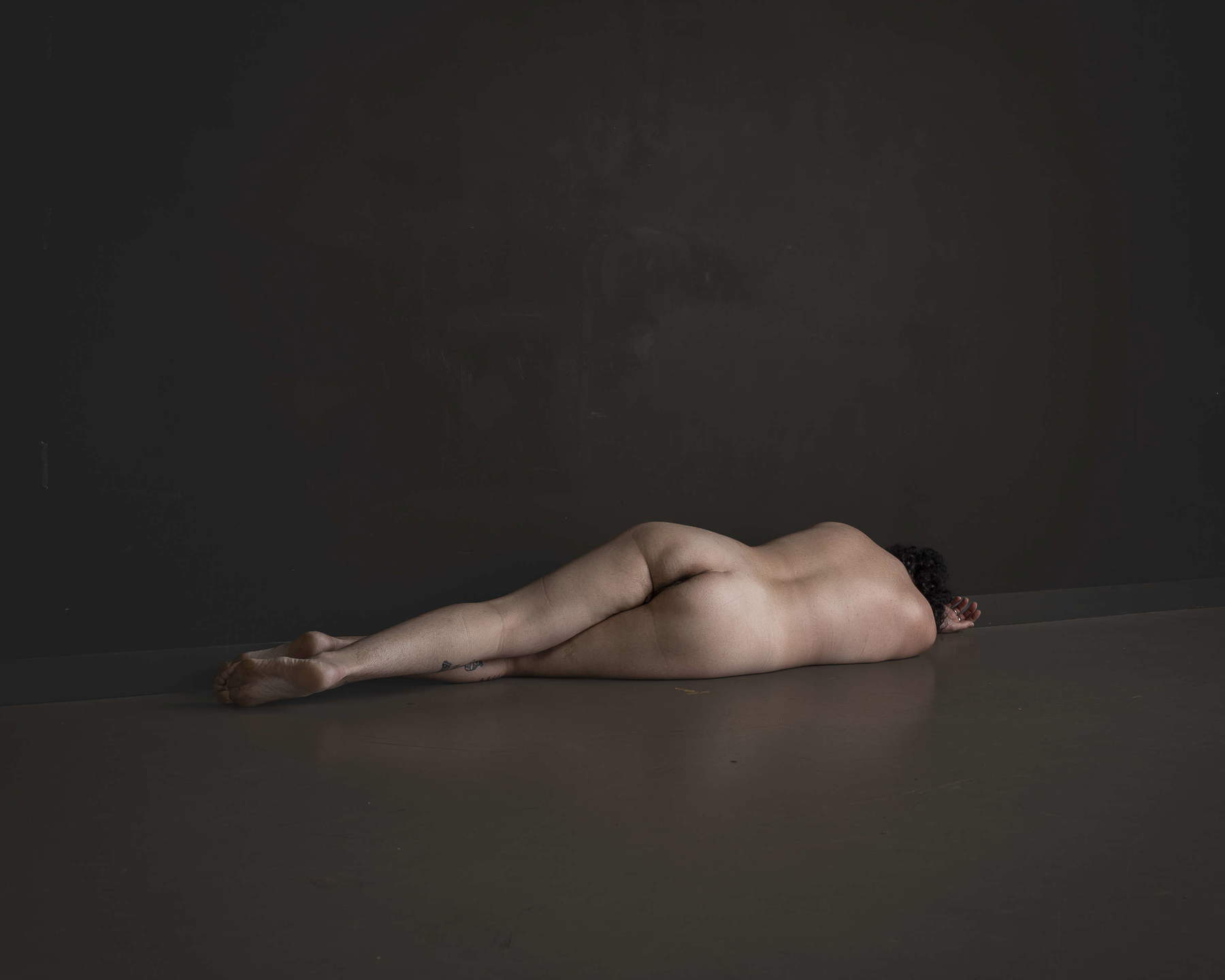
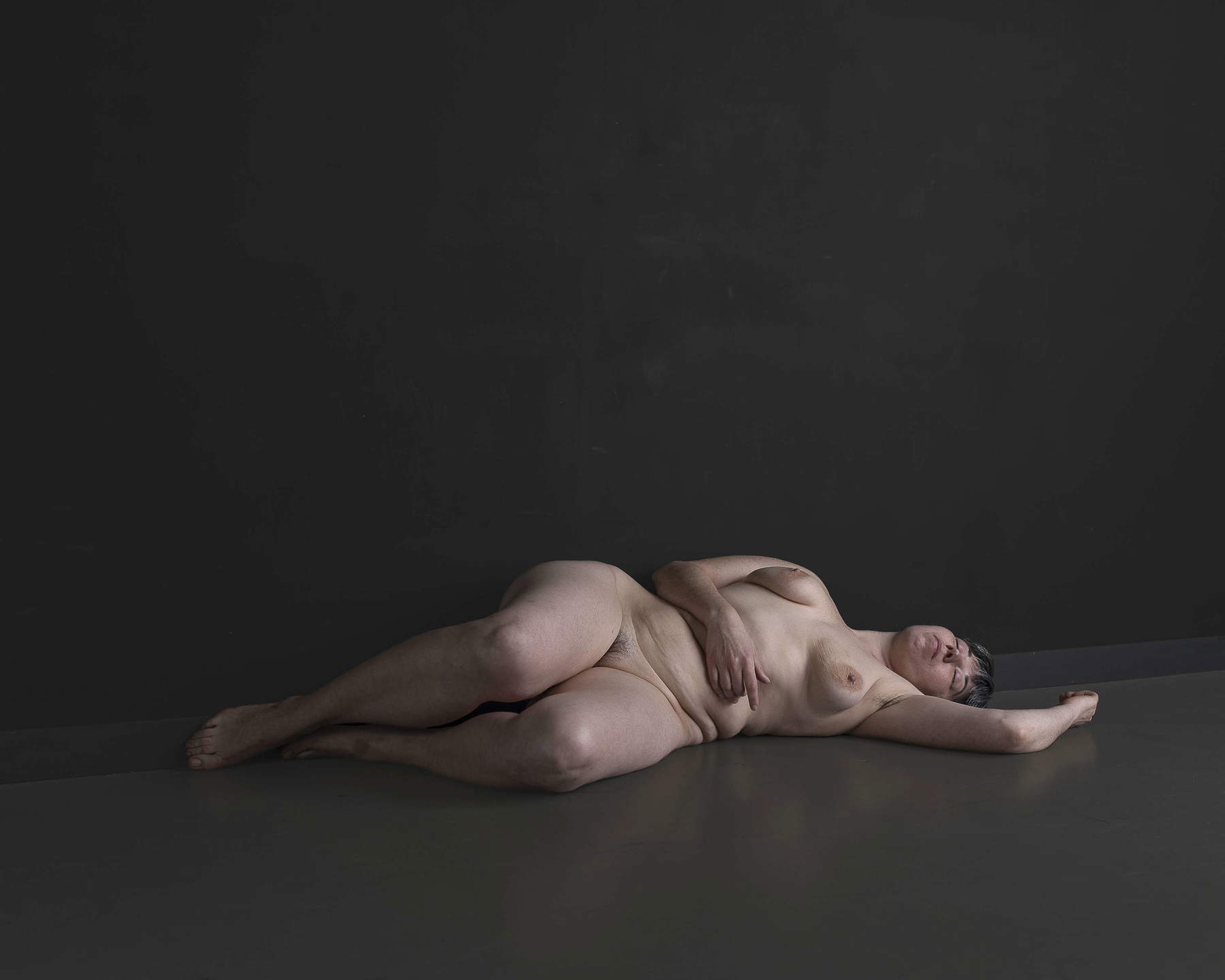
Laurent Poma. The project started with a photo shoot of a young burned woman who wanted me to show her the state of her body. Then I photographed a young transgender woman whom I wanted to represent in a free interpretation of the Birth of Venus. But the project really started in May 2022. My partner was talking to me about my relationship with my body and my ability to look at it and show it. Yet, nudity is not my field at all. I have always been very afraid of falling into a kind of trivial eroticism.
GL. So this is a project that started slowly. What did your partner tell you that convinced you to move forward on this path?
LP. Actually, I think it took me a long time to convince myself. Alexia, my partner, told me about the sensitivity that shone through these photos, the way I look at bodies. She noticed the care I take in avoiding any form of eroticization of the body. It helped me a lot to question the role of the model in this process, in other words, to shift the role of the model from that of object to that of subject. He also understood that I was not trying to “normalize” the people who came to me.
GL. How does the relationship with models work?
LP. I almost never ask anyone to pose for me. I wait for people to contact me. The desire to pose is in itself a sign of interest on the part of the model. Practically every shoot is preceded by an interview during which I prepare the camera and answer all questions. After the shoot, we look at the photos together and make an initial selection. The goal is for the model to feel as comfortable with the chosen photos as I do.
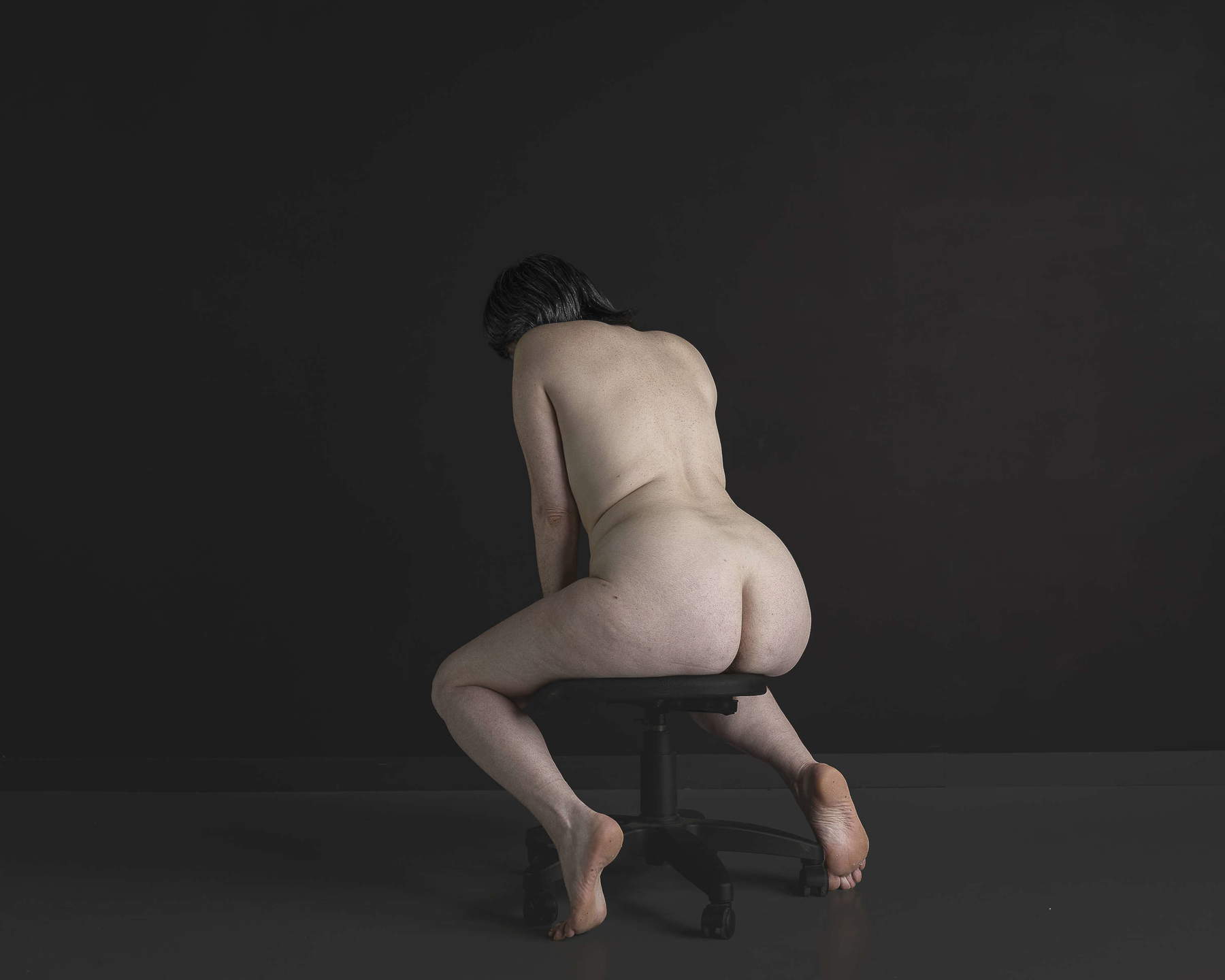
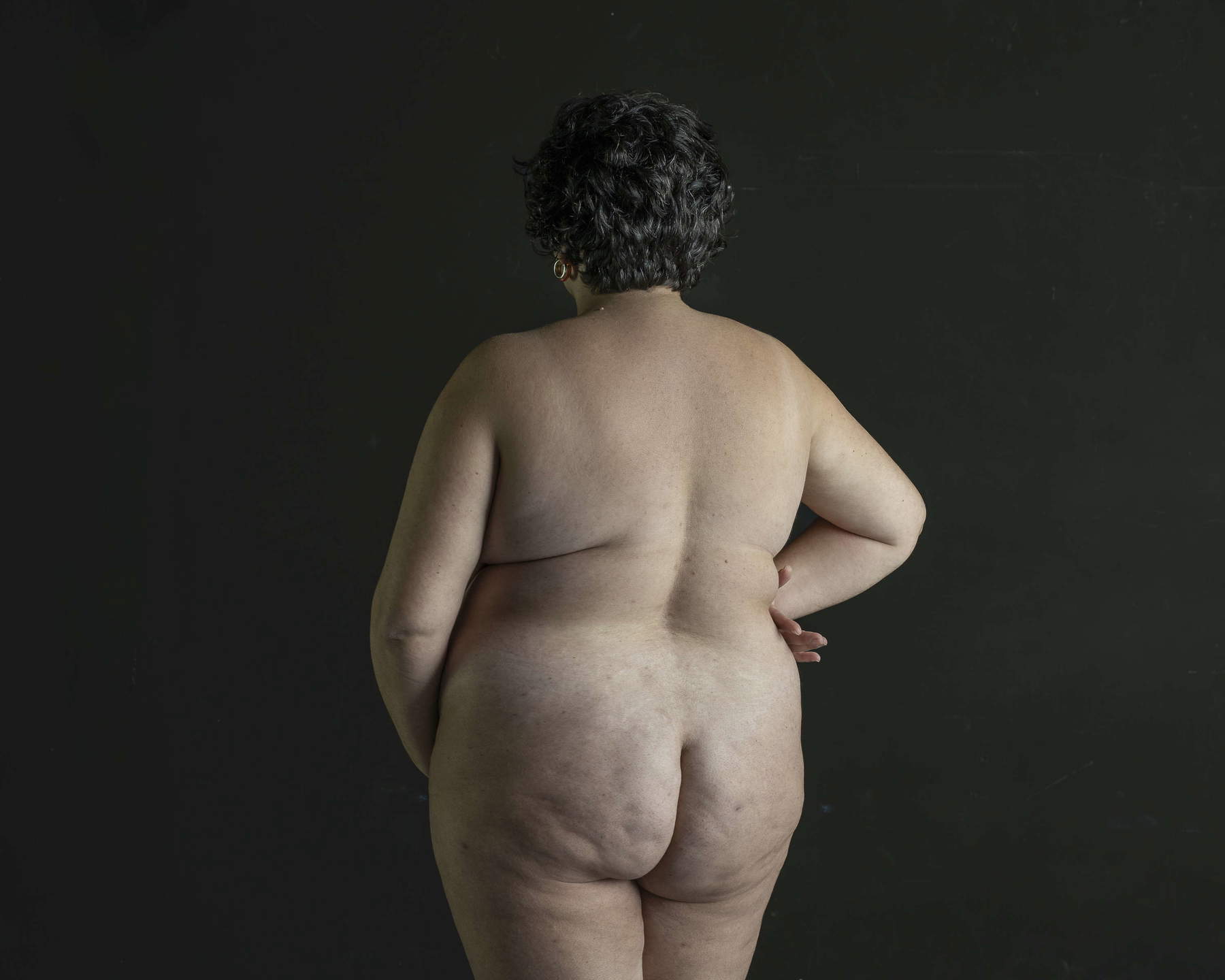
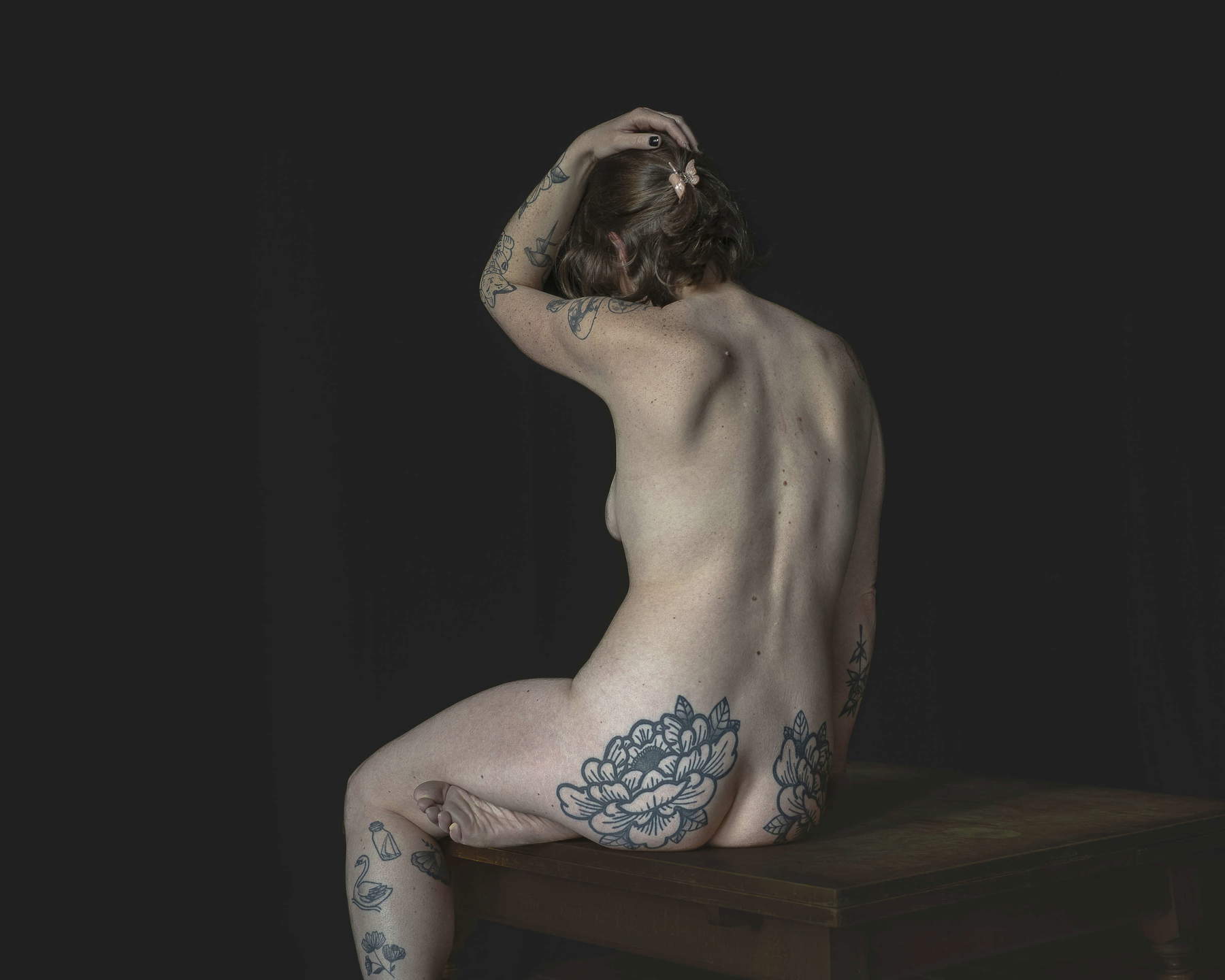
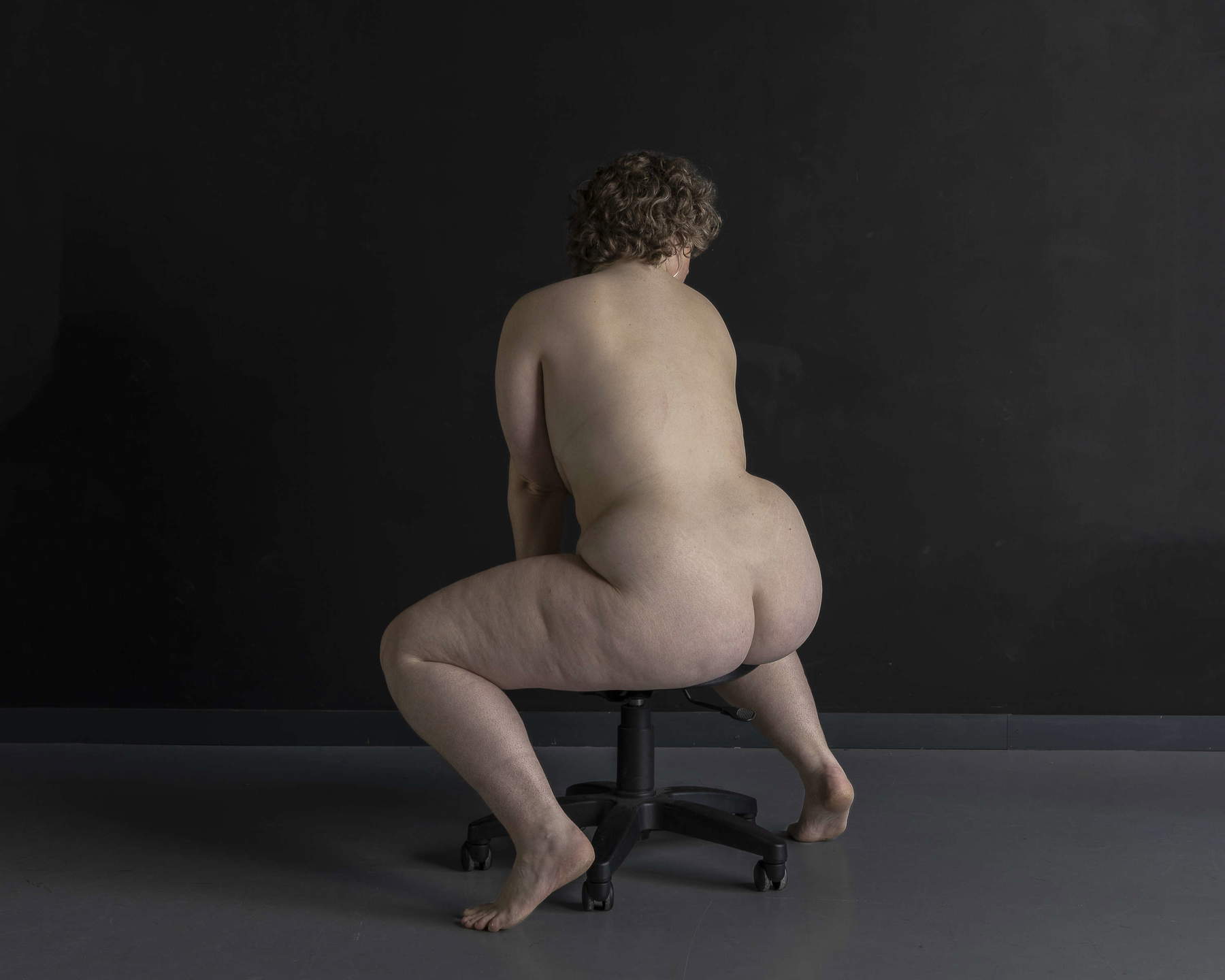
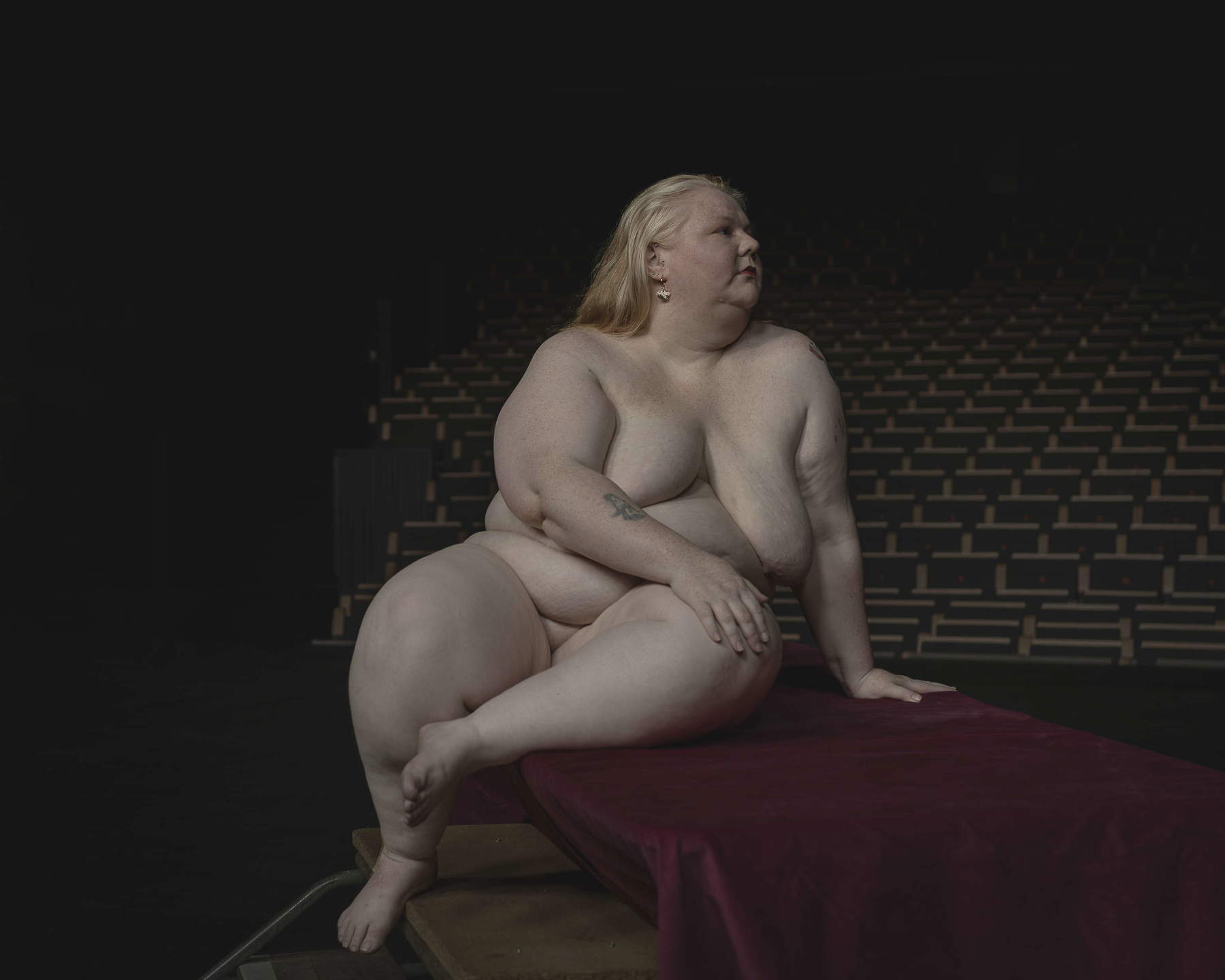
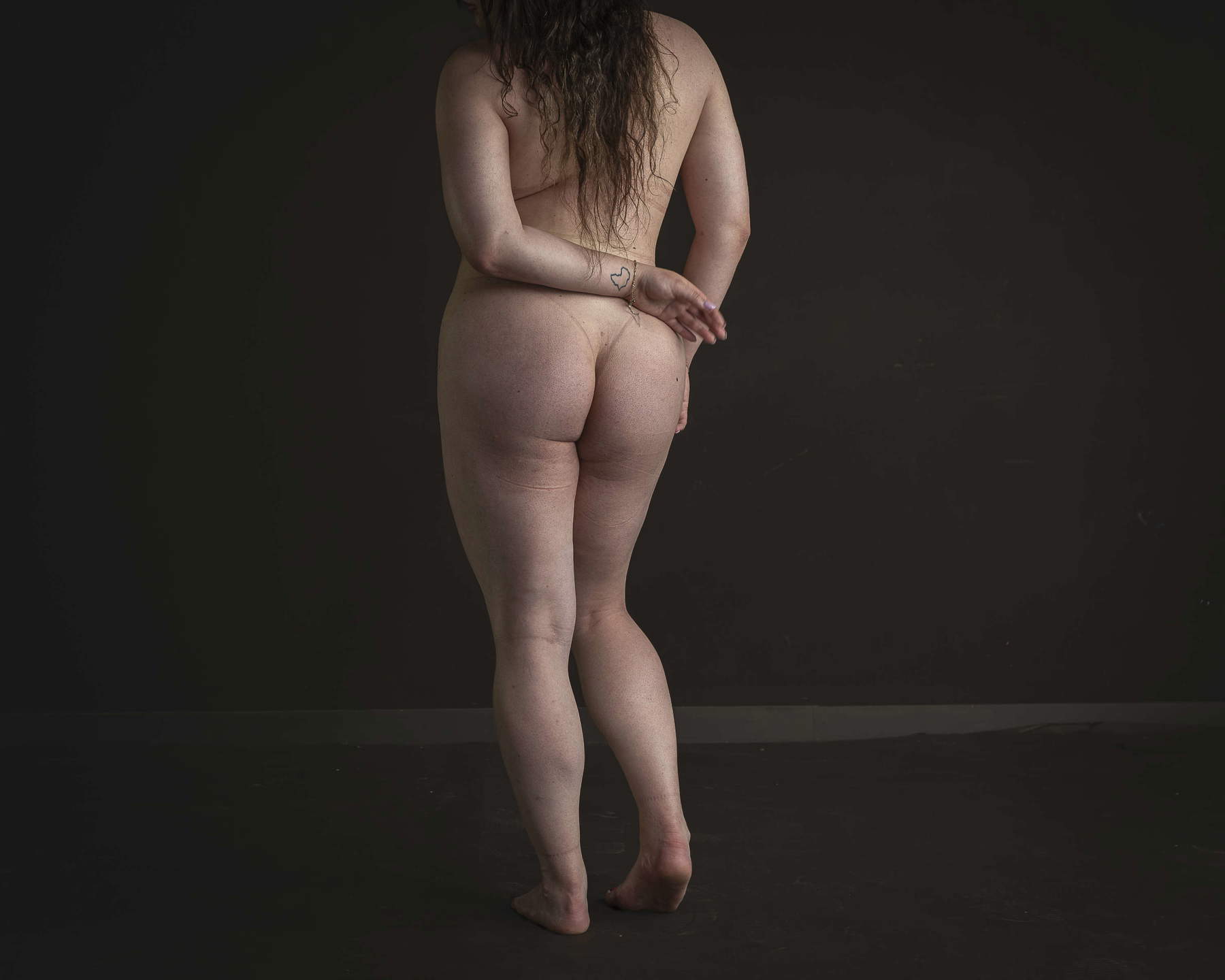
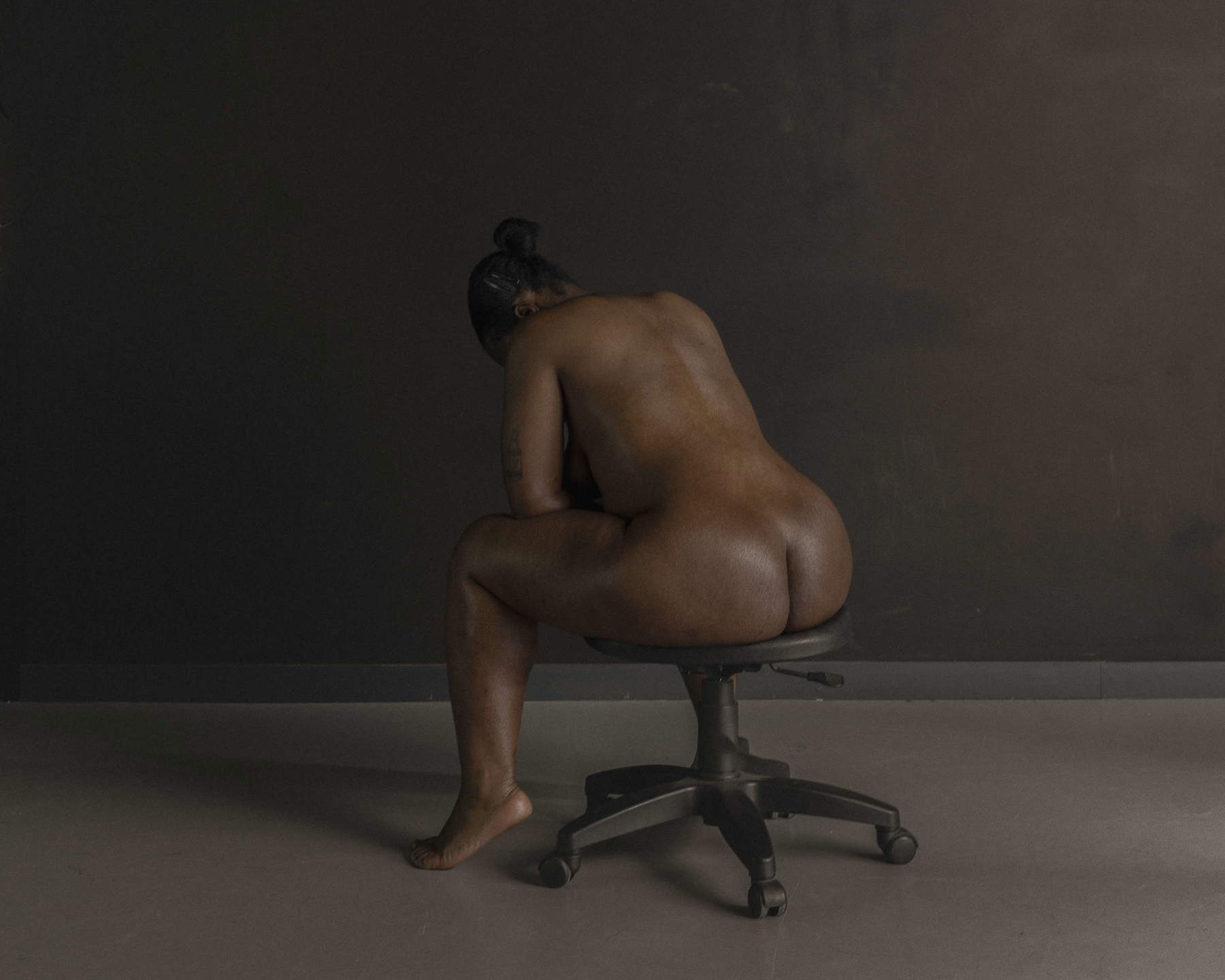
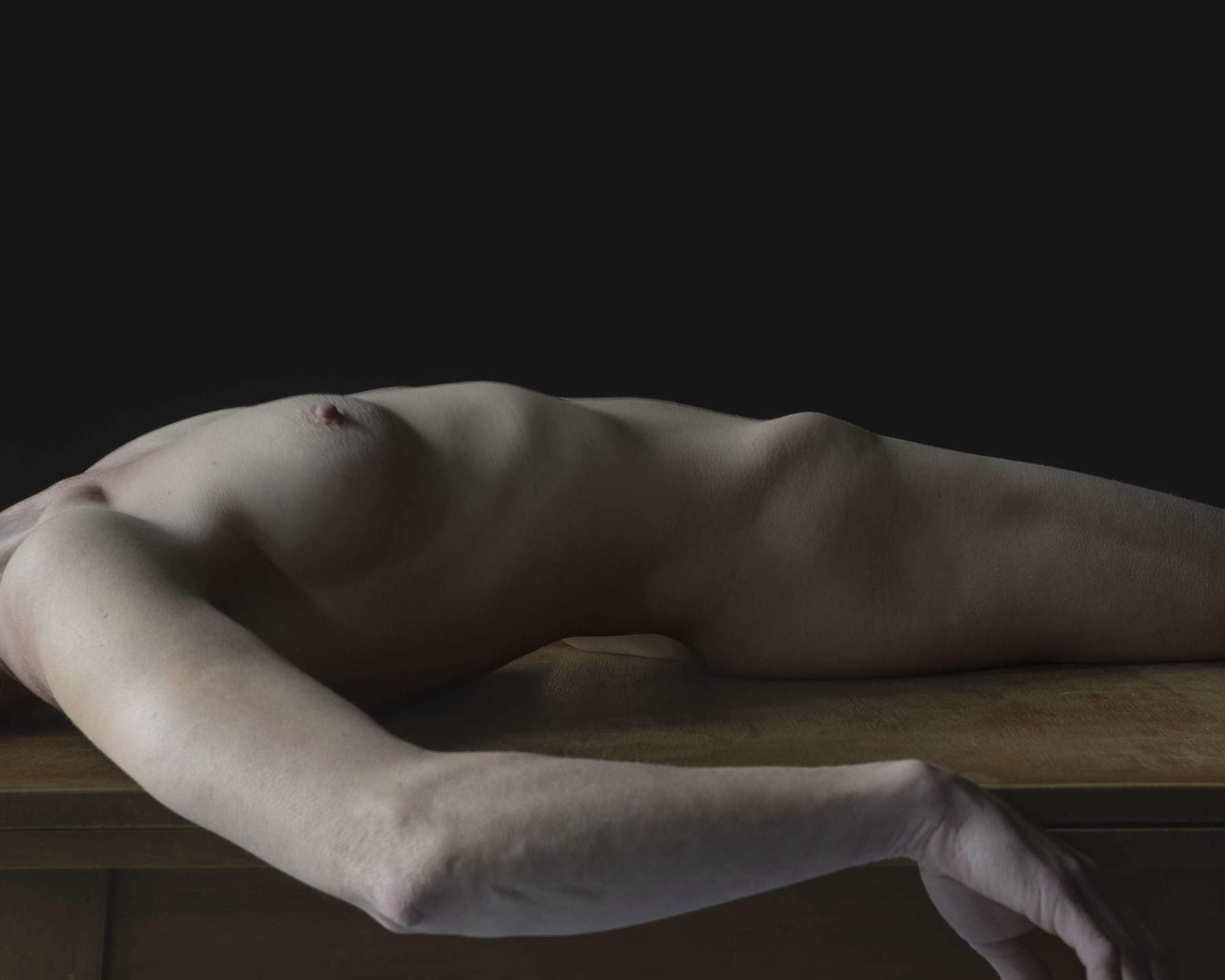
Carola Alemandi. Your works immediately called to mind the nudes of Irving Penn. Unlike Penn, however, there does not seem to me to be such a markedly expressive or aestheticizing intention in your images: you seem to have wanted to make a more basic yet radical gesture, showing the bodies of your subjects in a more immediate way. Do you agree with this reading? Another difference with Penn seems to me to be the use of light: in your work the shadows are definitely toned down, the light tends to be homogeneous, almost enveloping.
LP. I agree with your interpretation about my wanting to make a fundamental, radical and immediate gesture. For me, this work is more social than aesthetic in scope, as I photograph bodies that are often absent from dominant representations. I like the idea that, in a way and especially in a very modest way, it contributes to the deconstruction of the homogeneity of aesthetic standards related to the body.
CA. Your subjects, then, almost always show the face. They are not bodies understood as abstract forms, separated from the world, without identity (here I think of Bill Brandt, for example): they are recognizable presences, with a history. What role does the face play for you in this work?
LP. Yes, in fact I have a hard time without faces in my pictures. They play a central role for me. A role of grounding in reality, of affirming a presence, a singularity. And then it’s a reversal of the gaze, a form of empowerment for the model. The people I photograph are not a malleable raw material for me that I can dispose of without worrying too much about their being. Although sometimes I hide the face out of necessity of anonymity.
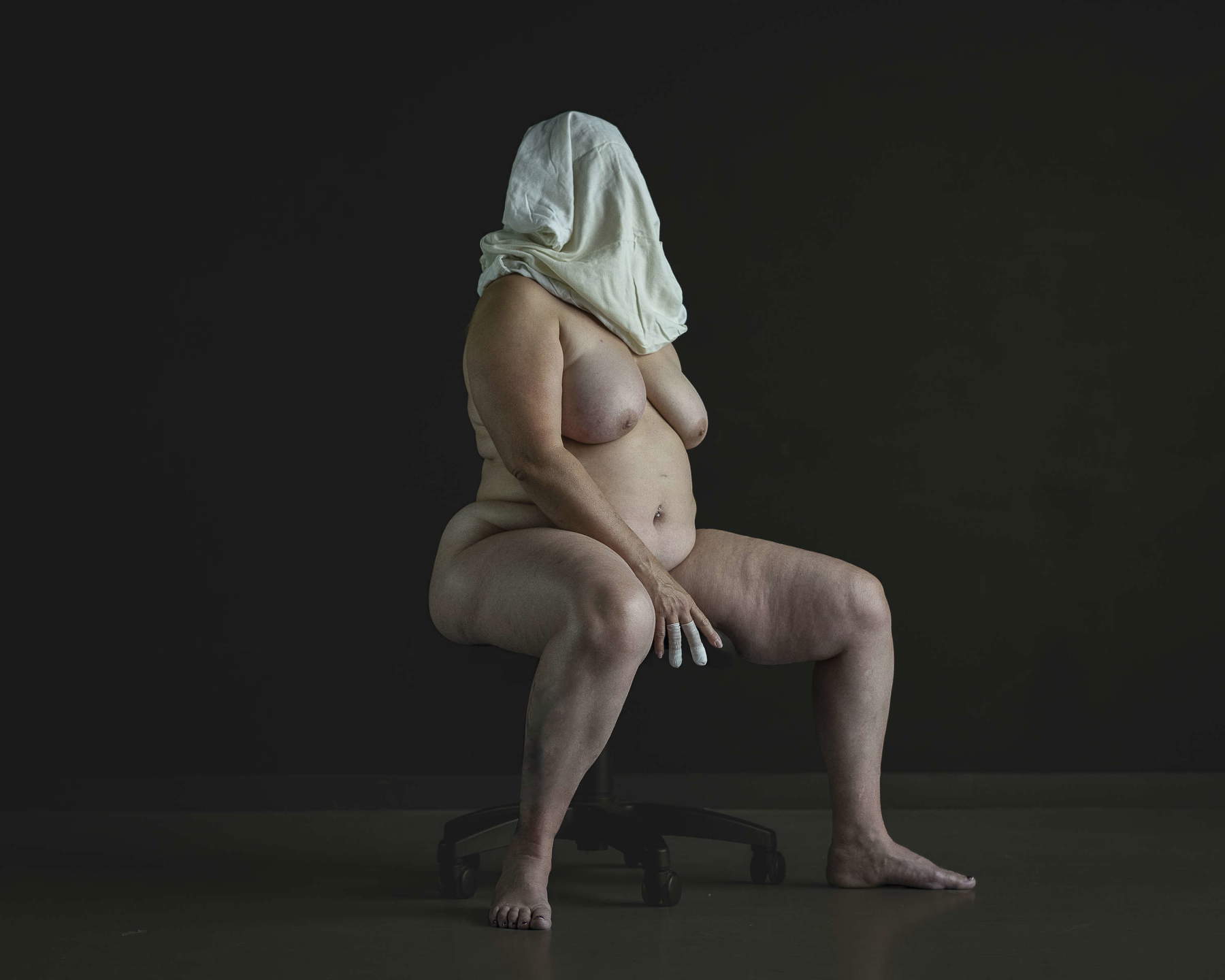
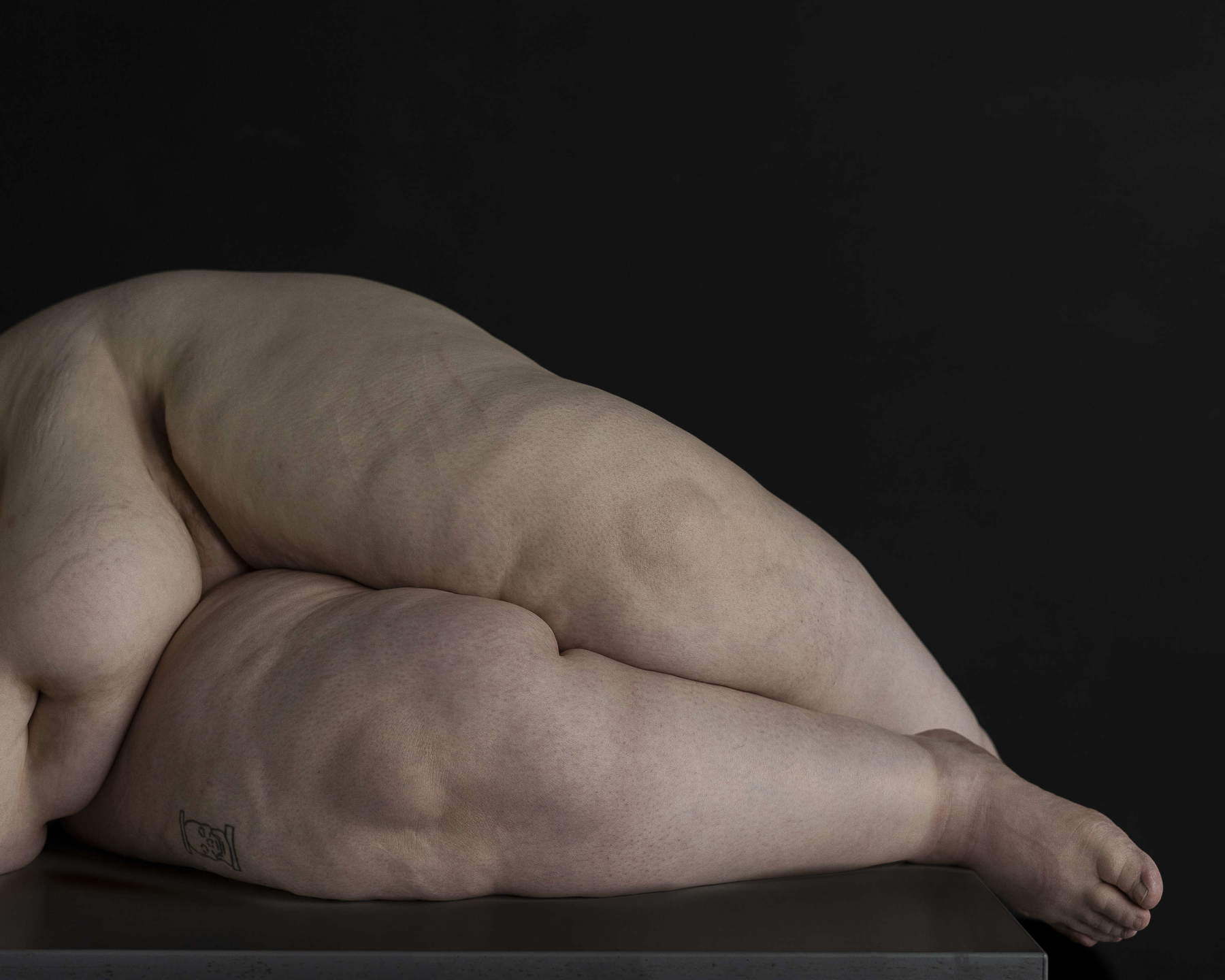
Azure Immediate. What is the dialogue between the Body and Truth within reality and the photographic dimension for the artist-photographer?
LP. I believe that to photograph is to lie. However, if reality does not exist and truth is a perception of reality to which one adheres, perhaps a form of truth resides in the photographic act. In my practice, the dialogue between the body and truth is central to my reflection on the very nature of photographic representation. I do not seek to capture an objective truth of reality, but rather to explore the subjective and relational dimension of the image through a collaborative approach. For me, photography is first and foremost a space of encounter, a place where my gaze meets that of the subject, where the body ceases to be a mere object to be immortalized and becomes an agent of meaning. The truth that emerges is thus not that of documentary fidelity, but that of a shared experience: a sensitive truth, born of the dialogue I have with the person photographed.
AI. What questions arise during the design phase between Laurent Poma and his models?
LP. Questions about the validity of one’s body, how others see us, acceptance and insecurities. Also questions about the process and one’s role within it.
AI. How is the triangulation between the Body, its Representation and the Message conveyed within the Modern Bodies project articulated? What are the artist-photographer’s deepest desires through such a project? How does it generally address an audience that will identify with it, an audience that will be shocked by its frankness, an audience that is reluctant to look at the photographs, and an audience that will feel free to observe them?
LP. First of all, I am not sure that there is a “message” in the strict sense, that is, content that is clearly formulated and intended to be conveyed. Rather, what motivates me is a matter of intention: it is intention that guides how I relate to the body, the model and their image. As for audience perception, it is not up to me, and that is perfectly fine. I welcome all reactions: identification, shock, even disgust. I rarely empathize with the reception of what some call the “message.” As I have already mentioned, I do not consider my work a communication tool or teaching aid. The very notion of message interests me little: it reduces photography to a mere communicative function, which I find deeply reductive. On the contrary, I like that everyone can freely develop his or her own interpretation. Although I attach great importance to the dialogue that photography establishes with the models, both in the creative process and in the reception of the images by the people portrayed, the reactions of the public amuse me without, however, really influencing me. And, frankly, I prefer to confront those who do not appreciate my work and express it openly: this opens the door to debate, even confrontation, which is ultimately much more stimulating.
Luca Lupi. What is beauty?
LP. It’s something I never think about when I create. Beauty-what a source of anxiety! What a cliché, and no doubt, what a bore! I completely agree with the social science explanation: beauty is a classification system based on value judgments, driven by majority tastes, leading to a process of validation and legitimation. This is all based on social constructs. In short, I don’t care. In fact, I wonder if beauty really falls within the realm of art.

The author of this article: Gabriele Landi
Gabriele Landi (Schaerbeek, Belgio, 1971), è un artista che lavora da tempo su una raffinata ricerca che indaga le forme dell'astrazione geometrica, sempre però con richiami alla realtà che lo circonda. Si occupa inoltre di didattica dell'arte moderna e contemporanea. Ha creato un format, Parola d'Artista, attraverso il quale approfondisce, con interviste e focus, il lavoro di suoi colleghi artisti e di critici. Diplomato all'Accademia di Belle Arti di Milano, vive e lavora in provincia di La Spezia.Warning: the translation into English of the original Italian article was created using automatic tools. We undertake to review all articles, but we do not guarantee the total absence of inaccuracies in the translation due to the program. You can find the original by clicking on the ITA button. If you find any mistake,please contact us.






















 IT
IT FR
FR DE
DE ES
ES CN
CN


