





Arriving at Eur is already, and without the aid of technology, an augmented reality experience in itself. A scenography, rather than a neighborhood, out of scale, monumental, rationalist designed in the 1930s to host and celebrate, as had happened in Paris with the Eiffel Tower in 1889 and the Grand Palais in 1900, the Universal Exposition of Rome (as the acronym Eur stands for) then never fulfilled in 1942. Major urban planning works interrupted during World War II then continued into the 1950s and 1960s, giving birth to a neighborhood that is, fascist connotations removed, the dream of a modern Rome still for us today. One cannot help but be enraptured by Eur’s proportions and architecture and not dream of it becoming the new center of Roman cultural life, currently scattered or “diffuse” as many like to tell it. But who are the actors at the center of Eur’s cultural revitalization today?
Ideally, the Eur cultural hub unites: the Palace of Civilization, better known as the Square Colosseum because it echoes the design of the ancient Flavian Amphitheater, in an intent of historical continuity as the Grande Arche of La Défense, Paris’s business district, reprises by re-editing theArc de Triomphe of the Champs Elysées; the MUCIV (Museum of Civilizations), a museum pole that merges together 6 institutes and collections (Pigorini, Loria, Vaccaro, Tucci, Alpi and ISPRA), which aspires to become an Italian version between the Quai Branly in Paris and the Metropolitan in New York; the Palazzo dei Congressi, a masterpiece by Adalberto Libera that hosts the publishing fair “Più libri più liberi” (More books more freedom); Piacentini’s Artificial Pond, a landscape monument with gardens and waterfalls that completes the artistic picture of the district; and finally Fuksas’ Nuvola, at the origin of the dismemberment of Eur’s historical heritage between 2013 and 2015 to restore its colossal debt, which has meanwhile become home among other things to the “Roma Arte in Nuvola” fair conceived in 2019 by Alessandro Nicosia and curated by Adriana Polveroni.
Since Fendi’s occupation of the Colosseo Quadrato, the key Eur monument has become a setting for private fashion shows and corporate exhibitions of the now-French fashion house, despite the cultural constraint and the obligation to make it accessible to the public imposed by the Superintendence. Who knows if for the scheduled renewal in 2028 the contract will be renegotiated. The last major artistic-cultural exhibition welcomed by Fendi inside the Square Coliseum was Arnaldo Pomodoro’s exhibition, “The Theater of Civilization” in 2023 organized by the nearby MUCIV. With this exhibition, we somewhat tasted the atmosphere of a cohesion among the historic buildings of the Eur thanks to the initiative of the now no longer director of the MUCIV, Andrea Viliani. With the occasion, Viliani tested his exhibition manifesto, which consists of a confusion of genres between archaeology, anthropology and art, between artifacts, artifacts and works, finishing at least narratively to break down the frontiers that remain in the postmodern era.
What else is at stake at MUCIV that currently focuses strategic Mic investments? Scientific revision, decolonization, renovation, accessibility, and digitization are all challenges that this unique museum requires. This is explained to us by a long-winded Andrea Viliani, who evaded the most sensitive questions and vetoed some topics such as the budget perhaps because, despite having completed his term, he still rightly connected with MUCIV behind the scenes. Shortly after the interview we reencounter Viliani at the presentation of the Macro museum’s new programming where he accompanied photographer Marialba Russo trait d’union between the Macro and MUCIV and who will soon be the protagonist of a cross-exhibition between the two museums. Macro director Cristiana Perrella collaborated on the “Fairy Tales are True” exhibition still running at MUCIV and which Viliani particularly cares about. A tangle of connections and disciplines that makes it difficult for those directly involved to juggle MUCIV’s protocols.
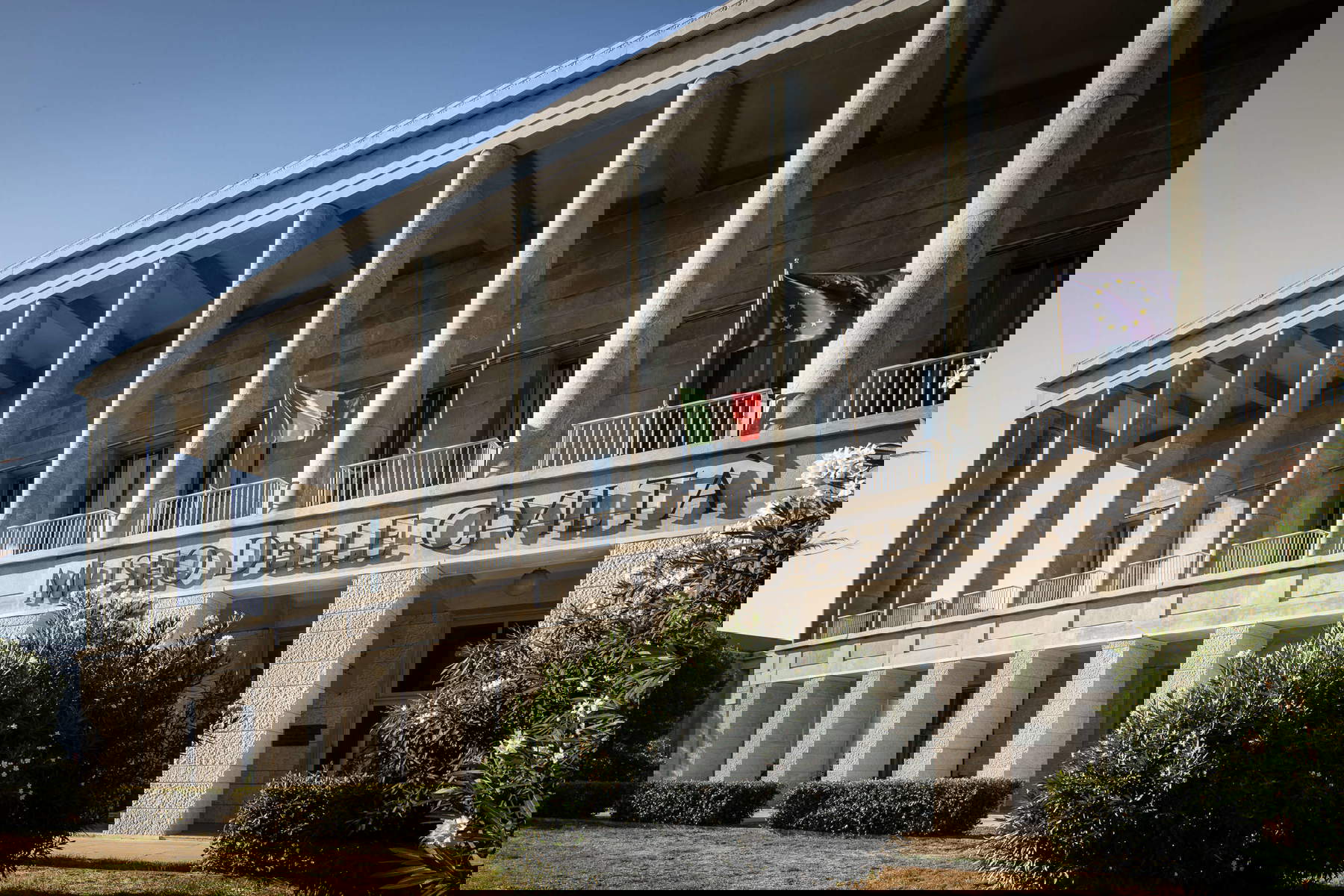
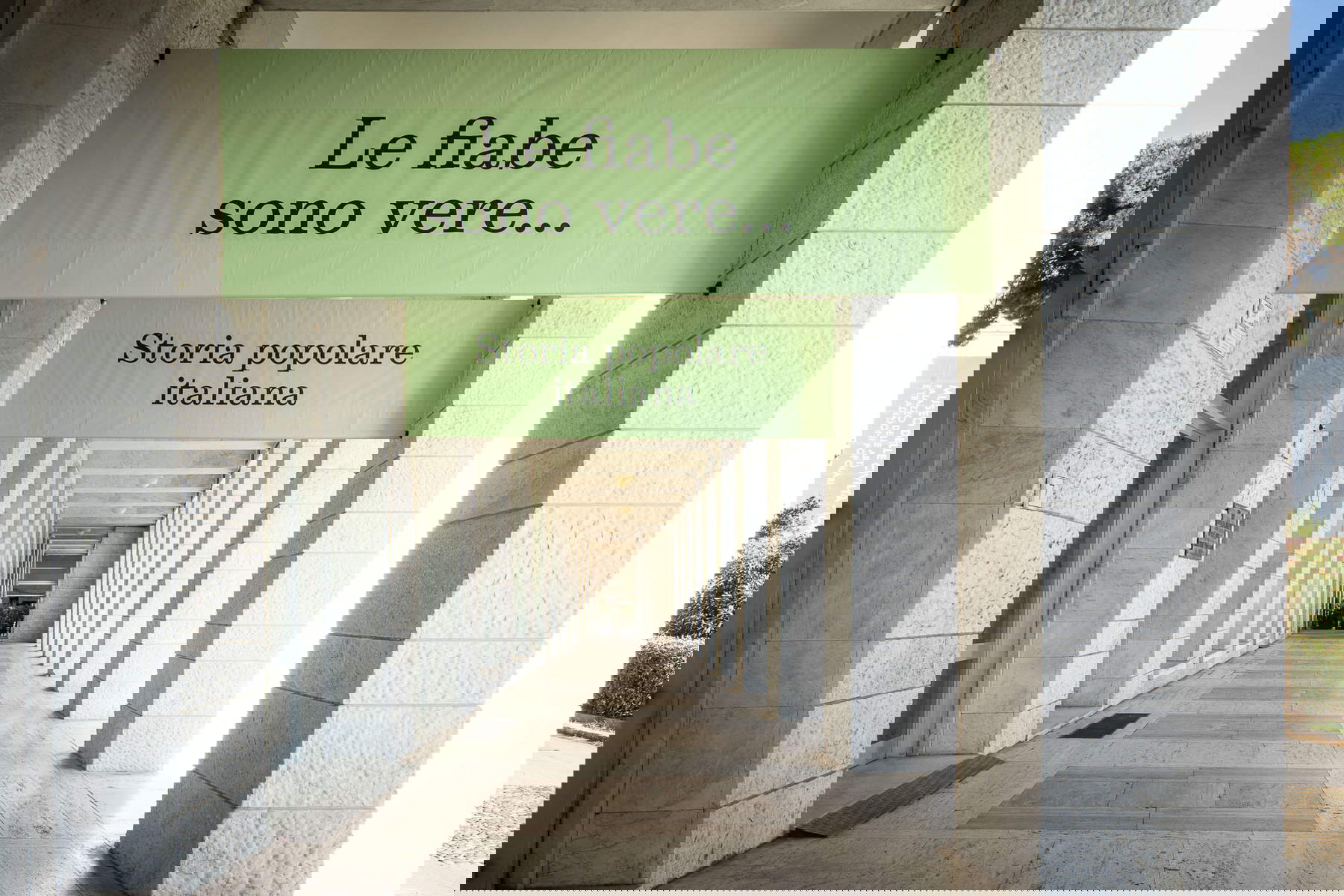
REF. Major construction work is underway at the MUCIV Science Palace, the first of which will be completed by the end of the year under the leadership of the new deputy director, Luana Toniolo. Meanwhile, at the Palazzo delle Arti e delle Tradizioni Popolari (Palace of Popular Arts and Traditions), the layout of the exhibition celebrating the 150th anniversary of the museum’s founding has been unveiled, while the exhibition Le fiabe sono vere, Storia popolare italiana, curated by Lei together with the general director of Museums, Massimo Osanna, is still underway (until May 24).
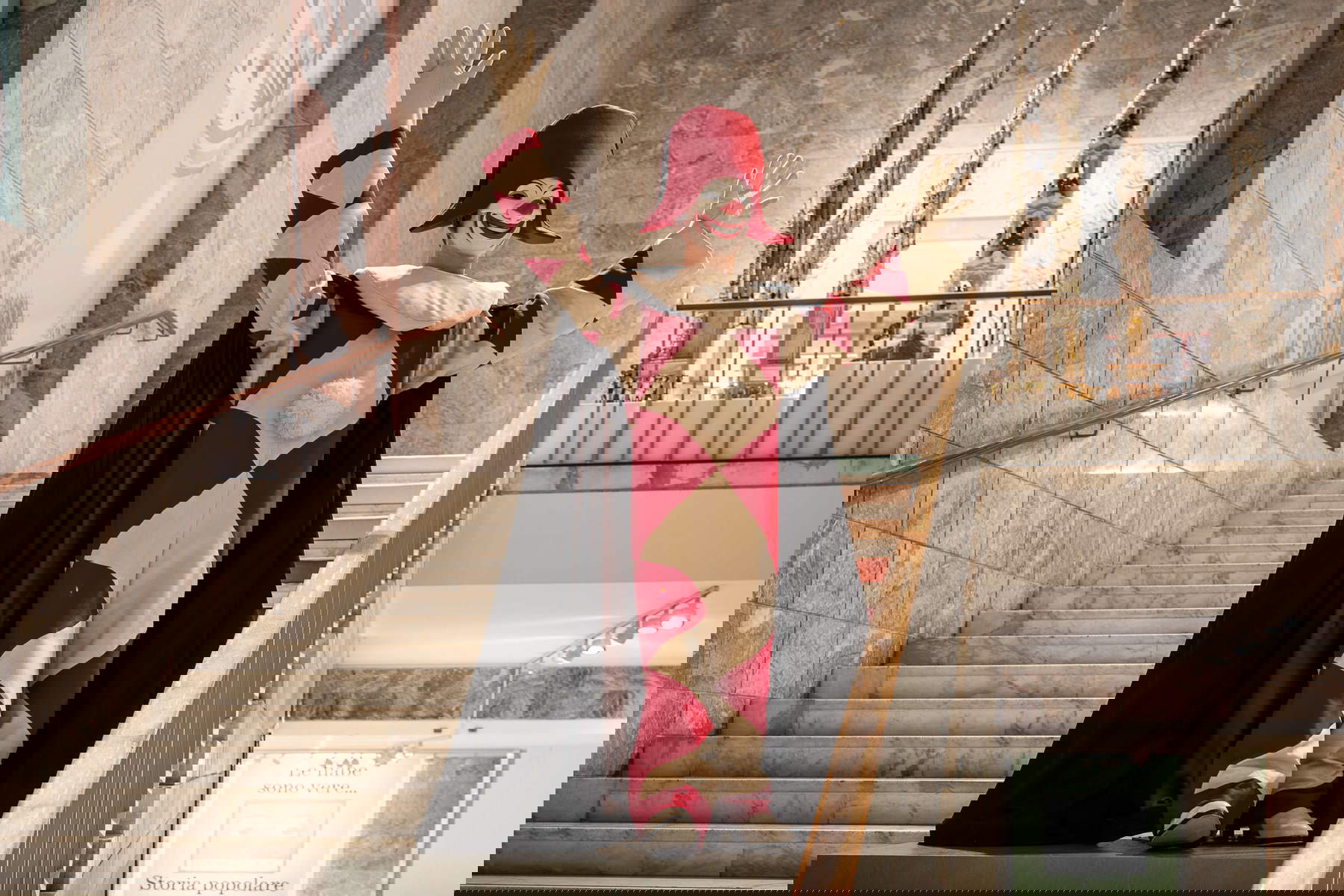
AV. This exhibition, which takes its title from a phrase by Italo Calvino in the introduction to his 1956 Anthology of Italian Fairy Tales, was conceived as a project-manifesto of our Directorate General for Museums to experiment with and share forms of accessibility of cultural heritage that can become systemic and structural, starting with the desire to make heritage a plural experience, involving all types of audiences. In working on the exhibition, we realized that there are no disabled or disinterested people, but at most disabled museums or those not interested in being understood. Proposing an experience that generates empathy and involvement contributes to people’s satisfaction and well-being, which is the most comprehensive form of accessibility, which we focused on and committed to. Thanks to the relevance between the heritage of Italian ethnography and people’s daily lives, this is in fact a collection that speaks of our daily lives.
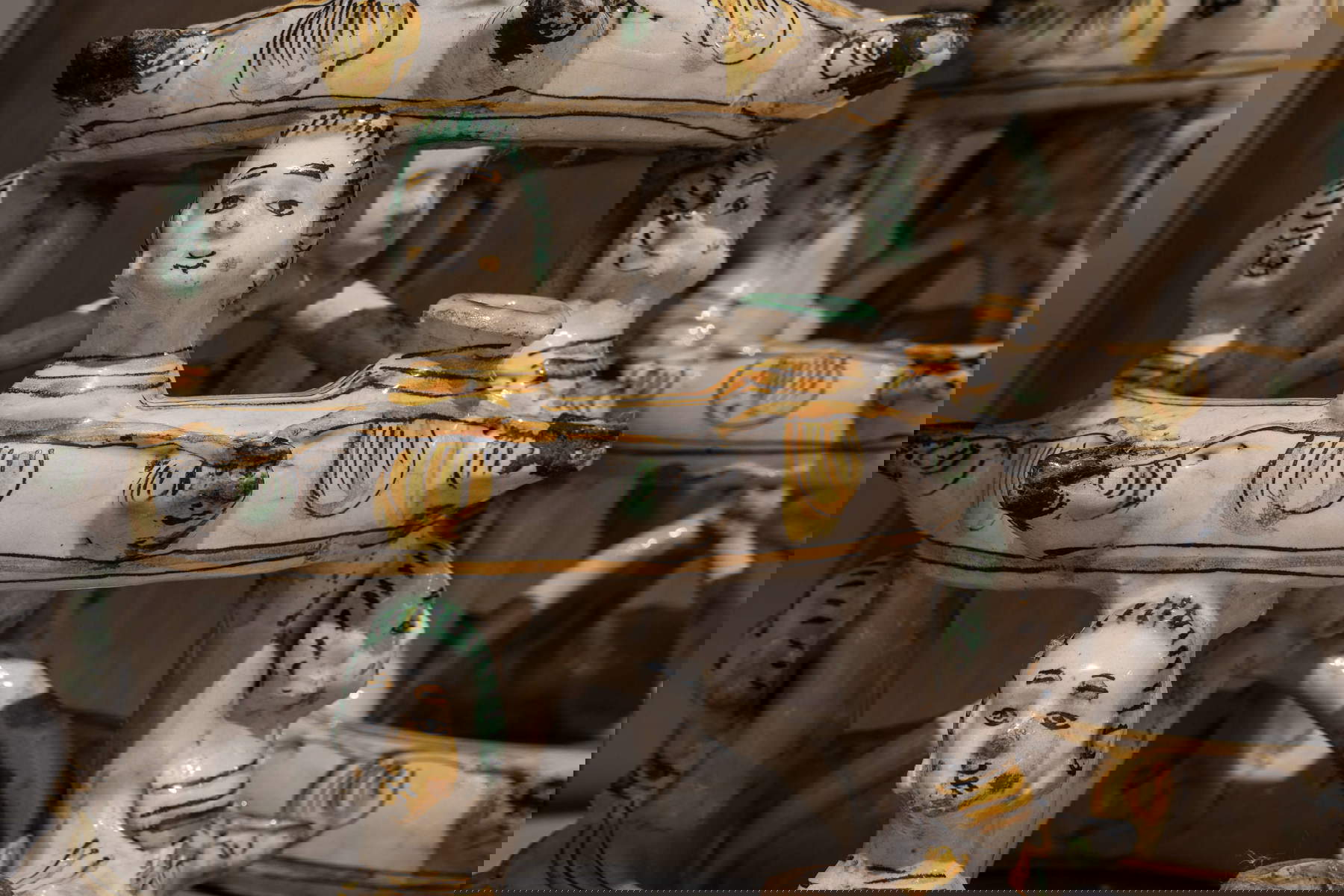
In fact, already from the entrance we are greeted by seats and cushions on the ground that invite us to admire the Lily of Nolafrom the staircase.
In conceiving the project and its layout, we started from the 1911 Exhibition of Italian Ethnography, which celebrated the first fifty years since the Unification of Italy and Italian identity as a set of specific territorial identities that the migratory phenomena (from the countryside to the cities, from the fields to the factories and from Italy to the rest of the world) were undermining. To get to the question of what tradition, folk, identity and community, work and resources, narrative and orality mean today (in the age of globalization and the digital revolution), how to interpret the relationships between people, thinking also of those Italian communities around the world that are the result of this history and that are often still held together by these memories: how a song is sung or a dance is danced, how a dish is cooked or, indeed, how a story is told. All of these objects, by the way, not only reflect the traditions of various communities, but are at the origin of our own present. Knowing, for example, that these clothes would be displayed in Rome to represent their communities, seamstresses and tailors made them even more beautiful. What we call, in short, Made in Italy was born in the manufactures of those villages and towns. Traditions and innovations, ancient knowledge and new know-how are closely connected.
Are these the same manufactures connected to the big contemporary fashion houses, or the same workshops or artisans with whom women artists also collaborated (I think of Maria Lai) to make their works?
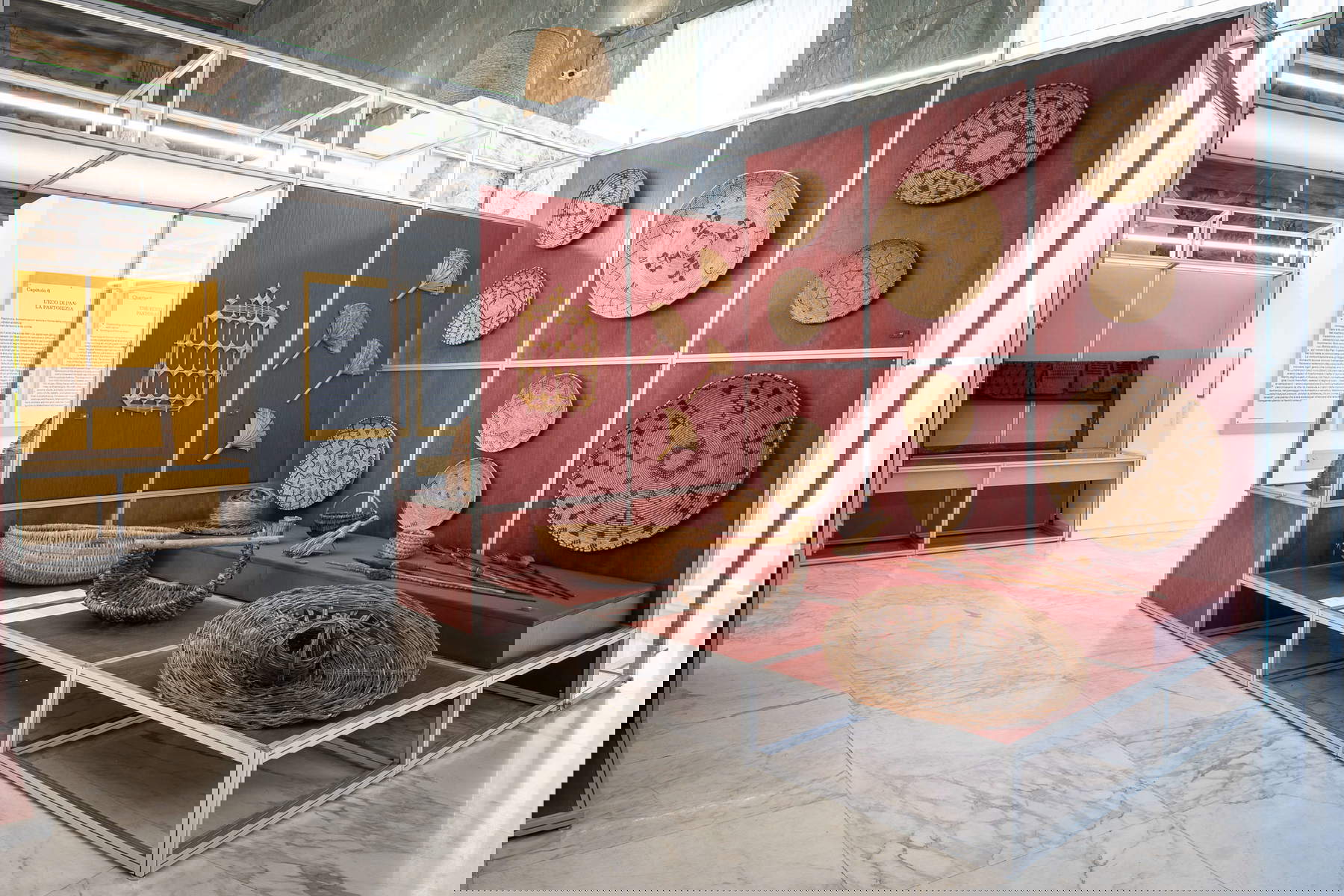
Let’s say that connections are made when these manufactures, workshops or artisans are intercepted by fashion, design, and art. The exhibition design itself was created by Italian designers Formafantasma, one of the most influential design studios internationally, whose design is based on research into the ecological, historical and social dynamics that shape the discipline of design itself, working with both public institutions and private foundations, such as Cartier in Paris and Prada in Milan. This focus onexhibition design is therefore not accidental in the exhibition, but responds to a desire to create solutions of confrontation between communities, disciplines, eras, materials, and techniques, ensuring that the object is not just displayed but returns to connect with the cultural, economic, and political dynamics that generated it and are transforming it. Formafantasma has designed an environmentally dimensioned goose game, with interconnected colorful modules that also include, in addition to accessible media, audio-visual experience, in a true synergy between artifact and document.
How does this multi-platform display promote accessibility? Will these same criteria be applied to the rest of the MUCIV or in other museums?
As demonstrated by the use of the universal accessibility logo, applicable thanks to the active collaboration with stakeholders and associations with whom we have co-designed and are testing the results, this is identified with its own physical, (multi)sensory and cognitive accessibility. Each chapter includes caption apparatus and introductory texts designed for all different abilities: in Italian, in English, in Braille, CAA, LIS, with the possibility of downloadable in-depth insights from Qr-codes and drawers at child height for a fairy-tale path, reserved not only for the child audience. The purpose of this exhibition is to define a method that can become physiological for all exhibits, of this and other museums. Also thanks to PNRR funds, museums have begun to conceive exhibitions and displays oriented from the design phase to accessibility: as a norm, a rule and no longer as a concession or exception. And in this sense I would like to give my personal congratulations to my colleague Luana Toniolo, who has taken over as MUCIV’s managing director, for the extraordinary work she is doing on museum accessibility at the National Etruscan Museum of Villa Giulia, of which she is director.
So the exhibition The Fairy Tales are True is an expert-proof, “certified” accessible exhibition?
Yes. But we have also gone beyond what the protocols and public indications to date still provide. In this sense, with the associations and the exhibition’s accessibility consultant, Miriam Mandosi, we agreed that the CAA cards should be removable so that the audience using CAA [Augmentative Alternative Communication] language does not have to stand in front of the text but can do so wherever and however they want, perhaps by taking them to the quiet area of the exhibition. Each person has their own rhythms and ways; there is no one pace or one way to visit an exhibition.
How connected is this need to make the museum accessible with the mission to decolonize it?
It is all connected. There is no difference between the two practices, accessibility and decolonization. In her novel Cassandra in Mogadishu, writer Igiaba Scego included a chapter dedicated to MUCIV, which is titled “Decolonial Interlude.” It is the story of an Afro-descendant family visiting this museum, including its colonial collections, which are in the process of being recatalogued and reexhibited precisely to multiply the possible stories. A visit to the museum becomes an opportunity for a grandmother, a daughter, and granddaughters who, in Somalia, have never been there, to reminisce and compare with each other: the museum has a collection of Somali combs that are no longer produced in Somalia but were used by mothers to pass on family stories as they combed their daughters’ hair. So what the museum preserves are not objects but the most intimate aspects of daily life. And that is exactly the accessibility: sharing with the public why these combs are so important. In the reinterpretation of the collections in which, since 2022, the interpretations of individuals and communities, such as Igiaba’s, have been included alongside historical documents, it has become possible to tell from multiple perspectives about the same subject. Activities such as musical concerts, poetry readings, and food and wine workshops are also further interpretations, involving senses other than sight alone. Hearing, touch, smell, and taste are senses that need to be reactivated in order to have an authentic experience of a fork, a comb, a sound instrument: objects that respond to human needs and should therefore not remain confined to museum showcases alone. In an encyclopedic and therefore multidisciplinary museum such as this, not only should the collections be stitched together, but the human aspects connected to cultural objects and their stories should be amplified. And that is precisely why in the exhibition The Fairy Tales are True each chapter has an original tactile object, and not a resin replica.
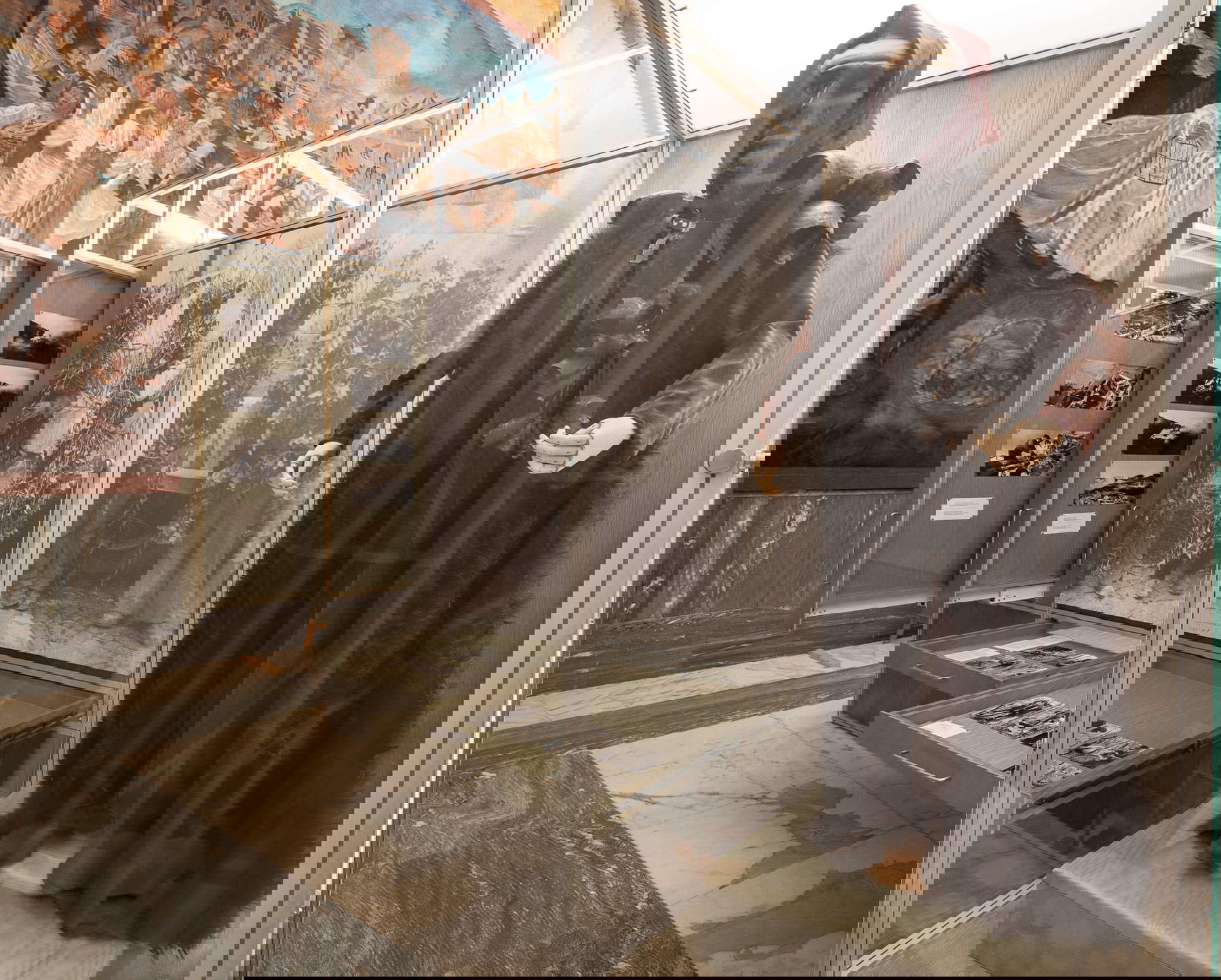
So in this exhibition the public can touch real artifacts? How did you select them, and how are conservation requirements applied?
Yes, in this exhibition you can touch live and in real time some objects of the same material as those displayed in the showcase. So even those who cannot see can have the same experience as other visitors. Together with the Conservation and Restoration Laboratory, particularly durable objects with suitable characteristics were selected, also based on similar cases such as the tactile path of the Egyptian Museum in Turin. One of the key elements of the exhibition is that there is no preferential accessible route, but a unified one in which everyone can use the various media according to their own needs. The same materials can serve all audiences depending on what they are most curious about.
One of the aspects in which the MUCIV is most committed, in the Italian context, is to bring communities of origin to interact with the exhibits inside the museum, a symbolic gesture that also brings museum enjoyment back to a ritual dimension.
A museum can lead communities to the museum but also bring the works back to the communities, to share with them the main decision-making processes. If critical decisions about objects are shared, communities can reappropriate their own culture. Ritual moments of sharing often take place in MUCIV’s halls or depositories with representatives of African, American, Asian, and Oceanian cultures. But I would like to give an example again from the exhibition The Fairy Tales are True, in which a casket is displayed with the flags of the 17 contrade del Palio that were donated by the community of Siena to King Victor Emmanuel III, then passed as an endowment to the Presidency of the Republic. It was President Gronchi who donated them to the National Museum of Folk Arts and Traditions in 1956. Today, due to the need for their restoration, each contrada is either directly following in Siena, or about to follow, the restoration of its flag. Each heritage community, which is always a living community, is a primary referent for a museum’s decisions: inside the museum, outside the museum, it is in its own way an instrument of diplomacy, a parliament of shared assets, knowledge, and cultural values. And this, too, is a form of accessibility.
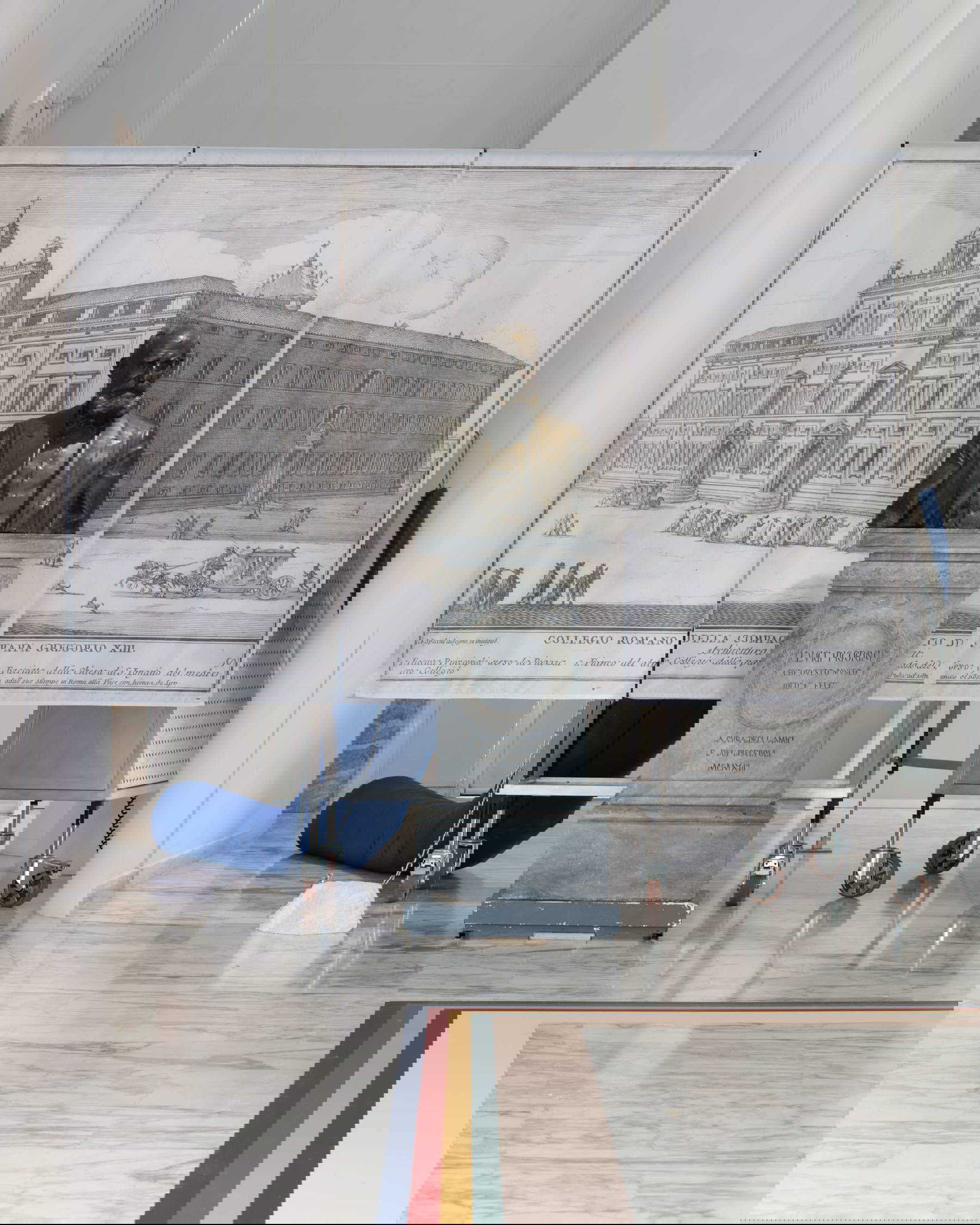
Let’s turn to the museum’s 150th anniversary exhibition, which recently opened in the neighboring Hall of Columns, and for which you provided overall supervision. In addition to ministerial and international regulations, I suppose accessibility is also made up of small arrangements, and that the choice for example to put the panels of this exhibition directly on the ground is not just an aesthetic decision.
It is the task of museums to test and update the accessibility guidance, as we were saying, to figure out how we can do better and more, based on what audiences are saying. In this case, the texts need to be as close as possible to the visitors, including those who will visit the exhibition in wheelchairs or other devices to support walking. And the tactile map has also replaced other types of maps, as the same material can serve multiple functions for multiple audiences.
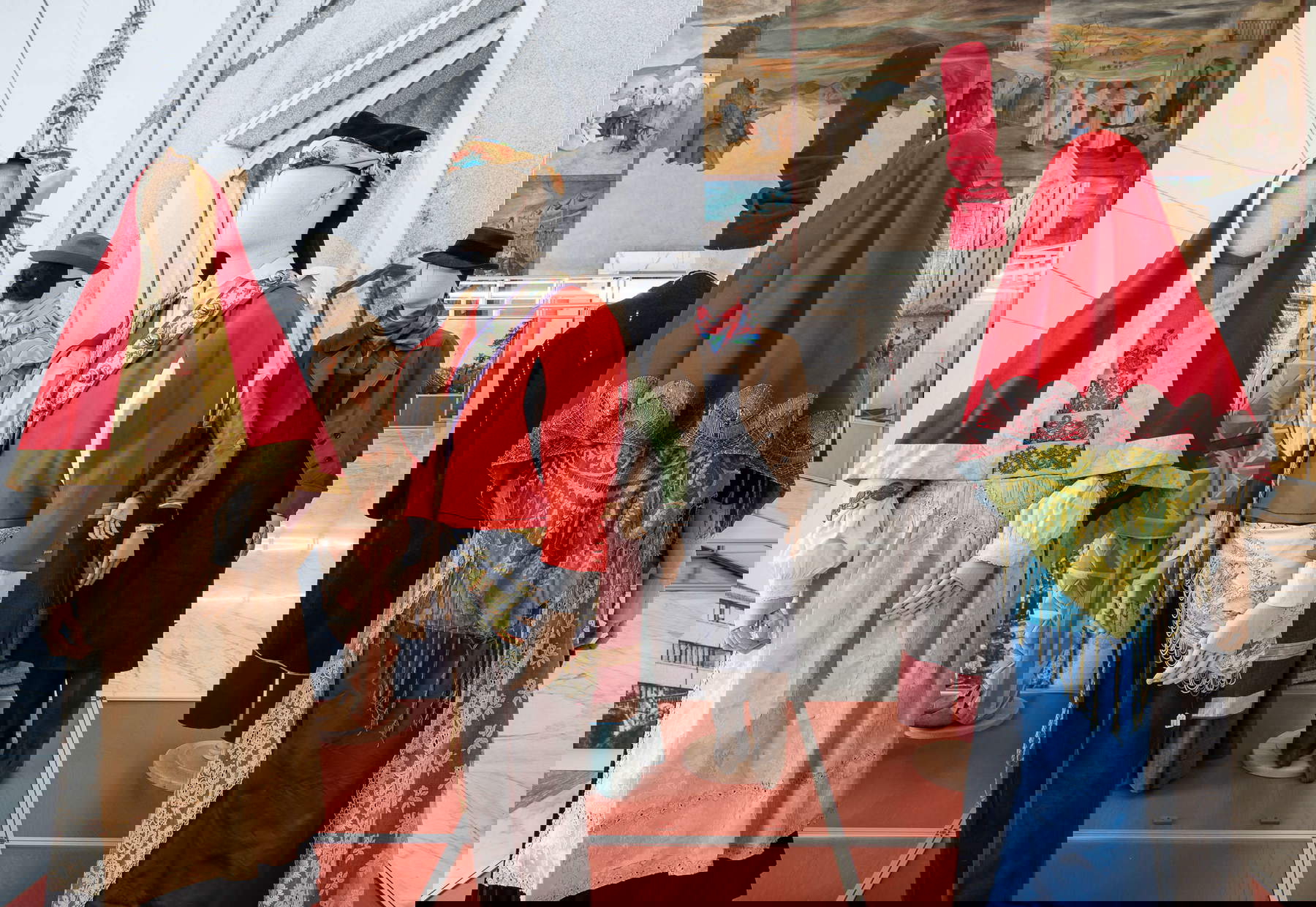
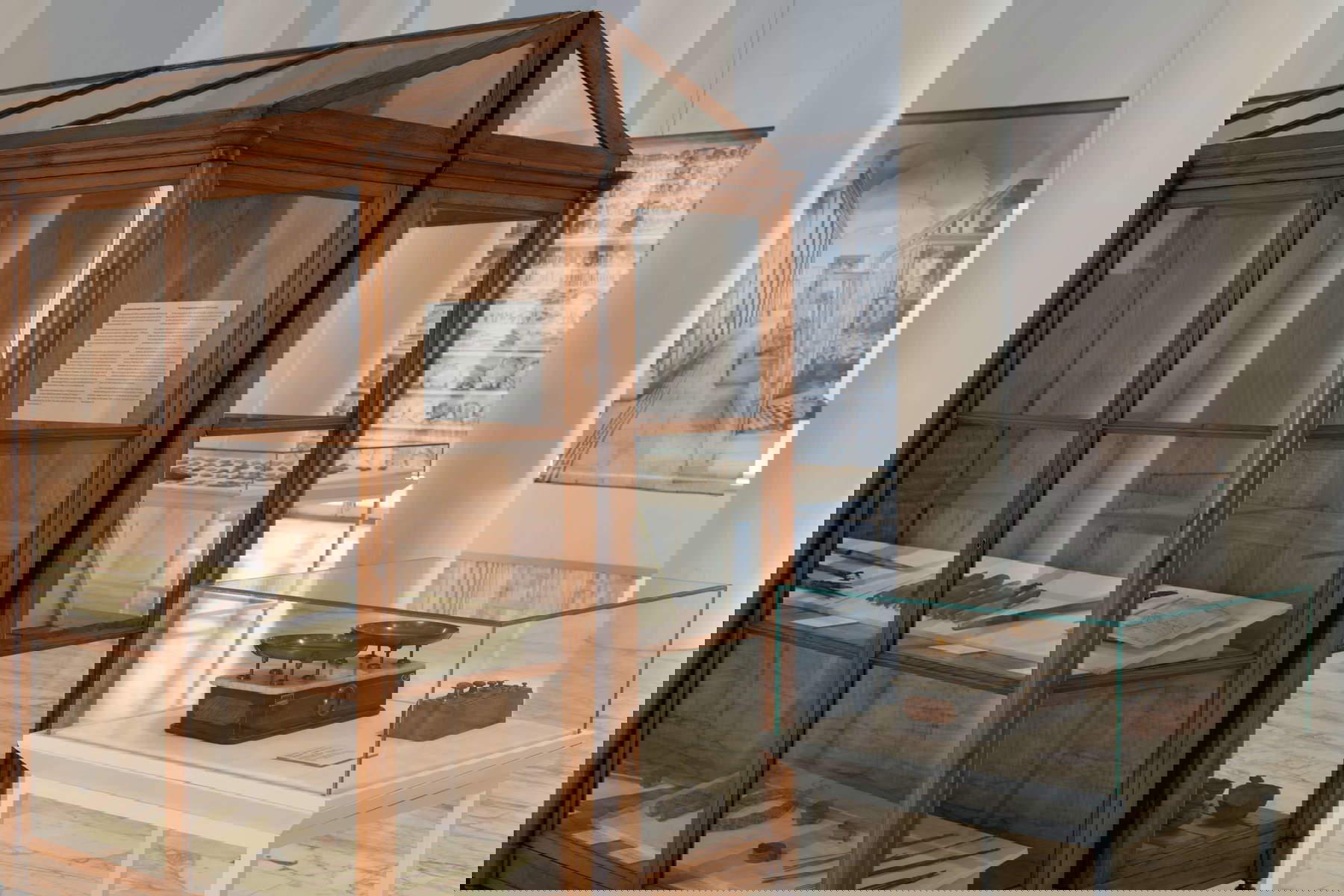
Another map, which I find particularly significant, traces the provenance of the artifacts in the collection formed by archaeologist Luigi Pigorini in 1876, when he opened the Museo Preistorico Etnografico in Rome at the Collegio Romano. A sign that knowledge, and even ownership, of these artifacts are never final, as the study of their provenances, contexts of origin and interpretations is still ongoing.
And it evolves as the disciplines with which the museum studies these issues evolve. Listed on this map are purchases, disposals, and donations of all the artifacts that composed the museum collections at the opening of the Pigorini museum, and that are displayed in the exhibition, with indications of their relative provenance, from whom they were found, cultural attributions, and institutional transitions. Thanks to the work conducted by the curators (Paolo Boccuccia, Camilla Fratini, Myriam Pierri), this map reveals how much the museum is a living organism, constantly growing, since its origin and even now that it is outlining and testing its perspectives.
What role did the recognition of such a sensitive issue as restitution play in this revision?
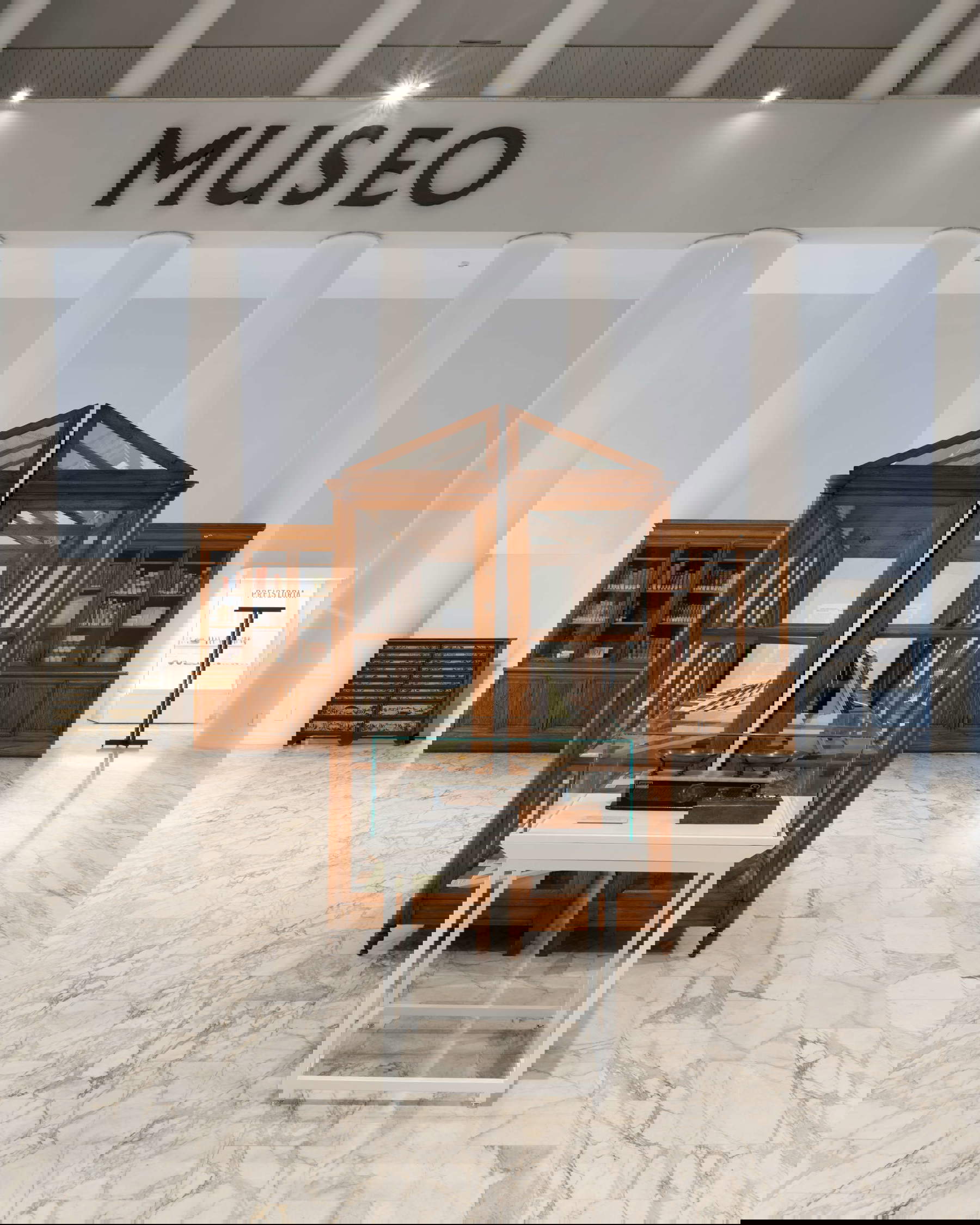
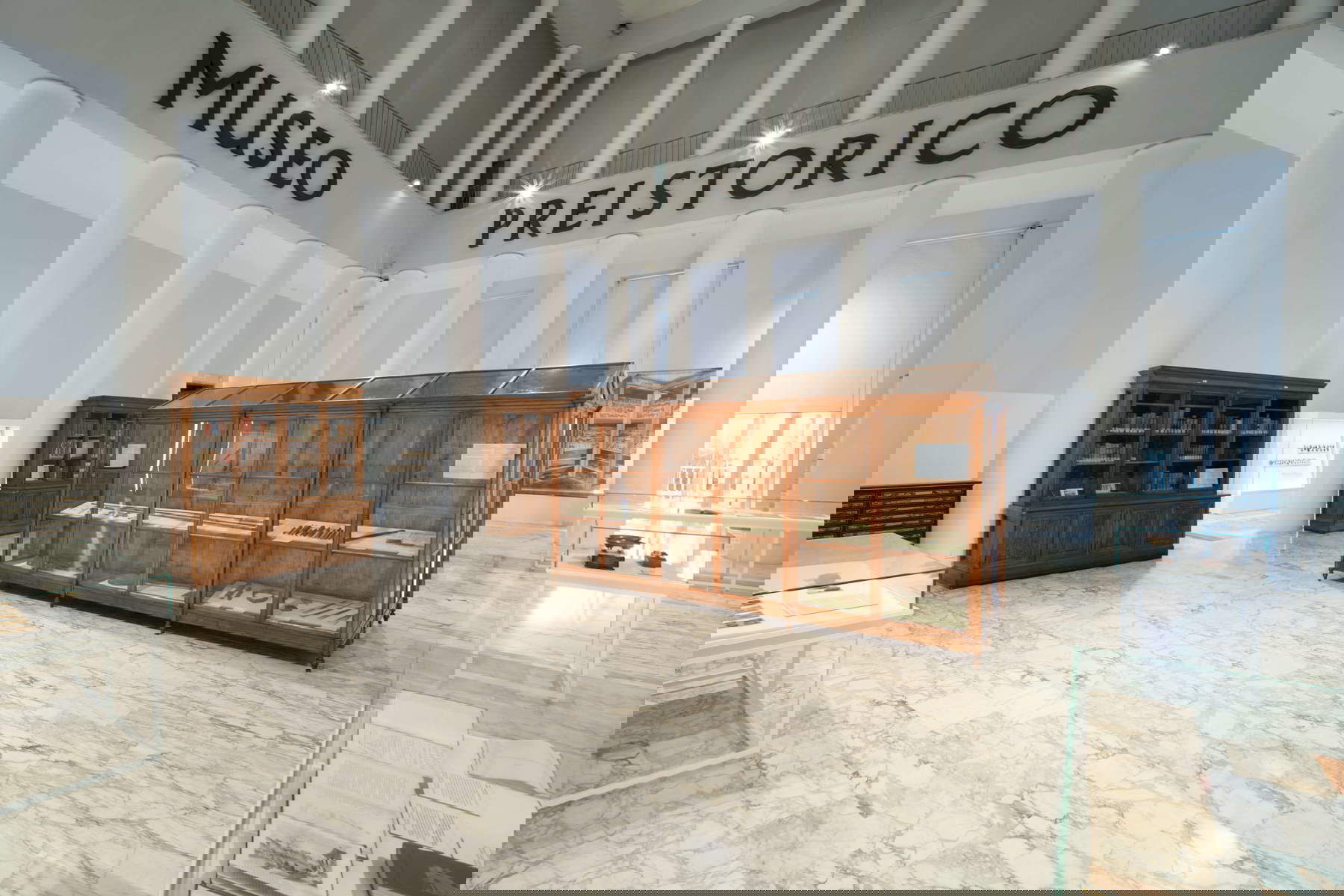
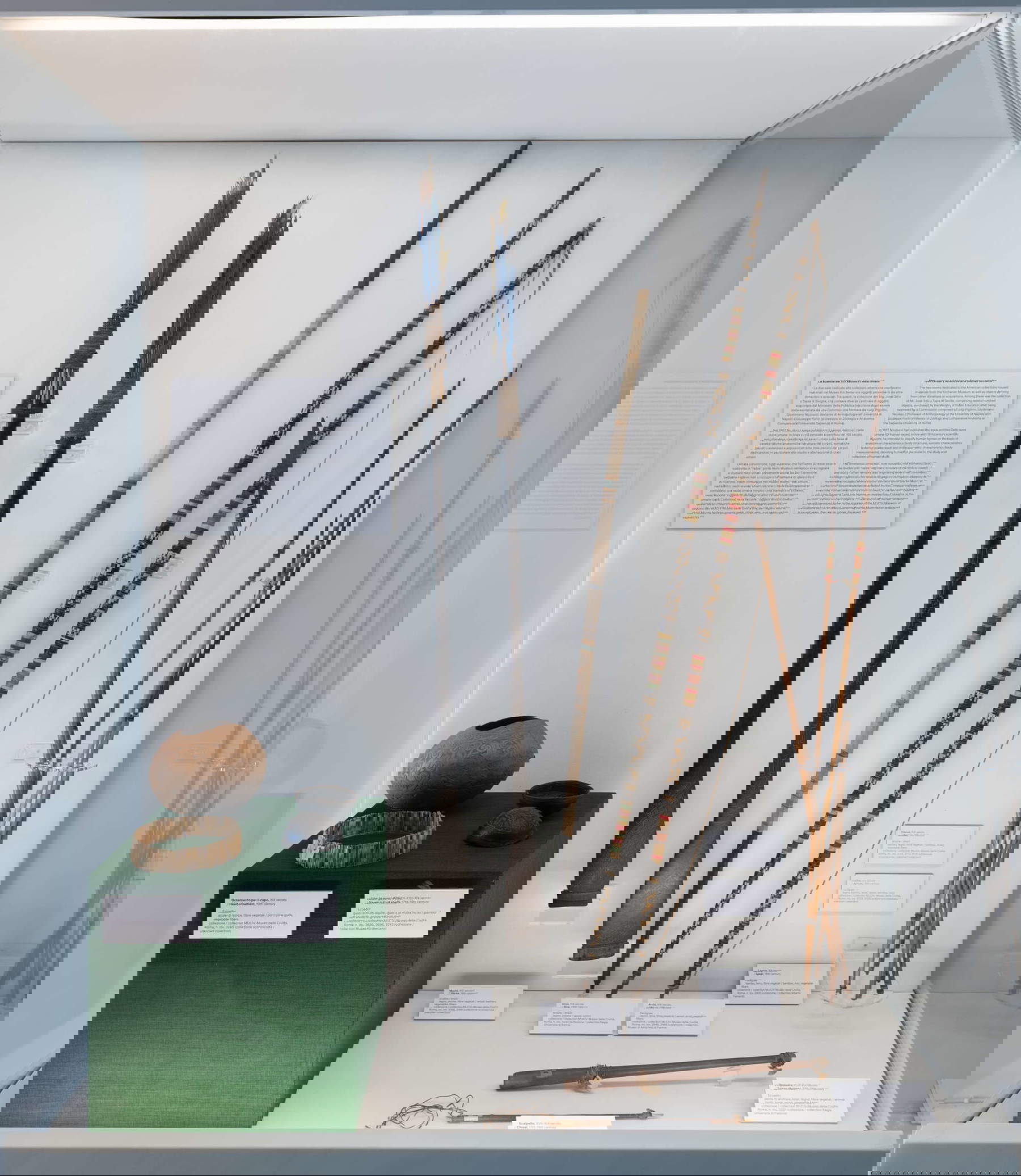
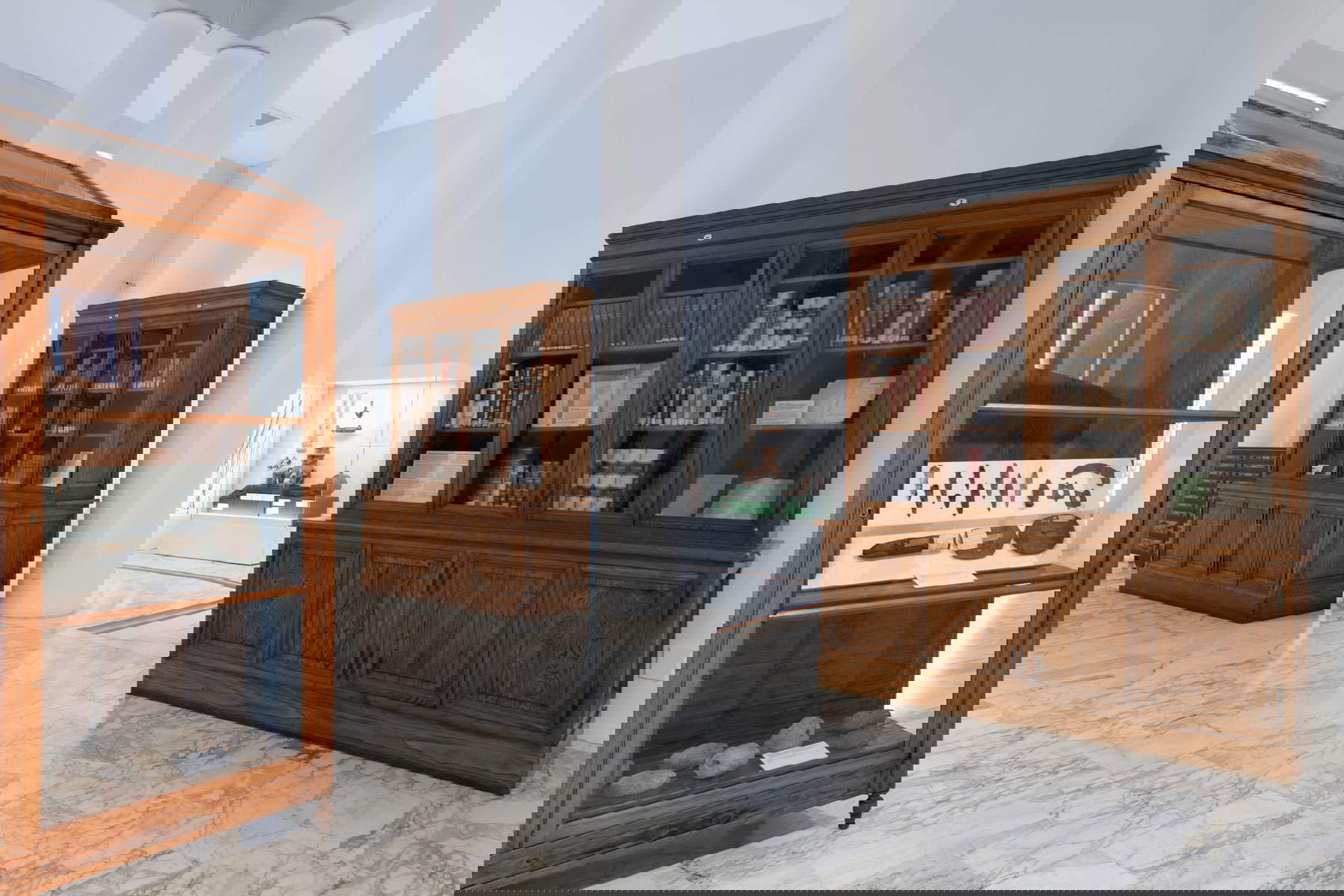
In the central part of the exhibition is the section evoking the 1876 layout: a museum that is still both prehistoric and ethnographic. Like many contemporary museums similar to the MUCIV, this pairing (based on the nineteenth-century comparative method) has been superseded worldwide: so in the side areas of the exhibition, the 11 showcases that correspond to the 11 rooms of the Pigorinian museum in 1876 contain some of the same exhibits, but with a scientific revision that starts precisely from the distinction between Prehistory and Ethnography. Let me give an example: if the transition from the Stone Age to the Metal Age marked a revolution in European Prehistory, and it was precisely this that was considered proof of the supposed backwardness of non-European civilizations, which would continue to use stone tools and weapons. Today we know that it was not because they were backward, and therefore primitive, but because of the different conditions under which each civilization develops, adapting to the resources and conditions of its natural and cultural habitat. From the nineteenth-century interpretation also derived the concept of primitive art, or art nègre, which was precisely the great misunderstanding of the 20th-century European artistic avant-gardes, such as Picasso’s Cubist art. But Picasso did not know, about African, American or Oceanian arts, what anthropologists know today. So it is the study, the deepening of the disciplines that has overcome that misunderstanding-we know today that there is a big difference between African Fang or Dogon sculptures, for example, and to consider them as unitarily primitive art is tantamount to equating Giotto and Van Gogh. That is why if the central showcases evoke 1876, the side showcases reread it from the perspective of 2026. Celebrating not only the opening 150 years ago, but the differences that have gradually been defined over these 150 years, leading us to the museum of today. Hence the title of the exhibition, ORIGINS and PROSPECTS, which is in fact one more project in which to experiment with the multiple forms of accessibility of museum heritage.
So going back to the relationship between accessibility and decolonization, from the museum’s point of view, does this imply the need to overcome even outdated scientific narratives?
Yes, but responsibly preserving their memory. For example, the one entrusted to the museum showcases, which have been specially restored, or to the research instruments, which have been maintained and displayed, or even to the metal signs that in the 1990s were set up on the facade of the Palace of Sciences before being disassembled to take into account the museum’s new name, “Museum of Civilizations.” Nothing is ever thrown away in museums-otherwise how would it be possible to set up an exhibition like this? - and so these writings have also been preserved, themselves becoming a historical document. And, by the way, within the large volumes of the Hall of Columns, with its structure very similar to that of the exterior facades, these inscriptions really manage to evoke the impression of entering the museum that visitors had until a few years ago. A museum that, in its 150-year history, has become a role model for prehistoric archaeology and ethnographic studies, even outside Italy, even before the MUCIV united five other museums and collection cores, totaling about 2 million works and documents on 50,000 square meters.
Wouldn’t MUCIV need as many directors?
Or a director with superpowers--each director is different from the others and adds a specific contribution of skills and sensibilities. Take the case of Luigi Pigorini, whose professional biography between past, present and future is precisely traced by a scientific conference that opened at the same time as the exhibition: while it is also true that he applied to the new museum the comparative method of evolutionist and positivist matrix mentioned earlier, he nevertheless had both the strategic resourcefulness to succeed in founding a new museum and the planning vision to connect it from its inauguration to the dual function of education and research, also founding the “Bulletin of Paleontology” that MUCIV still publishes today and the world’s first chair in prehistoric archaeology (at La Sapienza University in Rome). Pigorini’s energy can only be a stimulus and encouragement especially for a museum that is facing an overall rearrangement of its exhibits that, precisely, accompanies and substantiates the ongoing updating of its disciplines. As, moreover, is happening at the British Museum in London, the Humboldt Forum in Berlin, the Quai Branly in Paris or the Metropolitan in New York, to name but a few of the museums that share similar needs with the MUCIV and are sharing possible ways of action.
In these projects, as in others he has curated or overseen at MUCIV, artifacts and artifacts are always confronted with contemporary works of art or narratives. A mode that distinguishes his practice and that he has fine-tuned in projects such as Pompeii Commitment, Archaeological Matters, or in Arnaldo Pomodoro’s exhibition The Great Theater of Civilization in 2023 at the Colosseo Quadrato.
Since 2022, the museum has set up but mostly acquired contemporary works (along with ancient works and archival collections) that could precisely dialogue with the historical collections. Contemporary art in a museum like this does not have the same function as in a contemporary art museum. It also serves as a tool for accessibility. As had already been the case in these two buildings since 1942: the mosaics by Fortunato Depero and Enrico Prampolini, the marble inlay by Mario Tozzi, the stained glass window by Giulio Rosso, the many frescoes at the entrances or in the Saloni d’Onore had this same function, to make accessible the complexity of the contents that these collections preserve and that it is up to the museum to divulge without reducing their complexity. And even when it seems that the work simplifies.
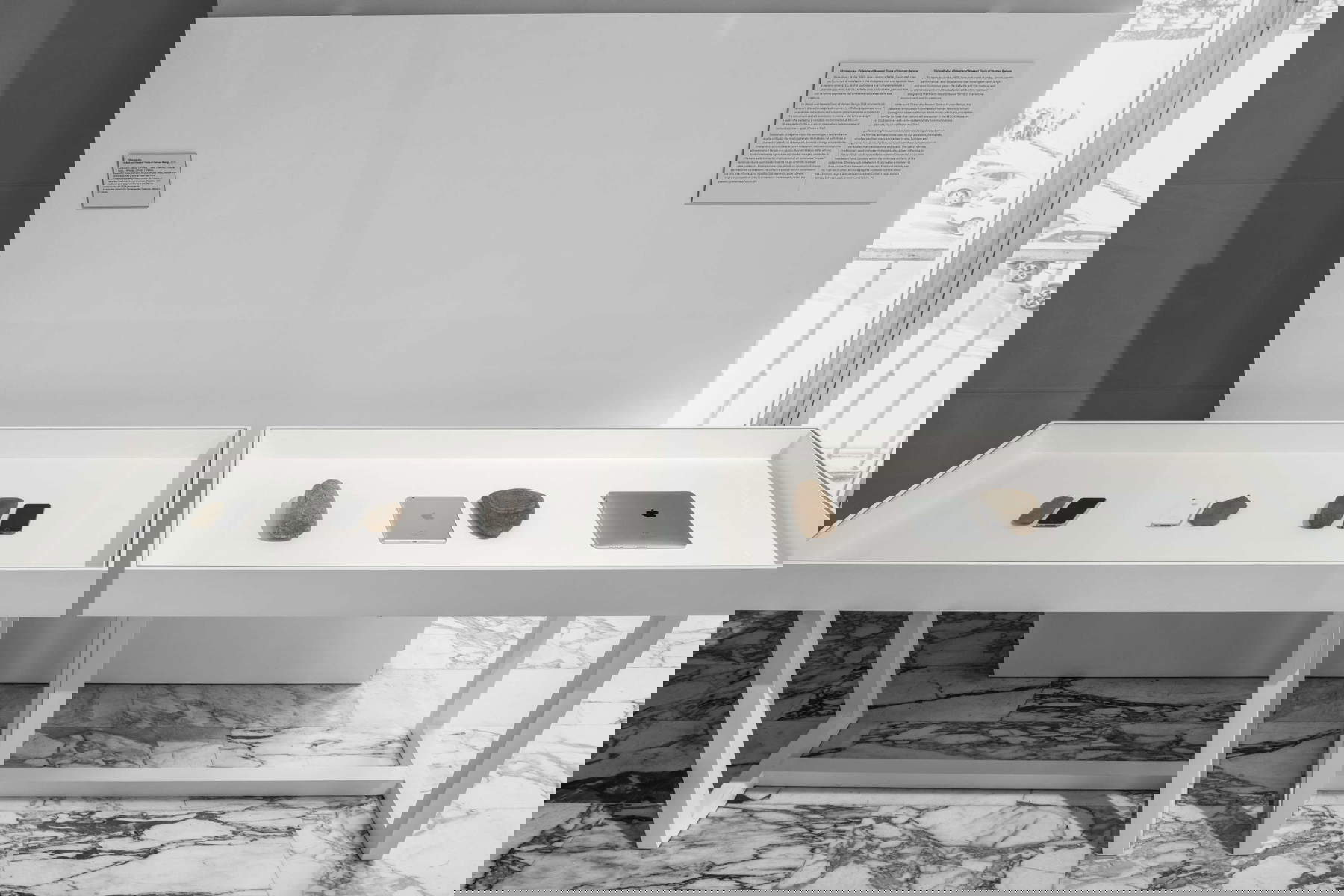
The bulletin board with which the ORIGINS and PROSPECTSexhibition closes would seem to perfectly represent this possible simplification, with flints juxtaposed with smartphones or tablets.
In this work-acquired through the PAC call for proposals, organized and supported by the General Directorate for Contemporary Creativity, which stipulates that all cultural places can include contemporary works in their collections to allow the heritage itself to become acontemporary experience (and this is also a form of accessibility, then) - Japanese artist Shimabuku takes this reasoning to the extreme, almost comprising a haiku, in which the concept of the work is immediate and corresponds to the title of the work itself: Oldest and Newest Tools of Human Beings. Shimabuku pairs a prehistoric tool with its contemporary analogue, and gives the opportunity to understand that while technology has changed, the objects humans use to meet their needs have remained similar, even in design. To make an accessible experience is to make people feel and understand concepts. And if you’ve achieved that, you haven’t impoverished them or trivialized them, but you’ve simply made them more immediate, even more fun: you may not know what a Paleolithic flint was used for, but you certainly recognize a cell phone, and you ask questions.
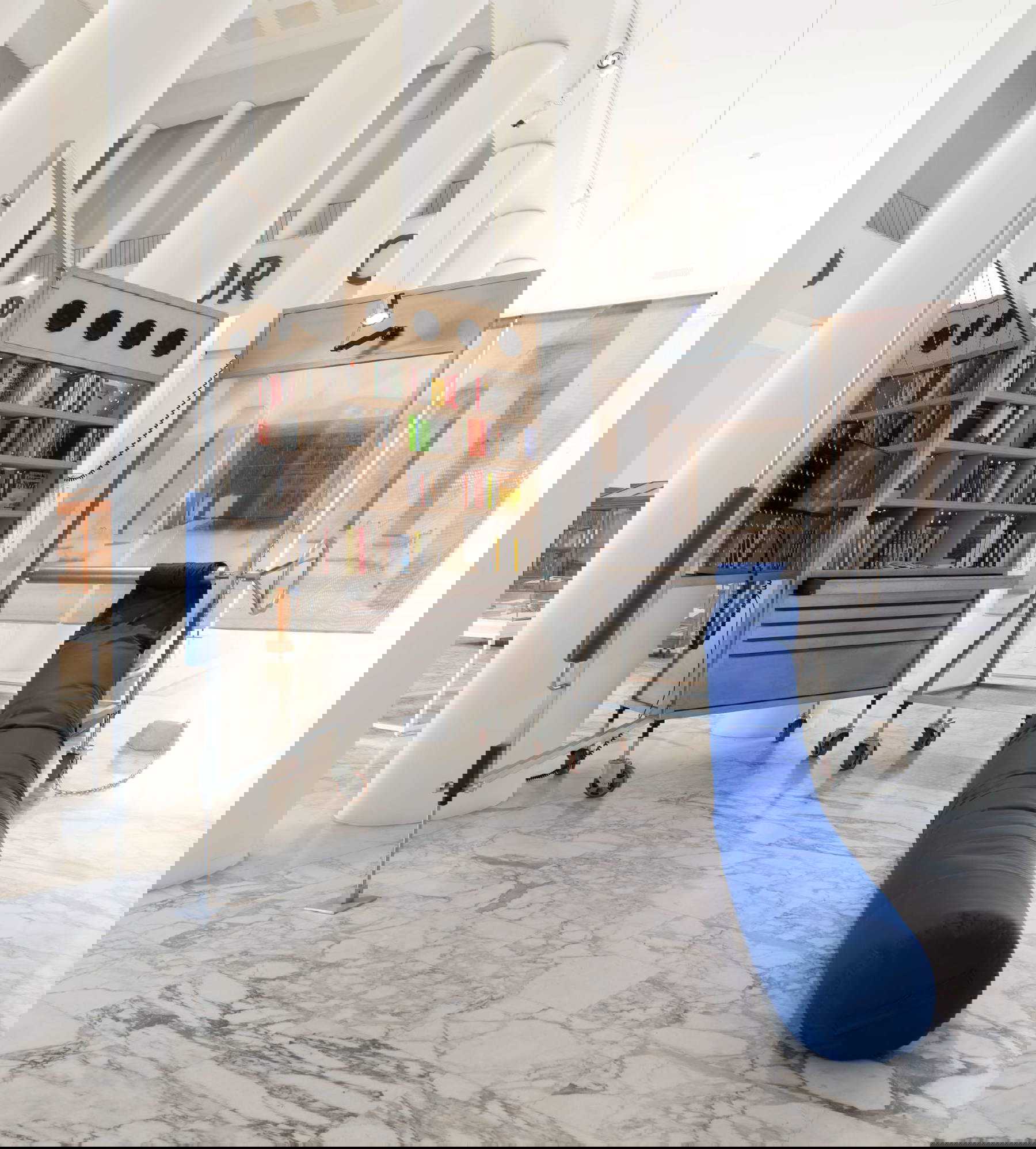
Much less immediate is the other installation with which the tour concludes, Libreria delle Api, a mobile and modular bookcase.
It is a project by the architectural firm 2050+, which designed a bookcase that allows the exchange of knowledge. It is a nomadic bookcase on wheels, which can also be moved within the museum to other rooms, and interdisciplinary and intercultural, which can accommodate and join together the many disciplines that together make up the human knowledge preserved in a museum like this. There is also a monitor with two videos by indigenous-born artist and museum Research Fellow, Maria Thereza Alves. These first two modules of the Bee Library were donated by the nonprofit platform Society of Bees, chaired by Silvia Fiorucci, which recently opened its new location in Rome, next to the Hertziana Library on Via Gregoriana. More modules are planned with a refrigerator, a swing... to make a visit to the museum comfortable, making viable that concept of co-evolution and multispecies co-existence advocated by philosopher and lecturer Donna Haraway, that is, that we humans, evolve together with other beings, such as bees, which pollinate flowers allowing the cycle of life, or viruses or, now, even artificial intelligence. In this sense, the museum is not only an organism, but must be able to coexist with all other organisms, evolving together.
AI: the latest addition to the Anthropocene.
Indeed yes, we evolve together. In this sense, even the Bee Library is not so much a work as a tool of disciplinary and museum accessibility, sharing what is needed to consciously build a more sustainable world and a more responsible museum. This is also why in axis with the library structure is a glimpse of one of the construction sites underway at MUCIV.
What have you learned from this constantly updating museum?
The museum must always be in flux, because so is the human knowledge we entrust to works before they become artifacts. This need for ceaseless movement is even more evident in a museum like this because of the extraordinary responsibility of its collections to the world we live in, what we inherit from the past and what we want to pass on to the future. Without eliminating anything with respect to the mistakes we have made as individuals and communities-cancelling culture is futile, as well as a museologically flawed position, because, as my work in Pompeii has taught me, you never completely erase anything! All that remains is to make a daily commitment to contribute to this movement, sharing your commitment with everyone and everyone else, inside and outside the museum. MUCIV teaches that you must have the courage to try and, most importantly, that you must try together.
Having ended your commitment to MUCIV a few weeks ago, with which you continue to collaborate during this transitional phase, you will continue with a new position at the General Directorate of Museums. Another great challenge awaits you, digitizing the national cultural heritage.
I want to thank our Director General for Museums, Massimo Osanna, with whom I conceived the Pompeii Commitment platform in 2020. Archaeological Matters and with whom I curated the exhibition The Fairy Tales are True, for his intuition to be able to apply this same method of working where perhaps it is most urgent today, namely in the creation of a metaverse of Italian cultural heritage, through the DHGP-Digital Heritage Gateway Platform. The goal is for this metaverse to truly make the cultural heritage experience more accessible, differentiated, and innovative. Condition is that it remains imbued with the same humanity with which cultural heritage is imbued, that the responsibility of being on a threshold, precisely a “gateway,” between analog and digital, between human and artificial...an ethical, empathetic and accessible place where no type of audience is excluded, thinking not only of digital natives but also of those who would risk being excluded in this transition. Instead, the digital revolution must be a moment of great humanism, if we want digital humanism.
What do you mean by “digital humanism”?
By Digital Humanities, or Humanistic Informatics, we mean the result of a dynamic dialogue, and I would add respectful reciprocity, between information technology and humanistic research, thinking of the digital as if it were another species, but connected with the human one. And after all, even AI is nothing more than yet another invention that leads human beings beyond themselves, obliging them to the maintenance of their achievements and keeping the triggered process under control. In this sense, the Renaissance perspective theorized and practiced by Filippo Brunelleschi, Leon Battista Alberti or Piero della Francesca was not very different from AI. But perhaps the one who expressed himself best is the 2023-2025 President of ICOM Italy, my friend Michele Lanzinger: if there is anything contemporary that is Paleolithic! I believe that too, just thinking about AI, since perhaps it is nothing more than a further threshold in our evolution, in which we will have to know how to remain human, and make our cultural heritage remain human, even in the transformations that this evolution is already entailing. And, as a contemporaryist, operating on a threshold between archaeology, anthropology, art and technology means leaving the comfort zone of your discipline to learn how to coexist, epistemically, with everything around it. In my experience, at least, the transition seems to have become systemic and permanent.
How is digital a natural continuation of your path as a curator and museum director?
I think the potential for accessibility that is also systemic and permanent is at the heart of these projects. Digital is a challenge that relates to accessibility, so that the digital transition of the museum is not just precisely such for digital natives, the “digitally able,” but a new museum experience, different from the real museum but integrated with it, and satisfying for everyone. The digital future of museums is a kind of unknown that we have to face with the same sense of responsibility and creative imagination with which we have learned to conceive exhibitions and rearrange collections. I don’t even have a social profile, and in not being a “digital savant,” I will therefore try the risks and potentials of this process myself, firsthand, and try to contribute to it.
What will the DHGP, Digital Heritage Gateway Platform, be like ?
I will not go into details, because the project is ongoing, thanks to the involvement of several institutes, including MUCIV. I am very grateful to the General Directorate of Museums, which is coordinating this colossal digital construction site, and to all the project staff, together with all the institute directors and their teams, for the rigor with which we are all approaching, each to the extent of his or her competence, the work to be conducted in the coming years to make the heritage of cultural places more accessible. And what is accessibility? I think it is a form of well-being, but also an exercise of freedom, with respect for the well-being and freedom of others.

Warning: the translation into English of the original Italian article was created using automatic tools. We undertake to review all articles, but we do not guarantee the total absence of inaccuracies in the translation due to the program. You can find the original by clicking on the ITA button. If you find any mistake,please contact us.




















 IT
IT FR
FR DE
DE ES
ES CN
CN


