



by Redazione 24/02/2026



Categories: Museums / Disclaimer
The Victoria and Albert Museum acquires a reconstruction of YouTube's first viewing page featuring Me at the zoo, the video uploaded in 2005 by co-founder Jawed Karim. A deal that marks a decisive step in digital design preservation.


A YouTube video officially enters the museum. The Victoria and Albert Museum in London, one of the world’s leading cultural institutions for art and design, has announced the acquisition of an item destined to mark a turning point in the way museums collect and preserve digital heritage: a recreation of one of the platform’s earliest viewing pages, featuring the video Me at the zoo, the first ever uploaded to the site.


It is an acquisition described as “historic,” not so much because of the length of the content, just 19 seconds, but because of what it represents. Me at the zoo is the video posted on April 23, 2005, by YouTube co-founder Jawed Karim, then 25, while at the San Diego Zoo talking about elephants. Shot with a low-resolution digital video camera, the clip has been viewed nearly 380 million times and received more than 18 million “likes.” Numbers that testify to how that simple, spontaneous gesture has, over time, become a foundational moment in the culture of user-generated content.
The acquisition can be seen from Feb. 18 in the Design 1900-Now gallery at the V&A South Kensington, a space dedicated to exploring how design both reflects and shapes the way we live, work, travel and communicate. Visitors will be able to watch a recording of the YouTube page as it plays Me at the zoo as it appeared 20 years ago, immersing themselves in the platform’s original experience at the dawn of Web 2.0. The reconstruction process will also be narrated in a mini exhibit at the V&A East Storehouse.




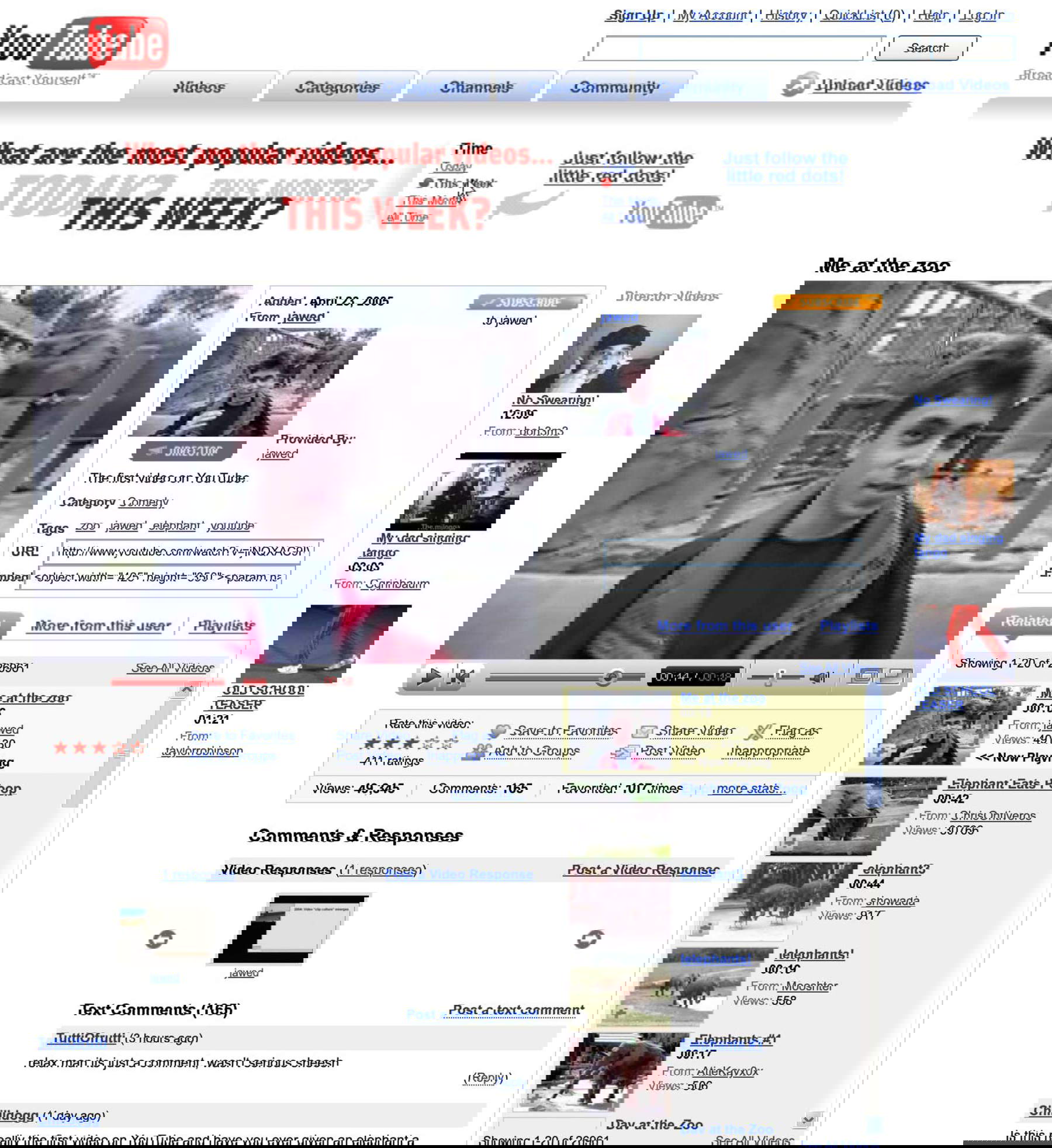
The operation is not limited to the mere display of a video. Over the past 18 months, museum curators and the digital preservation team have worked together with YouTube’s User Experience team and interaction design studio oio to faithfully reconstruct the design and user experience of the platform as of Dec. 8, 2006. This is the oldest version documented online through The Internet Archive, a nonprofit organization that preserves the historical memory of the Internet.
The reconstructed vision page represents one of the earliest examples of the user interface design conventions we take for granted today: badges, rating buttons, sharing features, recommendation systems. Elements that, born in that pioneering phase, helped define the architecture of the contemporary digital experience and continue to shape the way we navigate, interact, and produce content online.
For the V&A, the addition of YouTube to the collection consolidates a longstanding commitment to collecting and preserving digital design. Over the years, the museum has acquired objects and designs that bear witness to the evolution of the digital environment, including the WeChat app, the Flappy Bird video game, EUKI, and the design of the mosquito emoji. With the acquisition of the YouTube watch page, however, the institution is taking a step further, taking on the challenge of preserving not just a digital object but a complex experience of interactions, layout, social dynamics and participatory culture.
Corinna Gardner, Senior Curator of Design and Digital at the V&A, points out how this “snapshot” of the platform in the early days of Web 2.0 marks a pivotal moment in the history of the Internet and digital design. In his view, the acquisition opens up new narrative possibilities for telling the story of how the web has transformed the world, from the birth of mass video sharing platforms to today’s hypervisual universe and the economics of creators and digital media. Gardner also highlights how direct collaboration with YouTube has allowed the museum to experiment with new ways of collecting and preserving complex digital objects, laying the groundwork for innovative practices in this area.
Neal Mohan, CEO of YouTube, also called the addition of Me at the zoo to the Victoria and Albert Museum’s collection a “proud moment.” What began as a simple 19-second gesture of self-expression has become a new way for people to share their stories with the world. The reconstruction of the first watch page not only shows a video, but invites the audience to step back in time to the beginning of a global cultural phenomenon that changed the media landscape.
The symbolic value of the operation lies precisely in this historical awareness. If in the early 2000s YouTube appeared as one emerging platform among many, today it is one of the main spaces of cultural production and consumption globally. The possibility for anyone to upload a video has redefined the boundaries between author and audience, professional and amateur, center and periphery of media production. Me at the zoo, with its almost disarming simplicity, represents the inaugural act of this silent revolution.
To bring a reconstruction of a web page to the museum is to recognize that interface design, organization of functions, and modes of interaction are integral to the history of contemporary design. It is not just preserving an audiovisual content, but documenting a technological and cultural environment that shaped a generation.
The installation’s presence in the Design 1900-Now gallery situates YouTube within a larger narrative that relates objects, systems, and design languages of the 20th and 21st centuries. The platform thus becomes a chapter in design history, on par with industrial products, furniture, graphics, and technological innovations that marked different eras.
At a time when digital heritage preservation is one of the most urgent challenges for cultural institutions, the V&A’s initiative points in a clear direction. The Web is no longer just an ephemeral and ever-changing space, but an area whose memory deserves to be preserved and studied. Reconstructing the first page of YouTube viewing is thus not a nostalgic exercise but an act of critical awareness.
By watching Jawed Karim in front of the elephants at the San Diego Zoo, in a video shot with modest means and uploaded without imagining the consequences, museum audiences will be able to recognize the beginning of a process that redefined the very concept of media. A 19-second fragment that, two decades later, enters fully into the history of contemporary design and culture.
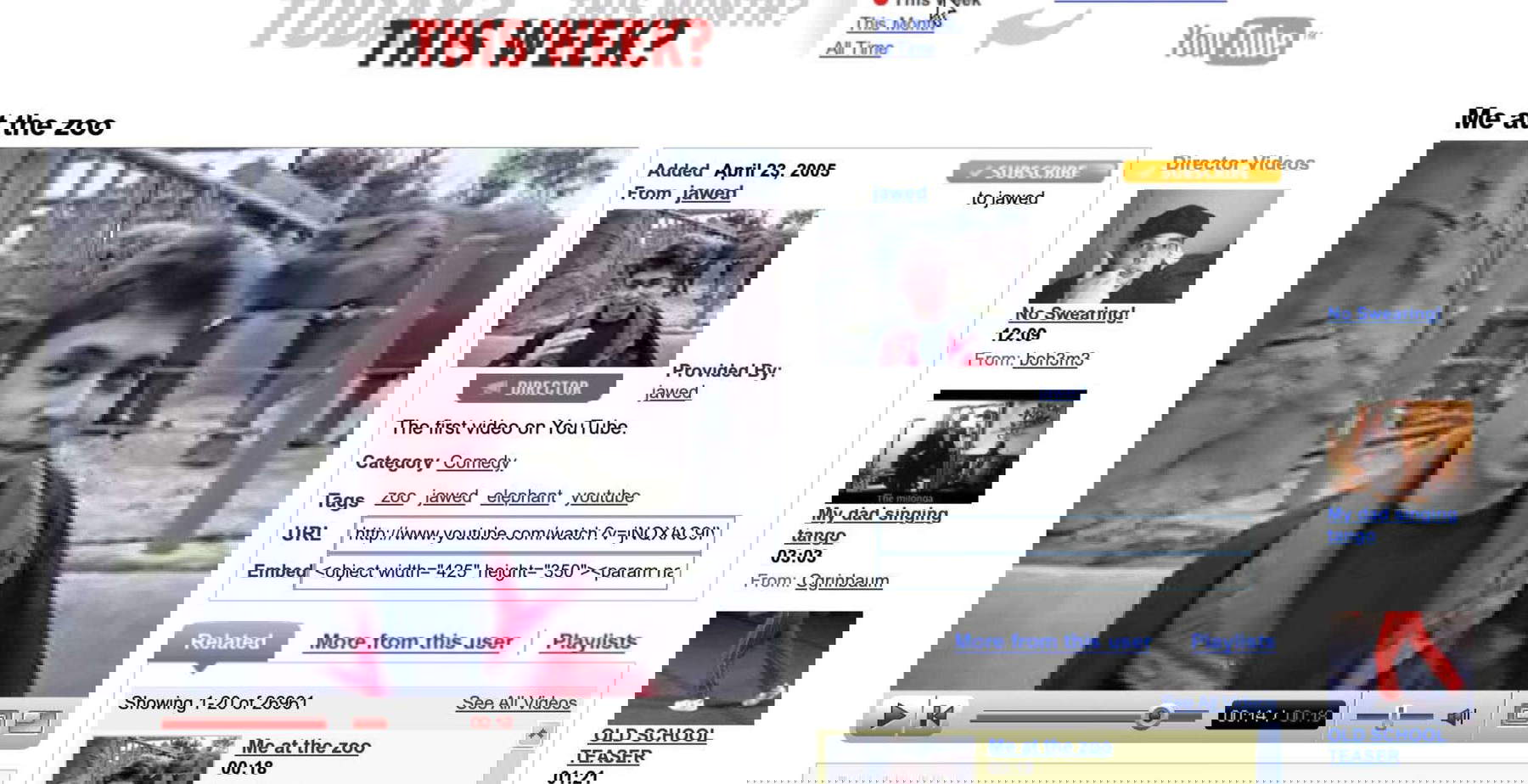 |
| London, Victoria & Albert Museum acquires and exhibits the first YouTube video in history |
Warning: the translation into English of the original Italian article was created using automatic tools. We undertake to review all articles, but we do not guarantee the total absence of inaccuracies in the translation due to the program. You can find the original by clicking on the ITA button. If you find any mistake,please contact us.