





Four works that have returned home over the past two years after having been lost: This is the tangible result of patient research, archival study, and international collaboration, which has now prompted the Musée des Beaux-Arts d’Orléans to renew its appeal to collectors, antique dealers, auction houses, scholars, and citizens around the world. The goal is to identify and recover the 424 paintings that are still missing from the museum’s collections, many of which disappeared during World War II, while others vanished during the 20th century while they were on deposit at public offices or other institutions. Underpinning the initiative is a fundamental principle of French law: museum collections are inalienable. This means that the museum’s right to recover the works does not expire over time, and that every identified painting can be returned to the public collection to which it belongs.
To facilitate this work, the museum has published a detailed inventory of the missing works, reconstructing for each one its provenance, descriptions, attributions, historical photographs (when available), inventories, catalogs, and archival documentation. The goal is to make it as easy as possible to identify the paintings should they reappear on the art market or in private collections.
The museum’s own history illustrates the importance of this dispersed heritage: the Musée d’Orléans opened its doors on November 4, 1825, withinthe Hôtel des Créneaux. Twenty-one years after the closure of the city’s first museum—founded as early as 1799 to house revolutionary confiscations—and at a time when numerous French museums were being established thanks to the Chaptal Decree, this French city’s institution took a different path from the country’s other major museums. While the fifteen so-called “Chaptal museums” had been stocked primarily with works sent by the state, the director of the Orléans museum decided to build the collections by relying mainly on private donations. This choice proved extraordinarily effective.
Large landowners, collectors, art enthusiasts, and citizens all contributed to the formation of the collection, creating a museum deeply rooted in the local community and capable of reflecting the city’s artistic tastes and history. The main architect of this endeavor was the Count of Bizemont, who for years published a weekly list of donations received in the *Journal du Loiret* , precisely documenting the growth of the collections. Later, it was the museum catalogs—updated by his successors—that collected and preserved this history.
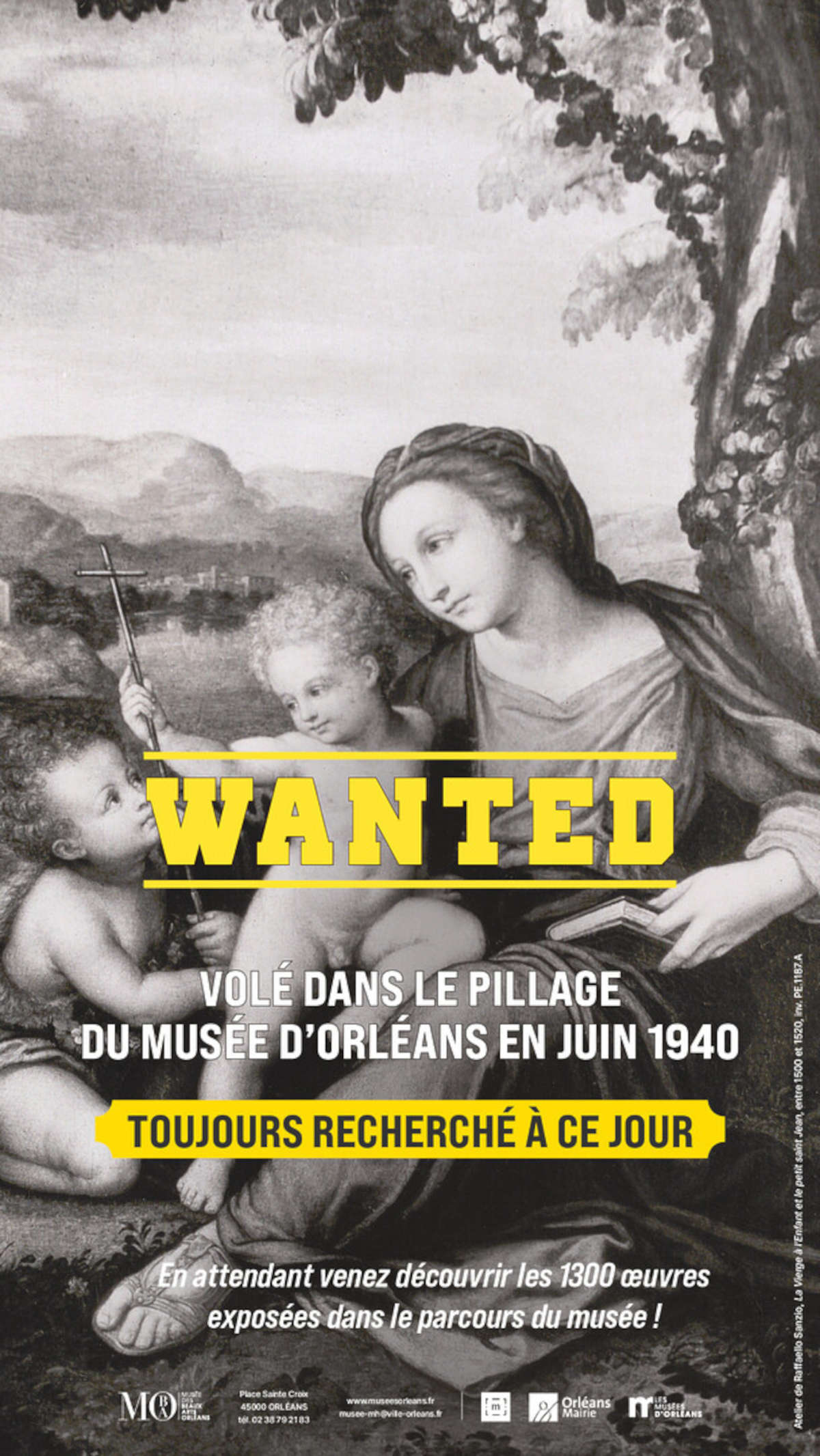
Over time, the generosity of donors has never waned. The expansion of the collections led to the opening of new museum venues:the Hôtel Cabu, dedicated to historical, archaeological, and artistic collections; the museum dedicated to Joan of Arc, and finally the Musée Paul Fourché, inaugurated in 1907 thanks to the donation of the significant collection of the collector Paul Fourché, who wished to permanently link his name to the city of Orléans. It was precisely this collection, however, that suffered the most dramatic losses.
Of the more than three hundred paintings donated by Paul Fourché, virtually nothing survived the looting of the museum in June 1940, which occurred before the fire that devastated the building along with the Hôtel Cabu and the Joan of Arc Museum. Other works, meanwhile, reportedly disappeared in the following years while they were in storage at public offices, in accordance with a widespread practice prior to the 2002 French Museum Act.
To reconstruct this lost heritage, the museum has launched a massive archival research effort, cross-referencing inventories, historical catalogs, photographs, curators’ notes, and administrative documents. Each entry in the new inventory compiles all available information so that potential owners can identify the works and facilitate their return.
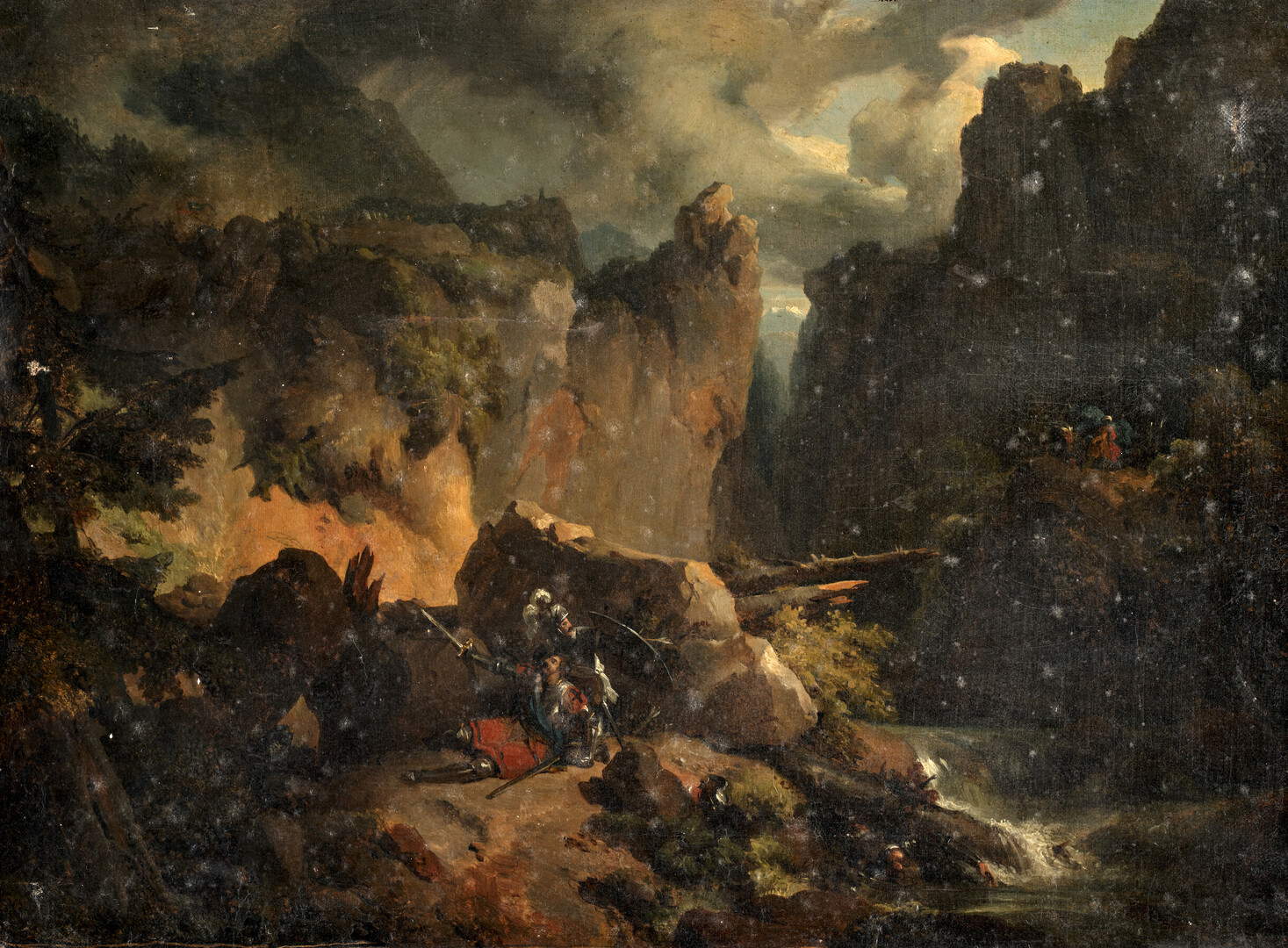
This approach has already yielded concrete results: over the past two years, four works considered lost for decades have been returned to the collections. The first recovery concerns *The Death of Orlando* by Achille-Etna Michallon, a study from 1818 that entered the collections in 1892 as part of the collection from Léon Cogniet’s studio. The painting had been missing since the mid-20th century. In 2026, a German couple who had purchased it on the art market in Germany in the 1980s spontaneously decided to return it after identifying, thanks to labels and inscriptions on the back, its provenance from the Orléans Museum. The work will now be restored with the support of the Arcanes studio.
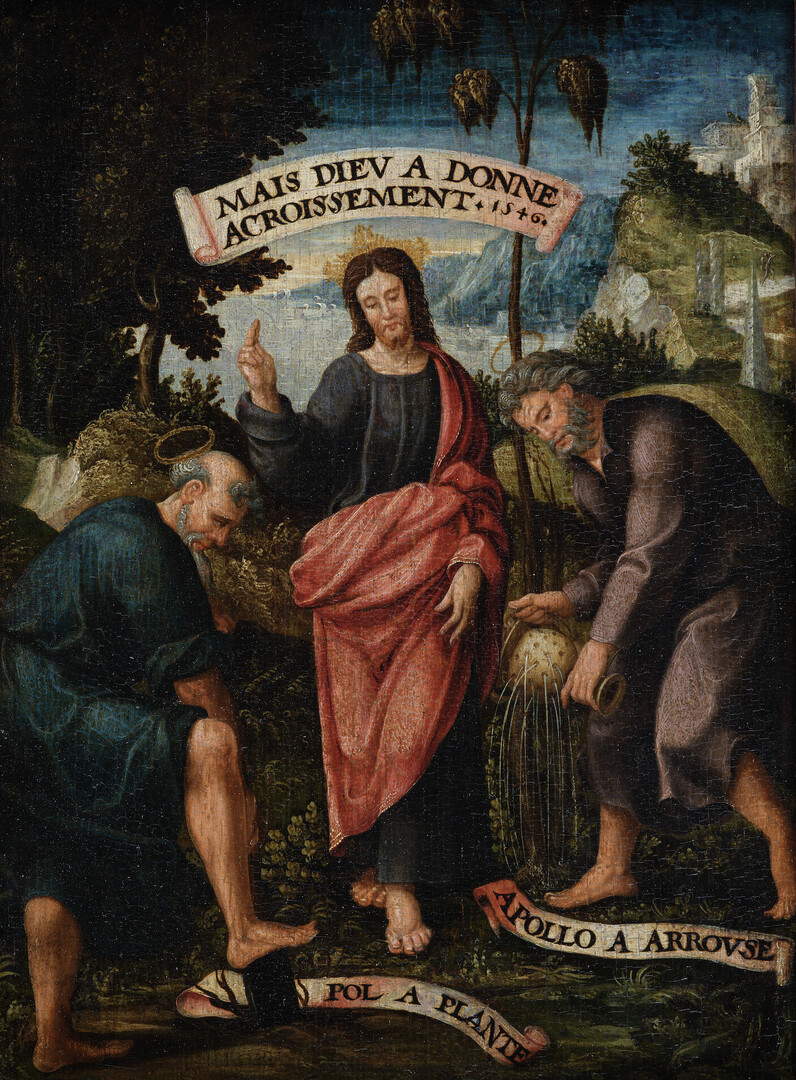
The anonymous painting depicting Christ between Saint Paul and Apollo of Alexandria, created in 1546, has also returned to the museum. Having disappeared before 1923, it reappeared on the market in 1994 and was purchased by the Beauvais Museum. Even then, Eric Moinet, director of the Orléans Museum, had recognized the painting based on the description in the 1876 catalog, but it had not been possible to secure its return. Thirty years later, however, the Beauvais Museum agreed to the transfer, allowing the work to return permanently to its original collections.
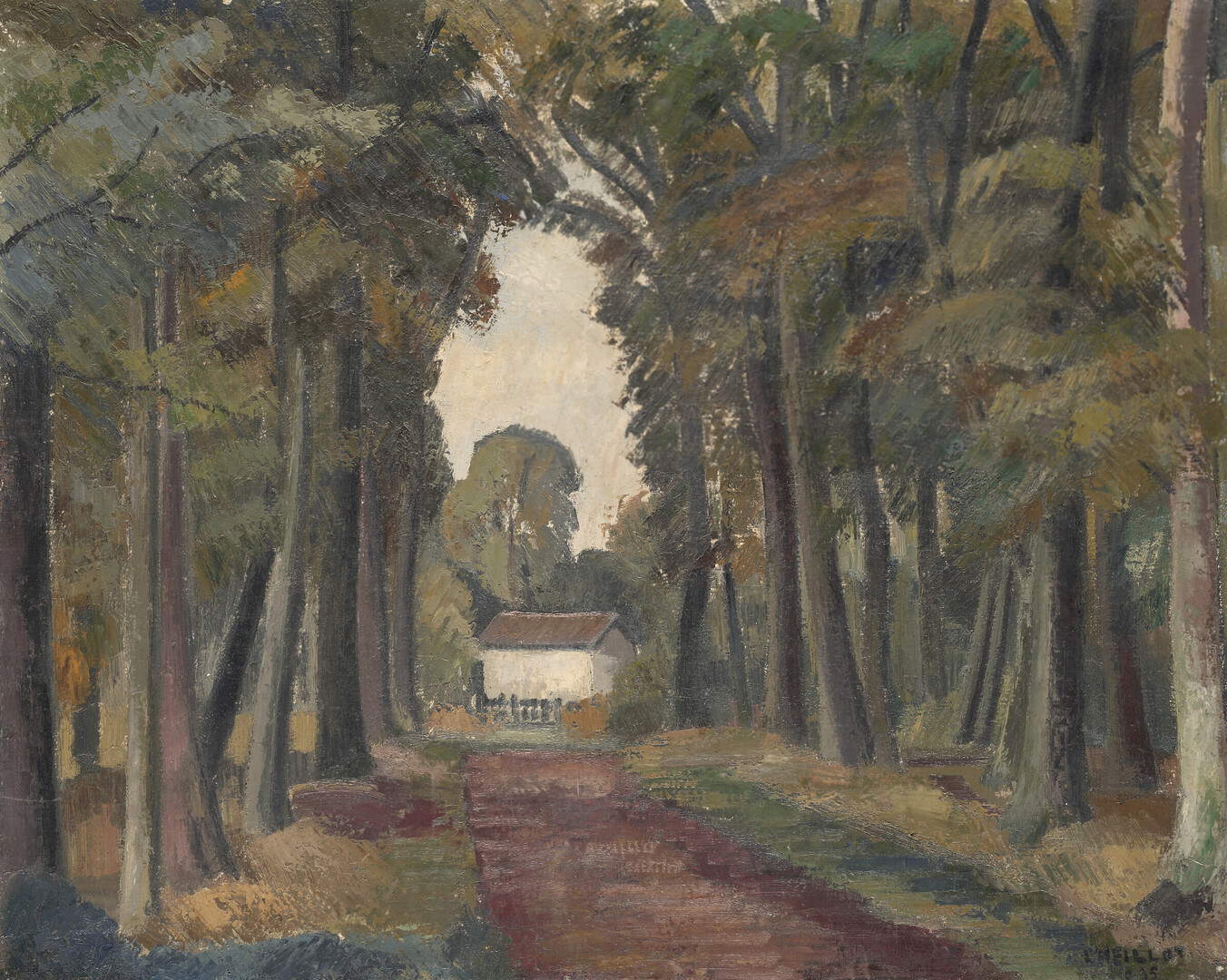
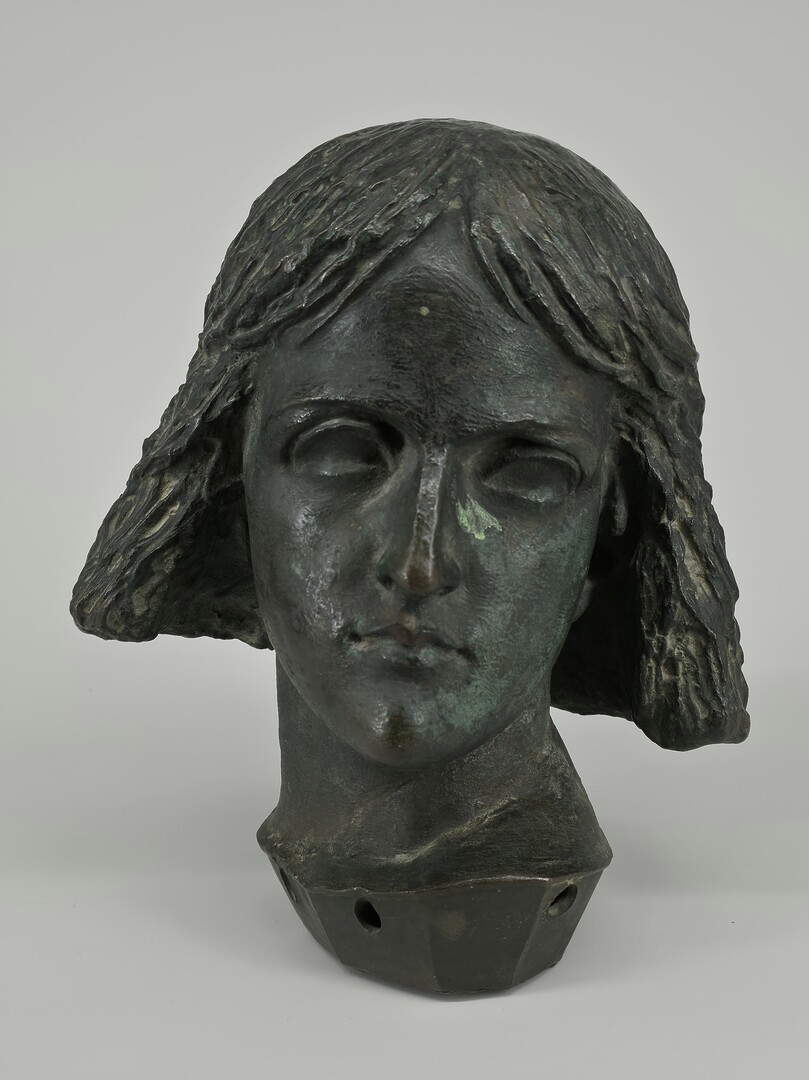
The third recovery concerns the landscape *Sous-bois, Bellevue* by the painter Louis Neillot, created in 1935. The painting had been kept in Orléans and displayed in a public office, and disappeared in the 1970s. Thanks to research by attorney Matthieu Semont, the work was located at an auction and returned to the museum in 2024. The fourth recovery, however, involves a sculpture. It is the head of the statue of Joan of Arc, created in 1899 by Armand Le Véel and unveiled in the archbishop’s garden. The work was almost completely destroyed in 1944, but the head was saved by what sources describe as “a patriot.” Kept in private hands for decades, it was donated to the museum in 2023 to be reunited with the other surviving fragments.
These recoveries now fuel the hope of unearthing many other works of extraordinary historical and artistic value. Among the most important paintings still being sought is a Deposition into the Tomb attributed to the Master of Frankfurt, an artist active in Antwerp between the late 15th and early 16th centuries. The work, an oil on panel measuring 61 by 80 centimeters that belonged to the Paul Fourché collection and was donated to the museum in 1907, disappeared during World War II. A photograph preserved in the archives enabled art historian Stephen Goddard to propose its attribution to the Master of Frankfurt in 1982.
Among the most significant Italian works is a *Head of a Little Angel*, a fragment attributed to Antonio Allegri, known as Correggio, from a painting depicting the Virgin and Child with the Infant Saint John. It, too, belonged to the Fourché collection and was lost during the war. A *Saint Jerome* by Luca Cambiaso, first recorded in the museum’s inventory as early as 1826, is also missing. The painting had been deposited at the Hôpital Général before 1851, subsequently removed in 1902 during renovation work due to its state of preservation, and reported as missing since 1912. The archival description depicts the saint as a half-length portrait with his chest bare, holding a skull in his hand. Also included in the long list is *The Fainting of the Virgin* by Alessandro Casolani, a late 16th-century panel painting from the Fourché collection that was lost during the war, along with the *Portrait of a Woman* attributed to Bronzino. The latter had traditionally been identified as a portrait of Caterina de’ Medici, but Paul Fourché had already ruled out this hypothesis by noting the inscription on the panel and the figure’s attire, which he deemed incompatible with the sovereign.
Among the Italian masterpieces is also a Madonna and Child attributed to Lorenzo Costa. Roberto Longhi, during a visit to the museum in 1920, had described it as a splendid work of the Ferrara-Bologna school, judging it to be “indisputable.” Also of great interest is a Deposition attributed to Giovanni Antonio de’ Sacchis, known as Pordenone. Originally considered a work of the 16th-century Florentine school, it was re-examined by Longhi, who in 1920 described it as “very good,” proposing that it be attributed to the Venetian school and probably to Pordenone himself.
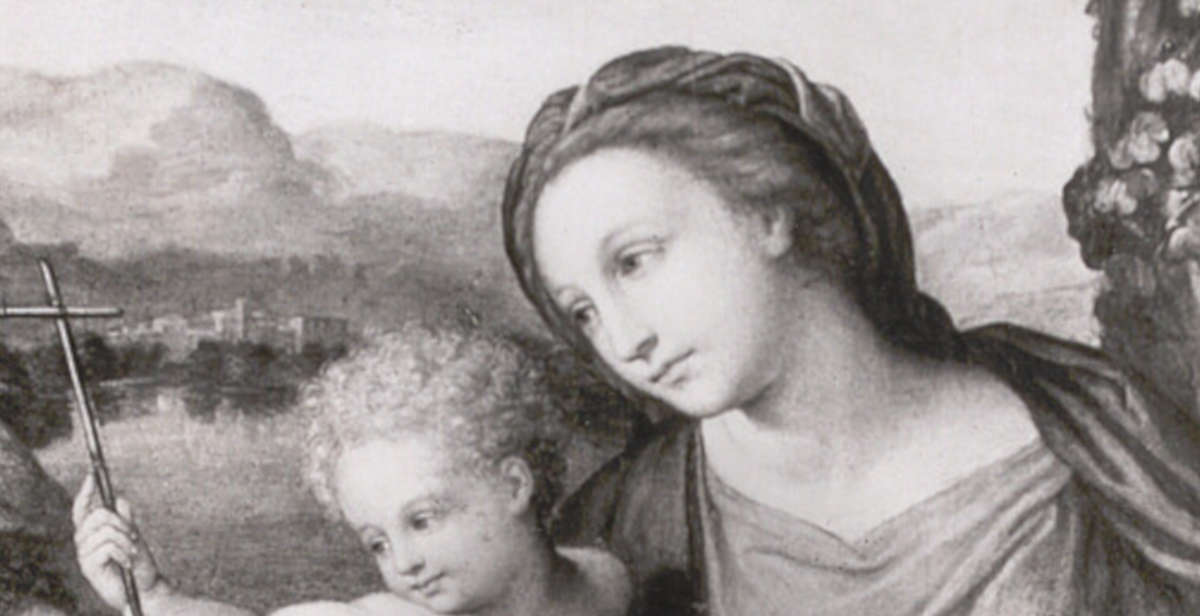
Among the most important works still missing is also a beautiful Madonna and Child with the Infant Saint John from Raphael’s workshop. The painting had a particularly complex provenance: discovered in 1869 in Lavagno, it had passed through the hands of several collectors and antique dealers before being purchased by Paul Fourché. Fourché himself had assembled the central panel with two side panels attributed to Jan van Hemessen. Roberto Longhi emphasized its exceptional quality, hypothesizing that it was painted by a pupil of Raphael and suggesting connections to Perin del Vaga, while others later proposed the name of Giovanni Francesco Penni.
Among the Flemish artists, the following works remain untraceable: *The Kingdom of Pluto* by Pieter Brueghel the Younger, *The Golden Age* by Frans Francken I, *Portrait of a Man* by Hans Holbein the Younger, *Saint Anthony the Abbot* attributed to Joachim Patinir, the *Portrait* known as that of Federico Spinola by Frans Pourbus II, *Vanitas* by Jacob Jordaens, and a *Portrait of a Man* by Ferdinand Voet. As for Spanish painting, the fragment depicting Saint Michael the Archangel and a saint with a bow, attributed to the Master of Rio Frio, is also sought after. Originally considered a work of the 15th-century Provençal school, it was later reattributed to the Spanish school and included in the corpus of the Master of Rio Frio by Chandler Post in 1970.
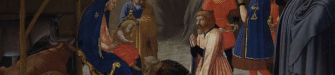
There is no shortage of important works from 17th-century Italy, such as Luca Giordano’s *The Adoration of the Magi *—whose attribution replaced the earlier one to Giovanni Domenico Tiepolo following Roberto Longhi’s studies—and Alessandro Tiarini’s *The Death of Lucretia *. Among its major losses, the museum also notes four paintings by Antoon van Dyck, all of which disappeared during World War II and remain untraceable to this day.
The list also includes Jean Siméon Chardin’s *Portrait of Charles Nicolas Cochin*, purchased by Paul Fourché in 1914 during the sale of the J. Duval collection in Bordeaux; Eugène Boudin’s landscape *Chenal à marée basse*; Giuseppe Palizzi’s *À dos d’ânes* (one of the collection’s major works of 19th-century Italian art), and numerous other paintings from the Fourché collection. A notable exception is Alfred Sisley’s *Le Jardin au bord de l’eau *. The work, initially believed to have been lost during the war, was rediscovered in the museum’s storage around 1952. On April 30, 1998, however, it was stolen by the notorious thief Stéphane Breitwieser and has not been recovered since.
The work of the Musée des Beaux-Arts d’Orléans demonstrates that even decades later, the recovery of lost works is possible. Every vintage photograph, every label on the back of a canvas, every note in the archives can become the decisive clue for returning a work believed to be lost to the public heritage. For this reason, the museum continues to invite anyone who recognizes one of the 424 paintings still missing to report its whereabouts: so that these works, donated to the community over a century ago, may one day once again become part of everyone’s cultural heritage.
 |
| The Museums of Orléans Issue an International Appeal: “Help Us Find 424 Missing Paintings” |

Warning: the translation into English of the original Italian article was created using automatic tools. We undertake to review all articles, but we do not guarantee the total absence of inaccuracies in the translation due to the program. You can find the original by clicking on the ITA button. If you find any mistake,please contact us.
















 IT
IT FR
FR DE
DE ES
ES CN
CN


