





After extensive renovations, Munich’s Villa Stuck Museum, home to the largest collection of publicly owned works by Franz von Stuck, will reopen to the public on October 18, 2025.
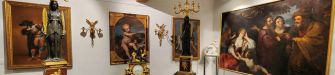
To mark the reopening, the historic Halls will undergo a thorough renovation, with new tapestries and furnishings and new works dialoguing with the original architecture. The exhibition walls of the former dining room, boudoir, and smoking room are now, for the first time, enhanced with a collection of paintings that invites visitors to rediscover two key phases of Franz von Stuck’s work.
The early works, many rarely exhibited or heretofore unpublished, reveal the central themes of the artist’s Symbolist poetics: mythology, religion, the desire for immortality, hunting, struggle and sacrifice. Canvases such as The Guardian of Paradise (1889), The Fantastic Hunt (pre-1890), Vision of St. Hubert (1890), Orpheus (1890), The Corpse of Christ (pre-1891), Samson (1890) and the manifesto Homage to Painting (1889) show an already mature language, imbued with dramatic tension and transcendence, and consecrate the artist early in his career as a significant exponent of Symbolism.
In contrast, the second period, between 1910 and 1914, corresponds to the peak of his painting career. The artist elaborates a freer and chromatically intense language, as evidenced by masterpieces such as Dissonance (1910), The Blowing Faun (1914), The Evening Star (1912), and the oil sketch for Sunset on the Sea (1910).
Special attention is given to female portraits, including those of the artist’s wife and daughter, along with important private commissions such as Portrait of Bettina Heinemann (1912-13). New to the collection is the Portrait of a Mainz Woman (Frau Fränkel), datable around 1914, in its original gilded frame, also designed and painted by Stuck. The work, inherited by the museum from a collector in Munich, is now on display in the former boudoir.
Significant restorations include the Baroque painting The Beheading of St. John, repainted by Stuck and now on display in the reception room, and several elaborate and finely worked frames. These restorations offer a new perspective on the artist’s sophisticated and experimental painting technique.
In the Music Room, visitors will be able to admire the reconstruction of vermilion-colored silk curtains, faithfully reproduced on the basis of historical sources. Rope railings and carpeting on the staircase, as well as curtains in the rooms overlooking the garden, have also been renovated according to historical models.
Research on colors and painting techniques conducted on the paintings in the Music Hall, in cooperation with the Doerner Institute in Munich and theBavarian State Office for the Protection of Monuments, will be illustrated during dedicated guided tours.At the same time, the Department of Textile Restoration of the State Office for the Preservation of Monuments supervised the consolidation of the precious upholstery textiles in the Reception Hall and the Music Hall.
Thus, in the Historic Rooms of the Villa Stuck Museum, major conservation and modernization works were carried out with the aim of ensuring maximum protection of the works and rooms. The interventions included the renovation of security, fire and air conditioning systems, involving windows, walls and ceilings, ensuring optimal conditions for the preservation of the heritage.
A lavishly illustrated 56-page brochure in German and English will also be available on the occasion of the reopening and distributed free of charge to visitors with the purchase of admission tickets.
The overall renovation of the Historic Rooms and conservation work was made possible through the generous support of the Villa Stuck Foundation Promotion Association.
Photo: Jann Averwerser
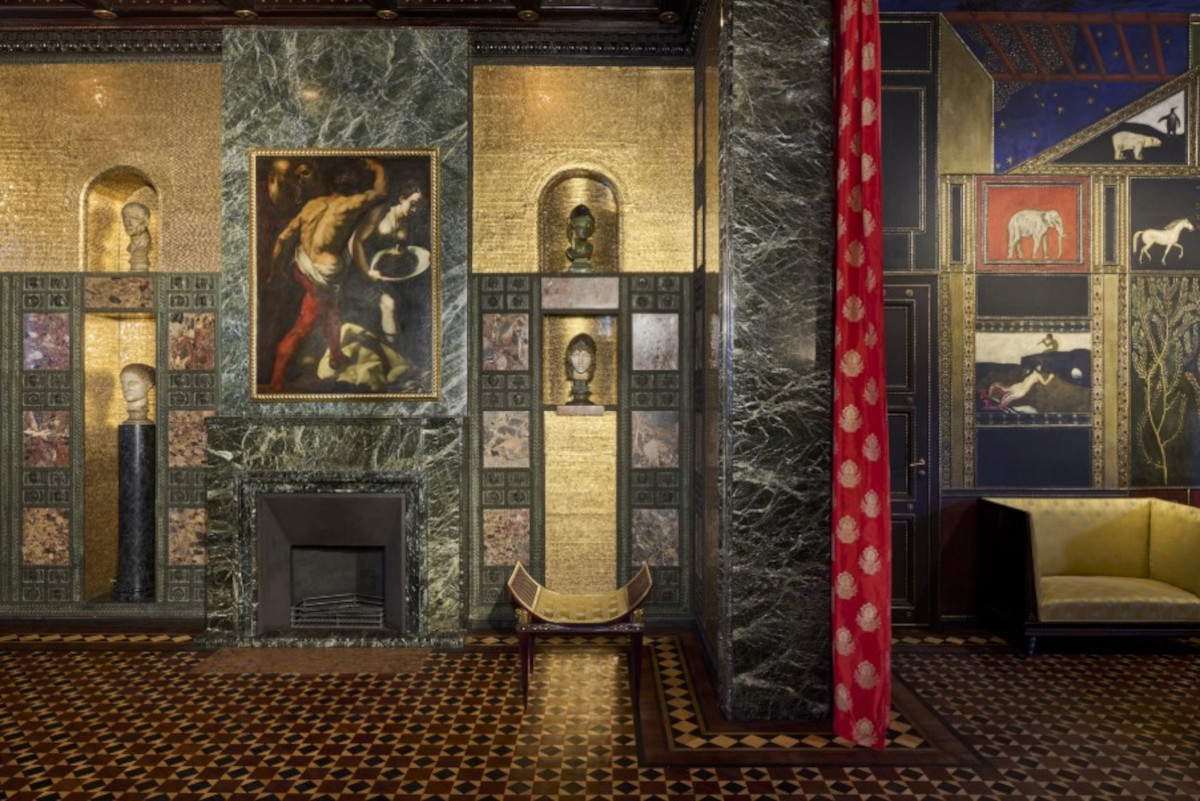 |
| The Villa Stuck Museum reopens renovated. Houses the largest collection of the artist's works in public ownership |

Warning: the translation into English of the original Italian article was created using automatic tools. We undertake to review all articles, but we do not guarantee the total absence of inaccuracies in the translation due to the program. You can find the original by clicking on the ITA button. If you find any mistake,please contact us.















 IT
IT FR
FR DE
DE ES
ES CN
CN


