





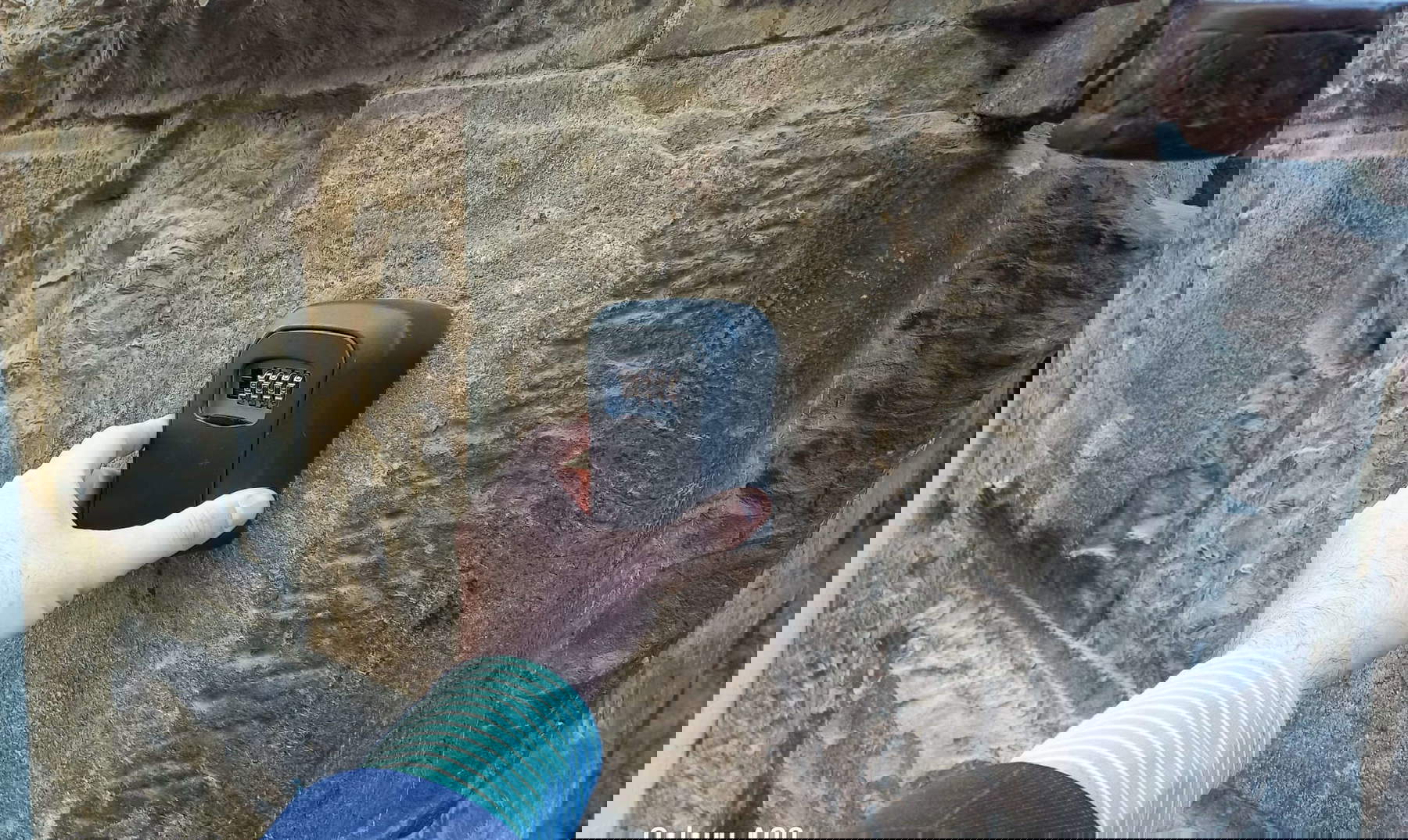
This city is not a hotel, one might say, and as of a few hours ago it has had a ruling that puts it in black and white. In Florence, Mayor Sara Funaro spoke of a “historic day,” rebuked by Forza Italia, which spoke of “foolish jubilation,” but yesterday’s was truly a turning point for the tourism and housing policies of the Tuscan capital (and also of all cities of art). With the publication of three judgments by the Tuscany Regional Administrative Court, in fact, the administrative court rejected 19 appeals that citizens and associations and economic entities had filed against the Municipal Regulations approved by Palazzo Vecchio in May 2025 with various measures aimed at limiting and regulating the impact that large tourism flows have on the city. As a result, the city administration was granted the correctness of the limitations and prohibitions placed with the regulation, such as the need to have specific authorization to rent an apartment to tourists and the prohibition of new properties on the market for this purpose if they were not already carrying out the activity as of December 31, 2024. And so, for example, away with keyboxes, i.e., the little metal boxes in the shape of padlocks with combinations hung on railings or gratings or attached to walls that hold the keys to apartments rented by tourists on online platforms(we talked about them here some time ago).
It all started a dozen years ago with the Airbnb portal beginning to offer an alternative to tourists going on vacation: instead of going to a hotel, why not go to the home of a citizen of the place visited? An updated and corrected reinterpretation of the au pair who went abroad to learn the language. But with the new course, we were talking about the sharing economy, an economy born out of the ways of sharing goods and experiences, such as an apartment could be. Soon, however, we went from the room rented out by grandma to round up, to the whole apartment: more and more inner-city residents sensed the business were leaving their homes just a stone’s throw from famous monuments to go live perhaps in the suburbs and rent out the property thanks to this great global showcase of Airbnb (which was later followed by all the others): there was no need to know real estate brokers, agencies or tour operators, or advertise like hotels, just be on the platform and anyone in the world looking for Florence could find us and rent our apartment. There was a flight of residents from the center with whole buildings, whole streets, with no more residents, with the houses solely used for tourist rentals. Much more profitable and hassle-free way than renting to a family for long years with possible delinquency problems. There were less than 4 thousand listings on Airbnb for an apartment in Florence in 2015, rising to 12 thousand in 2025. And, with the accounts made by Corriere Fiorentino, a home has an average annual revenue 34700 euros and an average price per night at 257 euros. Hoteliers for years have complained that it was no longer the single private initiative of the individual citizen who puts income from his parents’ old house in the center but a real entrepreneurial activity, thus complaining of unfair competition in the accommodation market. In fact, on Airbnb there are many accounts that manage multiple apartments: there is Edoardo who provides 236, Mamo 187, there are 138 those of Istay, 111 those of Lorenzo and 105 of Francesco, just to stop at the top 5.
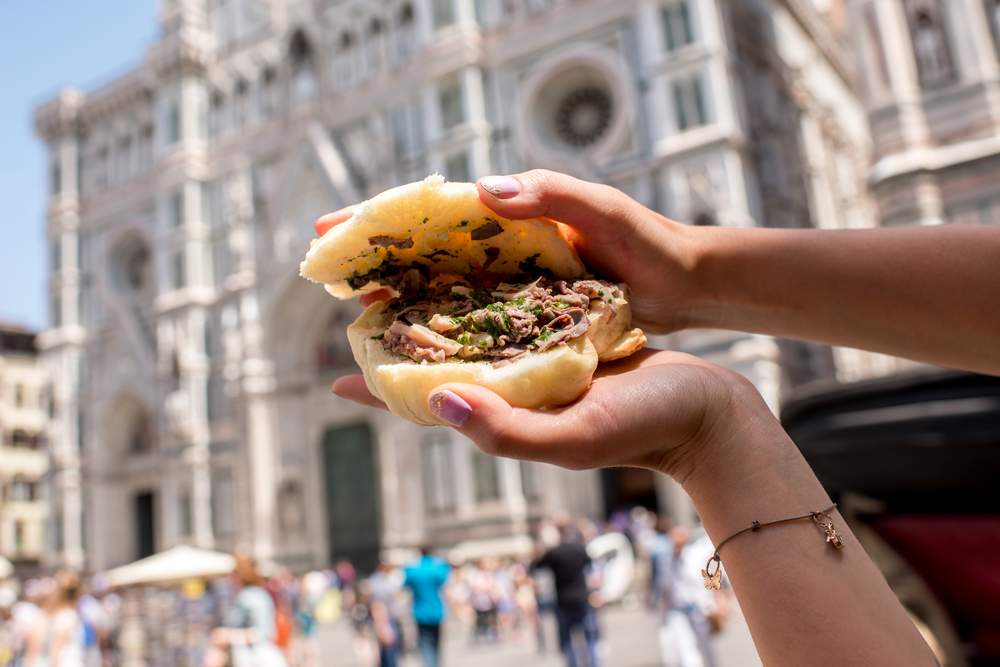
And with the disappearance of residents, services and all kinds of commerce have also changed: gone are typical stores of a living town supplanted by services for tourist use: laundromats, bicycle rentals, tourist items, and then lots of food and eating of all kinds. So much so that a local newspaper renamed a street in downtown Florence de steps from Piazza Signoria “Borg’Unto” because of the concentration of places where they sell focaccia and sandwiches with rows of people dozens of meters long dropping remnants, bread crumbs and cold cuts on the ground.
Florence, whose historic center is a UNESCO site, was becoming an open-air museum good for taking pictures. The glimpses could be seen ten years ago when Tom Hanks came to Florence to shoot the film Inferno and on a break in filming he went as a guest on David Letterman’s Late show, and when the reporter who asked him what he had brought as a souvenir from Florence, he pulled out one of those selfie sticks: “These things are sold everywhere in Florence. That would be the cradle of the Renaissance ... ”.
The City Council, in 2025, after a regional law of the Tuscany Region, approved the regulation, the first in Italy following the path taken by other large cities such as Barcelona or New York with the declared intention of curbing those phenomena considered to be the cause of a distortion of the social and urban fabric, and against which then came appeals from those who felt their right to dispose of their private property had been violated. But the Tar gave the City of Florence reason across the board: the Tar, in particular, cited Constitutional Court ruling 186/2025 and wrote clearly that “The protection of the urban environment and the objectives of social and cultural policy, together with the preservation of the historical and artistic heritage, constitute imperative reasons of general interest that justify restrictions on the freedom of economic initiative.” The judges of the first section were lapidary, stating that the common good of a city of art can and should justify restrictions on free economic initiative: it is not expropriation, it is identity protection.
The regulation approved by the City Council in May 2025 requires, in addition to the quota, that there be permits and that they be five-year permits, imposes specific minimum requirements for leased properties such as a minimum area of 28 square meters (to garages or 15-square-meter studios converted into cells for tourists) and facilities. Also considered correct was the Urban Police Regulation prohibiting keyboxes: instead of wasting time waiting for tourists to arrive so they can hand them out, it was preferred to put them in these little boxes by telling them the code with which to open them. Here the criticism of renting in the city from many quarters was at its highest: homeowners were not only accused of making the city ugly with all these padlocks attached all over the place, but more importantly, “they don’t even want to go through the trouble of waiting for the customer and getting to know them... nothing more to do with the immersive experience that was initially proposed, there is no sharing with the locals.”
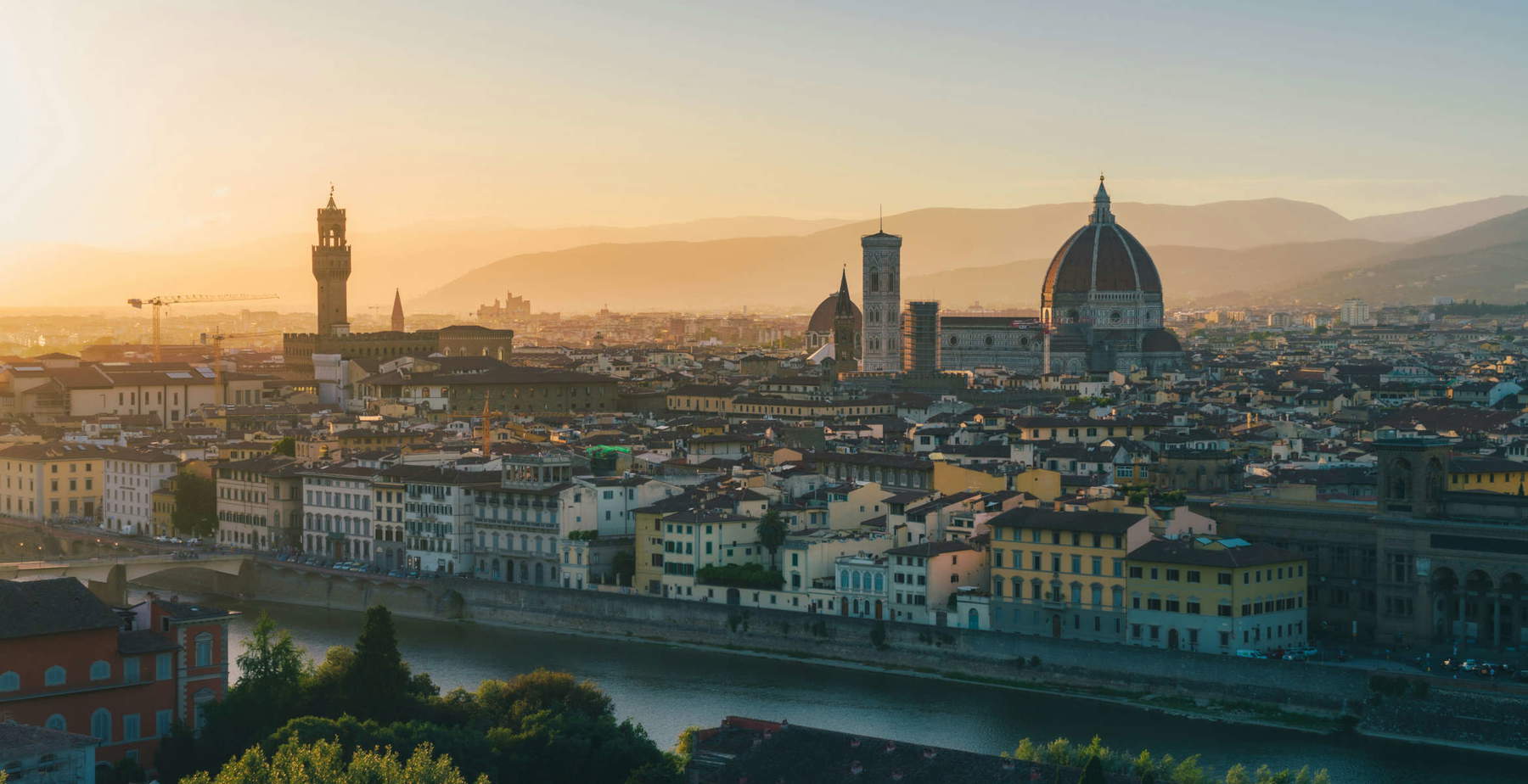
Specifically, as the Florence City Council statement explains, the Regional Administrative Tribunal for Tuscany (Section I) rejected the appeals filed against the City Council Resolution No. 27 of May 5, 2025 and the related “Regulations for Short Tourist Leases,” confirming its legitimacy.
The Regional Administrative Court found the approach of the Municipal Regulations adopted in implementation of Article 59 of Tuscan Regional Law No. 61/2024 to be legitimate, recognizing that the regulatory framework allows municipalities with a high density of tourism - and provincial capitals - to define specific criteria and limits and to provide for an authorization regime for short tourist leases in certain areas. “The submission of the activity of short tourist rentals to the authorization regime [...] can be said, therefore, to be justified by imperative reasons of general interest,” the judges write, concluding that: “the contested regulation does not present any critical issues and escapes the inferred censures.” For the TAR, therefore, the municipality can impose permits, quotas and limits on tourist rentals when overriding public interests come into play. The rulings identify these interests primarily in the protection of housing and urban balance.
The judgments then recognize special protection for the historic center of Florence: in fact, the Regional Administrative Court states that there is no discrimination in providing for stricter rules in the UNESCO area, because Florence is a “UNESCO world heritage site” and has a “concentration of works of art unique in the world,” a circumstance that “legitimizes its differential treatment.” Clarified in the rulings is the general principle that runs through the entire decision: short rentals are not just about tourism or the private relationship between owner and guest, but directly affect the urban layout of the city. For this reason, the Tribunal affirmed that “the rule also affects the government of the territory” and that the objective is to ensure “a ’sustainable’ unfolding” of tourism, as well as “guaranteeing a sufficient and affordable supply of housing intended for long-term rental.”
The Regional Administrative Court of Tuscany also rejected the appeals filed in opposition to the City of Florence’s ban on the installation and use of keyboxes and keypads, contained in the amendment to the Urban Police Regulations approved by the City Council in February 2025, on the grounds of public safety and urban decorum, recognizing the legitimacy of the measure.
The ruling clarifies that the municipal measure should be read consistently with the purposes set forth in Article 109 tulps: the “presence” of the manager or person in charge is understood as the need for “de visu” and real-time verification of identity, rejecting the reading that sending documents without visual inspection would be sufficient. The ruling also points out that it is not ruled out, in the abstract, that verification can also take place with suitable technological tools (e.g., video link systems at the entrance) as long as they allow immediate verification of the correspondence between guest and document. As for urban decorum, the Regional Administrative Court found the municipality’s assessment based on the impact of such devices on the integrity of facades (including historic ones) and the misuse of public supports and facilities to be legitimate.
The judge found the regulation to be balanced and proportionate because it prohibits use when the devices overlook public areas or areas open to the public, but does not preclude it outright: in fact, the installation of a maximum of one keypad per building on a public street is allowed, subject to condominium authorization. Finally, the Regional Administrative Court of Tuscany also ruled in favor of the City of Florence regarding the Variant to the Operational Plan that regulates the phenomenon of short tourist rentals through municipal urban planning tools.
In defining the appeals, the judges affirmed, among other things, that “the prohibition on the establishment of new uses for temporary residence within the UNESCO area appears perfectly suitable for the purpose of preserving the existing building stock, in function of the housing needs of the permanently resident population, preventing its constant and progressive erosion through conversion into properties with a tourist vocation.” Consequently, the Regional Administrative Court rejected all the grounds set forth in the relevant appeals, recognizing that the City of Florence acted legitimately within the scope of its planning powers.
“This is a historic day,” said Mayor Sara Funaro. “This is an important victory not only locally, but also nationally. We are facing important Tar rulings on three issues, which confirm that the administration is on the right path. The judges’ decisions on the regulation of short rentals, on keyboxes, for which there is a fundamental step on the security and urban decorum front, and on the urban planning variant confirm the full legitimacy of the municipality’s action. Respect for the constitutional principles of private property and the full legitimacy of the municipality to regulate on this matter in the interest of the territory, to ensure balance between residency, citizen protection and tourist reception were reaffirmed. It is then recognized the correctness of the measures related to the fight against illegal work and the protection of legality in the sector, which cannot be underestimated. The Tar confirmed the validity of our regulation in all its points, including the rules on authorizations, the constraints provided and the possibility of revocation in the established cases. We will move forward with conviction in the policies already announced, continuing to work for the protection of the balance of the city and the quality of life of residents.”
Of foolish exultations speak instead the group leaders of Forza Italia at the Regional Council of Tuscany, Marco Stella, and at the City of Florence, Alberto Locchi: “The exultations of the City of Florence and the Region of Tuscany for the ruling of the Tar on short rents are foolish and ideological, since the problems remain the same, we are all ready to support the appeal to the Council of State against this ruling of the Tar. It is not by tarring the short-rental sector that decorum is protected, since â in the regional law the hotel sector has been blatantly facilitated, as if tourists who go to hotels are less cumbersome than those in the non-hotel sector. Moreover, municipal regulations take no account whatsoever of the ’hit and run’ tourist, who is the real culprit of overtourism.”
Property Managers Italia, an aggregator of owners of properties used for short-term tourism, speaks of “surprise and bitterness” at the Tar’s decision, “especially in light of the recent precedent of the Sicilian Tar, which had instead challenged a regional regulation deemed excessively restrictive.” “In Sicily,” Property Managers notes, “the Tar had reiterated a fundamental principle: rules must be reasonable, proportionate and consistent with the nature of the extra-hotel sector. Instead, a highly restrictive approach is confirmed in Florence that risks reducing supply without addressing the structural causes of housing problems. This is not only a defeat for entrepreneurs and owners but for the entire city. Florence will increasingly continue to attract international tourism and will therefore need a broad and integrated hospitality system, composed of both the hotel sector and qualified touristic rental operators. Now, how are we supposed to handle steadily growing tourist flows if we simultaneously continue to reduce an important part of the accommodation supply? Rigidly limiting supply risks further concentrating the market, reducing competition and contributing to price increases without producing concrete benefits on the housing front. Today we are faced with situations that are difficult to explain: an apartment can be rented under a residential contract for years, but not a few days to a tourist. We continue to believe that we need balanced regulation, not punitive or symbolic measures.”


The author of this article: Andrea Laratta
Giornalista. Amante della politica (militante), si interessa dei fenomeni generati dal turismo, dell’arte e della poesia. “Tutta la vita è teatro”.Warning: the translation into English of the original Italian article was created using automatic tools. We undertake to review all articles, but we do not guarantee the total absence of inaccuracies in the translation due to the program. You can find the original by clicking on the ITA button. If you find any mistake,please contact us.



























 IT
IT FR
FR DE
DE ES
ES CN
CN


