





It has barely arrived, and already it must leave: Antonello da Messina’s*Ecce Homo*, purchased by the Italian government last February for $14.9 million (approximately 12.6 million euros), and added to the exhibition at the MuNDA —the National Museum of Abruzzo —in June 2026, is already leaving its home just two months after joining the museum’s collections in L’Aquila to be exhibited on loan at the Rimini Fair during the Meeting for Friendship Among Peoples, scheduled for August 21–26. The transfer was planned, but it takes on particular significance considering that the work arrived at the museum just two months ago, that L’Aquila is the 2026 Italian Capital of Culture, and especially in the wake of the theft of Antonello’s panels from the Regional Museum of Messina.
Visitors to the MuNDA are now greeted by a notice informing them of the panel’s temporary relocation, which was posted on social media by philosophy scholar Simone Pollo: the sign alerts visitors to the absence of Antonello’s now-famous painting precisely because of the CL Meeting on the Romagna coast.
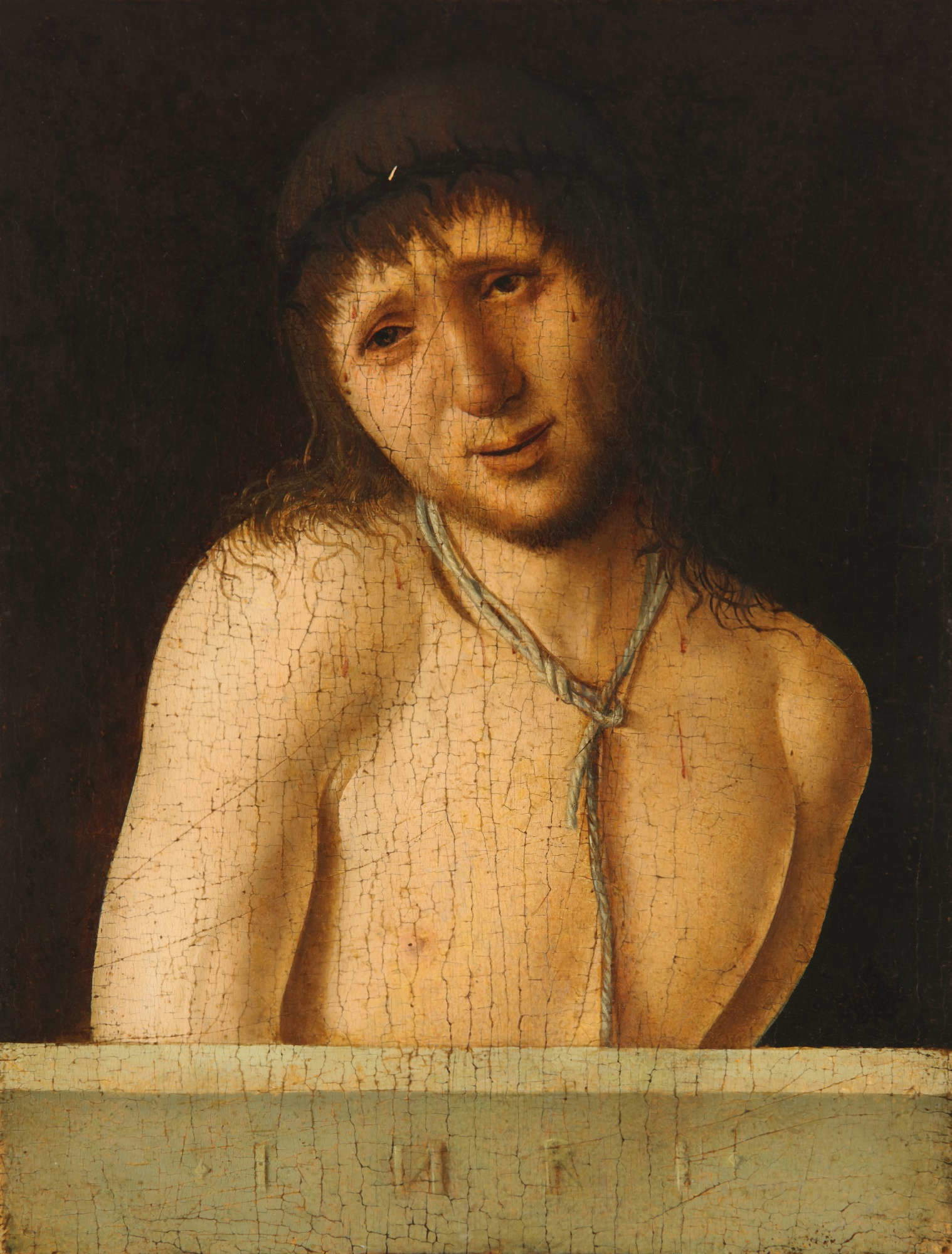
The *Ecce Homo* is a small panel painting, measuring approximately 20 by 15 centimeters, yet characterized by extraordinary expressive power. The work is painted on both sides and features two images deeply interconnected. On one side is a half-length portrait of Christ, his face marked by the Passion and his gaze directed directly toward the viewer. The image thus establishes a silent and immediate dialogue, capable of bridging the distance between the depicted figure and the observer. On the other side, however, appears Saint Jerome as a penitent, set against a rocky and austere landscape, conceived as a place of solitude and meditation.
The panel was intended for private devotion: an image to be kept and carried with one, meant for individual and silent contemplation. Dated between 1460 and 1465, it belongs to a decisive phase in Antonello da Messina’s artistic career, during which his knowledge of Flemish painting merged with the Italian tradition. From this fusion emerged a visual language characterized by a distinctive luminosity, a greater naturalism in the rendering of the figures, and remarkable psychological depth.
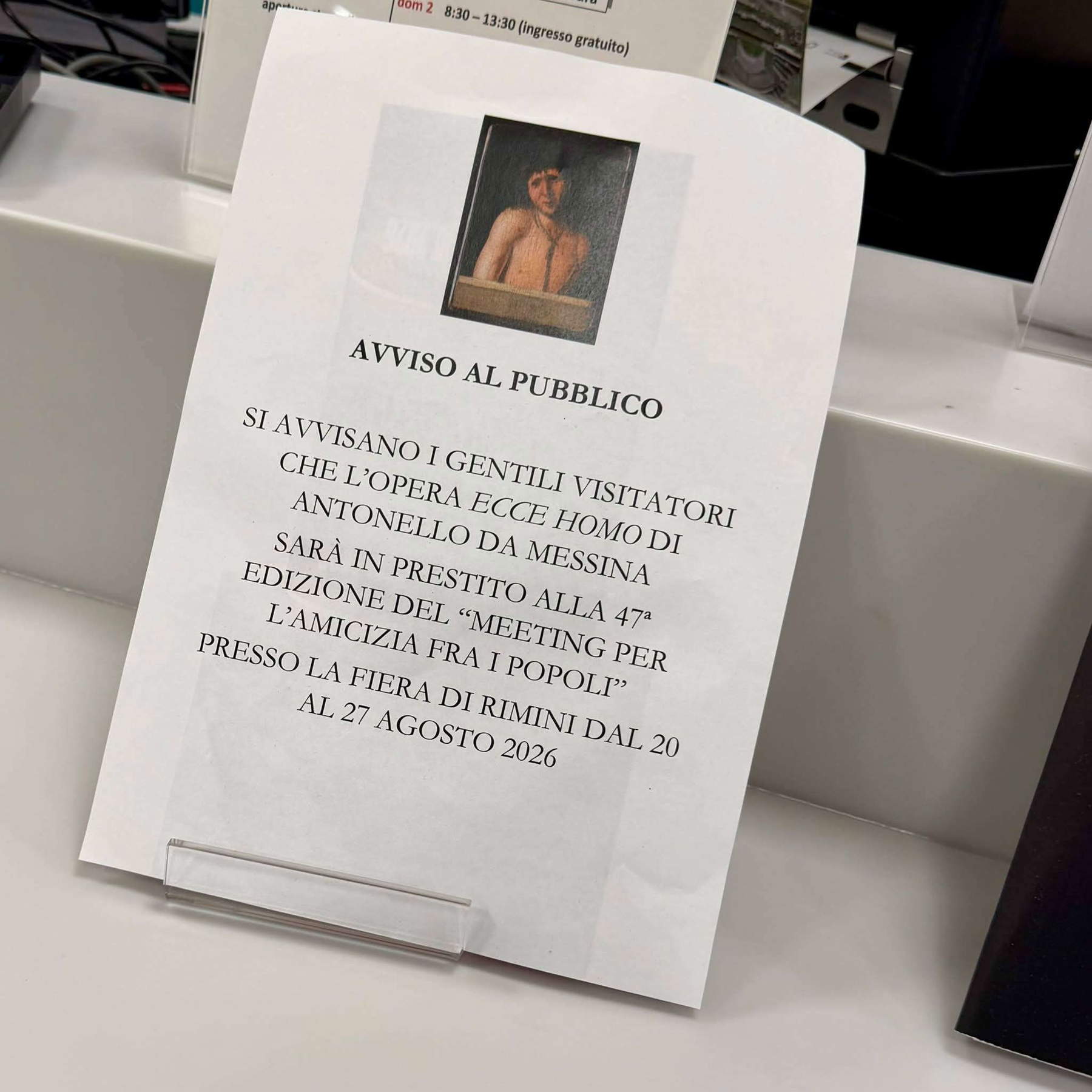
The work housed at MuNDA is also considered the first known version of *Ecce Homo* created by Antonello. The subject would later recur several times in the artist’s oeuvre, eventually reaching some of the highest expressions of the depiction of Christ’s humanity in the Renaissance. After a long period in private collections, this extremely rare panel has been returned to the public thanks to its acquisition by the Ministry of Culture.
The problem, however, is that its temporary removal—even if only for a week—was given little attention, and many, including Pollo himself, who expressed surprise at the work’s temporary relocation, were likely taken aback. This is not the first time, however, that a work has been loaned by the Ministry of Culture to the CL meeting: it already happened last year with a work attributed to Perugino and housed at the National Gallery of Umbria in Perugia. But while last year’s loan could be considered acceptable—since a lesser-known work was sent to Rimini—this year is different, as the MuNDA is being deprived for a few days of the main reason why many visitors are coming to the museum. It is true that the MiC had previously announced a “tour”of the *Ecce Homo* through various Italian cities, but no one expected it to start in Rimini, and above all, very little advance notice was given.
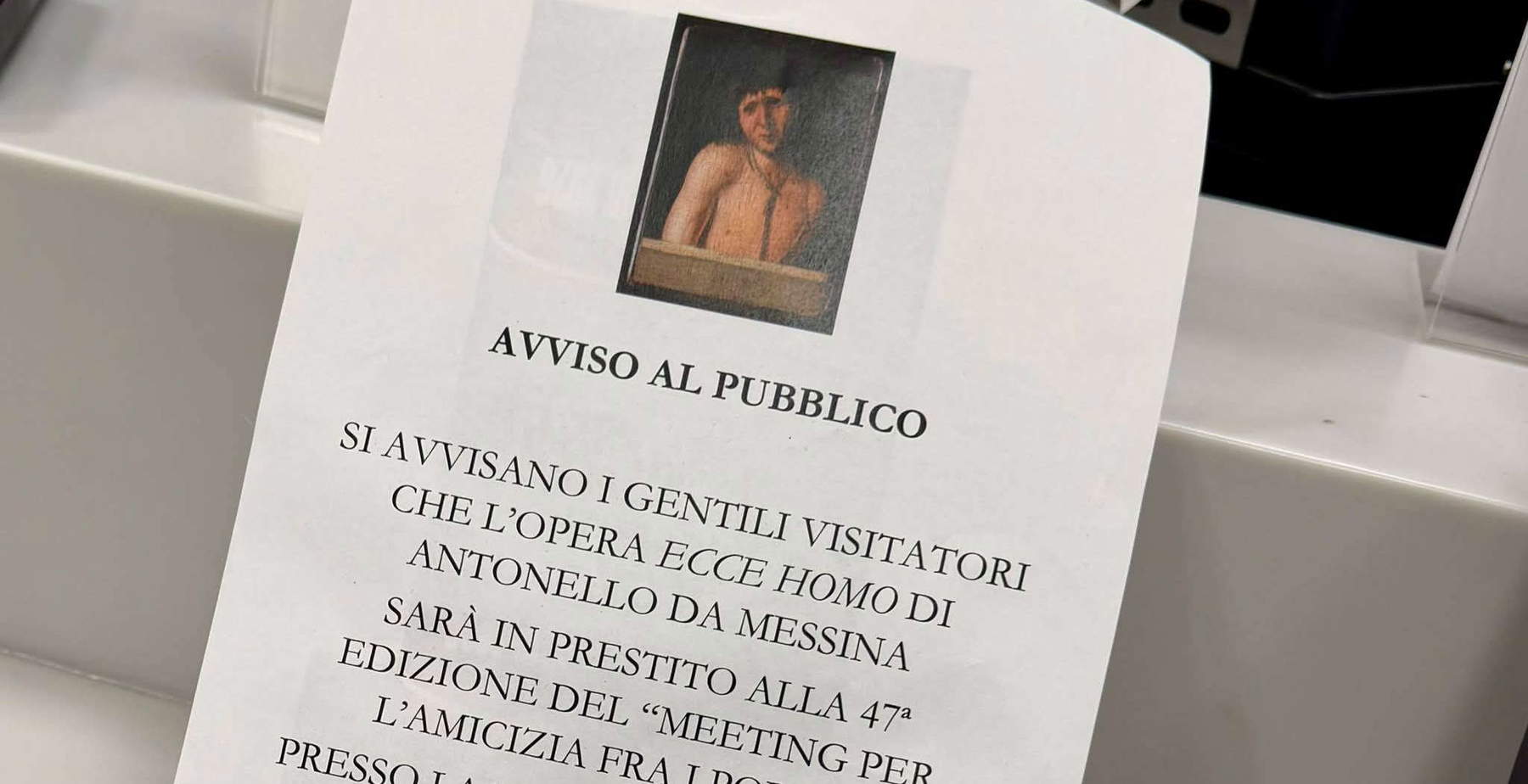 |
| Antonello da Messina’s *Ecce Homo*, purchased by the government, has been loaned to the CL Meeting |

Warning: the translation into English of the original Italian article was created using automatic tools. We undertake to review all articles, but we do not guarantee the total absence of inaccuracies in the translation due to the program. You can find the original by clicking on the ITA button. If you find any mistake,please contact us.
























 IT
IT FR
FR DE
DE ES
ES CN
CN


