



by Redazione 10/06/2026



Categories: News / Disclaimer
The measures in the implementing decrees approved today by the Council of Ministers on artificial intelligence, with a focus on education, public administration and the professions.


Artificial intelligence enters the school system permanently, both as content to be known and as a resource for renewing teaching methodologies. This is one of the novelties of the legislative decree approved today in preliminary examination by the Council of Ministers as part of the adaptation of national legislation to the provisions of the Regulation of the European Parliament and the Council on the powers of national authorities and the use of artificial intelligence in education. In this framework, training is seen as the enabling condition of the national AI strategy: not just technical training, but a path aimed at developing critical skills, risk awareness, interpretive skills and responsibility in the use of tools. The goal is not to passively follow technological evolution, but to strengthen the educational role of schools. The implementation of the delegation affects all areas of school education, introducing specific measures aimed at students, teachers and adults.


Among the main measures envisaged is the updating of school curricula in the second cycle of education, with the integration of advanced technologies and generative artificial intelligence into curricula. AI is also included in civic education, with a focus on ethical profiles and digital citizenship. STEAM (Science, Technology, Engineering, Arts and Mathematics) skills and school orientation activities are also planned to be strengthened to help students make educational and career choices consistent with technological transformations. Of particular importance then is continuing education for teachers, which will include the study of how AI systems work, possible risks of error and bias, data protection, and how to use AI responsibly.


Territorial technical-ethical committees organized in networks will be established to support schools, with tasks of pedagogical guidance, support for educational experimentation, protection of fundamental rights and data protection. These bodies will also help update school regulations to ensure safe and verifiable use of artificial intelligence.

A further innovative element concerns measures designed to counter the educational emergency resulting from the abuse of social media, digital platforms and AI. Schools thus become garrisons of digital prevention and well-being. To this end, a training plan for teaching staff is planned, funded with 100 million euros, aimed at strengthening the school system’s capacity to prevent risks, digital addictions, algorithmic opacity and forms of conditioning of minors. The involvement of families is also planned, in order to foster a balanced growth of the individual and minors even in the digital environment.
Training initiatives will also involve adults, through structured literacy paths and training on artificial intelligence, enhancing skills already possessed and encouraging processes of professional retraining, updating and reintegration into the labor market. The integration of training activities dedicated to AI in higher education pathways and ITS Academies is also promoted, with the aim of enhancing its role.
Artificial intelligence is not only concerned with specialized fields, but, due to its transversal character, it is introduced in the different university, AFAM and technical-professional paths through content adapted to the different educational contexts. Universities and AFAM institutions will have to include training activities dedicated to the conscious and safe use of AI systems, including through laboratory and interdisciplinary modes.
The minimum content will cover the functioning of the systems, the correct interpretation of the results produced, legal aspects, risks related to cybersecurity, and the impact on rights. Training will also need to foster the integration of technical, legal and ethical skills. Regulatory and ethical insights will be introduced in courses with a predominantly scientific character, while technical skills will also be developed in economic and legal tracks. ANVUR will be in charge of monitoring the quality of educational offerings based on the indications of the Minister of Universities and Research, including for the purpose of incentive policies. Science dissemination, literacy and professional training activities carried out by teachers and researchers will also be valorized, recognizing their contribution also for the purposes of evaluation and career progression. ITS Academies will be valorized as a strategic segment of the higher tertiary system, thanks to the integration of education, innovation and production needs, and the training of figures suited to work in technologically advanced contexts.
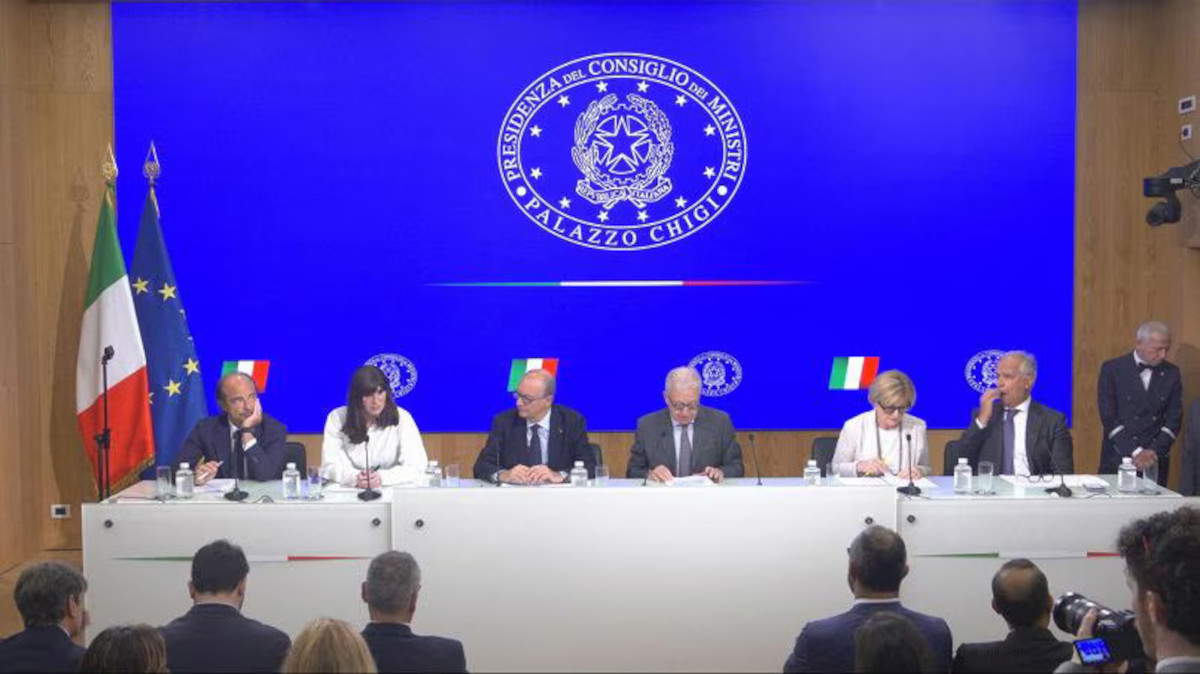
Artificial intelligence will also be introduced into public administration, representing a concrete opportunity to increase public value by making services more accessible, simplifying administrative processes and improving planning capacity. The implementing provisions provide for the integration of AI systems into the recruitment, training and organizational innovation policies of public administrations, with the aim of making administrative action more efficient and speeding up processes.
With regard to regulated professions, including the healthcare field, the regulatory intervention introduces AI literacy and refresher courses in both initial and continuing education. However, the principle that responsibility for professional activities continues to rest with the professional and cannot be transferred to the technological tools used remains firm. The training courses prepared by the professional orders will have three main dimensions: technical, legal and ethical.
The implementation package on artificial intelligence aims to promote innovation while ensuring the centrality of the individual. Artificial intelligence is recognized as a tool that can support decisions, services, educational pathways and competitiveness, but it cannot replace human responsibility or limit fundamental rights. The common element in all the measures introduced is the balance between technological development and the protection of people. This balance is pursued through the dissemination of skills through dedicated training paths, the protection of workers, the guarantee of effective access to justice in case of harm, the introduction of sanctioning tools for the most serious violations, and the coordination of competent authorities.
These draft legislative decrees have today undergone preliminary examination by the Council of Ministers. There will subsequently be scrutiny by the parliamentary committees; the Conference of Regions; and the relevant authorities.
The provisions appear to be in line with the European AI Act and do not introduce an alternative discipline to the European one, but ensure its implementation in national law. During the drafting of the law and the implementing decrees, the government maintained constant dialogue with the European Commission, both through informal interlocutions and through the formal notification procedures provided for by EU regulations.
The most distinctive aspect of the entire regulatory framework is the anthropocentric approach. Indeed, the provisions are geared toward ensuring that technological development always remains at the service of the individual, his or her dignity and fundamental rights. This approach invokes an ethical and humanistic view that technology cannot replace human judgment, responsibility and discernment. From this perspective, artificial intelligence is a valuable resource only if it is governed by principles that can reconcile innovation, justice, security and the pursuit of the common good.
|
| Artificial intelligence enters the education, vocational and administrative system: implementing measures |
Warning: the translation into English of the original Italian article was created using automatic tools. We undertake to review all articles, but we do not guarantee the total absence of inaccuracies in the translation due to the program. You can find the original by clicking on the ITA button. If you find any mistake,please contact us.