





Julio Le Parc, one of the most influential figures in international contemporary art and one of the main protagonists ofkinetic andOp Art, passed away on Saturday, May 30, in Paris at the age of 97. Confirming the news of his passing was his son Yamil Le Parc in a statement released to the Argentine daily La Nación. The artist had been hospitalized in recent days at the American Hospital in the French capital due to his worsening health condition. With Le Parc’s death disappears one of the last great protagonists of an artistic season that, beginning in the 1960s, radically transformed the way the work of art and the role of the viewer were conceived. Through light, movement, perception and interaction, the Franco-Argentine artist built a body of research that spanned more than seven decades, influencing generations of artists and redefining the boundaries between painting, sculpture, installation and public participation. According to his son, Le Parc remained deeply involved in his own work until the last days of his life. He was particularly looking forward to the opening of a major retrospective dedicated to him by London’s Tate Modern, scheduled for June 11. The exhibition, intended to cover nearly seven decades of his artistic activity, was a particularly important event for him and he hoped to be present at the opening.
Born in Mendoza, Argentina, in 1928, Julio Le Parc spent his childhood in a modest family environment. In 1942, he moved with his family to Buenos Aires, a city that would be the first fundamental laboratory of his artistic and intellectual formation. The following year he enrolled in the Prilidiano Pueyrredón National School of Fine Arts, but he abandoned his studies as early as 1944. During that period, however, he had the opportunity to closely observe the work of some of the most important Argentine artists engaged in creating the large murals at the Pacífico Galleries in the center of the capital. These included Antonio Berni, Juan Carlos Castagnino, Manuel Colmeiro Guimarás, Lino Enea Spilimbergo and Demetrio Urruchúa.
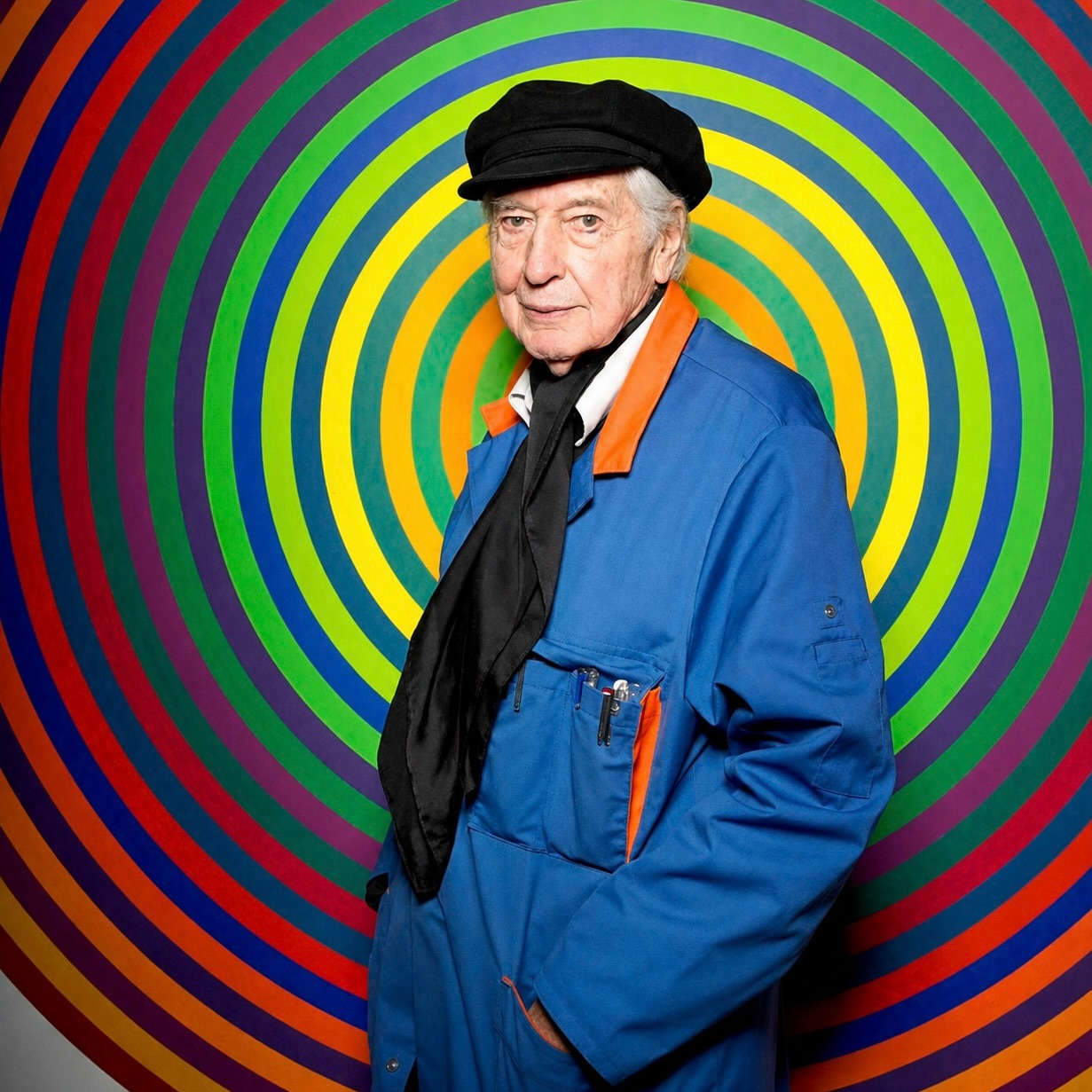
After a few years he resumed his art studies in 1955. This second formative phase coincided with a growing commitment on the political and institutional level as well. He became president of the Student Center for Plastic Arts and a member of the Board of Directors of the National School of Fine Arts, actively participating in the cultural debate of his time. In 1957 he began to develop a painting oriented toward abstraction. The following year he obtained a scholarship from the French government that enabled him to move to Paris, the city in which he would live most of his life and build his international reputation.
His arrival in the French capital represented a decisive turning point. In 1960 he was among the founders of the Groupe de Recherche d’Art Visuel, better known by the acronym GRAV, along with Horacio Garcia Rossi, Francisco Sobrino, François Morellet, Joël Stein and Jean-Pierre Vasarely, known as Yvaral. The collective was born with the goal of overcoming the traditional idea of the artwork as a static and contemplative object, placing the audience’s perception and experience at the center. Through experiments based on movement, light, optical effects and participation, GRAV contributed decisively to the definition of European kinetic art. In the same years Le Parc also joined the New Tendency movement, an international network of artists engaged in programmed research and perceptual experimentation.
His early works were influenced byArte Concreta Invención, an important Argentine constructivist movement, and by the teachings of artists such as Piet Mondrian and Victor Vasarely. However, as early as the late 1950s, Le Parc embarked on an autonomous path, developing a rigorous research based on the systematic organization of the pictorial surface and the infinite combinatorial possibilities offered by color. Indeed, one of the distinctive features of his production consisted in the use of extremely rigorous systems. In some cycles he worked exclusively with fourteen predetermined color tones; in others he limited his palette to white, black and gray, exploring all possible variations.
However, this rational approach did not prevent the works from generating surprising perceptual effects. On the contrary, the very application of strict rules gave rise to vibrant surfaces, optical illusions and visual dynamics that directly involved the viewer.
International acclaim came in 1966. In the same year he held his first solo exhibition at the Howard Wise Gallery in New York and participated in the 33rd Venice Biennale. It was in the lagoon city that he was awarded the prestigious Council of Ministers Prize as best foreign painter, a recognition that definitively consolidated his worldwide fame. The Venetian success represented a turning point for the international dissemination of his works and helped strengthen interest in kinetic art and Op Art at a time of extraordinary vitality in the international art scene. In 1967 he presented one of his most significant works, Desplazamientos, at the Torcuato Di Tella Institute in Buenos Aires and participated in the exhibition Luz y Movimiento organized by the Museum of Modern Art in Paris, further contributing to the definition of an artistic language based on perceptual transformation.
His research was characterized by the use of materials and devices capable of destabilizing perception. Artificial lights, reflections, moving elements, nylon threads, mechanical bands operated by hidden systems and fluorescent liquids became tools through which to create immersive and immersive environments.
Le Parc’s works are not conceived as mere objects to be observed. The viewer becomes an integral part of the experience, called upon to move through the space, change his or her point of view, and actively participate in the construction of the work’s meaning. This innovative conception anticipated many of the participatory practices that would characterize contemporary art in the following decades. For Le Parc, the visitor should no longer be a passive and subordinate observer, but an active subject involved in a dynamic and ever-changing experience.
The artist’s commitment was not limited to aesthetic research. Le Parc was also a staunch defender of human rights and participated in numerous anti-fascist collective projects against the dictatorships that affected several Latin American countries during the twentieth century. In May 1968 he took part in the so-called “ateliers of the people,” initiatives linked to French student and workers protests. Because of his involvement in the mobilizations he was expelled from France. The decision provoked strong protests from artists, intellectuals and cultural workers, so much so that five months later he was allowed to return to Paris.
After the dissolution of GRAV in 1968, Le Parc continued his research independently. In 1969 he returned to painting, developing new series based on rigorously organized chromatic structures, but without abandoning his interest in public perception and involvement. In 1972 Düsseldorf hosted the first major retrospective devoted to his work. Six years later, the BBC dedicated a documentary to him that helped to further spread awareness of his work to international audiences. In 1987 he received first prize at the Cuenca Biennial in Ecuador, confirming the international recognition of a career now well established.
Although living permanently in France, Le Parc always maintained strong ties with Argentina. After 2000 he returned to his home country several times to carry out new projects. Prominent among them was the installation created in 2006 at the Pacífico Galleries in Buenos Aires, the same place that had helped guide his thinking about the relationship between art and the public as a boy. The work consisted of an optical system capable of generating games of reflection and enhancing the historical murals in the building.
Italy also occupies a significant place in his production. In 2004 he made a series of sculptures called Torsioni together with Yvonne Argenterio at the Elettrofiamma workshop. The works were presented as part of the event Verso la luce at Boldeniga Castle, near Brescia, where the monumental sculpture Verso la Luce is still visible today.
Among the most important recent exhibitions dedicated to the artist is the major exhibition Julio Le Parc. The Discovery of Perception, hosted from September 2024 to March 2025 at the Palazzo delle Papesse in Siena. The event marked the reopening of the historic building to the public after more than 15 years and represented the largest solo exhibition ever dedicated to Le Parc in Italy since the prize he won at the 1966 Venice Biennale. Curated by Marcella Beccaria and produced in collaboration with the artist and Yamil Le Parc, the exhibition featured works coming directly from the studio in Cachan, France.
With the passing of Julio Le Parc, one of the most important chapters in contemporary art of the second half of the 20th century comes to a close. His research redefined the role of the viewer, transforming the work into a shared and participatory experience. Through light, movement and perception, the Argentine artist constructed a language capable of transcending geographical, cultural and disciplinary boundaries, leaving a legacy that will continue to influence the art world for a long time to come.
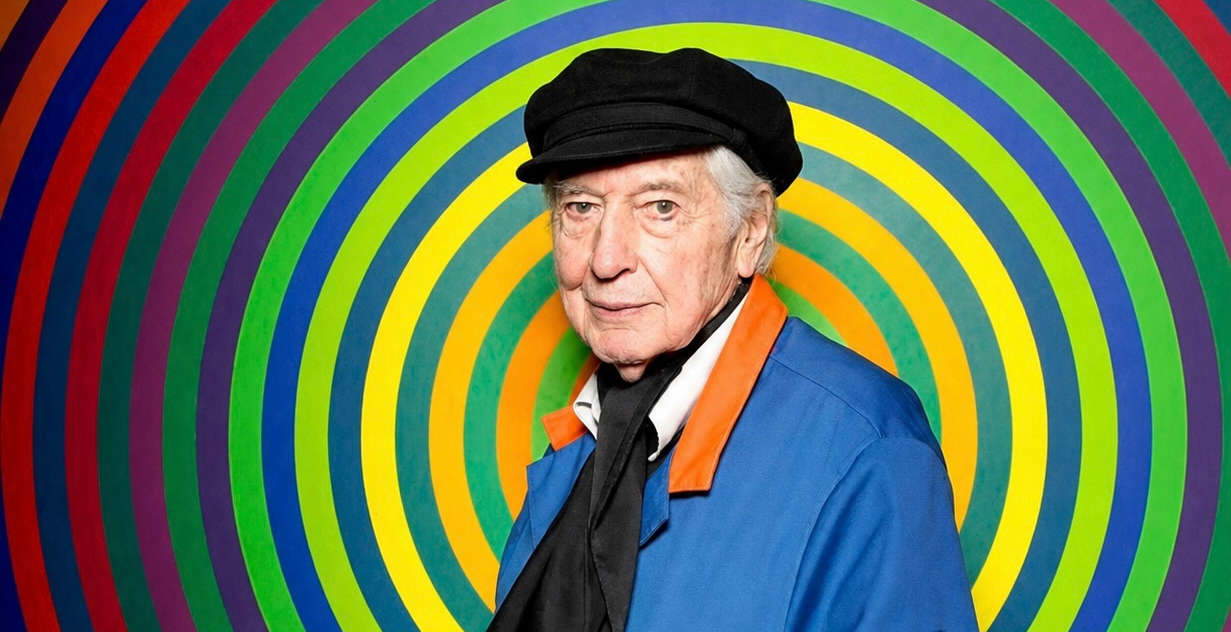 |
| Farewell to Julio Le Parc, master of kinetic and op art |

Warning: the translation into English of the original Italian article was created using automatic tools. We undertake to review all articles, but we do not guarantee the total absence of inaccuracies in the translation due to the program. You can find the original by clicking on the ITA button. If you find any mistake,please contact us.


















 IT
IT FR
FR DE
DE ES
ES CN
CN


