





In Ukraine, the Prosecutor’s Office of the Autonomous Republic of Crimea and the City of Sevastopol has formally opened an investigation into alleged illegal activities carried out in the field of archaeology within the territory of the peninsula. The focus of the investigation is on two researchers, whose identities have not yet been disclosed, who are accused of participating in illegal expeditions in Crimea, which has been occupied by the Russian Federation since 2014. The seriousness of the charges, which fall under the category of war crimes, reflects the Ukrainian authorities’ growing focus on protecting their cultural and historical heritage in the face of the administrative and territorial changes that have occurred over the past decade.
The first of the individuals under investigation is a researcher working at the State Hermitage Museum in St. Petersburg, while the second individual has been identified as a representative of the so-called “Crimean Institute of Archaeology,” an institution affiliated with the Russian Academy of Sciences. The initiation of criminal proceedings, made public on Monday by the Sevastopol Prosecutor’s Office (which, due to the Russian occupation of Crimea, is headquartered in the capital, Kyiv), marks a further chapter in the long-running legal and diplomatic dispute over the management of archaeological assets located in Crimea.
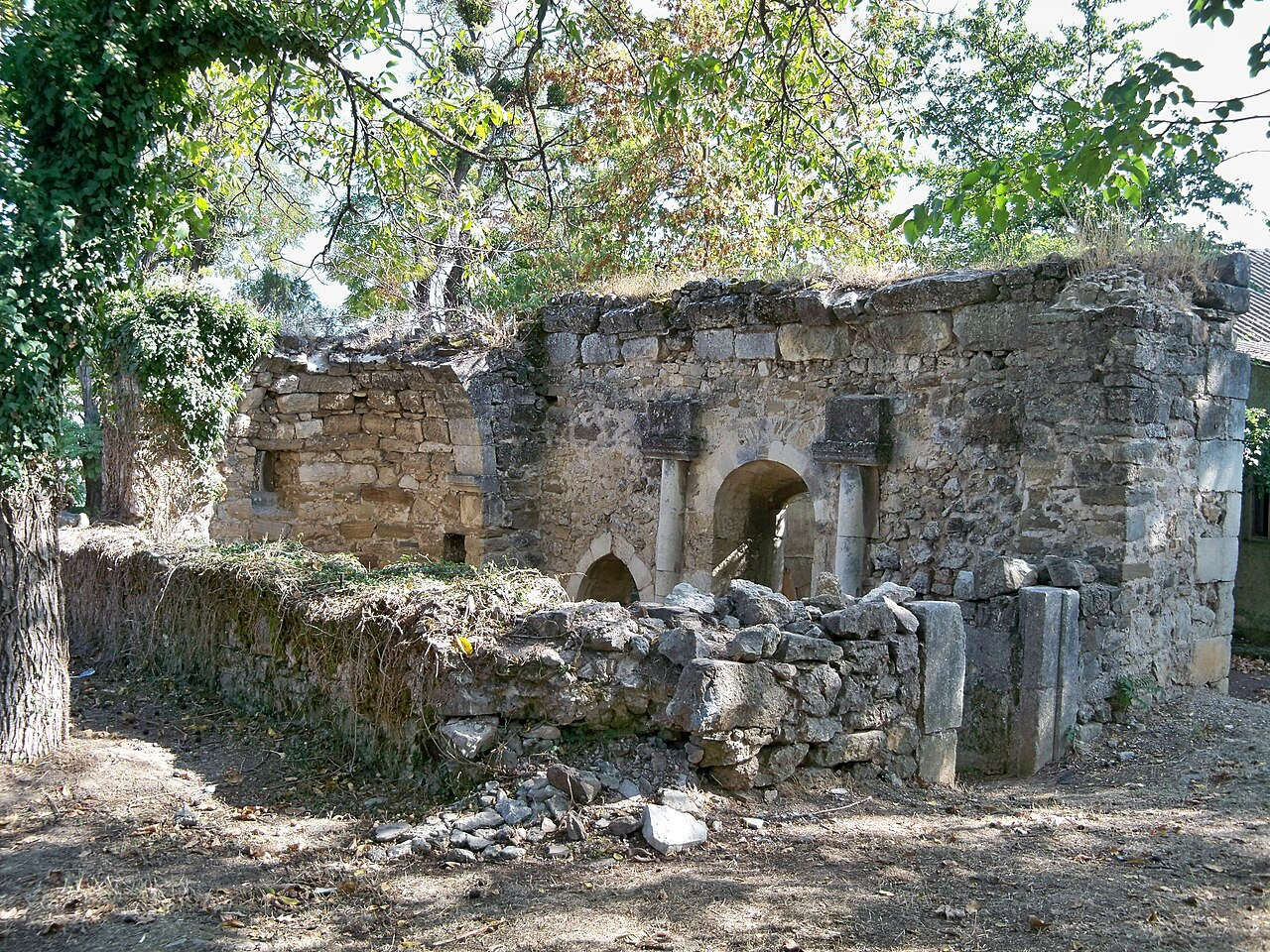
The investigation, coordinated by the Main Directorate of the Security Service of Ukraine for the Autonomous Republic of Crimea, focuses in particular on operations conducted at an archaeological site—the medieval settlement of Solkhat, located near the town of Staryj Krym— an area that constitutes a historical site of primary importance, dating back to the 13th and 14th centuries: it was the subject of activities that, according to the prosecution’s allegations, were carried out without the necessary authorizations from Ukrainian government authorities, the only bodies authorized to grant excavation permits in this territory.
According to the reconstruction provided by the investigating authorities, the archaeological activities in question allegedly caused partial damage to the stratigraphy of the medieval site. The removal of various artifacts—including components of the historic water supply system, water collection basins, and fragments of ceramic pottery—is one of the key focuses of the investigation. These materials, once removed from their place of origin, were reportedly transferred to the Hermitage at the initiative of one of the researchers involved.
The inclusion of these artifacts in the State Catalog of the Russian museum collection is viewed by Ukrainian judicial authorities as an act aimed at consolidating the misappropriation of assets that constitute an integral part of Ukraine’s cultural and historical heritage. This procedure, which physically and legally removes the artifacts from their original context of discovery to incorporate them into the heritage of the state that Ukraine defines as an aggressor, has been characterized as a violation of international norms for the protection of cultural property in occupied territories.
The legal framework for the Prosecutor’s Office’s initiative is based on the provisions of Article 438, paragraph 1, of the Ukrainian Criminal Code, supplemented by Article 28, paragraph 2, concerning the commission of crimes in concert by an organized group. The relevant legislation provides, in the event of a conviction, for prison sentences of up to twelve years. The classification of archaeological activities as war crimes underscores the intention to treat the protection of historical sites not as a mere academic dispute, but as a matter of international humanitarian law and national sovereignty. Of course, in accordance with Article 62 of the Ukrainian Constitution, the principle of the presumption of innocence applies at this stage: the Prosecutor’s Office notes that any person involved in criminal proceedings must be presumed innocent until their guilt is definitively established by a final and binding judgment issued by a competent court. The preliminary investigations, currently underway under the supervision of the SBU’s Main Directorate, are specifically aimed at gathering the evidence necessary to confirm or refute the charges brought against the two researchers.
The attention paid by the Public Prosecutor’s Office of Crimea and the City of Sevastopol to the Solkhat case is not an isolated incident: it is in fact part of a broader debate concerning the management of archaeological sites on the peninsula, which are caught between the conservation efforts of Ukrainian institutions and the administrative practices implemented by Russian authorities in recent years. From this perspective, the Solkhat case takes on paradigmatic significance, as it concerns a site that for centuries has borne witness to the region’s cultural stratification and which today finds itself at the center of a conflict affecting not only the territory but also the historical heritage of a people.
The Solkhat site, in particular, is well known to scholars for its significance in the history of the medieval East, having been a major commercial and cultural center. The destruction—albeit partial—of the site’s stratigraphy, as reported by the Public Prosecutor’s Office, raises concerns about the comprehensive preservation of such contexts, particularly where excavations do not follow rigorous international scientific protocols and the conservation regulations in effect prior to the 2014 crisis. The removal of structural elements, such as medieval water systems, compromises archaeologists’ ability to reconstruct the urban evolution of the historic center.
|
| Illegal Excavations in Crimea: Ukraine Investigates Two Russian Archaeologists |

Warning: the translation into English of the original Italian article was created using automatic tools. We undertake to review all articles, but we do not guarantee the total absence of inaccuracies in the translation due to the program. You can find the original by clicking on the ITA button. If you find any mistake,please contact us.




























 IT
IT FR
FR DE
DE ES
ES CN
CN


