




by Redazione 18/07/2026



Categories: News / Disclaimer
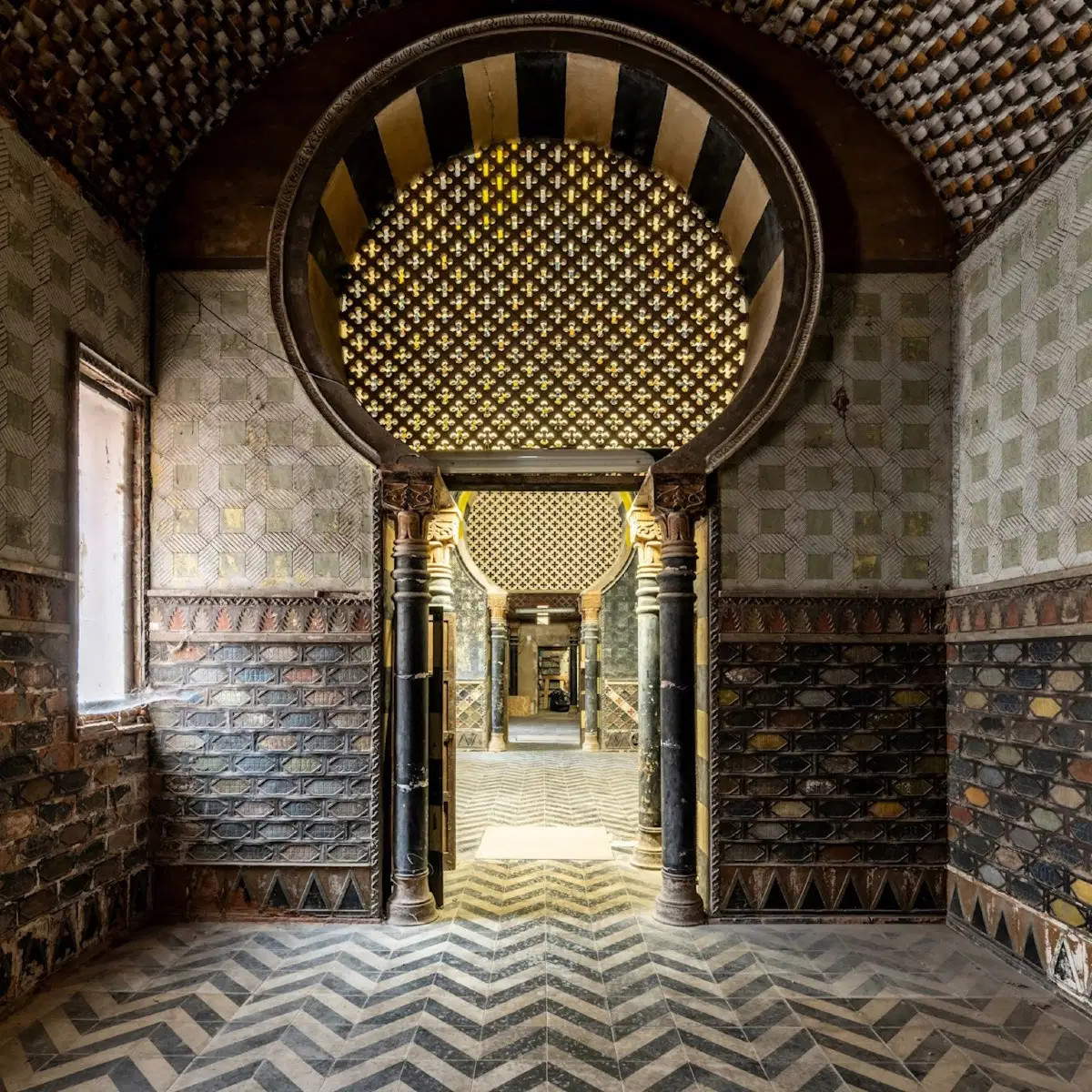
Restoration work on the Rocchetta Mattei, carried out as part of the PNRR project “Da Campolo l’Arte fa Scola,” has been completed. The historic garden, the Arab-Moorish wing, and numerous rooms have been restored.

Restoration work on the Rocchetta Mattei, one of the most iconic monumentsof the Bolognese Apennines and a symbol of the region’s cultural and tourism revival, has been completed. The completion of the work was celebrated at the historic residence of Count Cesare Mattei, in the town of Grizzana Morandi, marking the conclusion of one of the major territorial regeneration projects carried out in recent years in the Emilian-Romagnan Apennines. The restoration is part of the “Da Campolo l’Arte fa Scola” project, funded with 20 million euros through the National Recovery and Resilience Plan (PNRR), with the goal of enhancing the area’s historical and cultural heritage and creating a new development model based on culture, tourism, and education.

Already the focus of a major restoration effort promoted by the Carisbo Foundation, the monumental complex is now one of the most visited cultural sites in Emilia-Romagna. The new work focused on the historic garden, the Arab-Moorish wing, and numerous monumental rooms, further enriching the visitor experience.
The restoration of La Rocchetta is one of the key components of a broader project centered on the village of Campolo and also involving La Scola, Il Palagio, and the Giorgio Morandi House Museum. The goal is to create a cultural network capable of fostering dialogue between historical heritage, creativity, education, services, and tourism development, thereby contributing to the revitalization of the entire region.


The presentation of the restoration work took place in the presence of the President of the Emilia-Romagna Region, Michele de Pascale; the Regional Councilor for Culture, Gessica Allegni; the President of the Legislative Assembly, Maurizio Fabbri; Franco Rubini, Mayor of Grizzana Morandi; Renzo Servadei, Vice President of the Carisbo Foundation; Cristina Ambrosini, Director of the Region’s Cultural Heritage Sector; and Francesca Tomba, Superintendent of Archaeology, Fine Arts, and Landscape for the Metropolitan City of Bologna.
In addition to the architectural restoration, the project has also taken on significant educational value. Starting in May 2025, in fact, the Rocchetta Mattei construction site was transformed into an educational workshop thanks to a collaboration withthe University of Bologna, offering students a practical training opportunity in the field of restoration and conservation of cultural heritage. The new wing of the Rocchetta Mattei will open to the public this fall, with expanded visiting options and a significant increase in guided tours, allowing visitors to discover new spaces within one of the most fascinating sites in the Emilian Apennines.
“Returning to the Rocchetta Mattei to mark the conclusion of this beautiful, demanding, and challenging project means recognizing the value of a place that has become the gateway to a much broader journey,” state de Pascale and Allegni. “Rocchetta Mattei is the symbol of what it means to revitalize a region: an extraordinary place that, after being brought back to life thanks to the Carisbo Foundation’s visionary restoration, is now being further revitalized and returned to the community in all its splendor.”
“The story of Rocchetta Mattei’s regeneration, which today is intertwined with the regeneration of an entire region,” they added, “demonstrates that culture can be a true development policy: not only the preservation and enhancement of cultural heritage, but also a tool for building communities, attracting new talent, and restoring hope to the villages of the Apennines by creating new opportunities for living, working, learning, and entrepreneurship. It is a vision that puts people and communities at the center, offering our villages the tools to combat depopulation and build new prospects for sustainable development.”
“In recent years, Rocchetta Mattei has been transformed from a dilapidated building into an architectural gem, visited by thousands of people every year,” stated Fabbri. “The credit goes first and foremost to the Carisbo Foundation, which returned a large portion of it to the public in 2015, and then to the Municipality of Grizzana Morandi and the Union of the Bolognese Apennines, which have enhanced its value through tours and cultural events. Today, we’ve come full circle because, thanks to the National Recovery and Resilience Plan (PNRR) and the joint efforts of the Ministry, the Region, the Union, and the Municipality, rooms that had not yet been restored will become available as early as next fall. But Rocchetta Mattei is a living place: the adjacent building of the Compendio del Palagio is being returned to the community as the future House of the Arts, which will be home to musicians, photographers, and painters. Together with the work carried out in Campolo and La Scola, this project serves as a model for enhancing the natural and tourist heritage of the Bolognese Apennines.”
|
| Restoration of the Rocchetta Mattei, the iconic monument of the Bolognese Apennines, has been completed |
Warning: the translation into English of the original Italian article was created using automatic tools. We undertake to review all articles, but we do not guarantee the total absence of inaccuracies in the translation due to the program. You can find the original by clicking on the ITA button. If you find any mistake,please contact us.