





In the contemporary art market,artificial intelligence has become an integral part of how the market is structured, how works are created, bought, sold, and even interpreted. It is a transformation that is taking place not only in digital labs or technology fairs, but in auction rooms, market analysis platforms, curatorial strategies, and collector dynamics. In recent months, the phenomenon has also taken on a new consistency within art market data collection and intelligence systems. The French Artprice by Artmarket group unveiled its 2025-2029 strategic plan, based on an Intuitive Artmarket AI platform to consolidate its leadership position in analyzing the globalized art market and provide predictive tools for collectors, dealers, and institutions. Concurrently, concrete signs of growing institutional acceptance of art generated or co-produced with AI tools have also increased. In February 2025, the landmark auction house Christie’s conducted Augmented Intelligence, the first sale devoted exclusively to art produced with the aid of artificial intelligence, with more than 20 lots exceeding baseline estimates and attracting a younger, digital-native collector audience.
These transactions are not niche phenomena: the latest market analyses show that AI tools are not only being used to generate images or art models, but are entering into authentication and recommendation processes. Today a significant share of galleries and museums use algorithms to personalize the visitor experience, suggesting works based on individual tastes, or to assist in provenance verification, the verification of chains of ownership of works, reducing cost and time. These developments combine with supply and demand dynamics: according to several reports, the share of AI artworks in the global market is set to grow, and of an “AI art” market that could reach over $40 billion by 2033, with compound annual growth rates in the range of 28-29 percent.
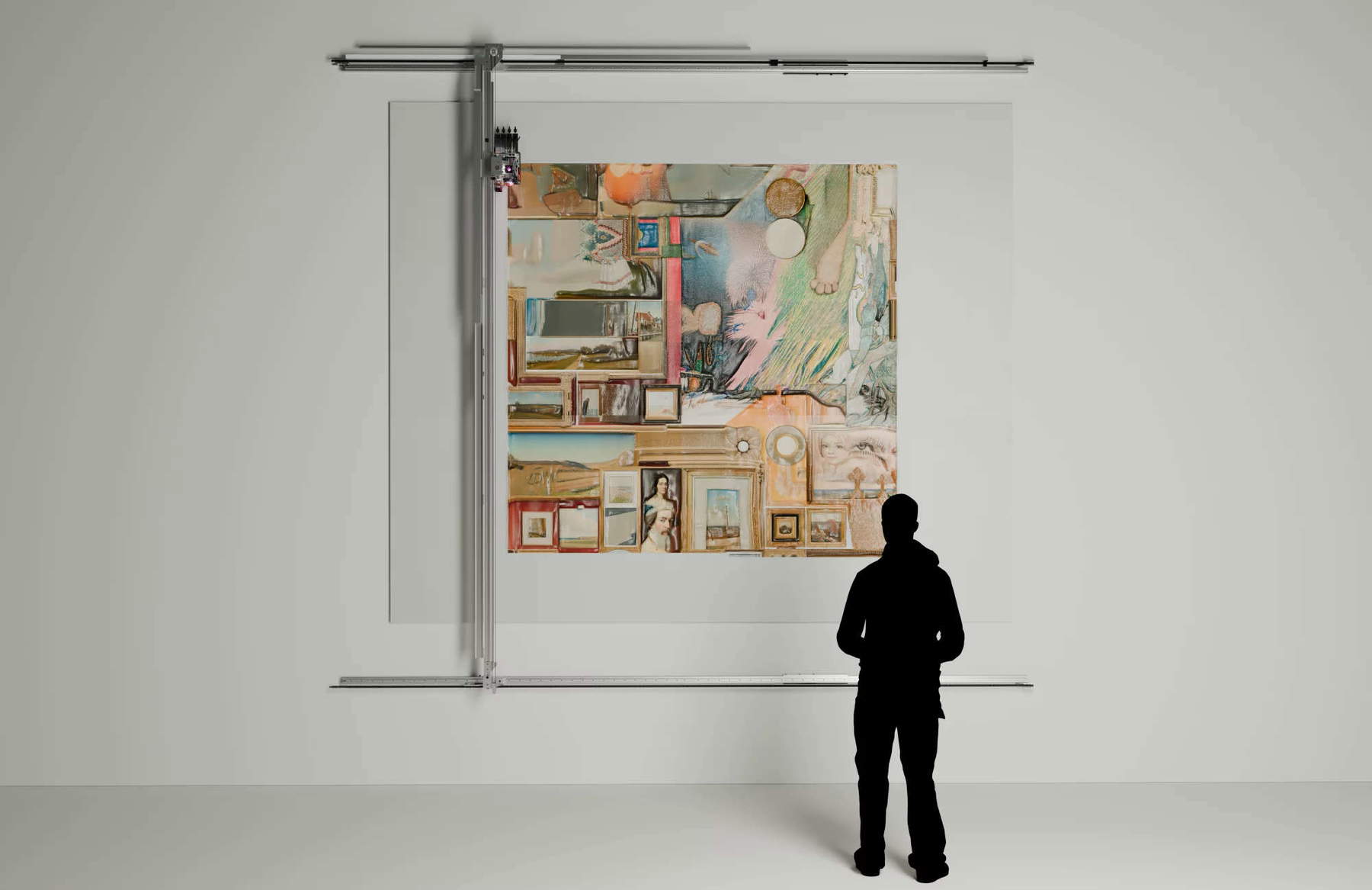
It is not only the volume of transactions that is changing, but also who is buying and how the audience is formed. At Christie’s auction, nearly half of the attendees were millennials and Gen Z, many of them new to the big-sale circuit-a signal of how AI art is speaking to a digital-sensitive audience, not just traditional enthusiasts. In parallel, the presence of AI is redefining the role of the artist and creative practices. Artists are no longer using AI simply as an image generator, but as a creative partner, integrating it into production processes: from machine learning that generates variations in patterns and forms, to algorithms that seek out new stylistic combinations that the human eye would not have considered, to real-time generative robotics, as in the case of robots programmed to paint by responding to the dynamics of an auction or to external impulses.
This push is accompanied by a rise in startups and platforms offering AI services for artists, curators, and collectors: tools that analyze trends, predict value fluctuations, suggest connections between works, or even generate automated critical narratives.
Despite these signs of consolidation, the presence of AI in the art market is not without tension. The growing production of art generated by algorithms raises questions about originality, authorship and copyright, with debates involving artists, lawyers and institutions. Some critics argue that the use of unauthorized datasets to train AI models defies traditional concepts of authorship and intellectual property, while others see the phenomenon as a natural stage of experimentation.
Beyond aesthetic and legal boundaries, AI is influencing the very geography of the marketplace, prompting both global platforms and incumbent auction houses to integrate digital technologies into their business models. In the context of a market with a fragile but dynamic economy, the adoption of AI is seen by many players as a way to innovate, attract new collector segments, and manage large amounts of data in real time.
Today, therefore, the consolidation of artificial intelligence in the art market is manifested on multiple fronts: art creation, introspection of market data, auction mechanics, product design, and cultural enjoyment. AI is no longer a niche expansion, but a structural element in decision-making processes and economic dynamics. And while the debate about AI and human creativity continues, between enthusiasts and skeptics, one must, instead, ask: to what extent will the integration of AI redefine not only “how” art is created and sold, but also “why” and “for whom”? For perhaps, within a market in which algorithms, collectors, and creators coexist ever more closely, the question is not whether AI will change art, but in what profound and lasting ways it will.


The author of this article: Federica Schneck
Federica Schneck, classe 1996, è una giornalista specializzata in arte contemporanea. Laureata in Storia dell'arte contemporanea presso l'Università di Pisa, il suo lavoro nasce da una profonda fascinazione per il modo in cui le pratiche artistiche operano all’interno, e in contrapposizione, alle strutture sociali e politiche del nostro tempo. Si occupa delle trasformazioni del sistema dell'arte contemporanea, del dialogo tra ricerche emergenti e patrimonio culturale, del mercato, delle istituzioni e delle fiere internazionali. Alla scrittura giornalistica affianca quella critica, con testi per artisti, gallerie e collezioni private.Warning: the translation into English of the original Italian article was created using automatic tools. We undertake to review all articles, but we do not guarantee the total absence of inaccuracies in the translation due to the program. You can find the original by clicking on the ITA button. If you find any mistake,please contact us.



























 IT
IT FR
FR DE
DE ES
ES CN
CN


