





Düsseldorf was one of the most important and most active cities in contemporary art and the art market between the 1970s and 1980s. Home to the famous Kunstakademie (Academy of Arts), it was for several decades the point of arrival (and departure) for several students who later became famous artists, such as Joseph Beuys, Gerhard Richter, Ruth Rogers-Altmann, Sigmar Polke, Anselm Kiefer, Thomas Struth, Andreas Gursky, and Candida Höfer, to name but a few. This German city located along the Rhine River has been a vivid reference for artists, galleries, and art collectors, especially since the late 1960s, and continues to be so today also thanks to the presence of important institutions, such as the ZERO foundation, and thanks to the realization of a series of events including the Art Düsseldorf art fair, which this year was held from November 16 to 18.
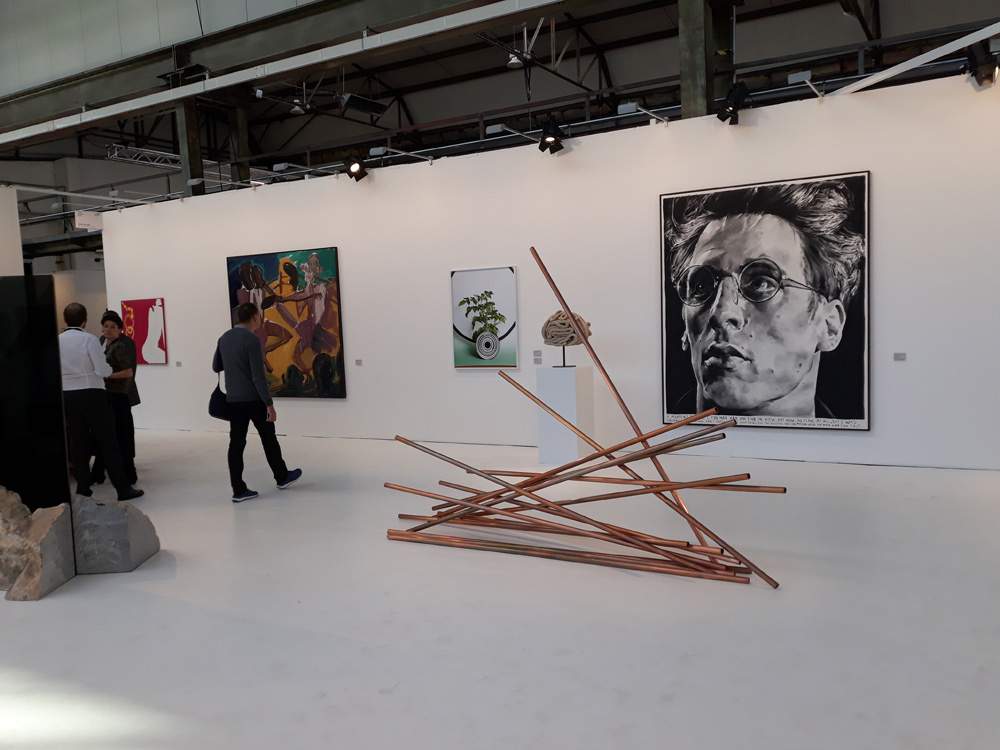 |
| Art Düsseldorf 2018, König Galerie, Areal Böhler, Düsseldorf. Ph. Credit Francesca Della Ventura |
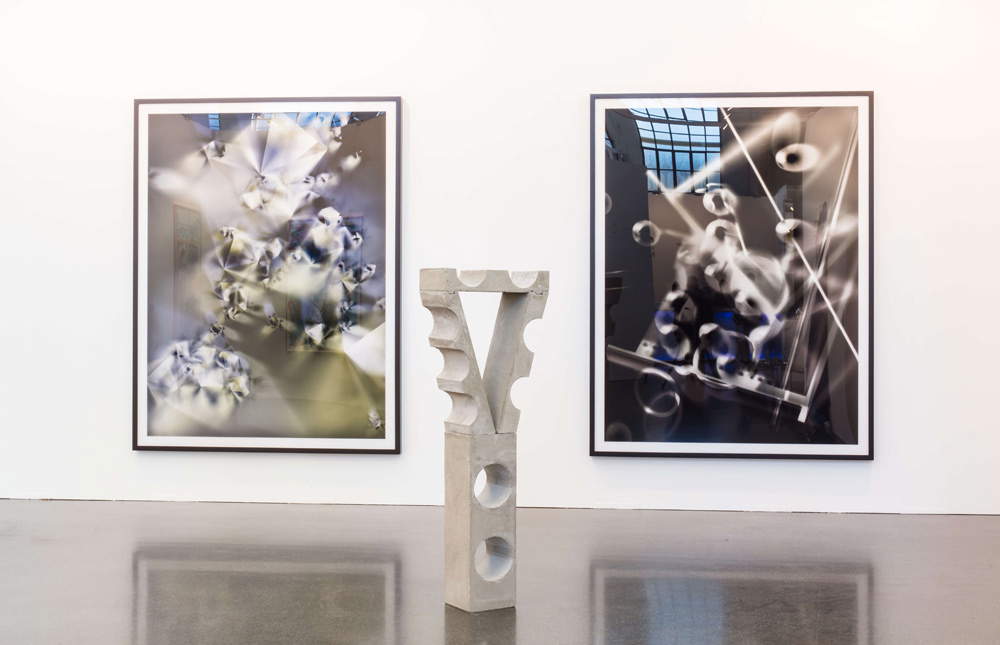 |
| Art Düsseldorf 2018, David Zwirner Gallery, Areal Böhler, Düsseldorf. Ph. Credit Sebastian Drüen |
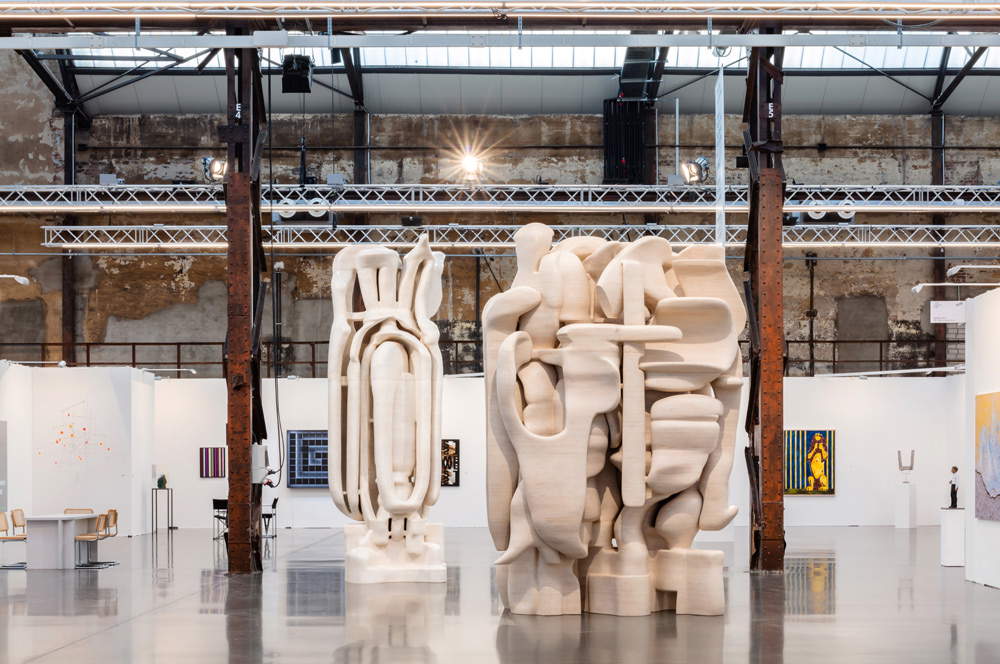 |
| Art Düsseldorf 2018, Tony Cragg, Areal Böhler, Düsseldorf. Ph. Credit Sebastian Drüen |
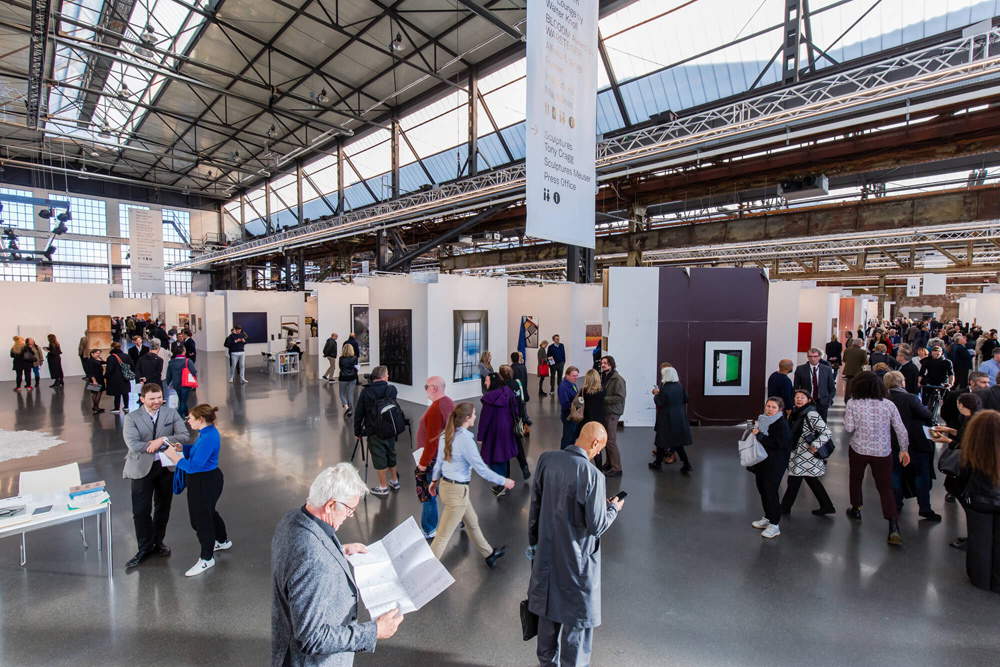 |
| Art Düsseldorf 2018, Areal Böhler, Düsseldorf. Ph. Credit Felix Hild |
Art Düsseldorf is a recently established contemporary art fair (this year its second edition) that featured ninety-one galleries from nineteen European and international nations . Building on the success of the first edition with as many as 43,000 visitors, this year the number of galleries present grew by as many as 40, increasing their exhibition space by 10 percent, the latter established at theAreal Böhler industrial complex.
Several galleries are present, and almost half of them are of regional origin (Germany and Belux), many of the international galleries are of European origin, while the others come from New York (including the well-known David Zwirner and Marlborough Contemporary), Tokyo(Talion Gallery) and Taipei(Tina Keng Gallery and Mind Set Art Center). Four are Italian: Galleria Rita Urso Artopia (Milan), Thomas Brambilla (Bergamo), Galleria Luce (Turin), and Montrasio Arte (Monza). A section of the fair was dedicated to “post-Lehman” galleries, that is, those young galleries that were born after the economic crisis that also hit the art world in 2008 and were supported financially in carrying out their initiatives. There were also many works by artists at the fair. This year the focus of the event was the installation of large-scale sculptures, such as those by Meuser, Erwin Wurm and Tony Cragg. Several German artists were brought to the fair by galleries: Georg Baselitz, Jeff Cowen, Jörg Immendorff, Markus Lüpertz, Per Kirkeby, Eugène Leroy, A.R.Penck, Sigmar Polke, Isa Genzken, and Thomas Schütte.
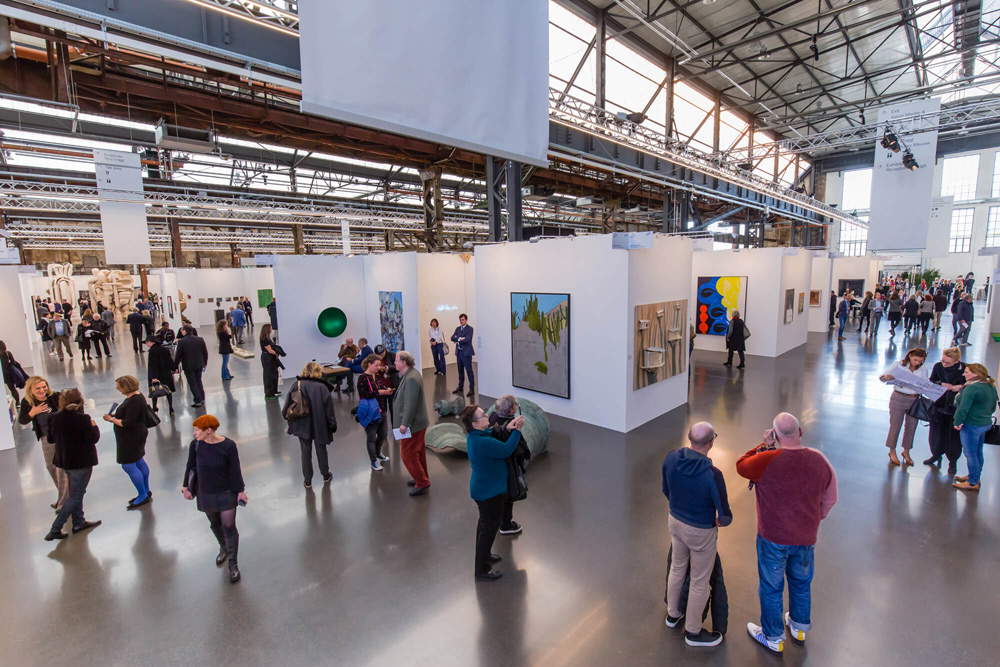 |
| Art Düsseldorf 2018, Areal Böhler, Düsseldorf. Ph. Credit Felix Hild |
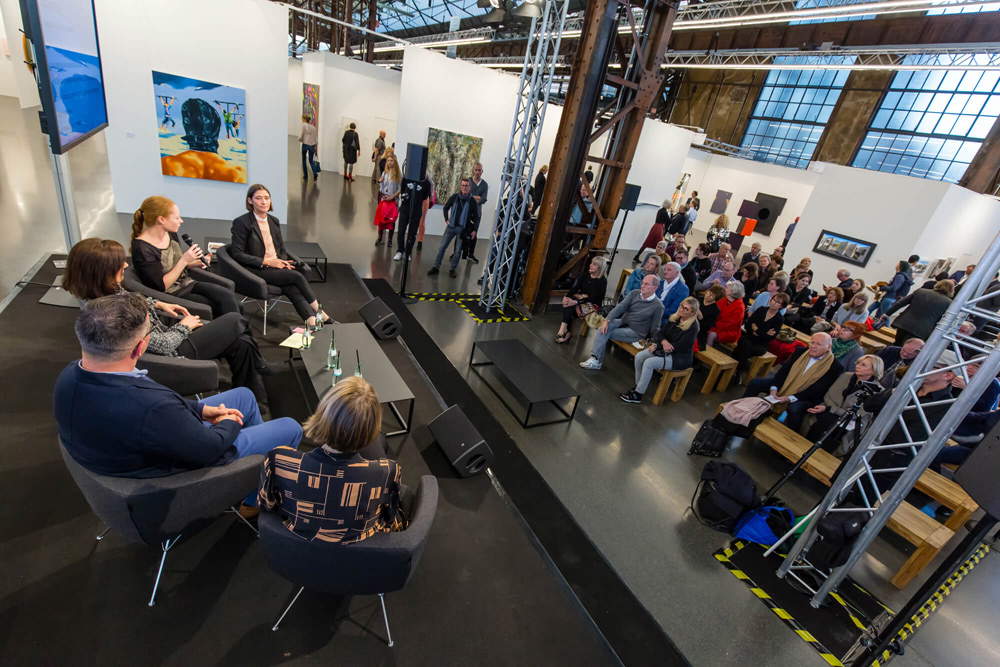 |
| Art Düsseldorf 2018, Talk with Jana Noritsch (Founder of the Collectors Club), Ann Kathrin Bronner (Collector/gallery owner), Susanne Gaensheimer (Director of Kunstsammlung NRW), Kristina Leipold (Ltg. Development, Gropius Bau), Wolfram RoÃ?ner (Art Thinking), Ph. Credit Felix Hild |
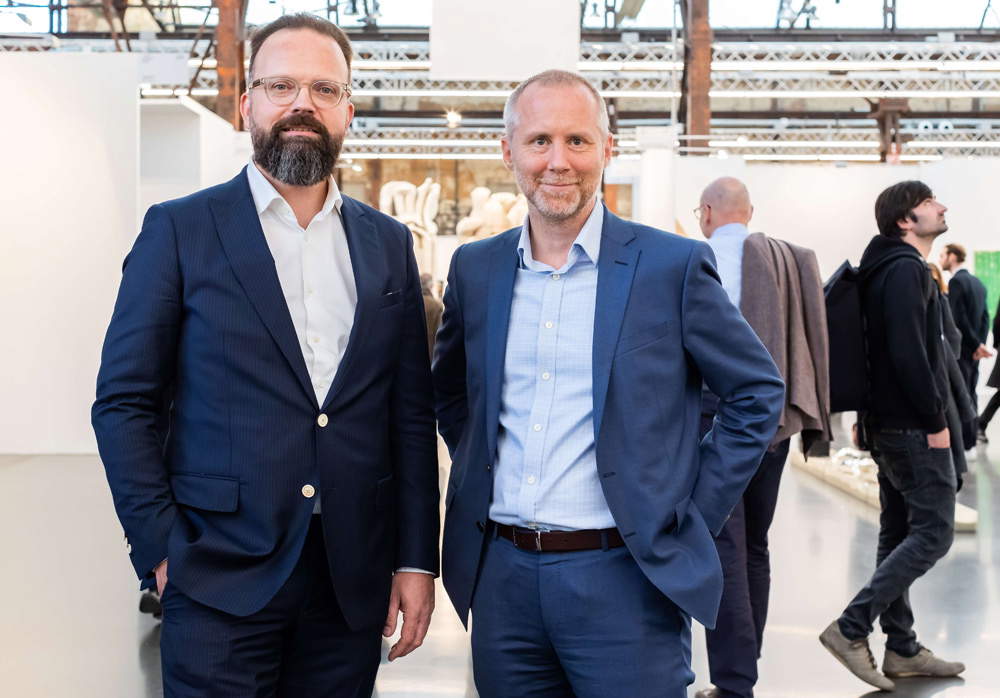 |
| Art Düsseldorf 2018, Walter Gehlen (Director and founder of Art Düsseldorf), Felix Kra?mer (Director of Kunstpalast Museum, Du?sseldorf). Ph. Credit Felix Hild |
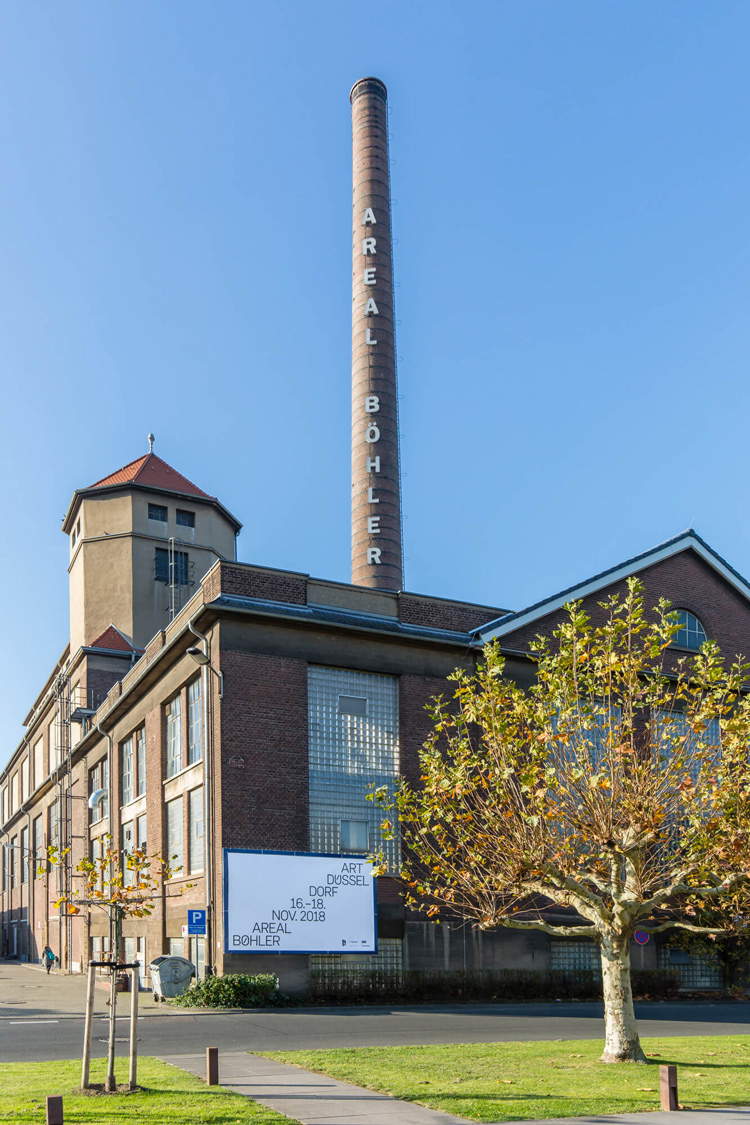 |
| Areal Böhler, Düsseldorf. Ph. Credit Sebastian Drüen |
The director of Art Düsseldorf, Walter Gehlen, then wanted to include a rich program of side events scattered around the city of Düsseldorf, guided tours for young collectors, as well as a fruitful program of meetings and discussions held at the “Talks” area of the art fair, which were attended by gallerists, art historians, and collectors and focused on the issues of feminism, the use of social networks in the field of art, and contemporary cultural politics. Art Düsseldorf’s goal is to grow annually as an art event, seeking to be, like the much better known and more historic Art Cologne, the region’s artistic engine as a meeting point for emerging players in the art scene.
Art fairs, in fact, are increasingly taking over the role that was precendently that of galleries in terms of discovery and affirmation of artists, especially as a result of the large influx of art collectors and investors who attend them. A consequence of the proliferation of art fairs could be a change in the very nature of the contemporary art system, leading to a continuous acceleration of production to the point of its own trivialization. It is important, therefore, that art fairs are also accompanied by side events and solid cultural programs to also stimulate reflection on contemporary cultural issues, as was the case with this Art Düsseldorf.

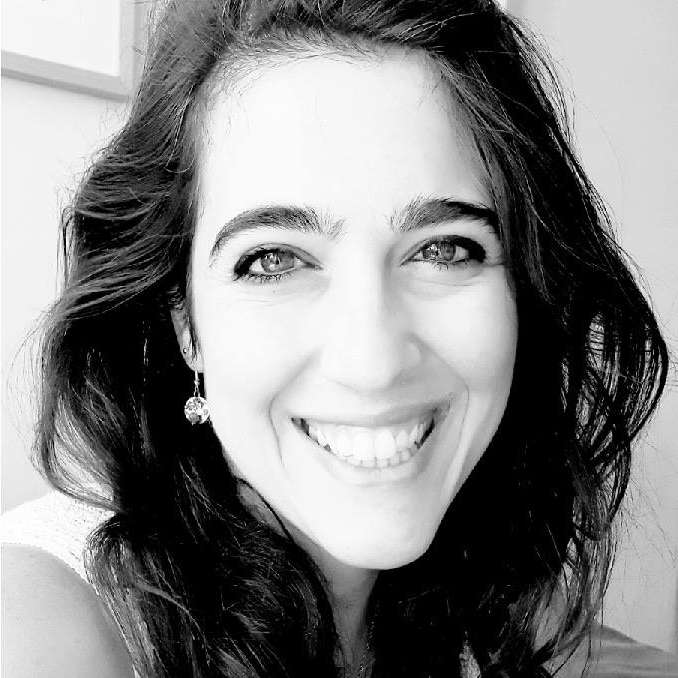
The author of this article: Francesca Della Ventura
Ha studiato storia dell'arte (triennale, magistrale e scuola di specializzazione) in Italia e ha lavorato per alcuni anni come curatrice freelancer e collaboratrice presso il Dipartimento dei Beni Storici, Artistici ed Etnoantropologici del Molise (2012-2014). Dal 2014 risiede in Germania dove ha collaborato con diverse gallerie d'arte e istituzioni culturali tra Colonia e Düsselorf. Dallo stesso anno svolge un dottorato di ricerca in storia dell'arte contemporanea all'Università di Colonia con una tesi sul ritorno all'arte figurativa negli anni Ottanta in Germania e Italia. Nel 2018 è stata ricercatrice presso l'Universidad Autonoma di Madrid. Ha scritto sull'identità tedesca e italiana nell'arte contemporanea e nella politica, sul cinema tedesco e italiano del dopoguerra e grazie a diverse borse di studio D.A.A.D. ha presentato la sua ricerca a livello internazionale. Attualmente i suoi temi di ricerca riguardano l’arte degli anni Ottanta, in particolar modo quella femminista. Dal 2020 è entrata a far parte del gruppo di ricerca dell’Universitá di Bonn “Contemporary Asymmetrical Dependencies” con un progetto di ricerca sulla costruzione dei nuovi musei e delle condizioni di dipendenza asimmetrica dei lavoratori migranti nell’isola di Saadyat ad Abu Dhabi. Nell'ottobre 2020 ha fondato inWomen.Gallery, galleria online, sostenibile e per artiste. Dal 2017 lavora come giornalista d'arte per la rivista online e cartacea Finestre sull'Arte.Warning: the translation into English of the original Italian article was created using automatic tools. We undertake to review all articles, but we do not guarantee the total absence of inaccuracies in the translation due to the program. You can find the original by clicking on the ITA button. If you find any mistake,please contact us.












 IT
IT FR
FR DE
DE ES
ES CN
CN


