




by Ugo Poletti 01/06/2026



Categories: Travel / Disclaimer
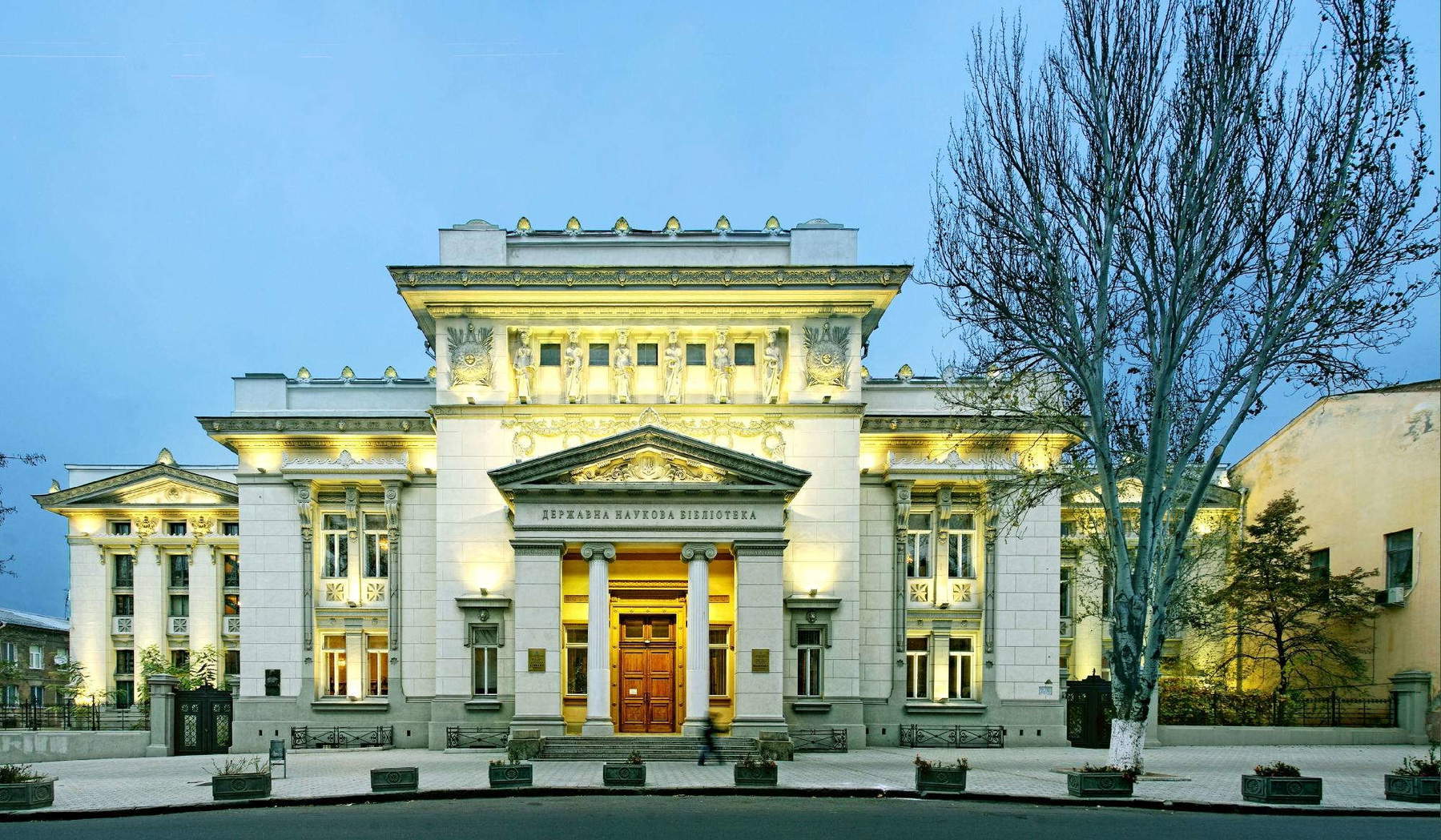
The University Scientific Library in Odessa, Ukraine, holds four million works, incunabula, Renaissance editions and volumes that cover the entire history of European publishing and thus guard the memory of Europe. A precious heritage of enormous value, now threatened by war.

The cultural heritage of the city of Odessa, Ukraine’s great Black Sea port, is unique in the richness of contributions from different European cultural traditions. This is the result of the city’s peculiar history, founded in 1794 during the French Revolution and built from scratch by a babel of different nationalities, particularly Italians, French, Greeks, and Germans. This history is also reflected in the wealth of old and rare books from all over Europe that make up the repository of Odessa’s oldest library: the Scientific Library of the National University I. I. Mechnikov.
The history of this library is marked by the many historical and institutional changes. It began as the Library of the Richelieu Lyceum (1817), the first educational institution in Odessa, founded by the Duke of Richelieu, who was the most famous and beloved mayor in the city’s history. Then it became the Library of the University of Novorossiya (1865), and finally the present Scientific Library of the Mechnikov National University, the new name of Odessa’s oldest university.


The breadth and scientific value of its collections place it among the leading libraries in Ukraine. Its library holdings, accumulated and preserved over the centuries, are of great value. Since its origins, the library has been enriched by donations from cultural institutions, but especially from wealthy private individuals. Numerous collections that belonged to nobles, statesmen, merchants, university professors and bibliophiles have flowed into its holdings. The library has survived the perils of history, going through the period of the Russian Revolution and Soviet power, the years of World War II and the Cold War, overcoming many challenges and contributing to the preservation of Odessa’s cultural heritage.
Today the library’s holdings amount to about 4 million units. Its collections are internationally known and include 21 nominal collections (including the library of the Vorontsov Palace in Odessa, the personal library of Count Stroganov, the Grigorovič Slavic library, and several university scientific collections), more than 100,000 rare and valuable editions, and about 300,000 periodical publications from the 17th-19th centuries.
The library manages the entire editorial cycle of the scholarly journal Bibliotechnyj Merkurij (ISSN 3335 Print; ISSN 2707-3343 Online), devoted to bibliographical studies and the history of old and rare books. Also established is the open access electronic journal Biblio-Collegium (ISSN 2409-4129), which publishes the proceedings of the library section of the university’s annual scientific conference. The library has a website with open resources that can be consulted, downloaded and used for educational and research purposes. Very important is the electronic library of rare editions, with a periodicals section that includes 19th-century Odessite newspapers such as Odesskie novosti and Odesskij listok. Also available is a large collection of classical authors, in Latin, Italian and other European languages (Homer, Lucian, Diogenes Laertius, Plutarch, Herodotus, Apuleius, Horace), as well as notable editions of the Italian Renaissance (Petrarch, Boccaccio, Dante, Tasso, Ariosto).
Here is a brief journey through the Library’s hidden treasures of European significance.
The Library’s incunabula
Incunabula (from Latin incunabula: “cradle,” “beginning”) are those books printed in Europe from the invention of printing by Johannes Gutenberg (c. 1397/1400 - 1468) in the mid-15th century until January 1, 1501. Prominent among the treasures of the Science Library is a small but valuable selection of editions from the late 15th century.
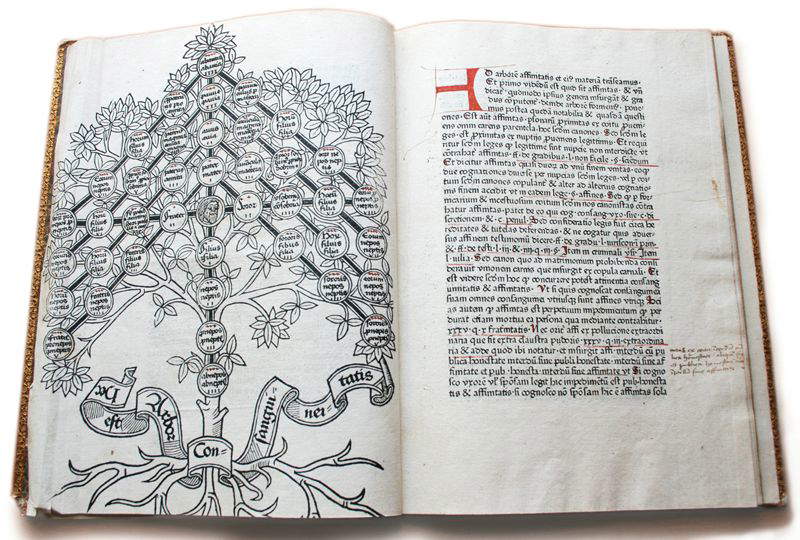
The oldest book preserved in the library is the treatise by the great jurist Johannes Andreae (ca. 1270 - 1348), Super arboribus consanguinitatis, affinitatis et cognationis spiritualis, published in Nuremberg after 1476. It is followed by the “Liber Calculationes” by the English mathematician, mechanic, philosopher and logician Richardus Swineshead, printed in Padua in 1477. Also published in the same city in 1486 was De latitudinibus formarum by the French theologian, astrologer and scholar Nicole Oresme (c. 1320 - 1382).
One of the earliest printed arithmetic texts in Europe is the treatise De proportionibus by the medieval theologian, philosopher, logician, mathematician and mechanic Albert of Saxony (c. 1313 - 1390), found in the Odessa library in a Venetian edition of 1494-1495. Added to this is English mathematician Richard Swineshead’s Liber Calculationes, the first accounting manual, published in Padua in 1477.
The treatise by Italian humanist Fra Luca Bartolomeo de Pacioli (c. 1445 - 1515), Summa de arithmetica, geometria, proportioni et proportionalità, published in Venice in 1494, represents a true encyclopedia of the mathematical sciences. Studying Venetian economic life and the modes of commercial transactions in the Serenissima, Pacioli also documented the gestural language of late 15th-century merchants. Indeed, among the illustrations appears a table with depictions of hands, in which each gesture corresponds to a figure.
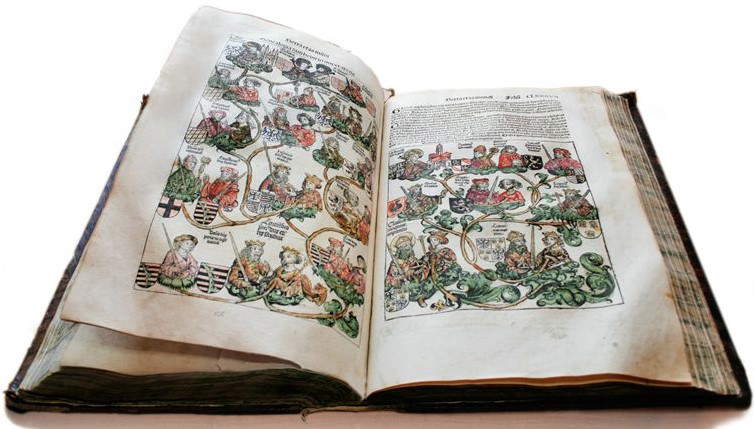
All the incunabula mentioned above come from the collection of Ivan Jur’evič Timčenko (1863 - 1939), a professor at the University of Novorossiya and a historian of mathematics. One of the finest incunabula of the 15th century, published by the great printing workshop of Anton Koberger (1445 - 1513) in Nuremberg, is the Liber Chronicarum of the German humanist Hartmann Schedel (1440 - 1514), a true gem of the collection. With more than 1,800 woodcuts, some of them hand-colored, this work is a fundamental source not only for history, but also for the iconography, geography and cartography of the world. The monumental folio volume, consisting of 328 maps, was printed in 1493.
For the so-called Universal Chronicle (the most popular title of the work) 645 woodcut plates were prepared and used to make the illustrations. On July 12, 1493, the book was published in Latin (edition preserved in the library) and, six months later, in German. The text of the Universal Chronicle is accompanied by woodcuts depicting biblical characters, portraits of historical figures, as well as historical, allegorical and religious scenes. The illustrations were made by Nuremberg engravers and artists Wilhelm Pleydenwurff and Michael Wolgemut (1434 - 1519), with contributions also from his pupil, the young Albrecht Dürer.
The Italian book between the 16th and 18th centuries.
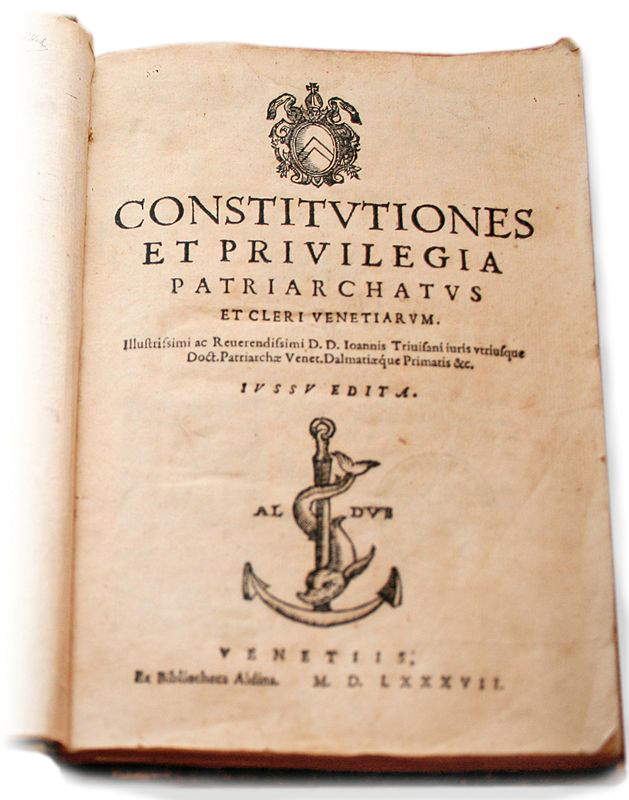
Among the ancient European editions preserved in the library, the collection of Italian books stands out in terms of consistency and thematic variety. A significant segment of this consists of legal works. Most of them come from the personal library of Polish jurist and legal historian Romuald Jan Hube (1803 - 1890). His collection (over 8,100 volumes) was acquired by the University of Novorossija in 1868. Also from the Hube collection come editions from the printing house of Aldo Manuzio representing one of the most significant contributions to European culture and one of the symbols of the Italian Renaissance. These include the work Constitutiones et privilegia Patriarchatus et Cleri Venetiarum (1587).
Scientific works include the studies of the celebrated anatomist and naturalist Marcello Malpighi(Anatomy of Plants, London, 1675-1679) and entomologist Francesco Redi(Observations around living animals found in living animals, Naples, 1687).
16th-century editions by the great European printers
The Science Library’s collection of 16th-century editions contains more than 500 copies in 12 languages: Latin, French, German, Italian, Czech, Polish, Greek, English, Spanish, Catalan, Danish, and Church Slavonic. The library holdings also include 94 paleotypes (editions from the first half of the 16th century).
The structure of the collection is extremely broad: it includes 39 Italian cities and other localities, 30 German printing centers, more than 10 French cities, 8 Spanish cities, as well as works published in Poland, Bohemia, England, Denmark, and Ukraine. The collection includes valuable editions from historic printing workshops throughout Europe. Among the most notable is the work Constitutiones et privilegia Patriarchatus et Cleri Venetiarum, published in 1587 at the famous “Casa di Aldo,” the Venetian printing house founded in 1494 by the humanist Aldo Pio Manuzio and remained active for more than a century, publishing 952 works, mainly by ancient Greek authors (Aristotle, Aristophanes, Sophocles, Herodotus, Plato) in Greek and Latin. Aldo Manuzio introduced fundamental innovations in the art of printing: in 1501 he invented a new typeface (antiqua), developed italics (inspired by the script of the papal chancery), and printed the first reduced-format books. Aldine editions represent one of the most significant contributions to European culture and one of the symbols of the Italian Renaissance.
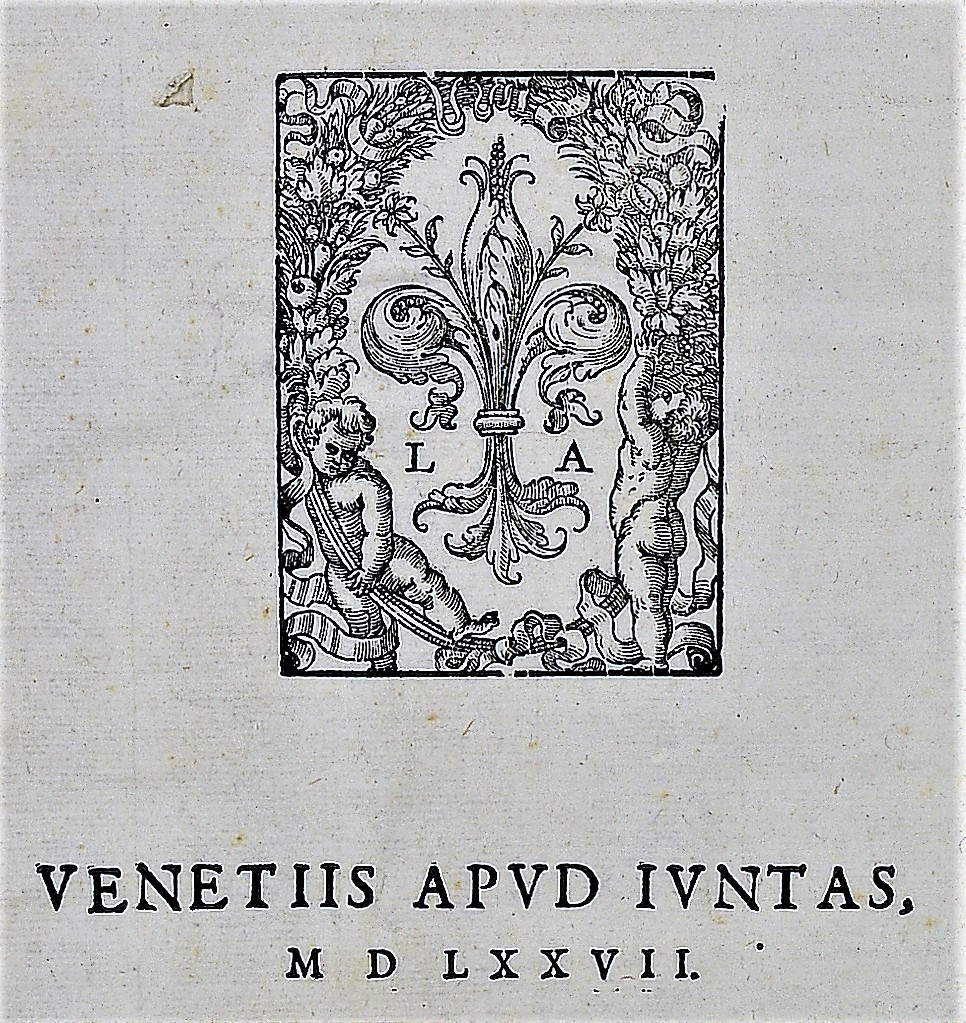
The output of the famous Florentine printing house of the Giunti family, on the other hand, is represented by works by the medieval jurist Baldus de Ubaldis (1327-1402), an exponent of the postglossatori school. His numerous interpretations of the Codex Iustinianus were published in Venice between 1576 and 1577.
Also present are works printed by the Estienne family of Paris: one of the most distinguished representatives of this dynasty of printers was the humanist and philologist Robert Estienne, who received the title of “royal printer in Latin, Hebrew and Greek” from King Francis I of France. Works printed by this printer are preserved in the university collection, including Plutarch’s Parallel Lives (1561), two copies of the Odes of Anacreon and other lyric poets (1556), and King Charles IX’s ordinance (1568) for the creation of a special guard corps in Paris, intended to suppress disturbances during the French Wars of Religion.
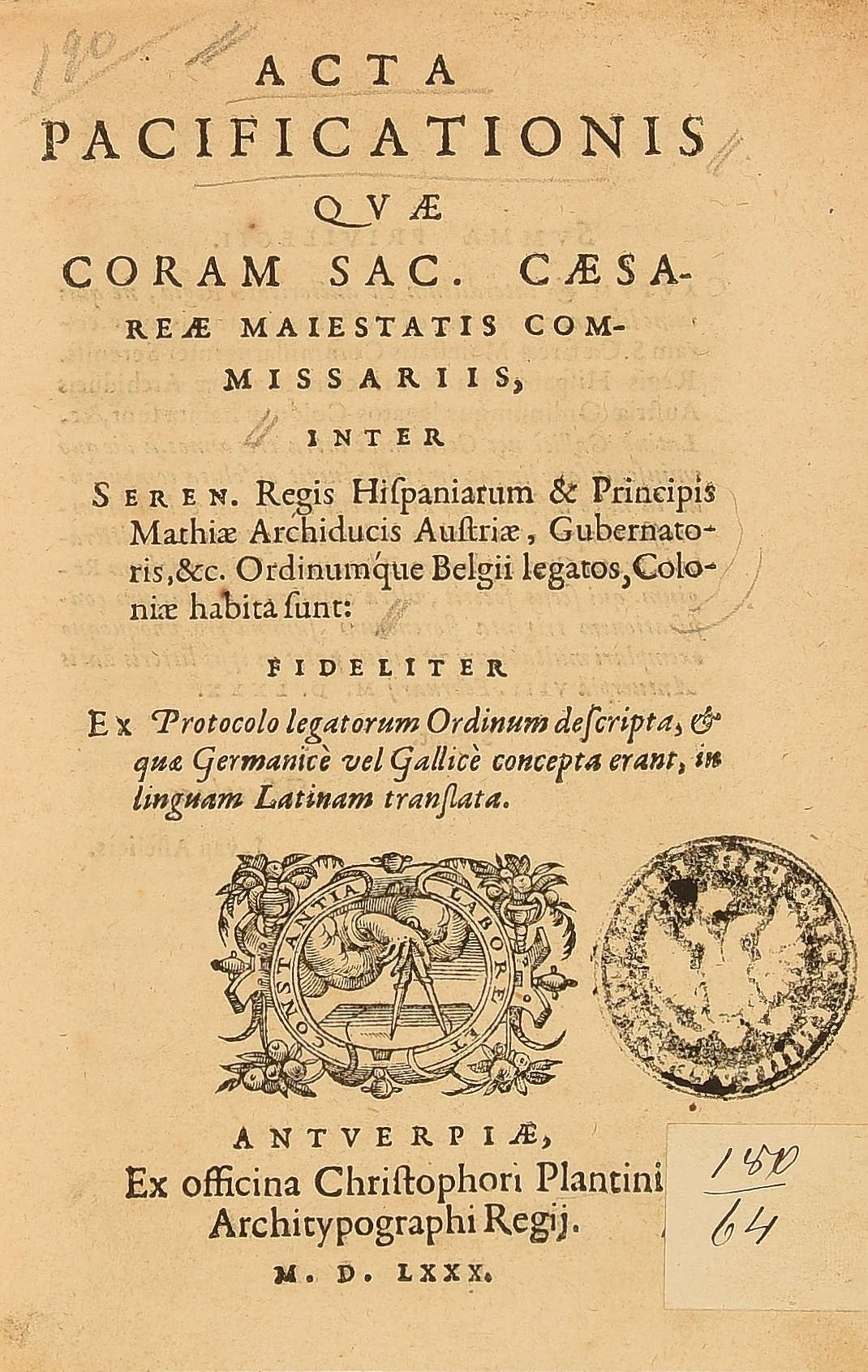
Another central figure in European publishing was the Huguenot printer Christophe Plantin in Antwerp. He founded the Officina Plantiniana, the first industrial-type printing-publishing enterprise in Europe, consisting of sixteen printers and employing about 80 workers. This helped make Antwerp one of the leading printing centers in Western Europe. In the Library’s holdings are two works published by his workshop during the period of the bourgeois revolution in the Low Countries: Ordonnance, édict et décret du Roy our Sire sur le faict de la justice criminelle es Pays Bas (1570) and Acta pacificationis. .. (1580), concerning agreements between the King of Spain, Archduke Matthias of Austria and representatives of the provinces of the Low Countries.
In the 17th century, a key role in the dissemination of new ideas in Europe was played by leading printers. The most significant contribution to publishing at the time was made by the Dutch publishing house Elzevier (hence the word “elzeviro”), active continuously for 120 years, from 1592 to 1712, with main offices in Leiden and Amsterdam, and branches in England, France, Italy and Denmark. The university collection includes 42 Elzevirian editions. These include a specimen of the Opera in quibus Tactica nunc primum prodeunt (1617) by the Byzantine emperor Constantine VII Porphyrogenitus (905-959), published by the noted Dutch historian, philologist and antiquarian Johannes Meursius (1579-1639).
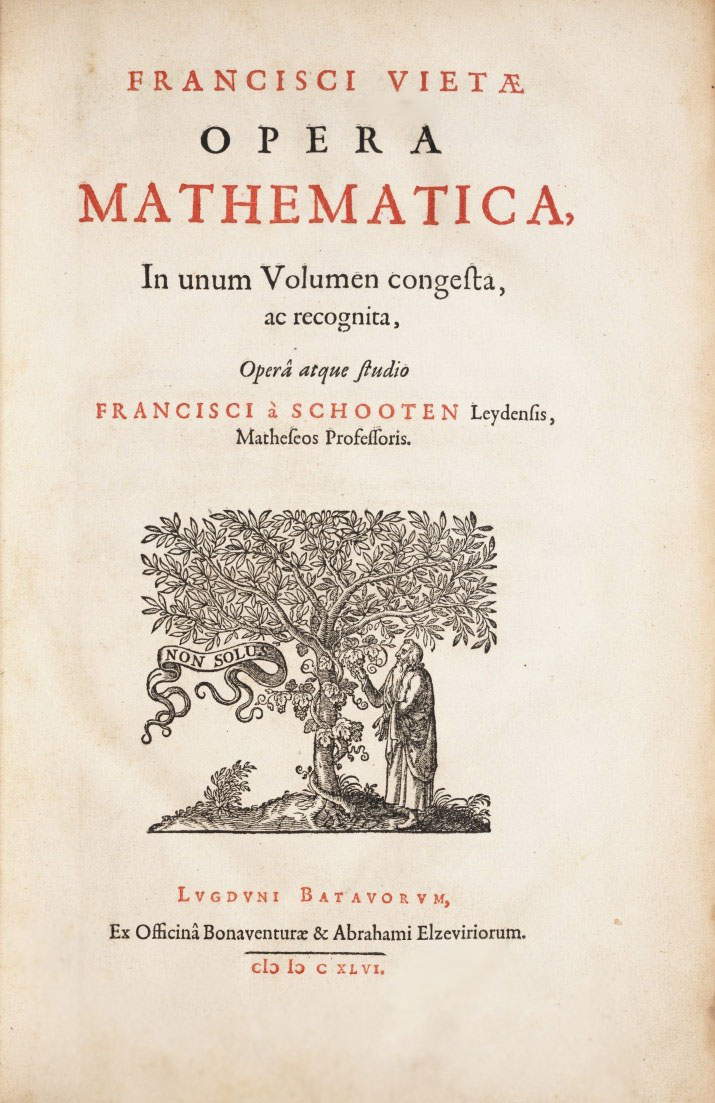
There is also the 1635 Leiden edition of the political-philosophical treatise Arcana politica sive De prudentia civili by the celebrated mathematician, philosopher, physician and engineer Girolamo Cardano (1501-1576), as well as the Opera mathematica of François Viète (1540-1603), published in Leiden in 1646 by Bonaventura Elzevir (1583-1652) and Abraham Elzevir (1592-1652).
Seventeenth-century books on great voyages and navigators
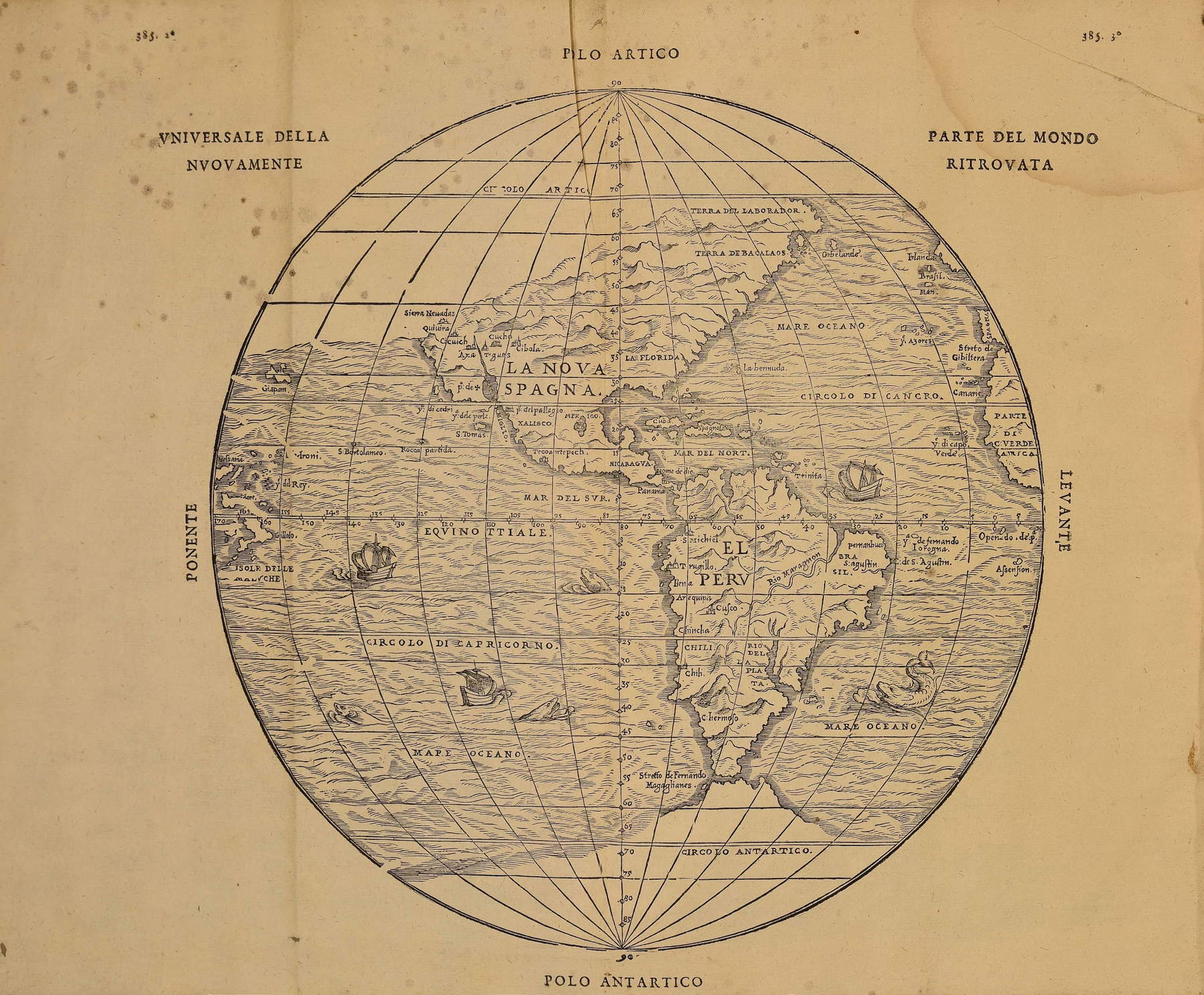
The Library preserves the third volume of the geographical treatise Delle navigationi et viaggi by the Venetian diplomat, geographer and humanist Giovanni Battista Ramusio (1485-1557), printed in 1606 by the Giunti family printing house. This volume is devoted to the conquest of the Aztec capital Tenochtitlán, led by Hernán Cortés on behalf of the Spanish crown, as well as the subjugation of the Inca Empire by Francisco Pizarro, along with other events of the conquistadores in South America.
There is also a description of New France, the territories discovered in America by French navigator Jacques Cartier in the 1630s and 1640s. The last part of Ramusio’s treatise recounts the Journey to the East Indies by the Italian merchant Cesare Federici, who visited the territories of the Vijayanagara Empire (South India) in the 1660s.
The collection of Lusatian religious literature
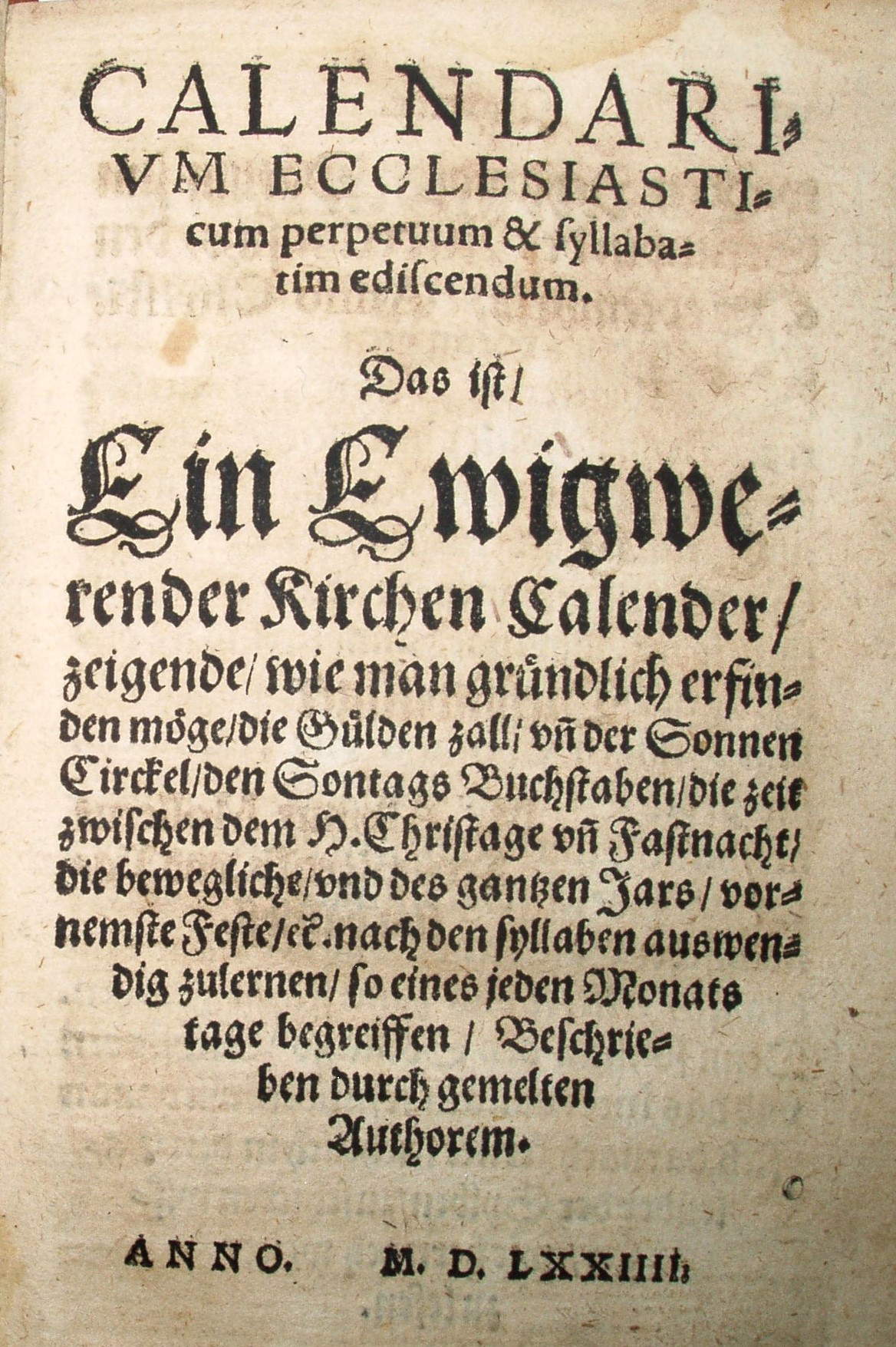
In the Library there is a valuable section of religious literature of the Lusatian tradition (editions of the Lusatian Serbs) from the collection of Polish philologist, traveler and bibliophile Andrzej Kucharski (35 units). The pride and joy of this section is the convoluted editorial Collection of Lower Lusatian Psalms and Catechism by A. Möller (1574), with the texts of the ecclesiastical calendar and collection of psalms in Latin, German, and the Vindicated (Lusatian) language, as well as the Small Catechism. The copy has marginal annotations in the Lusatian language, with an embossed impression on the binding cover with the inscription: Sic Deus dilexit mundum ut Fili (“Thus the Lord loves the world like a son”).
The ex libris of great people
In addition to books, the Science Library also keeps numerous documents-ex libris, stamps and dedications-very valuable for reconstructing the history of the works and their ownership.
Notable are the ex libris of the Neapolitan nobleman Francesco Vargas Machuca (1699-1785), who was an eminent jurist and man of letters. His library was renowned for its rich collection of writings by the Church Fathers, works of the Greek and Latin classics, as well as repertories and reference texts on the history of Naples(Catalogue of choice library formerly belonging to the late Marquis Vargas-Macciucca, E. Schipani printing house, 1886). The Marquis was in the habit of pasting on the flyleaf of books, next to the ex libris, a list of fifteen rules drafted in Latin, which those who borrowed volumes from his library had to abide by.
Also represented in the library is the figure of Marie Adelaide of France (1732-1800), a French princess of the Bourbon dynasty, the fourth daughter of Louis XV, known as Madame Adélaïde. Each of Louis XV’s daughters owned her own library, whose volumes were decorated with coats of arms embossed in gold or silver and were distinguished by the color of the bindings: the books of Princess Sophie were bound in lemon-yellow morocco, those of Princess Victoria in green or olive morocco, and those of Princess Marie Adelaide in red morocco. However, only Adelaide can be considered a true bibliophile: her library numbered about 10,000 volumes. The collection was dispersed at auction during the French Revolution. In Odessa, from that collection is Antoine Auberty’sHistoire du cardinal Mazarin (3 vols.), printed in Amsterdam by Michel-Charles Le Cène (1751, Vol. 1-3).
It continues with Louis XV, known as “the Beloved” (1710-1774), king of France. His reign (1715-1774) was marked by great defeats and the loss of colonies in North America and India, but it represented at the same time a period of great flowering of French culture. The ruler was well educated and inclined to the dissemination of knowledge. He established a substantial personal library.
Specialized literature notes that the superex libris found on specimens belonging to French monarchs (Louis XIV, Louis XV and Louis XVI) often take on the character of true editorial marks. They decorated Royal Almanacs, liturgical books, some folio volumes dedicated to official celebrations and other publications of the royal press. Louis XV was frequently offered works dedicated to him or books bound with his coat of arms “De France.” Coats of arms have considerable variety, and the library holds several examples. Works from his collection: Catalogue de livres imprimés de la Bibliothèque du Roy, in 7 volumes, (Paris: Imprimerie Royale, 1739-1753, vols. 1-6) and Almanach royal (Paris: chez Le Breton, 1750, 1759, 1761).
Also present are a number of books that belonged to Napoleon Bonaparte (1769-1821), emperor of the French, who read every new publication, frequently reread classical authors, and was a history buff. From 1807 one of his librarians was the famous bibliographer Antoine-Alexandre Barbier. Napoleon’s libraries numbered about 100,000 volumes; many of them were later auctioned off.
The emperor loved to work in the library set up in the favorite residence of Joséphine de Beauharnais at Malmaison. All genres were represented here: history, travel, theater, poetry, novels, dictionaries, scientific and artistic works (totaling about 5,000-6,000 volumes). The relatively sober calfskin bindings were stamped with the imperial coat of arms and the indication of the library to which they belonged, without excessive ornamentation or luxurious decorations. This library served as a model for those in other imperial residences: the Tuileries, Compiègne, Saint-Cloud, the Trianon, Rambouillet and Fontainebleau.
Some specimens preserved in the Library’s Vorontsov Collection, decorated with the coat of arms of the French emperor, bear annotations by Mikhail Vorontsov (governor-general of Novorossiya and plenipotentiary of Bessarabia from 1823 to 1844), attesting to their purchase in Malmaison in 1815. Selected volumes with Napoleonic superex libris also include a specimen with coat of arms related to Napoleon’s coronation in Milan Cathedral as king of the newly formed Kingdom of Italy. Works in the collection: Base du système métrique décimal, ou mesure de l’arc du méridien compris entre les parallèles de Dunkerque et Barcelone, executed from 1792 and later years by Méchain and Delambre, compiled by Delambre, (Paris: Baudouin, 1806-1810, vols. 1-3), Dominique Bouhours, Histoire de P. d. Aubusson-La Feuillade, grand maître de Rhodes (fourth edition, Paris, 1806), Pomponius Mela, French translation on the edition by Abraham Gronovius, (Paris-Poitiers, year XII, 1804, vols. 1-3) and Antony Buttura, Poems (Paris: Press of the Imperial University, 1811).
And to these treasures of European culture should be added the conspicuous proportion of books and documents in Russian, Ukrainian and other Slavic languages. A heritage of culture currently in danger due to the war with Russia, which does not spare historical buildings and cultural property.
Warning: the translation into English of the original Italian article was created using automatic tools. We undertake to review all articles, but we do not guarantee the total absence of inaccuracies in the translation due to the program. You can find the original by clicking on the ITA button. If you find any mistake,please contact us.