




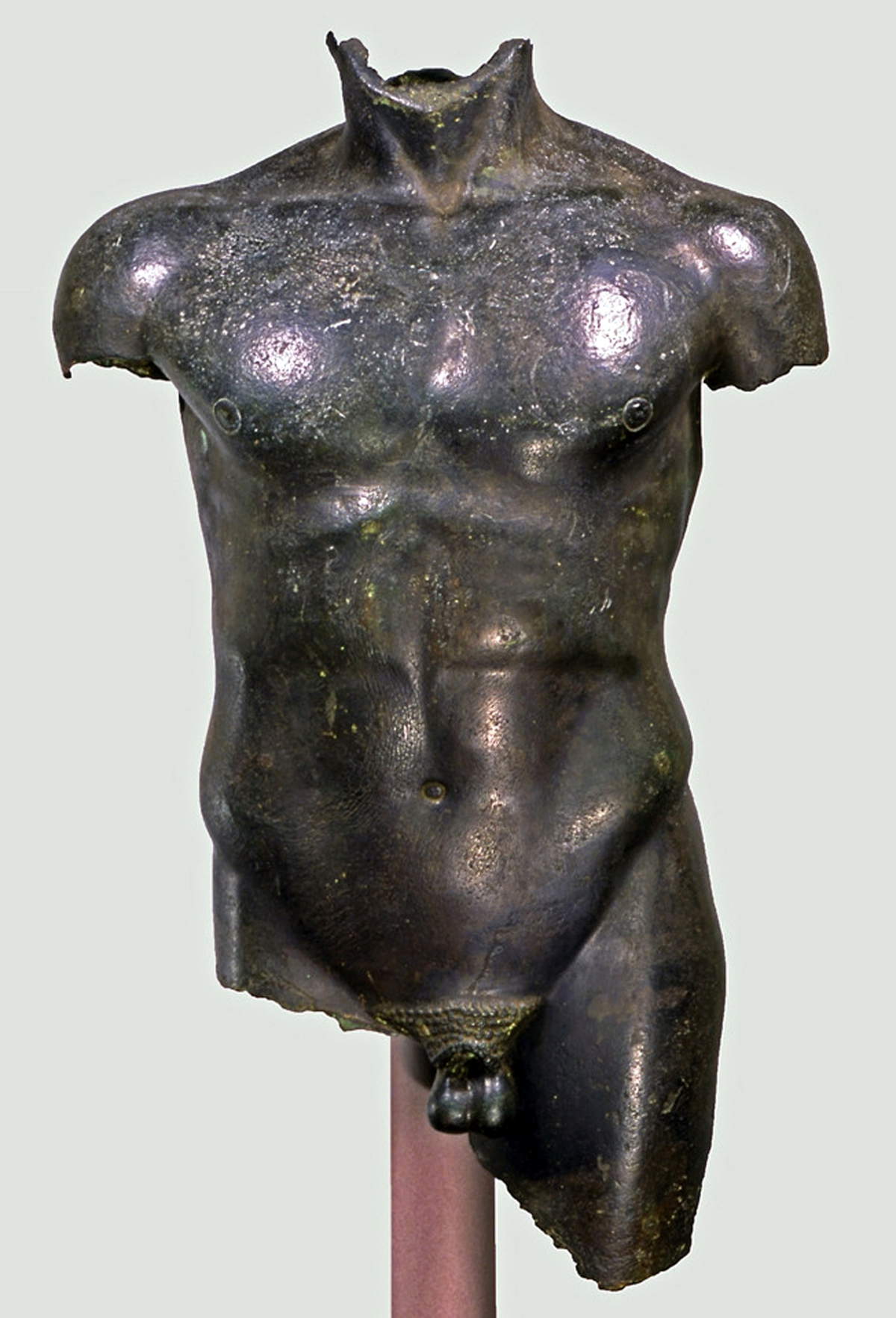
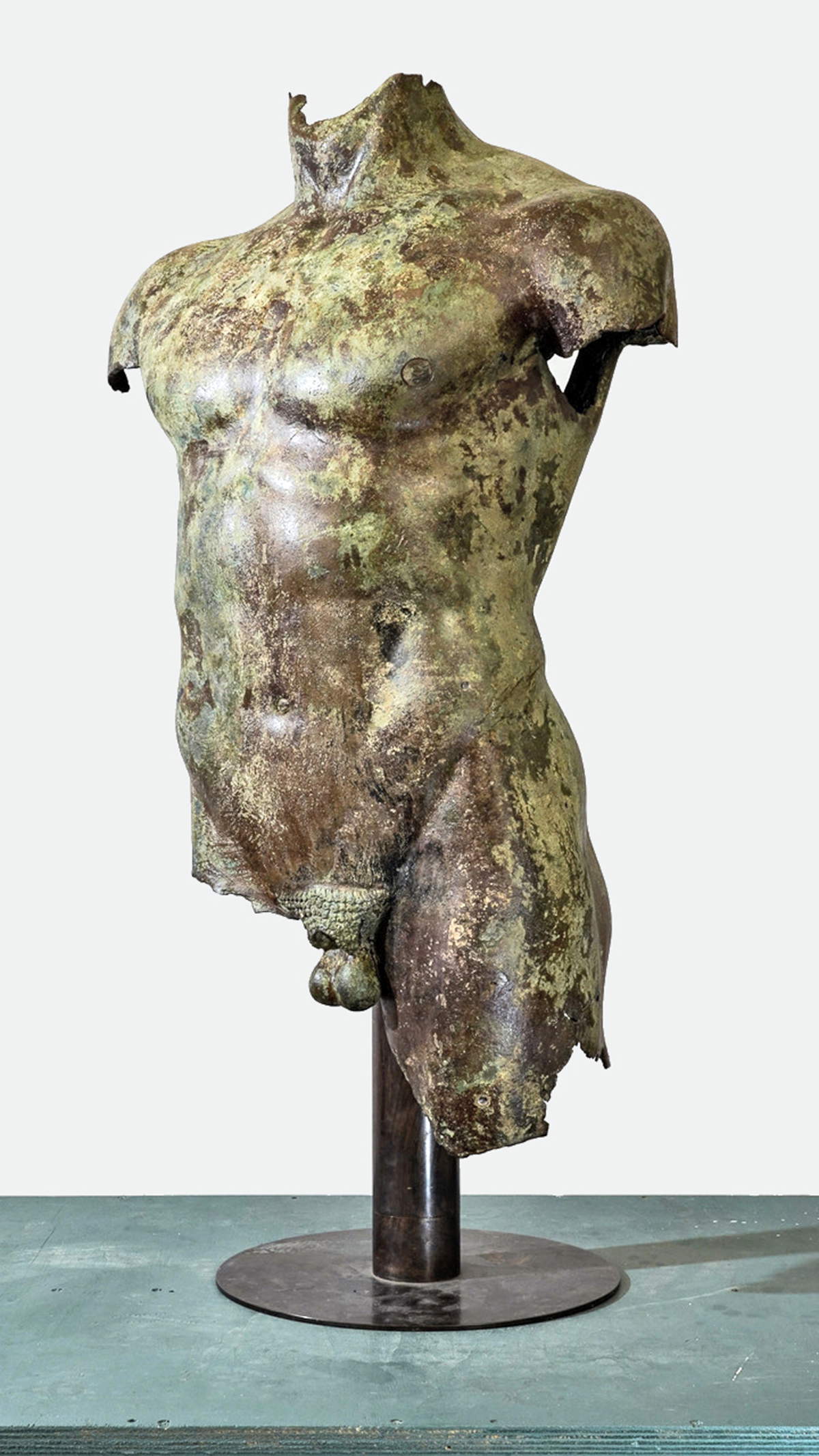
The famous Livorno Torso is back on display from today at the National Archaeological Museum in Florence, after a long and complex work of restoration, technological research and scientific investigation, developed thanks to the collaboration of Italian and international specialists. In fact, the famous bronze sculpture belonging to the Great Bronzes of the Medici collections has been the subject of a major conservation intervention, launched in 2024, which was carried out thanks to the contribution of Friends of Florence, the expertise of restorer Nicola Salvioli and the vision of Mario Iozzo, then director of the museum. The operation proved particularly challenging because of the different surface conditions and the sculpture’s delicate conservation issues. At the same time as the restoration, an analytical study was conducted on the metal alloy and the techniques used to make it.
Among the Great Bronzes held by the museum, the Torso was already in the Medici collections at the time of Cosimo I (1537-1574) and appears among the Gallery’s most significant works already in Johann Zoffany’s La Tribuna degli Uffizi (1772-1778). Numerous questions regarding its provenance remain unanswered: in the past, there has been debate as to whether it was a Greek original or a Roman copy, whether it was recovered in the seabed off the coast of Livorno, or whether it had always been part of the Medici collections. Investigations conducted during the restoration, however, have confirmed one fact with certainty: the sculpture spent a long period immersed in an underwater environment.
As was the case with other bronzes in the ancient Medici collections, the Torso was covered with thick dark surface layers known as “Lorraine patinas.” Their removal was necessary to effectively deal with the corrosive phenomena that affected the metal. This intervention made it possible to bring to light the color variations of the metal surface and to precisely identify the shell remnants, marine concretions and dowels present within the work.
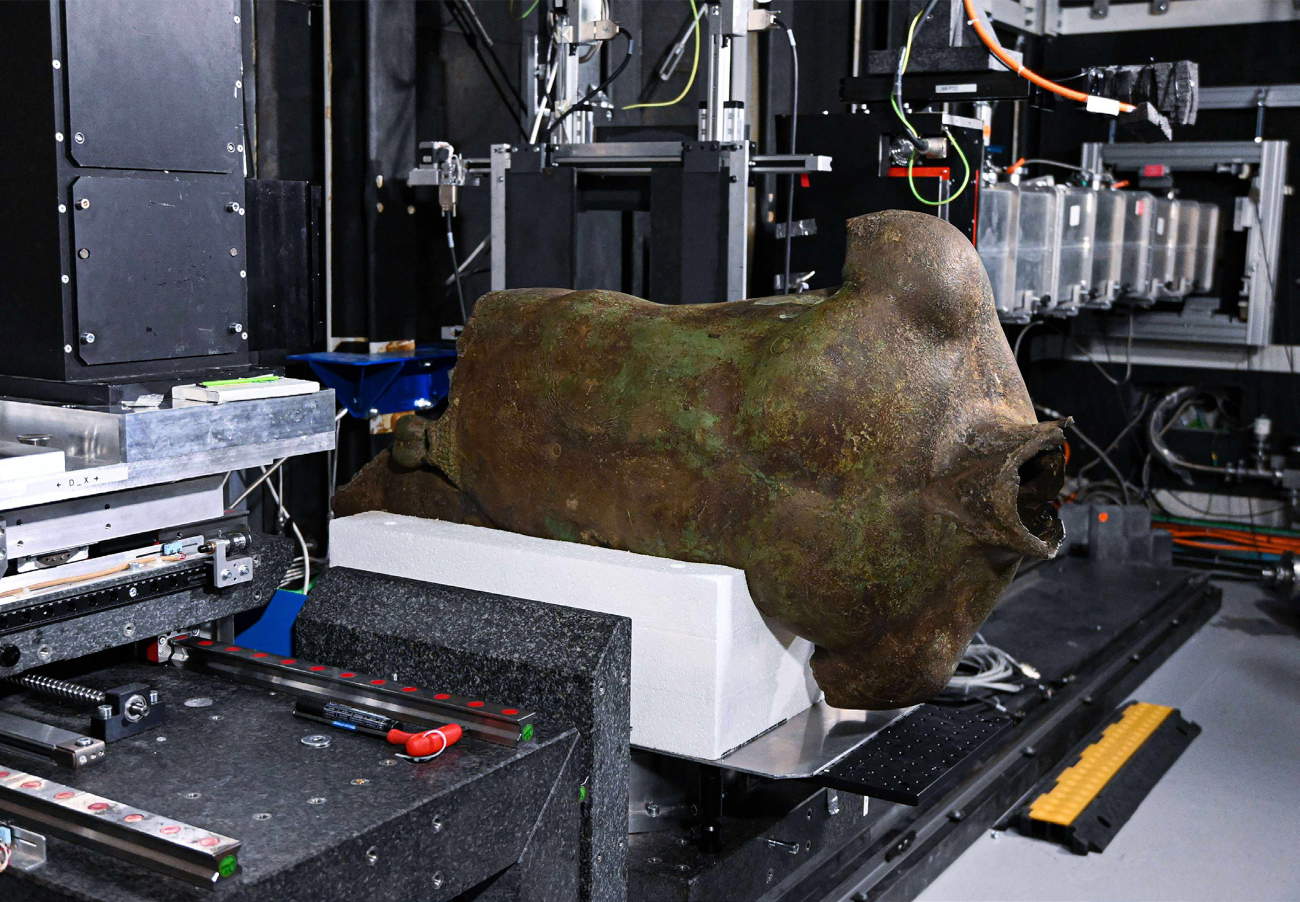
In order to shed light on the many outstanding questions, an extensive diagnostic campaign based on non-invasive and micro-invasive methodologies, aimed at analyzing the alloy and the deterioration processes it has undergone over time, was initiated. As early as June 2024, the sculpture underwent sophisticated investigations at theInstitute Laue-Langevin (ILL) in Grenoble, France. On that occasion, for the first time, theneutron imaging technique, used to explore particularly dense materials, was applied to a bronze statue of monumental size.
The restoration work also represented a significant opportunity for study and research, producing results of considerable interest that will be presented during a study day scheduled for Sept. 17 at the Florentine museum. In addition to directing the restoration, Nicola Salvioli designed the new display system intended for the sculpture, conceived to ensure greater structural safety, a more balanced distribution of loads and better aesthetic enhancement of the work.
After its summer stay at the National Archaeological Museum in Florence, from September 25 the Torso will become part of the major exhibition Broken. The Power of the Fragment, hosted at Palazzo Strozzi until Jan. 24, 2027. The exhibition will explore the theme of the fragment through a path that will bring archaeology and contemporary art into dialogue.
The restoration project of the Livorno Torso was realized thanks to the support of the Friends of Florence, particularly benefactors Lauri and Michael Corliss. The restoration activities, the 3D graphic documentation, and the study and realization of the new exhibition support were supervised by Nicola Salvioli, with the collaboration of Giorgio Pettiti. The technical and scientific direction of the intervention was entrusted to Barbara Arbeid and Giulia Basilissi.
Diagnostic investigations on the metal alloy, patinas and alteration products were conducted by the National Research Council-Institute of Cultural Heritage Sciences, with contributions from Barbara Salvadori, Silvia Vettori and Sofia Brizzi. Neutron analyses were performed by the National Research Council - Institute of Applied Physics “Nello Carrara,” represented by Francesco Grazzi and Francesco Cantini, in collaboration with the Institute Laue-Langevin (ILL) in Grenoble, where Antonella Scherillo, Anna Fedrigo and Alessandro Tengattini worked. The study of the melt lands was entrusted to Sonia Mugnaini, while the analysis of marine organism residues was carried out by the University of Florence - La Specola Museum of Natural History, specifically by Gianna Innocenti and Simone Cianfanelli. The official photographic documentation of the intervention was carried out by Antonio Quattrone, while the handling operations of the work, both nationally and internationally, were handled by Arteria Srl. Finally, the carpentry work necessary for the construction of the new exhibition support was carried out by New VBC Srl.
“It was an exciting investigation,” commented Daniele F. Maras, director of the National Archaeological Museum in Florence, “in which the skills of different scientific and humanistic disciplines intertwined under the banner of restoration, to tell the very long story of ancient bronze, from its creation to its stay under the waters of the sea to its display in the grand ducal collections, then in the museum. A team effort among many specialists that highlights the museum’s active role as a center of research and knowledge on archaeological heritage; but also a new and valuable collaboration with the Friends of Florence, which strengthens the relationship between the collection and its most generous and passionate audience.”
“With the restoration of the Leghorn Torso, Friends of Florence is pleased to renew its collaboration with the National Archaeological Museum of Florence,” said Simonetta Brandolini d’Adda, President of Friends of Florence, “supporting a project that has been able to combine conservation, research and scientific investigation. An intervention that has restored legibility and stability to the work and has allowed us to delve into its history, materials and execution technique. We are deeply grateful to Messrs. Lauri and Michael Corliss: thanks to their generous donation, Friends of Florence has been able to support and make possible this important project, contributing to the protection and enhancement of a work that today can tell an even richer and more complete story to the public. Our thanks also go to all the museum staff for their invaluable collaboration and to Nicola Salvioli who oversaw the restoration of the work by coordinating, an articulate and innovative diagnostic and research process.”
"The restoration of the Livorno Torso represents an opportunity to enhance and return to the public a work of extraordinary significance, which will be part of the itinerary of Palazzo Strozzi’s major exhibition Broken. The Power of the Fragment (Sept. 25, 2026 - Jan. 24, 2027)," commented Arturo Galansino, Director General of the Fondazione Palazzo Strozzi. “An achievement made possible thanks to the valuable support of Friends of Florence, which supported the restoration campaign, and the collaboration with the National Archaeological Museum of Florence, whose loan of the work renews and strengthens the dialogue between the city’s cultural institutions.”
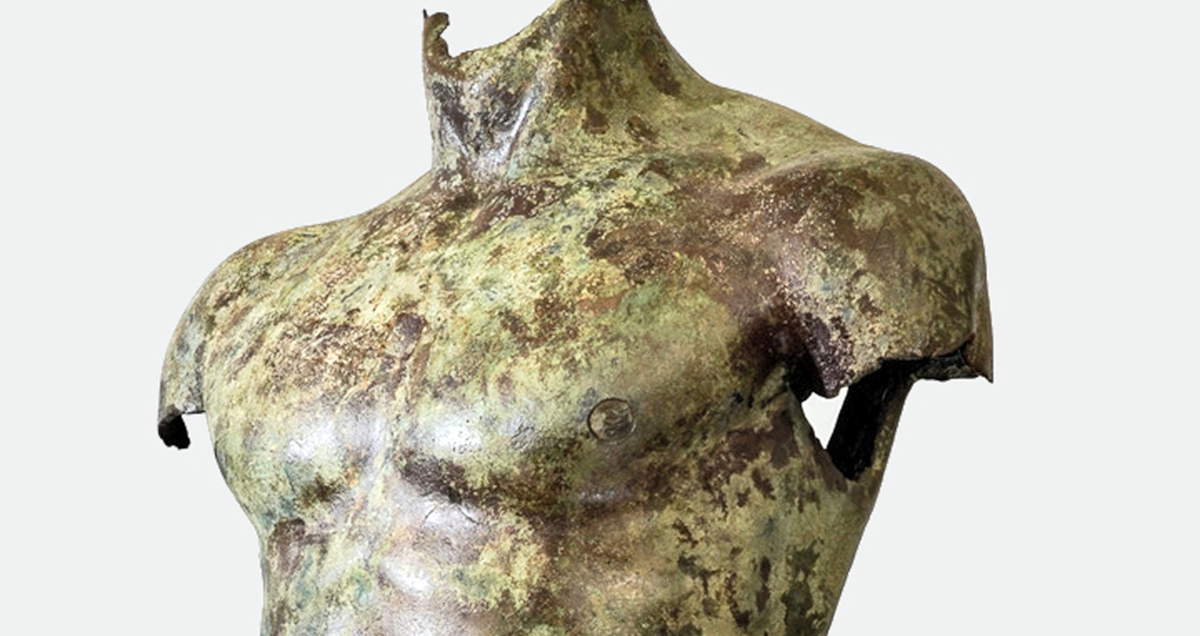 |
| The restored Torso of Leghorn, a large bronze from the Medici collections, returns to the Archaeological Museum of Florence |

Warning: the translation into English of the original Italian article was created using automatic tools. We undertake to review all articles, but we do not guarantee the total absence of inaccuracies in the translation due to the program. You can find the original by clicking on the ITA button. If you find any mistake,please contact us.















 IT
IT FR
FR DE
DE ES
ES CN
CN