




by Redazione 02/04/2026



Categories: Ancient art / Disclaimer
A rare Artemisia Gentileschi fragment, damaged during the war and missing its face, goes up for auction at Dorotheum in Vienna: estimated at up to 150,000 euros, it will be auctioned April 28.


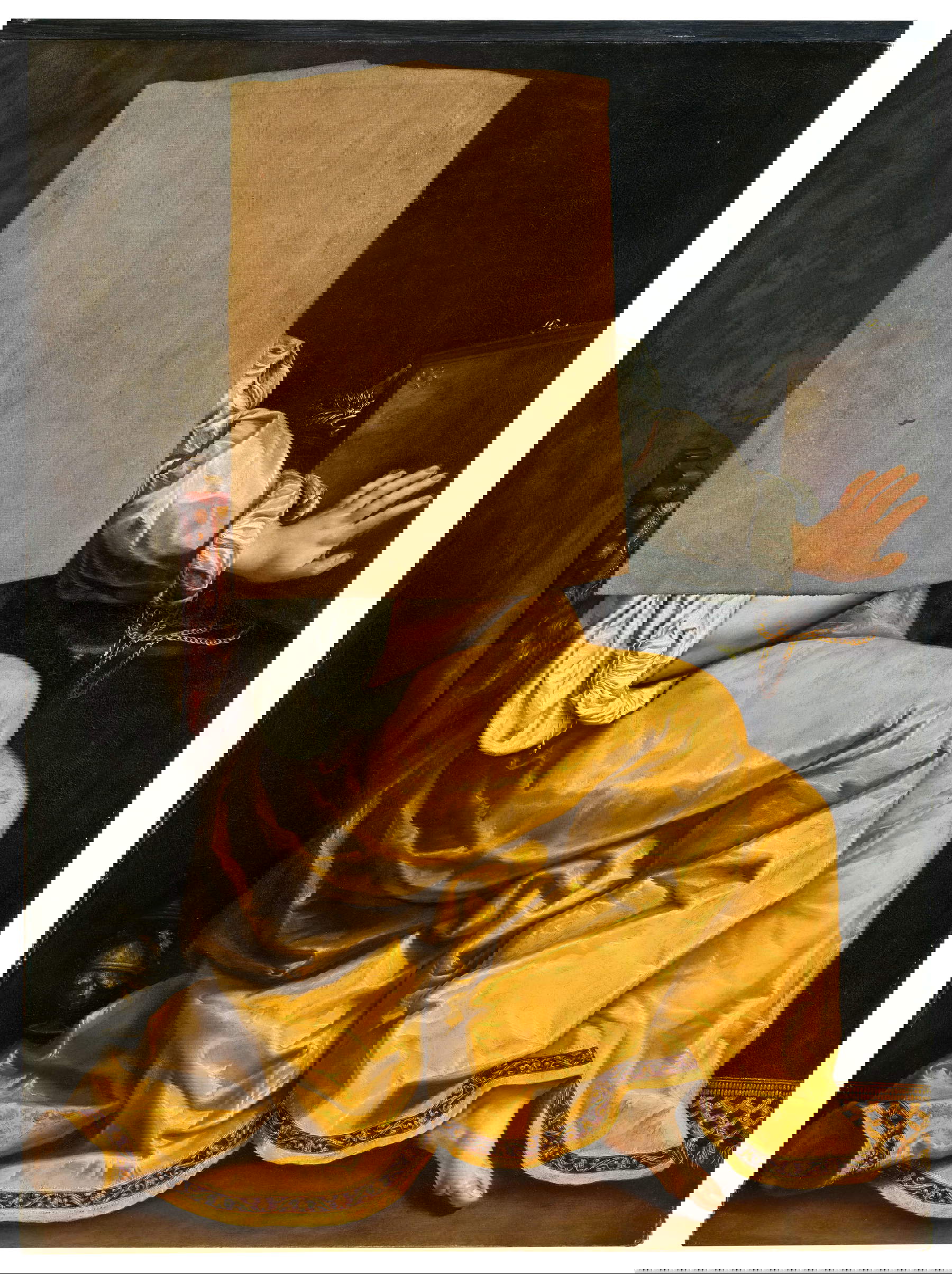
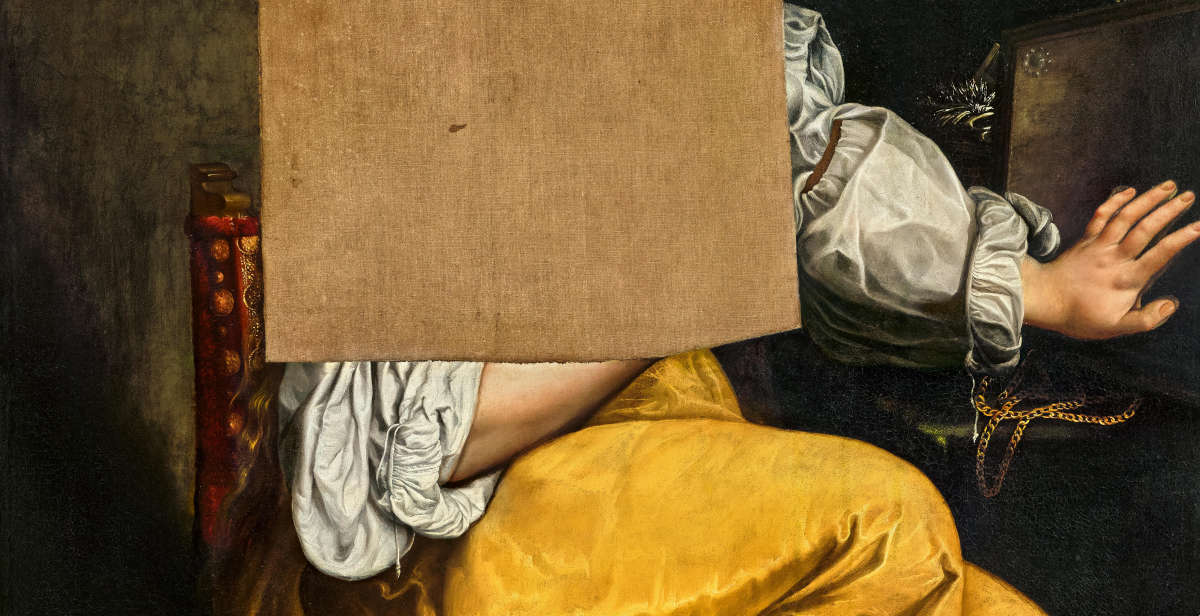
A mutilated work, scarred by history but still capable of restoring the power of Baroque painting. Among the top lots at the upcoming Old Master auction organized by Dorotheum in Vienna is a fragment of a Magdalene attributed to Artemisia Gentileschi (Rome, 1593 - Naples, post-1654), with an estimate of between 100,000 and 150,000 euros. The sale is scheduled for April 28, 2026. The painting, an oil on canvas of considerable size (148 x 111 cm), represents what remains of an originally complete composition, now deprived of its central element: the saint’s head, which was removed under circumstances that have not been fully clarified. According to the auction house, the damage may date back to the period of World War II, when the work was in Berlin, in a context marked by dispersion, looting and destruction.

For many years the painting remained in a private collection in Germany, stored rolled up in a cellar, before being rediscovered, restored, and recognized for the quality of its execution. Despite the severe losses it suffered, the work indeed retains a painterly presence that scholars firmly trace back to the hand of Artemisia Gentileschi. The attribution has been supported by Roberto Contini and Francesco Solinas, among the leading experts on the artist, who published the painting in 2011 on the occasion of the exhibition Artemisia Gentileschi. Storia di una passione, held at Palazzo Reale (Milan) between 2011 and 2012. Added to this is the recent favorable opinion of Riccardo Lattuada, who confirmed the attribution and dating of the work around 1615-1618, during the artist’s Florentine period.


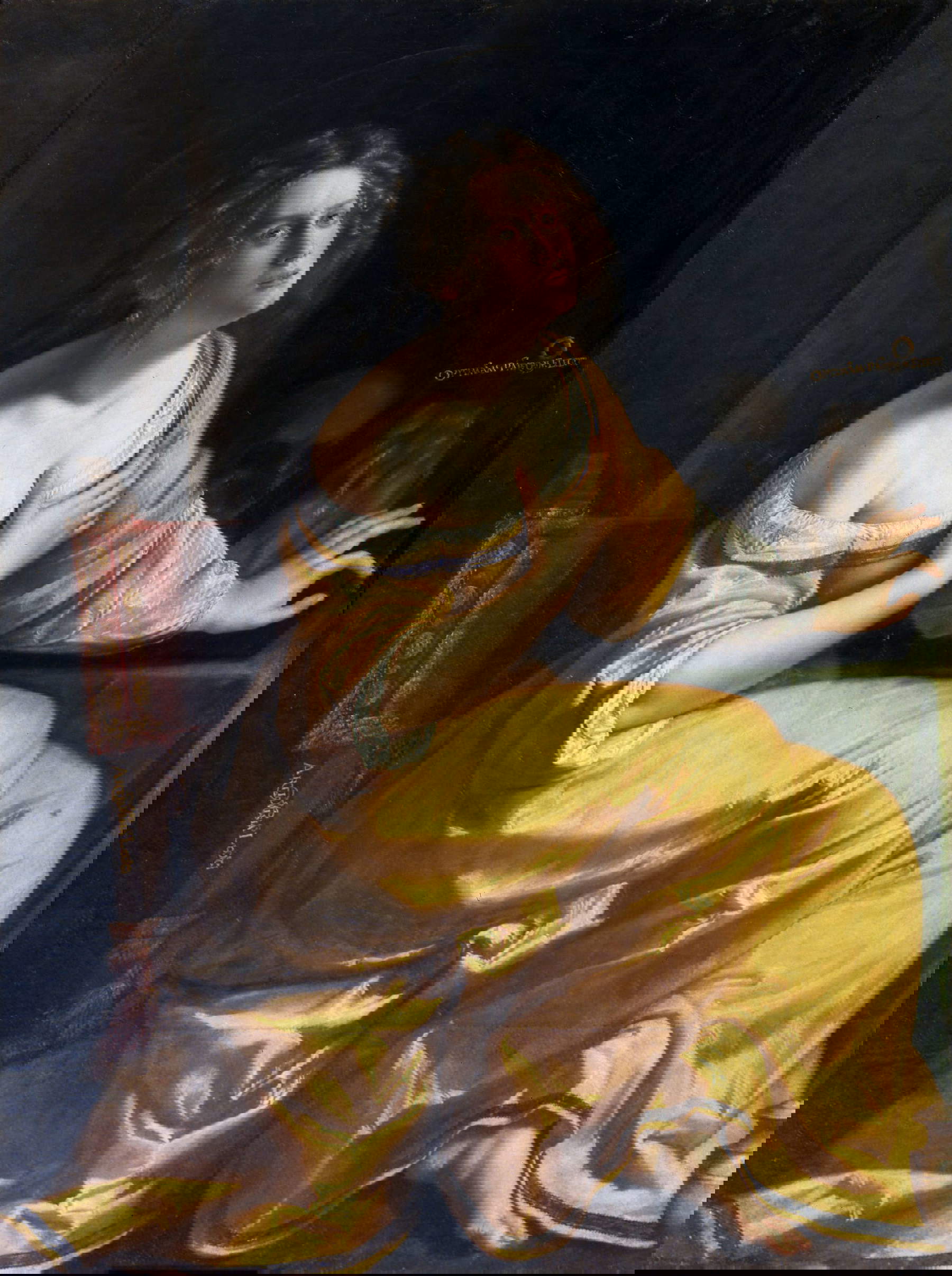
The painting is considered an autograph replica of the Magdalene preserved in the Galleria Palatina in Palazzo Pitti in Florence. The two versions have almost identical dimensions, but they differ in a number of compositional and stylistic variations that offer a direct glimpse into Artemisia’s working method. Comparison of the two works reveals, for example, a more dynamic rendering of the drapery in the version now on auction, a different position of the chair and of Magdalene’s left hand, which in this case seems to reject the image reflected in the mirror, in a gesture charged with symbolic meaning related to the rejection of vanity. Some iconographic elements are also modified, such as the ointment jar, associated with Mary Magdalene’s gesture of anointing Christ’s body, which in the Uffizi version is placed in the foreground, while here it appears in the background, with more elaborate decoration.


Further differences concern details such as the decorative border of the dress, which in the fragment has a complex pattern inspired by acanthus shoots, and the addition of elements such as a golden chain on the table or the fringe of green fabric. These variations testify to a widespread practice in seventeenth-century painting, also inherited by Artemisia’s father, Orazio Gentileschi, based on the use of preparatory cartoons that allowed a subject to be replicated by introducing changes related to the context of the commission.
From a technical point of view, analyses conducted by Gianluca Poldi through multiband infrared reflectography and spectroscopy revealed pentimenti and corrections along the contours of the figure, particularly in the foot and wrist, as well as changes in the clothing that indicate an evolving pictorial process. The pigments identified, including lead white, lead-tin yellow, ochre, vermillion, and ultramarine blue from lapis lazuli, appear consistent with 17th-century practice and the artist’s palette.
Despite the mutilation, or perhaps because of it, the painting has provoked critical reflections on the value of absence in aesthetic perception. Riccardo Lattuada has related the work’s impact to contemporary research such as that of Emilio Isgrò, known for his use of erasure as a creative gesture, and Rachel Whiteread and Edmund de Waal, who have explored the theme of negative space and memory.
In this sense, the loss of Magdalene’s head does not merely represent a mutilation, but becomes an element that could amplify the emotional tension of the image, transforming the void into a presence charged with meaning. This is a rare condition in the art market, where more often it is fragments extracted from larger works that circulate, rather than paintings of such importance deprived of their visual focus.
The provenance of the work is documented starting with the collection of Alfred Berliner and his wife Clara Berliner in Berlin, moving on to heirs and various private German collections between the 1960s and 1989. This path, marked by the events of twentieth-century Europe, helps to define the historical context in which the painting’s transformation takes place.
The presence of this Magdalene at the Dorotheum auction thus represents a rare opportunity for the market, not only because of its attribution to one of the protagonists of Baroque painting, but also because of the complexity of its material history. A work that, while incomplete, continues to offer tools for reading about Artemisia Gentileschi’s artistic practice and the relationship between wholeness, loss, and meaning in visual experience.
 |
| At auction in Vienna a mutilated Magdalene by Artemisia |
Warning: the translation into English of the original Italian article was created using automatic tools. We undertake to review all articles, but we do not guarantee the total absence of inaccuracies in the translation due to the program. You can find the original by clicking on the ITA button. If you find any mistake,please contact us.