





The thirteen illuminated choir books from the 16th century housed in the library of the Certosa di Pavia underwent a comprehensive process of diagnostic assessment, restoration, and conservation. The project, launched in the second half of 2025, was carried out by the “La Venaria Reale” Conservation and Restoration Center (CCR) with the support of the Lombardy Regional Directorate of National Museums and encompassed not only the volumes themselves but also the environment in which they are housed, through the restoration and conservation of the library’s historic furnishings.
The project drew upon various areas of expertise within the CCR, with interdisciplinary work organized across four Restoration Laboratories—for choral books, paper and photography, textiles, metals, glass, and ceramics—and the Wooden Furniture Laboratory for the library’s furnishings. The restoration activities were complemented by those of the Center’s Scientific Laboratories, which carried out a diagnostic plan aimed at deepening understanding of the materials comprising the works and defining strategies for their long-term conservation.
The goal of the project was to establish a state of conservation equilibrium for the entire site. The long-term objective is to enable more effective management of preventive and planned conservation in the future through targeted interventions that are sustainable over time. Work on the library’s historic furnishings also proceeded along these lines; they were restored to ensure a structurally sound environment, free from any biological infestations, and suitable for the preservation and use of the volumes.
The diagnostic and restoration phases covered the choir books in their entirety, taking into account the complexity and variety of materials used in the artifacts: from the book blocks to the miniatures, from the leather covers to the stitching, down to the capitals and metal elements incorporated into the bindings. The volumes feature so-called “Gothic” or “monastic” bindings, whose structure was analyzed along with their various material components.
The investigations, conducted using non-invasive and micro-invasive methods, provided information on the materials and techniques used in the creation of the choir books. Among the findings was a diverse palette of pigments, consisting of both inorganic pigments and organic dyes. Among the former, lapis lazuli blue was identified, while among the latter, indigo and various red lacquers derived from cochineal, madder, brazilwood, and folium were identified.
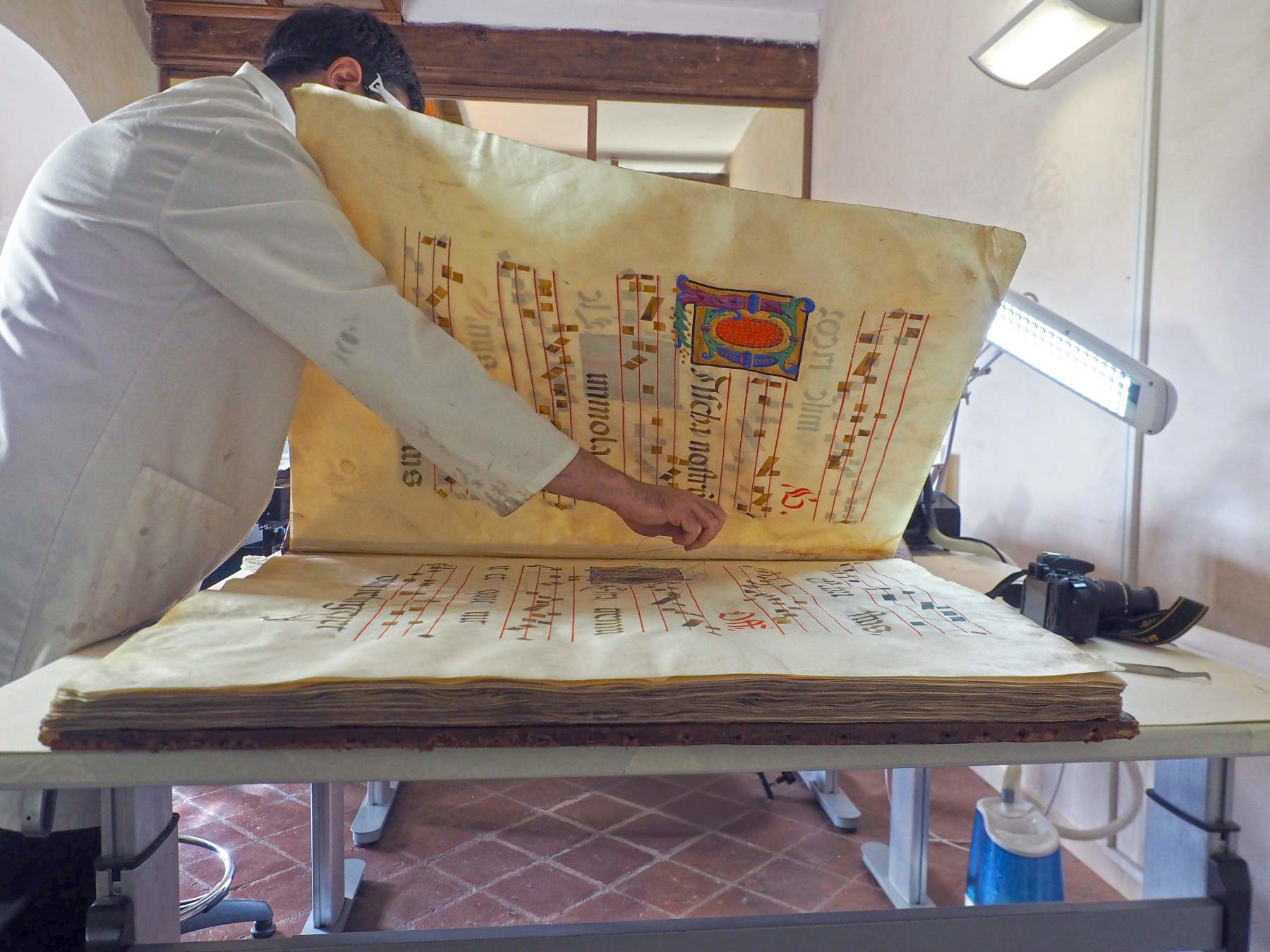
The analyses also provided insights into the preparatory stages of the miniatures. In fact, in some illuminated initials, construction lines and pencil notes regarding the colors intended for the various background areas were detected beneath the paint layer. These elements bear witness to the methods used in the design and execution of the decorations and may provide art historians with additional data to reconstruct the modus operandi of the various artists involved in the creation of the manuscripts.
The diagnostic study also examined the covers of the volumes, analyzing their various components. The types of leather and the species of wood used for the support boards were examined, while digital X-rays allowed for a more detailed understanding of how the artifacts were assembled and for assessing their state of preservation. The information gathered through these investigations helped guide subsequent restoration efforts.
The 16th-century miniatures on parchment underwent cleaning and consolidation treatments designed to mitigate the effects of minor abrasions and lifting of the paint film. During the restoration, the previously applied non-conservation-grade tissue paper was also replaced, with the aim of improving the works’ conservation conditions and preserving their integrity and legibility over time.
All the choir books were also treated for pests using anoxic conditions and returned in specialized two-part conservation boxes. Made of acid-free conservation-grade cardboard with an alkaline reserve and lined with padding, the cases were designed to ensure long-term protection of the volumes while also facilitating their safe transport.
The project thus addressed the restoration of the thirteen choir books within the context of a broader examination of the conservation environment. The CCR “La Venaria Reale” collaborated with the Lombardy Regional Directorate of National Museums to ensure the durability of the restoration work and to establish the conditions necessary to maintain these results over time. Upon completion of the project, the environmental and lighting parameters necessary for the proper conservation of the choir books were defined, and guidelines were developed for a scheduled maintenance plan. The goal is to maintain the conservation conditions identified during the project over time, integrating the restoration of the volumes and the renovation of the library into an ongoing conservation management program.
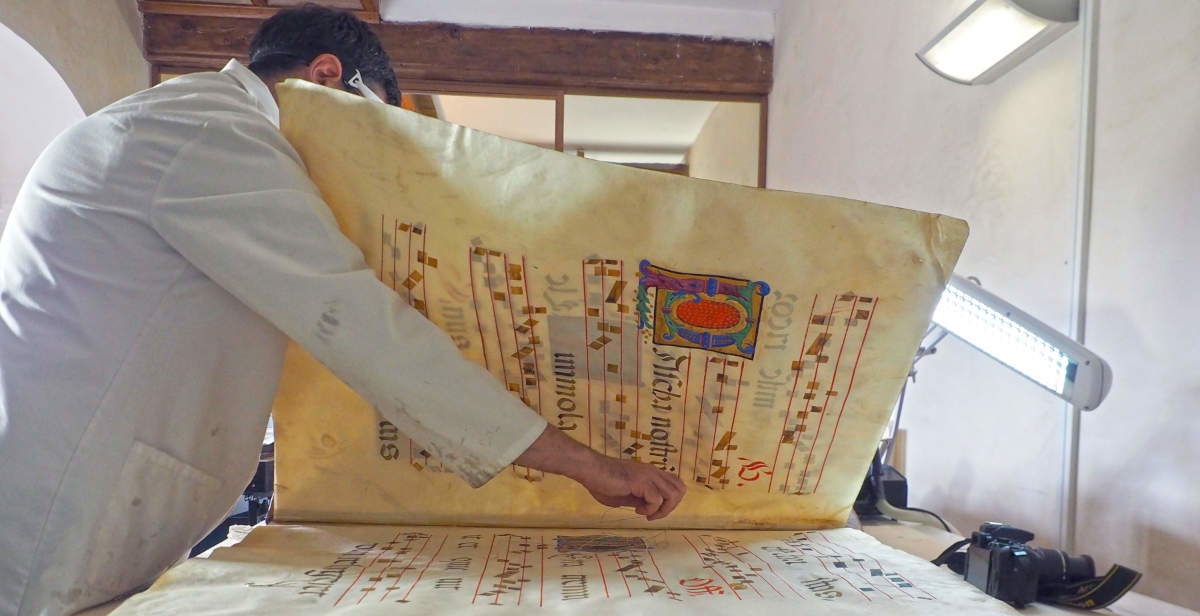 |
| Certosa di Pavia: 13 illuminated 16th-century choir books have been restored |

Warning: the translation into English of the original Italian article was created using automatic tools. We undertake to review all articles, but we do not guarantee the total absence of inaccuracies in the translation due to the program. You can find the original by clicking on the ITA button. If you find any mistake,please contact us.
























 IT
IT FR
FR DE
DE ES
ES CN
CN


