





In Ferrara, restoration work has begun at the Cathedral Museum on the 16th-century tapestry depicting the Beheading of Saint George, one of the most significant examples of Renaissance textile heritage preserved in the city of the Este family. On Tuesday, June 23, the work was dismantled and transported to the R.T. Restauro Tessile laboratory in Albinea, in the province of Reggio Emilia.
The conservation work will begin in the coming hours at this specialized facility, which has been in operation since 1993 and is recognized nationally and internationally for the restoration of historic textile artifacts. The project involves a tapestry that is part of the “Stories of the Patron Saints” cycle, created between 1550 and 1553 for Ferrara Cathedral. Funding was secured through the “eight per thousand” income tax allocation to the state, as part of the direct state management allocation administered by the Presidency of the Council of Ministers. The grant was awarded following a national selection process that recognized the work’s historical and cultural significance, as well as the quality of the project submitted by the City of Ferrara in agreement with the Cathedral Chapter, the owner of the artifact.
The tapestry, created by the Flemish tapestry maker Johannes Karcher based on preparatory drawings by Camillo Filippi and Luca d’Olanda, depicts the final episode in the life of Saint George, the city’s patron saint. The work is a remarkable example of Renaissance textile art and documents the relationship between the Este court and Flemish workshops, as well as representing one of the most important surviving examples of Este tapestry art.
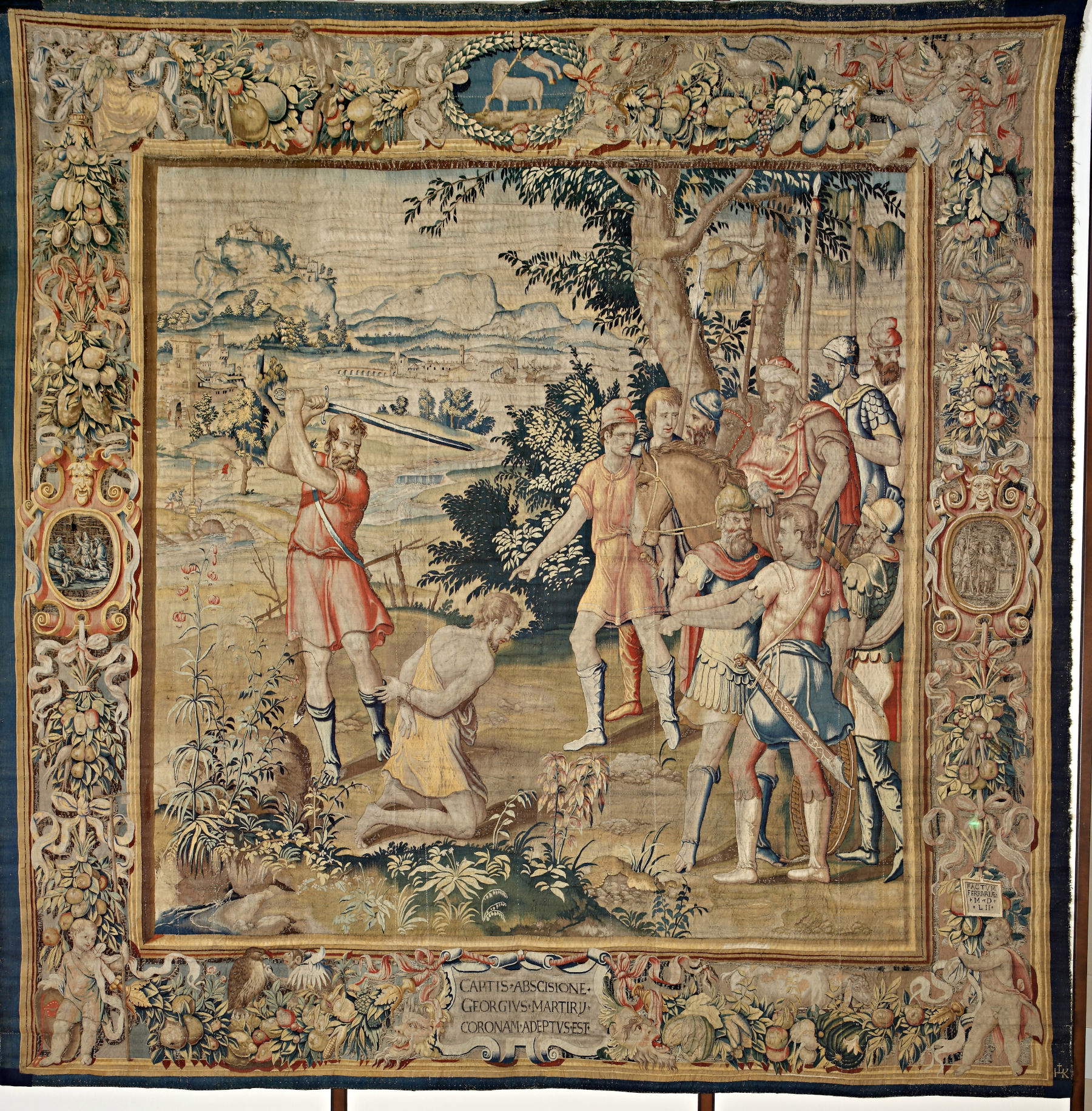
The relocation process required a high degree of technical complexity to ensure the artifact’s safety throughout all phases of dismantling, packing, and transport. This is a rare event in the museum’s recent history: the tapestry was last moved in 2000, when it was installed in its current exhibition space. The activities were coordinated by Romeo Pio Cristofori, curator of the Cathedral Museum and technical director of restoration, who will oversee the entire conservation process until the artwork’s return. The project involves a series of comprehensive interventions, beginning with documentation and preliminary analyses, followed by surface cleaning, the consolidation of the most fragile parts, a review of previous restorations, and the replacement of elements no longer suitable for conservation.
This project is part of the Cathedral Museum’s program for the protection and promotion of its heritage, in anticipation of the celebrations marking the museum’s centennial in 2029. Once the work is complete, the tapestry will return to public display, once again allowing the public to enjoy one of the most significant masterpieces in Ferrara’s artistic history.
“With the completion of the delicate operations to move the tapestry and its transfer to the designated workshop, a project of great importance for the preservation of our city’s cultural heritage is now officially underway,” stated Marco Gulinelli, Councilor for Culture. “We are talking about an extraordinary work, a symbol of Ferrara’s religious and artistic history, which—thanks to funding obtained from the Presidency of the Council of Ministers—will be restored and returned to full public display in optimal condition. This is a highly significant achievement, made possible by the dedication and professionalism of all those who worked on the application and the development of the project: from the technical and scientific staff of the Cathedral Museum to the City officials who oversaw every stage of the process. This team effort, coordinated by Ethel Guidi, Director of the Culture, Tourism, and UNESCO Relations Service, rewards the efforts made over the years to protect the city’s cultural heritage and confirms the national recognition of the importance of the collections housed in our Civic Museums.”
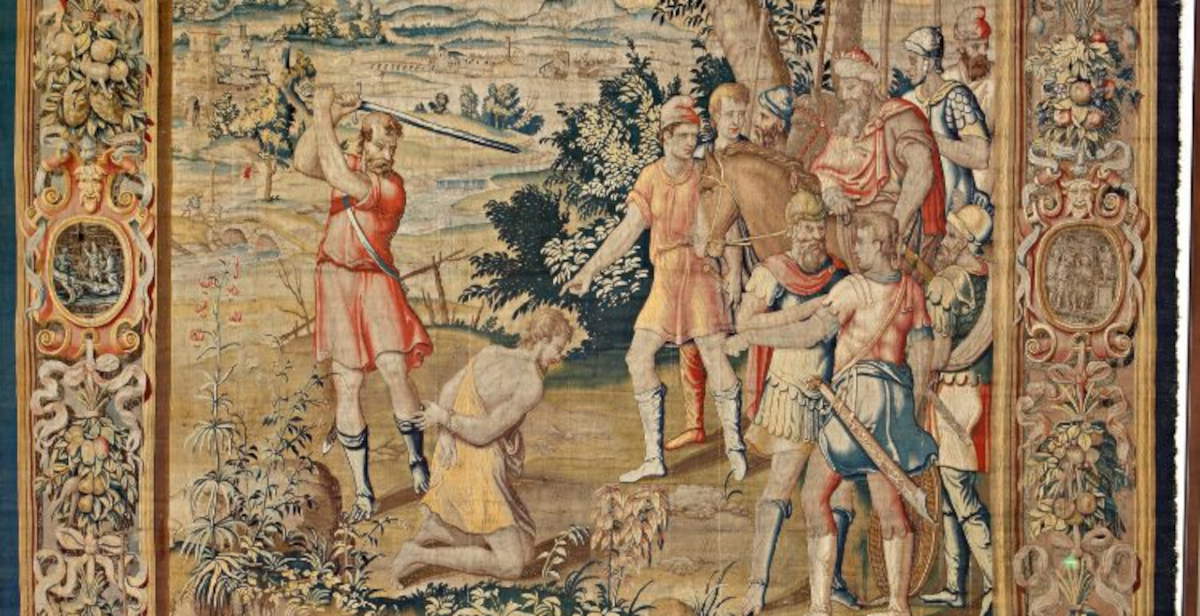 |
| Ferrara: Restoration of the Tapestry Depicting the Beheading of St. George Begins at the Cathedral Museum |

Warning: the translation into English of the original Italian article was created using automatic tools. We undertake to review all articles, but we do not guarantee the total absence of inaccuracies in the translation due to the program. You can find the original by clicking on the ITA button. If you find any mistake,please contact us.























 IT
IT FR
FR DE
DE ES
ES CN
CN


