








The three large canvases decorating the ceilings of the Real Casino del Bosco di San Silvestro at the Royal Palace of Caserta have been restored. The works were in a condition of severe deterioration, such that their preservation and the possibility of handing them down to future generations were at risk. They are three paintings from the 18th century placed in the building designed by architect Francesco Collecini. The canvases, dating from the first decades of the 18th century, adorn the vaults of the second floor in the rooms named “Yellow,” “of Bacchus and Ariadne,” and “of Diana the Huntress.”
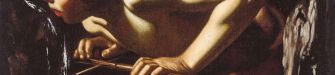
The canvas that required the most complex operations is the one depicting Bacchus and the Cretan princess Ariadne. Like the others in nearby rooms, it is attached to the ceiling by iron nails applied to a wooden structure. The painting was in critical condition: it was torn across much of its surface and still anchored to the ceiling only in a few places. Holes, color alterations and dark stains that could most likely be attributed to moisture were also visible.
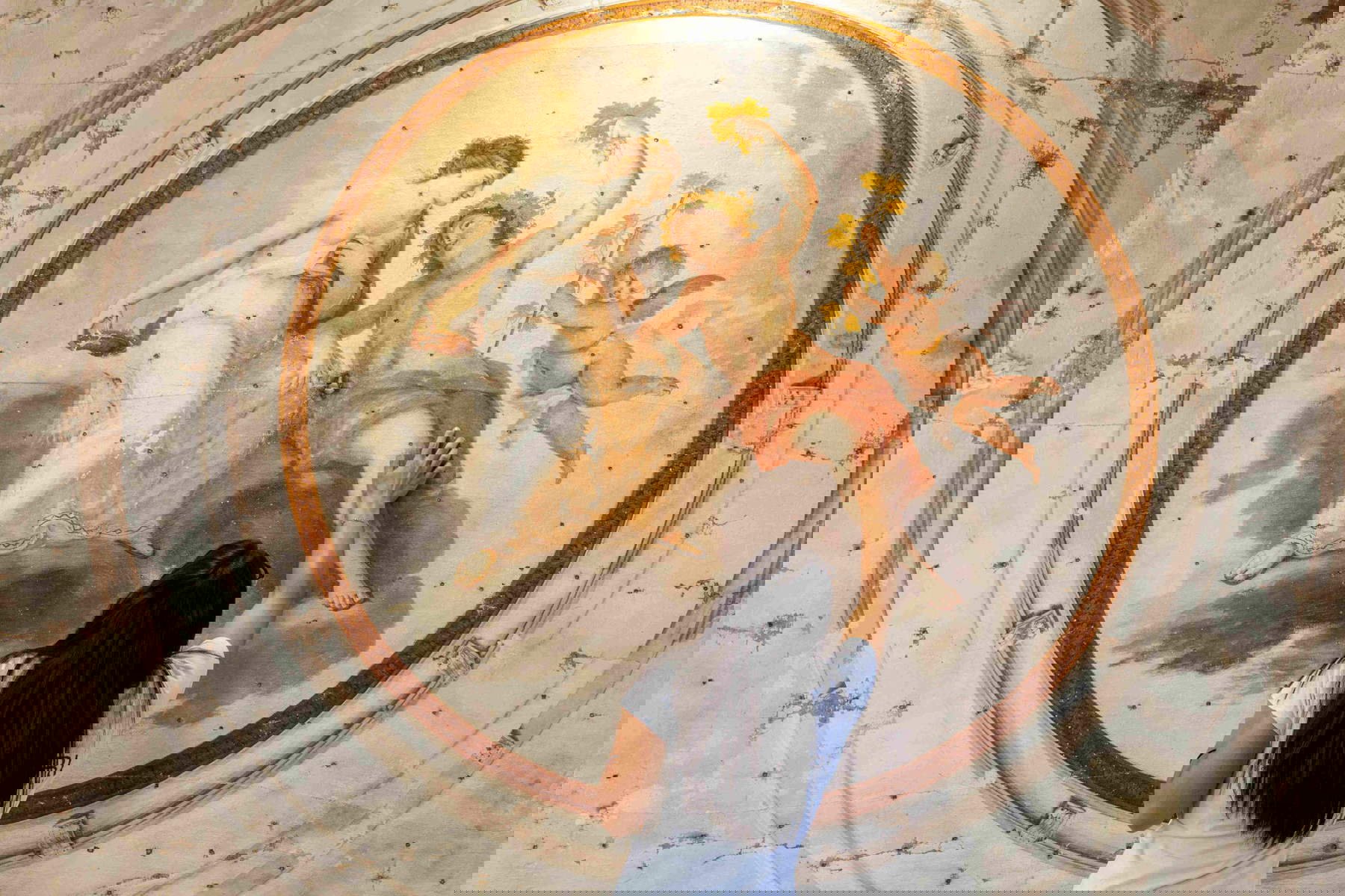
The restoration was carried out both on site, with phases of preliminary study, consolidation of the wooden structure and final interventions, and at the laboratory of the contracted company, Magistri s.r.l. Specific investigations and tests were carried out before each operation, including three-dimensional photogrammetric surveys, resistographic analyses, thermographic surveys and chemical-physical studies on the pictorial materials. Disassembly operations and handling to the laboratory also proved particularly delicate and complex. At the conservation center, specialists carefully cleaned each portion of the canvas, consolidating it with synthetic fibers and intervening with pictorial touch-ups in the missing parts. Having completed the restoration, the work has now been returned to its original location.
The other two canvases in the “Yellow” and “Diana the Huntress” rooms were restored directly on site. The work was financed with ordinary funds from the Museum of the Royal Palace of Caserta.
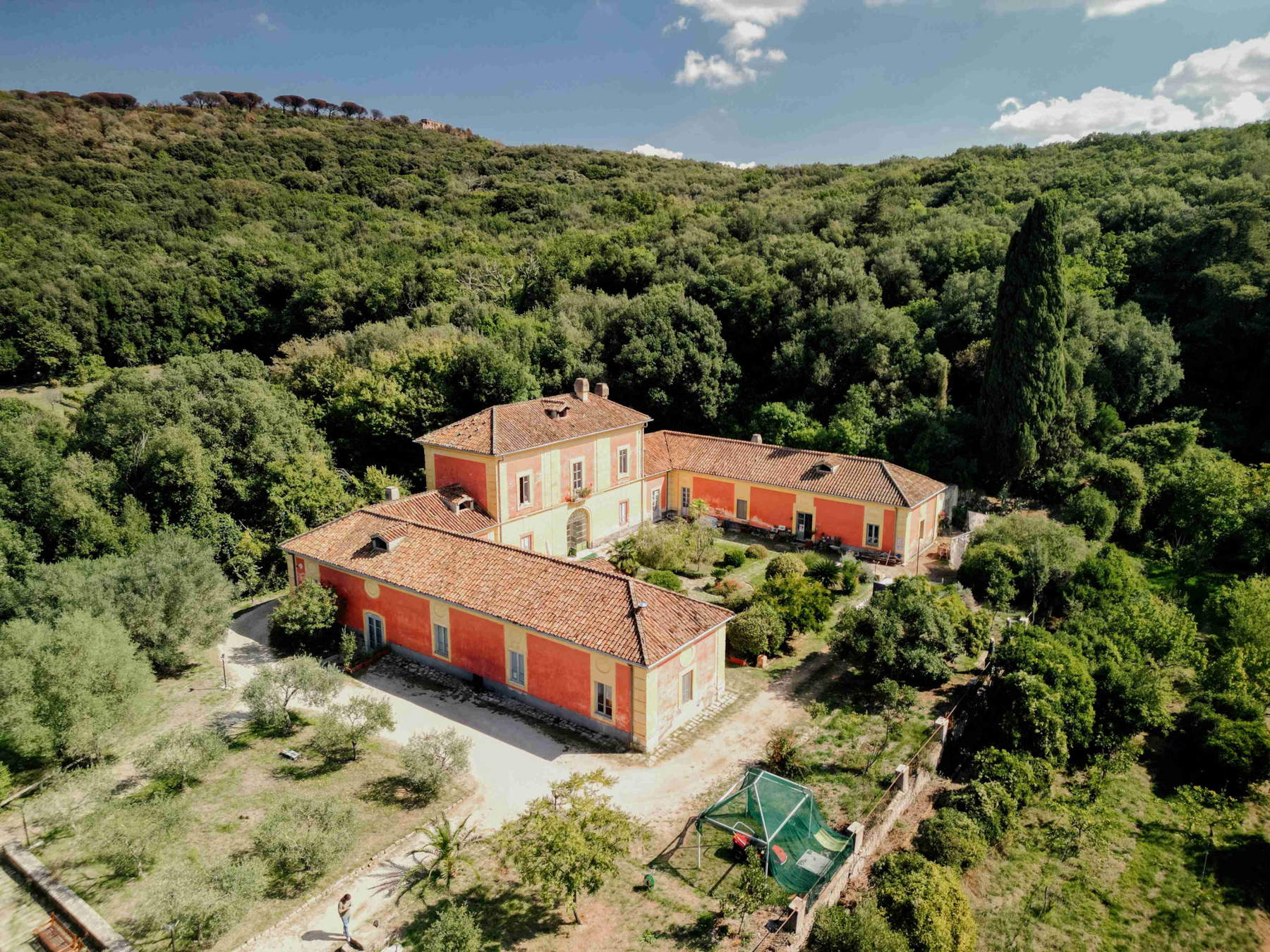
The Bosco di San Silvestro, along with the Belvedere di San Leucio Monumental Complex, the Royal Park and the English Garden of the Royal Palace of Caserta, was part of the so-called Royal Delights of the Bourbons. The estate covers about 76 hectares behind the Royal Park, on the hills of Mount Maiuolo and Mount Briano, from which the waterfall that feeds the fountains of the Vanvitellian complex originates. In the past, the area was used for agricultural and hunting activities, according to a custom common in European courts. In 1922 the forest passed from Crown Estate to State Property; later management was transferred from the Province to the Ministry of Cultural and Environmental Heritage. Since 1993 the site has been in the care of WWF Italy and has been open to the public. The Casino hosts workshops and initiatives curated by La Ghiandaia, which manages the Oasis on behalf of WWF-Italy. Currently, the San Silvestro Estate is closed to visitors as work is underway to “Protect and safeguard the Forest and architectural structures of the Royal San Silvestro Estate,” funded by the PNRR.
|
| Royal Palace of Caserta, completed the restoration of the three large canvases in the Royal Casino of the Forest of San Silvestro |

Warning: the translation into English of the original Italian article was created using automatic tools. We undertake to review all articles, but we do not guarantee the total absence of inaccuracies in the translation due to the program. You can find the original by clicking on the ITA button. If you find any mistake,please contact us.



















 IT
IT FR
FR DE
DE ES
ES CN
CN