





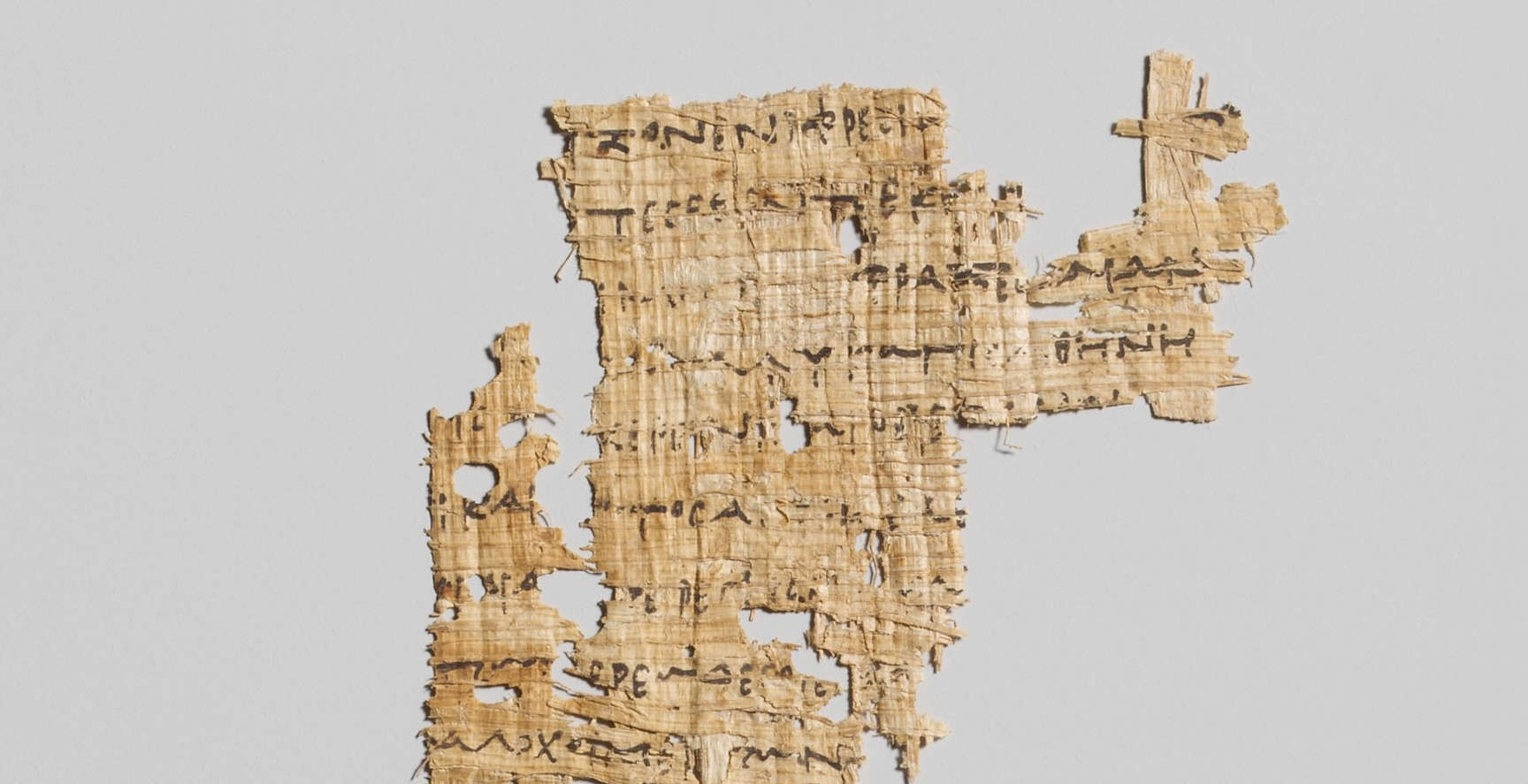
The Metropolitan Museum of Art in New York has returned the oldest surviving fragment of the *Odyssey* to public view, placing it once again within the exhibition layout of its main building on Fifth Avenue, after it had been stored in the museum’s vaults for a long time. The precious relic has been on public display for several days now in Gallery 162, located in the section of the museum entirely dedicated to Greek and Roman art. The return of this ancient artifact to the exhibition halls represents a significant occasion for scholars and enthusiasts of classical literature, as it offers the opportunity to admire up close a document that is fundamental to the history of the manuscript tradition of the poem attributed to Homer.
As part of an overview dedicated to the treasures in its collection related to the famous epic, the Metropolitan Museum describes the artifact as the first fragment from the early Ptolemaic period ever discovered relating to the Homeric text. The papyrus dates to a period roughly between 285 and 250 B.C. and was produced in Egypt. The artifact is distinguished by a refined inscription, created using a combination of water and charcoal applied with a stylus to papyrus, a material that was one of the most widespread and valued writing media in the ancient world. Of particular philological interest is the fact that the fragment contains three lines of text that are entirely absent from the standard versions of the *Odyssey* that have survived to the present day.
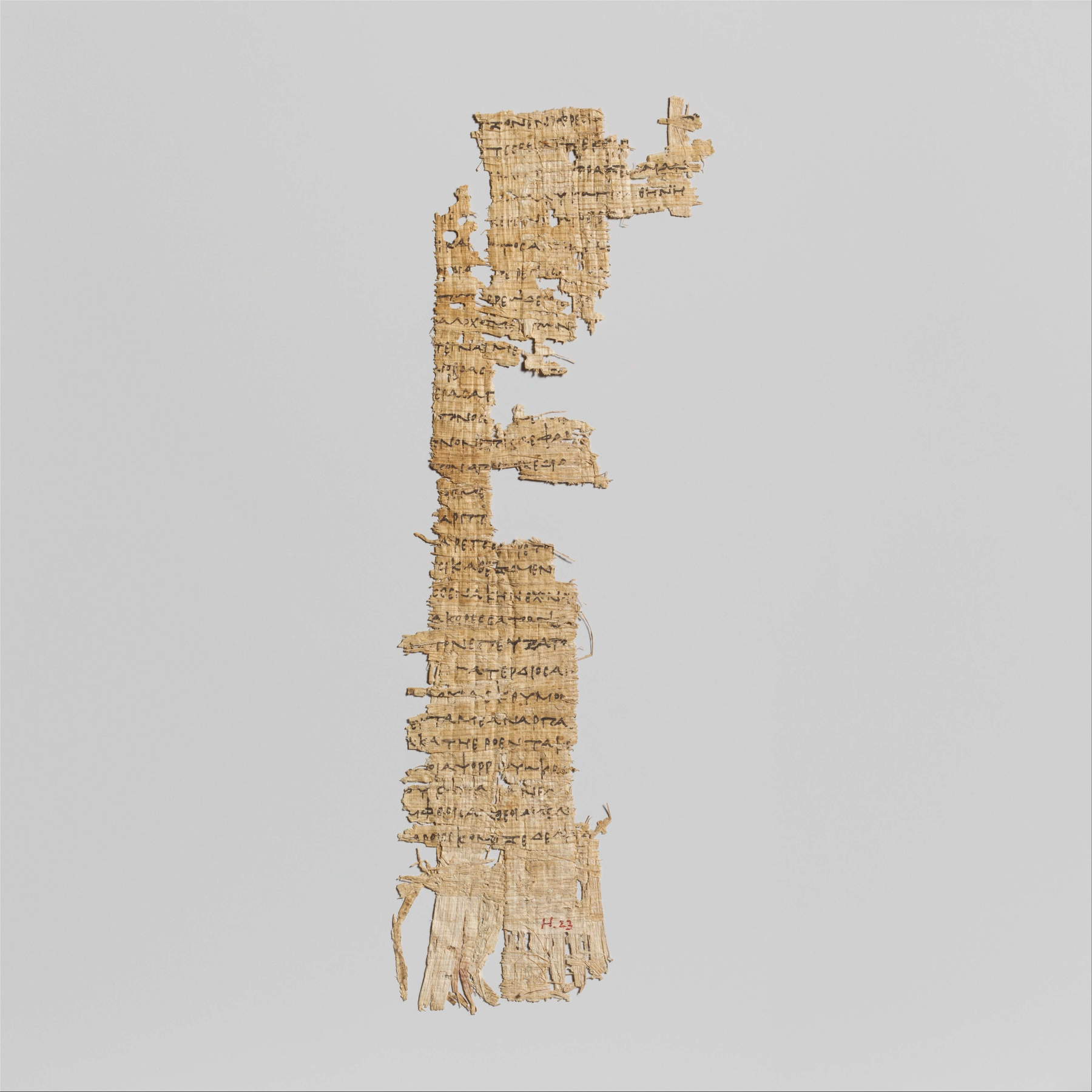
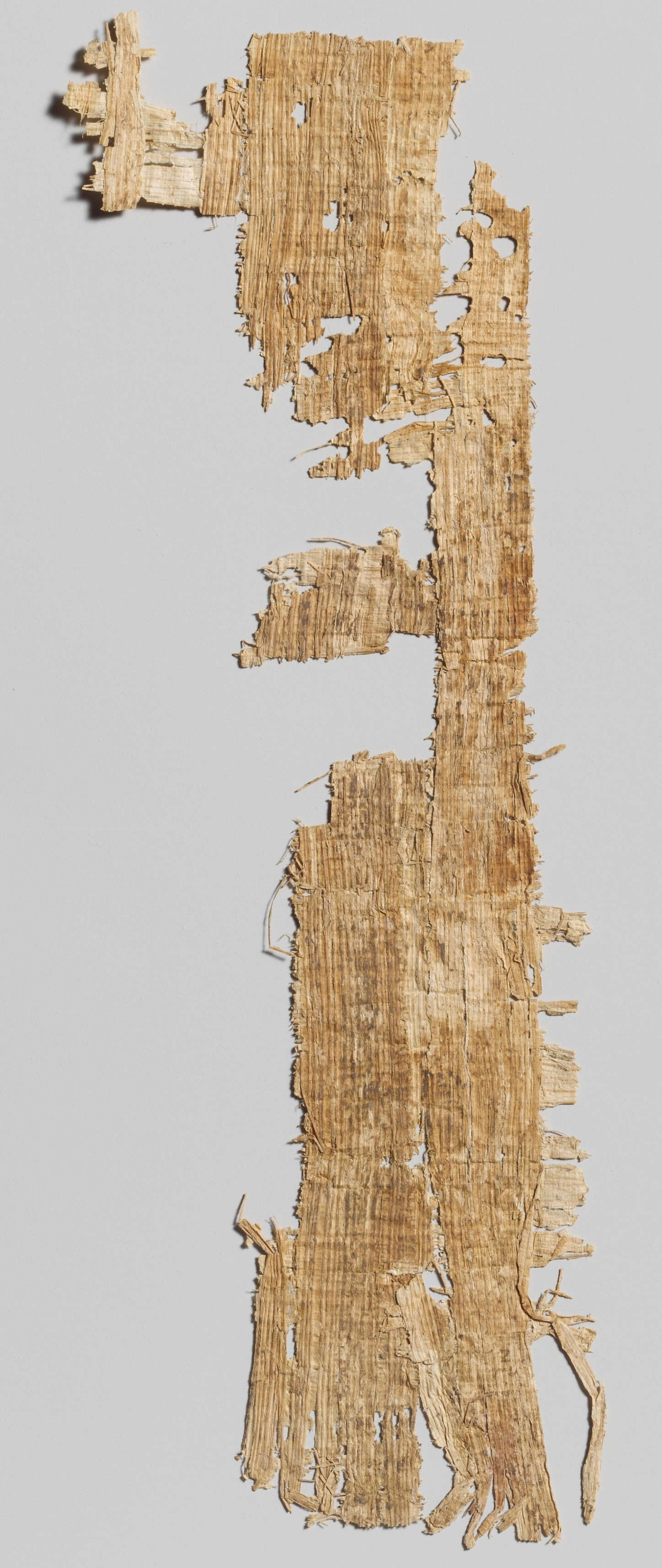
Although the narrative of the adventures of the Greek hero Odysseus (or Ulysses, in Latin) has been passed down and presented in countless forms over the centuries, a fundamental and often overlooked aspect lies in its origin, which is linked to oral performances recited by rhapsodes, the professional singers who, in ancient Greece, recited the poems of Homer and other authors of the tradition. In that early phase of dissemination, before a fixed written codification was established, there were many different versions of the epic poem. This extraordinary variety is tangibly evidenced by the papyrus fragment from the twentieth book of the Odyssey. Like the heroic warrior who is the poem’s protagonist, this material artifact also reminds the public that the story itself has undertaken a long and complex journey through the centuries of human history.
For the ancient Greeks, papyrus—a type of paper made by processing the stems of the marsh plant of the same name—was the material of choice for recording texts intended to endure over time, whether they were marriage contracts or literary works of immense value, such as the Homeric epics. Writing was carried out using specialized tools such as the stylus—a pointed reed with a split tip—or a bronze pen fitted with a nib, combined with ink traditionally made from carbon black diluted in water.
The artifact housed at the Metropolitan Museum constitutes the earliest fragmentary evidence of the *Odyssey* from the early Ptolemaic period ever discovered by archaeologists. The presence of three verses not found in the modern vulgate—taken directly from Book 20—provides irrefutable physical evidence that, during the third century B.C., different local versions and variants of this famous literary work were in circulation, before the work of philologists standardized its structure.
In the Hellenistic world, the most important center for the collection and preservation of Homeric texts was the legendary Library of Alexandria in Egypt: founded by the rulers of the Ptolemaic dynasty in the early decades of the third century B.C., it was the first public and universal library ever established. Since Homer was considered the poet par excellence, his works occupied a central position within the library’s collections, which housed copies of the poems that had arrived from numerous different city-states of the ancient Greek world, including Chios, Argos, and Sinope. One of the very first goals pursued by Alexandrian scholars was precisely to establish a standard and definitive text for these undisputed masterpieces of Hellenic literature.
As for the documented provenance of the artifact, the papyrus was originally excavated in 1902 from the Hibeh necropolis, in Egypt, thanks to field research conducted by archaeologists Bernard Pyne Grenfell and Arthur Surridge Hunt, who discovered it among the waste materials in the rubble areas outside the town’s northern wall, as documented in the excavation reports published in 1906. Subsequently, in 1909, the artifact became part of U.S. museum collections through an official donation approved by the Egypt Exploration Fund, eventually finding a permanent display home that today once again highlights the millennia-old history of the transmission of classical poetry.
 |
| The Metropolitan Museum in New York is exhibiting the oldest fragment of the *Odyssey* |

Warning: the translation into English of the original Italian article was created using automatic tools. We undertake to review all articles, but we do not guarantee the total absence of inaccuracies in the translation due to the program. You can find the original by clicking on the ITA button. If you find any mistake,please contact us.


























 IT
IT FR
FR DE
DE ES
ES CN
CN


