





The restoration of the *Tondo dei due Fratelli*—a painting from the mid-2nd century A.D. housed at the Egyptian Museum in Cairo—was unveiled in Cairo. Originating from Antinoopolis in Middle Egypt, the work will be on display for the first time in Italy as part of the exhibition *The Power of the Portrait. Egypt and Rome: The Faces of Fayum, scheduled to take place at the Ara Pacis Museum in Rome from November 5, 2026, to May 2, 2027. The conservation work was carried out by the Italian cooperative Fabrica Conservazione e Restauro, thanks to funding from the exhibition project.
The painting is one of the most significant examples of the Fayum portrait tradition, reflecting the convergence of Egyptian, Greek, and Roman cultures. Painted on a wooden panel using the encaustic technique—which involves pigments mixed with wax—it depicts two young men in half-length portraits, traditionally identified as brothers. The similarity of their features is accompanied by precise individual characterization: the painter differentiates their facial features, skin tones, and clothing, while the full-bodied brushstrokes, luminous highlights on the eyes, and shadows lend volume to the faces.
The presentation of the restoration brought together representatives from Italian and Egyptian institutions. In attendance were Claudio Parisi Presicce, Superintendent of the City of Rome; Tomaso Radaelli, President of MondoMostre; Hisham Elleithy, Secretary-General of the Supreme Council of Antiquities; and Sherif Fathy Attiya, Minister of Tourism and Antiquities, along with the conservators who worked on the painting.
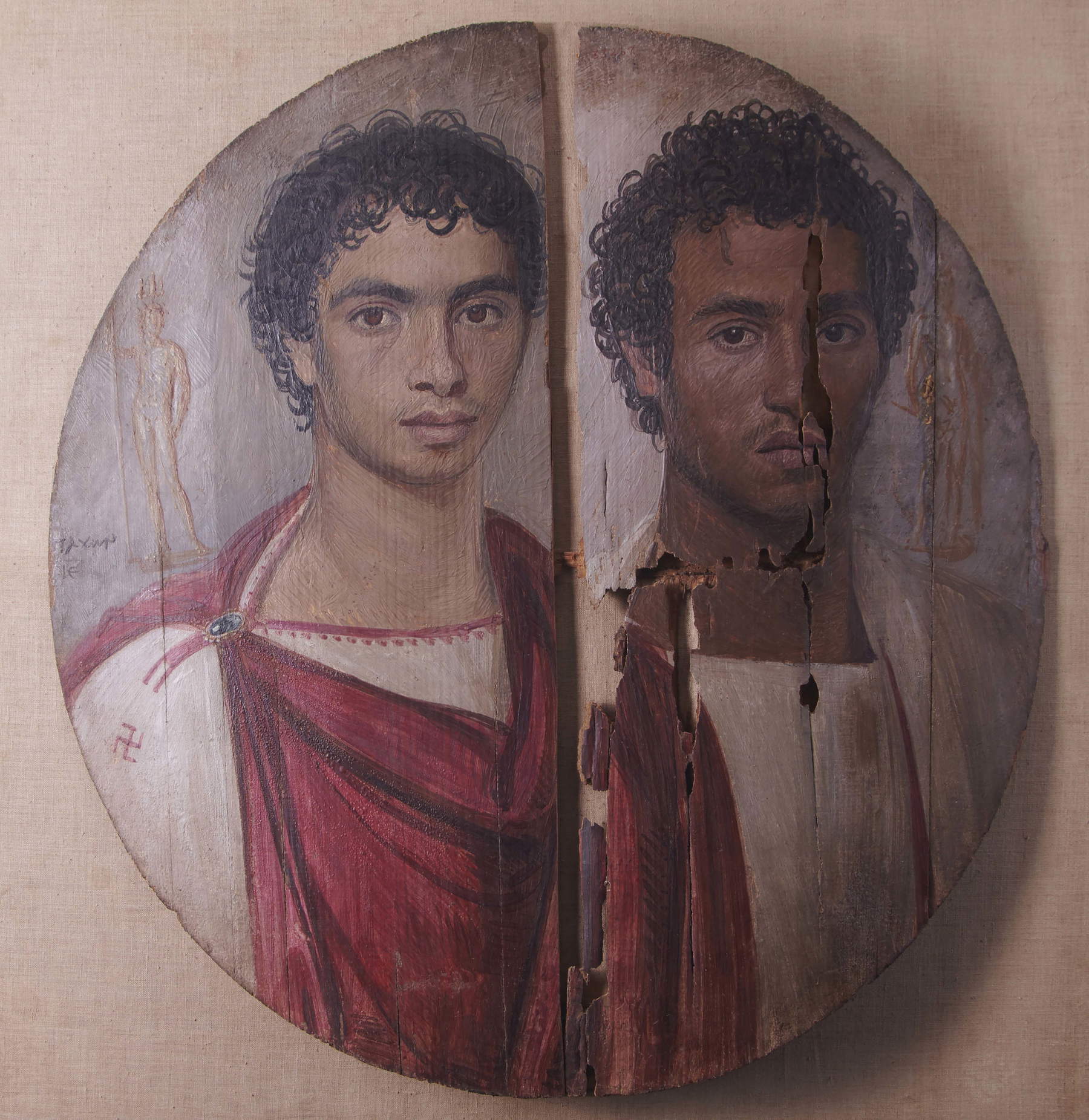
The restoration addressed several critical conservation issues, primarily related to the deterioration of the wooden support, previous restorations, and the fragility of the painted surface. An old infestation of wood-boring insects had carved tunnels into the wood, causing material loss and leaving some painted areas without support. At these points, even minimal pressure could have caused the paint to detach.
Following preliminary examinations, the conservators removed surface deposits, reduced discoloration, and reattached the lifted paint layers. The most delicate phase involved securing the parts that had been left without a support. Particular attention was also paid to certain fragments of the lips and chin of one of the young men, which had been repositioned incorrectly during a previous restoration. Finally, color balancing of the small lacunae improved the overall legibility of the work, restoring details of the faces and garments and contributing to its stability.
In Rome, the Tondo will be exhibited alongside nearly fifty Fayum portraits, brought together exceptionally through an international loan program. The exhibition will feature a total of over 110 works, including painted panels, shrouds, funerary masks, marbles, plaster casts, and ancient gold and silver objects, to document the role of portraiture in Roman Egypt and ancient Rome. The loan from the Egyptian Museum in Cairo will allow the Italian public to view a delicate work that is rarely loaned out and underrepresented in Italian museum collections.
The exhibition is curated by Claudio Parisi Presicce and Laura Petacco, and sponsored by Roma Capitale, the Department of Culture and Coordination of Initiatives Related to Holocaust Remembrance Day, and the Capitoline Superintendence for Cultural Heritage. Organization is entrusted to the Capitoline Superintendence and the temporary consortium MondoMostre – Civita Mostre e Musei, in collaboration with Zètema Progetto Cultura. Fastweb + Vodafone is the Official Partner, while Dimensione Suono Soft is the Radio Partner.
“The Tondo of the Two Brothers,” said Hisham El-Leithy, Secretary General of the Supreme Council of Antiquities (SCA), “is an exceptional object, not only for the quality and immediacy of its painting, but also because its form, technique, and state of preservation provide valuable insights for the study of portraiture in Roman Egypt. Its restoration required extremely careful work due to the fragility of both the wooden support and the painted surface. The collaboration between the restorers at the Egyptian Museum and their Italian colleagues represented an important opportunity for scientific and professional exchange. The work was carried out with minimal intervention and with full respect for the object’s authenticity, allowing the portrait to regain its visual coherence while preserving the traces of its long history.”
“In the ‘Tondo of the Two Brothers,’ we are drawn to the extraordinary intensity and expressive immediacy, the strong naturalistic rendering, and the direct, magnetic connection of their gazes: a silent dialogue from person to person that transcends the centuries and every cultural barrier,” states Claudio Parisi Presicce, Capitoline Superintendent of Cultural Heritage. “We are proud to have helped restore this expressive power through on-site restoration work carried out in preparation for the exhibition, which allows us to once again admire the beauty of a masterpiece representative of an art form that has united two great civilizations.”
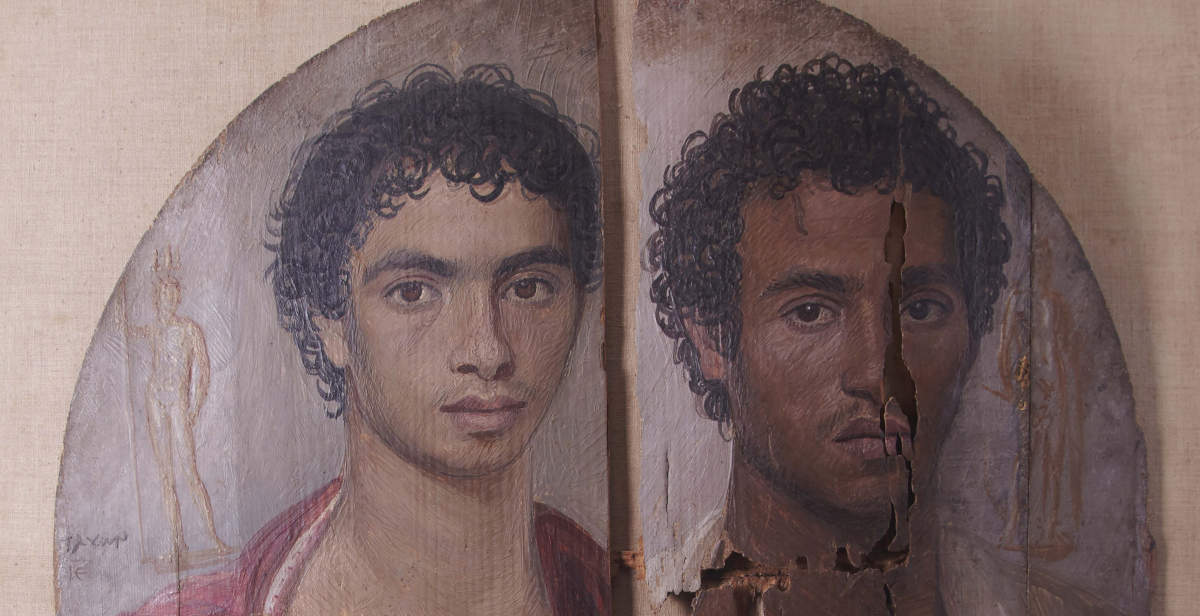 |
| The "Tondo of the Two Brothers," one of the most beautiful portraits from Fayum, has been restored: it will be on display in Rome |

Warning: the translation into English of the original Italian article was created using automatic tools. We undertake to review all articles, but we do not guarantee the total absence of inaccuracies in the translation due to the program. You can find the original by clicking on the ITA button. If you find any mistake,please contact us.
















 IT
IT FR
FR DE
DE ES
ES CN
CN


