




by Redazione 14/07/2026



Categories: Ancient art / Disclaimer
Visitors to the Doge’s Palace in Venice can witness the restoration of Paolo Veronese’s *The Rape of Europa*, observing up close the work of the restorers and the techniques used to preserve one of the masterpieces of Venetian painting.

In Venice’s Doge’s Palace, just before the Hall of the Great Council, the Liagò workshop is home to the restoration of *The Rape of Europa*, one of Paolo Veronese’s most famous paintings. The restoration site is exceptionally open to the public, offering the opportunity to observe the various stages of the conservation work up close. The project, funded by the Save Venice association thanks to a generous contribution from patron Rebecca Nemser, allows visitors to get right at the heart of the restoration work, observing the operations carried out by specialists and gaining insight into the methods used to preserve a work of extraordinary historical and artistic importance.


Painted between 1570 and 1580, the painting depicts the famous episode from Greek mythology in which Zeus, transformed into a bull, abducts the Phoenician princess Europa. The work became part of Venice’s public collections thanks to the testamentary wishes of Giacomo Contarini, who in 1595 stipulated that his paintings be donated to the Republic of Venice once the family’s male line had died out. The bequest took effect in 1713, when *The Rape of Europa * arrived at the Doge’s Palace along with Jacopo Bassano’s *Jacob ’s Return to Canaan *. Given the exceptional quality of the two paintings, the Venetian Republic decided to place them in the Sala dell’Anticollegio, a ceremonial hall preceding the Sala del Collegio, where the doge received ambassadors and foreign delegations. With the fall of the Republic of Venice in 1797, the painting was confiscated by French troops and was not returned to the Doge’s Palace until 1815, after the end of the Napoleonic Wars.


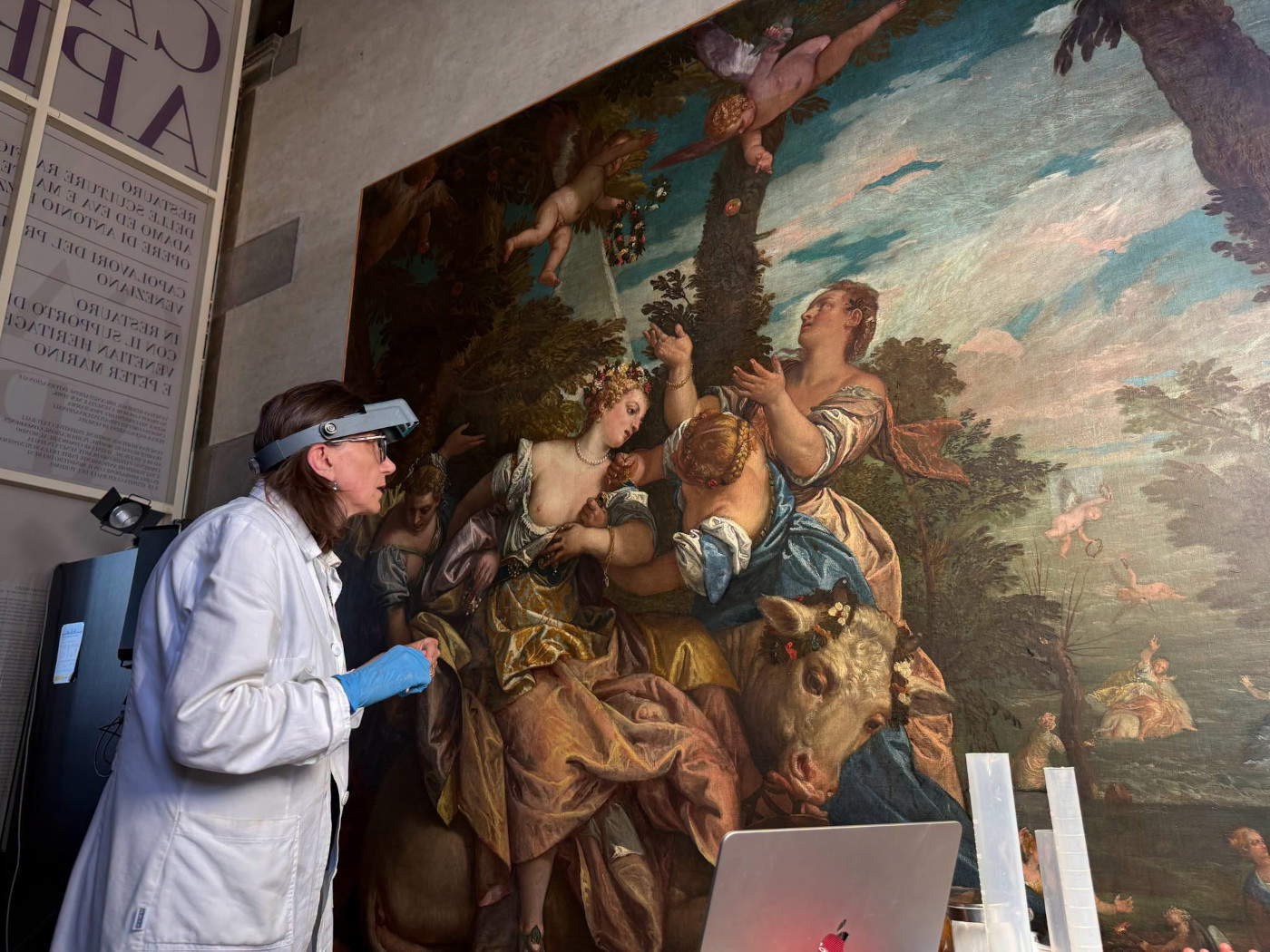
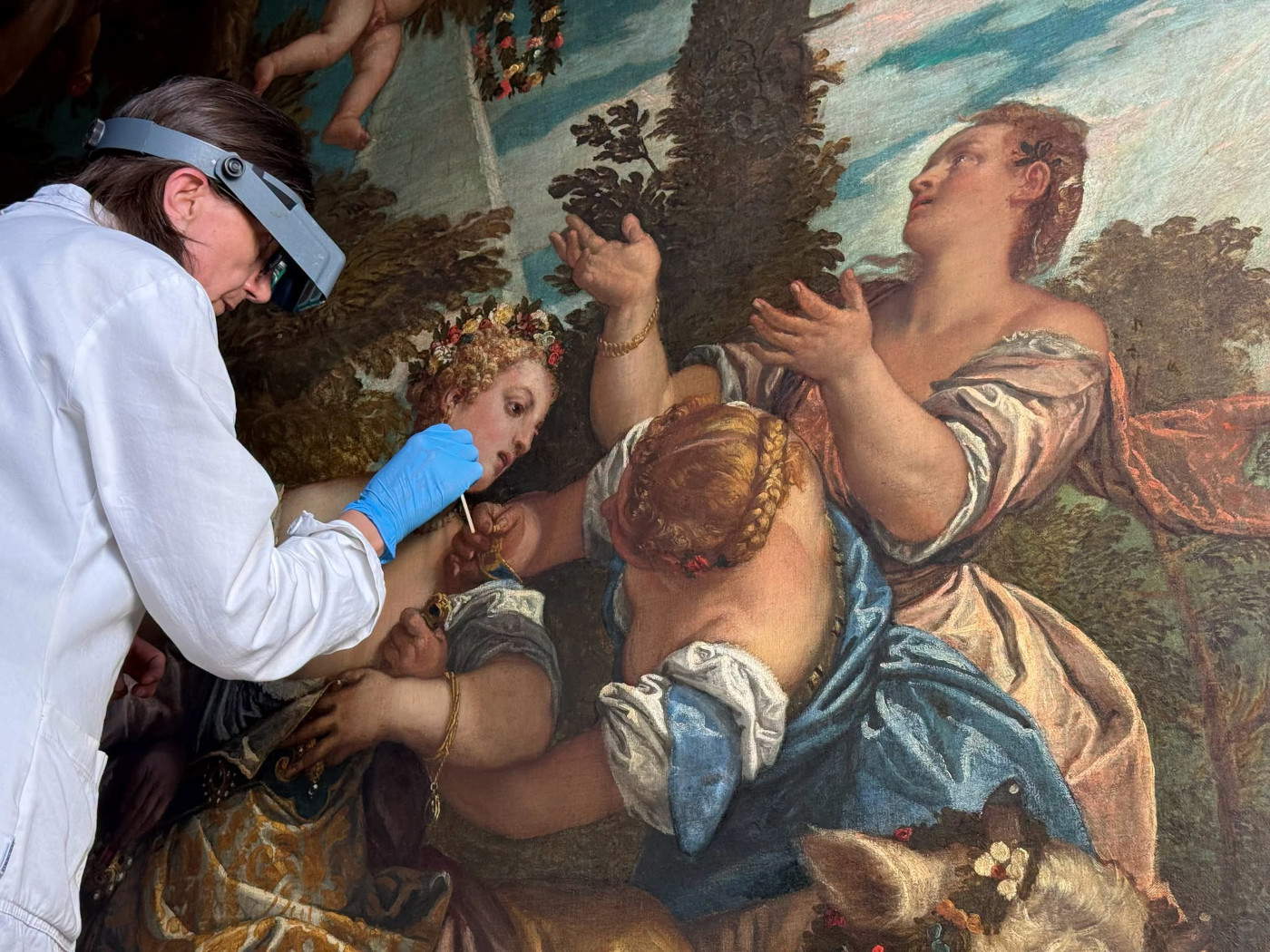
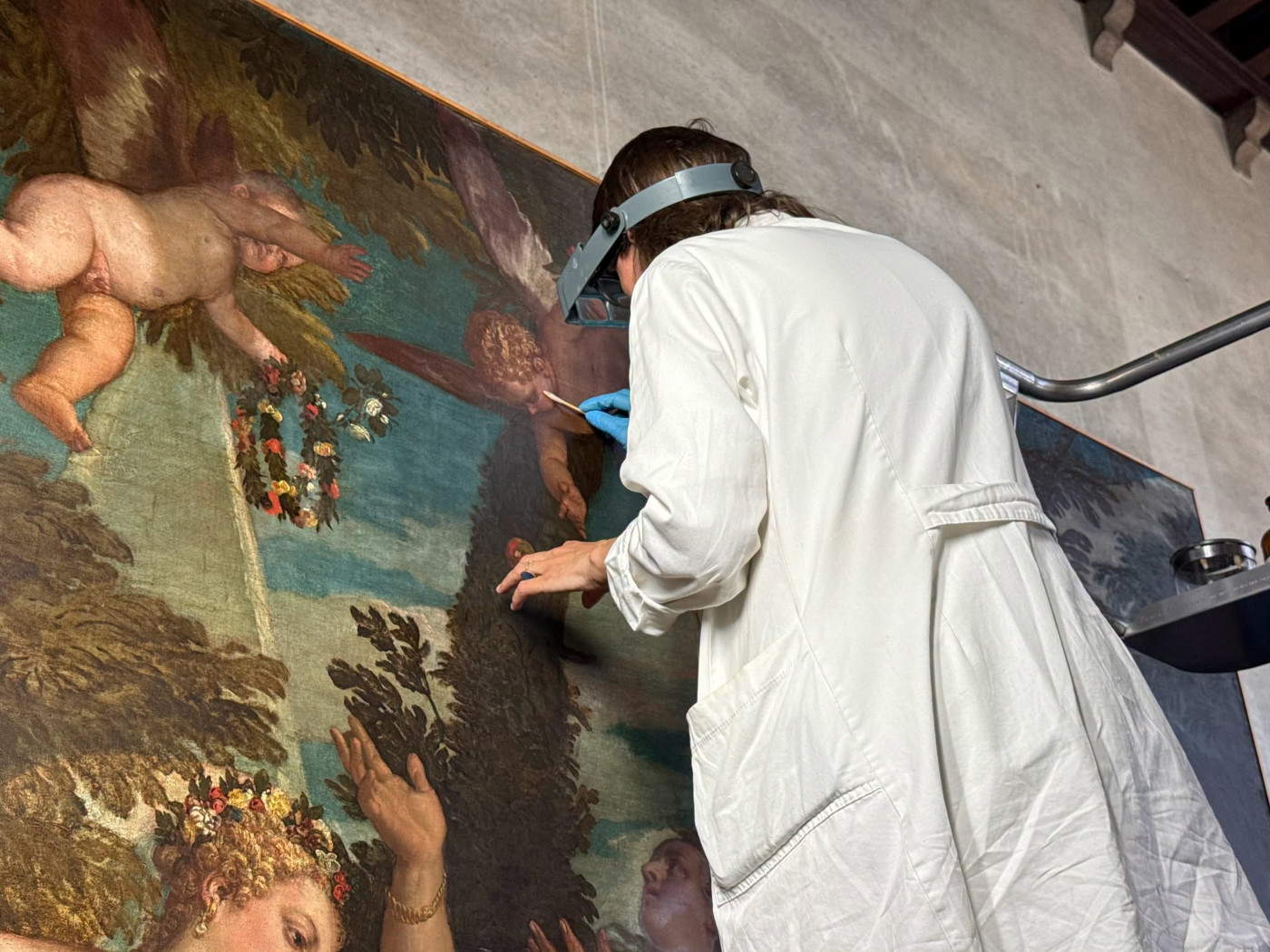
The only documented restoration prior to the current one dates back to 1971, when Giuseppe Giovanni Pedrocco carried out the consolidation of the canvas through lining, the cleaning of the painted surface, and some color restorations. The restoration currently underway is primarily focused on removing the varnishes applied during that previous intervention, which have deteriorated over time, diminishing the work’s original luminosity and brilliance. The cleaning will restore the intensity of Veronese’s color palette and reestablish the painting’s proper chromatic balance. Once this phase is complete, work will proceed with the pictorial restoration of the missing areas and the application of the final varnish, which is necessary both to protect the surface and to ensure better visibility of the work.
|
| Venice: Live Restoration of Paolo Veronese’s *The Rape of Europa* at the Doge’s Palace |
Warning: the translation into English of the original Italian article was created using automatic tools. We undertake to review all articles, but we do not guarantee the total absence of inaccuracies in the translation due to the program. You can find the original by clicking on the ITA button. If you find any mistake,please contact us.