





TheUrn of Bottarone, an Etruscan masterpiece housed at the National Archaeological Museum in Florence, has been restored sixty years after the devastating flood that hit the city in 1966. At the time, the Arno also invaded the museum’s halls, submerging the restoration laboratory, the photographic archive and numerous artifacts from the Etruscan section with more than two meters of water and mud. Today, as part of tourismA - Salone Archeologia e Turismo Culturale, organized by Archeologia Viva (Giunti Editore), the museum is presenting an exclusive preview at the Palazzo dei Congressi of the exhibition I colori dell’alabastro. The restoration of the Bottarone Urn sixty years after the Florence flood. The exhibition celebrates the completion of a major conservation intervention that restored luminosity and intensity to the original colors of the alabaster urn, bringing to light the intense embrace of the married couple carved more than 2,400 years ago.
The restoration, carried out by Daniela Manna on a scientific project and under the supervision of Barbara Arbeid, Giulia Basilissi and Mario Iozzo, was made possible thanks to the support of theSwiss Federal Office of Culture. The exhibition at tourismA’s spaces is curated by Daniele Federico Maras, Barbara Arbeid and Giulia Basilissi, produced with the support of the Embassy of Switzerland in Italy, and set up by Deferrari+Modesti studio with the collaboration of neo.lab.
“The Bottarone Urn was a well-successful experiment in restoration with a multi-level collaboration, collaboration of professionals and public resources and with the use of international funds. An excellence that returns a positive message for the future of the cultural heritage entrusted to us: from the catastrophe of the flood to a new life for the Etruscan urn and the Museum,” said Daniele Federico Maras, director of the National Archaeological Museum in Florence.
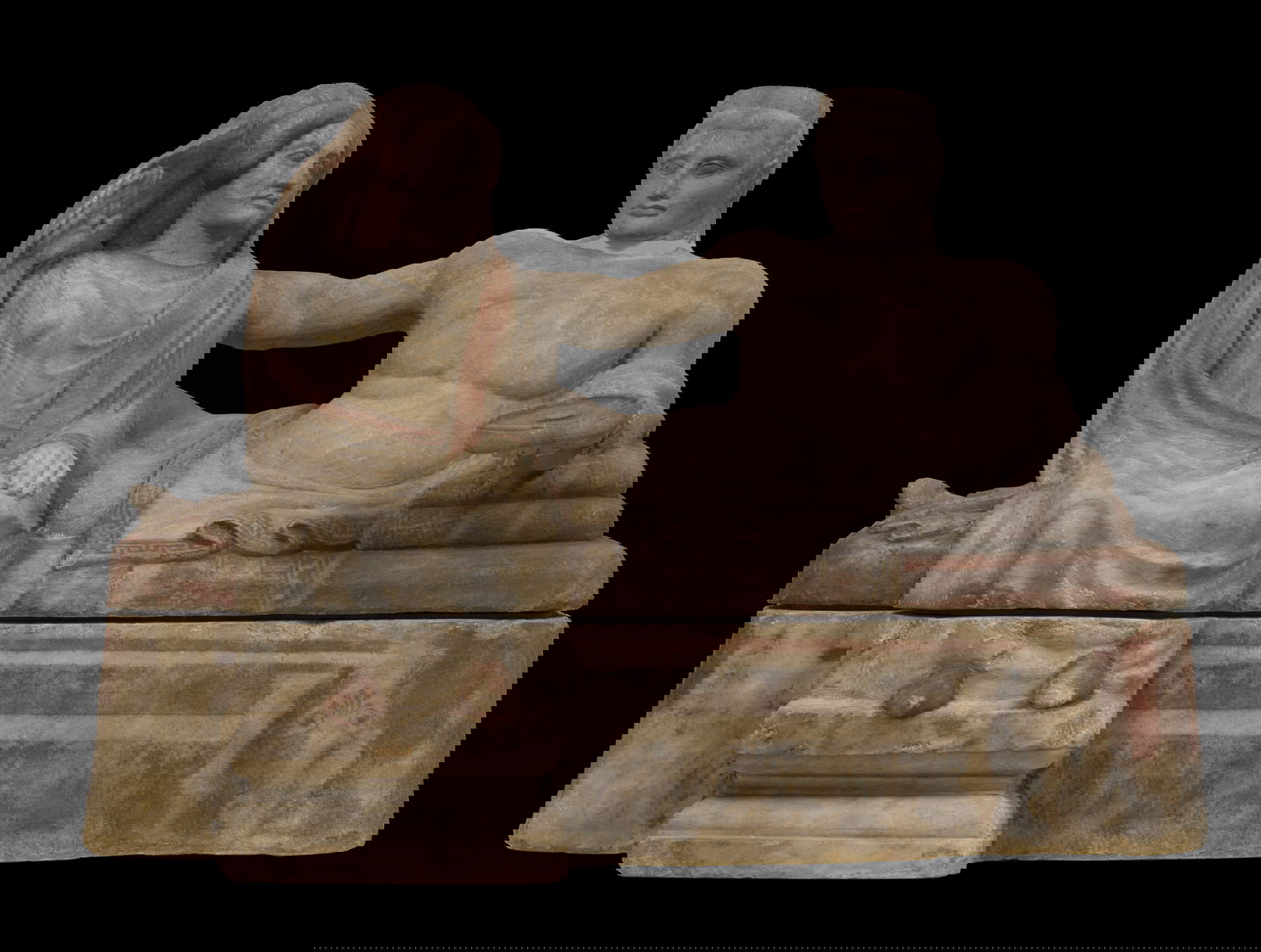
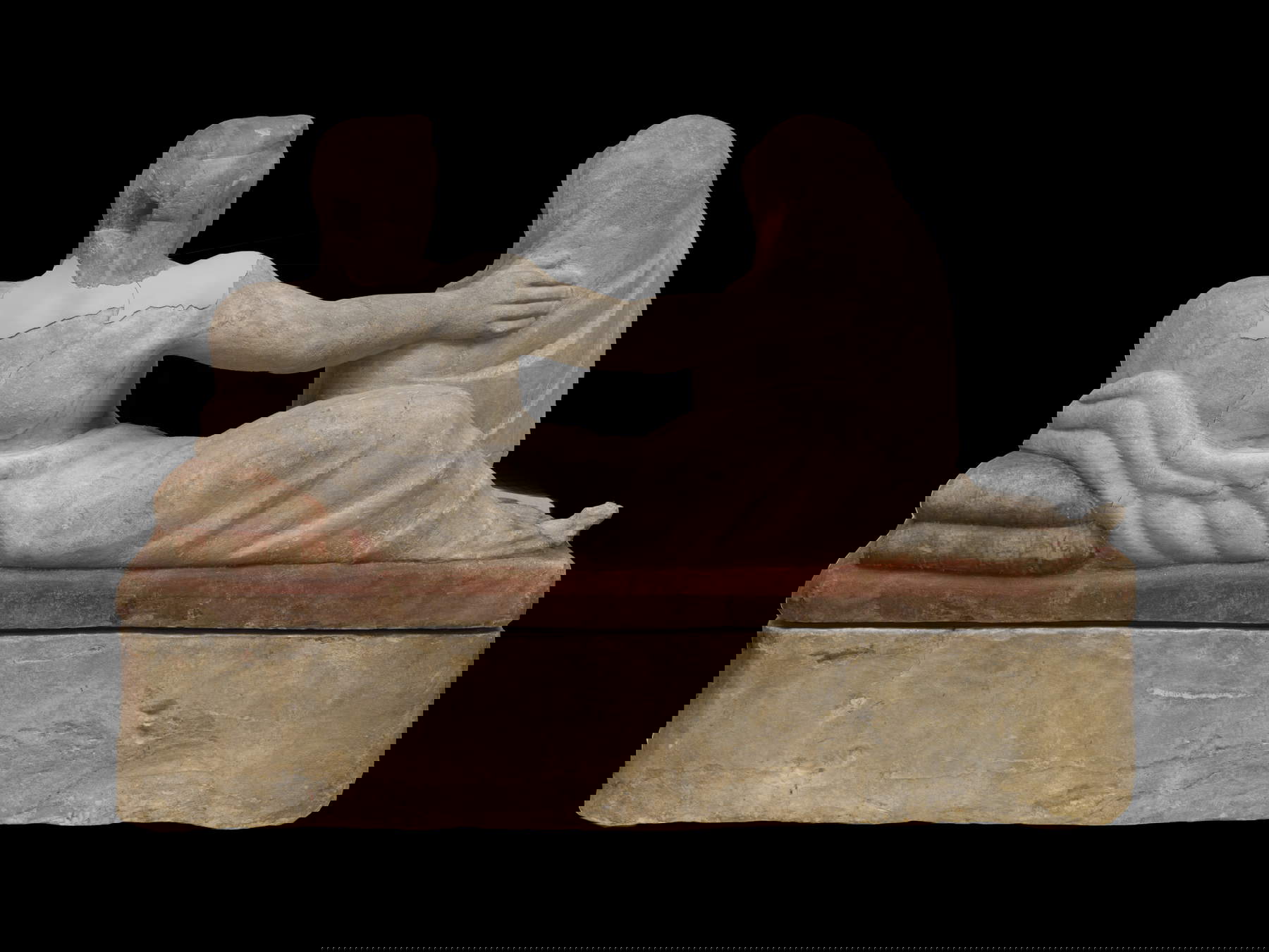
The urn, made between 425 and 380 B.C. of white alabaster with gray veins, was found in 1864 at Bottarone, near Città della Pieve; it later entered the collection of Giorgio Taccini and later that of Giuseppe Pacini, and since 1887 has been part of the collections of the Florentine museum. The lid depicts a married couple, a rare subject in Chiusi funerary sculpture of the period, which traditionally presents the deceased accompanied by a winged female demon: here, however, the female figure is the wife, as suggested by the gesture of unveiling, an element that makes the work iconographically exceptional.
After the flood, the urn underwent its first restoration between 1969 and 1970, directed by Francesco Nicosia, in a crucial phase for the revival of protection in Florence. However, that intervention was limited to cleaning the mud off and, over time, the surfaces had progressively graying while the male head showed structural problems.
In 2022, thanks to a grant resulting from an agreement between the Government of the Republic of Italy and the Swiss Federal Council, a new campaign of study, diagnostics and restoration was launched when it was selected among the winners of the Call for Financial Aid for the Restoration of Movable Cultural Heritage. The intervention led to major results, including the identification and mapping of Egyptian blue, as well as ochre and cinnabar, allowing for a more precise reconstruction of the work’s original polychromy. “The imaging investigations yielded exciting results: we identified the Egyptian blue and were able to map the polychromy, imagining the urn in its original appearance,” said Giulia Basilissi, Conservator Restoration Officer at the Museum.
The exhibition design by Deferrari+Modesti studio with the collaboration of neo.lab, conceived as a sober and immersive narrative, guides the visitor through a sixty-year-long story: from survival in the mud to conservation rebirth, interweaving collective memory, museum history and restoration practice.
The exhibition is on view from Feb. 27 to March 1, from 9 a.m. to 6 p.m., with free admission at the Palazzo dei Congressi - Central Exhibition Space. At the end of tourismA, the Urn of Bottarone will return to the halls of the National Archaeological Museum in Florence.
|
| Bottarone Urn restored: original colors of 2400-year-old Etruscan grooms resurfaced |

Warning: the translation into English of the original Italian article was created using automatic tools. We undertake to review all articles, but we do not guarantee the total absence of inaccuracies in the translation due to the program. You can find the original by clicking on the ITA button. If you find any mistake,please contact us.


























 IT
IT FR
FR DE
DE ES
ES CN
CN


