





An Egyptian archaeological mission of the Supreme Council of Antiquities has unearthed a group of rock tombs at the Qubbet el-Hawa site in Aswan, Egypt, dating back to theOld Kingdom. The burials, discovered during the current excavation campaign, include wells and burial chambers. According to authorities, the identified tombs were reused in later periods, particularly during the First Intermediate Period (Dynasties VII-XI, c. 2216/2166-2046 B.C.) and the Middle Kingdom (12th Dynasty, c. 1990-1785 B.C.), confirming the continuing importance of Qubbet el-Hawa through the ages. Archaeologists are currently in the process of systematically documenting and recording the discoveries, in line with the scientific mission of the Supreme Council of Antiquities.
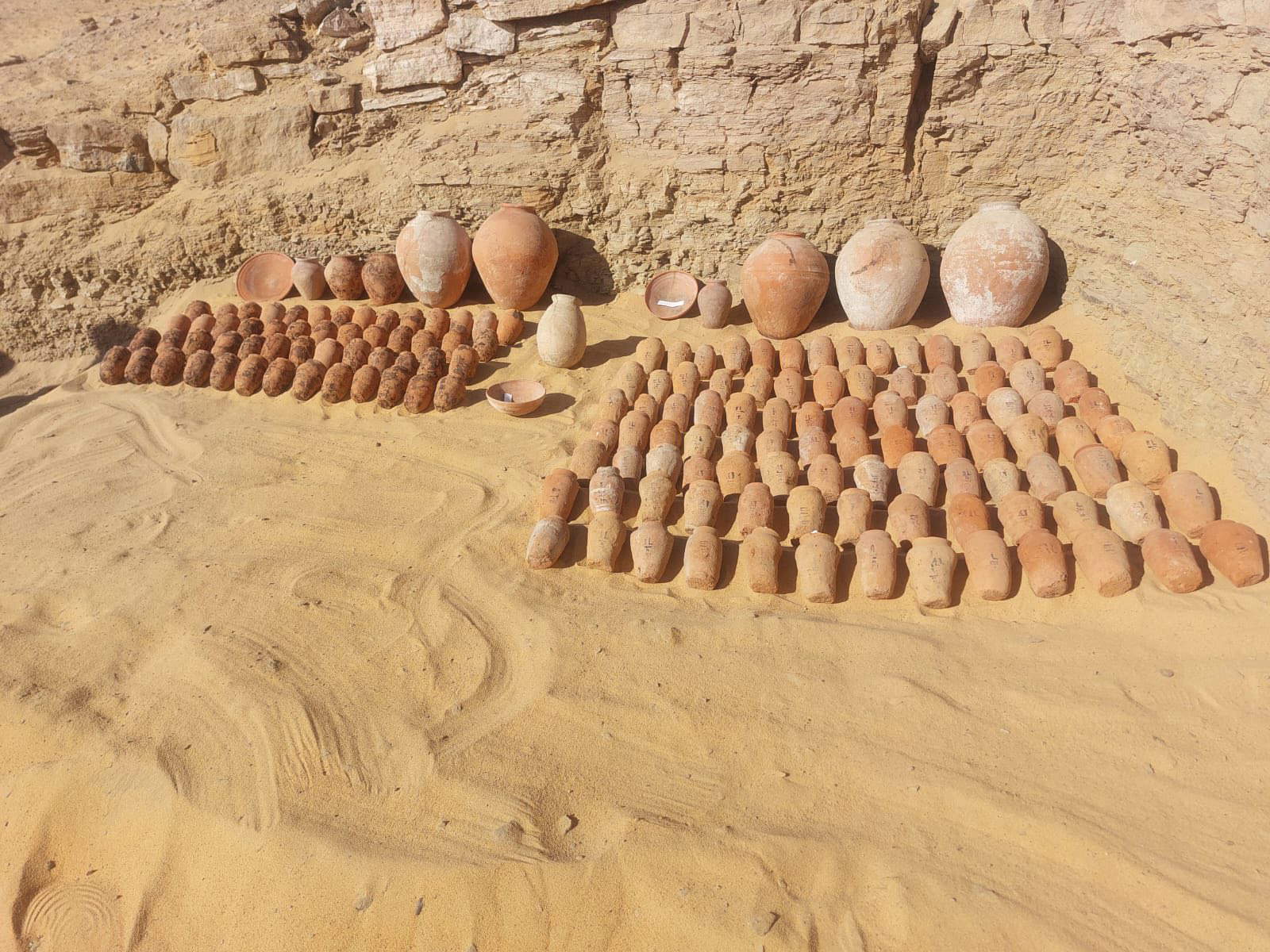
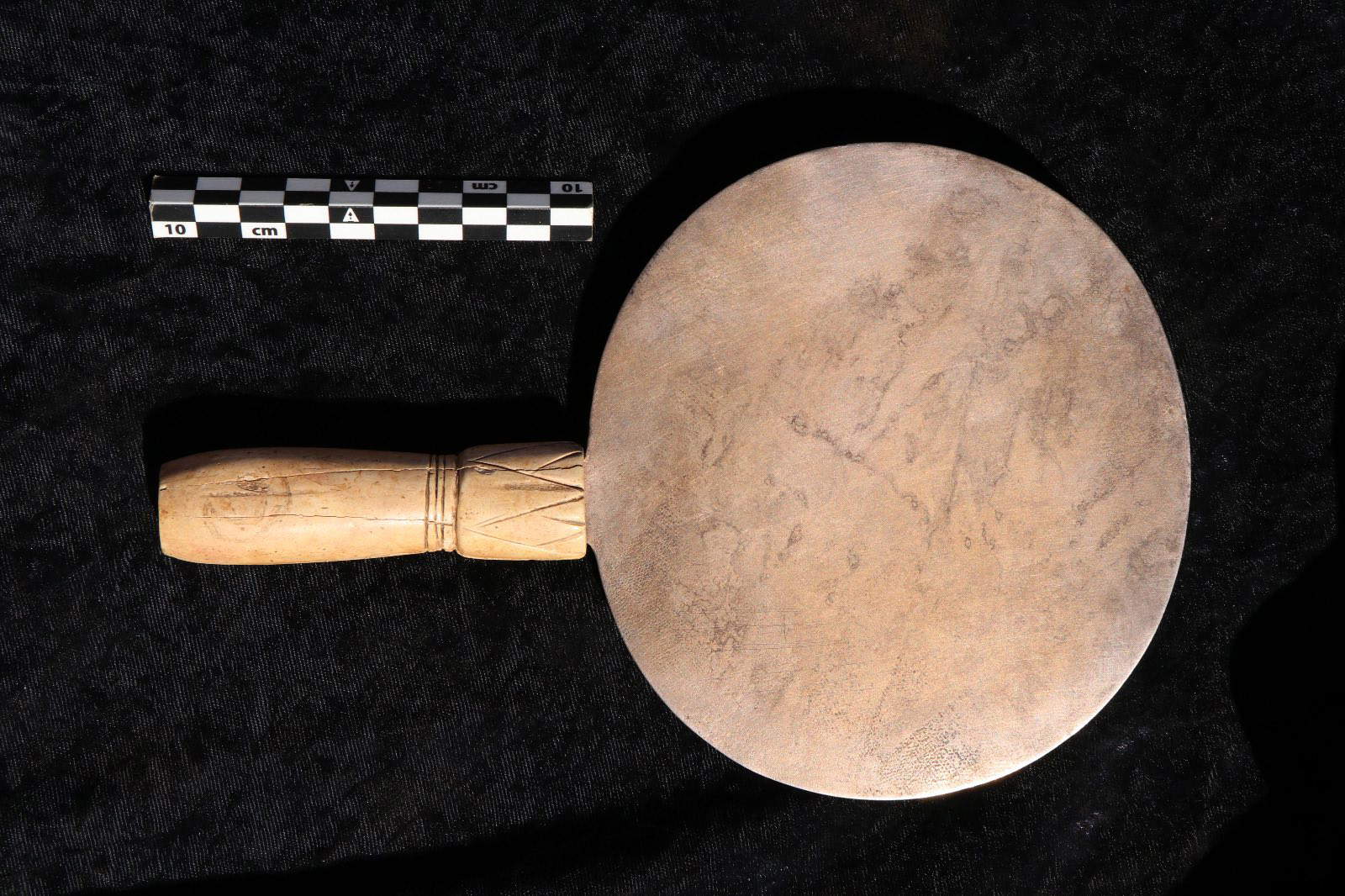
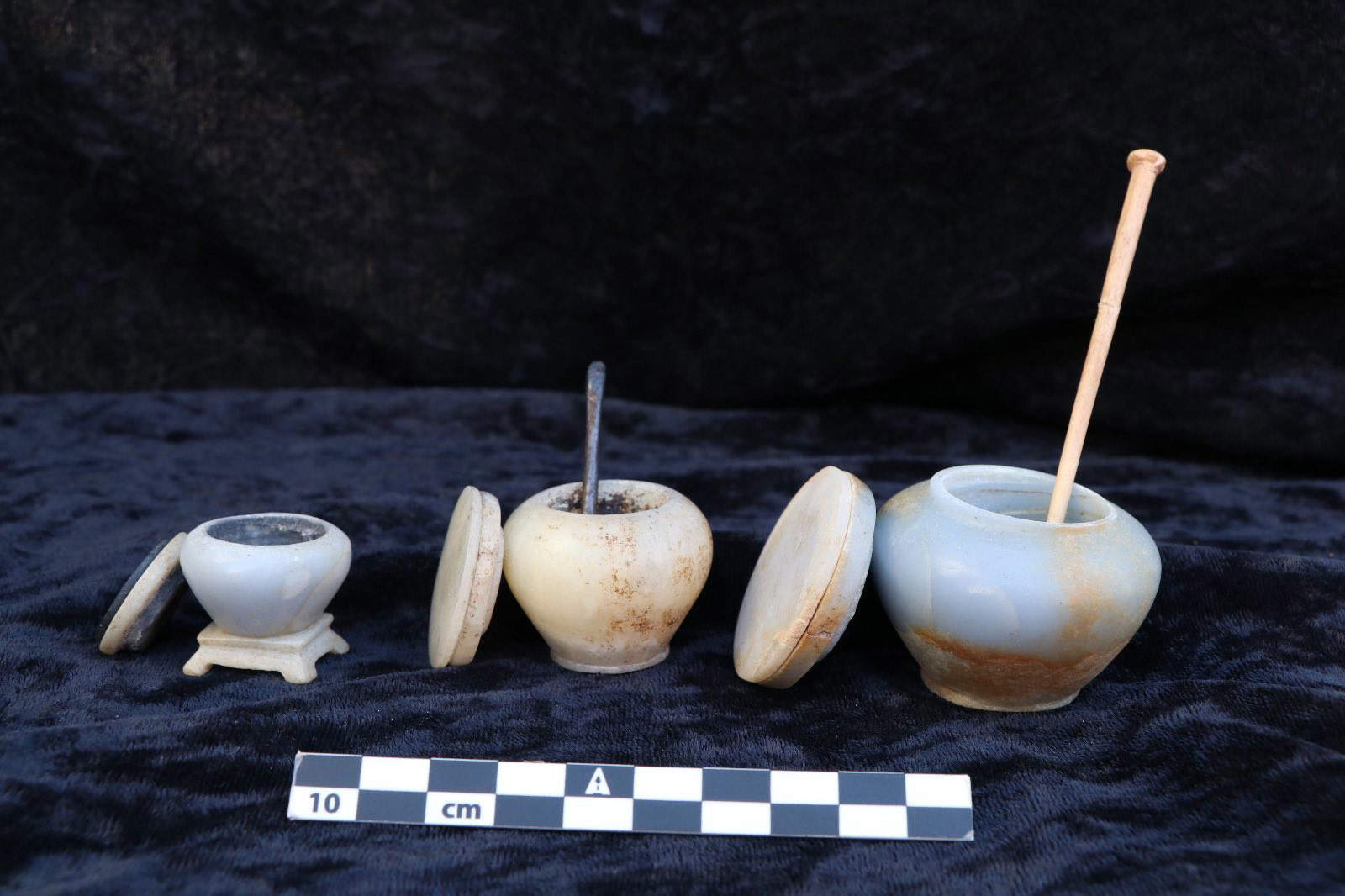
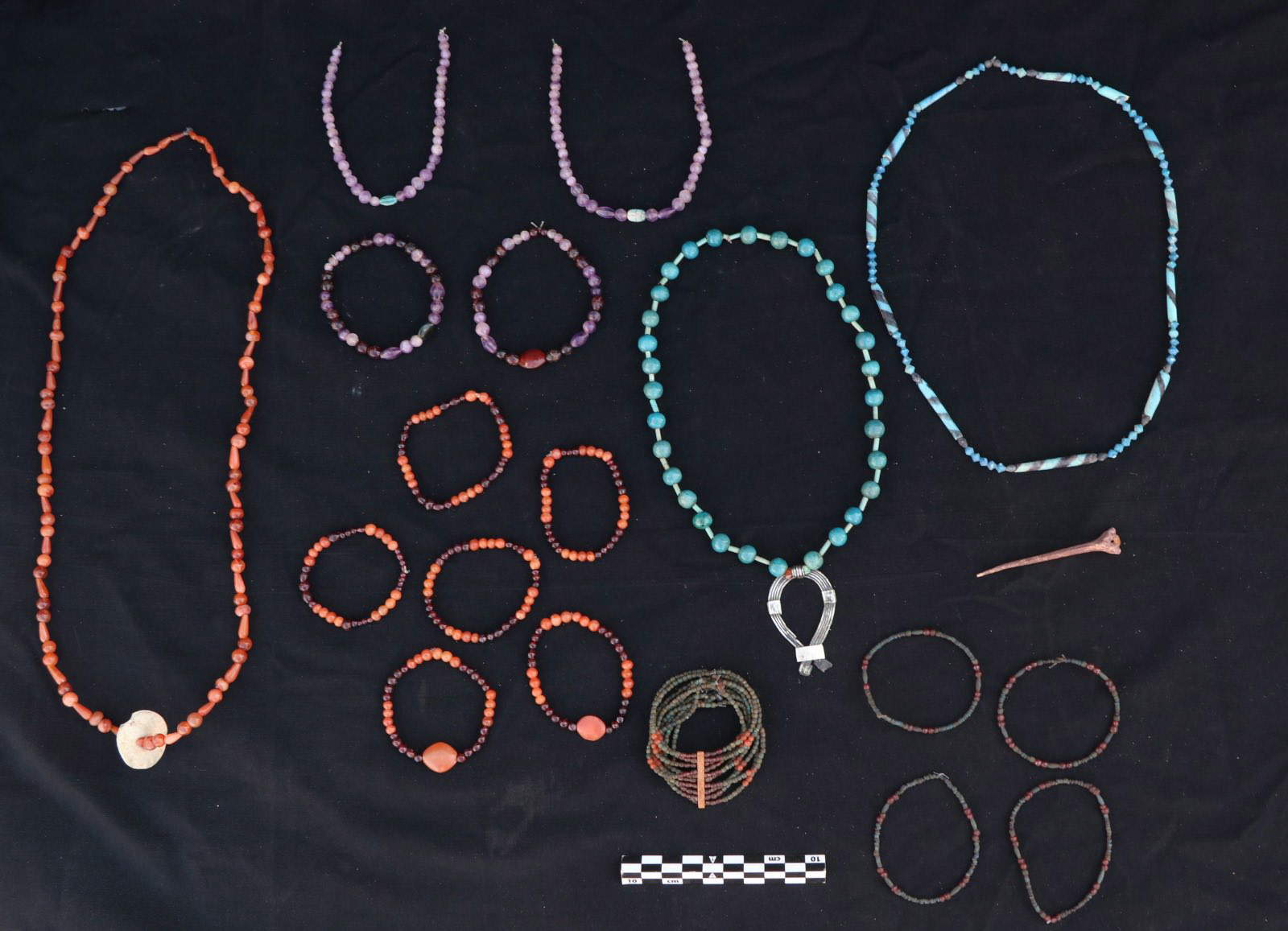
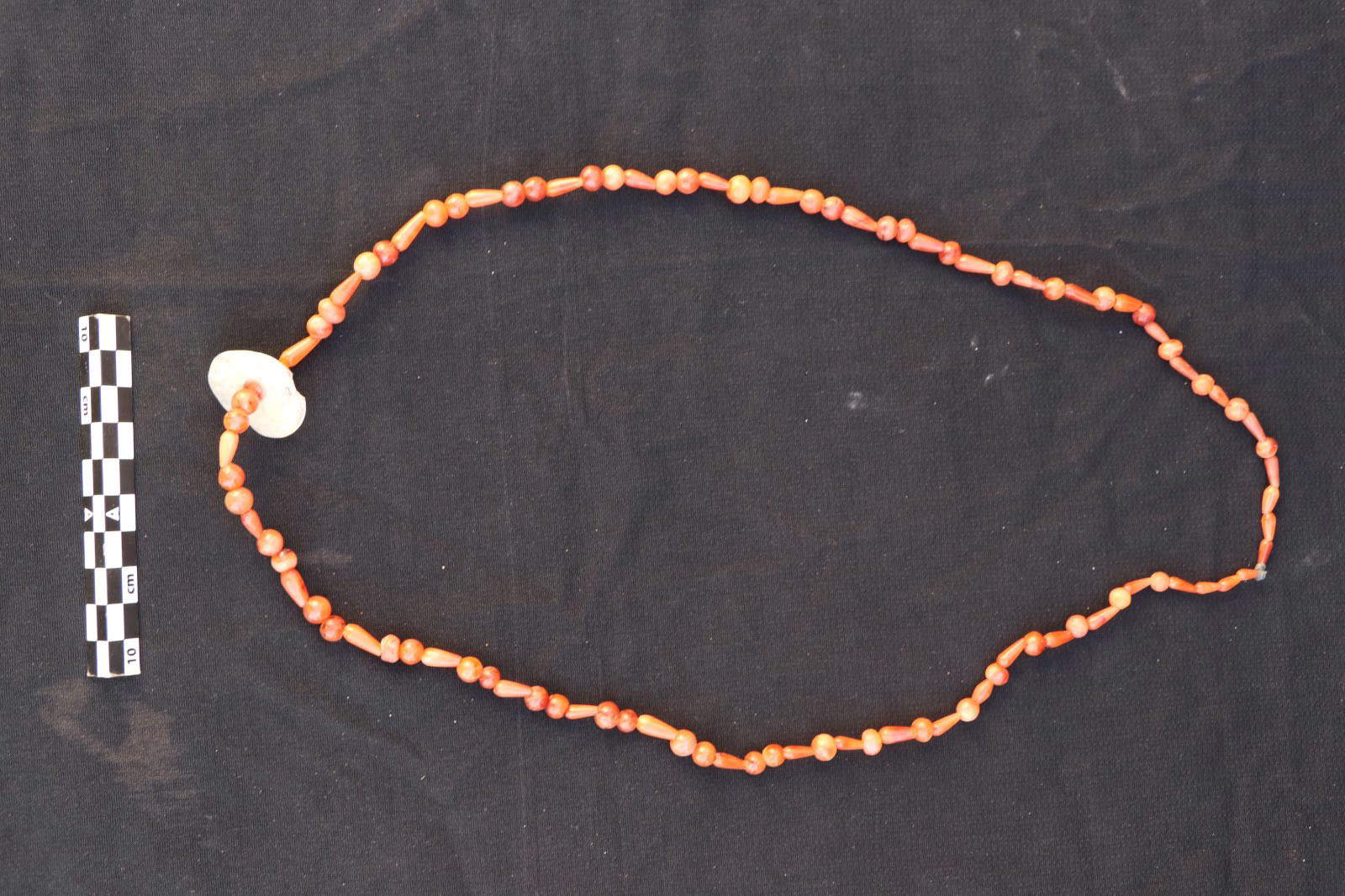
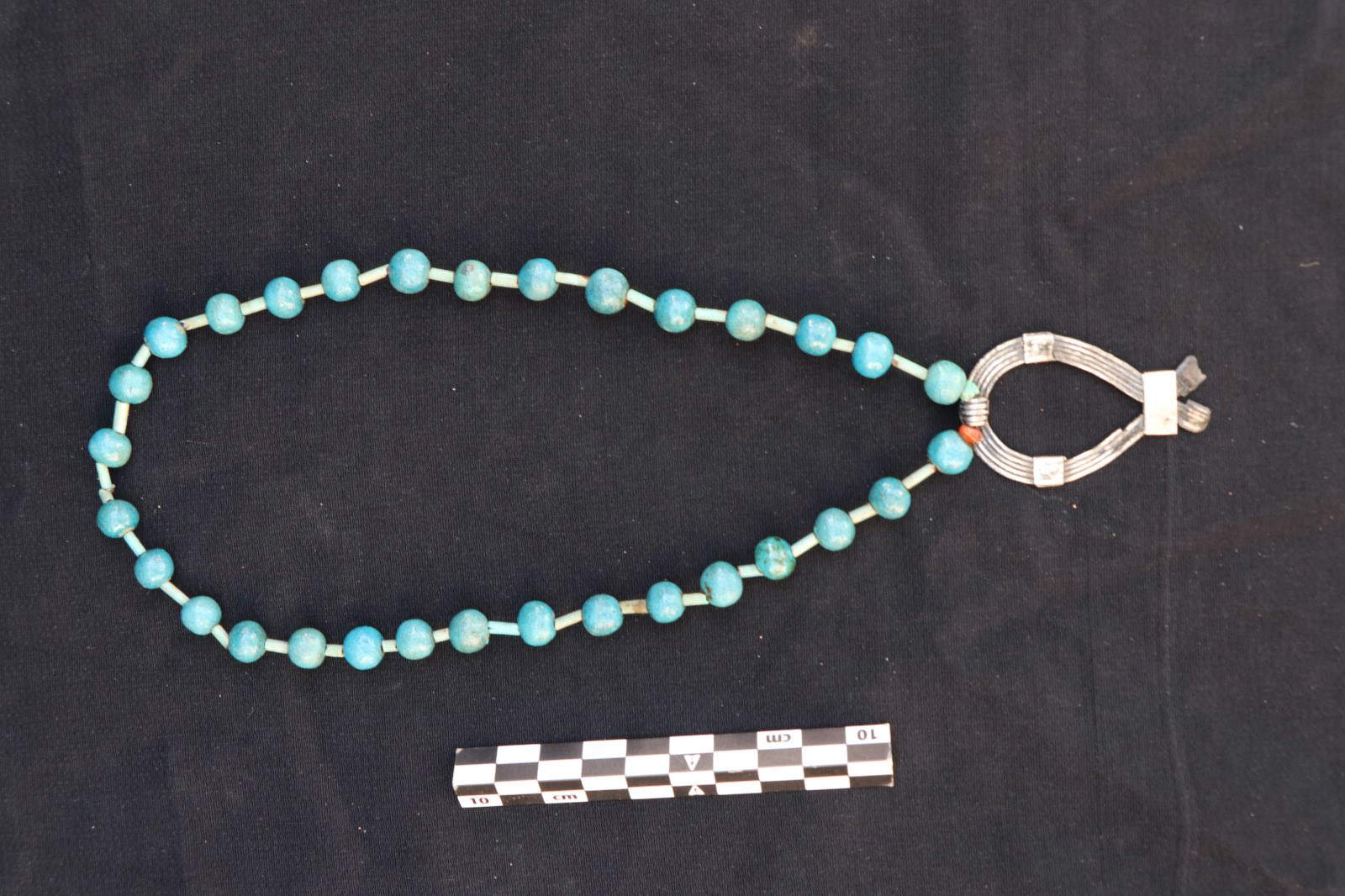
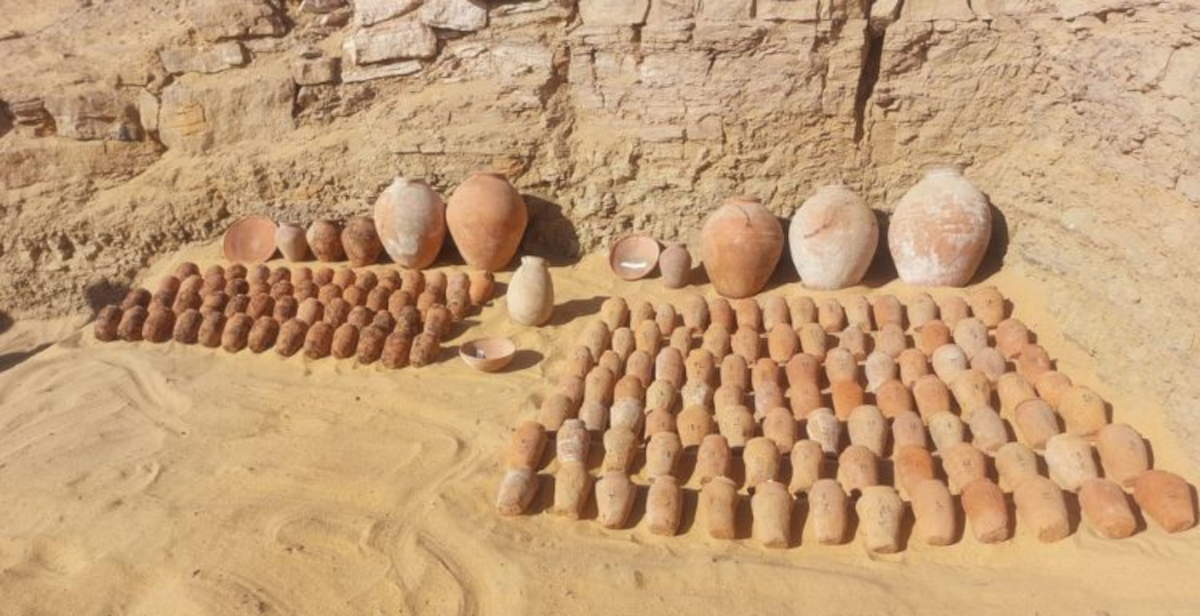
Among the recovered finds are some 160 ceramicvessels of various sizes and shapes, preserved in good condition and bearing hieratic inscriptions, probably intended for the storage of liquids and grains. Jewelry, including bronze mirrors, alabaster containers for kohl (a powder used to dye eyebrows and eyelashes black), colorful beaded necklaces and amulets of different types, dating to the Middle Kingdom, were also found in the tombs’ outer courtyard.
Minister of Tourism and Antiquities Sherif Fathi highlighted the key role of Egypt’s archaeological missions, which have recently led to important discoveries enriching the archaeological landscape and enhancing cultural tourism dedicated to Ancient Egypt. The minister confirmed the ministry’s commitment to providing technical and logistical support to the missions, ensuring adequate working environments to facilitate further research. Secretary General of the Supreme Council of Antiquities, Hisham El-Leithy, on the other hand, highlighted how the discovery increases knowledge of the site and provides a better understanding of the use of Qubbet el-Hawa in different historical periods. Mohammed Abdel-Badie, head of the Egyptian Antiquities sector of the Supreme Council of Antiquities, added that excavations will continue with the aim of identifying additional tombs and artifacts. Qubbet el-Hawa is known for the presence of tombs covering a broad chronological span, from the first phase of the Old Kingdom to the Greco-Roman period.
 |
| Discovery in Aswan: Egypt's new rock tombs from the Old Kingdom at the site of Qubbet el-Hawa |


The author of this article: Noemi Capoccia
Originaria di Lecce, classe 1995, ha conseguito la laurea presso l'Accademia di Belle Arti di Carrara nel 2021. Le sue passioni sono l'arte antica e l'archeologia. Dal 2024 lavora in Finestre sull'Arte.Warning: the translation into English of the original Italian article was created using automatic tools. We undertake to review all articles, but we do not guarantee the total absence of inaccuracies in the translation due to the program. You can find the original by clicking on the ITA button. If you find any mistake,please contact us.





























 IT
IT FR
FR DE
DE ES
ES CN
CN


