





A series of burial contexts dating from the Teotihuacan era was discovered in Tula de Allende, in the Mexican state of Hidalgo, during activities of the Project for ArchaeologicalRecovery related to the construction of the Mexico City-Querétaro passenger rail line. The findings include five tombs similar to so-called pit tombs, as well as numerous individual and collective burials found within a pre-Hispanic housing complex near the community of Ignacio Zaragoza.
The investigations are being coordinated by archaeologist Víctor Heredia Guillén under the supervision of the Archaeological Recovery Directorate of theNational Institute of Anthropology and History (INAH). Since September 2025, the research team has been working on an area of about 2,400 square meters coinciding with the route of the new railway infrastructure.
“The importance of archaeological recovery to understand, preserve and study the deep memory of these territories,” says the Secretary of Culture of the Government of Mexico, Claudia Curiel de Icaza. “Every burial, every offering and every context recovered by INAH provides information about the lifestyles, beliefs and social organization of those who inhabited this region more than a thousand years ago, and confirms that infrastructural development can be accompanied by rigorous research and heritage protection.”
According to archaeologist Laura Magallón Sandoval, who is in charge of field operations, the first clues emerged through the observation of materials scattered on the surface, mainly ceramic fragments belonging to the Coyotlatelco and Mexica periods, which can be dated between A.D. 900 and 1521. Subsequent stratigraphic assays allowed the identification of wall bases of habitation structures. The excavation campaigns, supported by high-precision orthophotography surveys, allowed the reconstruction of a settlement pattern consisting of small residential cores connected by central and side courtyards. The rooms appear to be oriented along north-south and east-west axes.
The Ignacio Zaragoza site shows traces of reoccupation in the Late Postclassic period, but most of the structures and materials identified belong to the Tlamimilolpan phase, dated between 225 and 350 A.D., and Xolalpan phase, dated between 350 and 550 A.D., both of which can be traced to Teotihuacan’s period of maximum expansion. Archaeologists point out that nearly eighteen centuries of environmental transformations and prolonged agricultural exploitation of the area have greatly compromised the ancient buildings, of which only the foundations remain today.
Despite the fragmentary state of the structures, investigations have uncovered numerous burial contexts carved directly into the rock outcrop on which the housing complex once stood. Both surface cists and tombs dug into the tepetate, a compact volcanic rock typical of the central area of Mexico, similar to the pit tombs known from other Mesoamerican regions, were identified within the rooms.
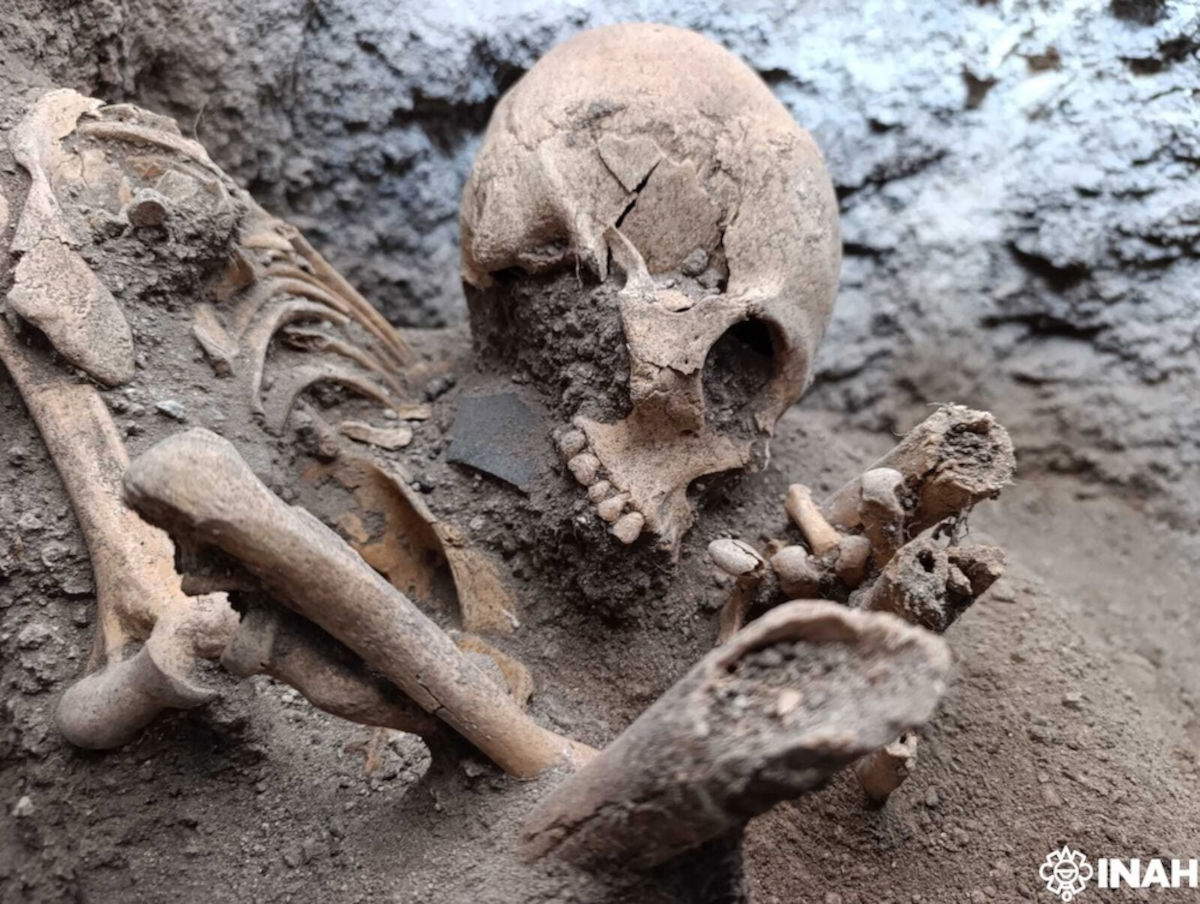
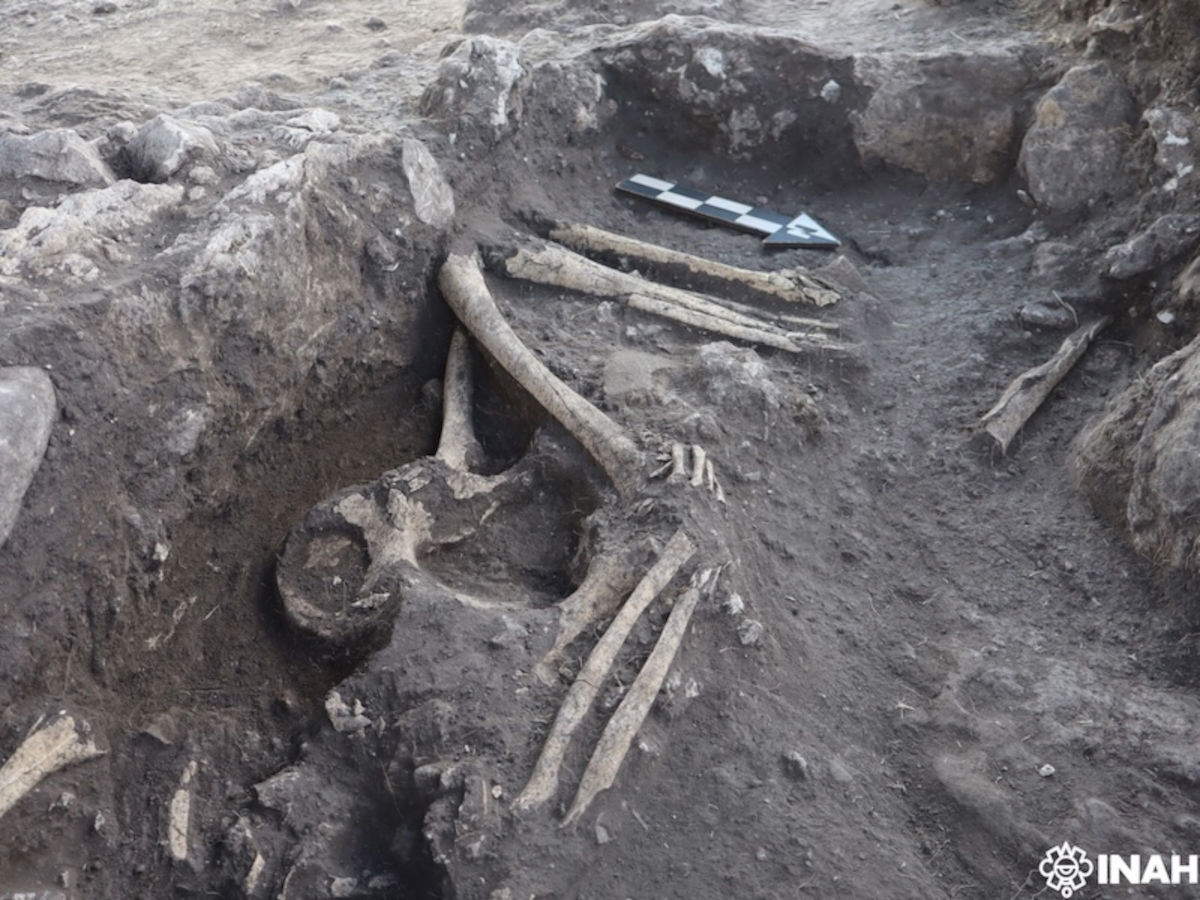
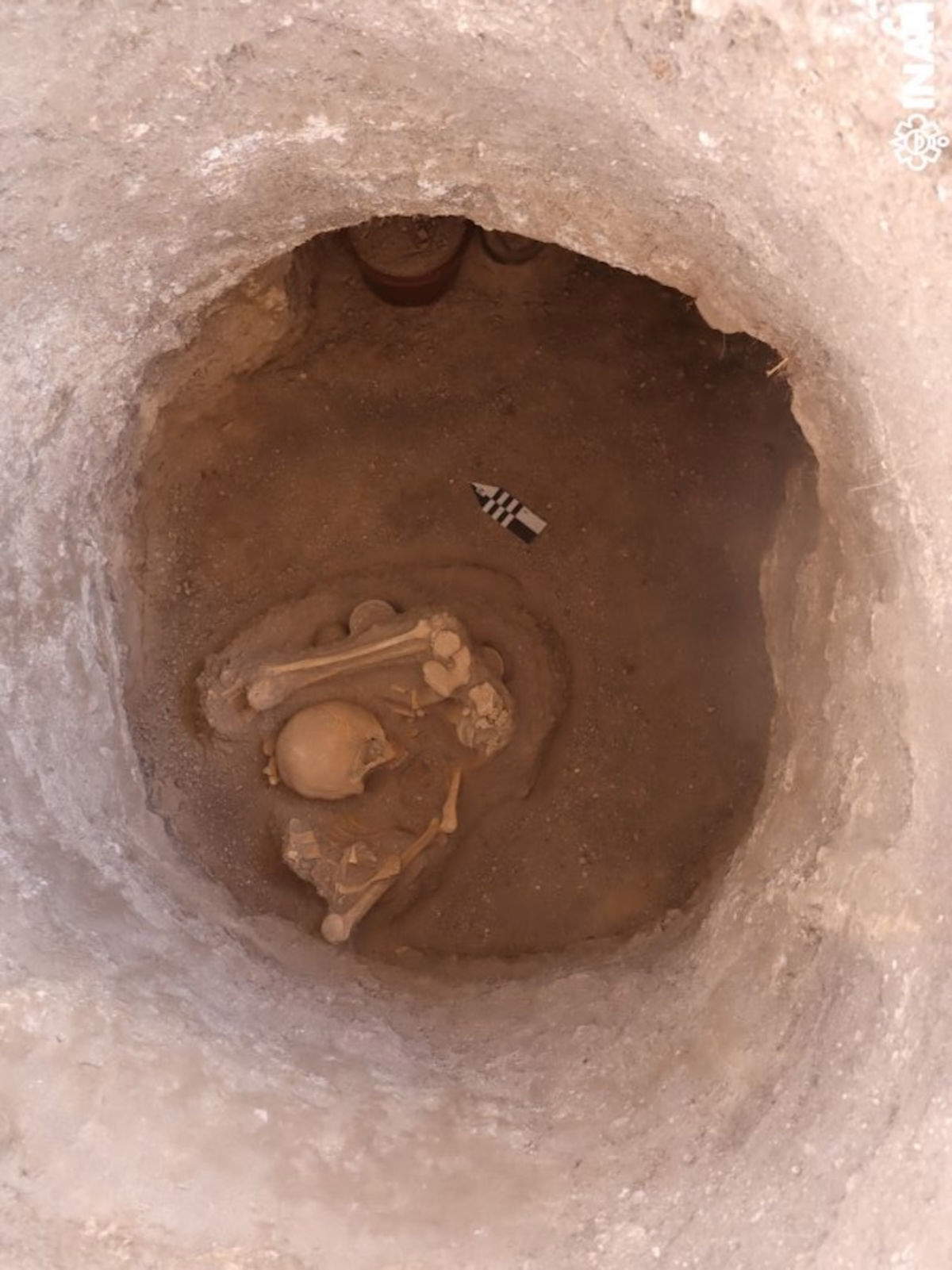
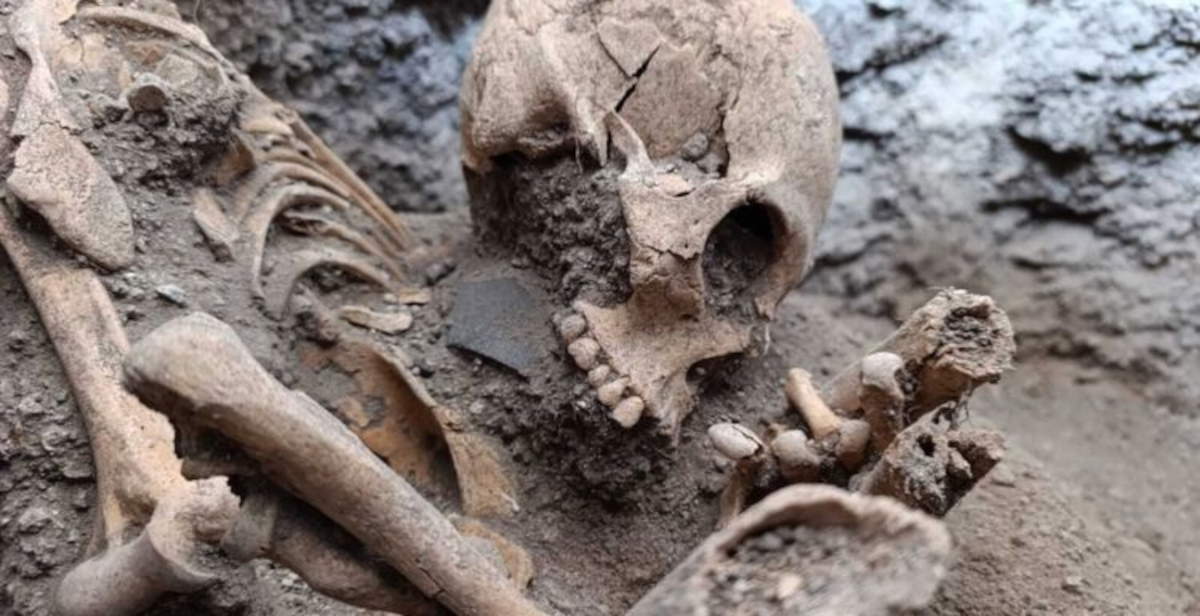
Laura Magallón Sandoval reports that more than ten burials have already been recorded, some collective and some individual. Archaeologists have recovered complete and partial skeletons, as well as numerous long bones belonging to the upper and lower limbs. Initial anthropological analyses conducted by José Manuel Cervantes Pérez and Abril Machain Castillo indicate the presence of childlike individuals, including at least one child between the ages of eight and eleven, as well as youths and mostly adults. Archaeologist Juana Mitzi Serrano Rivero, a member of the research team, explained that in one of the rooms, two tombs similar to shaft tombs were identified, characterized by a vertical conduit leading to lateral burial chambers. One of the structures was located to the north of the room and had two east-west oriented cavities; the other, located to the south, possessed a single east-facing chamber.
The northern tomb has a cavity with a diameter of about eighty centimeters and a depth of 1.69 meters, while the two side chambers measure an average of sixty centimeters. The longitudinal cut reaches two meters. The southern tomb has a circular cavity eighty centimeters in diameter and a depth of 1.80 meters, with an inner length of ninety centimeters.
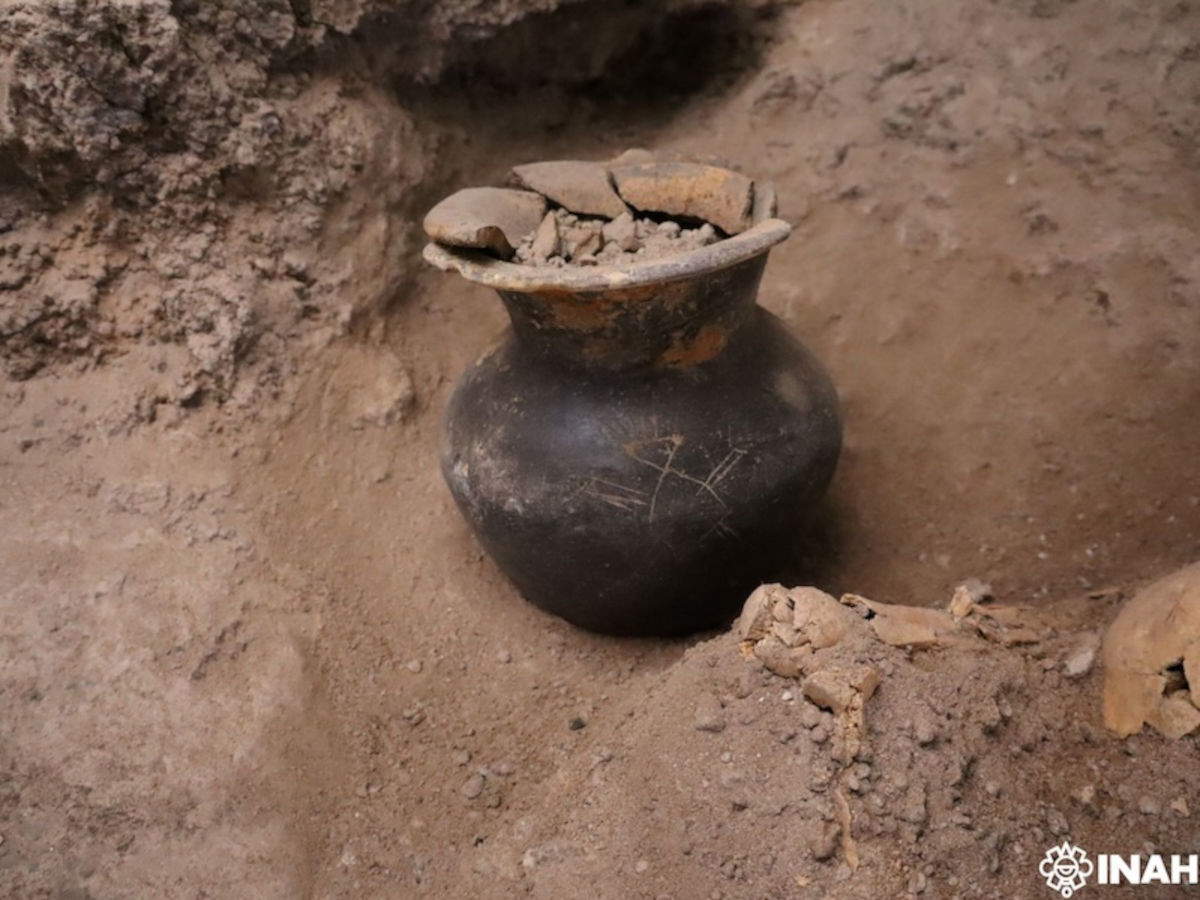
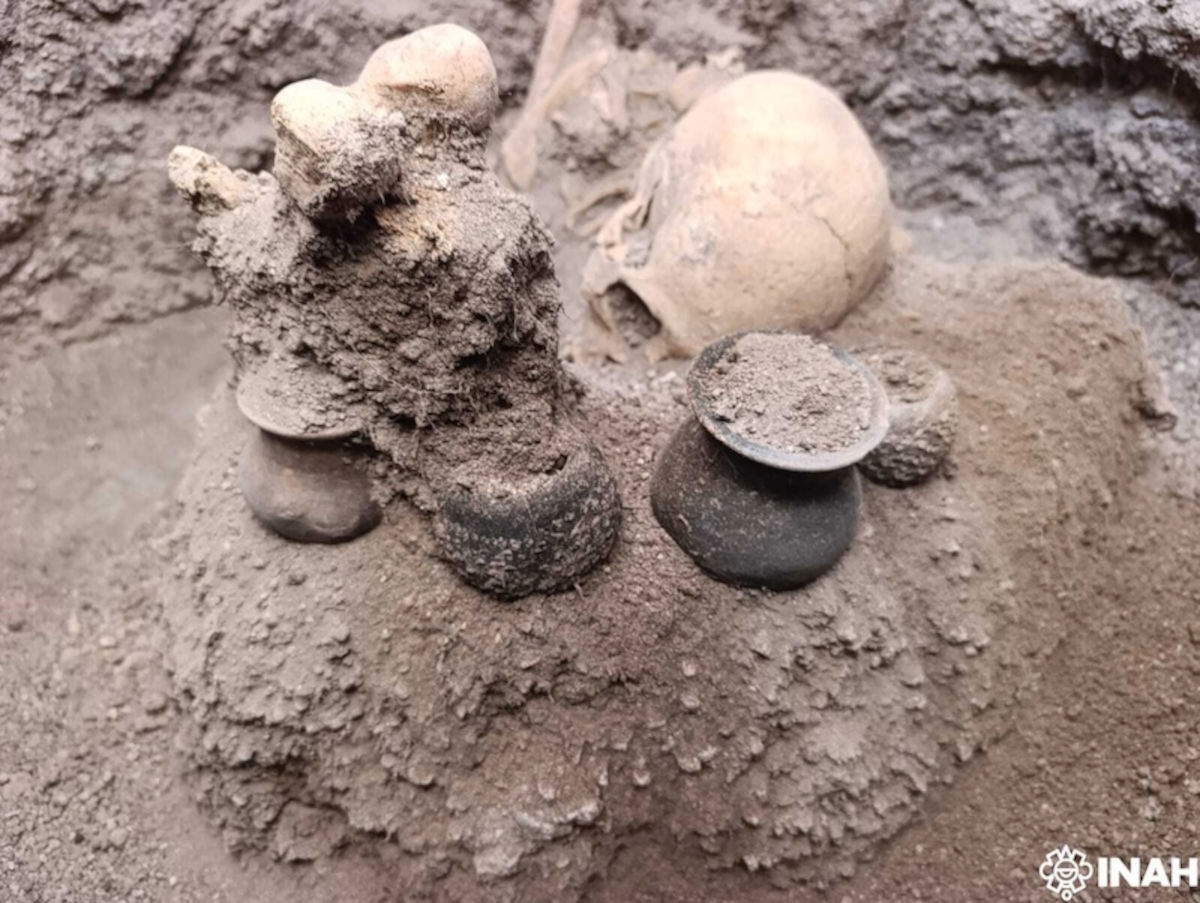
Inside the north tomb were found the bone remains of eight individuals, mostly adults, accompanied by forty-seven miniature vases. Among the grave goods, archaeologists also identified a small shell, part of a mother-of-pearl pendant of semicircular shape, and a plaque made of the same material. In another burial, however, graffiti-decorated vessels emerged, which were removed along with the surrounding sediment to allow for future laboratory microexcavations.
“Of the eight individuals,” says archaeologist Rivero, “six had been laid in a seated position, with the ceramic offering placed at their feet; and two of them had the burial context altered. ”It looks like the space was reoccupied, so when they were about to lay the last individual, they removed the grave goods of the previous one."
According to archaeologist Jonathan Velázquez Palacios, the area would have been exploited as a quarry for materials as early as pre-Columbian times, particularly for the extraction of lime. The material would have played a key role in making the stucco used in the buildings of Teotihuacan, some ninety kilometers away from the site.
Scholars also believe that the Ignacio Zaragoza site should be interpreted as part of a territorial network involving several centers in the northern Tula area. Archaeologists Cecilia Carrillo Román, José Muñoz Sánchez, José Ángel Esparza Robles, and Johan González Ávila are also participating in the research. Finally, Velázquez Palacios highlights how the region has numerous settlements referable to the Classical period, between 200 and 650 AD. Among the main sites related to the expansion of Teotihuacan are mentioned Chingú, considered the most important regional center, as well as El Tesoro, Acoculco, where tombs of the Zapotec and Teotihuacan traditions have been discovered in the past along with lying and flexed burials, El Llano and La Malinche.
 |
| Mexico, Teotihuacan tombs found with dozens of burials and grave goods |

Warning: the translation into English of the original Italian article was created using automatic tools. We undertake to review all articles, but we do not guarantee the total absence of inaccuracies in the translation due to the program. You can find the original by clicking on the ITA button. If you find any mistake,please contact us.




























 IT
IT FR
FR DE
DE ES
ES CN
CN


