





The restoration and enhancement works carried out by the Capitoline Superintendence as part of the PNRR - Caput Mundi program have been completed. Thanks to these works, nine archaeological sites of Roma Capitale will be exceptionally open to the public through a calendar of free guided tours that will kick off on Sunday, June 7. The initiative offers the opportunity to visit both already well-known monuments and lesser-known places of extraordinary historical and archaeological interest, restored to full accessibility thanks to recent restoration work.
Among the most significant new features is the expansion of the Circus Maximus tour route, which now includes a portion of the hemicycle on the Aventine side, allowing an even deeper understanding of the history and architecture of the largest spectacle building of ancient Rome.
Also accessible for the first time will be theArchaeological Area of Via delle Botteghe Oscure, where the remains of a vast porticoed square and the column bases of a temple, possibly the Porticus Minucia Vetus or Frumentaria and the temple of the Nymphs or Lari Permarini, are preserved.
In the Appia Antica Park, the Church of San Urbano alla Caffarella, which began as a small temple dedicated to Ceres in the second century AD and was later transformed into a Christian building, is again open to visitors. The complex houses precious frescoes dating from the 11th and 17th centuries, the latter carried out during the deep renovation promoted by Pope Urban VIII. In the same context, extraordinary maintenance was also carried out on the nearby Nymphaeum of Egeria.
In the Pigneto district, the Torrione Prenestino, a monumental mausoleum from the Augustan period and among the largest in the city, with a diameter of 41 meters, reopened. The site has undergone a conservative and reconstructive restoration, complemented by a new artistic lighting system.
Also newly accessible is the Mausoleum of Monte del Grano, an imposing monument from the mid-2nd century AD located in Piazza dei Tribuni, in the vicinity of the Centocelle Archaeological Park. From this monument comes the famous sarcophagus with scenes from the life of Achilles, preserved in the Capitoline Museums since 1590.
Interventions also involved the Largo Talamo Sepulchre, in the San Lorenzo district, dating from the first century B.C. and originally facing the ancient Via Collatina.
Also restored was a sector of the Ostiense Burial Ground, known as the Necropolis of St. Paul, located near the Rupe di San Paolo. The complex includes nine tombs arranged along the street front and around an inner courtyard; the different funerary types testify to the transition from the rite of incineration to that of inhumation during the second century AD. The work, accompanied by the installation of educational panels, full-scale reconstruction of three frescoed lunettes and a new lighting system, has restored full legibility to the site.
Not far away is the Cristoforo Colombo Cistern, a large circular structure from the 2nd century AD discovered during excavations carried out for the construction of the then Via Imperiale, now Via Cristoforo Colombo. The monument represents significant evidence of an ancient Roman agricultural complex.
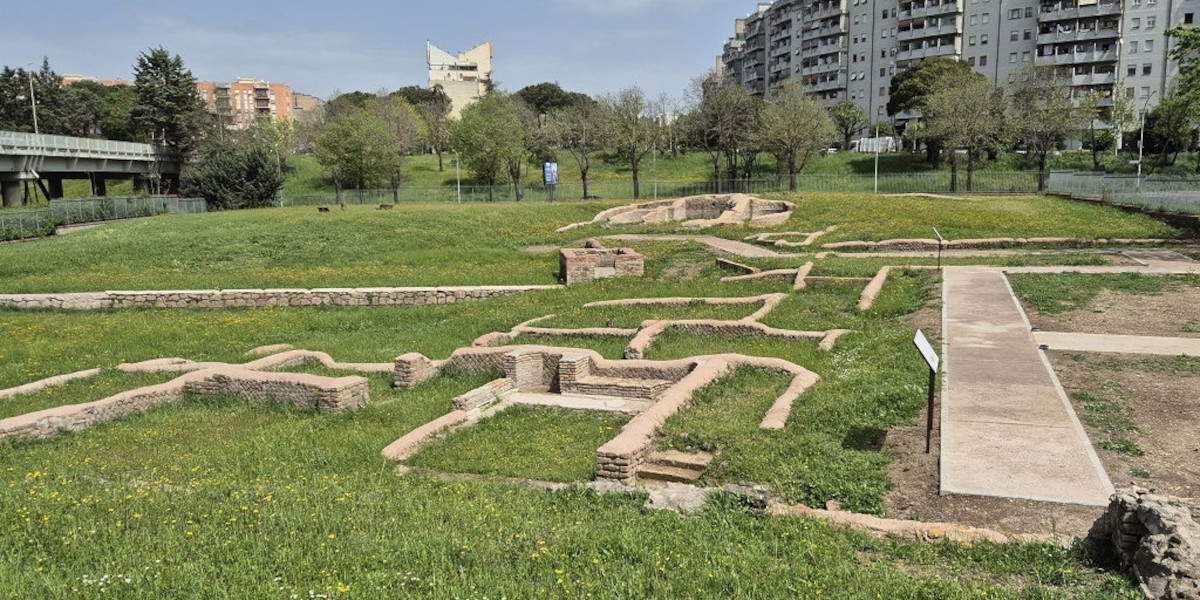
Finally, the remains of the Roman Villa of Tor de’ Cenci, which document the presence of a suburban residence that remained in activity for more than five centuries, from the first century B.C. to the fifth century A.D.
During the special openings, visitors will be accompanied by specialized guides who will explain the history and peculiarities of the monuments. At the end of the program, the sites will become part of the circuit of archaeological areas that can be visited upon request or during specific initiatives.
Admission is free while places are available and subject to the maximum capacity provided for each site.
Sunday, June 7, 2026
10 a.m. to 1 p.m. Mausoleum Monte del Grano
3 p.m. to 6 p.m. Sepulchre of Largo Talamo
Saturday, June 13, 2026
10 a.m. to 1 p.m. Church of San Urbano alla Caffarella
Sunday, June 14, 2026
10 a.m. to 1 p.m. Roman Villa of Tor de’ Cenci
10 a.m. to 1 p.m. Archaeological area of the Circus Maximus integrated
Sunday, June 21, 2026
10 a.m. to 1 p.m. Torrione Prenestino
from 3 p.m. to 6 p.m. Archaeological area of Via delle Botteghe Oscure
Sunday, June 28, 2026
10 a.m. to 1 p.m. Rupe di San Paolo
15:00 to 18:00 Cristoforo Colombo Cistern
For info 060608 active daily from 9 a.m. to 7 p.m.
|
| Starting June 7, nine archaeological sites in Rome reopen to the public after NRP restorations |

Warning: the translation into English of the original Italian article was created using automatic tools. We undertake to review all articles, but we do not guarantee the total absence of inaccuracies in the translation due to the program. You can find the original by clicking on the ITA button. If you find any mistake,please contact us.
























 IT
IT FR
FR DE
DE ES
ES CN
CN


