



by Redazione 04/04/2026



Categories: Contemporary art / Disclaimer
In Milan, Nero con punti by Alberto Burri, a work belonging to Unipol's artistic collection, in dialogue with five creations by Issey Miyake, Yohji Yamamoto and Junya Watanabe, some of the most innovative figures in contemporary Japanese fashion.
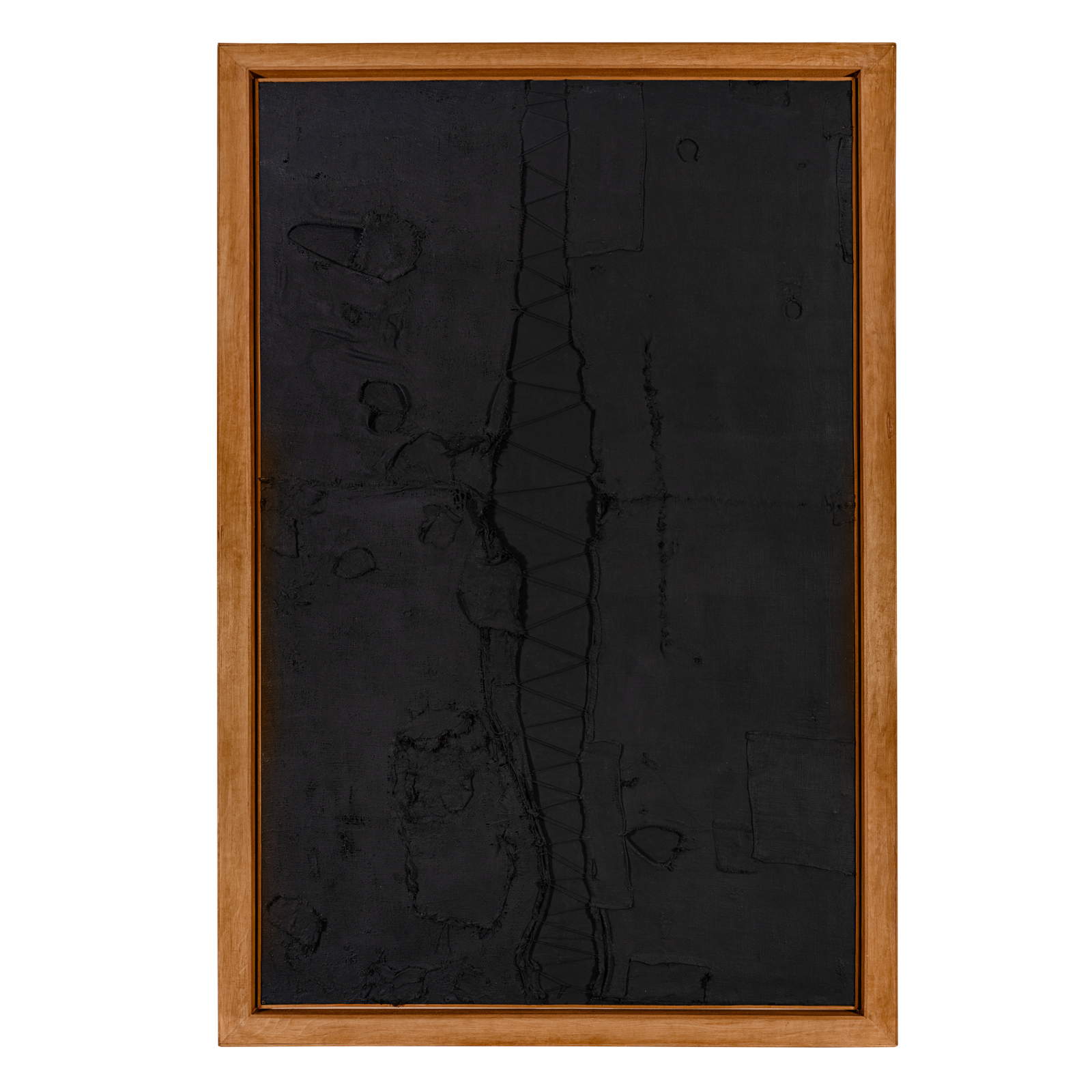
From April 16 to May 5, 2026, CUBO Enterprise Museum of Unipol Group presents at Unipol Tower in Milan the exhibition project Abitare il Nero. From Alberto Burri to the Fashion Designers of the Japanese School. At the center of the exhibition is Nero con punti by Alberto Burri, a work belonging to Unipol’s artistic collection, placed in dialogue with five creations by Issey Miyake, Yohji Yamamoto and Junya Watanabe, some of the most innovative figures in contemporary Japanese fashion.
The project, curated by Silvia Casagrande, fashion curator and fashion theory scholar, represents a new stage in the path of enhancement of the work, which began in 2019 with its restoration. The intention is to renew its reading and emphasize its topicality. The large jute canvas, made in 1958, is characterized by a monochromatic, intense and dark pictorial drafting, crossed by a central laceration that was subsequently stitched up: a gesture that, as Ilaria Bignotti observes, symbolically recalls the wounds of the world and their memory, being particularly significant in the contemporary historical context.
It was precisely in 2019 that the work, found in a deteriorated condition, underwent a delicate restoration in Florence, curated by Muriel Vervat in collaboration with the National Research Council. The operation involved the use of Funori, a natural substance derived from Japanese seaweed, traditionally used in the East for the recovery of porous materials such as paper and textiles, but not widely used in the West.


After restoration, Nero con punti was exhibited in Bologna in the 2022 exhibition Alberto Burri Reloaded, accompanied by a study day in February 2023 entitled Alberto Burri. Light on Black. The meeting involved scholars, philosophers and specialists, including Bruno Corà, offering an interdisciplinary reflection on the meaning and multiple declinations of black in the artist’s work.
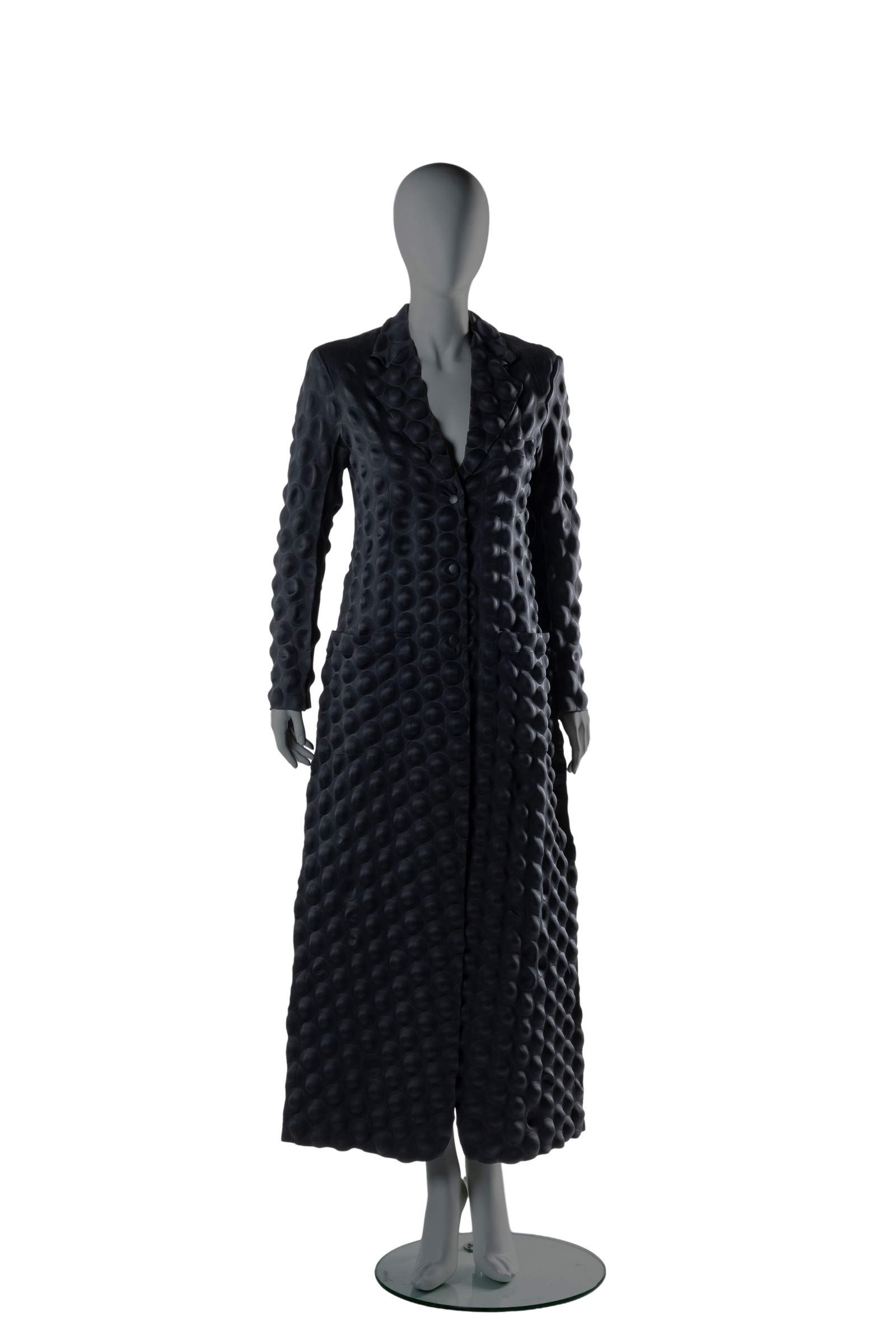
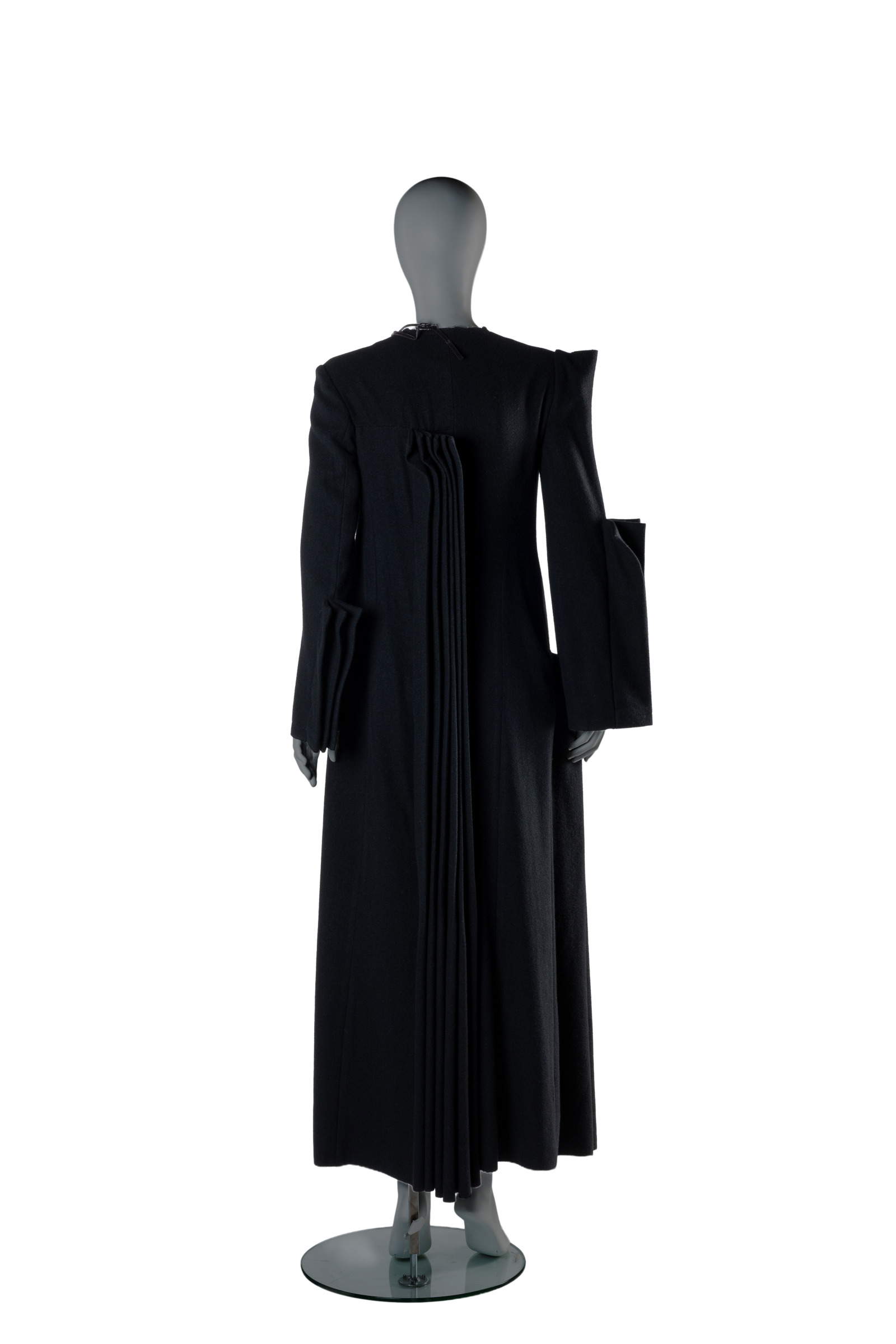
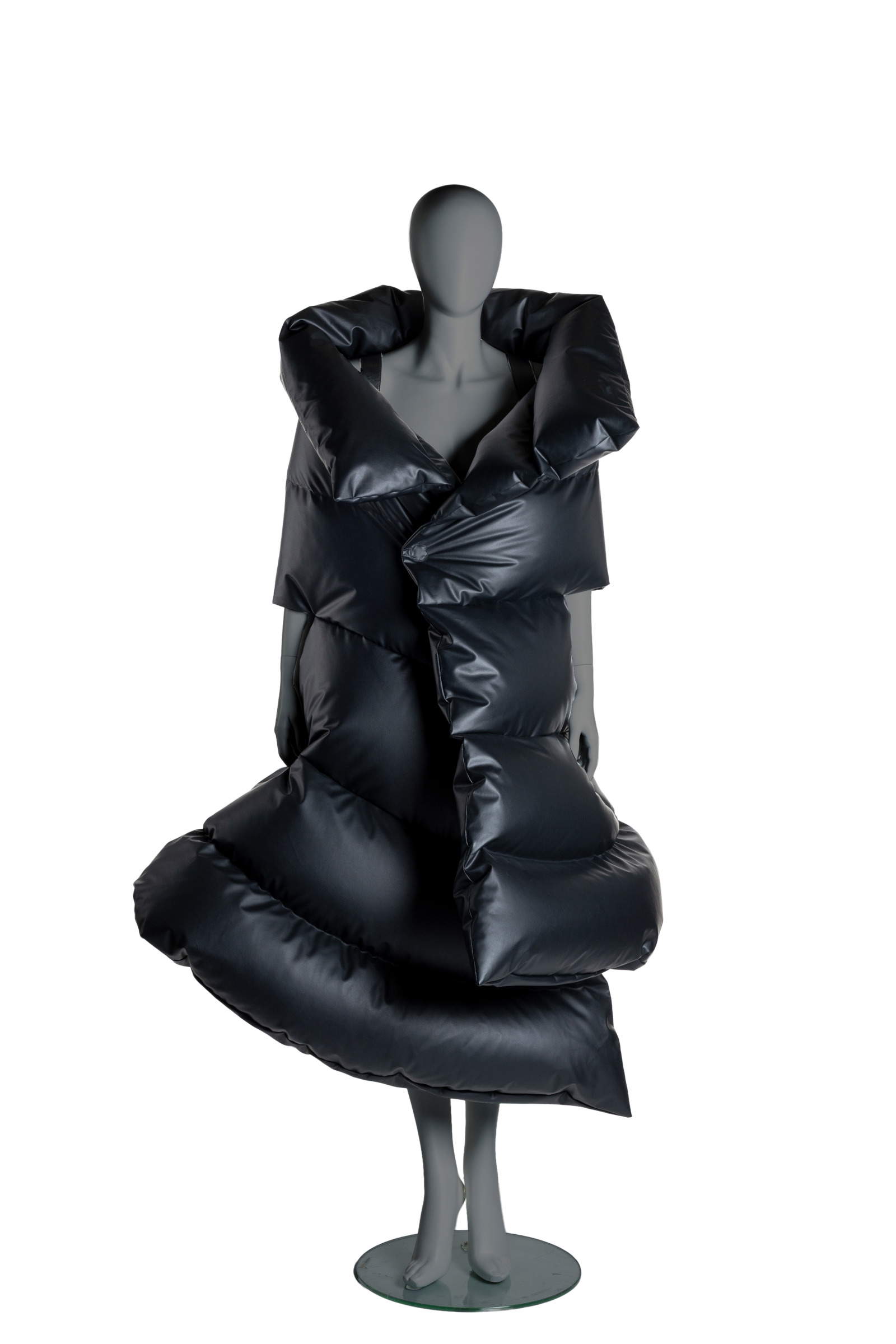
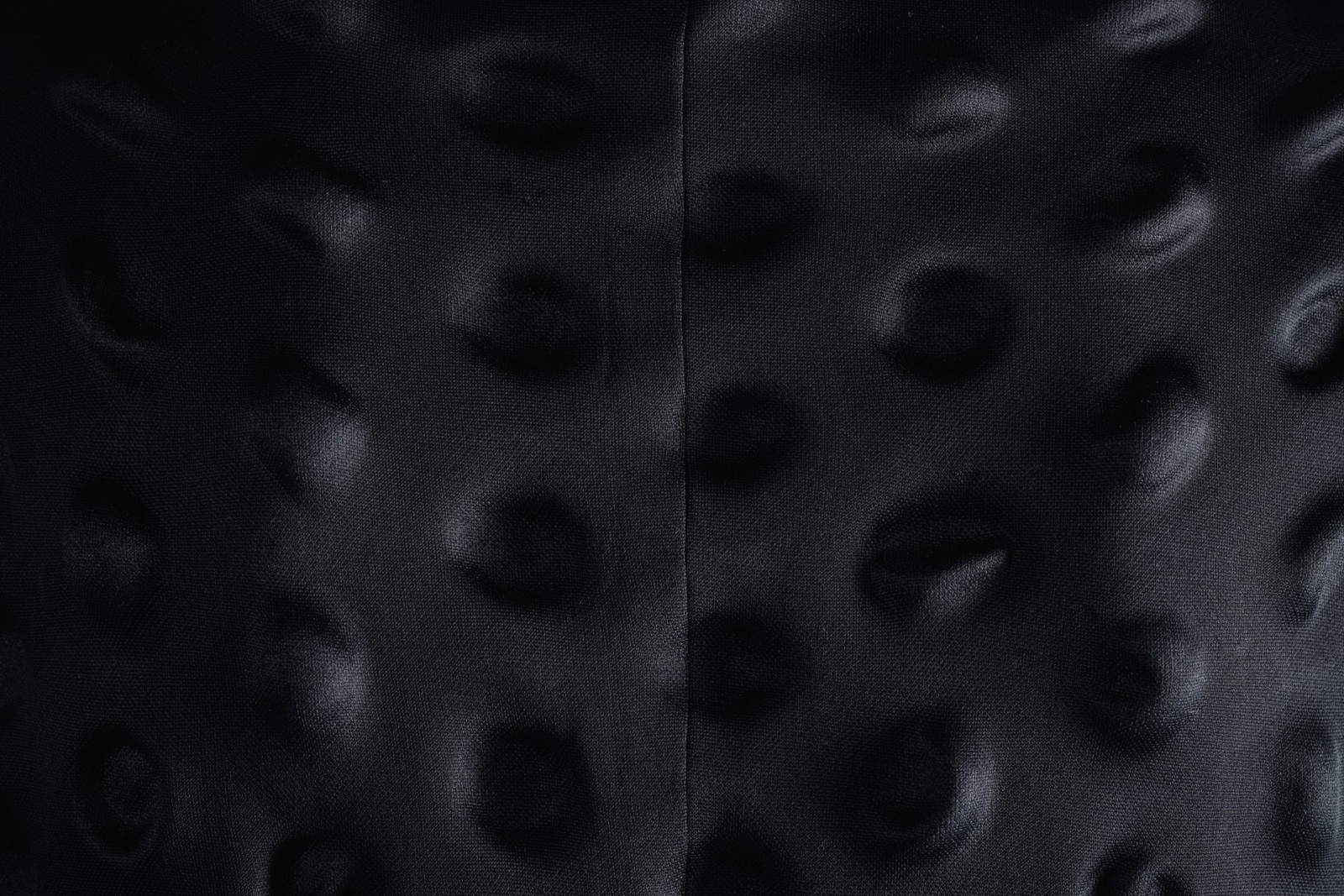
From this path comes a dialogue with Japanese culture, developed by Casagrande in the exhibition project and critical essay. In addition to black, common themes emerge such as shadow, void, fold, cut and suture, elements central to both Burri’s research and the Japanese designers’ experimentation. In the 1980s, in fact, the latter introduce a radical turn in the language of fashion: black clothes are deliberately imperfect, marked by tears, asymmetries and irregularities, breaking with the traditional idea of sartorial perfection.
In these creations, the fabric becomes a metaphor for the skin and the tears take on expressive value, opening up a new aesthetic of wounded matter. A tension that closely recalls the work of Burri, where burned surfaces, cracks and seams transform matter into living memory. In both cases, the “wound” is not a sign of destruction, but becomes language: a way of making the void visible and giving form to absence.
Silvia Casagrande’s reflections are collected in the study notebook Alberto Burri. The returned masterpiece in a journey that continues, edited by Ilaria Bignotti, which brings together the main contributions that emerged from the 2023 conference dedicated to the work.
The clothes on display come from the Mazzini Research Archives in Massa Lombarda.
Hours: Monday from 2 to 7 p.m.; Tuesday to Friday from 9:30 a.m. to 8 p.m.; Saturday from 11:30 a.m. to 5:30 p.m. Closed Sundays.
Free admission.
|
| At Unipol Tower in Milan, Alberto Burri in dialogue with five creations of contemporary Japanese fashion |
Warning: the translation into English of the original Italian article was created using automatic tools. We undertake to review all articles, but we do not guarantee the total absence of inaccuracies in the translation due to the program. You can find the original by clicking on the ITA button. If you find any mistake,please contact us.