





A new chapter is added to the centuries-old history of Angers Cathedral with the inauguration on Thursday, April 9, of the contemporary gallery designed by Japanese architect Kengo Kuma. The intervention represents the outcome of a long process of studies and work aimed at protecting the recently restored polychrome portal, one of the most precious elements of the building.
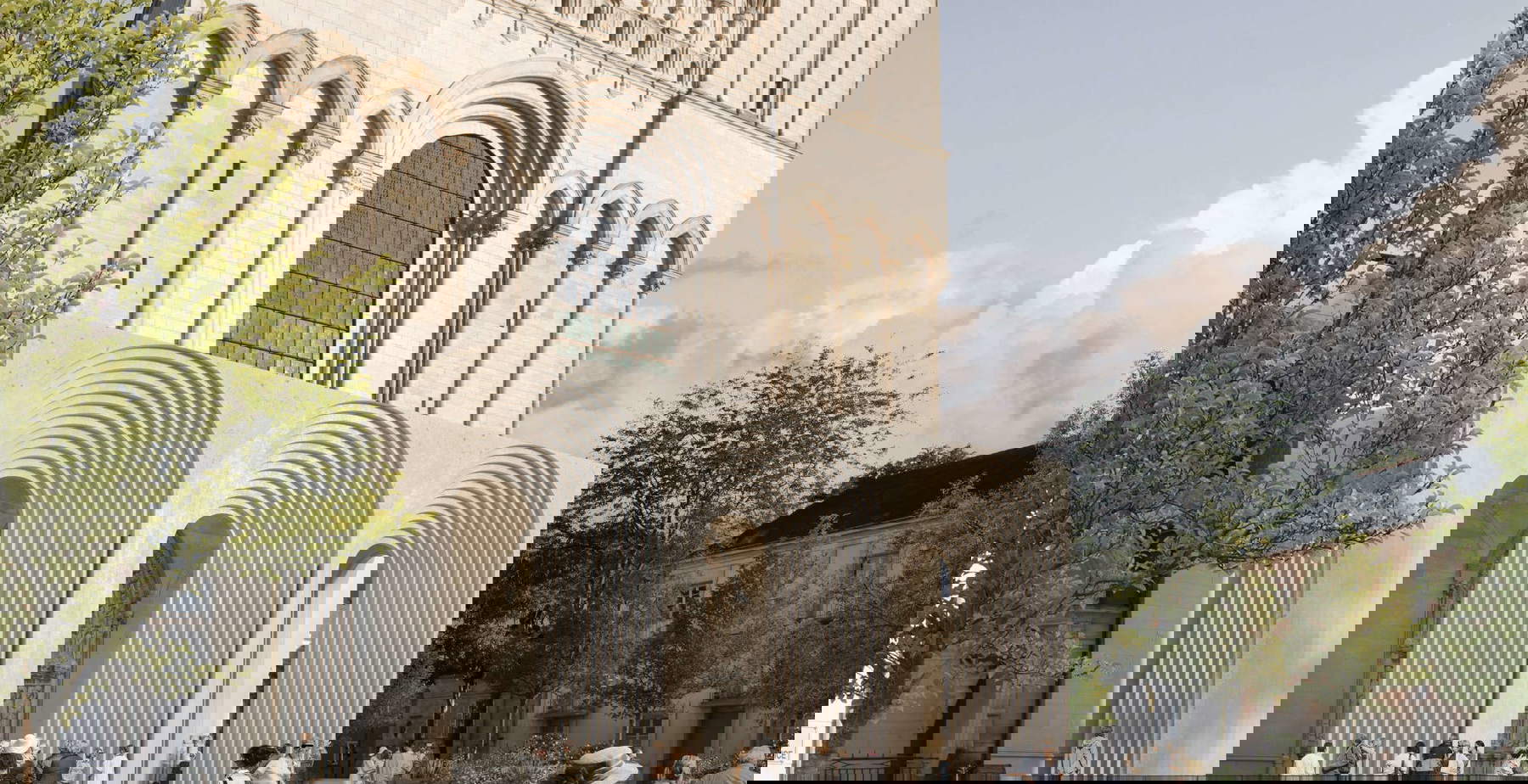
Kengo Kuma was asked to design a contemporary gallery to protect the western portal of Angers Cathedral, where valuable polychrome sculptures from the medieval (12th century) and modern (17th century) periods were recently discovered. The uniqueness of this portal, dating back to the 12th century, is these polychrome stone artifacts typical of the Middle Ages, and a new construction will be able to preserve them in a sustainable way. The challenge was to create a harmonious dialogue between a contemporary work and the preservation of medieval architectural heritage. “We wanted to identify with the builders of the Middle Ages,” said Kuma, “and create a frame of reference, using the compass, to generate the proportions that lead to unity. This was accomplished by a delicate process of precasting concrete on site, using sand and aggregates from the Loire basin, processed to the finest grain size.”
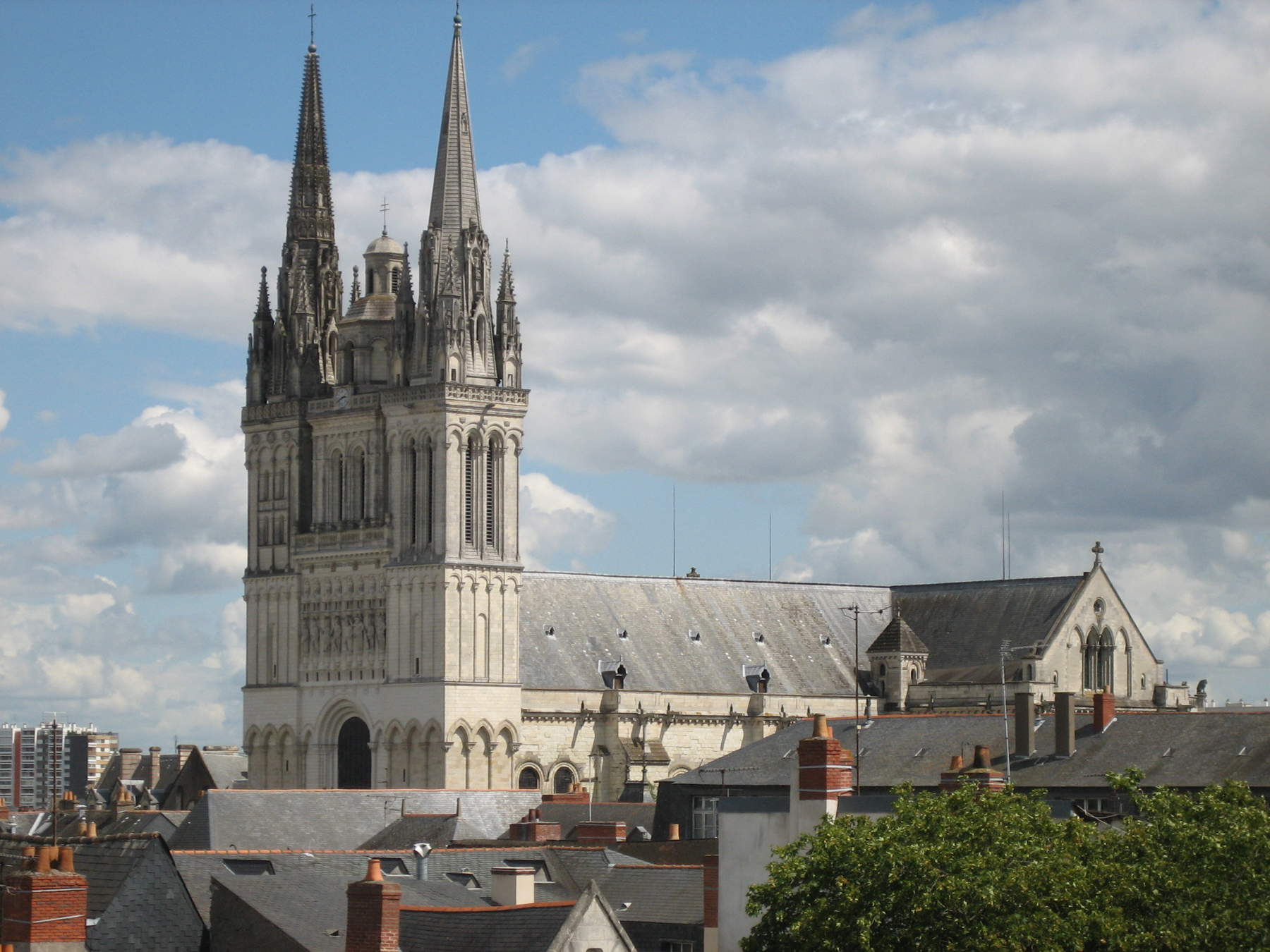
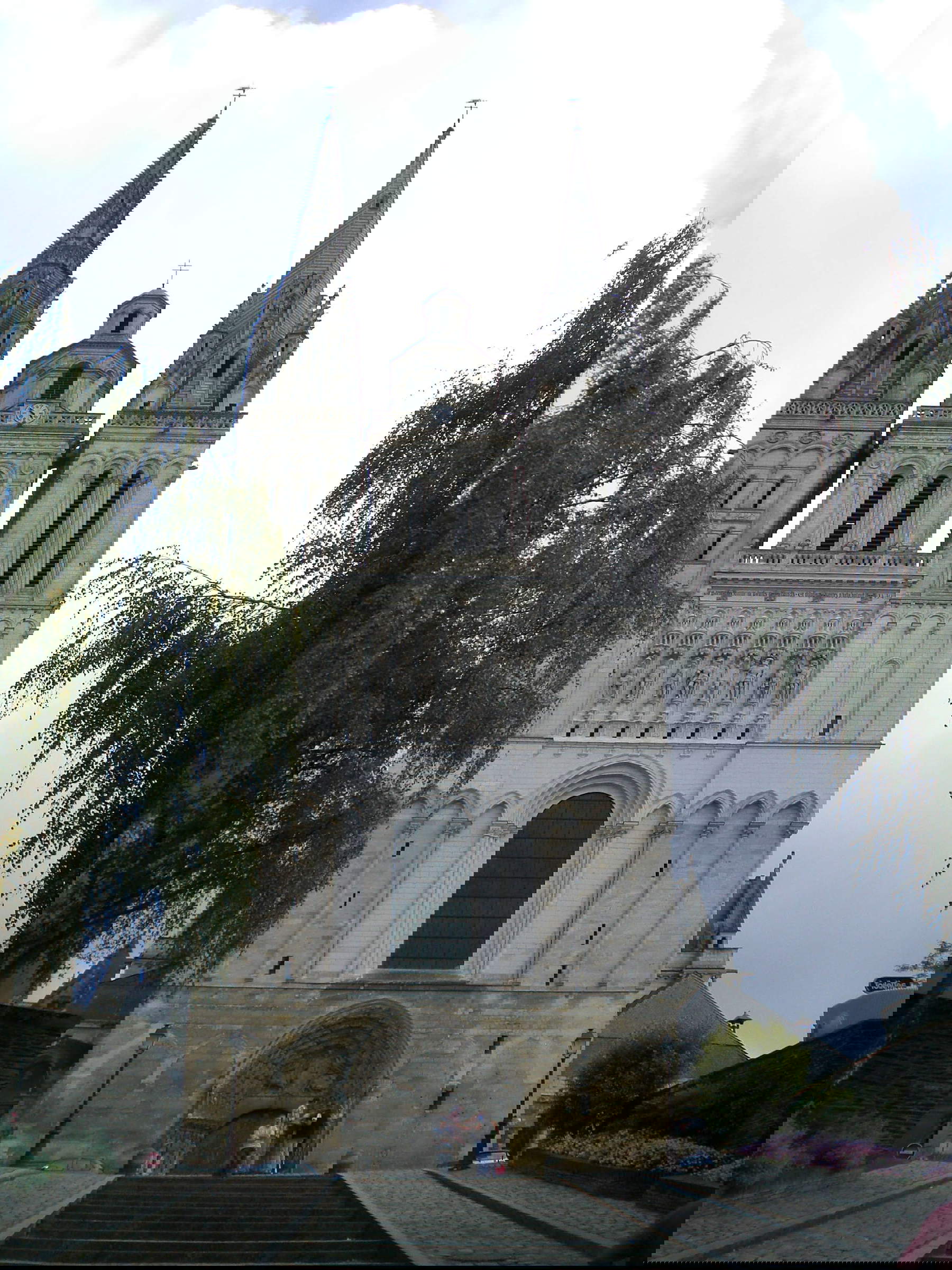
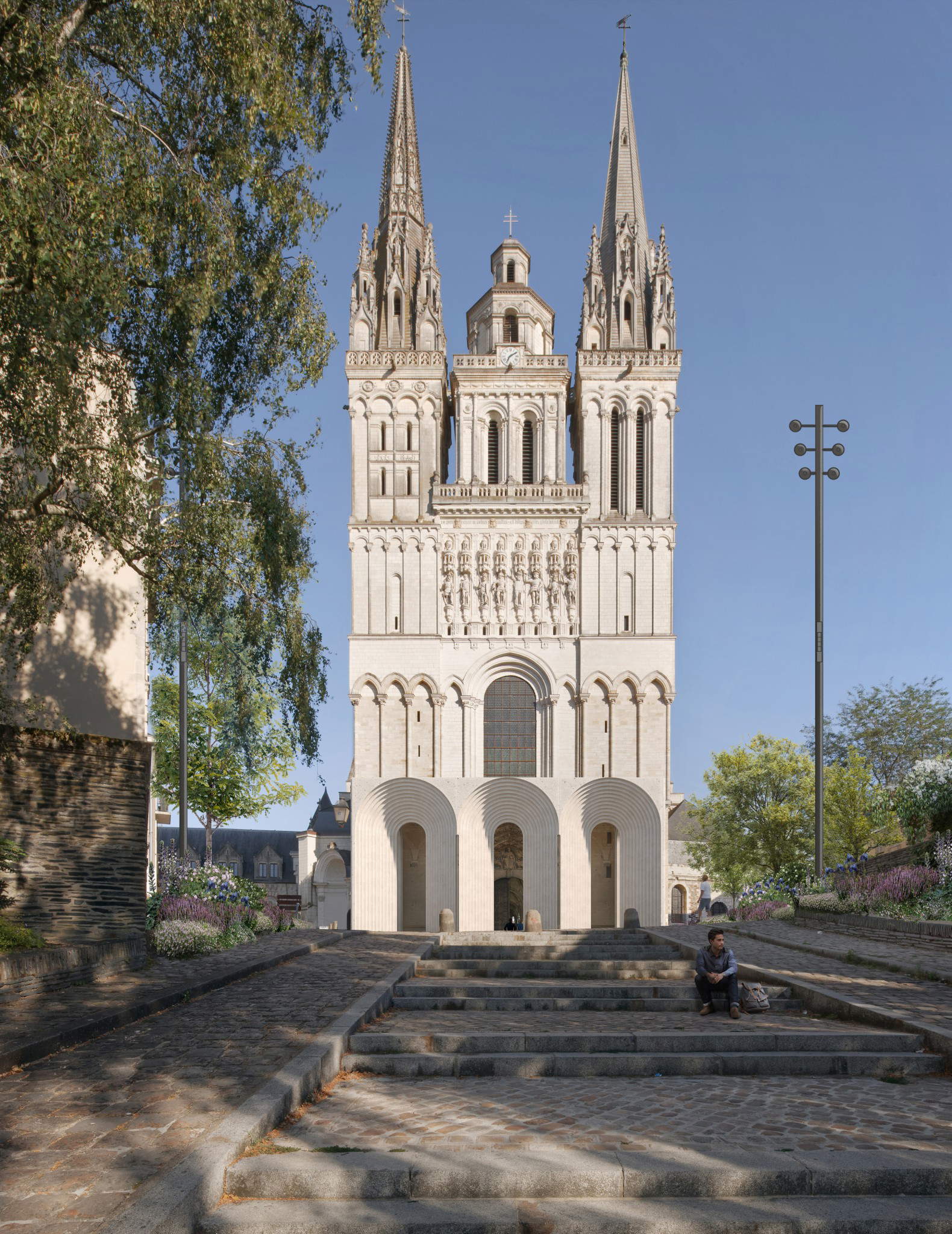
The new structure fits into a layered architectural context in which the cathedral has been transformed over the centuries. As Stéphane Moreau, construction manager at the Regional Directorate of Cultural Affairs, pointed out, today it is rare to witness the construction of a “piece of cathedral.” An expression that recalls the non-homogeneous nature of these buildings, the result of successive interventions. Indeed, the facade of the Angers cathedral combines elements made over a period of some five hundred years, evidence of a continuous construction history. The addition of the contemporary gallery is therefore part of the continuity of this evolution, in which each era contributed its own language.
The need for a protective structure has distant roots. In 1806 the monumental narthex in front of the facade, a two-level Angevin Gothic portico, was demolished for reasons of decay. Only four ogival arches remain today, the only visible trace of that ancient medieval construction. Kuma’s addition partly recreates the suggestion of a narthex and comes after several plans for a possible reconstruction were drawn up during the twentieth century, but none were completed. The need for action had already been formalized in 1823, but it was not until the 21st century that a new structure was built.
The design was entrusted to an international competition, necessitated in part by the scarcity of documentation on the original appearance of the demolished portico. The jury included representatives of the Ministry of Culture, local and religious authorities, including the prefect of Maine-et-Loire, the mayor and the bishop of Angers. The design by Kengo Kuma’s firm stood out for its sober approach. As explained by associate architect Elise Fauquembergue, the choice was to adopt a minimalist language, avoiding competing with historic architecture. In fact, the gallery also has a precise function: to protect the portal, ensuring its preservation over time.
From a formal point of view, the structure presents essential lines and references to the geometries of the facade, such as arches and moldings reinterpreted in a contemporary key. The construction, fully funded by the French state at a cost of 4.4 million euros, was blessed by the Bishop of Angers, Monsignor Delmas, during the inaugural ceremony, officially becoming part of the cathedral’s history. In addition to its protective function, the gallery also takes on a symbolic value, configuring itself as a threshold space between the outside and the inside, between the profane and the sacred. A dimension also emphasized by the Bishop of Angers, who called the new structure a place capable of welcoming and accompanying, destined to become an open space of liturgical life.
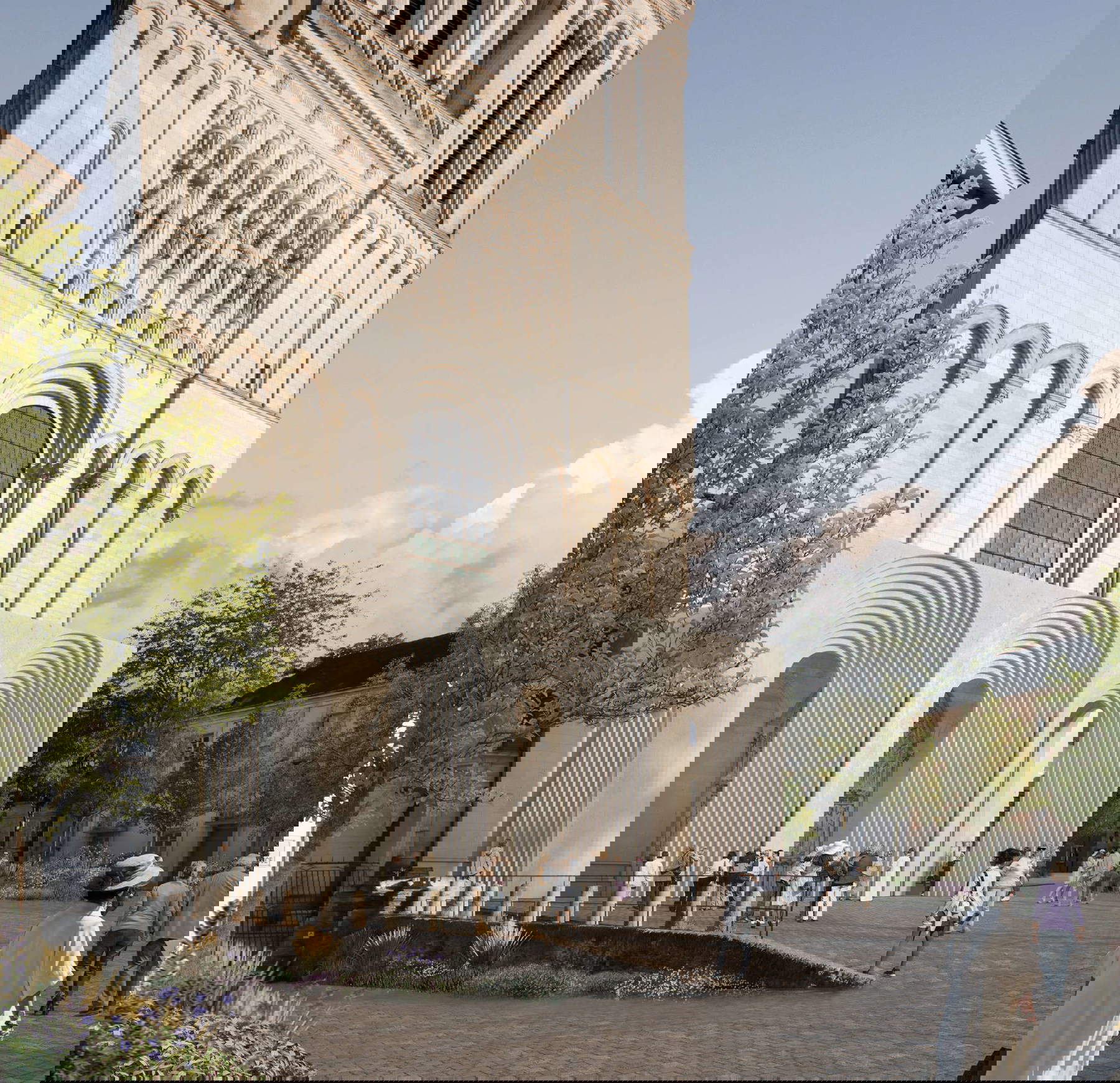
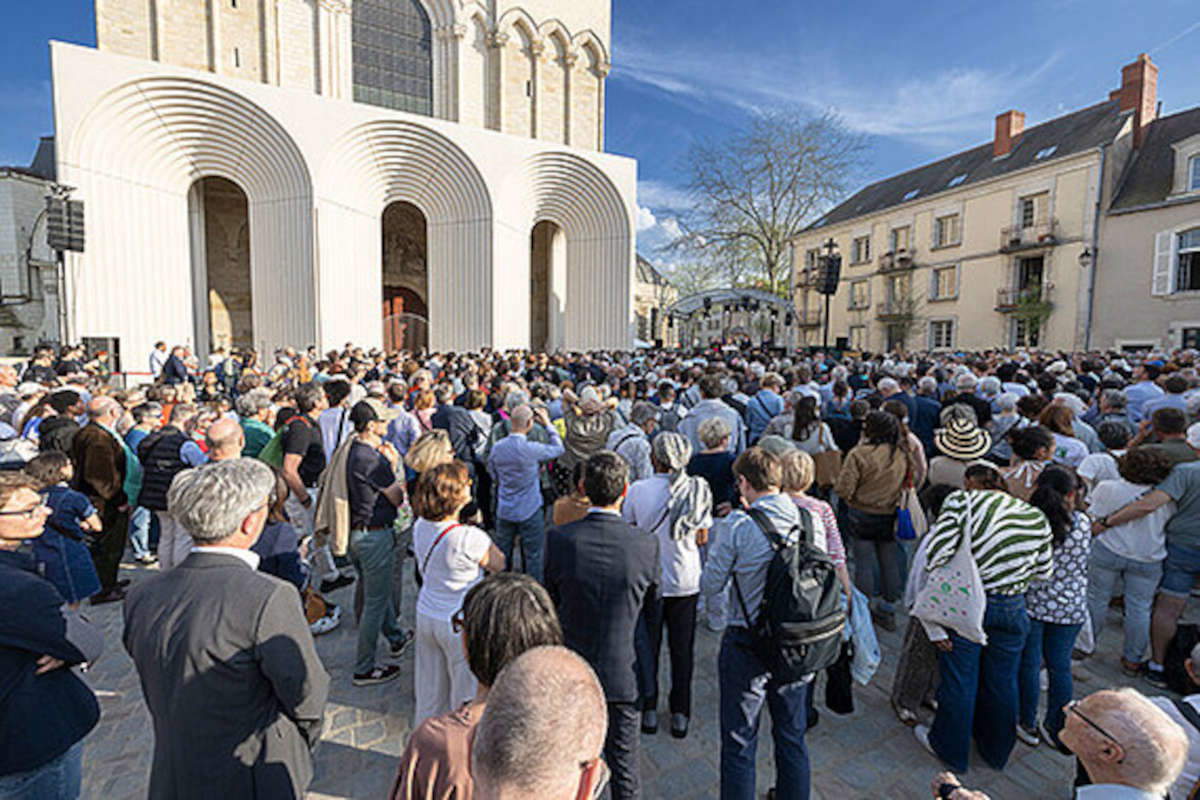
From a technical point of view, the gallery is built through a particularly refined concrete prefabrication process, using sands and aggregates from the Loire basin. This approach allows for a lighter structure than traditional cathedral masonry masses, while maintaining a monolithic and coherent presence.
The result is an architecture that fits discreetly into its historical context, establishing a dialogue between past and present. A quality also highlighted by Mayor Christophe Béchu, who stressed that the project responds to a need identified two centuries ago: “The first documented need to rebuild a gallery dates back to 1823,” he recalled. “Two centuries later, this request has finally been fulfilled. This is further evidence of the cathedral’s long history, the oldest elements of which date back to the 11th century, while others, among the most visible such as the north and south spires and the statues of St. Maurice, date back to the 16th century. Each era brought with it its own unique style. In this context, Kengo Kuma’s creation has the grace not to impose itself, but to integrate harmoniously with the building’s existing lines.”
Culture Minister Catherine Pégard also emphasized the symbolic value of the intervention. “The cathedral gallery,” she said, “has become a symbol of the state’s commitment to its heritage, not only for its preservation but also for the enhancement of its masterpieces. This is a responsibility of every generation. Its realization is exemplary in its ability to meet several challenges: ensuring the preservation of the portal, preserving the archaeological heritage of the underground, but also integrating into the present without erasing what has gone before.”
 |
| Contemporary cathedral gallery inaugurated in Angers |

Warning: the translation into English of the original Italian article was created using automatic tools. We undertake to review all articles, but we do not guarantee the total absence of inaccuracies in the translation due to the program. You can find the original by clicking on the ITA button. If you find any mistake,please contact us.



















 IT
IT FR
FR DE
DE ES
ES CN
CN


